United States (Midwest) · American
Classic Cherry Pie
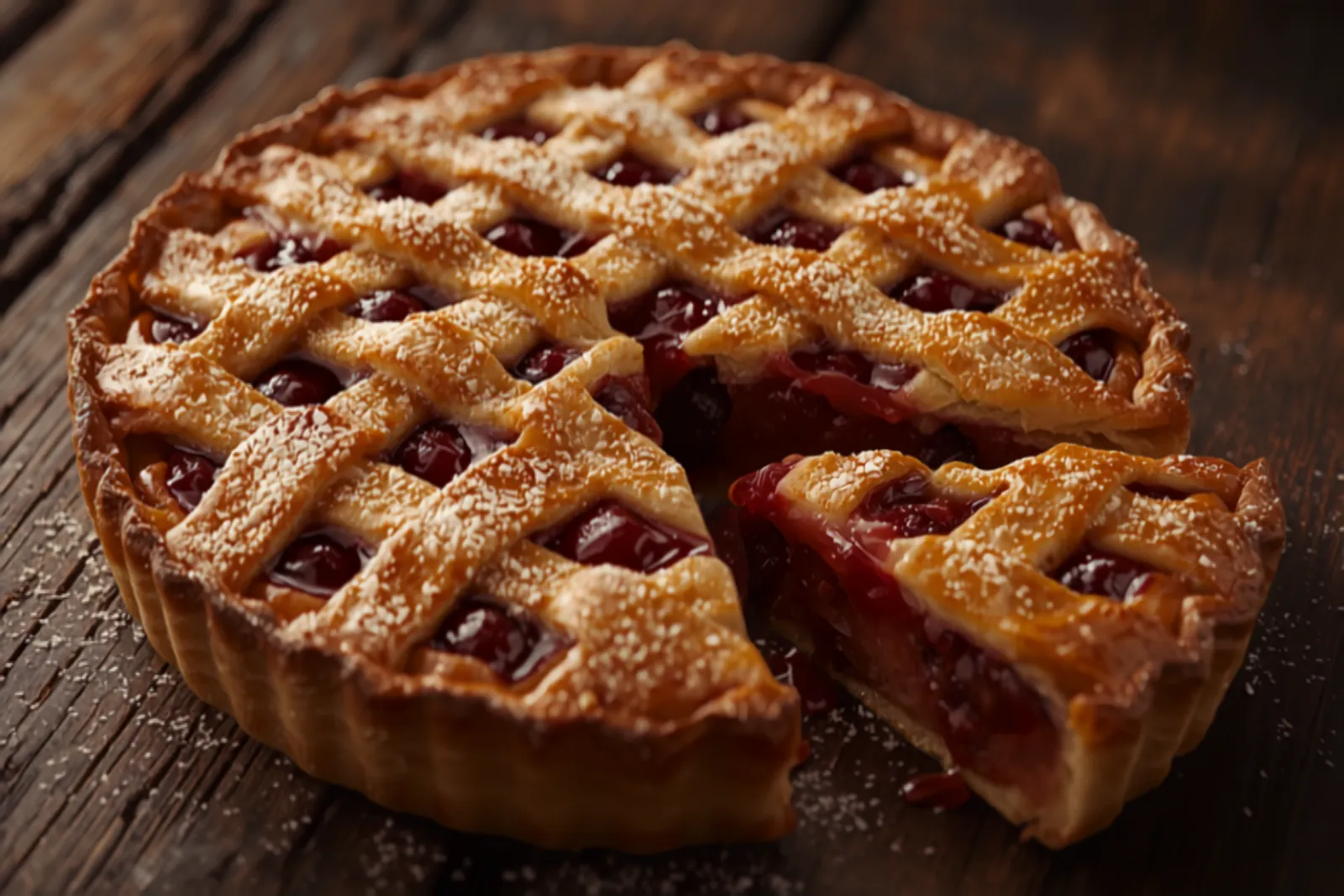
The all-American summer pie: glossy, jammy sour cherries under a flaky, golden double crust. A lattice top shows off the ruby filling, and a little tapioca keeps it sliceable instead of soupy.
Published June 20, 2026
Cultural context
Cherry pie is an icon of American baking, and nowhere is it more celebrated than the National Cherry Festival in Traverse City, Michigan — the self-styled 'Cherry Capital of the World' — held each July at the height of the harvest. Tart Montmorency cherries, not sweet ones, make the classic pie, their sharpness balanced by sugar and a buttery crust.
A cherry pie is one of the most American things you can bake: a flaky double crust over a glossy, jammy filling of tart cherries, the whole thing bubbling ruby-red through a woven lattice. It comes into its own in July, when the sour-cherry harvest peaks and Traverse City, Michigan — the “Cherry Capital of the World” — throws the National Cherry Festival.
Two things make or break it: the crust and the set.
Cold butter, flaky crust
Pie crust isn’t hard, but it is unforgiving about temperature. Keep the butter very cold and leave it in pea-sized flecks rather than rubbing it in completely — those bits of butter steam in the oven and puff the pastry into flaky layers. Add only just enough ice water to bring it together, and chill the dough before rolling and again once the pie is assembled, so the butter stays firm.
Sour cherries, and a little almond
Use sour (tart) cherries — Montmorency are the classic — not sweet ones; their brightness is what gives the pie its character. Fresh in season, frozen the rest of the year. And don’t skip the tiny hit of almond extract: it’s cherry’s secret best friend, deepening the flavour without anyone quite knowing why.
Let it set, and wait
The hardest part of cherry pie is patience. The filling only thickens as it cools, so you must let the pie bubble thickly in the oven (that’s when the tapioca or cornstarch sets) and then cool completely — several hours — before you cut it. Slice it warm and you’ll get delicious cherry soup on the plate. A scoop of vanilla ice cream is the only acceptable accompaniment.
Looking for more festival baking? Browse the World Festive collection or the full recipe collection.
Ingredients
For the crust
- 300 g plain flour
- 1 tbsp sugar
- 1/2 tsp salt
- 225 g cold unsalted butter, cubed Very cold — it's the key to a flaky crust.
- 6–8 tbsp ice water
For the filling
- 900 g sour (tart) cherries, pitted Fresh Montmorency in season, or frozen/jarred. If using sweet cherries, cut the sugar and add extra lemon.
- 150 g sugar Adjust to the tartness of your cherries.
- 3 tbsp instant tapioca or cornstarch The thickener that stops a soupy pie. Tapioca gives the clearest, most reliable set.
- 1 tbsp lemon juice
- 1/4 tsp almond extract The classic, magical partner to cherry. Use a light hand.
To finish
- 1 egg, beaten
- coarse sugar, for sprinkling
Method
Tap a step’s number to check it off as you go.
-
Make the crust: rub or pulse the cold butter into the flour, sugar, and salt until it looks like coarse crumbs with pea-sized bits. Add ice water just until it holds together. Divide in two, flatten into discs, and chill at least 1 hour.
Why: Keeping the butter cold and in flecks is what creates flaky layers — those bits of butter steam in the oven and lift the pastry. Resting relaxes the gluten so it won't shrink.
-
Toss the pitted cherries with sugar, tapioca, lemon juice, and almond extract. Let sit 15 minutes.
Why: Resting lets the tapioca begin absorbing the juices, ensuring a thick, jammy (not watery) filling.
-
Roll out one disc and line a pie dish. Fill with the cherry mixture. Roll the second disc and cut into strips for a lattice (or lay it whole and cut vents).
Why: A lattice or vents let steam escape and the juices bubble and thicken; a sealed top with no vents will turn soggy or split.
-
Weave or lay the top, trim and crimp the edges, then chill the assembled pie 20 minutes. Brush with egg and sprinkle with coarse sugar.
Why: Chilling firms the butter again so the crust holds its shape and stays flaky. The egg wash gives a golden shine; the sugar adds sparkle and crunch.
-
Bake at 220°C/425°F for 20 minutes, then drop to 190°C/375°F for 35–40 minutes more, until the crust is deep golden and the filling bubbles thickly through the lattice.
Why: The initial high heat sets and browns the crust; you must see the filling actively bubbling for the thickener to activate and set.
-
Cool completely — at least 3 hours — before slicing.
Why: This is the hardest and most important step: the filling only sets as it cools. Cut a warm pie and it floods the plate.
A quick, anonymous tap — no review needed.
Variations
- Frozen cherries
Use frozen sour cherries year-round — no need to thaw, but add an extra spoon of tapioca to absorb the extra liquid, and expect a few more minutes in the oven.
- All-butter to part-shortening
Swapping a little of the butter for shortening makes the crust slightly easier to handle and extra tender, at a small cost in flavour.
- Crumble top
Skip the top crust and finish with a brown-sugar oat crumble for a cherry crumble pie.
Serving & Storage
Serve at room temperature or just warm, in wedges, with a scoop of vanilla ice cream or a pour of cold cream. Fully cooled pie slices cleanest.
Pairs with: Vanilla ice cream, Whipped cream, Strong coffee.
Storage: Keeps 3 days at room temperature loosely covered, or up to 5 refrigerated. Freezes well baked (up to 3 months) or unbaked; bake unbaked pies from frozen, adding time.
Nutrition
Per serving (1 slice (1/8 pie))
- Calories
- 430
- Protein
- 5 g
- Carbs
- 58 g
- Fat
- 21 g
- Fiber
- 2 g
- Sugar
- 32 g
- Sodium
- 180 mg
Notable micronutrients: Vitamin C, Potassium
Estimated using standard ingredient data. Values vary with brands and substitutions.
Frequently Asked Questions
Sweet or sour cherries?
Sour (tart) cherries like Montmorency make the classic, bright cherry pie — their acidity is what gives it character. Sweet cherries (like Bing) make a more one-note, jammy pie; if that's all you have, cut the sugar and add extra lemon juice to compensate.
Why is my cherry pie runny?
Two reasons: not enough thickener, or cutting it too soon. Use tapioca or cornstarch, make sure the filling actually bubbles thickly in the oven (that's when the starch sets), and — crucially — let the pie cool completely for several hours before slicing. The filling sets as it cools.
How do I get a flaky crust?
Keep everything cold. Use very cold butter left in pea-sized pieces, add just enough ice water to bring it together, and chill the dough before rolling and again after assembling. Those cold butter flecks create steam and flaky layers in the oven.
Can I use canned cherry pie filling?
You can in a pinch, but it's much sweeter and gloopier than a fresh filling. If using jarred or canned whole sour cherries (in water, not pre-thickened), drain them and make the filling as written for a far better pie.
What to drink with this
All drinks →Hand-picked pours to match this dish. Alcoholic pairings are for adults of legal drinking age (21+ in the US) — please drink responsibly.
 21+
21+ United States (turn of the 20th century) · American
Dry Martini (Gin, Vermouth & a Cold Glass)
The original cocktail of cocktails — good gin, a measure of dry vermouth, stirred long over ice and served brutally cold. The ratios, the stir, and why a Martini is shaken or stirred for a reason.
 21+
21+ Long Island, New York (Prohibition-era claim) / Tennessee (rival origin) · American
Long Island Iced Tea (Five Spirits, No Tea)
The infamous Long Island Iced Tea, built in balance — five clear spirits, orange liqueur, fresh lemon and just enough cola to fake the colour of tea. Strong by design, but measured, not muddled.

Mexico (agua fresca tradition) · Mexican
Agua de Jamaica (Hibiscus Iced Tea)
Mexico's ruby-red hibiscus cooler: dried jamaica flowers steeped, sweetened and chilled into a tart, refreshing agua fresca. The right steep, how to control the tartness, and why it's so good for you.
From our kitchen community
Ratings & Reviews
My Rating
Tap a star to rate — no sign-in, no form needed.
My Review
0 Ratings
🥣 0 home cooks made it!
Be the first to rate Classic Cherry Pie.