Nagaland / Northeast India · Indian
Naga Smoked Pork with Bamboo Shoot
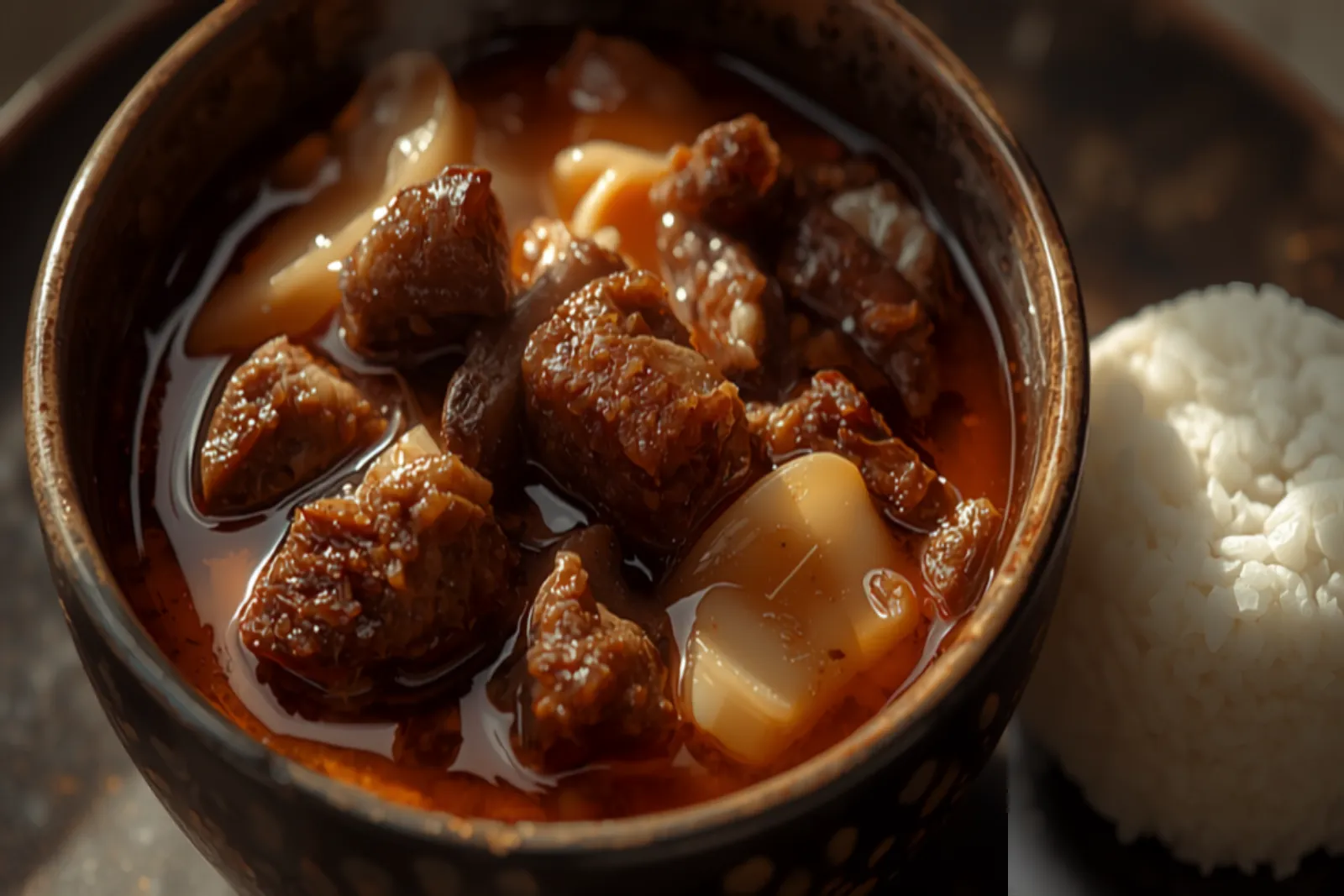
A defining dish of Nagaland: smoky pork belly slow-simmered with fermented bamboo shoot and fiery raja mircha (king chili) into a clean, intensely flavoured stew. Minimal oil, maximum depth — Northeast Indian cooking at its boldest.
Published July 17, 2026
Cultural context
Smoked pork with bamboo shoot is among the most iconic dishes of Nagaland and the wider Northeast. Naga cooking is distinct from mainland India: little oil, few dry spices, and big flavour from smoking, fermentation (bamboo shoot, axone), and the ferociously hot raja mircha (king chili / ghost pepper). It's clean, rustic, and deeply savoury.
Smoked pork with bamboo shoot is one of the defining dishes of Nagaland — and a vivid introduction to how different the cooking of India’s Northeast is from the rest of the country. There’s no masala here, almost no oil, and few dry spices. Instead, the flavour comes from smoke, ferment, and fire: smoky pork belly, tangy bamboo shoot, and the ferocious raja mircha, simmered into a clean, intense stew.
A different culinary logic
Mainland Indian cooking builds flavour with spice blends and fat. Naga cooking — like much of the Northeast — builds it with technique and ingredient: smoking meat, fermenting bamboo shoot and soybean (axone), fresh herbs, and some of the hottest chilies on earth. The result is austere and bold at once, and it deserves to be far better known.
Smoke and ferment, in balance
The two anchors are smoked pork, which carries a deep, woody savour, and bamboo shoot, whose tangy funk cuts the richness. If you can’t find smoked pork, hard-searing or briefly smoking fresh belly (or blending in a little smoked bacon) approximates it. The bamboo shoot — fresh or fermented — is what makes the dish unmistakably Northeastern.
Respect the king chili
Raja mircha (the ghost pepper) is native to the region and astonishingly hot. Add it whole and pull it out once the heat is where you want it, or use a fraction — or substitute a milder chili. The goal is fragrant heat that supports the smoke and ferment, not pain for its own sake.
Serve it simply, with steamed rice. For a gentle Assamese counterpoint, see aloo pitika and the Assamese masor tenga, or browse the full recipe collection.
Ingredients
For the stew
- 600 g smoked pork belly, cut into chunks Smoked pork is the heart of the dish. If unavailable, smoke fresh pork belly briefly or use a little smoked bacon with fresh pork to approximate.
- 1 cup fermented or fresh bamboo shoot, sliced The tangy, funky counterpoint to the smoky pork; available canned at Asian/Northeast grocers.
- 1 onion, sliced
- 1 tbsp ginger-garlic, crushed
- 1 raja mircha (king chili / ghost pepper), whole or to taste Extremely hot — use whole and remove, or a fraction, unless you want serious heat. A milder chili works as a substitute.
- 2 tomatoes, chopped (optional)
- salt; a little oil (optional — the pork renders its own fat)
To finish
- fresh coriander or local herbs
Method
Tap a step’s number to check it off as you go.
-
If your pork isn't pre-smoked, smoke or char it briefly, or sear it hard to build a smoky base. Then simmer the smoked pork in water with onion, ginger-garlic, and salt for about 40 minutes.
Why: Smoke is the defining flavour; pre-smoked pork carries it, but searing or briefly smoking fresh pork approximates it. The initial simmer renders the fat and begins to tenderise the belly.
-
Add the bamboo shoot and the whole raja mircha and continue simmering 15–20 minutes.
Why: The bamboo shoot's tangy funk cuts the rich smoky pork; adding the king chili whole infuses heat and aroma that you can control by how long you leave it in.
-
Add the tomatoes if using and cook until the pork is tender and the liquid reduces to a light, intense stew.
Why: Tomatoes add a little body and acidity; reducing concentrates the smoky-tangy-spicy flavours into a clean stew rather than a heavy gravy.
-
Taste for salt and heat (remove the chili if hot enough), and finish with herbs.
Why: Naga food relies on salt, smoke, ferment, and chili rather than a spice masala — so seasoning at the end is where you balance it.
A quick, anonymous tap — no review needed.
Variations
- With axone (fermented soybean)
Add a little axone (akhuni) for the deeply funky, umami-rich version beloved in parts of Nagaland.
- Pork with anishi or dried greens
Simmer with dried/fermented yam leaves (anishi) for another classic Naga treatment.
- Milder
Use a regular chili instead of raja mircha, or add it whole and remove early, for the smoke-and-bamboo flavour without the ferocious heat.
Serving & Storage
Serve with plain steamed rice — the clean, sticky rice of the Northeast balances the intense, smoky, spicy stew. Keep accompaniments simple; the dish is the centrepiece.
Pairs with: Steamed rice, Boiled local greens, A fresh chili-tomato chutney.
Storage: Keeps 3 days refrigerated and deepens as the smoke and ferment settle. Reheat gently; the flavour intensifies.
Nutrition
Per serving (1 serving)
- Calories
- 430
- Protein
- 26 g
- Carbs
- 6 g
- Fat
- 34 g
- Fiber
- 2 g
- Sugar
- 3 g
- Sodium
- 680 mg
Notable micronutrients: Thiamin, Zinc, Vitamin B6
Estimated using standard ingredient data. Values vary with brands and substitutions.
Frequently Asked Questions
Where do I get smoked pork and bamboo shoot?
Smoked pork is sold at Northeast Indian and some Asian grocers; you can also lightly smoke or hard-sear fresh pork belly, or blend in a little smoked bacon, to approximate it. Bamboo shoot (fresh or fermented) is available canned at Asian and Northeast grocers.
What is raja mircha?
Raja mircha — the king chili or ghost pepper (bhut jolokia) — is one of the world's hottest chilies, native to the Northeast. Use it with great caution: add it whole and remove once the heat is right, or use just a fraction. A milder chili is a sensible substitute.
Why is Northeast Indian food so different from the rest of India?
Northeast cuisines (Naga, Manipuri, Khasi, and others) use little oil and few dry spices, building flavour instead from smoking, fermentation (bamboo shoot, axone, fish), fresh herbs, and fiery local chilies. The result is cleaner and more austere than mainland Indian cooking — and utterly distinctive.
What to drink with this
All drinks →Hand-picked pours to match this dish.

North & West India (peak-summer drink across the subcontinent) · Indian
Aam Panna (Raw Green Mango Summer Cooler)
India's tangy, jade-green raw-mango cooler — roasted or boiled green mangoes blended with cumin, black salt and mint. The traditional heat-stroke remedy that tastes like summer.
Pan-Indian (North & West India) · Indian
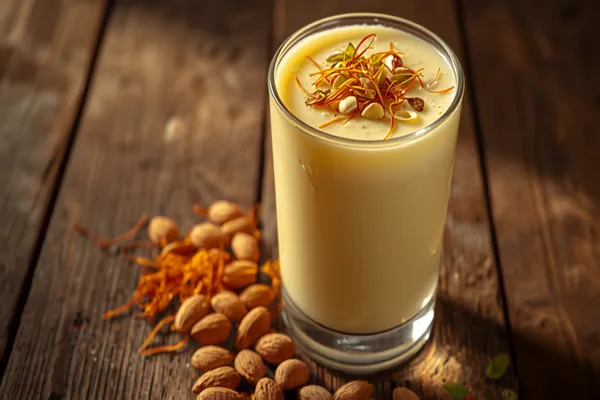
Badam Milk (Saffron Almond Milk)
Milk simmered with a paste of soaked almonds, saffron, cardamom and a whisper of nutmeg — India's rich, fragrant almond drink. Comforting served warm in winter, reviving served chilled in summer, festive any time.

Pan-Indian (Gujarat & West India especially) · Indian
Chaas (Spiced Indian Buttermilk / Masala Chaas)
Whisked yogurt thinned with water and seasoned with cumin, green chilli, ginger and curry leaves — India's cooling, savoury buttermilk. A salty-tangy digestive that beats the heat and settles a heavy meal in two minutes.
From our kitchen community
Ratings & Reviews
My Rating
Tap a star to rate — no sign-in, no form needed.
My Review
0 Ratings
🥣 0 home cooks made it!
Be the first to rate Naga Smoked Pork with Bamboo Shoot.
Related Recipes
Assam / Northeast India · Indian
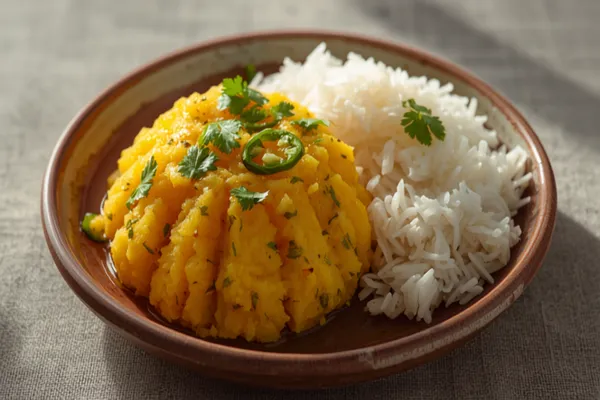
Aloo Pitika (Assamese Mashed Potato with Mustard Oil)
Assam's beloved comfort food: boiled potatoes mashed with raw mustard oil, onion, green chili, and coriander. Three minutes, five ingredients, and one of the purest expressions of the Northeast's light, clean cooking.
Assam / Northeast India · Indian
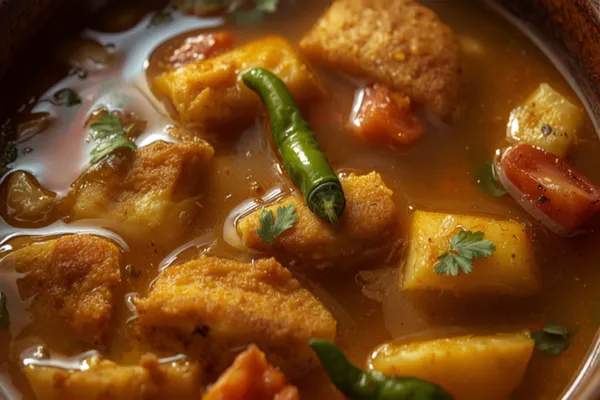
Masor Tenga (Assamese Sour Fish Curry)
Assam's signature light, sour fish curry: fried fish in a clean, tangy broth soured with tomato and lemon (or elephant apple), barely spiced and brightened with coriander. A summer dish built to cool and refresh.