Paris and the boulangeries of France — by way of Vienna's kipferl · French
Croissant (The Real French Butter Croissant)
A true croissant au beurre is laminated dough, not bread dough with butter mixed in — 27 gossamer layers built by folding a slab of butter into yeasted dough three times over a day and a half. Here's the real technique, no shortcuts.
Published September 26, 2026

Cultural context
The croissant's crescent shape descends from the Austrian kipferl, a much older plain yeasted roll; the story that it was invented in 1683 to mock the Ottoman crescent during the Siege of Vienna is popular folklore, not documented history. What is documented: Austrian baker August Zang opened a Boulangerie Viennoise in Paris around 1838–39 and introduced Parisians to Viennese breads, inspiring French imitators. The croissant only became the laminated, all-butter pastry it is today in the early 20th century — the first published French recipe using folded-in butter dates to 1915 — and France formally recognized it as a national product in 1920. So the croissant people eat now is genuinely French even though its name and silhouette are borrowed.
A real croissant — croissant au beurre, to give it its full name — has almost nothing in common with the bready, faintly sweet rolls sold under that name in most supermarkets. It’s laminated dough: yeasted détrempe and a slab of high-fat butter folded together again and again until a single croissant holds roughly 27 wafer-thin layers, each one puffing and separating from its neighbors in the oven’s heat. Get the technique right and you end up with something that shatters at the first bite and pulls apart into a honeycomb of airy, buttery sheets — not something you’ll get from any recipe that skips the fold.
Borrowed name, French technique
The crescent shape is older than the pastry itself. It traces back to the Austrian kipferl, a plain yeasted roll baked in Vienna for centuries before anyone in Paris had heard of it. The popular story — that Viennese bakers invented the shape in 1683 to celebrate victory over the besieging Ottoman army, mocking the crescent on the Ottoman flag — is a charming legend with essentially no documentary evidence behind it. What actually happened is more traceable: around 1838–39, an Austrian named August Zang opened a Boulangerie Viennoise in Paris, and Parisians who tried his Vienna-style breads went on to develop their own versions. The croissant most people know today — laminated with butter into distinct layers, rather than a plain enriched dough — is a French invention of the early 20th century; the first published French recipe using the folded-in-butter technique appeared in 1915, and France officially recognized the croissant as a national product in 1920. So while the crescent shape and the word itself came from Vienna, the pastry as bakers make it now is genuinely, technically French.
The fold is the whole recipe
Everything about a good croissant comes down to keeping the butter and the dough at the same temperature and consistency all the way through lamination. Too warm, and the butter smears into the dough — you lose the distinct layers and end up with something dense and greasy instead of flaky. Too cold, and the butter shatters into shards that tear through the dough as you roll. The three single (letter) folds used here build up roughly 27 alternating layers of dough and butter: enough for real, shattering flake, but not so many that the layers get too fine to read (that finer lamination is what puff pastry is for).
Why the long rest matters
The overnight chill after the final fold isn’t optional downtime — it’s doing two jobs at once. Cold relaxes the gluten fully, so the dough can be rolled out thin the next day without stubbornly springing back. And a slow, cold fermentation overnight builds real depth of flavor in the dough, the kind you don’t get from rushing a warm rise. It’s also why croissants are a genuine weekend project rather than a same-morning bake — though once shaped and frozen, a batch can be portioned out for fresh-baked mornings any day of the week.
Pair a warm croissant with good jam and a bowl-sized café au lait for dunking, or turn day-old ones into almond croissants rather than letting them go stale. For more of the techniques that built the classic European table, see the World Classics guide, and if you want to compare notes with another slow-built, cold-proofed dough, try the pretzel-shop chew of Bavarian pretzels or the overnight ferment behind New York bagels.
Ingredients
For the détrempe (base dough)
- 500 g (4 cups) bread flour or French T55 flour You want a moderate-protein flour — enough structure to hold the layers, not so much that the dough fights back every time you roll it. All-purpose works if that's what you have.
- 10 g (2 tsp) fine sea salt
- 55 g (1/4 cup) granulated sugar
- 11 g (1 tbsp) instant yeast About one standard packet. If using active dry, proof it in the water first.
- 140 g (generous 1/2 cup) cold whole milk
- 140 g (generous 1/2 cup) cold water
- 40 g (3 tbsp) unsalted butter, softened This small amount goes into the dough itself, separate from the lamination block.
For the beurrage (butter block)
- 280 g (2 1/2 sticks) cold unsalted European-style butter, 82%+ butterfat Higher fat, lower water content than standard American butter — it laminates cleanly instead of tearing or weeping. Look for a butter labeled 'European-style' or a cultured butter.
For the egg wash
- 1 large egg
- 1 tbsp milk or water
Method
Tap a step’s number to check it off as you go.
-
Whisk the flour, salt, sugar and yeast together (keep the salt and yeast from touching directly). Add the cold milk, water and softened butter, and mix into a shaggy dough, then knead briefly — just 3–4 minutes by hand or on low speed — until it comes together and looks smooth but still a little rough.
Why: This dough is deliberately under-kneaded compared to a sandwich loaf. Full gluten development would make it elastic and stubborn, snapping back every time you try to roll it thin during lamination. You need just enough structure to trap steam in the oven, not a strong, chewy network.
-
Pat the dough into a rough rectangle, wrap tightly, and refrigerate for at least 1 hour (or overnight).
Why: Cold, relaxed dough is essential for lamination to work. It also needs to match the butter block's firmness — if the dough is warm and soft while the butter is cold and hard, the butter will crack into shards instead of rolling out into one even sheet.
-
Pound and roll the cold lamination butter, still in its wrapper or between two sheets of parchment, into a neat 20 cm (8 in) square. Chill it until firm but still bendable — cold, not rock-hard.
Why: The butter block and the dough need to be the same consistency when you laminate them. Butter that's too soft smears into the dough and you lose distinct layers entirely — the classic cause of a dense, greasy croissant. Butter that's too hard shatters and tears through the dough as you roll.
-
Roll the chilled dough into a rectangle roughly double the width of the butter square. Set the butter on one half at a 45-degree angle so its corners point to the edges, fold the dough over to fully enclose it, and pinch the seams to seal.
Why: A clean seal keeps butter from leaking out or dough from fusing to itself where there should be a distinct fat layer.
-
Roll the enclosed package out to about 20 x 60 cm (8 x 24 in), keeping the edges as square as you can, then fold it like a letter — bottom third up, top third down. Turn the dough 90 degrees, wrap, and chill for 30 minutes. Repeat this single ('letter') fold two more times, for three folds total, always resting and chilling 30 minutes between them and always rotating 90 degrees before rolling again.
Why: Each letter fold triples the number of alternating dough-and-butter layers. Three folds builds roughly 27 layers — thin enough to shatter into flakes, but not so numerous that they merge into a dense laminate. In the oven, the water in the butter and dough flashes to steam and pushes each layer apart from its neighbors; fewer folds and the croissant is heavy, more folds (that's puff pastry territory) and the layers get too fine to read as flaky sheets.
-
After the third fold, chill the dough overnight — at least 8 hours, up to 24.
Why: This long, cold rest relaxes the gluten completely, so the dough can be rolled thin the next day without shrinking back, and it gives the yeast time to ferment slowly at a low temperature. A slow, cold fermentation builds real flavor instead of the flat, yeasty taste you get from rushing a warm rise.
-
Roll the cold dough out into a long rectangle about 25–30 cm wide and 3 mm (1/8 in) thick, trimming the ragged edges. Cut into triangles with a roughly 10 cm (4 in) base and 25 cm (10 in) sides, and snip a small 1 cm notch in the center of each base.
Why: The trimmed outer edges of laminated dough are where the layers got sealed shut by the rolling pin and won't puff properly, so they're cut away rather than baked. The notch lets the two base corners splay outward as you roll, which is what gives a croissant its wide, curved 'horns.'
-
Gently stretch each triangle a little longer, then roll it up from the notched base to the tip, keeping even, not-too-tight tension. Curve the two ends inward toward each other into a crescent (or leave it straight, the classic mark of an all-butter croissant at many French bakeries).
Why: Rolling with light, even tension keeps the spiral of layers intact; rolling too tightly compresses them back together and you lose the flake you spent a day and a half building.
-
Set the croissants tip-down on parchment-lined trays with plenty of space between them, cover loosely, and proof somewhere around 24–26.5°C (75–80°F) for about 2 hours, until they look noticeably puffed and jiggle softly when the tray is shaken.
Why: This is the trickiest temperature window in the whole process: warm enough for the yeast to work at a good pace, but never so warm that the butter inside starts to melt and leak out, which collapses the layers before they ever see the oven.
-
Brush the tops and sides lightly with egg wash (a whole egg beaten with a tablespoon of milk or water), avoiding the cut layer edges.
Why: Egg wash on the exposed layer edges can glue them shut and mute the flaky spiral once baked, so it's brushed only on the smooth outer surface.
-
Bake at 200°C (390°F) with convection (or 220°C/430°F conventional) for about 6 minutes, then lower the oven to 165°C (325°F) and bake another 9–12 minutes, until deeply golden all over.
Why: The hot start creates a burst of oven spring and sets the outer layers before the structure can collapse. Dropping the temperature after that first burst lets the inside finish cooking through without the already-browned crust scorching.
-
Cool on a wire rack for at least 20 minutes before eating.
Why: A croissant is still finishing its internal structure as it cools — the steam trapped between the layers needs a few minutes to escape and set. Cut into one straight from the oven and the warm, still-forming crumb collapses instead of holding its airy layers.
A quick, anonymous tap — no review needed.
Variations
- Pain au chocolat
Use the same laminated dough, cut into rectangles instead of triangles, and roll each around two batons of dark chocolate. Same dough, same technique — just a different fold and filling.
- Almond croissant (day-two croissant)
Split day-old croissants, brush the cut sides with orange-flower or rum syrup, sandwich and top with almond cream, scatter with sliced almonds, and rebake until golden. The classic way French bakeries use up unsold croissants.
- Half whole-wheat
Swap up to half the flour in the détrempe for whole-wheat pastry flour for a nuttier crumb. Keep the lamination butter and technique unchanged — the flavor shift is enough on its own.
Serving & Storage
Warm, on its own or split with good butter and jam, alongside a bowl-sized café au lait — the correct vessel for dunking, French-breakfast style.
Pairs with: Café au lait, Strawberry or apricot jam, Soft scrambled eggs, Fresh orange juice.
Storage: Best eaten the day they're baked, ideally within a couple of hours of coming out of the oven. To keep for later, freeze the shaped, unproofed croissants on a tray, then bag them once solid — proof from frozen (this takes longer, plan on 4–5 hours) and bake as directed. Already-baked croissants can be frozen too; thaw and refresh in a 150°C (300°F) oven for about 8 minutes rather than microwaving, which turns the layers rubbery.
Nutrition
Per serving (1 croissant (about 60 g))
- Calories
- 230
- Protein
- 5 g
- Carbs
- 26 g
- Fat
- 12 g
- Fiber
- 1 g
- Sugar
- 5 g
- Sodium
- 260 mg
Notable micronutrients: Vitamin A, Calcium, Iron
Estimated using standard ingredient data. Values vary with brands and substitutions.
Frequently Asked Questions
My croissants came out flat, greasy, or with no visible layers — what went wrong?
Almost always a temperature problem with the butter. If the butter block was too soft when you laminated it, it smeared into the dough instead of staying as a distinct sheet, so there was nothing left to create layers in the oven. If your kitchen was warm during shaping or proofing, the butter may have started melting out before baking. Keep the dough cold and work quickly; when in doubt, put it back in the fridge for 10–15 minutes rather than pushing through.
Do I really need to wait almost a day to make these?
Yes, though most of that time is hands-off chilling and an overnight rest, not active work — the actual hands-on time is about 90 minutes spread across a day and a half. The long cold rests are what let the dough relax enough to roll thin without shrinking back, and the slow overnight fermentation is what gives a real croissant its flavor rather than a flat, fast-yeast taste.
Can I freeze the dough or the shaped croissants ahead of time?
Yes — freeze the shaped, unproofed croissants on a tray until solid, then transfer to a bag; take them straight from freezer to a parchment-lined tray to proof (allow 4–5 hours, since they're starting cold) and bake as normal. This is the easiest way to have fresh-baked croissants on a weekday without doing any of the folding that morning.
What's the difference between a croissant and a pain au chocolat?
Structurally, nothing — they're made from the exact same laminated dough. Pain au chocolat is cut into rectangles and rolled around chocolate batons instead of being cut into triangles and rolled into a crescent or horn shape.
What to drink with this
All drinks →Hand-picked pours to match this dish. Alcoholic pairings are for adults of legal drinking age (21+ in the US) — please drink responsibly.
 21+
Burgundy, France · French
Kir Royale (Crème de Cassis & Champagne)
The elegant French apéritif: a measure of blackcurrant crème de cassis topped with cold champagne. Deep jewel-pink, lightly sweet and effortlessly chic — two ingredients, one minute, endless occasion.
 21+
Paris (1920s) · French
Mimosa (Champagne & Orange Juice)
The brunch classic done properly — cold sparkling wine and fresh orange juice in equal parts, poured in the right order so it stays bright and bubbly. The ratio, the order, and the wine that matters.

Jamaica & the Caribbean; England · Caribbean / British
Ginger Beer (Homemade, Fiery & Non-Alcoholic)
Fresh ginger, lime and sugar carbonated into a spicy, bracing brew — the real thing, far hotter than anything bottled. A Caribbean and British favourite that's the backbone of the Moscow Mule and Dark 'n' Stormy, and a sensational soda on its own.
From our kitchen community
Ratings & Reviews
My Rating
Tap a star to rate — no sign-in, no form needed.
My Review
0 Ratings
🥣 0 home cooks made it!
Be the first to rate Croissant (The Real French Butter Croissant).
Related Recipes
Burgundy · French
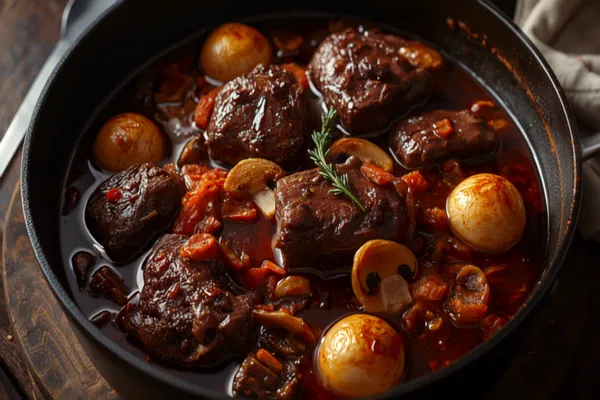
Boeuf Bourguignon (Burgundy Beef Braised in Red Wine)
The great beef stew of Burgundy: chunks of beef braised slowly in red wine with bacon lardons, pearl onions, and mushrooms until the sauce turns deep and glossy. A weekend project that rewards patience with one of France's most satisfying dishes.

France · French
French Chocolate Mousse (Mousse au Chocolat)
The classic French dessert in its purest form: intense dark chocolate lightened with whipped egg whites into an airy, cloud-like mousse. Just a few ingredients, no cream, and no cooking — only good chocolate and a little technique.
Bavaria · German
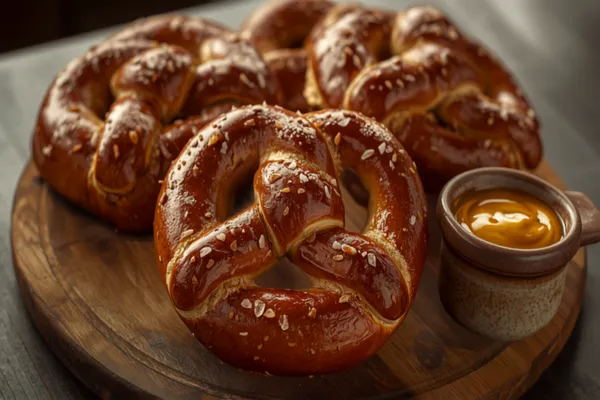
Bavarian Soft Pretzels (Brezn)
The mahogany-brown, lye-dipped soft pretzel of the Munich beer garden: a chewy, glossy crust giving way to a soft crumb, scattered with coarse salt. The Oktoberfest classic, made at home with a safe baking-soda bath.
New York City — the Lower East Side bakeries, by way of Ashkenazi Poland · Jewish American
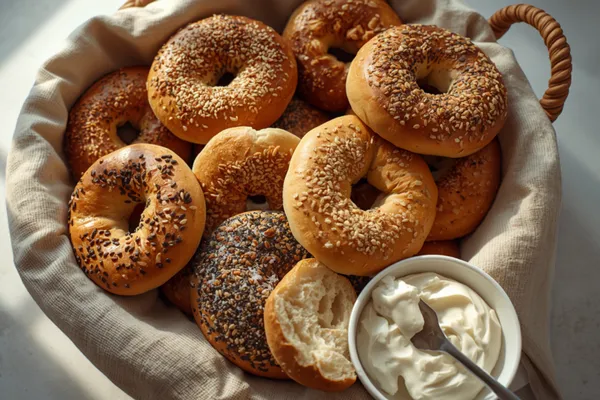
New York Bagels (Boiled, Blistered, Properly Chewy)
Real New York bagels: a stiff, low-hydration dough, an overnight cold rise, a barley-malt boil and a blazing oven. Glossy, blistered crust, dense chew, and a crumb that pulls rather than tears.