Hyderabad, Telangana / Deccan · Indian
Hyderabadi Haleem (Slow-Cooked Wheat and Meat Stew)
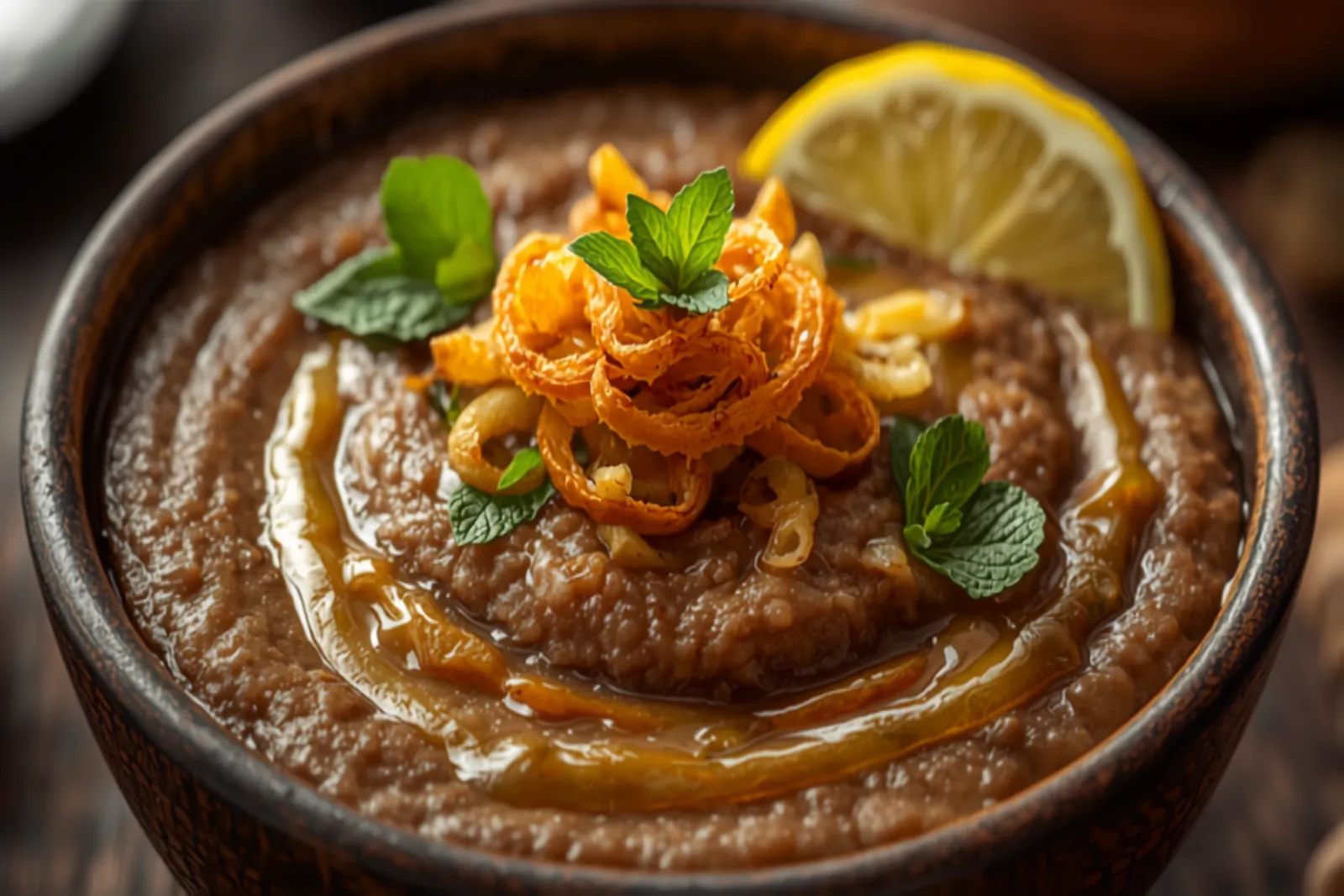
The legendary Ramadan and Eid dish of Hyderabad: wheat, lentils, and meat pounded together over hours of slow cooking into a rich, smooth, deeply spiced stew. A labour of patience that breaks the fast like nothing else.
Published July 7, 2026
Cultural context
Haleem — with roots in Arab harees, brought to Hyderabad via the Nizams and Arab settlers — is the defining dish of Ramadan in the city, sold from every corner during the holy month and central to Eid feasting. Hyderabadi haleem even holds a GI tag. The hallmark is hours of slow cooking and pounding until the meat and wheat become one smooth mass.
Hyderabadi haleem is one of Indian cooking’s great labours of patience — wheat, lentils, and meat slow-cooked and pounded over hours until they become a single smooth, rich, deeply spiced mass. It’s the defining dish of Ramadan in Hyderabad, sold from every corner through the holy month and central to Eid feasting, and it even carries a Geographical Indication tag. To eat it is one thing; to make it is a commitment.
A dish that crossed the sea
Haleem descends from the Arab harees, carried to Hyderabad through the Nizams’ court and Arab settlers and remade with the Deccan’s spices and ghee. That lineage shows in its richness and in its role at the breaking of the fast — restorative, dense with protein, and warming.
The texture is the whole point
What makes haleem haleem is not its ingredients but its texture — utterly smooth, the meat and wheat indistinguishable. That comes only from hours of cooking the soft grains and fall-apart meat together while continuously mashing and pounding. Traditionally it’s stirred in huge cauldrons for half a day; at home, a masher or hand blender helps, but there’s no skipping the slow pounding.
Ghee within, garnish on top
Haleem is generous with ghee, added in stages as it cooks and drizzled over at the end. And the garnishes aren’t optional: fried onions for sweetness and crunch, mint and coriander for freshness, sliced ginger, garam masala, and a hard squeeze of lemon to cut the richness. That contrast — smooth, rich stew against sharp, bright toppings — is the experience.
For the sweet side of Eid, see sheer khurma; for more Hyderabadi cooking, Hyderabadi biryani. Or browse the full recipe collection.
Ingredients
For the base
- 1 cup broken/cracked wheat (dalia) Soaked; the backbone of haleem. Barley and a little rice are sometimes added.
- 1/2 cup mixed lentils (chana, masoor, moong, urad) Soaked, for body and protein.
For the meat
- 750 g bone-in mutton/goat (or lamb) Bone-in for flavour; it must cook until falling apart.
- 1 cup thick yogurt
- 1 cup fried onions (birista)
- 2 tbsp ginger-garlic paste
- whole and ground spices: garam masala, turmeric, red chili, cardamom, cinnamon, cloves, bay
For cooking & finishing
- 1 cup ghee Haleem is generous with ghee; it's drizzled on at the end too.
- fried onions, mint, coriander, lemon wedges, sliced ginger, garam masala (to garnish)
Method
Tap a step’s number to check it off as you go.
-
Soak the wheat and lentils for a few hours. Separately, cook the mutton with yogurt, ginger-garlic, fried onions, and spices until very tender and falling off the bone.
Why: Cooking the meat separately until it collapses ensures it will shred smoothly into the wheat; tough meat ruins the texture.
-
Cook the soaked wheat and lentils in plenty of water until completely soft and broken down.
Why: The grains must be fully soft to be mashed into the signature smooth, gluey consistency.
-
Combine the meat and grains and cook together on low heat, mashing and pounding continuously (a wooden masher or hand blender helps) for 1–2 hours.
Why: The long pounding-while-cooking is the soul of haleem — it breaks down the meat fibres and grains into one smooth, homogeneous mass. There is no shortcut to this texture.
-
Add ghee in stages as you mash, and adjust salt and consistency with hot water.
Why: Ghee added during the cook enriches the haleem and helps it come together silky; staged additions stop it pooling.
-
Serve hot, drizzled with ghee and topped with fried onions, mint, coriander, sliced ginger, garam masala, and a big squeeze of lemon.
Why: The garnishes are essential — the lemon and ginger cut the richness, and fried onions add sweetness and crunch to the smooth stew.
A quick, anonymous tap — no review needed.
Variations
- Chicken haleem
Use chicken for a quicker, lighter haleem; it shreds faster, so the total cook time drops considerably.
- Vegetarian haleem
Replace meat with extra lentils, wheat, and vegetables; season generously and finish the same way with ghee and garnishes.
- Khichda
A closely related Hyderabadi dish keeps the texture slightly coarser, with the grains less fully mashed.
Serving & Storage
Serve hot in bowls with all the garnishes and lemon, often with naan or on its own. Traditionally eaten to break the Ramadan fast and at Eid gatherings.
Pairs with: Naan, Lemon and ginger, Fried onions, Mint.
Storage: Keeps 3 days refrigerated and thickens considerably (it sets almost solid); reheat with hot water or milk, stirring to loosen. Freezes well.
Nutrition
Per serving (1 bowl)
- Calories
- 520
- Protein
- 28 g
- Carbs
- 38 g
- Fat
- 30 g
- Fiber
- 6 g
- Sugar
- 3 g
- Sodium
- 720 mg
Notable micronutrients: Iron, Zinc, B vitamins
Estimated using standard ingredient data. Values vary with brands and substitutions.
Frequently Asked Questions
Why does haleem take so long?
The defining texture — a smooth, homogeneous blend of meat and wheat — only comes from hours of slow cooking while continuously mashing and pounding. Traditionally it's stirred for many hours in huge cauldrons. At home, plan most of a day; a hand blender or masher speeds the pounding but you can't skip it.
What's the difference between haleem and khichda?
They're close cousins. Haleem is pounded to a smoother, more uniform paste; khichda keeps the grains and meat a little more distinct and coarse. Both are Hyderabadi Ramadan staples.
Can I make haleem with chicken to save time?
Yes — chicken haleem is popular and much faster, since chicken shreds quickly. It's lighter than the mutton version but still rich and satisfying.
What to drink with this
All drinks →Hand-picked pours to match this dish.

North India · Indian
Jaljeera (Indian Cumin & Mint Cooler)
Roasted cumin, mint, tamarind and black salt blitzed into a tangy, spiced water — North India's punchy summer cooler and appetite-sharpener. Sweet, sour, salty and savoury all at once, served ice-cold with a fizz of soda.

Cuba (mojito tradition), worldwide · Cuban
Virgin Mojito (Non-Alcoholic Mint & Lime Cooler)
A proper mojito mocktail — fresh mint, lime and a little sugar, lengthened with soda over crushed ice. All the bright, herbal lift of the original, none of the rum.

North & West India (peak-summer drink across the subcontinent) · Indian
Aam Panna (Raw Green Mango Summer Cooler)
India's tangy, jade-green raw-mango cooler — roasted or boiled green mangoes blended with cumin, black salt and mint. The traditional heat-stroke remedy that tastes like summer.
From our kitchen community
Ratings & Reviews
My Rating
Tap a star to rate — no sign-in, no form needed.
My Review
0 Ratings
🥣 0 home cooks made it!
Be the first to rate Hyderabadi Haleem (Slow-Cooked Wheat and Meat Stew).
Related Recipes
Hyderabad / North India (pan-Muslim South Asia) · Indian
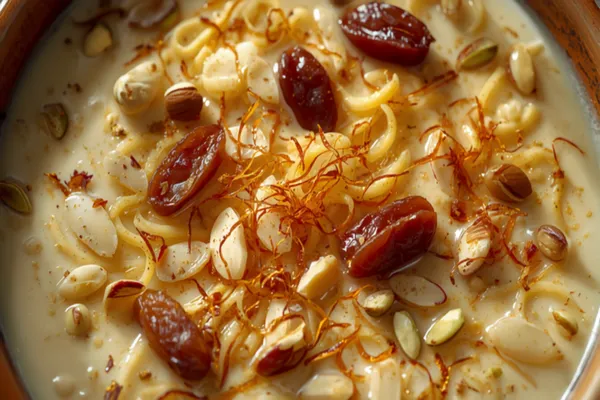
Sheer Khurma (Eid Vermicelli and Date Pudding)
The dessert that defines Eid morning: fine vermicelli toasted in ghee and simmered in milk with dates, nuts, and cardamom into a fragrant, festive pudding. Rich, celebratory, and shared with every visitor.
Hyderabad, Telangana / Deccan · Indian
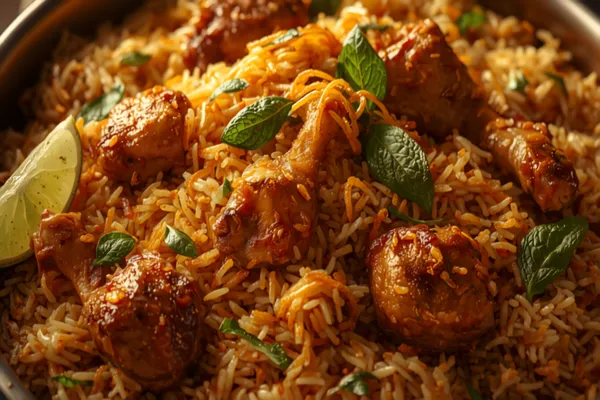
Hyderabadi Chicken Biryani (Dum Biryani)
The jewel of Hyderabad's Deccan kitchens: chicken marinated in yogurt and spice, layered raw with par-cooked basmati, and sealed to cook on slow dum. The kachay gosht method that makes it legendary — and how to get it right at home.
Hyderabad, Telangana / Deccan · Indian
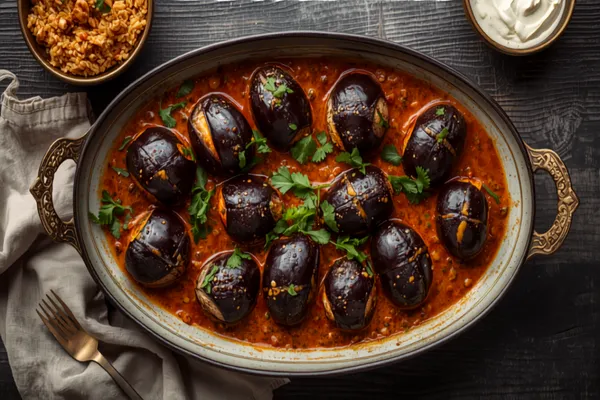
Bagara Baingan (Hyderabadi Baby Eggplants in Peanut-Sesame Gravy)
Hyderabad's great banquet curry — small brinjals slit and fried whole, then simmered in a dark, tangy gravy of roasted peanuts, sesame, dry coconut and tamarind. The dish that sits beside the biryani and quietly outshines it.