Cultural Story · South India
A Complete Guide to South Indian Cooking
South India isn't one cuisine but many — Tamil, Kerala, Karnataka, Andhra and Telangana, each with its own grains, spices, and rituals. A guide to the building blocks, the regional differences, and where to start cooking.
Published July 18, 2026
“South Indian food” is a phrase that flattens an enormous, varied culinary world. The four southern states — Tamil Nadu, Kerala, Karnataka, and the Telugu twins of Andhra Pradesh and Telangana — share some grammar (rice, lentils, coconut, curry leaves, the tempering) but diverge sharply in spice, souring, and ritual. This guide maps that world and points you to where to begin.
The shared foundation
Across the south, a few elements recur. Rice and lentils are the staple, most famously fermented into the batter for idli and masala dosa. The tempering — mustard seeds, curry leaves, and dried chili bloomed in hot oil — finishes countless dishes; learn it once in our spice pantry guide. Souring agents (tamarind, kokum, raw mango) give the characteristic tang of dishes like sambar. And coconut, in every form, runs through the cooking, especially near the coast.
Tamil Nadu
Tamil cooking gave the world the idli-dosa breakfast and the daily anchor of sambar and rasam over rice, eaten with medu vada and chutney. Inland, the Chettiar community’s Chettinad chicken shows the region’s bolder, peppery, freshly-ground-masala side.
Kerala
Kerala cooks with coconut and curry leaves in nearly everything, and its long coast means fish — like the kudampuli-soured Kerala fish curry. Its vegetarian tradition peaks at the Onam sadya, the banana-leaf feast built around dishes like avial and thoran and closed with ada pradhaman.
Karnataka and the coast
Karnataka spans the dry, sorghum-eating north (home of badanekayi ennegayi and jolada rotti) and the lush Mangalore coast, whose Tuluva cooking gives us fiery chicken ghee roast and the lacy neer dosa.
Andhra Pradesh and Telangana
The Telugu states cook the spiciest food in India, built on fierce chilies and the sour green gongura — as in gongura pachadi — and the protein-rich pesarattu breakfast. Telangana’s capital, Hyderabad, contributes the Deccan’s great rice dish, Hyderabadi biryani.
Where to start
Begin with sambar and coconut chutney — the backbone of a South Indian plate — then idli before the trickier masala dosa. From there the whole south opens up: a Kerala fish curry, the bold Chettinad chicken, or a coastal ghee roast. Browse the full recipe collection for more.
Frequently Asked Questions
What are the main South Indian cuisines?
South India spans four states with distinct cuisines: Tamil Nadu (sambar, rasam, Chettinad, idli-dosa), Kerala (coconut, fish, the Onam sadya), Karnataka (including coastal Mangalorean and North Karnataka), and Andhra Pradesh & Telangana (the spiciest, plus Hyderabadi biryani). Each has its own grains, souring agents, and signature dishes.
What ingredients define South Indian food?
Rice and lentils (idli, dosa, sambar), coconut (especially in Kerala and the coast), curry leaves, mustard seeds, tamarind and other souring agents, dried red chilies, and the tempering technique. Fermentation (dosa, idli batter) and freshly ground spice blends are central.
Where should a beginner start with South Indian cooking?
Start with sambar and coconut chutney, then idli (steamed, forgiving) before tackling the crisp masala dosa. From there, branch into a Kerala fish curry, an avial, or the bolder Chettinad and Andhra dishes.
Related Recipes
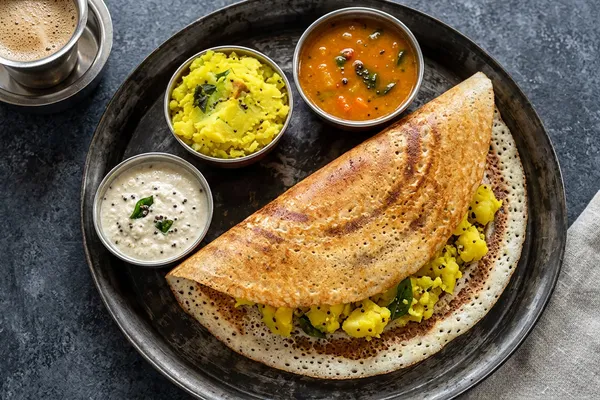
Tamil Nadu / Karnataka / South India · Indian
Masala Dosa (Crispy South Indian Crepe with Spiced Potato)
The South Indian icon: a fermented rice-and-lentil crepe griddled until lacy and golden, wrapped around a turmeric-yellow potato masala, and served with coconut chutney and sambar. A weekend project worth every minute.
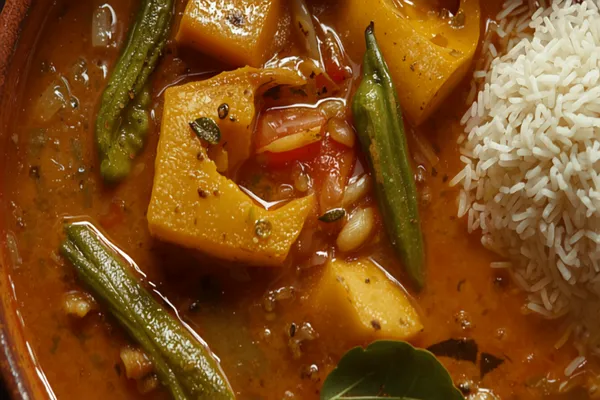
Tamil Nadu / South India · Indian
Sambar (South Indian Lentil and Vegetable Stew)
The everyday backbone of a South Indian meal: toor dal simmered with vegetables and tamarind, seasoned with a freshly ground sambar powder and a sizzling tempering. Tangy, savory, and endlessly comforting.
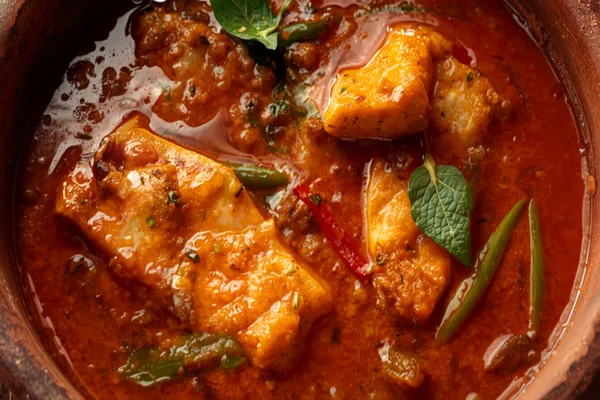
Kerala / South India (Malabar coast) · Indian
Kerala Fish Curry (Meen Curry with Coconut)
A coastal Kerala classic: fish simmered in a tangy, coconut-rich gravy sharpened with kokum-like kudampuli (Malabar tamarind) and a fragrant curry-leaf tempering. Sour, spicy, and built for rice.
Related stories & guides
- Festival & Seasonal · KeralaThe Onam Sadya: Kerala's Feast on a Banana LeafOnce a year, Kerala lays out one of the world's great vegetarian feasts — two dozen-plus dishes served on a banana leaf in a precise order, eaten with the hands. A guide to the Onam sadya: what's on the leaf, where it goes, and why it matters.
- Ingredient Deep DiveThe Indian Spice Pantry: A Beginner's MapYou don't need a hundred spices to cook Indian food — you need a dozen, and the know-how to use them. A practical guide to the essential Indian spices, what each does, and the techniques (tadka, bhuna, dry-roasting) that unlock them.
- Cultural Story · Eastern IndiaA Complete Guide to Bengali and Eastern Indian CookingFrom the fish-and-rice heart of Bengal to Odisha's temple food, Assam's sour-clean dishes, and the smoke-and-ferment cooking of the Northeast — a guide to eastern India's distinct, often gentle, sometimes fiery table.
- Cultural Story · North IndiaA Complete Guide to North Indian CookingThe cuisine the world knows best — and understands least. From Punjab's tandoor and dairy to Kashmir's aromatic Wazwan and Awadh's courtly kebabs, a guide to North India's regions, techniques, and where to begin.
- Cultural Story · West IndiaA Complete Guide to West Indian CookingFour very different states, one coast: Maharashtra's street food and fiery Kolhapuri curries, Gujarat's sweet-savoury vegetarian thali, Goa's twin Hindu and Catholic kitchens, and Rajasthan's desert cooking. A guide to western India's table.