Kerala / South India · Indian
Thoran (Kerala Stir-Fried Vegetables with Coconut)
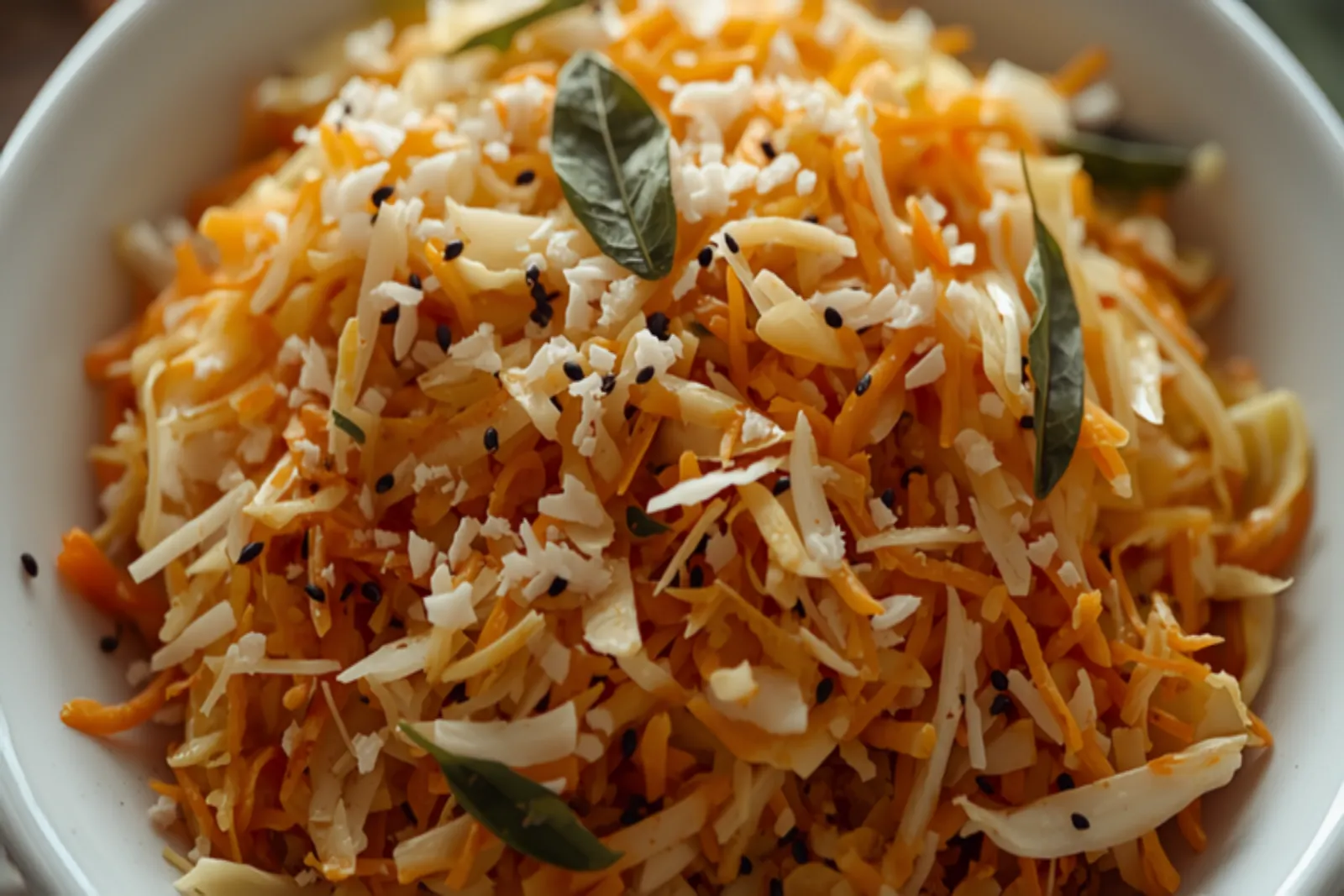
The everyday Kerala side that's essential to the sadya: finely chopped vegetables tossed with fresh grated coconut, green chili, and a curry-leaf-and-mustard tempering. Dry, fresh, and quick — the green note on the banana leaf.
Published July 8, 2026
Cultural context
Thoran is the quintessential Kerala vegetable side — a dry stir-fry of finely chopped vegetables bound with fresh grated coconut. A daily dish and a fixed item on the Onam sadya, it's made with whatever is in season: cabbage, beans, carrot, raw banana, or even foraged greens, each becoming its own thoran.
Thoran is the everyday green of Kerala cooking — finely chopped vegetables stir-fried dry and bound with fresh grated coconut, green chili, and a coconut-oil tempering of mustard seeds and curry leaves. It’s made daily with whatever’s in season, and it’s a fixed item on the Onam sadya, the fresh, light note among the richer dishes on the banana leaf.
Coarse coconut, dry dish
Two things define a thoran. First, the coconut is coarsely crushed with chili and cumin — never ground to a paste — so it coats the vegetable in fresh, distinct flecks. Second, the dish stays dry: the vegetable is stir-fried, not stewed, so it keeps its texture and brightness.
Cook the vegetable first
Stir-fry the finely chopped vegetable with turmeric until nearly tender before the coconut goes in, then add the coconut mix and finish with a brief covered cook. That order keeps it from going soggy and stops the coconut from drying out or browning.
Endlessly adaptable
Cabbage is the everyday favourite, but beans, carrot, beetroot, raw banana, and leafy greens all become thoran with the same method — which is exactly why it appears at nearly every Kerala meal.
Pair it with avial and learn the full feast in our guide to the Onam sadya. Or browse the full recipe collection.
Ingredients
For the vegetable
- 4 cups finely chopped vegetable Cabbage, green beans, carrot, or raw banana — finely chopped so it cooks quickly and binds with the coconut.
- 1/4 tsp turmeric
For the coconut mix
- 3/4 cup fresh grated coconut Fresh is essential to a good thoran; frozen grated coconut works.
- 2 green chilies
- 1/2 tsp cumin seeds
- 2 cloves garlic or 2 shallots (optional) Lightly crushed with the coconut; common but optional.
For the tempering
- 2 tbsp coconut oil
- 1 tsp mustard seeds
- 1 dried red chili
- 1 sprig curry leaves
Method
Tap a step’s number to check it off as you go.
-
Coarsely crush the grated coconut with the green chilies, cumin, and shallots/garlic (a few pulses or by hand). Don't make a paste.
Why: A coarse coconut mix coats the vegetable in fresh, distinct flecks; grinding it smooth would make a wet masala instead of a dry thoran.
-
Heat coconut oil and temper the mustard seeds, dried chili, and curry leaves until they splutter.
Why: The coconut-oil tempering is the aromatic Kerala base; mustard and curry leaves are non-negotiable.
-
Add the chopped vegetable and turmeric with a little salt, and stir-fry on medium until nearly tender.
Why: Cooking the vegetable first, mostly dry, keeps the dish from going soggy — thoran is meant to be dry, not stewed.
-
Add the coconut mix, toss to combine, cover, and cook on low 3–4 minutes until the vegetable is tender and the coconut is warmed through.
Why: A short covered cook lets the coconut's flavour meld with the vegetable without browning it; longer and the coconut dries out.
-
Toss once more and serve.
Why: A final toss distributes the coconut evenly; thoran is best fresh and just-cooked.
A quick, anonymous tap — no review needed.
Variations
- Cabbage thoran
The most common everyday version — finely shredded cabbage with carrot. Quick and reliably good.
- Beans thoran
Finely chopped green beans make a classic, slightly sweeter thoran.
- Cheera (greens) thoran
Use amaranth or spinach greens for a soft, iron-rich thoran.
Serving & Storage
Serve as a side with rice and sambar or rasam, or as one of the many small dishes on an Onam sadya banana leaf. It's a daily side, not a centrepiece.
Pairs with: Steamed rice, Sambar, Rasam, Onam sadya.
Storage: Best fresh and bright; keeps 1–2 days refrigerated, though the coconut loses its freshness. Reheat gently.
Nutrition
Per serving (about 3/4 cup)
- Calories
- 150
- Protein
- 3 g
- Carbs
- 12 g
- Fat
- 11 g
- Fiber
- 5 g
- Sugar
- 4 g
- Sodium
- 230 mg
Notable micronutrients: Vitamin C, Vitamin A, Fiber
Estimated using standard ingredient data. Values vary with brands and substitutions.
Frequently Asked Questions
What vegetables can I make thoran with?
Almost any finely chopped vegetable: cabbage, green beans, carrot, raw banana, beetroot, or leafy greens (cheera). Cabbage is the everyday favourite. The technique stays the same — the vegetable changes with the season.
Why must the coconut be coarse, not ground?
Thoran is a dry dish where the vegetable is coated in fresh coconut flecks. Grinding the coconut smooth turns it into a wet masala (a different dish). Just crush it coarsely with the chili and cumin.
Is coconut oil necessary?
It's strongly recommended — coconut oil is fundamental to Kerala cooking and gives thoran its authentic aroma. Another oil works mechanically but won't taste like Kerala.
What to drink with this
All drinks →Hand-picked pours to match this dish.
North & West India (peak-summer drink across the subcontinent) · Indian
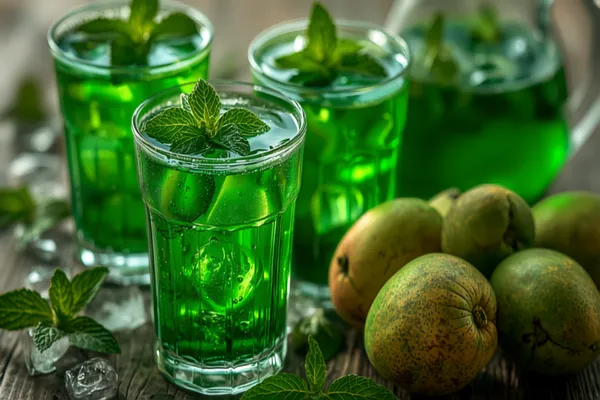
Aam Panna (Raw Green Mango Summer Cooler)
India's tangy, jade-green raw-mango cooler — roasted or boiled green mangoes blended with cumin, black salt and mint. The traditional heat-stroke remedy that tastes like summer.
Pan-Indian (North & West India) · Indian
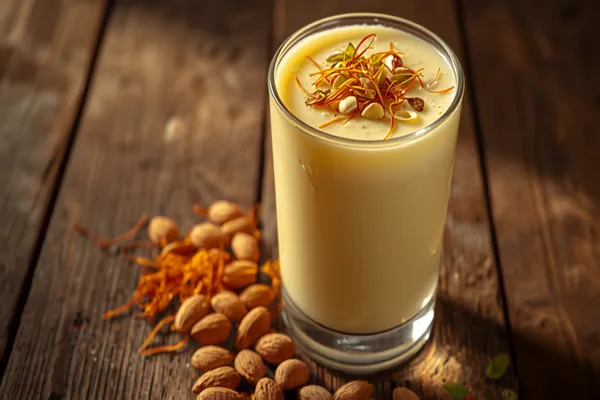
Badam Milk (Saffron Almond Milk)
Milk simmered with a paste of soaked almonds, saffron, cardamom and a whisper of nutmeg — India's rich, fragrant almond drink. Comforting served warm in winter, reviving served chilled in summer, festive any time.
Pan-Indian (Gujarat & West India especially) · Indian
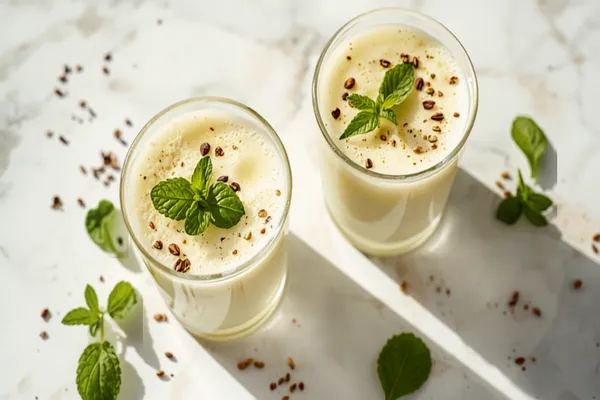
Chaas (Spiced Indian Buttermilk / Masala Chaas)
Whisked yogurt thinned with water and seasoned with cumin, green chilli, ginger and curry leaves — India's cooling, savoury buttermilk. A salty-tangy digestive that beats the heat and settles a heavy meal in two minutes.
From our kitchen community
Ratings & Reviews
My Rating
Tap a star to rate — no sign-in, no form needed.
My Review
0 Ratings
🥣 0 home cooks made it!
Be the first to rate Thoran (Kerala Stir-Fried Vegetables with Coconut).
Related Recipes
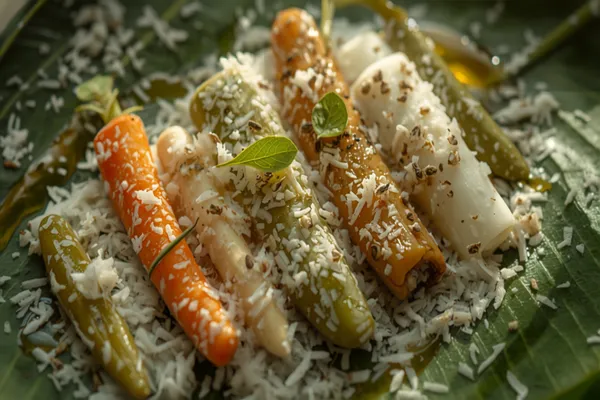
Kerala / South India · Indian
Avial (Kerala Mixed Vegetables in Coconut and Yogurt)
A cornerstone of the Kerala sadya: a medley of vegetables simmered until tender and bound in a coconut-cumin paste with tangy yogurt, finished with raw coconut oil and curry leaves. Wholesome, gentle, and quietly addictive.
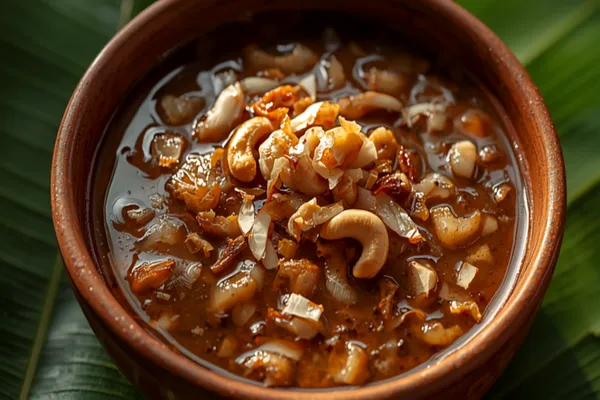
Kerala / South India · Indian
Ada Pradhaman (Kerala Onam Payasam)
The grand finale of the Onam sadya: rice ada simmered in jaggery and three extractions of coconut milk until thick, glossy, and caramel-deep, scented with cardamom and dry ginger and studded with ghee-fried coconut. Kerala's most beloved payasam.
Further reading
- Festival & Seasonal · KeralaThe Onam Sadya: Kerala's Feast on a Banana LeafOnce a year, Kerala lays out one of the world's great vegetarian feasts — two dozen-plus dishes served on a banana leaf in a precise order, eaten with the hands. A guide to the Onam sadya: what's on the leaf, where it goes, and why it matters.
- Cultural Story · South IndiaA Complete Guide to South Indian CookingSouth India isn't one cuisine but many — Tamil, Kerala, Karnataka, Andhra and Telangana, each with its own grains, spices, and rituals. A guide to the building blocks, the regional differences, and where to start cooking.