Festival & Seasonal · Kerala
The Onam Sadya: Kerala's Feast on a Banana Leaf
Once a year, Kerala lays out one of the world's great vegetarian feasts — two dozen-plus dishes served on a banana leaf in a precise order, eaten with the hands. A guide to the Onam sadya: what's on the leaf, where it goes, and why it matters.
Published July 12, 2026
Once a year, for the harvest festival of Onam, Kerala sits down to one of the world’s great vegetarian feasts. The sadya — the word simply means “banquet” — is two dozen or more dishes laid out on a banana leaf, eaten with the hands, in a sequence refined over generations. It is abundance with structure: a meal that is also a ritual, and a vivid expression of what Malayali cooking does best.
The leaf is a map
A sadya isn’t served on a plate but on a fresh banana leaf, placed with its tapering end to the diner’s left. Where each item goes is convention, not chaos: rice in the lower centre, and along the top edge a precise row of accompaniments — pickles and the salty-sour stuff at the far left, then the vegetable dishes, then the crisp pappadam and banana chips. You eat with your right hand, mixing rice with one dish at a time.
What’s on it
The sadya is built in courses, all vegetarian. There are the vegetable dishes: avial, the medley in coconut and yogurt; thoran, the dry coconut stir-fry; olan, kaalan, and erissery, each a different treatment of gourd, yam, or bean. There are the saucy dishes ladled over rice: sambar, the tangier rasam, and the soupy pulissery. There are pickles (achar), the sharp-sweet inji puli (ginger-tamarind), and the cooling pachadi. There are crisp things — pappadam, banana chips, sharkara varatti. And it all builds toward the finale.
Payasam closes the leaf
No sadya ends without payasam — the sweet pudding that signals the feast is complete. The grandest is ada pradhaman, rice ada in jaggery and coconut milk; others use moong dal (parippu payasam) or vermicelli. Often there are two, eaten by pouring them over a little rice or sipping from the leaf. A small banana on the side is traditional.
Why it matters
The sadya is more than a big meal. It’s communal — historically served to whole villages, rich and poor at the same leaf — and seasonal, built on the harvest. It encodes Kerala’s culinary identity: rice and coconut, jaggery and curry leaf, balance and restraint even amid abundance. To eat a sadya is to understand Kerala’s table in a single sitting.
Begin building your own with avial, thoran, and ada pradhaman — or browse the full recipe collection and more cultural stories.
Frequently Asked Questions
What is the Onam sadya?
The sadya is the grand vegetarian feast served during Onam, Kerala's harvest festival. Traditionally it features 20–30 dishes served on a banana leaf and eaten with the hands, in a set arrangement and order, ending with sweet payasam. It's entirely vegetarian and a centrepiece of Malayali culture.
How are dishes arranged on the banana leaf?
There's a convention: the leaf is placed with the tapering end to the left, rice goes in the centre-lower half, and the side dishes, pickles, and chips are arranged along the top edge in a customary order. Diners are served the dishes in sequence, with payasam toward the end.
Is the Onam sadya vegetarian?
Yes — the traditional sadya is entirely vegetarian (and largely built on rice, vegetables, lentils, coconut, and jaggery), reflecting the feast's cultural and seasonal roots. Even committed meat-eaters in Kerala keep the sadya vegetarian.
Related Recipes
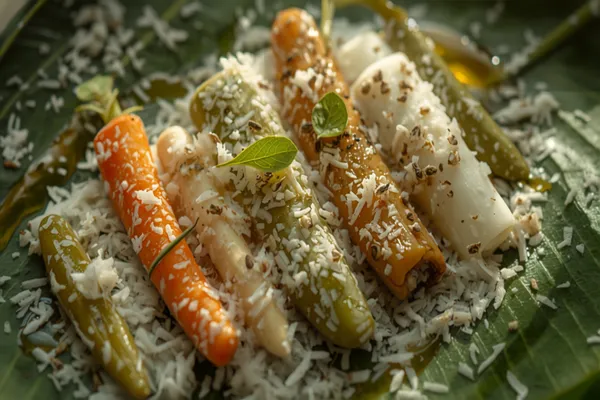
Kerala / South India · Indian
Avial (Kerala Mixed Vegetables in Coconut and Yogurt)
A cornerstone of the Kerala sadya: a medley of vegetables simmered until tender and bound in a coconut-cumin paste with tangy yogurt, finished with raw coconut oil and curry leaves. Wholesome, gentle, and quietly addictive.
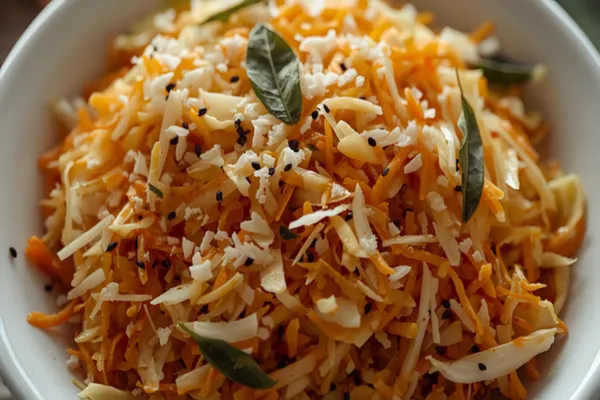
Kerala / South India · Indian
Thoran (Kerala Stir-Fried Vegetables with Coconut)
The everyday Kerala side that's essential to the sadya: finely chopped vegetables tossed with fresh grated coconut, green chili, and a curry-leaf-and-mustard tempering. Dry, fresh, and quick — the green note on the banana leaf.
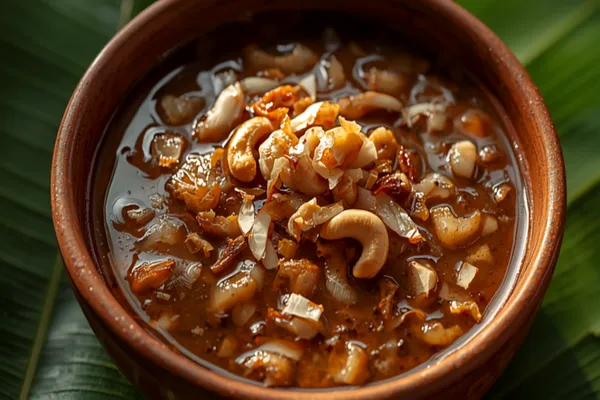
Kerala / South India · Indian
Ada Pradhaman (Kerala Onam Payasam)
The grand finale of the Onam sadya: rice ada simmered in jaggery and three extractions of coconut milk until thick, glossy, and caramel-deep, scented with cardamom and dry ginger and studded with ghee-fried coconut. Kerala's most beloved payasam.
Related stories & guides
- Ingredient Deep DiveThe Indian Spice Pantry: A Beginner's MapYou don't need a hundred spices to cook Indian food — you need a dozen, and the know-how to use them. A practical guide to the essential Indian spices, what each does, and the techniques (tadka, bhuna, dry-roasting) that unlock them.
- Cultural Story · South IndiaA Complete Guide to South Indian CookingSouth India isn't one cuisine but many — Tamil, Kerala, Karnataka, Andhra and Telangana, each with its own grains, spices, and rituals. A guide to the building blocks, the regional differences, and where to start cooking.