Tamil Nadu / South India · Indian
Sambar (South Indian Lentil and Vegetable Stew)
The everyday backbone of a South Indian meal: toor dal simmered with vegetables and tamarind, seasoned with a freshly ground sambar powder and a sizzling tempering. Tangy, savory, and endlessly comforting.
Published June 20, 2026
Cultural context
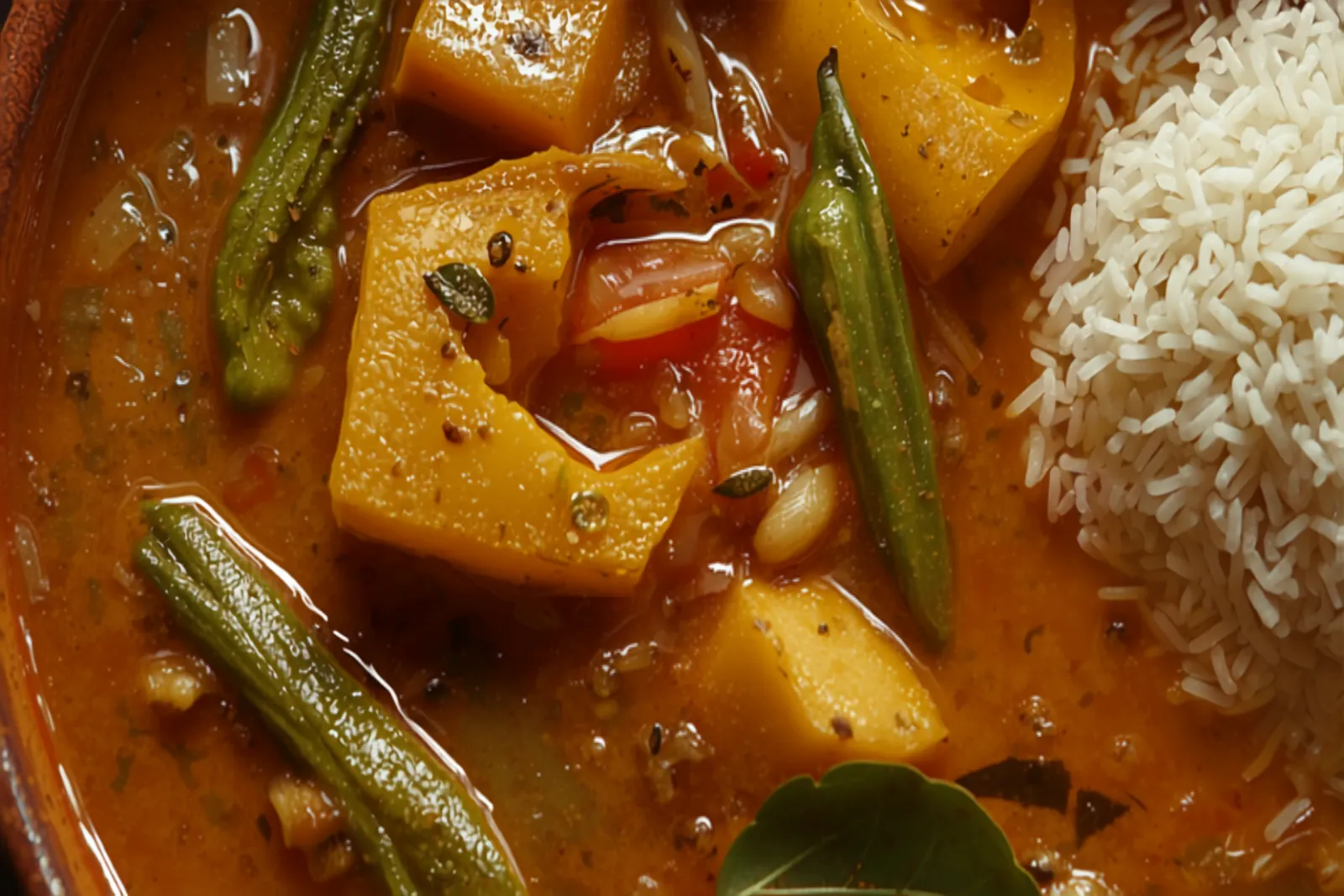
Sambar is eaten across all four southern states, each with its own touch — Tamil Nadu's is robustly spiced and tamarind-forward, Karnataka's a touch sweeter, Kerala's lighter. It anchors the daily meal: poured over rice, soaked up with idli, dipped into with dosa. No South Indian kitchen is without it.
If South Indian cooking has a daily anchor, it is sambar — a tangy, savory stew of toor dal and vegetables, soured with tamarind, spiced with a roasted sambar powder, and finished with a sizzling tempering of mustard seeds and curry leaves. It is poured over rice at lunch, served alongside dosa and idli at breakfast, and made in some form in nearly every kitchen across the four southern states.
One dish, four states
Sambar is shared but not uniform. Tamil Nadu’s tends to be the most robust and tamarind-forward; Karnataka’s often carries a hint of sweetness from jaggery; Kerala’s runs lighter. The recipe here is a Tamil-leaning everyday version — the kind made on a weekday, not a feast-day special.
Three components, built in order
A good sambar is really three things done well: a thoroughly cooked, whisked-smooth dal for body; properly cooked vegetables (staggered by how long each takes); and the balance of tamarind sourness against the sambar powder’s warmth. Get the dal soft and the souring right and the rest follows.
The tempering makes it sing
The final tadka — mustard seeds popped in hot oil with dried chili, asafoetida, and curry leaves, poured sizzling over the pot — is non-negotiable. It’s added at the very end so the aromatics hit in a fragrant burst rather than getting lost in the simmer.
Serve it over rice or with masala dosa. For more South Indian staples, browse the full recipe collection.
Ingredients
For the dal base
- 1 cup toor dal (split pigeon peas) The classic sambar lentil; cooks soft and creamy.
- 1/2 tsp turmeric
For the stew
- small lime-sized ball tamarind, soaked in warm water The souring agent that defines sambar. Use 1–2 tsp of paste as a substitute.
- 2–3 cups mixed vegetables Drumsticks, pumpkin, bottle gourd, carrot, okra, shallots (sambar onions), tomato — any mix.
- 2–3 tbsp sambar powder Freshly ground is best (see note); a good store-bought powder is fine.
For the tempering (tadka)
- 2 tbsp oil or ghee
- 1 tsp mustard seeds
- 2 dried red chilies
- 1 pinch asafoetida (hing) Use a gluten-free hing if needed; it gives sambar its savory depth.
- 1 sprig curry leaves
To finish
- chopped coriander and salt
Method
Tap a step’s number to check it off as you go.
-
Pressure-cook or simmer the toor dal with turmeric and plenty of water until completely soft, then whisk smooth.
Why: A fully broken-down dal gives sambar its body; undercooked dal leaves it thin and grainy.
-
Cook the harder vegetables in a little water until nearly tender, adding quicker ones (okra, tomato) later.
Why: Staggering the vegetables by cooking time keeps each one properly done rather than some mushy and some raw.
-
Stir in the tamarind extract and sambar powder, and simmer 8–10 minutes.
Why: Simmering the tamarind and spice powder together cooks out the raw edge and lets the sourness and spice marry.
-
Add the whisked dal and salt, loosen with water to a pourable stew, and simmer gently 5 minutes.
Why: Adding the dal last keeps it from catching; a brief simmer brings everything together without dulling the dal's freshness.
-
Make the tempering: heat oil, pop the mustard seeds, add red chilies, hing, and curry leaves, and pour the sizzling mixture over the sambar. Finish with coriander.
Why: The tadka, added at the end, is what perfumes the whole pot — pouring it over hot sambar releases the aromatics in a burst.
A quick, anonymous tap — no review needed.
Variations
- Tiffin sambar
Make it slightly thinner and milder, the way it's served with idli and dosa, with extra shallots and a touch of jaggery.
- Arachuvitta sambar
Grind a fresh masala of roasted coconut, coriander, chana dal, and chilies instead of dry powder for a richer, special-occasion version.
- No-tamarind
Use extra tomato for a gentler sourness if you don't have tamarind, though the flavour shifts.
Serving & Storage
Ladle over hot rice with a spoon of ghee, or serve as a dip alongside idli, dosa, vada, or pongal.
Pairs with: Steamed rice, Idli, Masala dosa, Papad.
Storage: Keeps 3 days refrigerated and tastes even better the next day. Loosen with water when reheating, as it thickens.
Nutrition
Per serving (about 1 cup)
- Calories
- 190
- Protein
- 9 g
- Carbs
- 28 g
- Fat
- 5 g
- Fiber
- 7 g
- Sugar
- 5 g
- Sodium
- 470 mg
Notable micronutrients: Folate, Iron, Vitamin A
Estimated using standard ingredient data. Values vary with brands and substitutions.
Frequently Asked Questions
What vegetables go in sambar?
Almost anything sturdy: drumsticks (the classic), pumpkin, bottle gourd, carrot, okra, eggplant, shallots, and tomato. A mix of two or three is plenty; drumstick and shallot is a beloved combination.
Can I use a different lentil?
Toor (pigeon pea) dal is traditional and gives the right creamy body. Masoor dal works in a pinch but cooks softer and tastes a little different. Avoid whole lentils that hold their shape.
What is sambar powder?
A roasted, ground spice blend — typically coriander seeds, dried red chilies, chana dal, fenugreek, and more. Freshly made is wonderful, but a good packaged South Indian sambar powder makes excellent sambar.
What to drink with this
All drinks →Hand-picked pours to match this dish.
North & West India (peak-summer drink across the subcontinent) · Indian
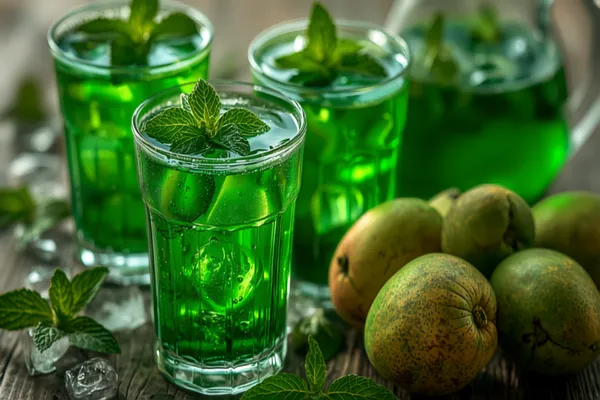
Aam Panna (Raw Green Mango Summer Cooler)
India's tangy, jade-green raw-mango cooler — roasted or boiled green mangoes blended with cumin, black salt and mint. The traditional heat-stroke remedy that tastes like summer.
Pan-Indian (North & West India) · Indian
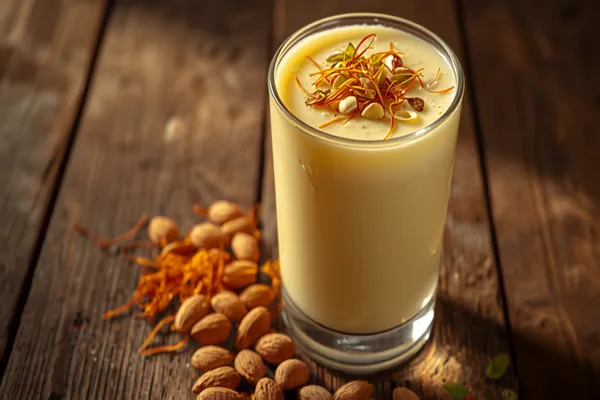
Badam Milk (Saffron Almond Milk)
Milk simmered with a paste of soaked almonds, saffron, cardamom and a whisper of nutmeg — India's rich, fragrant almond drink. Comforting served warm in winter, reviving served chilled in summer, festive any time.
Pan-Indian (Gujarat & West India especially) · Indian
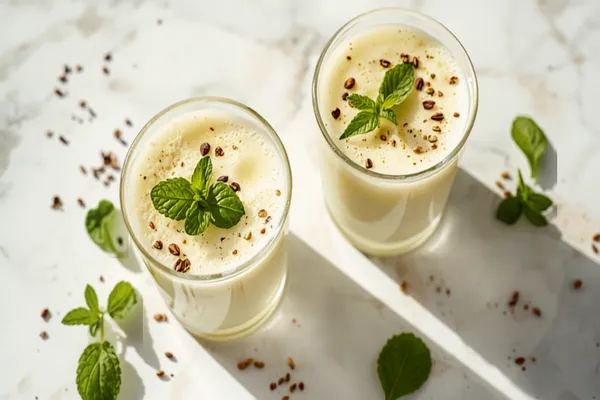
Chaas (Spiced Indian Buttermilk / Masala Chaas)
Whisked yogurt thinned with water and seasoned with cumin, green chilli, ginger and curry leaves — India's cooling, savoury buttermilk. A salty-tangy digestive that beats the heat and settles a heavy meal in two minutes.
From our kitchen community
Ratings & Reviews
My Rating
Tap a star to rate — no sign-in, no form needed.
My Review
0 Ratings
🥣 0 home cooks made it!
Be the first to rate Sambar (South Indian Lentil and Vegetable Stew).
Related Recipes
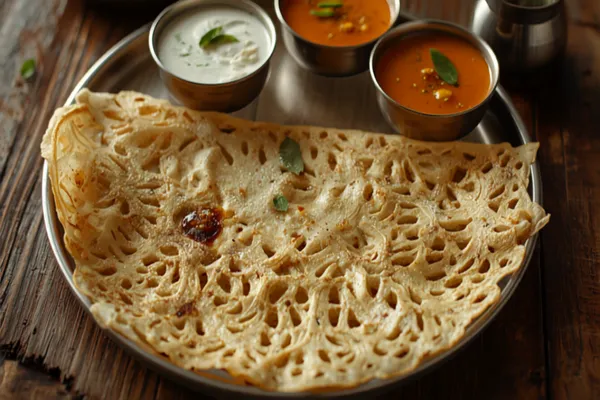
Udupi, Karnataka (South India) · Indian
Rava Dosa (Crispy Lace Semolina Dosa)
The instant, no-ferment dosa — a batter of semolina, rice flour and maida poured thin so it cooks into a golden, lace-holed crisp. Studded with cumin, pepper, green chilli and curry leaves, it's the fastest great dosa you can make.
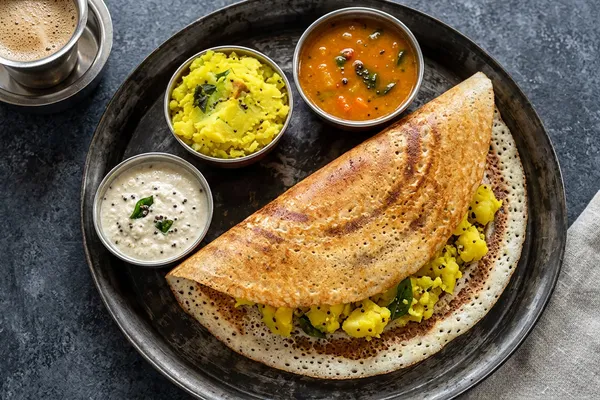
Tamil Nadu / Karnataka / South India · Indian
Masala Dosa (Crispy South Indian Crepe with Spiced Potato)
The South Indian icon: a fermented rice-and-lentil crepe griddled until lacy and golden, wrapped around a turmeric-yellow potato masala, and served with coconut chutney and sambar. A weekend project worth every minute.
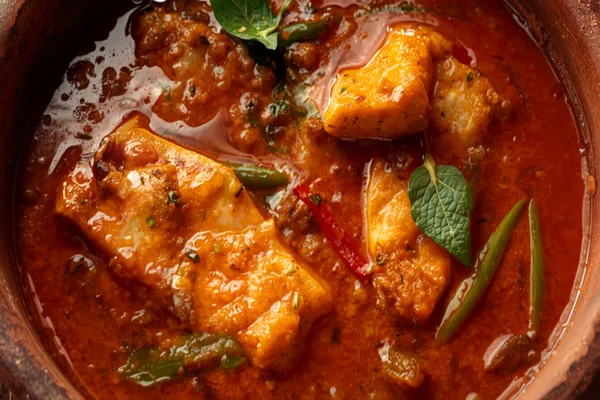
Kerala / South India (Malabar coast) · Indian
Kerala Fish Curry (Meen Curry with Coconut)
A coastal Kerala classic: fish simmered in a tangy, coconut-rich gravy sharpened with kokum-like kudampuli (Malabar tamarind) and a fragrant curry-leaf tempering. Sour, spicy, and built for rice.
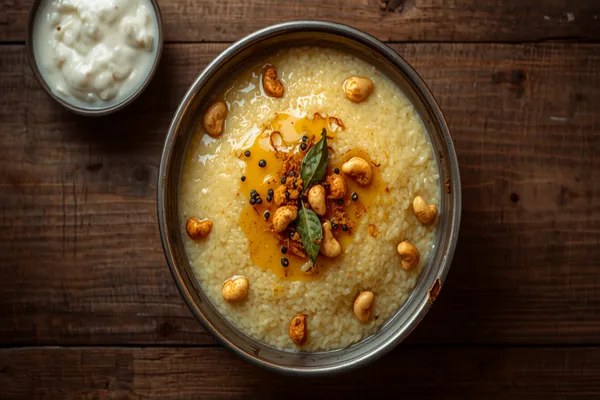
Tamil Nadu · Indian
Ven Pongal (South Indian Rice-and-Dal Breakfast)
The creamy, peppery Tamil breakfast of rice and moong dal cooked soft and finished with a ghee tempering of cashews, cumin, black pepper and curry leaves. Temple comfort food you can make in one pot.
Tamil Nadu / South India · Indian
Uttapam (Onion-Tomato South Indian Savory Pancake)
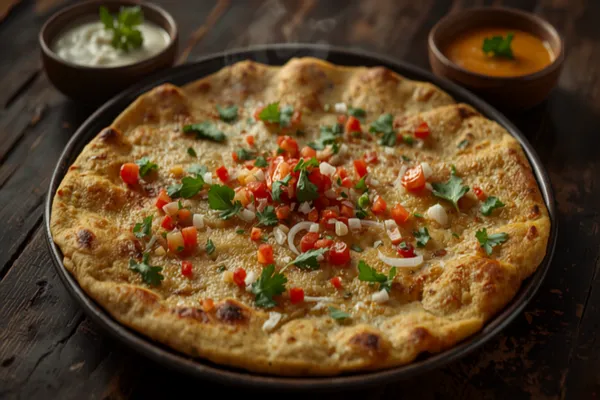
A thick, savoury South Indian pancake made from fermented rice-and-lentil batter, griddled with onion, tomato, chilli and coriander pressed into the top — crisp at the edges, pillowy in the middle. The forgiving, topping-loaded cousin of the dosa.
Further reading
- Cultural Story · South IndiaA Complete Guide to South Indian CookingSouth India isn't one cuisine but many — Tamil, Kerala, Karnataka, Andhra and Telangana, each with its own grains, spices, and rituals. A guide to the building blocks, the regional differences, and where to start cooking.
- Ingredient Deep DiveThe Indian Spice Pantry: A Beginner's MapYou don't need a hundred spices to cook Indian food — you need a dozen, and the know-how to use them. A practical guide to the essential Indian spices, what each does, and the techniques (tadka, bhuna, dry-roasting) that unlock them.