Tamil Nadu / South India · Indian
Uttapam (Onion-Tomato South Indian Savory Pancake)
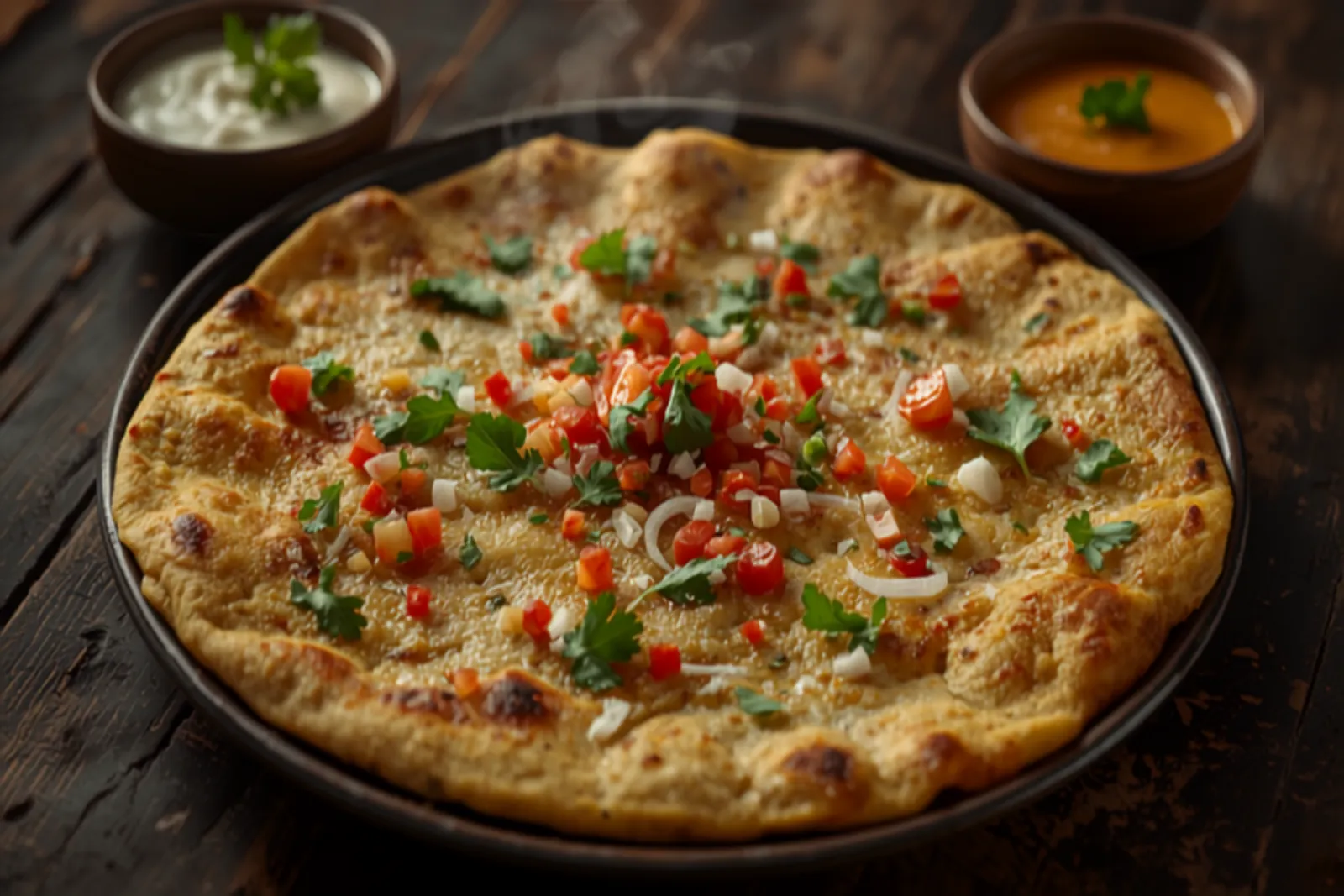
A thick, savoury South Indian pancake made from fermented rice-and-lentil batter, griddled with onion, tomato, chilli and coriander pressed into the top — crisp at the edges, pillowy in the middle. The forgiving, topping-loaded cousin of the dosa.
Published July 13, 2026
Cultural context
Uttapam (also uthappam or oothappam) is thought to have roots in Tamil cuisine and is a staple breakfast across South India. Unlike the thin, crisp dosa, it is poured thick and finished with vegetables pressed into the surface — the everyday way to turn a batch of dosa batter into something heartier.
Uttapam is the friendliest thing you can make from a bowl of South Indian dosa batter: a thick, savoury pancake, crisp at the edges and pillowy in the middle, with onion, tomato, green chilli and coriander pressed right into the top. Where a dosa demands a practised hand to spread it paper-thin, an uttapam is forgiving by design — you pour it fat, load it up, and let the pan do the work. It’s an everyday breakfast across Tamil Nadu and the wider south, and one of the best ways to use up batter that has fermented a day or two too long.
Same batter, thicker pour
An uttapam starts from the very dosa and idli batter of fermented rice and urad dal. The difference is entirely in the handling: you keep the batter thick and spoonable and spread the round only gently, so steam gets trapped inside and the centre stays soft while the base crisps. Batter that’s a little older and more sour is ideal here — the tang is part of the appeal.
Press the toppings in while it’s wet
The trick that makes an uttapam an uttapam is timing. Scatter the finely chopped onion, tomato and chilli over the batter the moment it hits the pan, then press them down with the back of the ladle so they sink in. Do it while the surface is still wet and the vegetables cook into the pancake instead of tumbling off when you flip it. Deseed the tomato so the top doesn’t go soggy, and keep the heat at a steady medium so the thick round cooks through before the base browns too far.
Eat it hot with chutney
Uttapam is at its best straight off the tawa, with coconut chutney and a bowl of sambar. For more South Indian tiffin, try medu vada or browse the full recipe collection.
Ingredients
For the batter
- 2 cups idli/dosa rice (parboiled rice) Parboiled rice ferments and griddles best. A ready batch of dosa or idli batter works too — see the FAQ.
- 1/2 cup urad dal (skinned split black gram) A 3:1 or 4:1 rice-to-dal ratio is standard; the dal does the leavening.
- 1/4 tsp fenugreek seeds (methi) Soaked with the dal; aids fermentation and a golden crust.
- salt and water as needed
For the topping
- 1 medium onion, finely chopped
- 1 medium tomato, deseeded and finely chopped Deseeding keeps the top from going soggy and overly sour.
- 1–2 green chillies, finely chopped
- 2 tbsp coriander leaves, chopped
- 8–10 curry leaves, torn (optional)
- oil or ghee, for drizzling
Method
Tap a step’s number to check it off as you go.
-
Soak the rice in one bowl and the urad dal with fenugreek in another for at least 6 hours. Grind the dal to a light, airy batter and the rice to a slightly grainy one, then combine, add salt, and mix by hand.
Why: Grinding separately lets the dal whip up full of air (the wild leavening) while the rice gives body — the same batter that makes dosa and idli.
-
Ferment, covered, in a warm spot for 8–12 hours until risen and bubbly. Stir down and loosen with a little water to a thick, spoonable consistency — noticeably thicker than dosa batter.
Why: Fermentation leavens the batter and builds the gentle tang. A thick batter is what makes an uttapam fluffy inside instead of thin and crisp all through.
-
Chop all the toppings small and keep them ready in one bowl. Heat a flat tawa or non-stick pan over medium heat until a drop of water skitters.
Why: Uttapam cooks fast once it hits the pan, so the toppings need to go on immediately; a fine, even chop cooks through and stays put.
-
Pour a ladle of batter and spread it gently into a thick round about 12–15 cm across — do not thin it out like a dosa.
Why: Keeping it thick traps steam so the centre stays soft and pillowy while the base crisps.
-
Immediately scatter a handful of the mixed toppings over the top and press them lightly with the back of the ladle so they sink in.
Why: Pressing while the batter is still wet embeds the vegetables so they cook into the pancake instead of sliding off when you flip it.
-
Drizzle oil around the edge and over the top, cover, and cook 2–3 minutes until the base is golden and crisp and the top looks set.
Why: Covering traps steam to cook the thick top through; the oil crisps and browns the underside.
-
Flip and cook 1–2 minutes topping-side down, then serve hot.
Why: A short spell face-down lightly chars the onion and tomato, coaxing out sweetness — but only briefly so they don't burn.
A quick, anonymous tap — no review needed.
Variations
- Masala uttapam
Smear a thin layer of dosa potato masala or a sprinkle of idli podi over the batter before adding the vegetables for a spicier, more filling version.
- Rava (quick) uttapam
Skip the fermentation entirely: whisk semolina with yogurt and water, rest 20 minutes, and griddle the same way with the toppings.
- Mixed vegetable
Add grated carrot, chopped capsicum or grated beetroot to the onion-tomato mix for colour, sweetness and extra fibre.
Serving & Storage
Serve hot off the tawa with coconut chutney and sambar. A tomato chutney or a spoon of idli podi mixed with oil is the everyday alternative.
Pairs with: Coconut chutney, Sambar, Tomato chutney, Filter coffee.
Storage: The batter keeps 3–4 days refrigerated and sours a little more each day (great for uttapam). Cooked uttapams are best eaten fresh; reheat leftovers on a hot tawa to re-crisp.
Nutrition
Per serving (1 uttapam)
- Calories
- 165
- Protein
- 4 g
- Carbs
- 28 g
- Fat
- 4 g
- Fiber
- 2 g
- Sugar
- 2 g
- Sodium
- 320 mg
Notable micronutrients: Folate, Iron, B vitamins
Estimated using standard ingredient data. Values vary with brands and substitutions.
Frequently Asked Questions
What's the difference between an uttapam and a dosa?
Same fermented batter, different handling. A dosa is spread thin and crisp all over and usually served plain or folded around a filling; an uttapam is poured thick, left soft in the middle, and has its toppings pressed into the surface as it cooks. Think of the uttapam as the pancake and the dosa as the crêpe.
Can I use ready dosa or idli batter?
Yes — it's the easiest way. Use it a touch thicker than you would for dosa (loosen idli batter slightly, thicken dosa batter by resting it). Slightly older, more sour batter actually makes especially good uttapam.
Why is my uttapam raw in the middle?
The batter was too thick, the heat too high, or it wasn't covered. Keep the pan on medium, spread the round a little wider, and cover the pan so the steam cooks the top through before the base burns.
What to drink with this
All drinks →Hand-picked pours to match this dish.
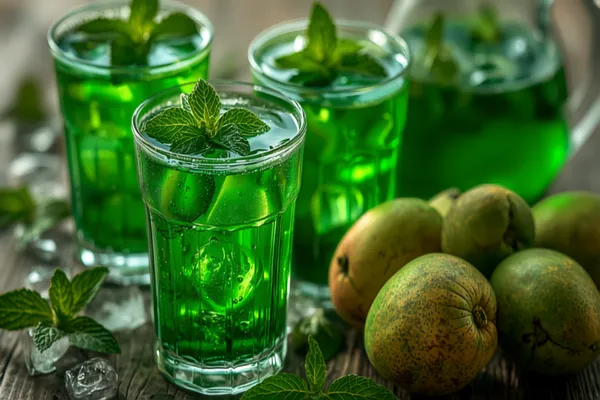
North & West India (peak-summer drink across the subcontinent) · Indian
Aam Panna (Raw Green Mango Summer Cooler)
India's tangy, jade-green raw-mango cooler — roasted or boiled green mangoes blended with cumin, black salt and mint. The traditional heat-stroke remedy that tastes like summer.
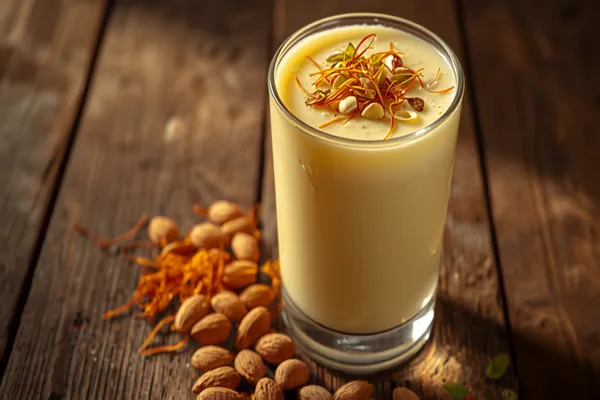
Pan-Indian (North & West India) · Indian
Badam Milk (Saffron Almond Milk)
Milk simmered with a paste of soaked almonds, saffron, cardamom and a whisper of nutmeg — India's rich, fragrant almond drink. Comforting served warm in winter, reviving served chilled in summer, festive any time.
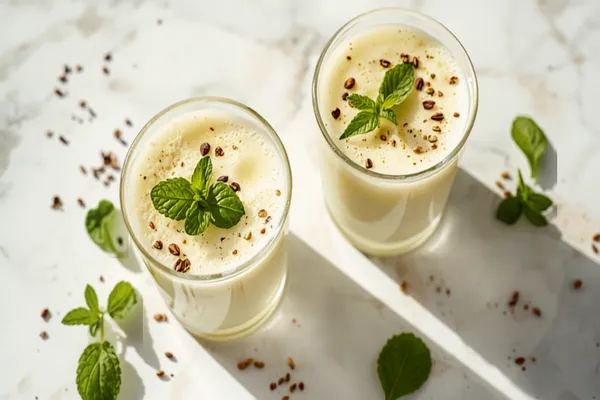
Pan-Indian (Gujarat & West India especially) · Indian
Chaas (Spiced Indian Buttermilk / Masala Chaas)
Whisked yogurt thinned with water and seasoned with cumin, green chilli, ginger and curry leaves — India's cooling, savoury buttermilk. A salty-tangy digestive that beats the heat and settles a heavy meal in two minutes.
From our kitchen community
Ratings & Reviews
My Rating
Tap a star to rate — no sign-in, no form needed.
My Review
0 Ratings
🥣 0 home cooks made it!
Be the first to rate Uttapam (Onion-Tomato South Indian Savory Pancake).
Related Recipes
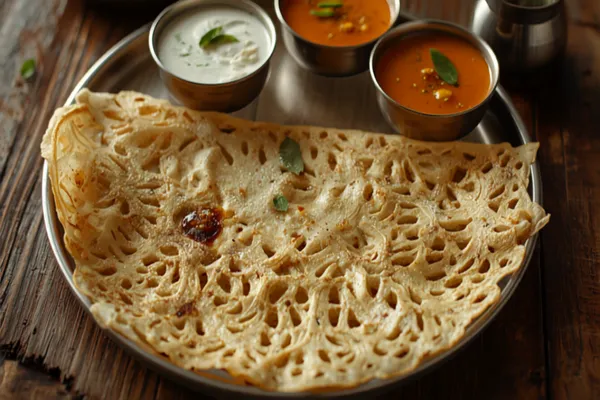
Udupi, Karnataka (South India) · Indian
Rava Dosa (Crispy Lace Semolina Dosa)
The instant, no-ferment dosa — a batter of semolina, rice flour and maida poured thin so it cooks into a golden, lace-holed crisp. Studded with cumin, pepper, green chilli and curry leaves, it's the fastest great dosa you can make.
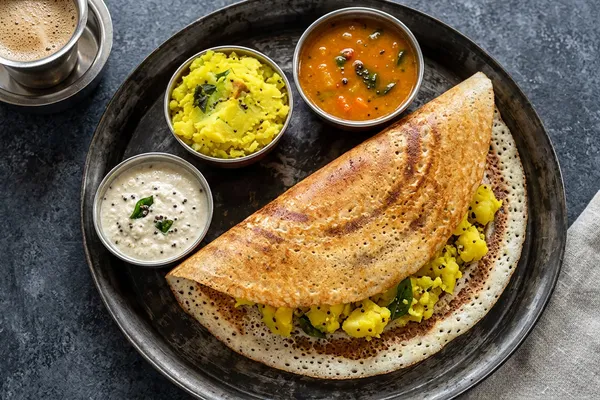
Tamil Nadu / Karnataka / South India · Indian
Masala Dosa (Crispy South Indian Crepe with Spiced Potato)
The South Indian icon: a fermented rice-and-lentil crepe griddled until lacy and golden, wrapped around a turmeric-yellow potato masala, and served with coconut chutney and sambar. A weekend project worth every minute.
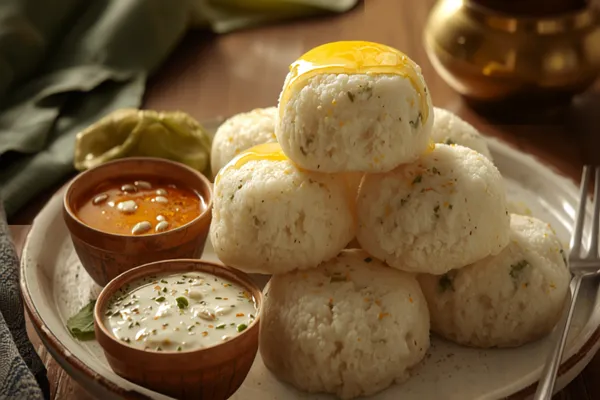
Tamil Nadu / Karnataka / South India · Indian
Idli (Soft Steamed South Indian Rice Cakes)
The gentlest of South Indian breakfasts: pillowy, fermented rice-and-lentil cakes, steamed until cloud-soft and eaten with sambar and chutney. Light, gut-friendly, and the comfort food of the south.
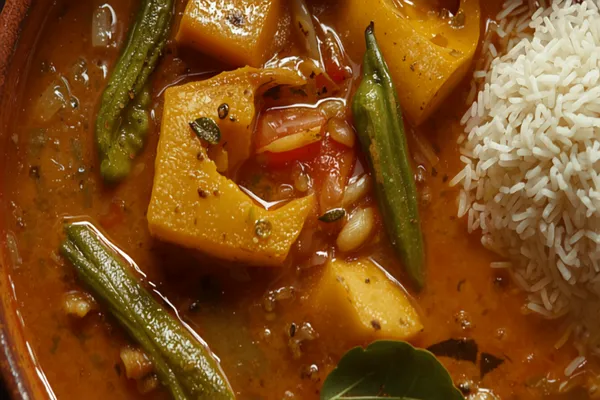
Tamil Nadu / South India · Indian
Sambar (South Indian Lentil and Vegetable Stew)
The everyday backbone of a South Indian meal: toor dal simmered with vegetables and tamarind, seasoned with a freshly ground sambar powder and a sizzling tempering. Tangy, savory, and endlessly comforting.
Tamil Nadu / South India · Indian
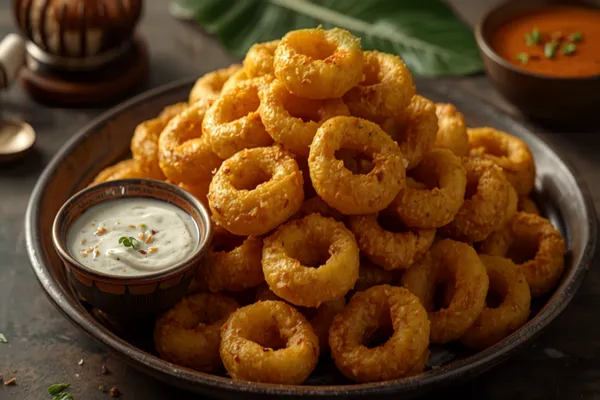
Medu Vada (South Indian Lentil Doughnuts)
Crisp-outside, fluffy-inside savory doughnuts of ground urad dal, spiced with pepper, ginger, and curry leaves and fried golden. The crunchy counterpart to soft idli on the South Indian breakfast plate.