Udupi, Karnataka (South India) · Indian
Rava Dosa (Crispy Lace Semolina Dosa)
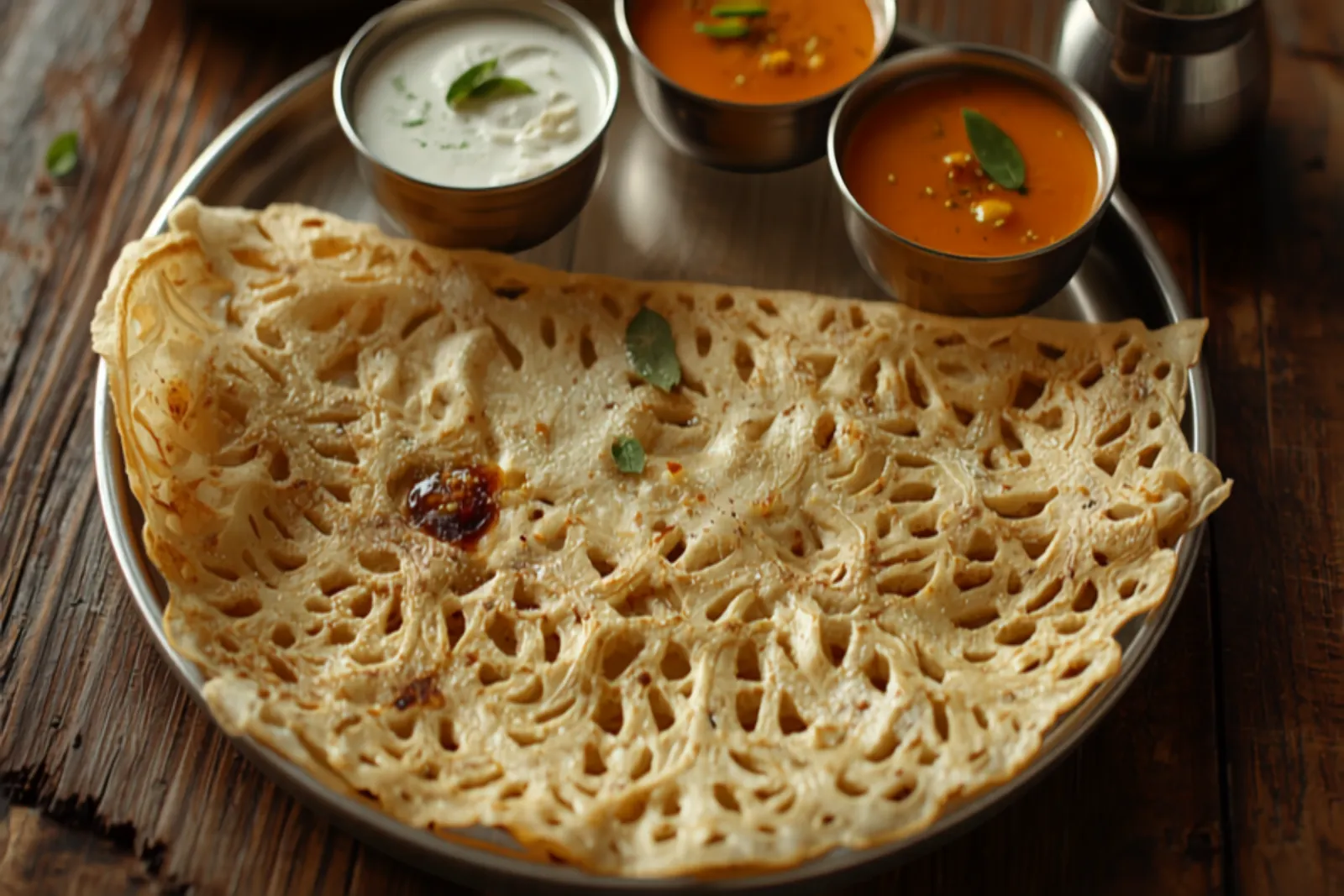
The instant, no-ferment dosa — a batter of semolina, rice flour and maida poured thin so it cooks into a golden, lace-holed crisp. Studded with cumin, pepper, green chilli and curry leaves, it's the fastest great dosa you can make.
Published August 2, 2026
Cultural context
Rava dosa is an Udupi-restaurant classic from coastal Karnataka, made famous by the 'Udupi hotels' that carried South Indian tiffin across the country. Unlike the fermented rice-and-lentil dosa, it uses semolina and needs no soaking or overnight ferment — a batter you can mix and pour, prized for its glassy, net-like crunch.
Rava dosa is the crisp, lacy dosa you order when you want that shatter-glass crunch without waiting a day for batter to ferment. Where the classic dosa relies on soaked rice and lentils and an overnight rise, rava dosa is built on semolina, rice flour and a little maida — mixed, rested for fifteen minutes, and poured thin. It is the signature of the Udupi hotels of coastal Karnataka, the vegetarian tiffin restaurants that carried South Indian breakfast across India and, eventually, the world.
An instant dosa with a lace-hole crust
The magic of rava dosa is textural. Because the batter is watery rather than spreadable, it can’t be smoothed into an even circle — and that’s the point. Poured from a height onto a hot tawa, the thin batter scatters and sets in an uneven net, leaving the holes that make the dosa look like golden lace and eat like a cracker. The rice flour does most of the crisping; the semolina gives body and a faint nutty toast; the maida is just enough glue to keep the whole fragile sheet in one piece.
Why the batter has to be thin — and the pan hot
Two rules decide whether your rava dosa crackles or flops. First, the batter must stay as loose as buttermilk. Rava swells and sinks as it rests, so it thickens in the bowl; stir it and, if needed, splash in water before every dosa. A thick batter fills its own holes and gives you a soft pancake instead of lace. Second, the tawa has to be properly hot so the batter sets on contact — that instant set is what freezes the net in place. Then be generous with ghee or oil around the edges and let it cook a full two to three minutes: rava dosa fries more than it steams, and that patience is what turns it deep-golden and crisp.
Seasoning that reads as South Indian
Cumin, coarsely crushed black pepper, ginger, green chilli, curry leaves and a pinch of asafoetida are stirred straight into the batter, so every bite carries the tiffin-counter flavour. Add finely chopped onion and you have the beloved onion rava dosa; leave it out for the plain version. Serve it the only way it should be served — straight off the pan, before the crunch fades — with coconut chutney and a bowl of hot sambar.
Once you’ve got the pour down, work through the rest of the tiffin canon: the fermented masala dosa and the soft, savoury uttapam. For the bigger picture, read our guide to South Indian cooking.
Ingredients
For the batter
- 1/2 cup (80 g) fine semolina (Bombay rava / sooji) Use fine rava, not coarse — it stays suspended in the thin batter and crisps evenly.
- 1/2 cup (75 g) rice flour The main source of the lacy crunch. Don't substitute.
- 1/4 cup (30 g) all-purpose flour (maida) Just enough to bind the holes together so the dosa lifts in one piece.
- 3 cups (750 ml) water The batter must be pourable and thin, like buttermilk — this is what makes the holes.
- 1 tsp cumin seeds
- 1/2 tsp whole black peppercorns Lightly crushed; the coarse bite is traditional.
- 1 green chilli, finely chopped
- 1 tbsp ginger, finely grated
- 10–12 curry leaves, chopped
- 2 tbsp coriander leaves, chopped
- 1 small onion, very finely chopped (optional) Skip for a plain rava dosa; add for the popular onion (vengaya) rava dosa.
- 1/4 tsp asafoetida (hing)
- 3/4 tsp salt, or to taste
For cooking
- as needed oil or ghee Ghee gives the best flavour; oil keeps it vegan. You need a generous drizzle per dosa.
Method
Tap a step’s number to check it off as you go.
-
Whisk the semolina, rice flour and maida with the water, cumin, crushed pepper, green chilli, ginger, curry leaves, coriander, onion (if using), asafoetida and salt into a very thin, lump-free batter.
Why: A thin, watery batter is the whole secret — thick batter fills the holes and gives you a pancake, not lace. It should be the consistency of buttermilk.
-
Rest the batter 15–20 minutes, then stir again before cooking.
Why: The rava needs a few minutes to hydrate and swell; the rest also lets the flavours mingle. Stir before each dosa because the rava sinks.
-
Heat a flat tawa or non-stick pan until very hot. Test with a droplet of water — it should sizzle and vanish. Lightly wipe with oil.
Why: A properly hot pan is non-negotiable: the batter has to hit heat and set instantly for the holes to form and the edges to crisp.
-
Stir the batter, then pour it from a height in a thin stream, working from the outer edge inward to fill gaps. Do NOT spread it with the ladle.
Why: Pouring from a height scatters the thin batter into a natural net; spreading it like a regular dosa collapses the lace and makes it dense.
-
Drizzle a teaspoon of oil or ghee around the edges and over the top. Cook on medium-high until the underside is deep golden and the dosa lifts freely, 2–3 minutes.
Why: Rava dosa is slower and needs more fat than a regular dosa — that fat is what fries it to a shatter-crisp finish. Rushing gives you a pale, chewy dosa.
-
Fold or roll and serve immediately, hot and crisp, with coconut chutney and sambar.
Why: Rava dosa softens as it sits, so it's at its best straight off the pan — this is a cook-and-serve, one-at-a-time dish.
A quick, anonymous tap — no review needed.
Variations
- Onion rava dosa
Fold finely chopped onion and an extra curry leaf into the batter — the sweet, jammy onion against the crisp lace is a restaurant favourite.
- Vegan
Cook in oil instead of ghee; the batter is already dairy-free.
- Rava masala dosa
Tuck a spoon of spiced potato masala into the folded dosa to make it a light meal rather than a tiffin.
Serving & Storage
Serve straight from the pan with coconut chutney and a bowl of hot sambar; a smear of tomato or onion chutney is welcome too.
Pairs with: Coconut chutney, Sambar, Filter coffee, Tomato chutney.
Storage: Best eaten immediately — rava dosa loses its crunch within minutes. The batter keeps 1 day refrigerated; loosen with water and stir well before pouring, as the rava settles.
Nutrition
Per serving (1 dosa)
- Calories
- 145
- Protein
- 3 g
- Carbs
- 21 g
- Fat
- 5 g
- Fiber
- 1 g
- Sugar
- 1 g
- Sodium
- 300 mg
Notable micronutrients: Iron, Calcium, Folate
Estimated using standard ingredient data. Values vary with brands and substitutions.
Frequently Asked Questions
Why is my rava dosa not crispy?
Two usual culprits: the batter was too thick, or the pan wasn't hot enough. The batter should be watery like buttermilk so it scatters into a net, and the tawa should be genuinely hot before you pour. Be generous with oil or ghee — that fat is what fries it crisp — and give it a full 2–3 minutes without flipping too soon.
Why do I pour rava dosa instead of spreading it?
A regular dosa is spread with the back of a ladle, but rava dosa batter is far too thin for that. You pour it from a height so the thin batter falls in a scattered pattern, leaving the characteristic holes. Spreading it would fill those holes and give you a dense, soft dosa.
Can I make the batter ahead?
You can mix it a few hours ahead, but the rava keeps sinking and absorbing water, so it thickens as it stands. Keep it refrigerated, then thin it back to buttermilk consistency with a little water and stir thoroughly before each dosa. It doesn't ferment or improve overnight the way a rice-lentil batter does.
What to drink with this
All drinks →Hand-picked pours to match this dish.
North & West India (peak-summer drink across the subcontinent) · Indian
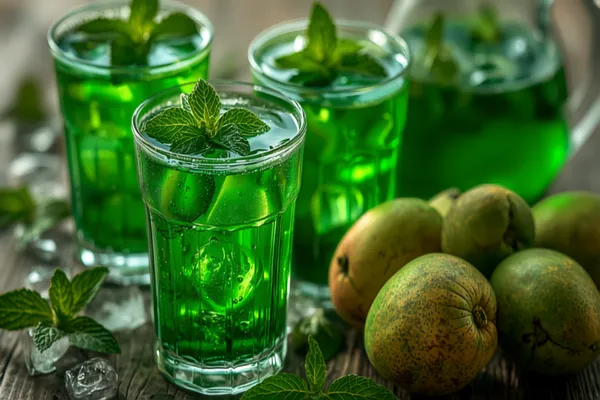
Aam Panna (Raw Green Mango Summer Cooler)
India's tangy, jade-green raw-mango cooler — roasted or boiled green mangoes blended with cumin, black salt and mint. The traditional heat-stroke remedy that tastes like summer.
Pan-Indian (North & West India) · Indian
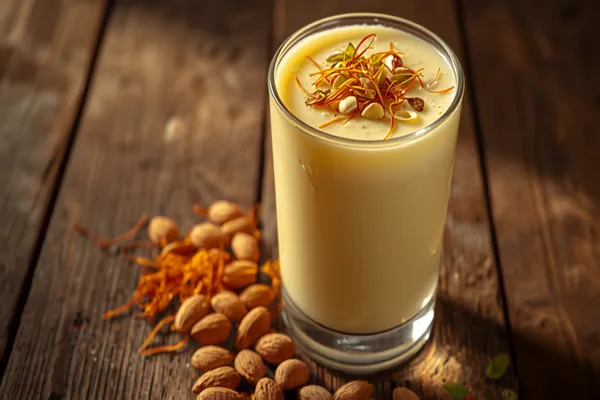
Badam Milk (Saffron Almond Milk)
Milk simmered with a paste of soaked almonds, saffron, cardamom and a whisper of nutmeg — India's rich, fragrant almond drink. Comforting served warm in winter, reviving served chilled in summer, festive any time.
Pan-Indian (Gujarat & West India especially) · Indian
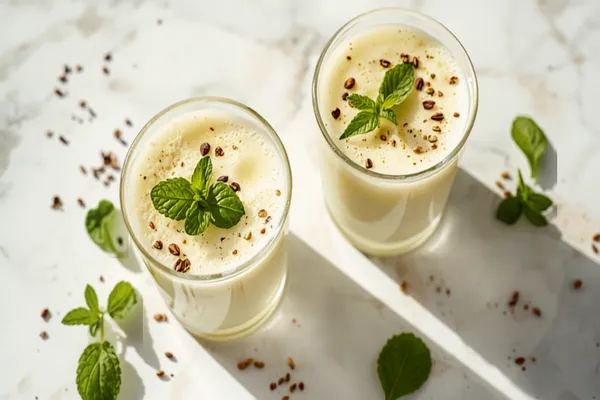
Chaas (Spiced Indian Buttermilk / Masala Chaas)
Whisked yogurt thinned with water and seasoned with cumin, green chilli, ginger and curry leaves — India's cooling, savoury buttermilk. A salty-tangy digestive that beats the heat and settles a heavy meal in two minutes.
From our kitchen community
Ratings & Reviews
My Rating
Tap a star to rate — no sign-in, no form needed.
My Review
0 Ratings
🥣 0 home cooks made it!
Be the first to rate Rava Dosa (Crispy Lace Semolina Dosa).
Related Recipes
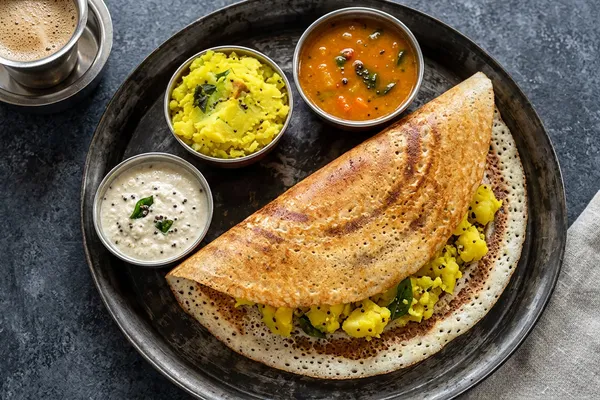
Tamil Nadu / Karnataka / South India · Indian
Masala Dosa (Crispy South Indian Crepe with Spiced Potato)
The South Indian icon: a fermented rice-and-lentil crepe griddled until lacy and golden, wrapped around a turmeric-yellow potato masala, and served with coconut chutney and sambar. A weekend project worth every minute.
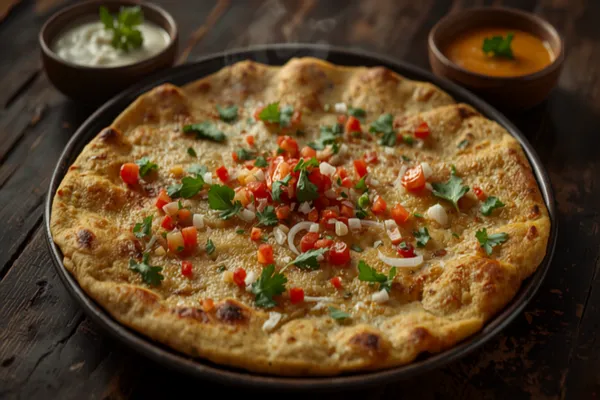
Tamil Nadu / South India · Indian
Uttapam (Onion-Tomato South Indian Savory Pancake)
A thick, savoury South Indian pancake made from fermented rice-and-lentil batter, griddled with onion, tomato, chilli and coriander pressed into the top — crisp at the edges, pillowy in the middle. The forgiving, topping-loaded cousin of the dosa.
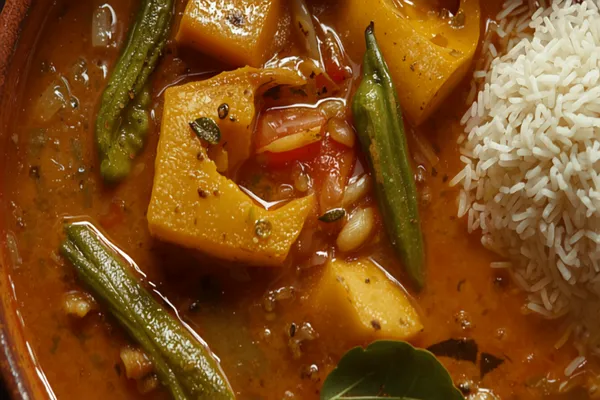
Tamil Nadu / South India · Indian
Sambar (South Indian Lentil and Vegetable Stew)
The everyday backbone of a South Indian meal: toor dal simmered with vegetables and tamarind, seasoned with a freshly ground sambar powder and a sizzling tempering. Tangy, savory, and endlessly comforting.
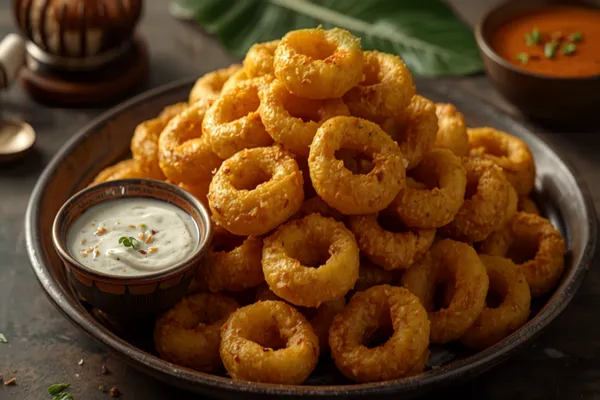
Tamil Nadu / South India · Indian
Medu Vada (South Indian Lentil Doughnuts)
Crisp-outside, fluffy-inside savory doughnuts of ground urad dal, spiced with pepper, ginger, and curry leaves and fried golden. The crunchy counterpart to soft idli on the South Indian breakfast plate.