Kerala / South India (Malabar coast) · Indian
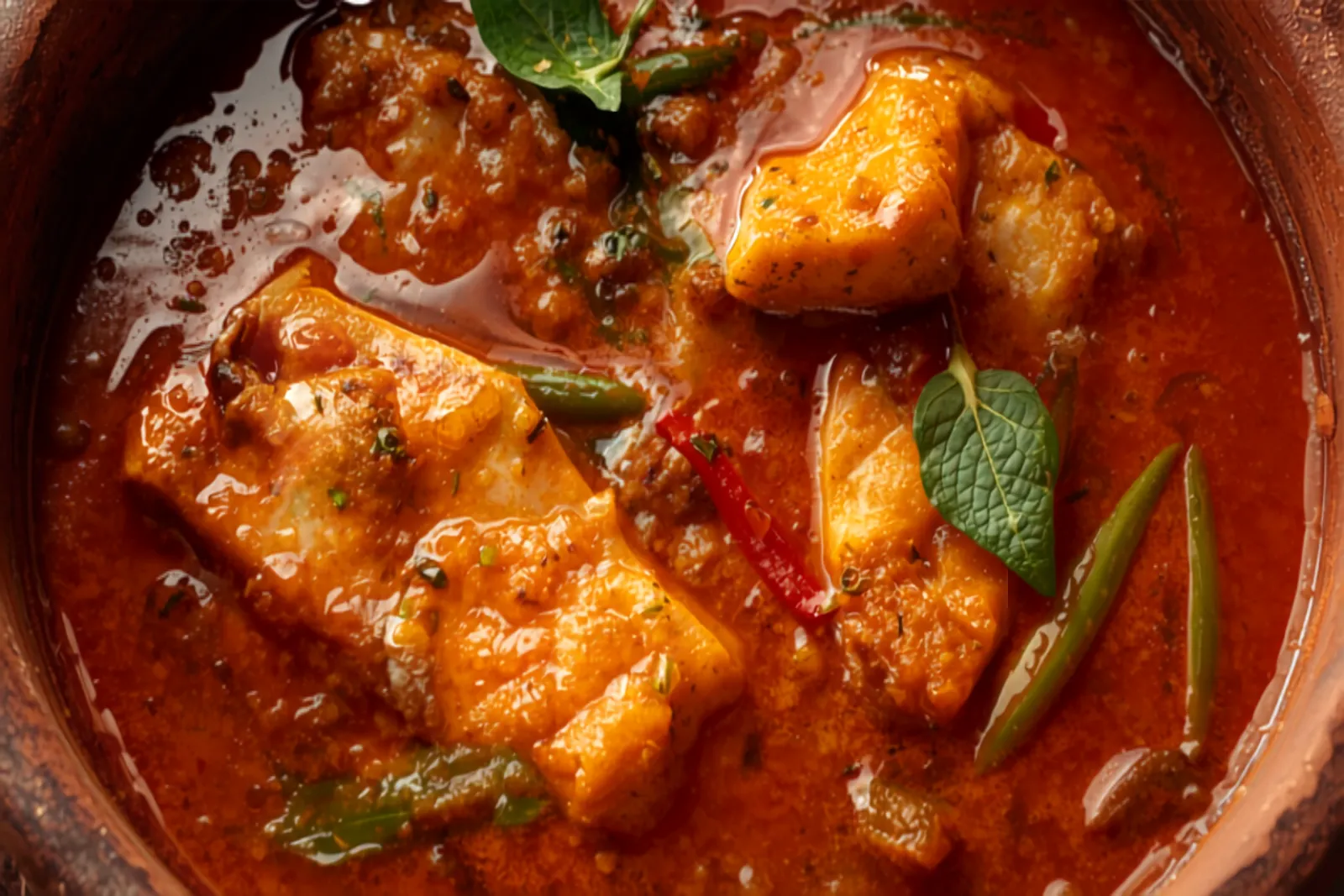
Kerala Fish Curry (Meen Curry with Coconut)
A coastal Kerala classic: fish simmered in a tangy, coconut-rich gravy sharpened with kokum-like kudampuli (Malabar tamarind) and a fragrant curry-leaf tempering. Sour, spicy, and built for rice.
Published June 21, 2026
Cultural context
Fish curry is daily food along Kerala's long coast, with as many versions as there are households. This coconut-based style uses kudampuli (Malabar tamarind / fish tamarind), the smoky-sour dried fruit that is the signature souring agent of Kerala fish cooking, distinct from regular tamarind.
Along Kerala’s long, green coast, fish curry is daily food — and a coconut-rich, kudampuli-soured version like this one is among its finest expressions. It’s tangy, gently spiced, deep red from Kashmiri chili, and built to be poured over rice. Every household has its own, but the bones are constant: coconut oil, curry leaves, a souring agent, and fish straight from the water.
The souring agent matters
What sets Kerala fish curry apart from other Indian fish curries is kudampuli — Malabar tamarind, a dried smoky-sour fruit (a cousin of kokum) used specifically for fish here. It lends a tang and faint smokiness that regular tamarind can’t quite replicate. If you find it at an Indian grocer, use it; if not, tamarind paste will stand in.
Coconut oil is not optional
Kerala cooking lives and dies by coconut oil. It carries the aroma of the whole cuisine, and this curry tastes unmistakably of place because of it. Build the base in it, and use it again for the finishing tempering.
Treat the fish gently
Fish wants a soft hand: add it in a single layer, swirl the pan rather than stirring, and pull it off the heat the moment it’s opaque. Coconut milk goes in last and is only warmed through — a hard boil can split it. And if you can wait, the curry is even better a few hours on, once the sourness and spice settle into the fish.
Serve with rice or appam. For more South Indian cooking, browse the full recipe collection.
Ingredients
For the curry
- 500 g firm fish steaks Kingfish (seer/neymeen), pomfret, or any firm fish that holds together. Sardines are also traditional.
- 3–4 pieces kudampuli (Malabar tamarind), soaked in warm water The defining sour note. Substitute 1–2 tsp tamarind paste, though the flavour differs.
- 1 cup thick coconut milk Freshly extracted is best; canned works well.
- 2 tbsp coconut oil Coconut oil is essential to the Kerala flavour — don't substitute if you can help it.
- 1 onion, sliced (or shallots, preferred)
- 1 tbsp ginger-garlic, julienned/minced
- 2 green chilies, slit
- 2 tbsp Kashmiri red chili powder For deep red colour with moderate heat; adjust to taste.
- 1 tsp coriander powder
- 1/4 tsp turmeric and fenugreek powder
For the tempering
- 1 sprig curry leaves
- 1/2 tsp mustard seeds
Method
Tap a step’s number to check it off as you go.
-
Soak the kudampuli in a little warm water. In coconut oil, sauté shallots, ginger-garlic, green chili, and curry leaves until soft and golden.
Why: Building the base slowly in coconut oil sets the unmistakable Kerala foundation before the spices go in.
-
Lower the heat, add the chili, coriander, turmeric, and fenugreek powders, and fry briefly with a splash of water to a paste.
Why: Cooking the ground spices in a little water (not dry) blooms them without burning, which scorches easily at this stage.
-
Add the soaked kudampuli with its water and enough water to make a gravy; simmer 5 minutes.
Why: Letting the sour kudampuli simmer first infuses the gravy before the delicate fish is added.
-
Slide in the fish in a single layer, spoon gravy over, and simmer gently 8–10 minutes until just cooked — do not stir hard.
Why: Fish breaks easily; swirl the pan instead of stirring, and pull it the moment it turns opaque to keep it tender.
-
Pour in the thick coconut milk, warm through without boiling hard, and finish with a tempering of mustard seeds and curry leaves in coconut oil.
Why: Coconut milk added at the end and only gently warmed stays smooth; a hard boil can split it. The final tempering lifts the aroma.
A quick, anonymous tap — no review needed.
Variations
- Without coconut milk (nadan/Kottayam style)
Skip the coconut milk for the fiery, tangy red Kottayam-style fish curry — just kudampuli, chili, and spices in a thin gravy.
- Sardine or mackerel
Oily fish like sardines and mackerel are traditional and especially good with the sour gravy.
- Milder
Reduce the Kashmiri chili and add an extra splash of coconut milk for a gentler, creamier curry.
Serving & Storage
Best with plain rice (red matta rice is the Kerala choice). Like most fish curries here, it tastes even better several hours later, once the flavours settle.
Pairs with: Kerala red rice, Steamed rice, Appam, Kappa (tapioca).
Storage: Keeps 2 days refrigerated and deepens overnight — a celebrated quality of Kerala fish curry. Reheat gently to avoid breaking the fish.
Nutrition
Per serving (1 serving with gravy)
- Calories
- 330
- Protein
- 26 g
- Carbs
- 9 g
- Fat
- 22 g
- Fiber
- 2 g
- Sugar
- 3 g
- Sodium
- 520 mg
Notable micronutrients: Omega-3, Vitamin D, Selenium
Estimated using standard ingredient data. Values vary with brands and substitutions.
Frequently Asked Questions
What is kudampuli?
Kudampuli, also called Malabar or fish tamarind (kokum's cousin), is a dried, smoky-sour fruit used specifically in Kerala fish curries. It gives a distinct tang quite different from regular tamarind. If you can't find it, tamarind paste is the closest substitute, though the character shifts.
Why use coconut oil?
Coconut oil is fundamental to Kerala cooking and gives this curry its signature aroma and flavour. Another oil will work mechanically, but it won't taste like Kerala.
How do I stop the fish from breaking?
Use firm fish, add it in a single layer, and never stir hard — swirl the pan or gently spoon the gravy over instead. Cook just until opaque.
What to drink with this
All drinks →Hand-picked pours to match this dish.
North & West India (peak-summer drink across the subcontinent) · Indian
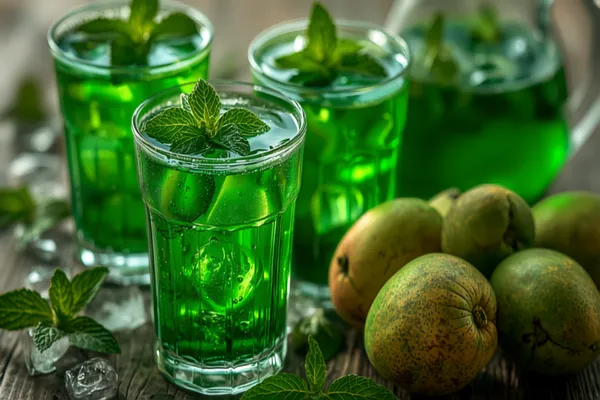
Aam Panna (Raw Green Mango Summer Cooler)
India's tangy, jade-green raw-mango cooler — roasted or boiled green mangoes blended with cumin, black salt and mint. The traditional heat-stroke remedy that tastes like summer.
Pan-Indian (North & West India) · Indian
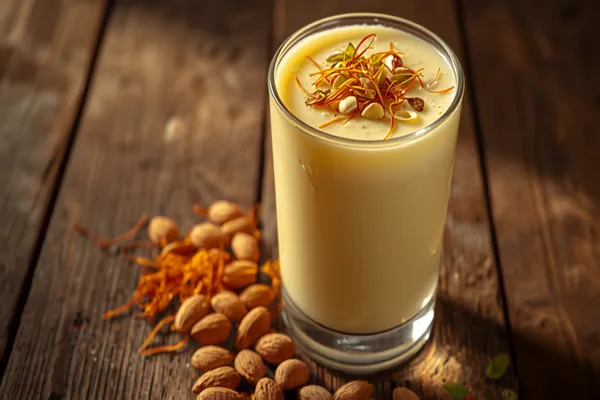
Badam Milk (Saffron Almond Milk)
Milk simmered with a paste of soaked almonds, saffron, cardamom and a whisper of nutmeg — India's rich, fragrant almond drink. Comforting served warm in winter, reviving served chilled in summer, festive any time.
Pan-Indian (Gujarat & West India especially) · Indian
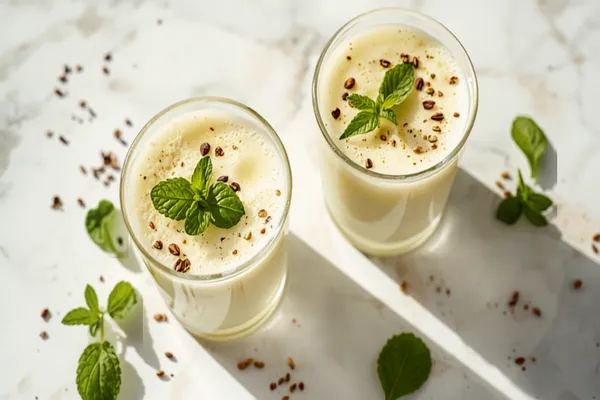
Chaas (Spiced Indian Buttermilk / Masala Chaas)
Whisked yogurt thinned with water and seasoned with cumin, green chilli, ginger and curry leaves — India's cooling, savoury buttermilk. A salty-tangy digestive that beats the heat and settles a heavy meal in two minutes.
From our kitchen community
Ratings & Reviews
My Rating
Tap a star to rate — no sign-in, no form needed.
My Review
0 Ratings
🥣 0 home cooks made it!
Be the first to rate Kerala Fish Curry (Meen Curry with Coconut).
Related Recipes
Kerala / South India (Fort Kochi and the Travancore coast) · Indian
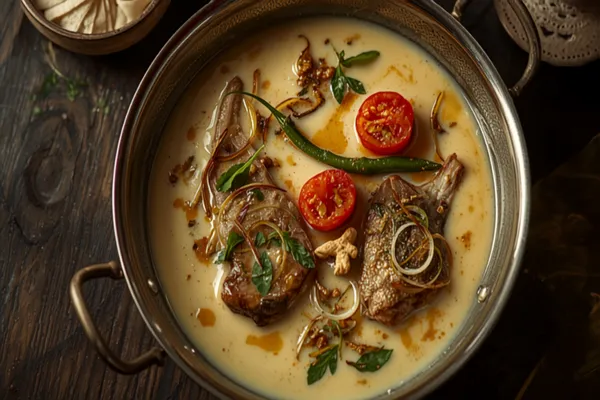
Meen Moilee (Kerala Fish Molee in Coconut Milk)
Kerala's pale gold coconut-milk fish stew — seer fish poached gently in shallots, ginger, green chilli and two grades of coconut milk. Barely spiced, deeply fragrant, and the most elegant fish curry on the Malabar coast.
Tamil Nadu / South India · Indian
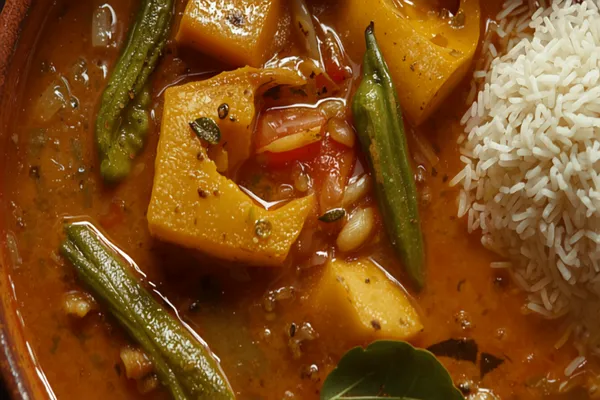
Sambar (South Indian Lentil and Vegetable Stew)
The everyday backbone of a South Indian meal: toor dal simmered with vegetables and tamarind, seasoned with a freshly ground sambar powder and a sizzling tempering. Tangy, savory, and endlessly comforting.
Tamil Nadu / Karnataka / South India · Indian
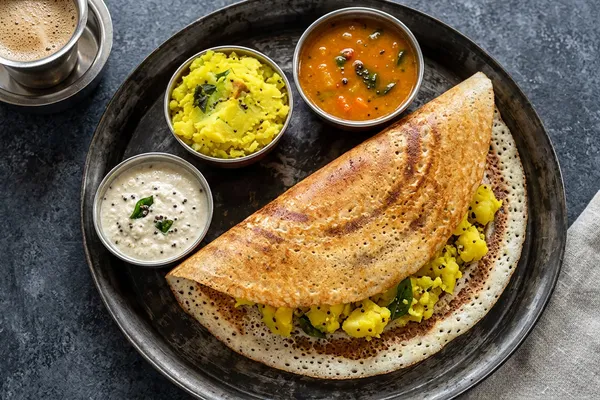
Masala Dosa (Crispy South Indian Crepe with Spiced Potato)
The South Indian icon: a fermented rice-and-lentil crepe griddled until lacy and golden, wrapped around a turmeric-yellow potato masala, and served with coconut chutney and sambar. A weekend project worth every minute.
Malabar Coast, Kerala · Indian
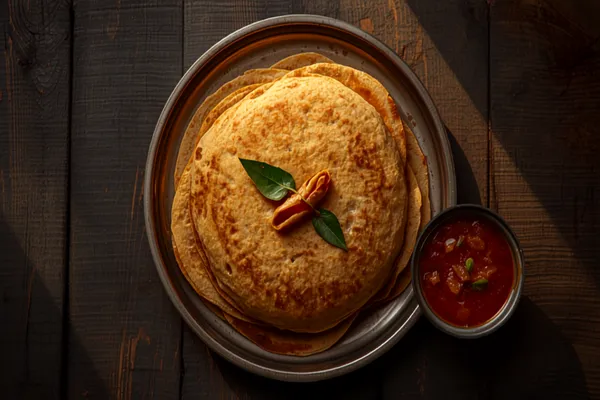
Malabar Parotta (Kerala Layered Flatbread)
The flaky, pull-apart layered flatbread of the Malabar Coast — soft dough stretched paper-thin, coiled into a spiral, and griddled until it shatters into ribbons. Slap it hot and eat it with curry.