Malabar Coast, Kerala · Indian
Malabar Parotta (Kerala Layered Flatbread)
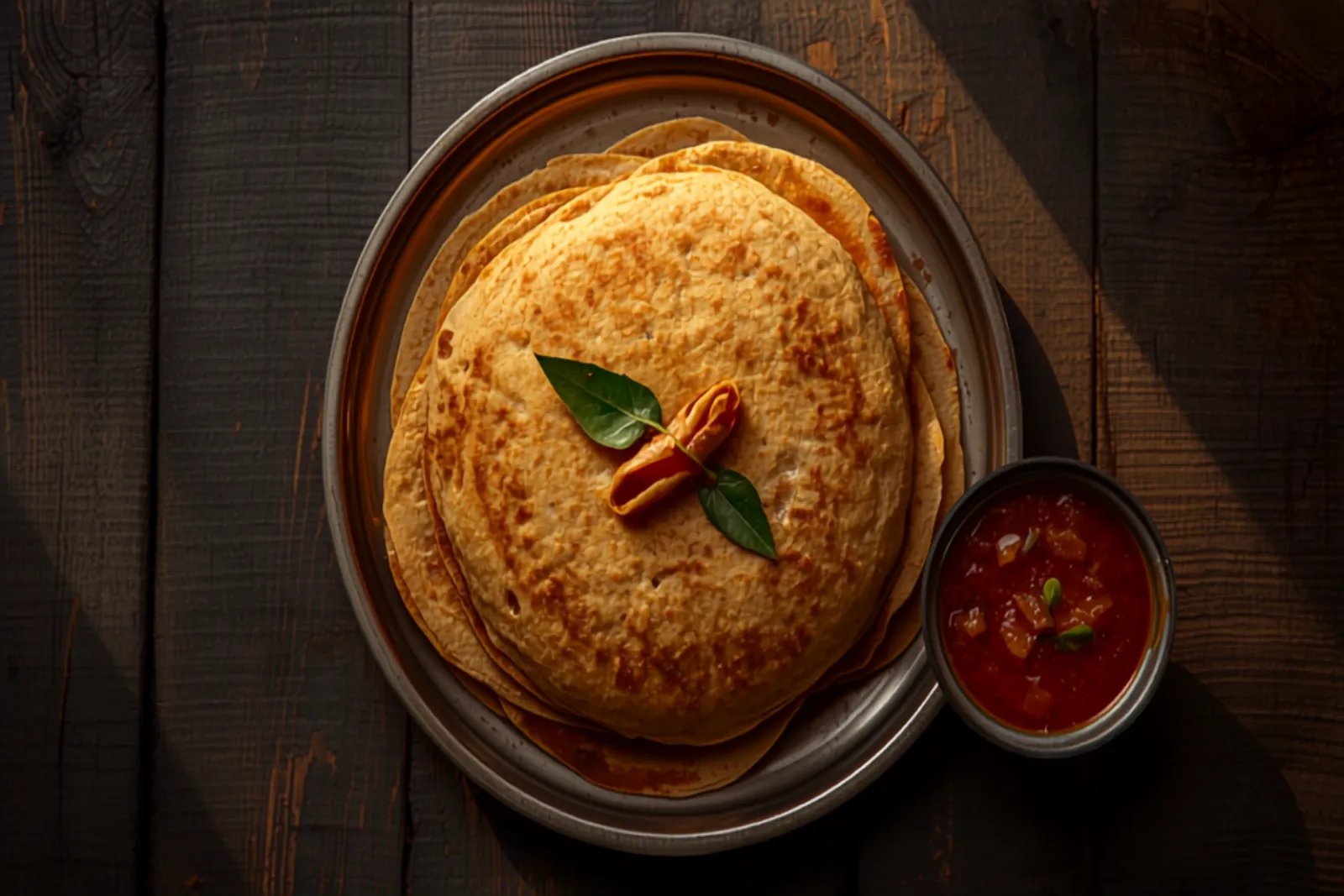
The flaky, pull-apart layered flatbread of the Malabar Coast — soft dough stretched paper-thin, coiled into a spiral, and griddled until it shatters into ribbons. Slap it hot and eat it with curry.
Published July 8, 2026
Cultural context
Parotta belongs to the Indian Ocean, not to any one state. Laminated flatbreads travelled with West Asian traders to the Malabar Coast, and Sri Lankan Tamil migrant workers carried a related bread — veechu parotta — into coastal Tamil Nadu; food writers have traced strands of its lineage as far as Jaffna. What Kerala gave it was the tea-shop: by the 1970s and 80s the rhythmic slap of dough on a steel counter was the sound of every roadside thattukada from Kozhikode to Kochi. Kerala and Tamil Nadu both claim it, and both are partly right.
Malabar parotta is the sound of a Kerala evening: dough slapped hard against a steel counter, a coil rolled flat, and then the sharp double-clap of a cook crushing a hot bread between his palms so it explodes into ribbons. It is a bread of pure technique — flour, water, salt, oil, and about three hours of patience — and no other Indian flatbread rewards patience quite so theatrically.
A bread of the Indian Ocean, not of one state
Kerala and Tamil Nadu both claim the parotta, and the argument misses the point. Laminated flatbreads arrived on the Malabar Coast with West Asian traders, and Sri Lankan Tamil migrant workers brought a close cousin, veechu parotta, into coastal Tamil Nadu; some food writers trace threads of the lineage back to Jaffna. What Kerala unmistakably gave it was the thattukada — the roadside tea shop where, by the 1970s and 80s, parotta and beef curry became the state’s most beloved late-night plate. The bread belongs to a coastline and a trade route, not to a border.
The dough is the whole recipe
Everything that makes parotta flaky happens before it meets the griddle. You want a dough soft enough to feel slightly tacky, kneaded hard for ten minutes, and then left alone for two hours or overnight. That rest is non-negotiable. Gluten that hasn’t relaxed will snap back the moment you try to stretch it, and a sheet you cannot stretch to translucency is a sheet with nothing to laminate.
Oil, never flour, for the stretch
Oil your counter and your hands and stretch the ball outward until light comes through it. Oil keeps the sheets sliding past one another; a flour-dusted stretch would weld them. Then, and only then, a whisper of dry maida over the oiled sheet before you pleat it — that dry dusting is the release agent that keeps each fold a separate leaf.
Pleat, coil, rest again
Gather the sheet into accordion folds like a paper fan, stretch the rope, and coil it into a snail shell. This is the move that matters: pleating makes the layers, coiling stands them upright so they run through the bread rather than across it. Rest the coils another twenty minutes so they roll out without unravelling.
Medium heat, and then the slap
Roll the coil to about 5 mm — thicker than feels right — and cook it over medium heat with ghee, not over a raging flame. The water between the layers needs time to turn to steam and force them apart before the crust sets. Then, the moment it comes off the tawa, clap it hard between your palms. The crust cracks, the layers spring loose, and the parotta opens into the dozens of leaves you spent three hours building.
Serve it torn, with gravy: a coconut-rich Kerala fish curry or a peppery Chettinad chicken. For more on the region’s breads and its rice-and-coconut logic, read our guide to South Indian cooking.
Ingredients
For the dough
- 500 g (about 4 cups) maida (refined white flour) Maida is low-protein and very extensible — it stretches to a translucent sheet without tearing. Plain all-purpose flour works; strong bread flour fights you.
- 1 tsp fine salt
- 1 tsp sugar A little sugar feeds browning and softens the crumb. Not enough to taste sweet.
- 1 egg, lightly beaten (optional) Tea shops often add one. It gives a richer, more tender parotta. Leave it out to keep the bread vegetarian-and-eggless — it still works.
- 3 tbsp neutral oil or melted ghee
- 250–280 ml (about 1 to 1 1/4 cups) warm water or warm milk Milk gives a softer, paler parotta; water gives a crisper one. Add gradually — flours drink differently.
For shaping and cooking
- 6–8 tbsp neutral oil, for laminating and cooking
- 3–4 tbsp ghee For finishing on the griddle. This is where most of the aroma comes from.
- 2–3 tbsp extra maida, for dusting
Method
Tap a step’s number to check it off as you go.
-
Whisk the flour, salt and sugar in a wide bowl. Add the egg (if using) and 3 tbsp oil, then trickle in the warm water a little at a time, mixing until it comes together into a shaggy mass.
Why: Warm liquid relaxes the gluten from the start, which matters more here than in almost any other Indian bread — you are about to ask this dough to stretch to the thickness of a sheet of paper.
-
Knead on the counter for a full 10 minutes, until the dough is smooth, slack and genuinely sticky-soft — softer than chapati dough. Slap it down hard a few times as you go.
Why: Slapping aligns the gluten faster than pushing does, and it's exactly what parotta masters do. The dough should feel like an earlobe, not a rubber ball; a stiff dough will never laminate.
-
Rub the dough with a film of oil, cover, and rest at least 2 hours at room temperature — overnight in the fridge is better.
Why: This is the single step people skip and the single reason parottas fail. Resting lets the gluten network relax so the dough will stretch instead of snapping back. Time does the work your hands can't.
-
Divide into 8 balls. Oil your counter generously — no flour yet. Take one ball and press, then push it outward with oiled palms into a thin round, then keep going: lift, stretch over the backs of your hands, and coax it to a translucent sheet 40 cm or more across. A few small tears are fine.
Why: Oil, not flour, is the lubricant. Flour would glue the layers together; a slick of oil keeps every sheet separate, which is what turns one sheet into a hundred leaves.
-
Brush the sheet with oil and dust it very lightly with dry maida. Now pleat it: gather the sheet into loose accordion folds along its length, like a paper fan, to make one long ruffled rope.
Why: The dusting of dry flour is the release agent between folds. The pleats are the layers — each fold you make now is a leaf you will pull apart later.
-
Stretch the rope gently to lengthen it, then coil it into a tight spiral like a snail shell, tucking the end underneath. Set it aside, oiled and covered, and repeat with the rest. Rest the coils 20–30 minutes.
Why: Coiling turns the horizontal pleats into a vertical stack, so when you flatten the spiral the layers run through the bread rather than across it. The second rest relaxes the dough again so the coil rolls out without unravelling.
-
Press each coil gently with your palm, then roll it out to about 15 cm across and 5 mm thick. Roll from the centre outward with a light hand and don't press the edges thin.
Why: Roll it too thin and you crush the air pockets between the layers — the parotta comes out dense and bready. It should still look slightly thick and slightly uneven going onto the griddle.
-
Heat a heavy tawa or cast-iron skillet over medium heat. Cook the parotta about 1–2 minutes a side until it puffs and blisters golden-brown, spooning around 1 tsp of ghee on each side.
Why: Medium heat, not high: the water trapped between the layers has to turn to steam and push them apart before the outside sets. Too hot and you get a scorched crust over raw, glued layers.
-
Take the parotta straight off the heat, hold it in a folded cloth, and clap it between your palms two or three times — or gather the edges and crush them inward.
Why: The famous slap. It cracks the fused crust and shocks the layers loose so the parotta blooms into ribbons. Do it while it's blazing hot; a cooled parotta will not open up.
-
Stack the cooked parottas in a cloth-lined box or wrapped in foil while you finish the rest, and serve immediately.
Why: Trapped steam keeps them soft. A parotta left on an open plate goes leathery within minutes.
A quick, anonymous tap — no review needed.
Variations
- Wheat parotta
Swap half the maida for fine atta. Less shatteringly flaky and a shade heavier, but nuttier and far more forgiving. Add an extra tablespoon of oil to the dough.
- Coin parotta
Roll the coils to a thicker 1 cm and cut the cooked bread into small rounds. The Kozhikode tea-shop favourite, eaten by the handful with beef curry gravy.
- Kothu parotta
Shred day-old parottas and stir-fry the pieces on a hot griddle with egg, onions, chilli and leftover curry gravy, chopping constantly with two blades. The best thing to do with yesterday's bread.
- Eggless and vegan
Leave out the egg, use water instead of milk, and finish with coconut oil rather than ghee — a common thattukada practice anyway.
Serving & Storage
Parotta wants gravy. Tear it, don't cut it, and use a piece as the spoon. In Kerala it goes with beef curry or a coconut-thick fish curry; in Tamil Nadu with salna or chicken chettinad. A raw onion and green chilli on the side is not optional at a proper tea shop.
Pairs with: Kerala fish curry, Chettinad chicken, Vegetable stew, Sulaimani or strong chai.
Storage: Best within minutes of cooking. Cooked parottas keep 2 days wrapped airtight in the fridge; reheat on a dry tawa and clap again to reopen the layers. Uncooked coils freeze beautifully for up to 2 months — freeze them separated by parchment, thaw fully, then roll and cook.
Nutrition
Per serving (1 parotta (about 85 g))
- Calories
- 265
- Protein
- 5 g
- Carbs
- 36 g
- Fat
- 11 g
- Fiber
- 1 g
- Sugar
- 1 g
- Sodium
- 295 mg
Notable micronutrients: Selenium, Iron
Estimated using standard ingredient data. Values vary with brands and substitutions.
Frequently Asked Questions
Why won't my parotta separate into layers?
Almost always one of three things. The dough was too stiff (it should be softer than chapati dough and slightly tacky), it wasn't rested long enough (two hours minimum — the gluten has to relax or the sheet will never stretch thin), or you rolled the coil too thin and crushed the air out. Rolling to 5 mm and clapping the parotta while it's still scorching hot fixes most of it.
Can I make parotta with whole-wheat flour?
You can, and many home cooks do, but be honest about the trade-off. Wheat bran cuts through the gluten strands and stops the dough stretching to a translucent sheet, so the layers are thicker and fewer. Half maida, half fine atta plus an extra spoon of oil is the best compromise — recognisably parotta, noticeably nuttier, a little denser.
What is the difference between Malabar parotta and veechu parotta?
The same stretched sheet, folded two different ways. Malabar parotta is pleated and coiled into a spiral, so it flakes into round, layered ribbons. Veechu parotta — from Tamil Nadu and Sri Lanka, where veechu means 'to fling' — is folded into a square envelope and cooked flat, giving a thinner, chewier bread. The dough is essentially identical.
Is maida really necessary?
For a classic tea-shop parotta, yes. Maida's low protein and fine grind make it exceptionally extensible, which is the entire point — you need a dough that will stretch to translucency without tearing. Bread flour is too strong and will spring back on you. If you want to avoid maida altogether, make the wheat version above and accept a different, still very good bread.
What to drink with this
All drinks →Hand-picked pours to match this dish.
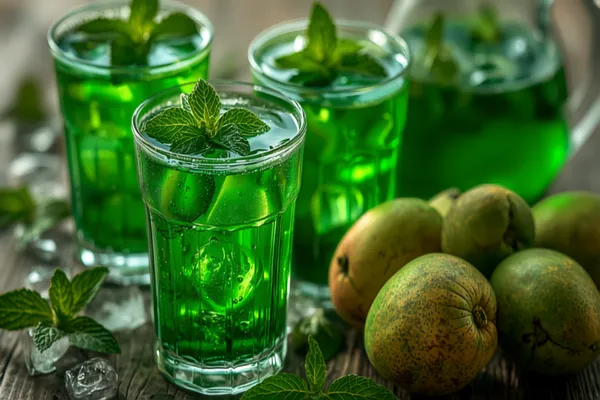
North & West India (peak-summer drink across the subcontinent) · Indian
Aam Panna (Raw Green Mango Summer Cooler)
India's tangy, jade-green raw-mango cooler — roasted or boiled green mangoes blended with cumin, black salt and mint. The traditional heat-stroke remedy that tastes like summer.
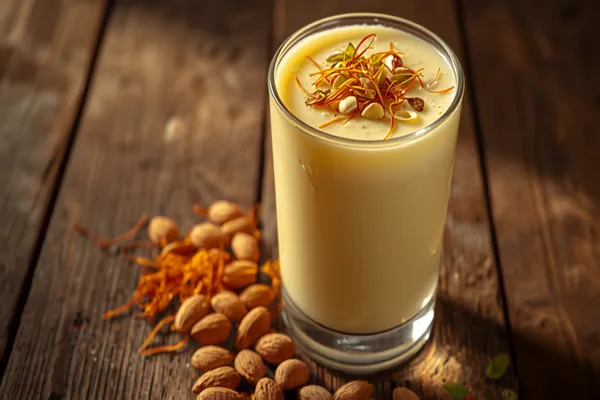
Pan-Indian (North & West India) · Indian
Badam Milk (Saffron Almond Milk)
Milk simmered with a paste of soaked almonds, saffron, cardamom and a whisper of nutmeg — India's rich, fragrant almond drink. Comforting served warm in winter, reviving served chilled in summer, festive any time.
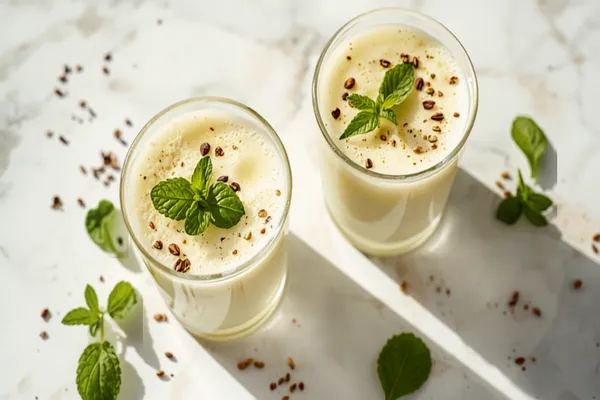
Pan-Indian (Gujarat & West India especially) · Indian
Chaas (Spiced Indian Buttermilk / Masala Chaas)
Whisked yogurt thinned with water and seasoned with cumin, green chilli, ginger and curry leaves — India's cooling, savoury buttermilk. A salty-tangy digestive that beats the heat and settles a heavy meal in two minutes.
From our kitchen community
Ratings & Reviews
My Rating
Tap a star to rate — no sign-in, no form needed.
My Review
0 Ratings
🥣 0 home cooks made it!
Be the first to rate Malabar Parotta (Kerala Layered Flatbread).
Related Recipes
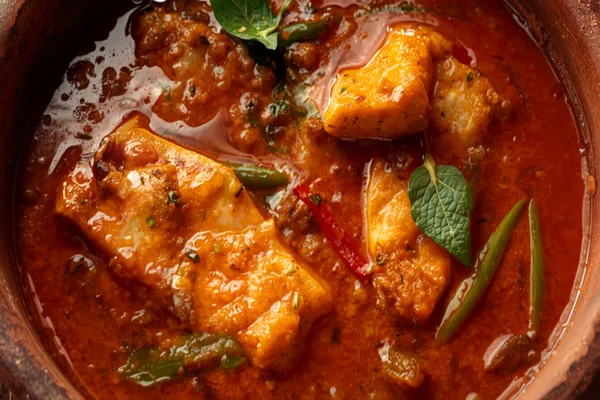
Kerala / South India (Malabar coast) · Indian
Kerala Fish Curry (Meen Curry with Coconut)
A coastal Kerala classic: fish simmered in a tangy, coconut-rich gravy sharpened with kokum-like kudampuli (Malabar tamarind) and a fragrant curry-leaf tempering. Sour, spicy, and built for rice.
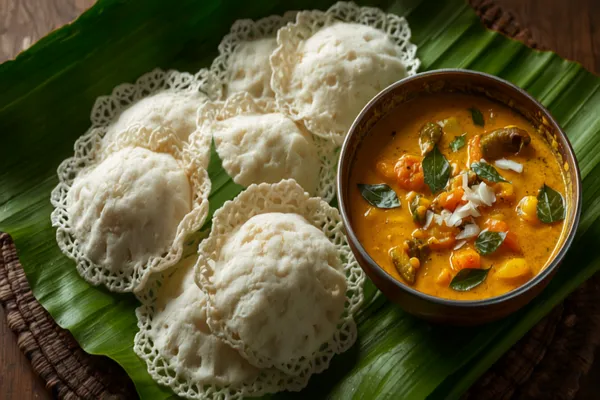
Kerala / South India · Indian
Appam with Vegetable Stew (Kerala Lacy Rice Hoppers)
Kerala's soft, lacy-edged fermented rice-and-coconut hoppers, served with a gently spiced coconut-milk vegetable stew. A breakfast-table classic of the Malabar and Travancore coasts — pillowy in the centre, crisp at the rim.
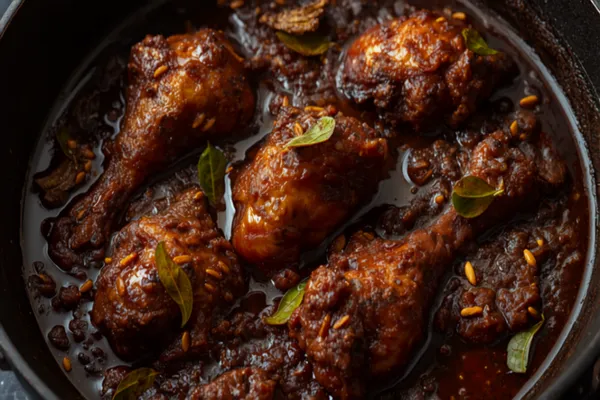
Chettinad, Tamil Nadu / South India · Indian
Chettinad Chicken (Kozhi Chettinad)
Tamil Nadu's boldest curry: chicken in a dark, aromatic masala of freshly roasted and ground spices — peppercorns, fennel, star anise, and the smoky stone flower (kalpasi) — fired up with Chettinad's signature heat. Deep, complex, unforgettable.
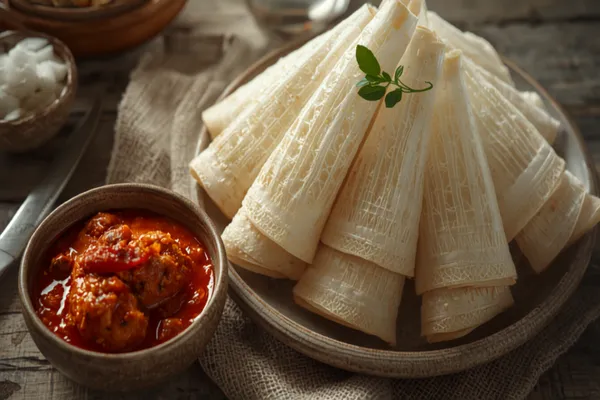
Mangalore / coastal Karnataka (Tulu Nadu) / South India · Indian
Neer Dosa (Mangalorean Lacy Rice Crepe)
Coastal Karnataka's delicate everyday crepe: a thin, soft, lacy dosa from a simple ground-rice batter — no fermentation, no urad dal. 'Neer' means water, for how thin the batter pours. The gentle foil to a fiery ghee roast.
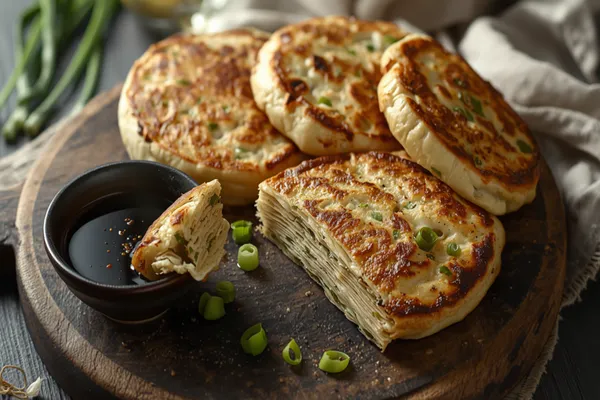
Shanghai and the lower Yangtze, drawing on the northern wheat belt of Shandong and Henan where the bing tradition began · Chinese
Cong You Bing — Chinese Scallion Pancakes with Shatteringly Flaky Layers
Flour, water, oil and spring onions, laminated like puff pastry and fried until the layers separate into flakes. The two things that decide the outcome are a half-boiling-water dough and an oil roux — not plain oil — between the sheets.
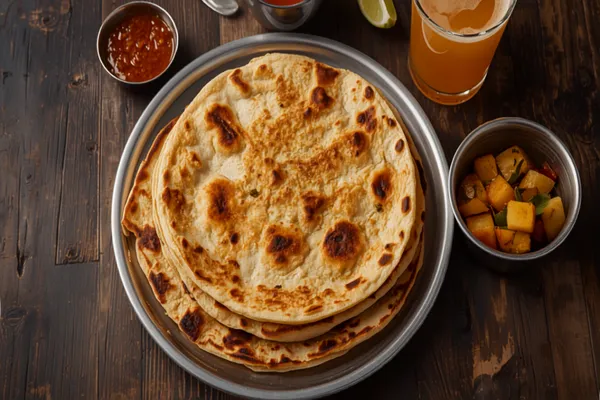
Peninsular Malaysia — the mamak stalls of Penang, Kuala Lumpur and the Klang Valley, with the same bread sold across the causeway in Singapore as roti prata · Malaysian
Roti Canai (Malaysian Mamak Flatbread with Kuah Dhal)
The flaky, layered flatbread of Malaysia's mamak stalls: a soft enriched dough rested overnight, stretched translucent and coiled, griddled in ghee until it shatters, then clapped between the palms to open its layers — served with a thin, fragrant kuah dhal.