Shanghai and the lower Yangtze, drawing on the northern wheat belt of Shandong and Henan where the bing tradition began · Chinese
Cong You Bing — Chinese Scallion Pancakes with Shatteringly Flaky Layers
Flour, water, oil and spring onions, laminated like puff pastry and fried until the layers separate into flakes. The two things that decide the outcome are a half-boiling-water dough and an oil roux — not plain oil — between the sheets.
Published August 27, 2026
Cultural context
*Bing* (餅) is one of the oldest categories in Chinese cooking — a wheat-flour flatbread named in the *Mozi* around 400 BCE and defined in the Han-dynasty *Shuowen Jiezi* — and it arrived with wheat and the rotary quern along the Silk Road, which is why the earliest famous one is called *hu bing*, 'foreign bing'. *Cong you bing*, literally 'scallion oil bing', belongs to the northern wheat provinces by ancestry and to Shanghai by fame: the thick, generously oiled, twice-cooked street version sold from woks on Jiangnan pavements is the one most of the world pictures. Taiwan added a thicker, chewier 'thousand-layer' cousin and then, in frozen packets, exported it everywhere.
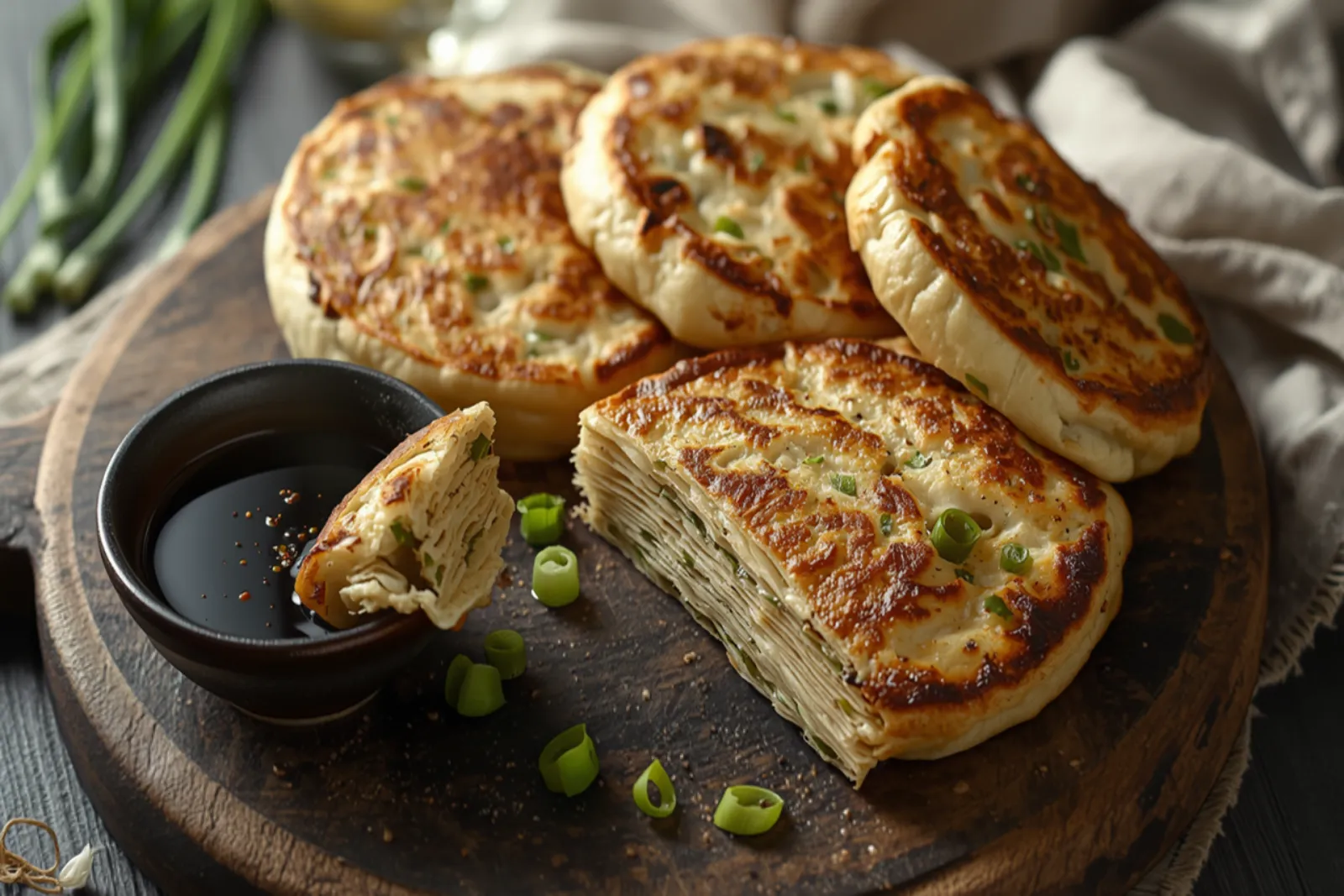
Scallion pancakes — cong you bing, 葱油饼, literally “scallion oil bing” — are four pantry ingredients pretending to be pastry. Flour, water, oil and spring onions become a coiled, laminated round that fries into dozens of distinct flakes, crisp at the rim and chewy at the centre, smelling of hot onion and toasted wheat. They are sold from pavement woks in Shanghai, folded into paper sleeves and eaten walking. They cost almost nothing to make. And they go wrong for entirely predictable reasons, which is what most of this recipe is about.
Bing is older than almost everything
Bing (餅) is not a dish but a whole category: wheat-flour flatbread, the oldest branch of Chinese baking. The word appears in the Mozi around 400 BCE, and by the Han dynasty the dictionary Shuowen Jiezi was defining it as food made from wheat flour. Wheat itself was an import, travelling east through Central Asia along with the rotary quern that made flour practical — which is why the most famous early bing was hu bing, “foreign bing,” a sesame flatbread that arrived over the Silk Road and became a Han staple.
That deep history is worth knowing because of a story you’ll meet everywhere online: that scallion pancakes descend from Indian paratha, brought to Shanghai by the city’s Indian community in the early twentieth century. It’s an appealing tale and the resemblance is real, but the dates don’t work — layered oil-and-flour bing were being made in China for centuries before that. The more honest reading is that wheat, milling, and the trick of laminating dough with fat all moved along the same trade corridors, leaving a family of cousins across Asia: the Chinese bing, the paratha, Malaysia’s roti canai, the flatbreads of the Levant. None of them is the parent.
By ancestry, then, the scallion pancake belongs to the northern wheat provinces — Shandong and Henan, where bing is everyday bread. By reputation it belongs to Shanghai, whose thicker, oilier, twice-cooked street version is what the world pictures. Taiwan later added a chewier “thousand-layer” cousin, froze it, and shipped it to supermarkets everywhere.
The two decisions that matter
Half the dough gets boiling water
This is ban tang mian, half-scalded dough, and it is why restaurant scallion pancakes are tender and yours may not be. Boiling water poured over half the flour denatures its gluten proteins so they can’t form a strong elastic network, and gelatinises some of the starch so it holds water. That portion of the dough turns soft, extensible and — critically — willing to be rolled paper-thin without springing back.
The other half gets cold water and keeps its gluten intact, which is what stops the thin laminated sheets from tearing. Scald all of it and the dough is too fragile to work; scald none of it and you’ll be wrestling a rubber band.
Use an oil roux, not oil
The second decision is you su (油酥): a few tablespoons of flour whisked into warmed oil to make a loose paste. Nearly every home recipe that produces disappointing pancakes tells you to brush the sheet with plain oil instead.
Plain oil has nowhere to go once a rolling pin arrives. It squeezes out at the edges, runs across the worktop, and leaves the dough sheets pressed directly against each other — which is to say fused, which is to say one thick layer rather than twenty thin ones. Suspending the fat in flour turns it into a paste that stays put, forming an unbroken barrier film between every sheet. It’s the job butter does in a croissant, without the chilling, because a paste doesn’t have to be solid to hold its place.
Then: roll, coil, and go easy
Roll the sheet into a rope and the layers become concentric; coil that rope into a snail and flatten it and they become stacked spirals, which is where the shatter comes from. Stretch the rope before coiling and you multiply them again. The only way to ruin it at this point is to bear down hard when rolling the coil out, welding everything back into a single mass — so roll from the centre, turn often, and accept a little roux weeping through.
One last thing, and it’s the one nobody mentions: when the pancake comes out of the pan, clap it between your palms or push it in from the edges a few times. Stall cooks call this tui su, pushing the flakes. It fractures the layers along their seams so they visibly separate. Two seconds, entirely different pancake.
If lamination is your thing, Kerala’s Malabar parotta works the same magic with a different geometry — and there’s more on dishes worth the technique in the world classics guide.
Ingredients
For the dough
- 300 g (2 1/2 cups) plain (all-purpose) flour, plus more for dusting Ordinary mid-protein plain flour is right. Bread flour makes a dough that fights the rolling pin and layers that stay tough; cake flour has too little structure to hold the lamination.
- 1/2 tsp fine salt
- 150 ml (2/3 cup) boiling water, straight off the kettle It genuinely needs to be at a rolling boil, not merely hot — see step 1. This is the half of the dough doing the tenderising.
- 75–85 ml (1/3 cup) cold water Add the last 10 ml only if the dough is dry. Flours vary; you want soft and slightly tacky, not sticky.
For the oil roux (you su, 油酥)
- 60 ml (1/4 cup) neutral oil — groundnut, rapeseed or sunflower Rendered pork lard is the old restaurant choice and gives a noticeably better flake and flavour; it makes the pancake non-vegetarian. Toasted sesame oil is too strong to use alone — a teaspoon stirred into the neutral oil is plenty.
- 45 g (5 tbsp) plain flour
- 3/4 tsp fine salt All the pancake's salt lives here rather than on the scallions — see step 5 for why that matters.
- 1/2 tsp ground white pepper, optional Common in Shanghai and Taiwan, absent from many northern versions. It adds a low, dusty heat that suits the scallion.
For the filling
- 8–10 (about 120 g) spring onions (scallions), sliced as finely as you can manage Use the green tops and the pale part; save the tough white bulbs for stock. Chinese chives (garlic chives) can stand in for a sharper, more garlicky pancake.
For frying
- 4–5 tbsp neutral oil
For the dipping sauce
- 3 tbsp light soy sauce
- 1 tbsp Chinkiang black vinegar The malty, faintly sweet Zhenjiang rice vinegar. Rice vinegar works; balsamic does not.
- 1 tsp toasted sesame oil
- 1 small clove garlic, finely grated
- 1/2 tsp caster sugar
- 1–2 tsp chilli crisp or chilli oil, to taste — optional
Method
Tap a step’s number to check it off as you go.
-
Put the flour and 1/2 tsp salt in a large bowl. Pour the boiling water over about half the flour and stir hard with chopsticks or a wooden spoon until that side is a shaggy, scalded mass. Then add 75 ml cold water to the dry side and stir until everything comes together into a rough dough.
Why: This is *ban tang mian* — half-scalded dough — and it is the single biggest decision in the recipe. Boiling water denatures the gluten proteins so they can no longer form a strong elastic network, and it gelatinises some of the starch, which holds water. That half of the dough is tender, soft and, crucially, does not spring back when rolled. The cold-water half keeps enough intact gluten to give the pancake chew and to stop the thin laminated sheets tearing. All boiling water gives you something fragile that falls apart; all cold water gives you a dough that recoils every time you roll it and layers that stay leathery.
-
Tip the dough onto a lightly floured surface and knead for 4–5 minutes, until smooth and soft — the texture of an earlobe. Add the last 10 ml of cold water if it feels dry and stiff. Wrap in cling film or cover with an upturned bowl and rest for 30 minutes at room temperature.
Why: The rest is not optional and it is not about flavour. Kneading tightens the gluten that survived the scalding; thirty minutes lets it relax so that later you can roll a piece of dough out to a paper-thin 30 cm sheet without it shrinking back or splitting. Skipping the rest is the reason home scallion pancakes end up thick and bready — you simply cannot get the dough thin enough, and thin is what makes layers.
-
Meanwhile, make the oil roux. Warm the 60 ml oil in a small pan over a low heat until it shimmers but is nowhere near smoking, then take it off the heat and whisk in the 45 g flour, 3/4 tsp salt and the white pepper. It should be a loose, pourable paste, like double cream. Set it aside to cool to room temperature.
Why: This is *you su*, and swapping it for plain brushed oil is the difference between a flaky pancake and a greasy one. Loose oil has nowhere to go under a rolling pin — it squeezes out at the edges, pools on the worktop and leaves the dough sheets touching each other, which is to say fused. Suspending the fat in flour turns it into a paste that stays exactly where you spread it, forming a continuous barrier film between every layer. It is the same job butter does in a croissant, minus the chilling, because a paste doesn't need to be solid to stay put.
-
Divide the rested dough into 4 pieces. Keep three covered. Roll the first out on a lightly floured surface into the thinnest rectangle you can — aim for about 30 x 20 cm and genuinely translucent in patches. If it starts to fight you, leave it for two minutes and come back.
Why: Layer count is a straight function of thinness: the sheet you roll now becomes 15 or 20 stacked sheets after rolling and coiling, and if it starts at 2 mm it finishes as a dense spiral. Fighting a recoiling dough is always a signal to wait rather than push — gluten relaxes on its own clock, and two minutes of patience is faster than tearing the sheet and starting again.
-
Spread a quarter of the oil roux over the whole sheet with the back of a spoon, right to the edges. Scatter a quarter of the sliced spring onions evenly over the top — evenly and not too thickly.
Why: Two things are going on. First, the salt is in the roux rather than sprinkled on the onions on purpose: salt sitting directly on cut scallion draws water out within minutes, and that water turns to steam in the pan, blows holes through the thin layers and makes the seams unstick. Second, a heavy carpet of scallion physically prevents the dough sheets from bonding at all, and the pancake unravels in the pan. Restraint here looks wrong and tastes right.
-
Roll the sheet up tightly from the long edge into a rope, as you would a swiss roll, then stretch the rope gently to about 45 cm. Coil it into a flat spiral like a snail shell, tuck the loose end underneath, and press down lightly to a thick disc. Repeat with the remaining three pieces, then rest all four coils, covered, for 10 minutes.
Why: Rolling the sheet gives you concentric layers; coiling that rope and then flattening it turns those concentric rings into dozens of stacked spirals, which is where the shattering flakiness comes from. Stretching the rope before coiling multiplies the count again. The 10-minute rest matters for the same reason as the first one — a tightly wound coil is under tension, and rolling it out immediately squeezes the roux straight through the dough.
-
Roll each coil out into a round about 20 cm across and 5 mm thick. Use a light hand and go from the centre outwards, turning rather than pressing hard. A little roux weeping through is fine; a torn sheet is not.
Why: Heavy pressure at this stage welds the spirals back into a single mass and undoes everything the lamination achieved. You are persuading the coil to spread, not crushing it flat. Five millimetres is the sweet spot: thinner and the layers merge into a crisp cracker, thicker and the centre stays doughy in the time the outside takes to brown.
-
Heat 1 tbsp oil in a heavy frying pan over a medium heat. Lay in one pancake and fry for 3 minutes, until the underside is golden with dark blistered spots. Flip, add another 1/2 tbsp oil round the edge, and fry 2–3 minutes more. Then cover the pan with a lid for 1 minute, uncover, and give each side a final 30 seconds to re-crisp.
Why: Medium heat, not high: the pancake needs long enough for the roux between the layers to melt out and effectively shallow-fry each sheet from the inside, which is what crisps them individually. High heat browns the outside in ninety seconds and leaves the middle raw and pasty. The minute under the lid is the street-stall trick — trapped steam inflates the layers and pushes them apart, and the final uncovered thirty seconds drives that moisture back off so you keep the crunch.
-
Slide the pancake onto a board. While it is still hot, clap it lightly between your palms or push in from opposite edges two or three times, so the layers visibly loosen and fluff apart. Cut into six wedges and eat straight away, while the rest fry.
Why: This is *tui su* — 'pushing the flakes' — and it is what stall cooks do instinctively before handing the pancake over. Compressing the disc briefly fractures the layers along their seams so they separate into distinct flakes instead of staying a solid round. It takes two seconds and transforms the texture.
-
Stir the dipping sauce ingredients together in a small bowl and serve alongside.
Why: The pancake is fatty, salty and starchy; the sauce is there as the acid counterweight, which is why black vinegar rather than more soy is doing the real work. Add it at the table, not to the pancake — a dipped corner stays crisp, a dressed pancake goes soft in under a minute.
A quick, anonymous tap — no review needed.
Variations
- Taiwanese thousand-layer (千層蔥油餅)
Thicker, chewier and puffier than the Shanghai version. Roll the sheet slightly less thin, use lard in the roux, and fry in a good 3 mm of oil over a lower heat for longer so the pancake inflates as it cooks. This is the style behind the frozen packets sold worldwide, and the one that gets pushed and fluffed most aggressively at the stall.
- Shandong-style, thinner and drier
The northern wheat-belt original leans leaner: less roux, less oil in the pan, rolled thinner and cooked on a dry-ish griddle until it is more crisp than rich. Eaten as everyday bread with congee or soup rather than as a snack in its own right.
- Egg pancake (蛋餅 / jidan bing)
Taiwanese breakfast standard. Beat an egg, pour it into the pan, lay the just-cooked pancake straight on top so the egg sets against it, then flip, add a smear of sweet soy paste and roll the whole thing up. Add ham, cheese or a handful of basil if you like.
- Chinese chive and sesame
Swap the spring onions for finely chopped garlic chives (*jiu cai*) and scatter a tablespoon of white sesame seeds over the sheet with them. Sharper and more assertive; a common northern breakfast.
- Baked, not fried
Not traditional, but it works when you're making a lot at once. Brush both sides lightly with oil and bake at 220°C / 425°F on a preheated baking tray for 12–14 minutes, flipping halfway. You lose some crispness at the edges and gain a hands-off batch.
Serving & Storage
Cut into wedges and eat with your fingers, straight from the board, with the vinegar-soy sauce in the middle of the table. In Shanghai they are breakfast and afternoon snack rather than dinner — bought hot in a paper sleeve on the way somewhere. At home they slot in anywhere a bread would: alongside congee in the morning, torn into a bowl of soup, or as the thing everyone eats standing up in the kitchen while the rest of dinner finishes. A whole pancake wrapped around cucumber batons, hoisin and shredded roast pork makes a very good improvised roll.
Pairs with: Chinkiang black vinegar and soy dipping sauce, Chilli crisp, Congee, Hot and sour soup, Cold smacked cucumber salad, Jasmine or oolong tea, Soy milk (doujiang), hot and unsweetened.
Storage: Best within minutes of leaving the pan — this is not a dish that improves. Cooked pancakes keep a day in the fridge and revive in a dry pan over medium heat for 2 minutes a side; never in a microwave, which turns the layers to felt. Better still, freeze them raw: stack the rolled-out rounds with baking paper between them, bag, and freeze for up to 3 months. Fry straight from frozen over a slightly lower heat for an extra 2 minutes a side — no thawing, which would only make them soggy. The oil roux keeps a week in a jar in the fridge; let it come back to room temperature before spreading.
Nutrition
Per serving (1 pancake (a quarter of the recipe))
- Calories
- 395
- Protein
- 8 g
- Carbs
- 50 g
- Fat
- 18 g
- Fiber
- 2 g
- Sugar
- 1 g
- Sodium
- 690 mg
Notable micronutrients: Vitamin K, Folate, Selenium, Thiamine, Iron
Estimated using standard ingredient data. Values vary with brands and substitutions.
Frequently Asked Questions
Why aren't my pancakes flaky? Mine come out like a thick chewy bread.
Almost always one of three things, in this order of likelihood. First, the dough was not rolled thin enough — the initial sheet needs to be near-translucent, because the number of layers you finish with is set entirely by how thin it starts. Second, you used plain oil instead of the flour-and-oil roux; loose oil squeezes out under the rolling pin and the dough sheets end up touching, which means fusing. Third, you pressed too hard rolling out the coil, welding the spirals back together. A fourth, smaller culprit: skipping the two rests, which leaves the dough springy and impossible to roll thin.
Do I really need boiling water, or can I just use warm?
It needs to be boiling. The point is to denature the gluten proteins and gelatinise some starch, and warm water doesn't do either — it just makes a slightly softer ordinary dough that still recoils under the pin and cooks up chewy rather than tender. Pour it straight from the kettle and stir with chopsticks or a spoon rather than your hand, for obvious reasons. And note that only half the flour is scalded: the unscalded half is what keeps the thin layers strong enough not to tear.
Is cong you bing really the ancestor of Indian paratha — or the other way round?
Neither claim survives much scrutiny, though both circulate widely. The most popular version online holds that Shanghai's early-twentieth-century Indian community brought paratha, which the city adapted — a nice story with no real evidence behind it, and one contradicted by chronology: *bing* is named in Chinese texts by around 400 BCE and defined as a wheat-flour food in Han-dynasty dictionaries, and layered oil-and-flour bing are documented in Chinese cookery long before any Indian presence in Shanghai. The honest picture is a family resemblance rather than a lineage. Wheat, the rotary quern and the technique of laminating dough with fat all travelled the same Silk Road corridors, which is why the Chinese *bing*, the South Asian paratha, the Levantine and Yemeni breads and the Malay *roti canai* are cousins in method without any one of them being the parent.
Can I make these ahead for a party?
Yes, and freezing raw is much better than making them ahead cooked. Roll the coils out into their final rounds, stack them with squares of baking paper between, bag them flat and freeze. They fry from frozen with no thawing at all — just drop the heat slightly and give them an extra couple of minutes a side. Cooked-and-reheated pancakes are acceptable in a dry pan but never quite regain the shatter. If you want to split the work differently, the dough itself will sit covered in the fridge overnight and rolls out beautifully once it comes back to room temperature.
What's the difference between this and a Taiwanese scallion pancake?
Mostly thickness and fat. The Shanghai-style pancake here is rolled thinner, fried in a few tablespoons of oil, and finishes crisp with defined flakes. The Taiwanese *thousand-layer* version is rolled thicker, usually made with lard, and shallow-fried in more oil over lower heat so it puffs and stays chewy inside — soft and stretchy where the Shanghai one is brittle. Both get the same clap-and-fluff treatment at the end. The frozen pancakes sold in supermarkets around the world are almost all the Taiwanese style.
Can I use a food processor or stand mixer for the dough?
A stand mixer with a dough hook is fine — mix on low for 3–4 minutes after the water goes in, then let it rest as usual. A food processor is best avoided: it works the dough far too fast and too warm, and this is a dough you want deliberately under-developed rather than strong. Honestly, five minutes of hand kneading also tells you more about whether the hydration is right than any machine will.
What to drink with this
All drinks →Hand-picked pours to match this dish. Alcoholic pairings are for adults of legal drinking age (21+ in the US) — please drink responsibly.
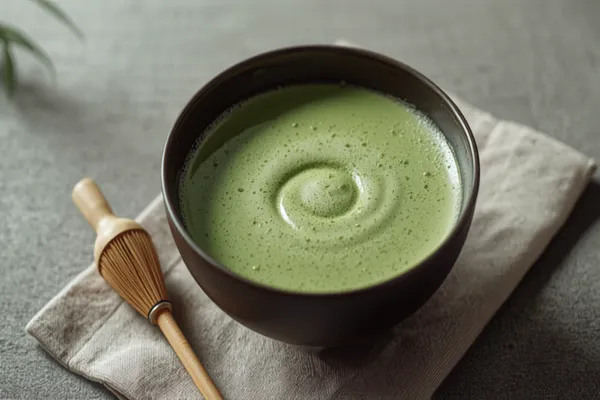
Japan (the chado tea tradition of Kyoto and Uji, home of Japan's finest matcha) · Japanese
Matcha (Whisked Usucha, Thin Tea)
How to whisk a proper bowl of usucha — thin matcha — with a bamboo chasen: bright, jade-green, frothed to a fine foam, and faintly sweet-bitter. The everyday face of Japan's centuries-old tea tradition, ready in two minutes on a home counter.
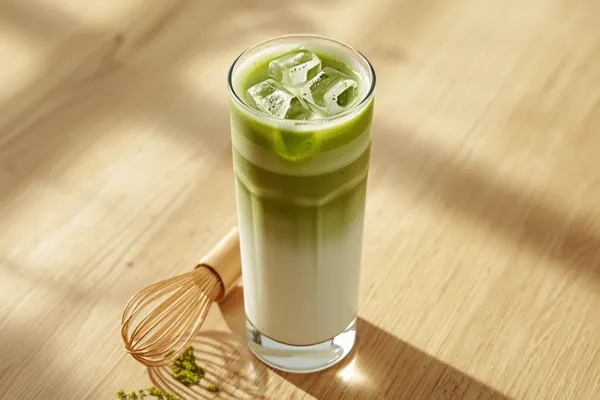
Japan (matcha tradition, Uji & Nishio) · Japanese
Matcha Latte (Whisked Japanese Green Tea Latte)
Stone-ground Japanese matcha whisked smooth and poured over steamed milk — grassy, sweet and gently caffeinated, with no bitterness when you make it right. A café favourite that's better and cheaper at home.
 21+
21+ American bars (via Japanese Midori) · Japanese-American
Midori Sour (Melon Liqueur, Lemon & Lime)
The bright-green retro sour: sweet Midori melon liqueur balanced with fresh lemon and lime, lengthened with a splash of soda. A vivid, nostalgic crowd-pleaser — sweet-tart, low-proof and unmistakably '80s.
From our kitchen community
Ratings & Reviews
My Rating
Tap a star to rate — no sign-in, no form needed.
My Review
0 Ratings
🥣 0 home cooks made it!
Be the first to rate Cong You Bing — Chinese Scallion Pancakes with Shatteringly Flaky Layers.
Related Recipes
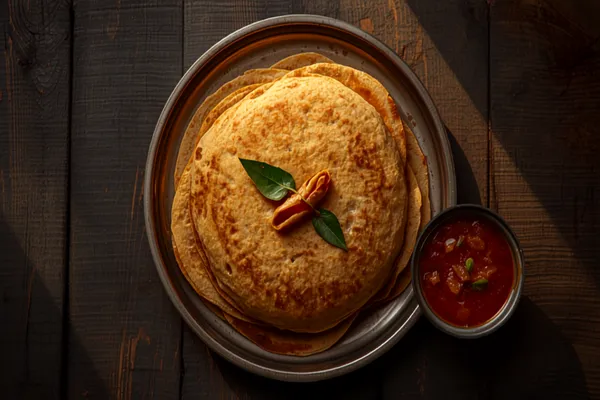
Malabar Coast, Kerala · Indian
Malabar Parotta (Kerala Layered Flatbread)
The flaky, pull-apart layered flatbread of the Malabar Coast — soft dough stretched paper-thin, coiled into a spiral, and griddled until it shatters into ribbons. Slap it hot and eat it with curry.
Northern China · Chinese
Pork and Chive Potstickers (Jiaozi)
The dumplings at the heart of Chinese celebration: juicy pork-and-chive filling folded into pleated wrappers, then pan-fried crisp on the bottom and steamed soft on top. A hands-on, make-together feast — fold a big batch and freeze the rest.
Guangdong / Cantonese (China) · Chinese
Siu Mai (Cantonese Pork and Shrimp Dumplings)
The open-topped dim sum classic — juicy pork and shrimp filling in a thin wheat wrapper, pleated into a little cup and steamed until plump. The dumpling at the heart of any dim sum spread, easier to make at home than you'd think.
Guangdong (Cantonese) · Chinese
Char Siu (Cantonese Barbecue Pork)
The lacquered red-edged pork that hangs in every Cantonese roast-meat window: pork shoulder marinated in a sweet-savoury glaze of hoisin, soy, honey, and five-spice, then roasted and basted until sticky and caramelised. Easier at home than you'd think.
Hong Kong — the cha chaan teng and bing sutt bakeries of Central, Wan Chai and Kowloon, with roots in 1920s Guangzhou · Hong Kong
Hong Kong Egg Tarts (Daan Taat)
The glassy, wobble-free custard tart of Hong Kong's cha chaan teng — a short, biscuity butter crust, a filling of whole eggs and evaporated milk strained twice until it sets clear, and a two-stage bake that browns the pastry before the custard ever has a chance to soufflé.
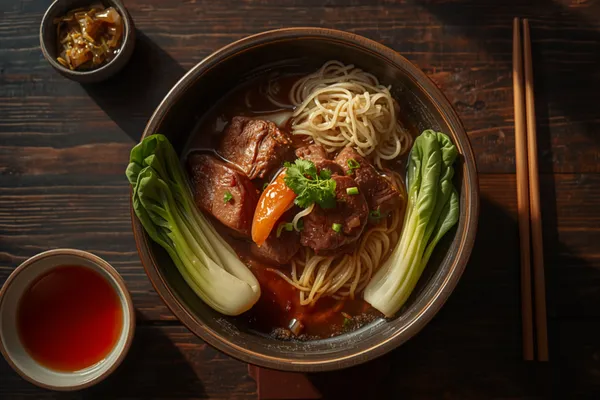
Taiwan — born in the juancun military-dependents' villages around Gangshan in Kaohsiung, perfected in the noodle shops of Taipei · Taiwanese
Taiwanese Beef Noodle Soup — Red-Braised Niu Rou Mian with Shank and Tendon
Taiwan's national bowl: beef shank and tendon braised for three hours in a dark, glossy broth built on fried chilli bean paste, caramelised rock sugar and tomato. The colour comes from frying the doubanjiang in oil, not from soy sauce — and that one step is the whole dish.
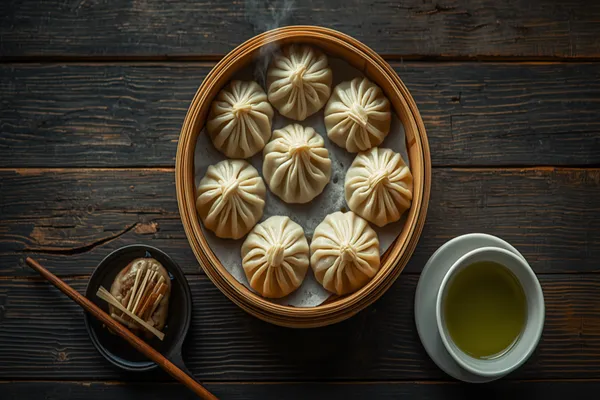
Nanxiang, in Shanghai's western Jiading district — and the teahouse counters around Yu Garden that carried it into the city · Chinese
Xiaolongbao (Shanghai Soup Dumplings, the Nanxiang Way)
The dumpling that carries its own soup: chilled pork aspic folded into the filling, sealed inside a thin unleavened wrapper with eighteen pleats, and steamed until the jelly melts back into broth. Every part of the technique exists to protect that liquid.
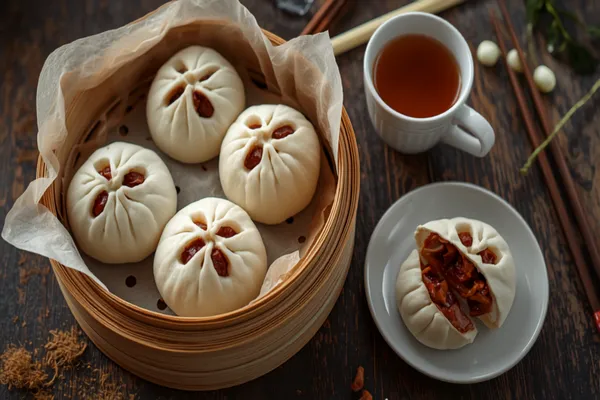
Guangzhou and the Pearl River Delta — the yum cha teahouses of Guangdong, and the dim sum halls of Hong Kong that carried them worldwide · Chinese
Char Siu Bao (Cantonese Steamed BBQ Pork Buns)
The cloud-white dim sum bun that splits open at the top like a laughing mouth: low-gluten dough steamed around a jellied sauce studded with sweet-savoury char siu. The filling is set firm on purpose — that is the whole trick.