Japan (matcha tradition, Uji & Nishio) · Japanese
Matcha Latte (Whisked Japanese Green Tea Latte)
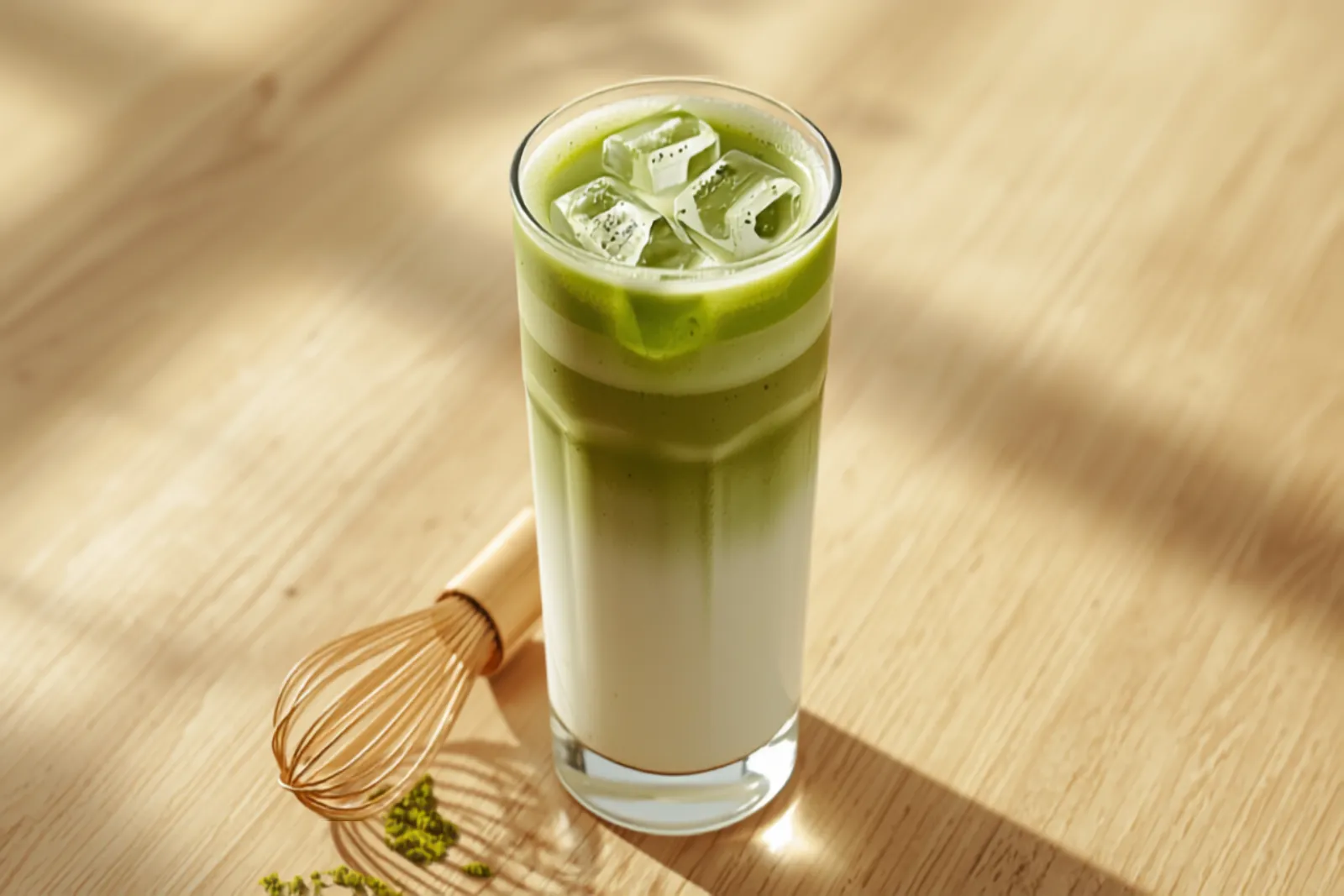
Stone-ground Japanese matcha whisked smooth and poured over steamed milk — grassy, sweet and gently caffeinated, with no bitterness when you make it right. A café favourite that's better and cheaper at home.
Published June 22, 2026
Cultural context
Matcha — finely stone-ground green tea — has been central to the Japanese tea ceremony for centuries, traditionally whisked with hot water alone. The milky latte is a modern, Western-born adaptation that has swept global café culture. Good matcha is vivid green and grassy-sweet; the dull, bitter cup most people know comes from low grade or overheated water.
A matcha latte is stone-ground Japanese green tea whisked smooth and poured over milk — grassy, gently sweet and calmly caffeinated. Made right it has no bitterness at all, which is exactly where most home (and café) versions go wrong.
Sift, then use cooler water
Matcha clumps, so sift it first — that’s the difference between silky and gritty. And never use boiling water: it scorches the tea and turns it bitter. Let the kettle sit a minute off the boil, around 75–80°C.
Whisk briskly, don’t stir
Whisk in a quick zig-zag with a bamboo chasen or a small electric frother until smooth and frothy. A slow circular stir just leaves it lumpy and flat.
Build over the milk
Pour the concentrated matcha over steamed milk (hot) or ice and cold milk (iced) — oat milk’s natural sweetness is the café favourite. Sweeten lightly if you’re new to it. Compare with Hong Kong milk tea and masala chai. More in the Drinks guide.
Ingredients
- 1–2 tsp matcha powder Use culinary or ceremonial-grade matcha; ceremonial is smoother and sweeter for drinking. Vivid green = fresh; dull or yellow-green = stale and bitter.
- 60 ml (2 oz) hot water, about 75–80°C (not boiling) Boiling water scorches matcha and makes it bitter — let the kettle sit a minute off the boil.
- 200 ml milk (dairy or oat), steamed or warmed Oat milk is the café favourite — its natural sweetness flatters matcha.
- to taste honey, maple or simple syrup (optional)
- ice, if serving iced
Method
Tap a step’s number to check it off as you go.
-
Sift the matcha into a bowl or cup to remove lumps, then add the hot (not boiling) water.
Why: Matcha clumps badly; sifting is the difference between a smooth latte and a gritty, speckled one. Sub-boiling water keeps it sweet rather than bitter.
-
Whisk briskly with a bamboo whisk (chasen) or a small electric frother in a zig-zag 'M' motion for 15–20 seconds until smooth and frothy.
Why: The brisk whisking dissolves the powder fully and aerates it into a fine foam — a circular stir leaves it lumpy and flat.
-
Pour over steamed milk (hot) or over ice and cold milk (iced), sweeten to taste, and stir.
Why: Adding the concentrated matcha to the milk, rather than the reverse, gives the cleanest layers and lets you judge the colour and strength.
A quick, anonymous tap — no review needed.
Variations
- Iced matcha latte
Whisk the matcha with a little cool water, pour over a glass of ice and cold milk, and stir — the café summer staple.
- Vanilla or honey
A few drops of vanilla or a spoon of honey rounds the grassy edge for anyone new to matcha.
- Dairy-free
Oat milk is the classic match; almond or soy work too, though oat's sweetness suits matcha best.
Serving & Storage
A gentler caffeine lift than coffee — steady and calm thanks to the L-theanine. Lovely with a pastry, mochi or a slice of cake at mid-morning or afternoon.
Storage: Whisk fresh — matcha settles and dulls within minutes. You can keep the sifted powder ready, but make the drink to order.
Nutrition
Per serving (1 latte (~260 ml, with oat milk))
- Calories
- 120
- Protein
- 4 g
- Carbs
- 16 g
- Fat
- 4 g
- Fiber
- 1 g
- Sugar
- 10 g
- Sodium
- 90 mg
Notable micronutrients: Antioxidants (catechins), L-theanine
Estimated using standard ingredient data. Values vary with brands and substitutions.
Frequently Asked Questions
Why is my matcha bitter?
Three usual causes: low-grade or stale matcha (it should be vivid green, not yellow-brown), water that's too hot (keep it around 75–80°C, well off the boil), or not enough whisking. Fix those and good matcha tastes grassy and naturally sweet, not bitter.
Do I need a bamboo whisk?
It helps but isn't essential. A traditional chasen aerates matcha beautifully, but a small handheld milk frother works almost as well, and even a sealed jar shaken hard will do in a pinch. The key is sifting first and agitating briskly to break up every lump.
Ceremonial or culinary grade?
For a drink you sip, ceremonial grade is smoother, sweeter and greener — worth it for a plain or lightly sweetened latte. Culinary grade is more robust and slightly bitter, which is fine when there's milk and sweetener to balance it, and better value for everyday lattes.
From our kitchen community
Ratings & Reviews
My Rating
Tap a star to rate — no sign-in, no form needed.
My Review
0 Ratings
🥣 0 home cooks made it!
Be the first to rate Matcha Latte (Whisked Japanese Green Tea Latte).
Related Recipes

Hong Kong (cha chaan teng tradition) · Hong Kong
Hong Kong Milk Tea (Silk-Stocking Milk Tea)
Strong black tea pulled through a cloth sieve and softened with evaporated and condensed milk — Hong Kong's smooth, full-bodied café classic. Bolder than English tea, silkier than coffee, hot or over ice.

Thailand (street and market drink) · Thai
Thai Iced Tea (Cha Yen)
The bright-orange, creamy-sweet Thai street drink: strong spiced black tea sweetened with condensed milk and poured over ice with a float of cream. How to brew it strong and why it's so orange.

Pan-Indian (the everyday tea of the subcontinent) · Indian
Masala Chai (Spiced Indian Tea)
India's daily ritual in a cup: black tea brewed with milk, sugar and freshly crushed spices. The proper stovetop method, plus how to build your own masala.