Hong Kong (cha chaan teng tradition) · Hong Kong
Hong Kong Milk Tea (Silk-Stocking Milk Tea)
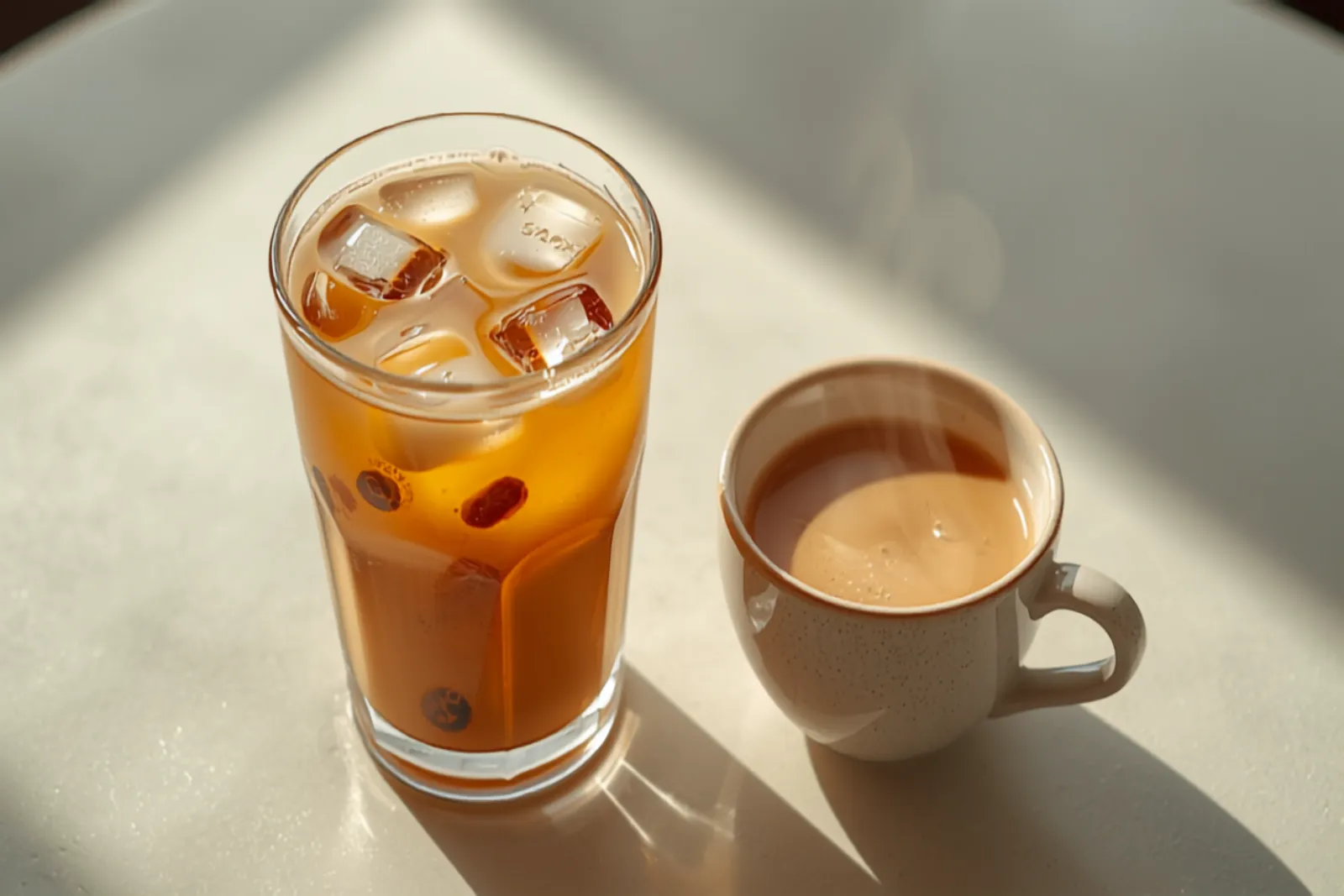
Strong black tea pulled through a cloth sieve and softened with evaporated and condensed milk — Hong Kong's smooth, full-bodied café classic. Bolder than English tea, silkier than coffee, hot or over ice.
Published June 22, 2026
Cultural context
Hong Kong milk tea grew out of British colonial tea culture, reinvented in the city's cha chaan teng (tea cafés) with evaporated and condensed milk instead of fresh milk and sugar. It's nicknamed 'silk-stocking' tea for the fine cloth sieve the tea is repeatedly strained through, which gives it its famously smooth body. A national institution, listed as part of Hong Kong's intangible cultural heritage.
Hong Kong milk tea is the city’s café classic: strong black tea pulled through a cloth sieve and softened with evaporated and condensed milk. Bolder than an English cuppa, silkier than coffee, it’s a national institution — nicknamed “silk-stocking” tea for the fine cloth it’s strained through.
Brew it bold
This tea has to be strong — simmer it, don’t just steep it, and brew it darker than you’d ever drink plain. The evaporated milk will mellow it; a weak brew just disappears.
Pull it for silk
Strain the tea through a fine sieve or cloth and pour it back and forth between two jugs several times. That aeration smooths the tannins and gives the tea its famous velvety body.
Finish with two milks
Off the heat, stir in evaporated milk for body and condensed milk (or sugar) for sweetness — evaporated milk is what makes it taste unmistakably Hong Kong, not British. Serve hot or over ice. Try the coffee-tea [yuanyang] variation, or compare with Vietnamese iced coffee. More in the Drinks guide.
Ingredients
- 3–4 tbsp strong black tea — a Ceylon-based blend Cha chaan teng use a blend of coarse and fine black teas (often Ceylon) for body and colour. A strong Ceylon or English Breakfast works at home.
- 500 ml water
- 60–80 ml evaporated milk Evaporated milk is what gives HK milk tea its signature creamy, slightly caramelized body — not fresh milk.
- 1–2 tbsp sweetened condensed milk, or sugar to taste Condensed milk both sweetens and enriches. Use sugar instead if you prefer to control the sweetness separately.
- ice, if serving iced
Method
Tap a step’s number to check it off as you go.
-
Bring the water to a boil, add the tea, and simmer gently for 3–4 minutes so it brews very strong.
Why: HK milk tea must be brewed bold — the evaporated milk would wash out a delicate tea entirely. Simmering, not just steeping, pulls out maximum colour and body.
-
Strain the tea through a fine sieve (or a clean cloth/'tea sock'), then pour it back and forth between two jugs several times.
Why: 'Pulling' the tea through the cloth repeatedly aerates it and smooths the tannins — this is the silk-stocking step that gives the tea its velvety texture.
-
Stir in the evaporated milk and condensed milk (or sugar) to taste; serve hot, or pour over a glass of ice for iced milk tea.
Why: Adding the milks off the heat keeps them from splitting; tasting as you go lets you hit the classic balance of strong, smooth and just-sweet-enough.
A quick, anonymous tap — no review needed.
Variations
- Yuanyang
Mix the milk tea with brewed coffee (about 3:7 coffee to tea) for the famous Hong Kong coffee-tea hybrid.
- Iced (dong nai cha)
Brew extra strong, sweeten while hot, then pour over a tall glass of ice — the standard summer order.
- Less sweet
Use evaporated milk only and add sugar separately so you can dial the sweetness right down.
Serving & Storage
The classic accompaniment to a cha chaan teng breakfast or afternoon tea — pineapple buns, egg tarts, French toast, instant-noodle sets. Rich enough to stand up to fried and eggy food.
Storage: Best brewed fresh. You can brew and pull a batch of strong tea, keep it chilled, and add the milks to order — especially handy for iced milk tea.
Nutrition
Per serving (1 cup (~250 ml))
- Calories
- 110
- Protein
- 3 g
- Carbs
- 14 g
- Fat
- 4 g
- Fiber
- 0 g
- Sugar
- 13 g
- Sodium
- 50 mg
Estimated using standard ingredient data. Values vary with brands and substitutions.
Frequently Asked Questions
Why evaporated milk instead of regular milk?
Evaporated milk is the heart of the style. Its concentrated, slightly cooked flavour and richer body are what make HK milk tea taste different from a British cuppa — fuller, smoother and faintly caramelized. Fresh milk makes a thinner, paler, less distinctive drink.
What is the 'silk stocking' step and do I need it?
It's the repeated straining of the tea through a fine cloth sieve, plus pouring it back and forth to aerate it. This smooths the tannins and gives the tea its velvety texture. You don't strictly need a cloth — a fine metal sieve plus a few back-and-forth pours between jugs gets you most of the way there.
How strong should the tea be?
Very. Simmer it rather than just steeping, and brew it darker than you'd ever drink it plain — the evaporated and condensed milk will mellow it considerably. If the finished tea tastes weak or milky-pale, the brew wasn't strong enough.
From our kitchen community
Ratings & Reviews
My Rating
Tap a star to rate — no sign-in, no form needed.
My Review
0 Ratings
🥣 0 home cooks made it!
Be the first to rate Hong Kong Milk Tea (Silk-Stocking Milk Tea).
Related Recipes
Vietnam (Saigon coffee culture) · Vietnamese
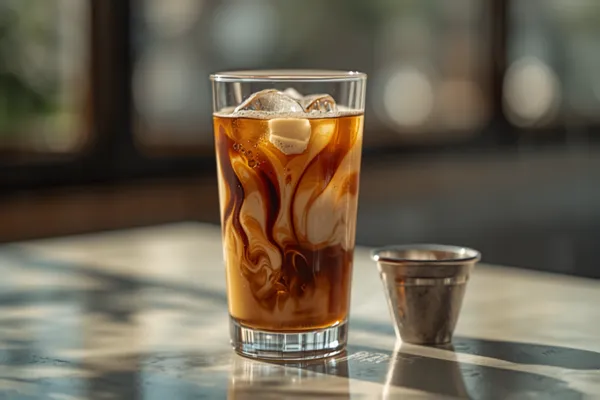
Vietnamese Iced Coffee (Cà Phê Sữa Đá)
Strong dark-roast coffee dripped through a phin over sweetened condensed milk, then poured over ice. Vietnam's bold, sweet, jolting iced coffee — and how to make it without special gear.
Japan (matcha tradition, Uji & Nishio) · Japanese
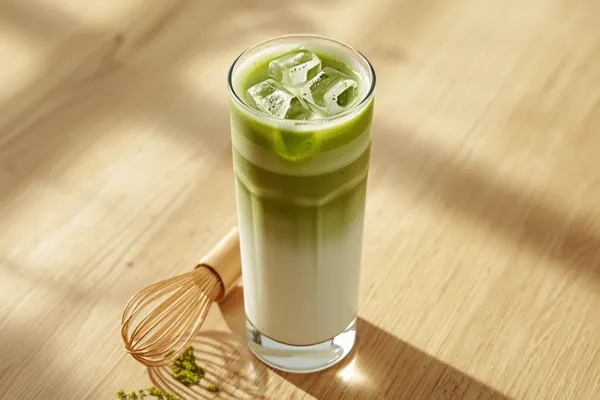
Matcha Latte (Whisked Japanese Green Tea Latte)
Stone-ground Japanese matcha whisked smooth and poured over steamed milk — grassy, sweet and gently caffeinated, with no bitterness when you make it right. A café favourite that's better and cheaper at home.
Taichung, Taiwan · Taiwanese
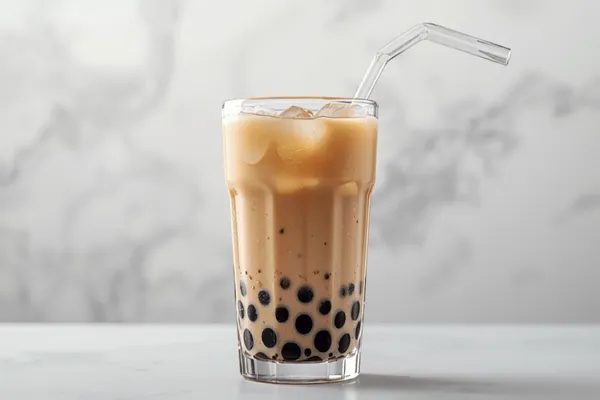
Bubble Tea (Taiwanese Boba Milk Tea)
Strong black tea, milk and chewy tapioca pearls over ice — Taiwan's gift to the world. Make the springy boba and the brown-sugar syrup from scratch and the homemade version beats the shop, for a fraction of the price.
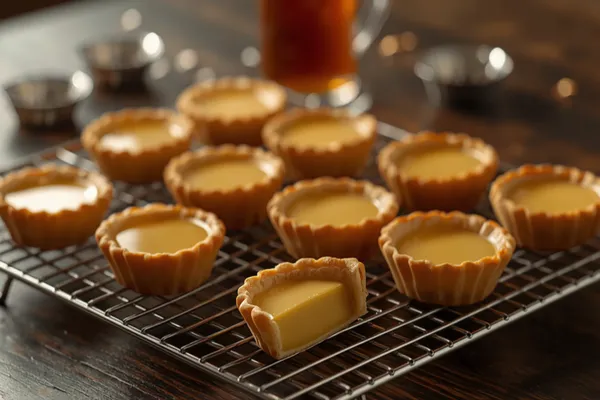
Hong Kong — the cha chaan teng and bing sutt bakeries of Central, Wan Chai and Kowloon, with roots in 1920s Guangzhou · Hong Kong
Hong Kong Egg Tarts (Daan Taat)
The glassy, wobble-free custard tart of Hong Kong's cha chaan teng — a short, biscuity butter crust, a filling of whole eggs and evaporated milk strained twice until it sets clear, and a two-stage bake that browns the pastry before the custard ever has a chance to soufflé.
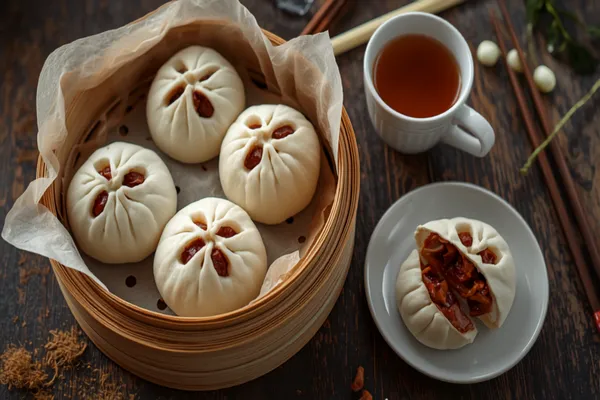
Guangzhou and the Pearl River Delta — the yum cha teahouses of Guangdong, and the dim sum halls of Hong Kong that carried them worldwide · Chinese
Char Siu Bao (Cantonese Steamed BBQ Pork Buns)
The cloud-white dim sum bun that splits open at the top like a laughing mouth: low-gluten dough steamed around a jellied sauce studded with sweet-savoury char siu. The filling is set firm on purpose — that is the whole trick.
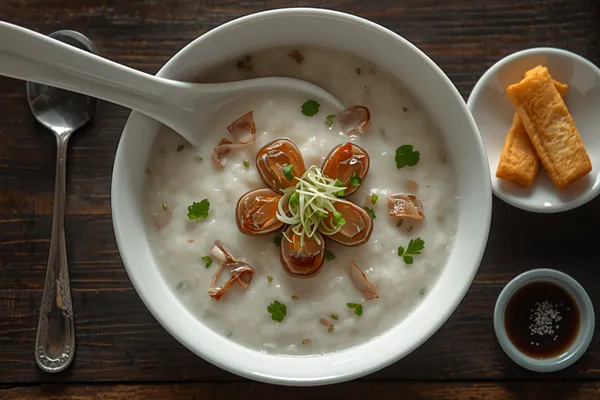
Guangdong and the Pearl River Delta — the congee shops of Guangzhou, Shunde and Hong Kong, within a rice-porridge tradition shared across China and much of Asia · Chinese
Congee with Century Egg and Pork (皮蛋瘦肉粥)
The Cantonese breakfast bowl the rest of the world learned to love: rice simmered in twelve times its weight in water until the grains vanish into something silky and savoury, finished with century egg, slippery pork and a snowfall of ginger and spring onion.