Hong Kong — the cha chaan teng and bing sutt bakeries of Central, Wan Chai and Kowloon, with roots in 1920s Guangzhou · Hong Kong
Hong Kong Egg Tarts (Daan Taat)
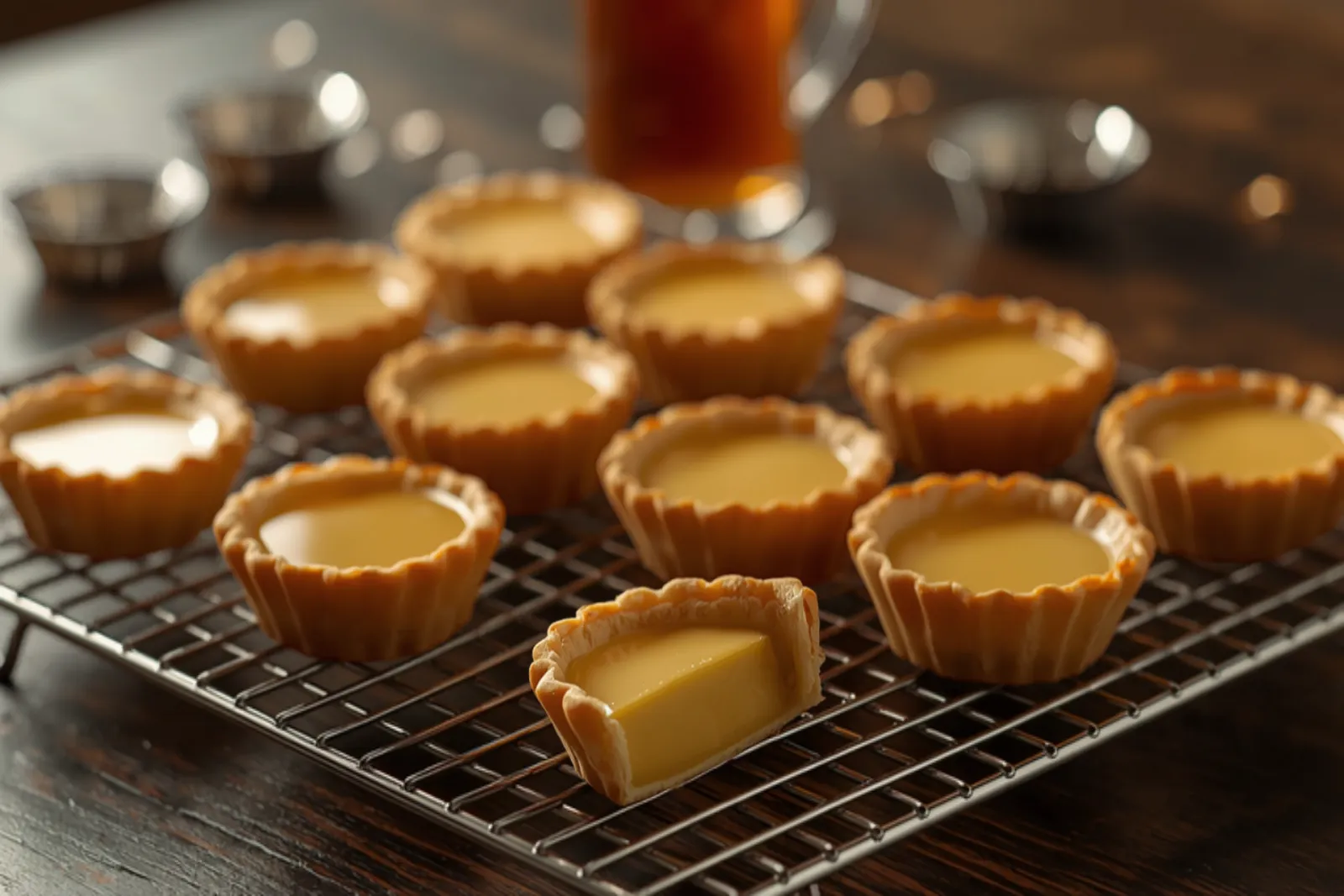
The glassy, wobble-free custard tart of Hong Kong's cha chaan teng — a short, biscuity butter crust, a filling of whole eggs and evaporated milk strained twice until it sets clear, and a two-stage bake that browns the pastry before the custard ever has a chance to soufflé.
Published August 23, 2026
Cultural context
The Cantonese daan taat took its name from the Cantonese word for egg and the English word tart, and that is roughly its history too: the English custard tart, reworked by Guangzhou department-store bakeries competing for customers in the 1920s, then carried into Hong Kong and made cheap and everyday by the post-war cha chaan teng and bing sutt cafés. It is not the same lineage as Macau's bruléed pou taat, which came separately from the Portuguese pastel de nata by way of Andrew Stow's Coloane bakery in 1989 — two tarts, two routes, often confused. Hong Kong's egg tart tradition was added to the city's inventory of intangible cultural heritage in 2014.
Hong Kong egg tarts — daan taat — are sold the way bread is sold elsewhere: by the tray, still warm, in a paper bag you eat out of before you get to the end of the street. A good one is a small object lesson in restraint. The shell is short and biscuity rather than flaky, thin enough to snap. The custard on top is smooth, pale gold and entirely unbrowned, with a surface so glassy you can see the kitchen light in it. There is no cinnamon, no caramelised sugar, no blister. Everything that makes the tart good is a thing that was not done to it.
Even the name is a record of where it came from. Daan is Cantonese for egg; taat is the English word tart, borrowed whole. The lineage runs from the English custard tart to the department-store bakeries of 1920s Guangzhou, where rival shops invented novelties to pull customers through the door, and from there into Hong Kong. After the war the bing sutt ice houses and then the cha chaan teng tea cafés made it a two-dollar snack rather than a luxury, and it became one of the handful of foods the city genuinely considers its own — formally so in 2014, when egg-tart baking went onto Hong Kong’s intangible cultural heritage inventory.
The other tart, which is not this one
It is worth clearing this up before you bake, because half the recipes online quietly mix the two.
Ninety minutes away in Macau there is a different tart entirely: puff pastry, a cooked custard of cream and egg yolks, and a top deliberately scorched black in a ferociously hot oven. That is the pou taat, and it descends from the Portuguese pastel de nata — via, specifically, an English pharmacist named Andrew Stow, who tasted the Belém original on a trip to Portugal and opened Lord Stow’s Bakery on Coloane in 1989 with his own adaptation, less sweet than Chinese pastries and finished with a bruléed top instead of Portugal’s dusting of cinnamon.
Two tarts, two routes, four centuries apart at the source. They meet only in that both ended up in the Pearl River Delta. If you bake this recipe hoping for burnt spots, you will be disappointed; if you want those, make the other one.
Why the custard is strained twice
Almost everything that goes wrong with an egg tart at home is one of three failures, and two of them happen before the oven.
The first is texture. Whole eggs — not yolks alone — are whisked gently with evaporated milk and a sugar syrup that has been dissolved in hot water and then cooled completely. Cooled, because syrup poured hot into raw egg cooks it on contact into threads. Gently, because every bubble beaten in will surface during the bake and set as a small crater. Then the mixture is passed through a fine sieve twice and skimmed. That second pass feels excessive and is the reason bakery tarts look like glass and homemade ones often don’t.
The second is the crust. The dough is barely mixed: butter and icing sugar beaten only until smooth, egg added in thirds so the emulsion holds, flour folded in until the dry patches disappear and not one stroke further. Over-mixing builds gluten, and gluten pulls the shell down the sides of the tin as it bakes. It is pressed into the tins with the thumbs rather than rolled, standing a couple of millimetres proud of the rim to allow for settling, then chilled again while the custard is made.
Hot first, then cool
The third failure happens in the oven, and it is the one worth understanding.
Pastry and custard want opposite conditions. A wet filling sitting on raw dough will make the base soggy unless that base sets fast, which needs real heat. But egg custard sets at around 80°C, and much above that it boils — steam forms inside the filling, the tart inflates like a soufflé, and then it collapses into a pocked, weeping mess as it cools.
So the bake is deliberately split. Ten to twelve minutes at 200°C on a low shelf, which browns the rims and seals the base. Then the oven drops to 165°C for the rest, and the custard sets slowly and evenly without ever coming near a simmer. If it starts to dome anyway, wedge the door open for a minute — venting heat is faster than turning the dial. The tarts come out when the edges are set, the very centre still has the faintest tremor, and a toothpick pushed in upright stands on its own.
Then eat them warm. Chilled egg tarts are a different and lesser thing, which is why the good bakeries put out a fresh tray every twenty minutes and the queue re-forms every twenty minutes to match. If you’re building a full Hong Kong afternoon around them, pull a pot of Hong Kong milk tea — the tannin is the point — and there’s more of the wider canon in the world classics guide.
Ingredients
For the shortcrust shells
- 115 g (1 stick) unsalted butter, softened but still cool Cool enough to hold a dent from your finger without being greasy. Tai Cheong-style tarts are butter-rich and biscuity; the flakier dim-sum version uses laminated dough, which is a different recipe (see Variations).
- 50 g (1/4 cup) icing sugar, sifted Icing sugar rather than granulated — it dissolves into the butter without leaving grit, and it keeps the crust short rather than crisp-crunchy.
- 1 large egg, lightly beaten Room temperature. A cold egg will seize the butter and split the dough.
- 1/2 tsp vanilla extract
- 225 g (1 3/4 cups) plain (all-purpose) flour Plus a little for dusting. Don't substitute bread flour — the extra protein makes the shells tough and shrinking.
- 1/4 tsp fine salt
- 1 tbsp milk powder (optional) Not traditional in every bakery, but it deepens the browning and gives the crust the faintly milky, biscuit-tin smell of a good Hong Kong bakery.
For the custard
- 100 g (1/2 cup) caster or granulated sugar
- 180 ml (3/4 cup) just-boiled water Used to dissolve the sugar into a syrup, then cooled completely. This is a real step, not a shortcut.
- 3 large eggs, plus 1 extra yolk Whole eggs, unlike the yolk-only Portuguese custard — this is what gives daan taat its clean, unmistakably eggy flavour and its pale gold colour.
- 120 ml (1/2 cup) evaporated milk Not condensed, not fresh. Evaporated milk is the cha chaan teng house dairy — concentrated enough to give body without cream, and unsweetened so you control the sugar. Full-fat if you can get it.
- 1/2 tsp vanilla extract Optional and mildly contested; several old-guard bakeries use none at all and let the egg speak.
Method
Tap a step’s number to check it off as you go.
-
Beat the butter and icing sugar together with a wooden spoon or paddle until just combined and pale — about 1 minute. Stop as soon as it looks smooth.
Why: Don't cream it to a fluffy mousse the way you would for cake. Beaten-in air makes the shells rise and dome in the tin, and a domed shell has nowhere to put the custard.
-
Beat in the egg a third at a time, then the vanilla, mixing until each addition disappears before adding the next.
Why: Butter and egg are an emulsion of fat and water, and they only hold together if the water goes in slowly. Dump the egg in at once and the mixture curdles; the dough will still bake, but it turns greasy and crumbly rather than short.
-
Sift in the flour, salt and milk powder if using, and fold with a spatula until there are no dry patches. The moment it comes together as a soft dough, stop. Flatten into a disc, wrap, and chill for 30 minutes.
Why: Every extra turn of the spatula develops gluten, and gluten is what makes a tart shell shrink down the sides of the tin during baking. The rest in the fridge does two jobs: it firms the butter so the dough is workable, and it lets the flour hydrate so the shells hold their shape.
-
Heat the oven to 200°C / 400°F (fan 180°C). Divide the chilled dough into 12 pieces of about 32 g. Roll each into a ball, drop it into an ungreased fluted tart tin, and press it out from the centre with your thumbs — up the sides and slightly proud of the rim, aiming for an even 3 mm all round.
Why: Pressing rather than rolling is how bakeries do it, and it is more accurate: you can feel a thick base under your thumb in a way you cannot see it. The rim sits a little above the tin because pastry settles as the butter melts, and a shell that finishes level with the custard will overflow.
-
Chill the lined tins while you make the custard. Dissolve the sugar in the just-boiled water, stirring until completely clear, then leave it to cool to room temperature — genuinely cool, not warm.
Why: Sugar dissolved in advance means no undissolved crystals to mar the set surface. And the syrup must be cold before it meets the eggs: pour it in hot and you make sweet scrambled egg, with lumps that no amount of straining will save.
-
Whisk the eggs and extra yolk gently with the evaporated milk and vanilla — stir, don't aerate. Pour in the cooled syrup and stir again.
Why: Every bubble you whisk in becomes a crater on the finished surface. The signature of a proper daan taat is a smooth, glassy top you can see your reflection in, and that begins with a lazy whisk rather than a brisk one.
-
Strain the custard through a fine sieve into a jug. Then strain it a second time, and skim off any foam sitting on the surface with a spoon.
Why: The first pass catches chalazae and any stray strands of set egg; the second catches the fine foam. This is the single highest-return step in the recipe — the difference between a professional-looking tart and a pockmarked one is almost entirely straining.
-
Pour the custard into the chilled shells to about 80 per cent full — roughly 3 mm below the pastry rim. Do not fill them level.
Why: The custard expands as it heats and settles back as it cools. Filled to the brim, it boils over the edge, glues the tart to the tin and bakes into a hard rim of caramelised egg.
-
Bake on a low shelf at 200°C / 400°F for 10–12 minutes, until the pastry rims are set and beginning to colour. Then drop the oven to 165°C / 325°F and bake for a further 12–15 minutes.
Why: This two-stage bake is the whole trick. The pastry needs high heat early or the base goes soggy under the wet filling; the custard needs low heat or it boils, souffles up like a balloon and then collapses into something watery and full of holes. Hot for the crust, cool for the custard, in that order.
-
Watch the last stretch. If the custard starts to dome or bubble, wedge the oven door open a crack for a minute to drop the temperature. The tarts are done when the custard is set at the edges with only a faint wobble at the very centre, and a toothpick pushed in upright will stand on its own.
Why: The toothpick test is the bakery standard and it is more reliable than the clock, because tin thickness and oven calibration vary enormously. Carry-over heat finishes the middle after they come out, so pulling them at a faint wobble gives a silky set rather than a rubbery one.
-
Cool in the tins for 10 minutes, then tap the base of each tin and tip the tart out into your palm. Eat warm, ideally within the hour.
Why: Straight out of the oven the custard is still slack and the shell is fragile; ten minutes lets both firm up enough to release cleanly. But egg tarts are a warm food, not a cold one — the pastry loses its snap and the custard tightens as it chills, which is exactly why Hong Kong bakeries sell them by the tray as they come out.
A quick, anonymous tap — no review needed.
Variations
- Flaky puff-pastry shells (sou pei)
The version served in dim sum houses. A water dough is wrapped around a fat dough — traditionally lard, now often butter or shortening — then rolled and folded twice to laminate, so the shell shatters into leaves instead of crumbling. Considerably more work and less forgiving in a warm kitchen, but it is the older of the two crusts. A good all-butter rough puff, cut into 11 cm rounds and pressed into the tins, gets you most of the way there.
- Extra-rich custard
Replace 60 ml of the evaporated milk with double cream and add one more yolk. Softer, denser, closer to a Western custard tart — a common bakery upgrade in Hong Kong, sold at a premium.
- Bird's nest / honey-egg tart
Swap 2 tablespoons of the sugar for honey, which browns a shade more and adds a floral edge. Popular in older Kowloon bakeries.
- Ginger-milk tart
Steep 2 teaspoons of grated fresh ginger in the hot syrup and strain it out with the rest. A nod to Cantonese ginger-milk pudding, and it cuts the richness noticeably.
- Macanese-style (a different tart)
If what you actually want is the bruléed, blistered-top tart, that's the Portuguese-descended pou taat, not this one: puff pastry, a cream-and-yolk custard thickened on the stove, and a very hot oven — 250°C or higher — to scorch the top. Worth knowing they are separate recipes rather than variations on each other.
Serving & Storage
Eat them warm, standing up, out of a paper bag, which is how the city itself eats them. On a table, serve two or three per person alongside strong Hong Kong milk tea or a plain yuenyeung — the tannic tea cuts the custard in a way coffee doesn't. They are also the traditional close to a dim sum lunch, arriving after the savoury baskets have been cleared.
Pairs with: Hong Kong milk tea, Yuenyeung (coffee-tea), Jasmine or pu-erh tea, Siu mai, Char siu.
Storage: Best within a few hours of baking, unrefrigerated and uncovered so the pastry stays crisp. They keep 2 days in an airtight box in the fridge, but the shell softens — revive them in a 160°C / 320°F oven for 5–7 minutes, which crisps the crust without re-cooking the custard (never the microwave, which turns the custard weepy and rubbery). The unbaked dough freezes for 2 months, and lined tart shells freeze well for 1 month; bake straight from frozen, adding 3–4 minutes. Baked tarts do not freeze — the custard splits on thawing.
Nutrition
Per serving (1 tart)
- Calories
- 205
- Protein
- 4 g
- Carbs
- 23 g
- Fat
- 11 g
- Fiber
- 0 g
- Sugar
- 12 g
- Sodium
- 85 mg
Notable micronutrients: Calcium, Vitamin A, Vitamin B12, Selenium, Riboflavin
Estimated using standard ingredient data. Values vary with brands and substitutions.
Frequently Asked Questions
What's the difference between a Hong Kong egg tart and a Portuguese egg tart?
They're two different pastries with two different routes into southern China. The Hong Kong daan taat descends from the English custard tart, reworked in 1920s Guangzhou department-store bakeries and made everyday by post-war Hong Kong cafés: whole eggs, evaporated milk, a smooth pale-gold top that is never browned, and usually a biscuity shortcrust. The Macanese pou taat descends from the Portuguese pastel de nata and arrived separately, popularised by Lord Stow's Bakery in Coloane from 1989: puff pastry, a cooked cream-and-yolk custard, and a deliberately scorched, blistered top. Neither is a version of the other.
Why did my custard puff up and then collapse?
It boiled. Egg custard sets at around 80°C but starts producing steam well before 100°C, and once steam forms inside it the tart inflates like a soufflé, then falls and leaves a honeycomb of holes and a watery layer at the bottom. The cause is almost always too high a second-stage temperature — or an oven that runs hot. Drop to 160°C, and if you see doming, open the oven door a crack for 30–60 seconds to vent the heat.
Why is my tart shell soggy underneath?
The wet custard sat on unset pastry for too long. Three fixes, in order of impact: start the bake hot (200°C for the first 10–12 minutes) so the base sets before the filling soaks in; bake on a low oven shelf, or on a preheated baking tray, so the heat comes from below; and chill the lined tins while you make the custard so the pastry is cold going into a hot oven. Metal tins beat ceramic here — they conduct heat far faster.
Do I need evaporated milk, or can I use fresh milk or cream?
You can, but it changes the tart. Evaporated milk is roughly twice the concentration of fresh milk, so it delivers body without the fat of cream and without watering down the set — and its very slight cooked-caramel note is part of the flavour people recognise. Fresh milk gives a looser, blander custard; cream gives a rich one that reads as a Western custard tart. If you only have fresh milk, use 120 ml plus an extra yolk.
Why do my shells shrink down the sides of the tin?
Overworked or under-rested dough. Mixing past the point where the flour is just incorporated builds gluten, and gluten contracts in the oven. Fold only until there are no dry patches, chill the disc for a full 30 minutes, and chill again once the tins are lined. Pressing the pastry a millimetre or two above the rim also buys you margin for the settling that happens as the butter melts.
Can I make these without special tart tins?
Fluted 7.5 cm tins are the classic shape and give the scalloped edge, but a standard 12-hole muffin tin works — press the dough thinly up the sides and fill a little lower, since the deeper well means a longer bake. Give the muffin tin an extra 3–4 minutes at the low temperature and check with the toothpick. Foil cases are the one thing to avoid: they insulate the base and you will get a pale, damp crust.
What to drink with this
All drinks →Hand-picked pours to match this dish.
Hong Kong (cha chaan teng tradition) · Hong Kong
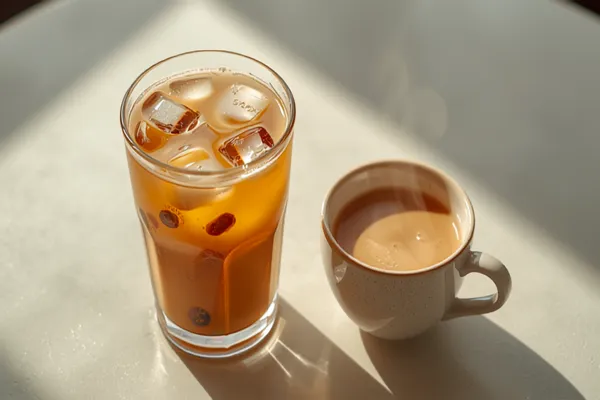
Hong Kong Milk Tea (Silk-Stocking Milk Tea)
Strong black tea pulled through a cloth sieve and softened with evaporated and condensed milk — Hong Kong's smooth, full-bodied café classic. Bolder than English tea, silkier than coffee, hot or over ice.
Pan-Indian (the everyday tea of the subcontinent) · Indian
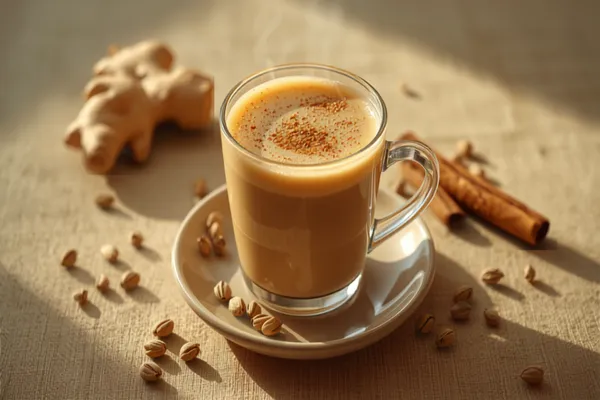
Masala Chai (Spiced Indian Tea)
India's daily ritual in a cup: black tea brewed with milk, sugar and freshly crushed spices. The proper stovetop method, plus how to build your own masala.

Mexico (agua fresca tradition) · Mexican
Agua de Jamaica (Hibiscus Iced Tea)
Mexico's ruby-red hibiscus cooler: dried jamaica flowers steeped, sweetened and chilled into a tart, refreshing agua fresca. The right steep, how to control the tartness, and why it's so good for you.
From our kitchen community
Ratings & Reviews
My Rating
Tap a star to rate — no sign-in, no form needed.
My Review
0 Ratings
🥣 0 home cooks made it!
Be the first to rate Hong Kong Egg Tarts (Daan Taat).
Related Recipes
Hong Kong (cha chaan teng tradition) · Hong Kong
Hong Kong Milk Tea (Silk-Stocking Milk Tea)
Strong black tea pulled through a cloth sieve and softened with evaporated and condensed milk — Hong Kong's smooth, full-bodied café classic. Bolder than English tea, silkier than coffee, hot or over ice.
Guangdong / Cantonese (China) · Chinese
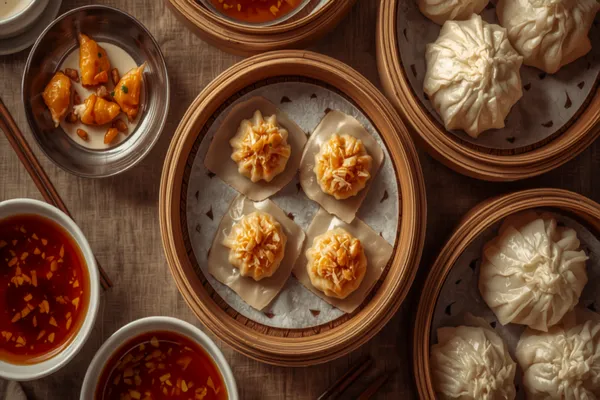
Siu Mai (Cantonese Pork and Shrimp Dumplings)
The open-topped dim sum classic — juicy pork and shrimp filling in a thin wheat wrapper, pleated into a little cup and steamed until plump. The dumpling at the heart of any dim sum spread, easier to make at home than you'd think.
Guangdong (Cantonese) · Chinese
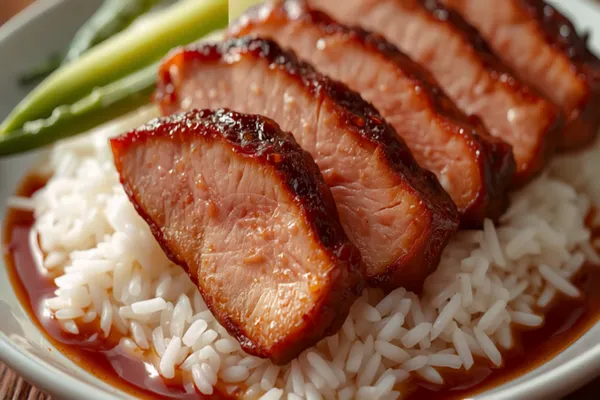
Char Siu (Cantonese Barbecue Pork)
The lacquered red-edged pork that hangs in every Cantonese roast-meat window: pork shoulder marinated in a sweet-savoury glaze of hoisin, soy, honey, and five-spice, then roasted and basted until sticky and caramelised. Easier at home than you'd think.
Northern China · Chinese
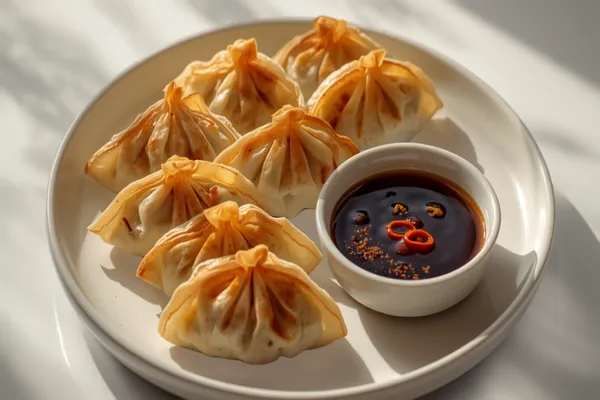
Pork and Chive Potstickers (Jiaozi)
The dumplings at the heart of Chinese celebration: juicy pork-and-chive filling folded into pleated wrappers, then pan-fried crisp on the bottom and steamed soft on top. A hands-on, make-together feast — fold a big batch and freeze the rest.
Japan (a Tokyo-born wagashi, now made nationwide) · Japanese
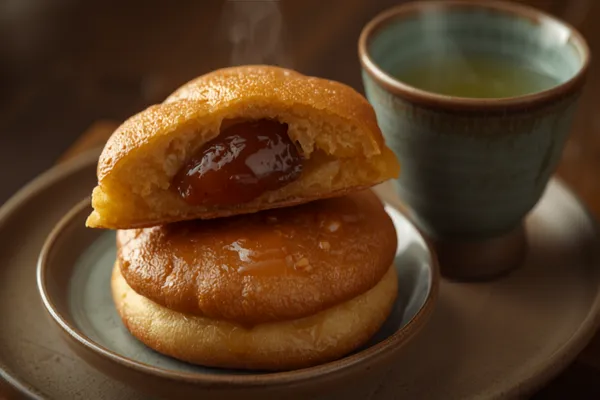
Dorayaki (Honey Pancakes with Sweet Red-Bean Anko)
Two small, springy castella-style pancakes sandwiching a generous layer of sweet red-bean anko. Fragrant with honey and faintly caramel, dorayaki is the beloved wagashi that turned a certain blue robot cat into a national mascot for good snacks.
Shanghai and the lower Yangtze, drawing on the northern wheat belt of Shandong and Henan where the bing tradition began · Chinese
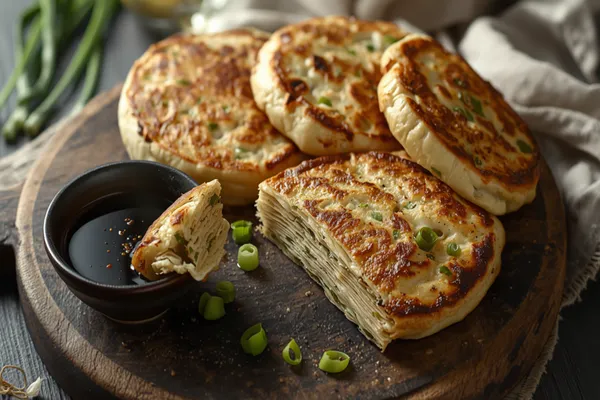
Cong You Bing — Chinese Scallion Pancakes with Shatteringly Flaky Layers
Flour, water, oil and spring onions, laminated like puff pastry and fried until the layers separate into flakes. The two things that decide the outcome are a half-boiling-water dough and an oil roux — not plain oil — between the sheets.
Belém, Lisbon — the Jerónimos Monastery quarter on the Tagus, within Portugal's wider convent-sweet tradition · Portuguese
Pastéis de Nata (Portuguese Custard Tarts)
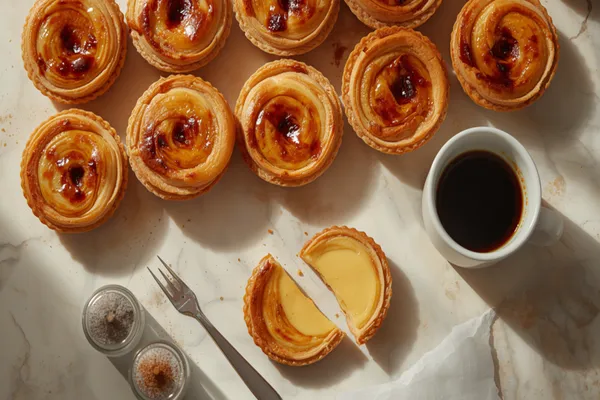
Lisbon's blistered custard tart — a spiral-rolled puff shell that shatters like glass, a flour-set egg-yolk custard scented with lemon peel and cinnamon rather than vanilla, and an oven turned as hot as it will go so the top scorches into dark, bitter-sweet freckles.
Guangzhou and the Pearl River Delta — the yum cha teahouses of Guangdong, and the dim sum halls of Hong Kong that carried them worldwide · Chinese
Char Siu Bao (Cantonese Steamed BBQ Pork Buns)
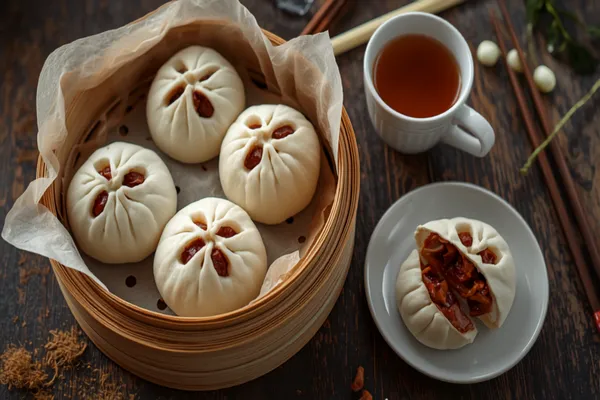
The cloud-white dim sum bun that splits open at the top like a laughing mouth: low-gluten dough steamed around a jellied sauce studded with sweet-savoury char siu. The filling is set firm on purpose — that is the whole trick.