Belém, Lisbon — the Jerónimos Monastery quarter on the Tagus, within Portugal's wider convent-sweet tradition · Portuguese
Pastéis de Nata (Portuguese Custard Tarts)
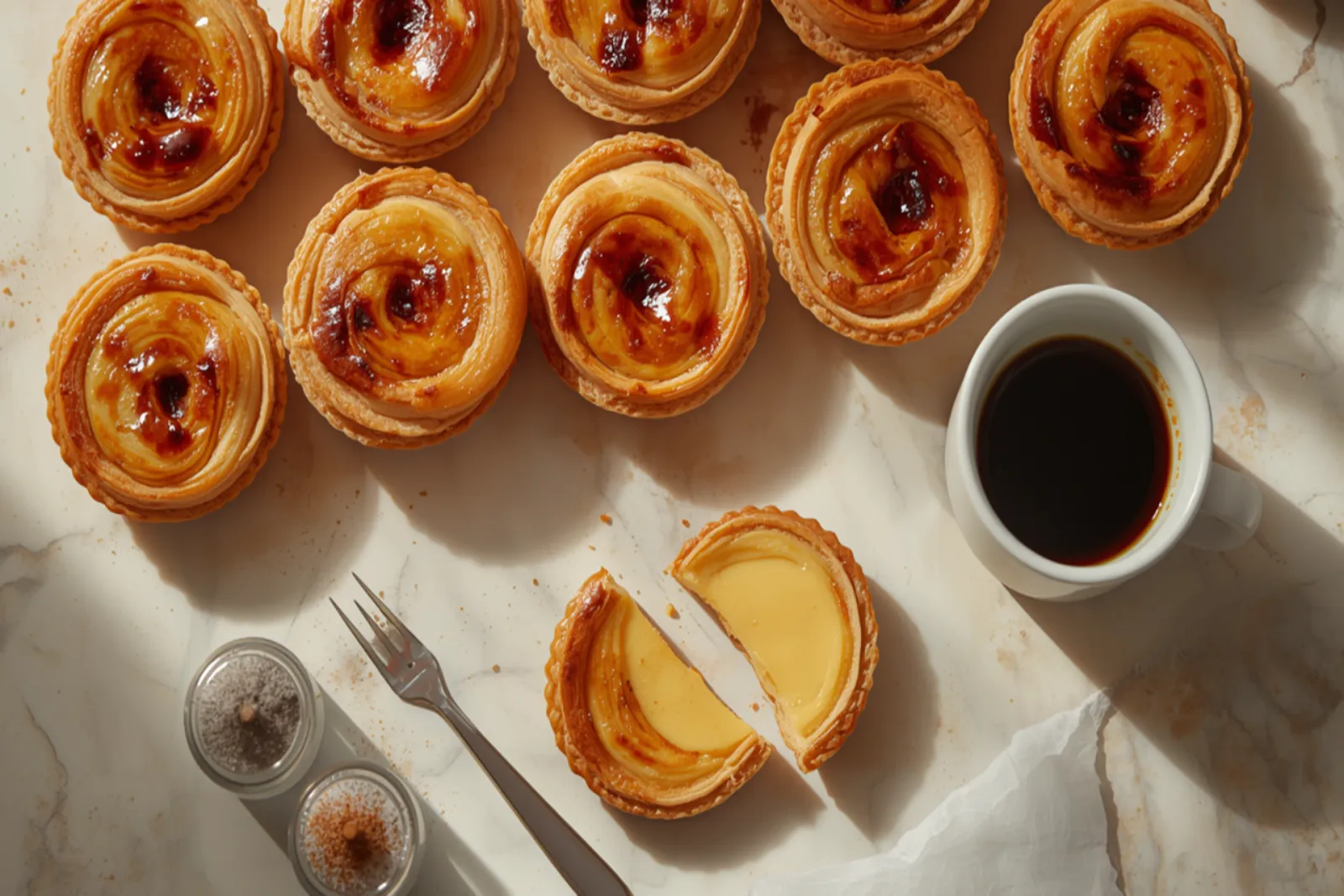
Lisbon's blistered custard tart — a spiral-rolled puff shell that shatters like glass, a flour-set egg-yolk custard scented with lemon peel and cinnamon rather than vanilla, and an oven turned as hot as it will go so the top scorches into dark, bitter-sweet freckles.
Published September 6, 2026
Cultural context
Egg-yolk sweets are the legacy of Portugal's convents, where whites were used by the sackful to starch habits and clarify wine and the yolks had to go somewhere. The tart itself came out of the Jerónimos Monastery in Belém; after the 1834 dissolution of the religious houses the recipe passed to a neighbouring sugar refinery, which opened the Fábrica de Pastéis de Belém in 1837 and still guards it. Only that shop may call its tarts pastéis de Belém — everywhere else in the Portuguese-speaking world, from Porto to Macau to Goa, they are pastéis de nata.
Pastéis de nata are the loudest quiet pastry in Europe. Six inches of counter in any Lisbon pastelaria will hold a tray of them: shells the colour of dark honey, custard tops freckled with spots so scorched they look burnt, and a queue that re-forms every time a fresh tray comes out. Bite one warm and it does three things at once — the shell shatters into concentric leaves, the custard is soft and barely sweet, and those black blisters carry a whisper of bitterness that stops the whole thing being a sugar bomb.
The story starts with laundry. Portugal’s convents and monasteries went through egg whites by the sackful — to starch habits and wimples, and to fine and clarify wine — which left them with an absurd surplus of yolks and a great deal of time. What came out of that arithmetic is doçaria conventual, the country’s tradition of intensely eggy sweets, of which this is far and away the most famous. The tart itself belongs to the Jerónimos Monastery in Belém, on the western edge of Lisbon, where the Tagus opens toward the Atlantic and the ships once left for India and Brazil.
Then politics intervened. Portugal’s religious houses were dissolved in 1834, and the monks of Belém sold their recipe to the sugar refinery next door. In 1837 the refinery opened the Fábrica de Pastéis de Belém, and it has been baking them on the same spot ever since — the recipe kept in a locked room, known to a small handful of pastry chefs at a time. That shop alone may call its tarts pastéis de Belém. Everywhere else, from Porto to São Paulo to Macau to Goa, they are pastéis de nata, and this is that tart: the one every neighbourhood bakery in Portugal makes, and makes well.
The three things that make it a nata
Most recipes that disappoint have lost one of them.
Flour in the custard. It looks wrong on the page. A French custard tart is thickened with yolks alone, and cookbooks outside Portugal often quietly delete the flour on the grounds that it is unrefined. It is load-bearing. A small amount of starch stabilises the yolks against an oven hot enough to blister the surface in twelve minutes, and it gives the set its particular soft density — not the wobbling silk of a crème, but something you can lift on a fork. Take the flour out and you get a tart that weeps in the tin.
The syrup, cooked to temperature. Sugar and water go on to boil with a cinnamon stick and two strips of lemon peel and come up to 100–105°C before the aromatics are fished out. Two things happen there. Water is driven off, so the finished custard has enough concentrated sugar to set properly rather than staying slack — this is the single most common cause of a runny middle. And a boiling sugar solution is a far better solvent for citrus oil than milk is, which is why the lemon comes through so clearly in a tart that contains no lemon juice at all.
A rolled spiral, not a flat round. The pastry sheet is rolled into a tight log and cut into discs, and each disc goes into the tin cut-side-up, then gets pressed out and up the walls with a wet thumb. That means the laminated layers stand vertically all the way around the shell. It is why a proper nata shatters into rings when you bite it, and why a shell cut from flat pastry — however good the pastry — behaves like a little pie crust instead.
Turn the oven up further than feels sensible
Belém’s ovens run at something close to 400°C. Yours will not, and it does not need to, but the principle transfers: this tart is a race. The custard must set and its surface must caramelise before the wet filling has time to steam the pastry underneath into softness. High heat wins that race; moderate heat loses it, and you end up with a pale tart on a damp base no matter how carefully you made the custard.
So take the oven to its ceiling — 250°C and up, conventional rather than fan, top third of the oven, with a heavy tray preheated inside to drive heat into the bases. Give it a genuine half hour to get there. Twelve to eighteen minutes later the tops should be set with a faint tremor and mottled with dark brown-to-black spots. Those spots are the signature. They are caramelised sugar and browned milk protein, they taste faintly bitter, and a nata without them is simply not finished. If your oven runs cool, thirty seconds under the grill will do what the oven wouldn’t.
Then eat them warm, dusted with as much cinnamon as you like, ideally standing up. Cold ones are still pleasant; they are just a different, lesser pastry. If you want to taste how far this tart travelled, bake a tray of Hong Kong egg tarts alongside them — the smooth, unbrowned Cantonese tart came by a completely separate route and makes the contrast obvious. There’s more of the wider canon in the world classics guide.
Ingredients
For the custard
- 500 ml (2 cups) whole milk Full-fat. The custard carries almost no cream, so the milk is doing all of the work — semi-skimmed gives a thin, chalky set.
- 60 g (1/2 cup) plain (all-purpose) flour Not a mistake and not a shortcut. Flour is what makes a nata a nata rather than a French crème tart — see the steps.
- 1/4 tsp fine salt
- 250 g (1 1/4 cups) caster or granulated sugar
- 120 ml (1/2 cup) water
- 1 cinnamon stick A whole stick steeped in the syrup and then discarded — you want the perfume, not the grit of ground cinnamon in the custard.
- 2 wide strips lemon peel Pared with a vegetable peeler, yellow only. The white pith is bitter and will leach into the syrup.
- 6 large egg yolks Yolks only — this is a conventual egg sweet and the whites belong elsewhere (meringues, financiers, an omelette). Save them; don't waste them.
For the shells
- 1 sheet, about 320 g (1 lb) all-butter puff pastry, chilled All-butter matters more than homemade. The traditional massa folhada is laminated with lard or butter and rolled, not folded; a good bought sheet gets you 90 per cent of the way there.
- plain flour, for dusting
To finish
- ground cinnamon and icing sugar, for dusting at the table At Belém they hand you two shakers with the tarts and let you decide. Never dust before baking — sugar on top will burn to carbon at these temperatures.
Method
Tap a step’s number to check it off as you go.
-
Whisk the flour and salt into 120 ml of the cold milk in a saucepan until completely smooth, then whisk in the rest of the milk. Set over medium heat and cook, whisking constantly and getting into the corners of the pan, until it thickens to a loose béchamel — about 5 minutes. Take it off the heat.
Why: Almost every pastel de nata recipe outside Portugal quietly drops the flour, and the tarts weep. A little starch does two jobs: it holds the custard together through an oven hot enough to blister the top in twelve minutes, and it stops the yolks curdling when they arrive. Whisk the flour into cold milk first — added to hot milk it seizes into lumps you will never whisk out.
-
In a second pan, bring the sugar, water, cinnamon stick and lemon peel to a boil without stirring, and cook until the syrup reaches 100–105°C / 212–220°F on a thermometer — roughly 3 minutes at a steady boil. Fish out the cinnamon and peel.
Why: You are concentrating the syrup, not making caramel. That small window above boiling drives off just enough water to give the finished custard its dense, spoon-coating set; a watery syrup makes a tart that never firms in the middle. And syrup is how the aromatics get in — steeping them in a boiling sugar solution pulls far more citrus oil out of the peel than steeping in milk would.
-
Pour the hot syrup into the hot milk-and-flour base in a thin, steady stream, whisking briskly the whole time. Then leave it to cool to lukewarm — genuinely lukewarm, around 40°C / 105°F, which takes 20–30 minutes.
Why: Hot into hot keeps the starch smooth. Cooling is the non-negotiable part: yolks begin to set at about 65°C, so stirring them into a hot base gives you sweet scrambled egg. If you are impatient, sit the pan in a sink of cold water and stir.
-
Whisk the yolks in a bowl just to break them up, then whisk them into the cooled base. Strain the custard through a fine sieve into a jug and set aside.
Why: Stir the yolks in, don't aerate them — air bubbles become craters. The strain catches the chalazae and any stray thickened bits from the pan; it takes thirty seconds and it is the difference between a smooth surface and a pitted one.
-
Unroll the chilled puff pastry on a lightly floured surface with its long edge facing you. Roll it up tightly into a firm log, wrap, and chill for 20 minutes. Trim the ends, then cut the log into 12 equal discs about 2 cm thick.
Why: This spiral is the whole architecture of the shell. Rolling turns the flat layers into a coil, so when you press a disc cut-side-down into the tin the layers run vertically up the walls — which is why a real nata shatters into concentric rings and a shell cut from flat pastry just puffs into a lid. Chilling firms the butter so the discs cut cleanly instead of squashing.
-
Stand each disc cut-side-up in an ungreased muffin hole. Dip your thumb in cold water and press from the centre outwards and up the sides, thinning the pastry as you go, until it lines the hole in an even 2 mm layer standing about 2 mm proud of the rim. Chill the lined tin for 20 minutes.
Why: Cold water on the thumb stops the pastry sticking and keeps your hand from melting the butter into the dough — smeared butter means no layers. The pastry is pressed rather than rolled because you can feel a thick patch you cannot see, and it stands proud of the rim because pastry sinks as the butter renders. A shell that finishes level with the custard will overflow and glue itself into the tin.
-
Heat the oven as hot as it will go — 250–290°C / 480–550°F, conventional rather than fan if you have the choice — with a rack in the top third and a heavy baking tray on it. Give it a full 30 minutes to come up.
Why: Belém bakes at around 400°C, and the whole character of the tart depends on ferocious heat: the custard has to set and its surface caramelise before the pastry underneath has time to steam and go soft. A moderate oven gives you a pale, damp, disappointing tart no matter how good the custard is. The preheated tray drives heat into the bases from below.
-
Fill each shell with custard to about three-quarters full, roughly 5 mm below the pastry rim. Bake on the preheated tray for 12–18 minutes.
Why: The custard rises and domes as it heats, then sinks back as it cools; fill to the brim and it boils over. Three-quarters is not caution, it is arithmetic.
-
Pull them when the tops are set with a slight wobble and freckled with dark brown-to-black blisters, and the pastry rims are deep gold. If your oven runs cool and the tops are still pale after 18 minutes, finish them under a hot grill for 30–60 seconds, watching constantly.
Why: Those scorched spots are the point, not a mistake — they are caramelised sugar and browned milk protein, and the faint bitterness is what keeps the tart from being merely sweet. An evenly pale nata is an underbaked one. The wobble matters too: carry-over heat firms the centre after it leaves the oven, so a custard set solid in the tin will be rubbery on the plate.
-
Cool in the tin for 5–10 minutes, then lift each tart out with a small palette knife. Serve warm, with cinnamon and icing sugar for people to dust themselves.
Why: Straight from the oven the custard is still slack and the shell is fragile; a few minutes lets both firm up enough to release. But these are a warm food — an hour later the pastry has begun to soften and the custard has tightened, which is exactly why Lisbon bakeries sell them by the tray as they come out of the oven and never before.
A quick, anonymous tap — no review needed.
Variations
- Orange instead of lemon
Swap the lemon peel for two wide strips of orange peel. Common in the Algarve and a noticeably rounder, less sharp tart. Some bakeries use both.
- Vanilla (modern, and mildly contested)
Split half a vanilla pod into the syrup with the cinnamon. Plenty of contemporary Lisbon pastelarias do it; the old guard argue the tart's flavour is lemon and cinnamon and that vanilla makes it read as a generic custard tart. Try it once and decide.
- Homemade massa folhada
The traditional Portuguese laminated dough is made with a soft flour-and-water paste spread with lard or softened butter, rolled up rather than book-folded, and rested. It gives a shorter, more brittle shell than French puff. A weekend project rather than a weeknight one, and worth doing once.
- Mini natas for a party
Cut the log into 24 thinner discs and use a mini muffin tin. Bake at the same temperature for 9–12 minutes. They are all crust and blister, which is not a criticism.
- The Macanese cousin (a different tart)
Lord Stow's pou taat of Coloane, Macau, descends directly from this recipe by way of an English pharmacist in 1989 — but it uses cream and is less sweet, and its top is scorched harder still. Not to be confused with Hong Kong's daan taat, which is a smooth, unbrowned, whole-egg tart from an entirely different lineage.
Serving & Storage
Warm, standing at the counter, with a bica — the short, dark Portuguese espresso — and the two shakers of cinnamon and icing sugar pushed towards you. If you are serving them at a table, put them out within an hour of baking and let people dust their own; the ritual is half of it. They are a mid-morning or mid-afternoon pastry in Portugal far more than a formal dessert.
Pairs with: Bica (Portuguese espresso), Galão (milky coffee), Tawny port, Vinho verde, Fresh orange juice.
Storage: They are at their best within two hours of baking and genuinely good for about four. Keep leftovers uncovered at room temperature for a day — never in the fridge unwrapped, where the shell goes limp and the custard tightens. Revive them in a 200°C / 400°F oven for 4–5 minutes, which re-crisps the pastry without re-cooking the custard; the microwave turns them to wet cardboard. The rolled pastry log freezes for 2 months and the lined tins for 1 month, so you can keep shells on standby and make the custard fresh. Baked tarts do not freeze — the custard splits on thawing.
Nutrition
Per serving (1 tart)
- Calories
- 200
- Protein
- 4 g
- Carbs
- 24 g
- Fat
- 10 g
- Fiber
- 0 g
- Sugar
- 15 g
- Sodium
- 95 mg
Notable micronutrients: Calcium, Vitamin A, Vitamin D, Riboflavin, Selenium
Estimated using standard ingredient data. Values vary with brands and substitutions.
Frequently Asked Questions
What's the difference between a pastel de nata and a pastel de Belém?
Legally, the address. Pastéis de Belém is a trademark belonging to the Fábrica in Belém, which bought the monastery's recipe in the 1830s and has kept it in a locked room ever since — only a handful of pastry chefs are said to know it in full. Their tart differs in the details of the dough and the exact proportions of the custard, and it is served conspicuously hot. Every other tart in Portugal and beyond, however good, is a pastel de nata. The recipe here is the standard pastelaria version, not the Belém secret.
Why is my custard weeping or watery in the middle?
Nearly always underbaking or an under-concentrated syrup. Get the syrup to a true 100–105°C so the sugar is properly concentrated, and get the oven genuinely hot — most home ovens read 20–30°C above what they deliver, and a nata baked at 200°C will never set and blister in the same window. Bake on a preheated tray in the top third, and if the tops are still pale at 18 minutes, hit them under the grill. Skipping the flour also causes this.
Can I use shop-bought puff pastry?
Yes, and most Portuguese home cooks do. Buy an all-butter block or sheet — the ones made with vegetable shortening taste waxy and never crisp properly. The one thing you must do is roll the sheet into a tight log and cut discs from it, then press each disc cut-side-up into the tin. Cutting flat rounds and pressing them in gives you a pastry cup, not the spiral of vertical layers that makes a nata shatter.
Why cinnamon and lemon rather than vanilla?
Because the tart predates cheap vanilla in Portugal and was flavoured with what the convent kitchens had: a stick of cinnamon and the peel of a lemon, both steeped in the sugar syrup and thrown away. That pairing is the flavour people recognise. Vanilla is not wrong — many modern bakeries add it — but it pushes the tart towards a generic custard and away from itself.
What do I do with six egg whites?
The same question the convents faced, in reverse. Portugal's egg-yolk sweets exist precisely because monasteries used whites in bulk to starch habits and clarify wine, leaving mountains of yolks to be turned into pastries. Whites keep 4 days in the fridge and freeze for months: meringues, financiers, an angel food cake, or simply an omelette. Do not pour them away — they are half the story of why this tart exists.
Do I need the traditional forminhas tins?
No. Portuguese bakeries use shallow, straight-sided tinplate forminhas about 7 cm across, and they do give a wider, flatter tart with more blistered surface, but a standard 12-hole muffin tin works well and is what most home recipes assume. Press the pastry thin and slightly proud of the rim, and don't grease the tin — the butter in the pastry handles that, and a greased tin makes the shell slide down as it bakes.
What to drink with this
All drinks →Hand-picked pours to match this dish. Alcoholic pairings are for adults of legal drinking age (21+ in the US) — please drink responsibly.
 21+
21+ Florence, Italy (Tuscan aperitivo tradition) · Italian
Negroni (The Perfect Three-Part Aperitivo)
Equal parts gin, Campari and sweet vermouth, stirred over ice with an orange peel. Italy's great bitter aperitivo — the easiest world-class cocktail to remember and one of the hardest to improve on.
 21+
21+ American cocktail bars (via Italian amaretto) · Italian-American
Amaretto Sour (Almond Liqueur, Lemon & a Bourbon Backbone)
The grown-up amaretto sour: nutty almond liqueur balanced with fresh lemon, a splash of bourbon for backbone, and egg white for a silky foam. Sweet-tart, almond-scented and far better than the neon bar version.

Jamaica & the Caribbean; England · Caribbean / British
Ginger Beer (Homemade, Fiery & Non-Alcoholic)
Fresh ginger, lime and sugar carbonated into a spicy, bracing brew — the real thing, far hotter than anything bottled. A Caribbean and British favourite that's the backbone of the Moscow Mule and Dark 'n' Stormy, and a sensational soda on its own.
From our kitchen community
Ratings & Reviews
My Rating
Tap a star to rate — no sign-in, no form needed.
My Review
0 Ratings
🥣 0 home cooks made it!
Be the first to rate Pastéis de Nata (Portuguese Custard Tarts).
Related Recipes
Hong Kong — the cha chaan teng and bing sutt bakeries of Central, Wan Chai and Kowloon, with roots in 1920s Guangzhou · Hong Kong
Hong Kong Egg Tarts (Daan Taat)
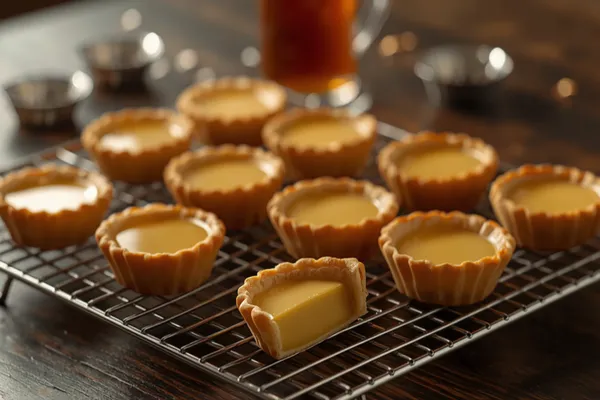
The glassy, wobble-free custard tart of Hong Kong's cha chaan teng — a short, biscuity butter crust, a filling of whole eggs and evaporated milk strained twice until it sets clear, and a two-stage bake that browns the pastry before the custard ever has a chance to soufflé.
Minas Gerais, south-eastern Brazil (the Serra da Canastra dairy country) · Brazilian
Pão de Queijo (Brazilian Cheese Bread from Minas Gerais)
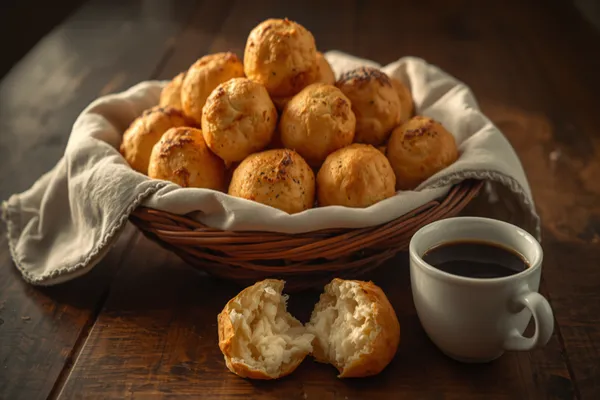
Brazil's great small bread: hollow, chewy cassava-starch puffs with a crackling shell and a stretchy, salty cheese-scented middle. Naturally gluten-free, and the batter keeps in the freezer for a hot tray any morning of the week.
Spain (pan-Spanish) · Spanish
Tortilla Española (Spanish Potato Omelette)
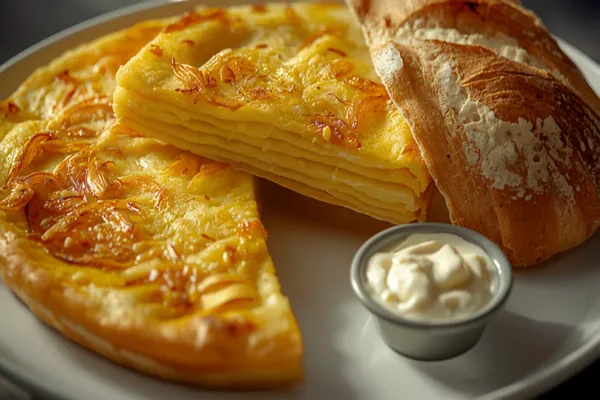
Spain's national dish in a pan: potatoes slowly confited in olive oil, bound with egg and cooked into a thick, golden cake with a just-set, custardy centre. Served warm or at room temperature, in wedges or cubes.
Spain (Andalusia & Madrid) · Spanish
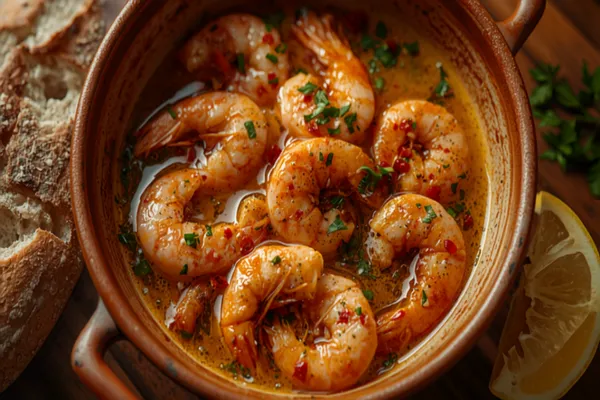
Gambas al Ajillo (Spanish Garlic Shrimp)
The fastest great tapa there is: plump prawns sizzled in olive oil with sliced garlic, a pinch of dried chilli and a splash of sherry, served bubbling hot with bread to soak up the golden, garlicky oil.
Managua and Nicaragua's Pacific cattle country — with a rival claim from Mexico's Gulf coast · Nicaraguan
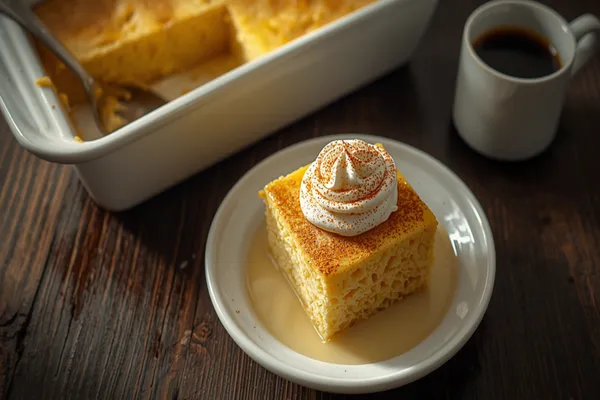
Tres Leches Cake (Pastel de Tres Leches)
Latin America's great milk-soaked cake: a lean, fatless sponge built on whipped egg whites, flooded overnight with condensed, evaporated and whole milk, and finished with cold cream and cinnamon. Wet through to the last crumb and never soggy.
Gaziantep, south-eastern Anatolia — with living traditions across Greece, the Levant, Armenia and the Balkans · Turkish
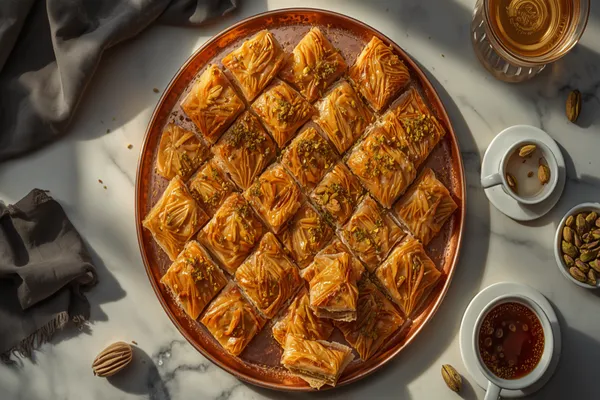
Baklava — Gaziantep Pistachio, Clarified Butter and Forty Sheets of Yufka
The best baklava is not the sweetest — it is the crispest. This is the Gaziantep way: a tray of tissue-thin pastry, ground green pistachio, clarified butter and a plain lemon-sharpened sugar syrup, cut before it bakes and drenched hot-on-cold so every layer shatters instead of sagging.