Gaziantep, south-eastern Anatolia — with living traditions across Greece, the Levant, Armenia and the Balkans · Turkish
Baklava — Gaziantep Pistachio, Clarified Butter and Forty Sheets of Yufka
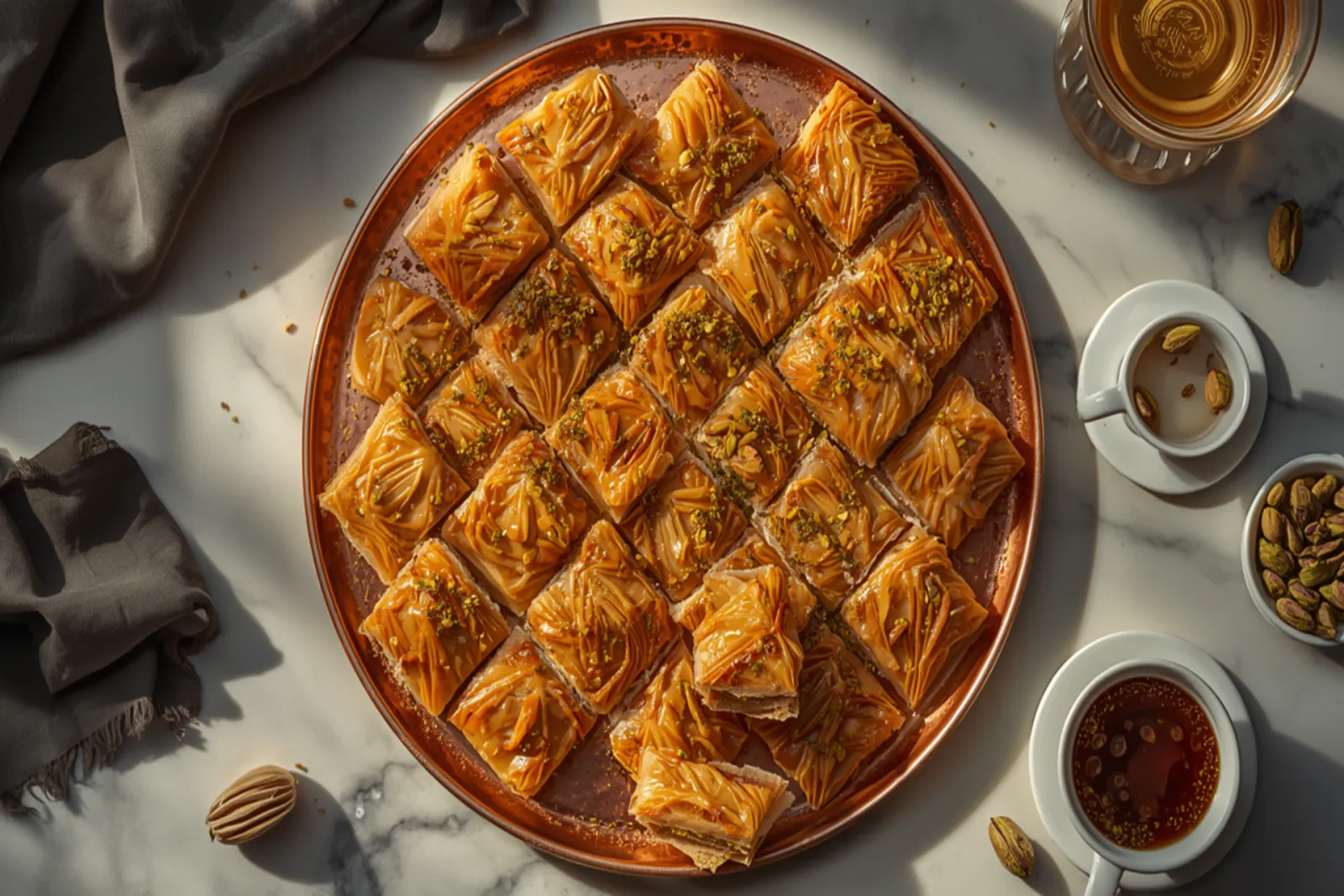
The best baklava is not the sweetest — it is the crispest. This is the Gaziantep way: a tray of tissue-thin pastry, ground green pistachio, clarified butter and a plain lemon-sharpened sugar syrup, cut before it bakes and drenched hot-on-cold so every layer shatters instead of sagging.
Published September 1, 2026
Cultural context
Baklava has no single inventor and anyone who tells you otherwise is selling something. Layered nut-and-pastry sweets run back to the ancient Near East; the version the world eats now — paper-thin sheets, butter, syrup — was refined in the Ottoman palace kitchens, where records show it being baked at Topkapı by the fifteenth century, and it is claimed with equal feeling in Athens, Aleppo, Yerevan and Sarajevo. What Gaziantep has is not the origin but the standard: Antep Baklavası was the first Turkish product to win EU Protected Geographical Indication, and the city's pistachio, its yufka masters and its written specification are the benchmark the rest of the field is measured against.
Baklava is a pastry that everyone thinks they know and most people have only met in its worst version — the gummy, over-syruped square that sits under cling film on a counter. Real baklava is a texture before it is a sweet. Lift a piece and the top sheets should shatter audibly; bite it and you should get forty distinct leaves of pastry, a seam of green nut, and a sweetness that arrives late and leaves quickly. Getting there is not about a secret ingredient. It is about butter that has had its water removed, an oven you take further than feels comfortable, and a rule about temperature that the whole dish turns on.
The sweet has a long, disputed and frankly political history. Something like it — chopped nuts and honey between layers of flatbread, baked in a wood oven — was being made in the ancient Near East well before any of the modern claimants existed. Its immediate ancestor is usually taken to be güllaç, tissue-thin sheets steeped in sweetened milk, still eaten across Turkey in Ramadan. The form we recognise now was standardised in the Ottoman palace kitchens; Topkapı records show it being baked there by the 1470s. And every spring, in a ceremony called the Baklava Alayı, the Sultan sent trays of it out to the Janissary regiments, who carried them back through the streets of Istanbul on poles — a state sweet, delivered as a military ritual.
Then the empire receded and left baklava behind everywhere it had been. Greece, Syria, Lebanon, Armenia, Bulgaria, Bosnia, Iraq, Azerbaijan: all of them make it, all of them have made it for centuries, and none of them are wrong. So this recipe does not argue about who invented it. It teaches one specific, exceptionally well-documented style — and mentions the others honestly where they differ.
Why Gaziantep
The style is Gaziantep’s, in south-eastern Anatolia, an old caravan city that sits in the middle of Turkey’s pistachio country. Antep Baklavası was the first Turkish product ever granted Protected Geographical Indication by the European Union, which means the method exists as a written specification rather than a rumour: durum wheat yufka rolled by hand, clarified butter made from sheep’s-milk yoghurt, a semolina-thickened cream boiled to a precise temperature, local pistachios, plain sugar syrup, wood-fired stone ovens. The city is a UNESCO Creative City of Gastronomy, and the reason is largely this tray.
None of that specification is reproducible in a home kitchen, and the useful thing is not to pretend otherwise but to work out which parts of it actually carry the flavour. Three do, and all three are available to you: clarified butter instead of whole butter, a thin film of semolina cream under the nuts, and a plain, unspiced syrup. Those are the differences between a Gaziantep-style tray and the generic honey-drenched thing.
The technique is really just two rules
Rule one: bake it further than you want to
Baklava is not baked so much as slowly fried in the butter between its own layers. The oven’s job is to drive every trace of water out of forty sheets of dough until they are rigid and dry, so that they have somewhere to put the syrup. Pull the tray at the pale-gold stage that instinct suggests and the middle layers are still soft; syrup then has nothing to soak into and simply sits in the dough as wetness. Take it to a deep, even amber over 70 to 80 minutes and the same syrup is absorbed into a crisp structure that stays crisp.
Use clarified butter or ghee for this, not whole butter. Whole butter is roughly 16% water and 1–2% milk protein, and over more than an hour in a hot oven the water steams the sheets limp while the protein browns, then burns. Clarify it — or buy ghee — and you are brushing on pure fat, which is what fries pastry crisp.
Rule two: cold syrup, hot pastry
This is the one that separates the two outcomes. When the tray comes out of the oven it is full of superheated steam pushing outward. Pour cold syrup over it and that steam collapses, drawing syrup down through the cuts and into the layers by something close to suction, while the pastry is still hot enough to stay set. The hiss you hear is the whole mechanism working.
Do it the other way — hot syrup on hot baklava, or cold on cold — and the syrup has no reason to travel. It pools at the base, waterlogs the bottom sheets, and leaves the top dry. Both temperatures matter, so the syrup gets made first and cooled while the tray is assembled and baked. Everything else in this recipe is craftsmanship. This part is physics.
And then leave it alone
The last instruction is the hardest: uncovered, room temperature, six hours minimum and overnight for preference. The syrup redistributes and the excess moisture evaporates off. Covering the tray traps that steam and softens the top; the fridge sets the butter solid and turns the pastry to leather. Baklava is a sweet that improves on days two and three, which makes it one of the genuinely great things to make ahead — the reason it has been the pastry of Eid tables, Ramadan nights, weddings and funerals from Sarajevo to Baghdad for five hundred years.
For the other end of the phyllo tradition — savoury, herb-packed and made in the same tissue-thin sheets — try Greece’s spanakopita. And it is worth learning to make the Turkish coffee that is supposed to sit beside it: bitter, unsweetened, and precisely the counterweight the pastry is designed for.
Ingredients
For the syrup (make it first)
- 400 g (2 cups) granulated sugar Plain white sugar, not honey. Turkish baklava syrup is deliberately neutral — its job is to sweeten and set, not to add a flavour of its own that competes with the pistachio.
- 240 ml (1 cup) water
- 1 tbsp lemon juice, freshly squeezed Not optional and not for flavour. The acid inverts part of the sucrose as the syrup simmers, which stops it crystallising into grit in the tray a day later.
- 1 strip lemon peel, pared with a peeler Removed before cooling. A Gaziantep purist would leave even this out; it adds a faint brightness without turning the syrup into lemon syrup.
For the semolina cream (optional — the Antep detail)
- 150 ml whole milk
- 2 tsp fine semolina The registered Antep specification includes a thin semolina-thickened cream brushed under the nut layer. It is invisible in the finished slice and it is one of the reasons Gaziantep baklava tastes richer than the sum of its parts.
For the pastry
- 450 g (1 lb) phyllo / filo pastry, thin (#4) sheets, roughly 23 × 33 cm Thawed overnight in the fridge, then brought to room temperature in its sealed packet for 2 hours. Never thaw it on the counter or in the microwave — condensation glues the sheets into a single unusable brick. A hand-rolled Turkish *yufka* is the real thing; almost nobody outside a baklava shop makes it, and good commercial phyllo makes very good baklava.
- 250 g clarified butter or ghee, melted and kept just warm Clarified, not whole butter. The milk solids in whole butter contain water and protein: the water steams the pastry limp and the protein browns and burns over 75 minutes in the oven. Gaziantep uses clarified butter made from sheep's-milk yoghurt, which is grassier and slightly tangy; cow's ghee is the easy stand-in.
- 300 g raw unsalted pistachios, shelled Turkish *Antep fıstığı* if you can find them — small, dense, deeply green and more resinous than the plumper Californian or Iranian nuts, which will still make excellent baklava. Buy them raw and unsalted; roasted nuts taste toasted twice after an hour in the oven.
Equipment
- 1 23 × 33 cm (9 × 13 in) metal baking tray, at least 5 cm deep Metal, not glass or ceramic. Baklava needs the base to conduct heat hard enough to crisp the bottom sheets; glass insulates and you get a pale, damp underside.
- 1 wide, soft pastry brush — or a small ladle Baklava shops flick butter on with a ladle rather than painting it. Either way, a stiff brush drags and tears sheets that are two-hundredths of a millimetre thick.
Method
Tap a step’s number to check it off as you go.
-
Make the syrup first, before you touch the pastry. Bring the sugar, water and lemon peel to a boil, stirring only until the sugar dissolves. Simmer gently for 12–15 minutes without stirring, until it is very slightly thickened but still runs freely off a spoon. Stir in the lemon juice, simmer 1 minute more, fish out the peel, and set it aside — uncovered — to cool completely to room temperature. It can go in the fridge once cool.
Why: Everything about baklava's texture comes down to one thing: the syrup and the pastry must never be the same temperature. Cold syrup meeting hot pastry is drawn in fast by the steam rushing out of the layers, and the sheets stay separate and brittle. Hot syrup on hot pastry simply floods them and they collapse; cold on cold sits in a puddle at the bottom of the tray. Making the syrup first is not tidiness — it is the only way it will be properly cold by the time the tray comes out.
-
If you are making the semolina cream, whisk the milk and semolina together cold in a small pan, then heat gently, stirring constantly, until it thickens to the consistency of single cream and just begins to bubble — about 3 minutes. Take it off the heat and let it cool to lukewarm.
Why: This is the step most home recipes omit and the one that separates a good tray from a Gaziantep one. A thin film of semolina cream under the nuts holds them in place, adds a faint dairy roundness, and — because starch gelatinises and then sets — gives the middle of the baklava enough structure that the top half doesn't slide off the bottom half when you lift a piece.
-
Pulse the pistachios in a food processor in short bursts until they are the texture of coarse sand with a few larger fragments — not powder, not chunks. Stop the moment they look right.
Why: Over-processed nuts release their oil and clump into a paste that steams rather than toasts; under-processed ones leave gaps that the pastry collapses into. Coarse sand packs into an even bed a couple of millimetres deep, which is exactly the ratio Antep baklava is built on — the pastry is the dish, the nuts are the seam.
-
Heat the oven to 180°C / 350°F, conventional (not fan). Brush the tray generously with clarified butter. Unroll the phyllo, lay it flat, and cover the stack with a sheet of baking paper and a barely damp tea towel on top of that.
Why: Phyllo dries out in about two minutes of open air and turns to cornflakes you cannot lift. The paper barrier matters: a damp towel laid directly on the sheets wets the top one into paste. Fan ovens are worse here than in almost any other bake — the moving air lifts and dries the loose top sheet before the butter has set it down.
-
Lay down the first sheet, brush it lightly all over with butter, and repeat until you have used half the packet — roughly 18–20 sheets. Work outward from the middle in soft strokes and do not fuss over tears; a torn sheet in the base is invisible in the finished tray.
Why: Baklava is butter architecture. Each sheet is brushed so that during baking the fat between the layers fries them apart into individual crisp leaves rather than baking them together into one thick sole. Light is the operative word — sheets that are drenched rather than filmed go greasy and heavy and refuse to take up syrup later.
-
Spread the lukewarm semolina cream in a very thin film over the top sheet, then scatter the ground pistachios evenly across the whole surface, right to the corners. Reserve 3 tablespoons of nuts for garnish.
Why: To the corners is the instruction that matters. Nuts heaped in the middle mean the outer pieces are all pastry and the centre pieces bulge and split. An even bed also gives the tray a level upper half, which is what lets you cut clean diamonds through it later.
-
Layer the remaining sheets on top the same way, buttering each. Butter the final sheet generously, then trim any overhang flush with the tray with a sharp knife.
Why: The top surface is the one that has to hold up to the syrup, so it gets the heaviest coat. Trimming rather than tucking keeps the edges thin enough to crisp — folded-in overhang stays doughy in the middle of the pile.
-
Cut the tray all the way through to the base before baking. For diamonds, make parallel cuts about 4 cm apart down the length of the tray, then cut diagonally across them at roughly 45°. Use a long, thin, very sharp knife and press down cleanly rather than sawing.
Why: You cannot cut baked baklava. Straight from the oven it is 40 layers of glass and a knife shatters the whole top half. Cutting raw does two further jobs: it opens channels for the syrup to reach the base of every piece, and it lets steam escape during baking instead of pushing the layers apart into a dome.
-
Bake for 70–80 minutes, until the top is a deep, even golden brown — noticeably darker than you will want to let it go. Rotate the tray once at the halfway mark. If the top is colouring too fast in the first half hour, lay a sheet of foil loosely over it.
Why: Underbaked baklava is the second most common failure after soggy baklava, and they are the same failure: pastry that is still soft has nowhere for syrup to go but into the dough. You are effectively frying the sheets in their own butter until they are dry and rigid all the way to the base. Pale gold is not done. Deep amber is.
-
The moment the tray comes out of the oven, ladle the cold syrup evenly over the hot baklava, working slowly along the cuts and around the edges. It will hiss and foam. Use all of it.
Why: That hiss is the sound of the thing working — steam leaving the pastry as syrup is pulled into the vacuum behind it. The temperature gap is doing the work, so speed matters: a tray that has sat for ten minutes has already begun to cool and will absorb unevenly. And the syrup looks like far too much when it pools around the edges. It is not; it will be gone within the hour.
-
Leave the tray completely uncovered, at room temperature, for at least 6 hours and preferably overnight. Do not refrigerate it and do not cover it.
Why: The syrup has to distribute itself evenly through every layer and the surplus moisture has to leave. Cover the tray and that moisture condenses back onto the top sheets and softens them; refrigerate it and the butter sets solid and the pastry goes leathery. Baklava is a room-temperature sweet, always.
-
Re-cut along the original lines with a sharp knife to free the pieces, scatter the reserved pistachios over the top, and lift them out with a small offset spatula. Serve at room temperature.
Why: The final scatter of raw green nut goes on now rather than before baking, because pistachios that spend 80 minutes in a hot oven turn a dull khaki. The colour on top of a shop tray in Gaziantep is always fresh nut added at the end — it is the visual signature of the style.
A quick, anonymous tap — no review needed.
Variations
- Greek baklava (καρυδόπιτα-style)
The other great tradition, and a genuinely different sweet rather than a lesser one. Walnuts instead of pistachios, honey in the syrup alongside the sugar, and cinnamon and cloves warming both the nut layer and the syrup; the phyllo is often brushed with butter cut with olive oil. It is darker, spicier and less sweet-sharp than the Turkish version, and the two are not improved by being judged against each other.
- Şöbiyet
Gaziantep's other icon: the same pastry folded into triangles around a much more generous pocket of kaymak — thick clotted buffalo cream — with the pistachio. Richer, softer, and best eaten the day it is made, which is why it rarely travels the way plain baklava does.
- Cevizli (walnut) baklava
The everyday Turkish version, and what most Anatolian households actually bake, because pistachios are expensive. Walnuts are more tannic and less perfumed, so scald them briefly in boiling water and dry them well first to take the bitter edge off the skins.
- Levantine, with flower water
From Damascus to Beirut the syrup (*atr*) is scented at the end of cooking with a teaspoon of orange-blossom water and a half-teaspoon of rosewater, off the heat so the aromatics don't boil away. Cashews and pine nuts join the pistachios and walnuts. It is a floral, more perfumed register than the deliberately plain Turkish syrup.
- Kuru baklava (dry baklava)
Made with less butter, no cream layer and a restrained hand with the syrup, specifically so it can survive a long journey without going soft. This is the baklava sold in tins to take home — drier and more brittle by design, and the one worth making if you are posting a box to someone.
- Less sweet
Cut the syrup sugar to 320 g and add an extra teaspoon of lemon juice. You cannot go much below that: the syrup needs enough dissolved sugar to set the pastry rather than just wet it, and a watery syrup produces exactly the soggy tray everyone is trying to avoid.
Serving & Storage
Room temperature, in small pieces, with something bitter and hot beside it — this is not a plated dessert so much as a punctuation mark. In Gaziantep it comes with Turkish coffee or a tulip glass of black tea; a spoonful of thick kaymak or unsweetened clotted cream on the side is the local indulgence, and a scoop of plain or *sakızlı* (mastic) ice cream against the warm pastry is the summer version.
Pairs with: Turkish coffee, Black tea in a tulip glass, Kaymak or clotted cream, Mastic or vanilla ice cream, Moroccan mint tea.
Storage: Keeps 10–14 days at room temperature in a tin or a loosely covered tray — never in the fridge, which sets the butter and turns the pastry to leather, and never sealed airtight while it is still releasing steam. It is at its best on days two and three, once the syrup has settled through every layer. Unbaked assembled trays freeze well for 2 months: freeze uncut, then cut and bake from frozen with 10 extra minutes. Baked and syruped baklava freezes acceptably for a month and should be thawed uncovered at room temperature.
Nutrition
Per serving (1 diamond (about 60 g))
- Calories
- 265
- Protein
- 4 g
- Carbs
- 28 g
- Fat
- 16 g
- Fiber
- 1.5 g
- Sugar
- 17 g
- Sodium
- 85 mg
Notable micronutrients: Vitamin B6, Thiamin, Copper, Manganese, Potassium
Estimated using standard ingredient data. Values vary with brands and substitutions.
Frequently Asked Questions
Is baklava Greek or Turkish?
Neither claim survives contact with the evidence, and the argument is more about nationhood than pastry. Layered sweets of nuts and dough go back to the ancient Near East — the Assyrians were baking nuts between flatbreads with honey centuries BC — and the direct ancestor of the modern form, *güllaç*, is a stack of tissue-thin sheets soaked in sweetened milk that predates the recipe we know. What is documented is that the pastry was standardised in the Ottoman palace kitchens, appearing in Topkapı records by the fifteenth century, and that it spread with the empire across Greece, the Levant, Armenia, the Caucasus and the Balkans, where every one of those cuisines has cooked it as its own for hundreds of years. Turkey holds the EU geographical indication for *Antep Baklavası* specifically, which protects Gaziantep's method — not baklava itself. The honest answer is that it belongs to a region, not a flag.
Why did my baklava turn out soggy?
Almost always one of three things, in this order. First, temperature: hot syrup poured onto hot baklava floods the layers instead of being drawn into them. The syrup must be fully cold and the pastry straight from the oven. Second, underbaking — pale, still-soft pastry has no crisp structure to keep, so any syrup at all makes it wet. Take it to deep amber, which is darker than instinct allows. Third, covering or refrigerating it while it rests: the tray needs to sit uncovered at room temperature for hours so surplus moisture can leave, and a lid or a fridge traps it against the top sheets.
Do I have to make my own phyllo?
No, and you probably shouldn't for a first tray. Hand-rolling *yufka* thin enough to read a newspaper through is a trade with a formal apprenticeship behind it — baklava masters in Gaziantep talk about eight years before a rolling pin behaves — and it is done with a metre-long *oklava* on a floured table larger than most kitchens. Good commercial phyllo makes genuinely good baklava. Buy the thinnest grade you can find (usually marked #4), thaw it slowly in the fridge overnight, and let it come to room temperature sealed before you open it, which is what stops it cracking.
Honey or sugar syrup?
It depends which baklava you are making, and they are not interchangeable. Turkish baklava uses a plain sugar syrup with lemon and no spice at all, on the principle that the pistachio and the butter are the flavours and the syrup should be transparent to them. Greek baklava leans on honey with cinnamon and often cloves, which gives a darker, resinous, more aromatic sweet. Substituting honey into a Turkish tray does not make it more authentic — it makes it a different pastry, and honey also browns faster and can taste scorched where it pools.
Why must baklava be cut before it goes in the oven?
Because after baking it is structurally glass. Forty buttered, dried-out layers shatter and skid under a knife, and you will destroy the top half of the tray trying. Cutting raw, all the way through to the base, also creates the channels the syrup travels down to reach the bottom sheets, and gives the trapped steam somewhere to escape so the layers don't balloon into a dome. Use a long thin sharp knife, press straight down, and don't saw.
What kind of pistachios should I use, and can I substitute?
*Antep fıstığı* — the small, slender, intensely green Gaziantep pistachio — is the benchmark, with a resinous depth and a colour that survives the oven. Iranian and Californian pistachios are larger, milder and paler, and make excellent baklava that simply looks and tastes a shade softer. Buy raw and unsalted in every case: salted nuts throw the syrup balance off and pre-roasted ones are effectively cooked twice. Walnuts are the traditional everyday substitute across Anatolia, and a mix of walnut and pistachio is entirely normal in home kitchens.
Can I make baklava ahead for a party?
It is one of the few sweets that is genuinely better made ahead. Bake and syrup it two days before and leave it uncovered at room temperature; by day two the syrup has distributed evenly through the layers and the flavour has rounded out. You can also assemble the raw tray, cut it, and freeze it uncut-side-down for up to two months, then bake straight from frozen with about ten extra minutes. What you cannot do is bake it, syrup it, and serve it an hour later — it needs the rest.
What to drink with this
All drinks →Hand-picked pours to match this dish.
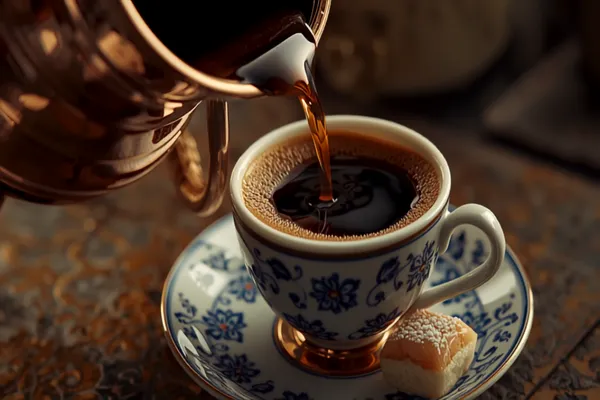
Turkey (Ottoman coffee tradition) · Turkish
Turkish Coffee (Türk Kahvesi — Unfiltered & Foamy)
Finely ground coffee simmered slowly in a cezve to a rich foam, served unfiltered in tiny cups. The grind, the heat and the foam that make it — plus the ritual of the grounds left behind.
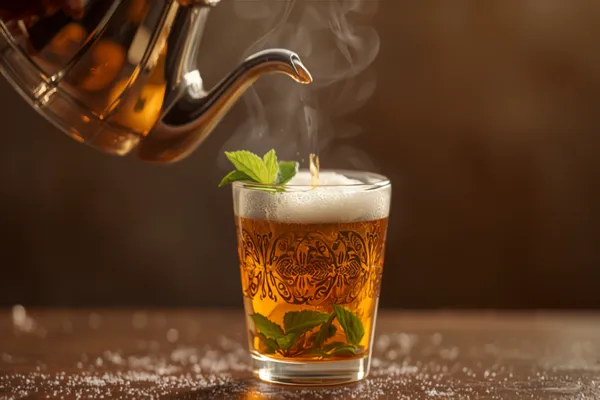
Morocco (the Maghreb) · Moroccan
Moroccan Mint Tea (Atay — Maghrebi Mint Tea)
Morocco's sweet, fragrant green tea poured from a height into a frothy glass. The proper method — washing the tea, layering the mint, and the famous long pour — plus how sweet it really should be.
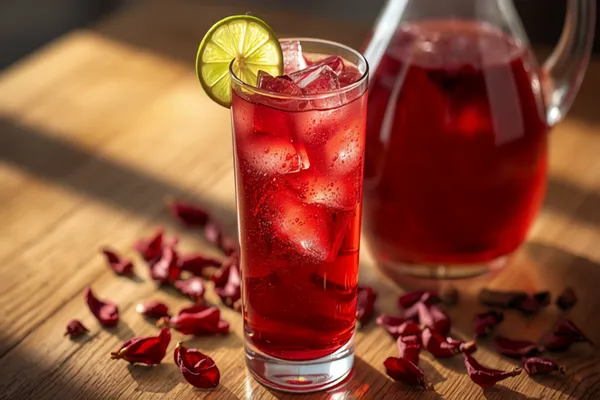
Mexico (agua fresca tradition) · Mexican
Agua de Jamaica (Hibiscus Iced Tea)
Mexico's ruby-red hibiscus cooler: dried jamaica flowers steeped, sweetened and chilled into a tart, refreshing agua fresca. The right steep, how to control the tartness, and why it's so good for you.
From our kitchen community
Ratings & Reviews
My Rating
Tap a star to rate — no sign-in, no form needed.
My Review
0 Ratings
🥣 0 home cooks made it!
Be the first to rate Baklava — Gaziantep Pistachio, Clarified Butter and Forty Sheets of Yufka.
Related Recipes
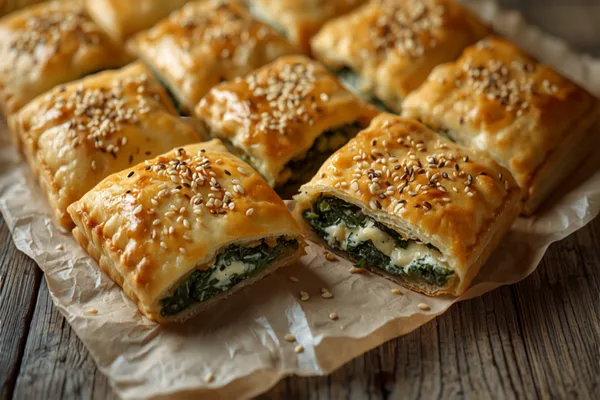
Greece (pan-Hellenic) · Greek
Spanakopita (Greek Spinach and Feta Pie)
The great Greek spinach pie: a generous filling of wilted spinach, herbs, scallions and sharp feta, baked between shatteringly crisp layers of butter-and-oil brushed phyllo. Cut into squares, served warm or at room temperature.
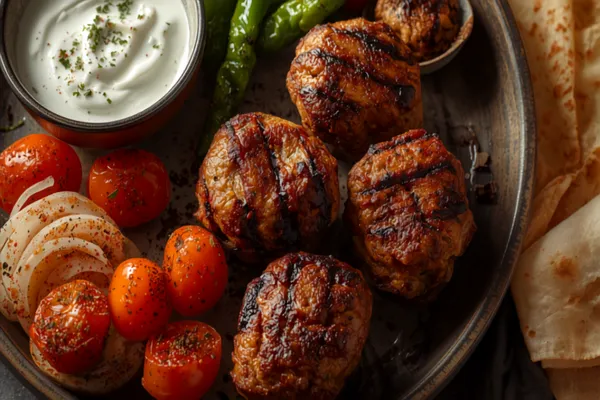
Turkey (pan-Turkish) · Turkish
Turkish Köfte (Spiced Grilled Meatballs)
Turkey's everyday favourite: ground meat kneaded with onion, garlic and cumin, shaped into little ovals and grilled or pan-fried until charred outside and juicy within. Served with flatbread, grilled peppers and a cooling salad.
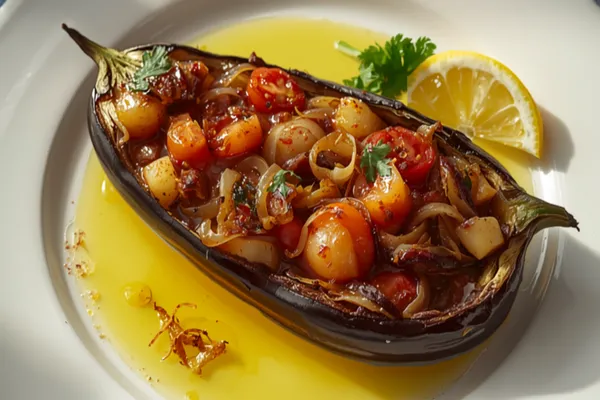
Turkey (Ottoman / pan-Turkish) · Turkish
İmam Bayıldı (Turkish Stuffed Eggplant in Olive Oil)
The eggplant dish so good 'the imam fainted': whole eggplant braised soft in olive oil and stuffed with a sweet tangle of onion, garlic and tomato. Served at room temperature, it's the star of the Turkish olive-oil table.
Turkey (Ottoman coffee tradition) · Turkish
Turkish Coffee (Türk Kahvesi — Unfiltered & Foamy)
Finely ground coffee simmered slowly in a cezve to a rich foam, served unfiltered in tiny cups. The grind, the heat and the foam that make it — plus the ritual of the grounds left behind.
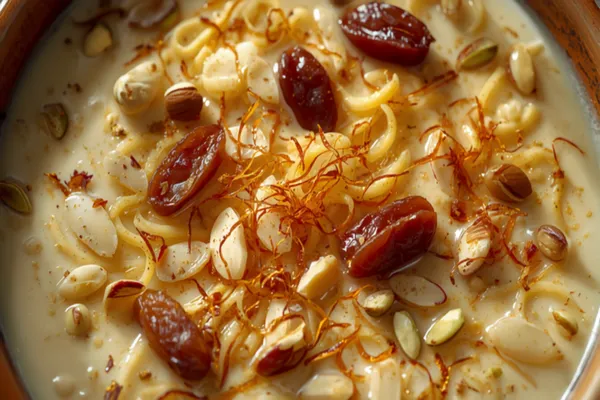
Hyderabad / North India (pan-Muslim South Asia) · Indian
Sheer Khurma (Eid Vermicelli and Date Pudding)
The dessert that defines Eid morning: fine vermicelli toasted in ghee and simmered in milk with dates, nuts, and cardamom into a fragrant, festive pudding. Rich, celebratory, and shared with every visitor.
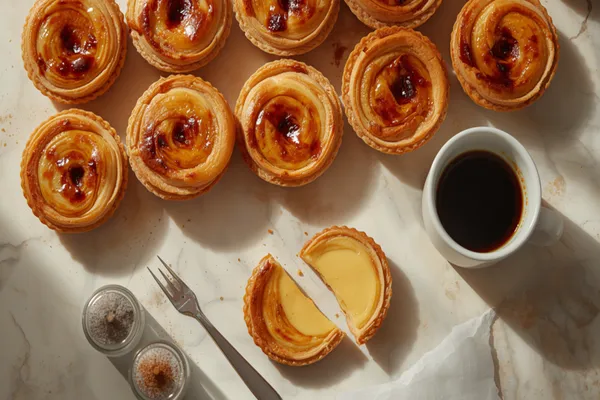
Belém, Lisbon — the Jerónimos Monastery quarter on the Tagus, within Portugal's wider convent-sweet tradition · Portuguese
Pastéis de Nata (Portuguese Custard Tarts)
Lisbon's blistered custard tart — a spiral-rolled puff shell that shatters like glass, a flour-set egg-yolk custard scented with lemon peel and cinnamon rather than vanilla, and an oven turned as hot as it will go so the top scorches into dark, bitter-sweet freckles.
Further reading
- Cultural Story · InternationalWorld Classics: A Cook's Tour Beyond IndiaTable & Traditions is India-first, but the world has a place at this table too. A guide to our curated international slice — the European, East Asian, Southeast Asian, Middle Eastern and North African, and American dishes worth cooking, and where to begin with each.
- Festival & Seasonal · InternationalWorld Festive: Recipes for Celebrations Around the GlobeEvery culture has its feast days — the holiday tables, the harvest gatherings, the festivals devoted to a single beloved food. This is our guide to celebration cooking from around the world, from a French Yule log to Hawaiian Spam musubi, and the festivals behind each dish.