Turkey (Ottoman / pan-Turkish) · Turkish
İmam Bayıldı (Turkish Stuffed Eggplant in Olive Oil)
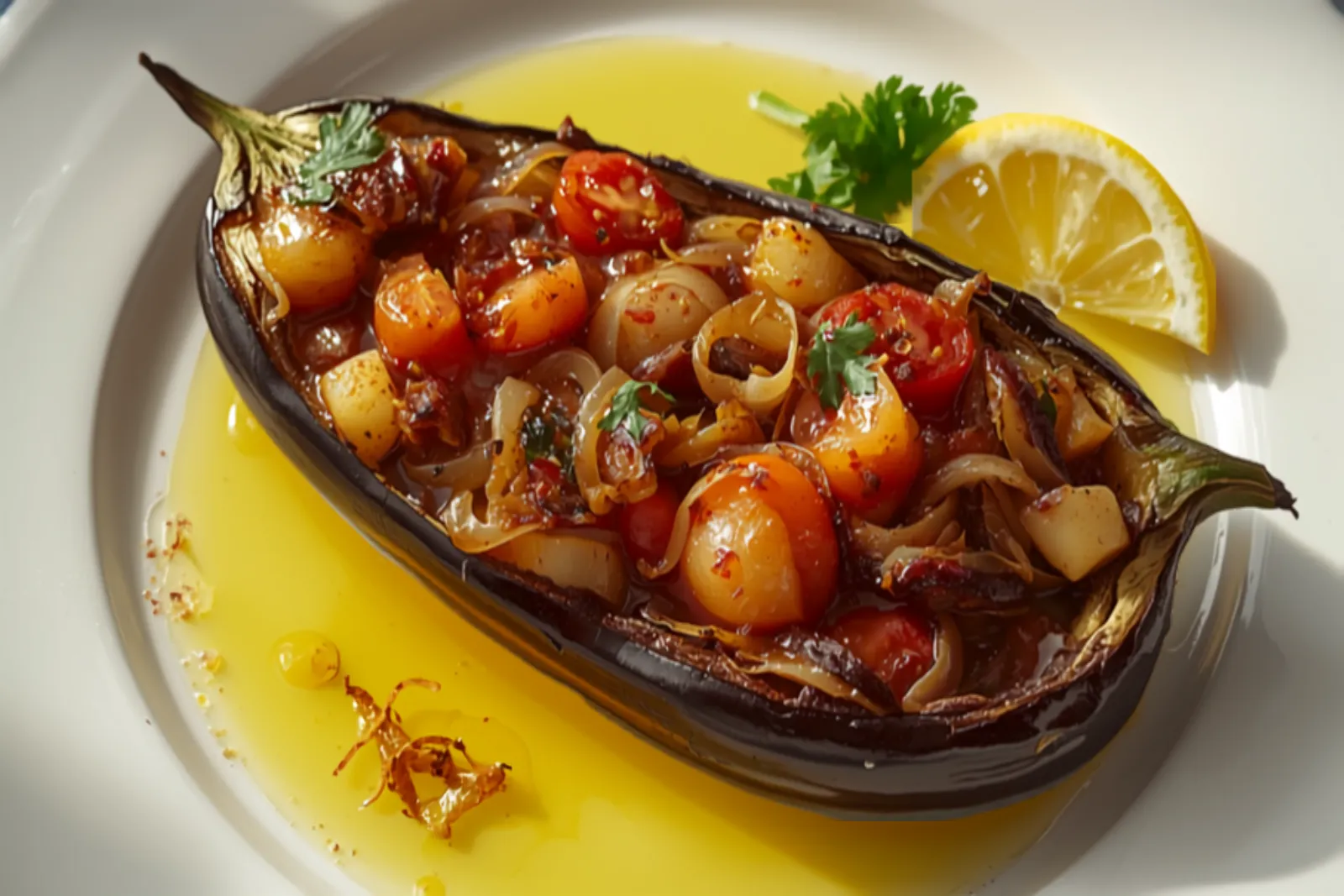
The eggplant dish so good 'the imam fainted': whole eggplant braised soft in olive oil and stuffed with a sweet tangle of onion, garlic and tomato. Served at room temperature, it's the star of the Turkish olive-oil table.
Published June 24, 2026
Cultural context
İmam bayıldı — 'the imam fainted' — is one of the most famous of Turkey's zeytinyağlı dishes, the vegetable dishes cooked in olive oil and served cold or at room temperature. Legend says an imam swooned, whether from the dish's deliciousness or at the amount of precious olive oil it used. It's a meatless cousin of the stuffed karnıyarık, and a centrepiece of the meze and summer table.
İmam bayıldı — literally “the imam fainted” — is the most romantically named dish in this collection, and one of the best things anyone has ever done to an eggplant. Whole aubergines are braised soft in olive oil and stuffed with a sweet, slow-cooked tangle of onion, garlic and tomato, then served cool. The legend says an imam swooned at the table; whether from delight or at the sheer quantity of precious olive oil, no one agrees.
Fry first, then braise
The silky texture is built in two stages. First the whole eggplants are fried in olive oil until collapsed and golden — this is what sweetens the flesh and lets it braise to melting softness later; under-fried eggplant stays spongy. Then a separate filling of onions and garlic is cooked slowly until sweet, with tomato added and reduced to a thick jam. That sweetness against the rich eggplant is the whole character of the dish, so don’t rush the onions.
An olive-oil dish, served cool
İmam bayıldı belongs to the zeytinyağlı family — Turkish vegetable dishes cooked in olive oil and eaten at room temperature, never hot. After stuffing the eggplants and braising them gently in oil and a little water until completely tender, let them cool so the flavours round out and settle. It’s an ideal make-ahead dish, genuinely better the next day, finished simply with parsley and a squeeze of lemon.
For more of the Turkish table, try köfte and menemen, or browse the full recipe collection.
Ingredients
For the eggplant
- 4 small-medium eggplant / aubergine Long, slim ones hold their shape best. Peel in stripes, leaving alternating bands of skin.
- for shallow frying olive oil
For the filling
- 4 tbsp olive oil
- 2 large onions, thinly sliced
- 6 cloves garlic, sliced Generous garlic is traditional here.
- 3 tomatoes, chopped (or 1 can chopped tomatoes)
- 1 tsp sugar
- 1 large handful flat-leaf parsley, chopped
For the braise
- 1 tsp salt, plus more to taste
- 120 ml hot water
- lemon wedges, to serve
Method
Tap a step’s number to check it off as you go.
-
Peel the eggplant in stripes and fry them whole in olive oil, turning, until softened and golden all over. Lift out and set aside.
Why: Frying first collapses and sweetens the flesh so it braises to a silky softness — pale, under-fried eggplant stays spongy and bland.
-
In the same pan, slowly cook the onions and garlic in olive oil until soft and sweet, 10-12 minutes. Add the tomatoes, sugar, salt and most of the parsley and cook to a thick jam.
Why: A long, gentle cook turns the onions sweet and the tomato into a concentrated filling — this sweetness against the rich eggplant is the soul of the dish.
-
Sit the eggplant in a snug pan. Slit each one lengthways to make a pocket and prise it open, then stuff generously with the onion mixture.
Why: A deep pocket holds plenty of filling; keeping the eggplant whole means it presents beautifully and holds its shape.
-
Pour the hot water and a little more olive oil around the eggplant, cover, and braise gently for 30-40 minutes until completely tender.
Why: The low, slow braise in oil and water is the zeytinyağlı method — it cooks the eggplant to melting softness and develops a glossy, savoury sauce.
-
Cool to room temperature (or chill), then serve with the pan juices, extra parsley and lemon.
Why: İmam bayıldı is an olive-oil dish meant to be eaten cool or at room temperature, when its flavours are fullest — never served hot.
A quick, anonymous tap — no review needed.
Variations
- Karnıyarık (with meat)
Stuff the eggplant with a cooked spiced lamb-and-onion mixture instead for the meaty sibling of imam bayıldı, served hot.
- With pine nuts and currants
Add a spoon of pine nuts and soaked currants to the filling for an Ottoman, slightly sweeter character.
- Oven-roasted (lighter)
Roast the halved eggplant until soft instead of shallow-frying whole, then stuff and bake — less oil, still excellent.
Serving & Storage
Serve at room temperature as a meze or light main, with bread, rice pilav, and a bowl of yogurt on the side. A squeeze of lemon over the top lifts the richness.
Pairs with: Crusty bread or rice pilav, Thick yogurt, A crisp white or rosé.
Storage: Keeps 4 days refrigerated and tastes even better after a day. Always serve cool or at room temperature, not hot.
Nutrition
Per serving (1 eggplant)
- Calories
- 290
- Protein
- 4 g
- Carbs
- 22 g
- Fat
- 22 g
- Fiber
- 8 g
- Sugar
- 12 g
- Sodium
- 480 mg
Notable micronutrients: Vitamin C, Potassium, Vitamin A, Fiber
Estimated using standard ingredient data. Values vary with brands and substitutions.
Frequently Asked Questions
Why is it served cold?
It's a zeytinyağlı (olive-oil) dish, a whole category of Turkish vegetable dishes cooked in olive oil and eaten cool or at room temperature. The flavours are rounder and fuller that way — serving it piping hot misses the point.
How do I keep the eggplant from being greasy?
Fry it in hot (not lukewarm) oil so it browns rather than soaks, drain it well, and use the braising liquid to finish cooking. Roasting instead of frying is the lightest route of all.
Can I make it ahead?
Absolutely — it's designed for it. İmam bayıldı improves overnight as the eggplant soaks up the sweet onion-tomato filling and oil, making it an ideal make-ahead dish for a spread.
What to drink with this
All drinks →Hand-picked pours to match this dish.

Turkey (Ottoman coffee tradition) · Turkish
Turkish Coffee (Türk Kahvesi — Unfiltered & Foamy)
Finely ground coffee simmered slowly in a cezve to a rich foam, served unfiltered in tiny cups. The grind, the heat and the foam that make it — plus the ritual of the grounds left behind.

Morocco (the Maghreb) · Moroccan
Moroccan Mint Tea (Atay — Maghrebi Mint Tea)
Morocco's sweet, fragrant green tea poured from a height into a frothy glass. The proper method — washing the tea, layering the mint, and the famous long pour — plus how sweet it really should be.

Mexico (agua fresca tradition) · Mexican
Agua de Jamaica (Hibiscus Iced Tea)
Mexico's ruby-red hibiscus cooler: dried jamaica flowers steeped, sweetened and chilled into a tart, refreshing agua fresca. The right steep, how to control the tartness, and why it's so good for you.
From our kitchen community
Ratings & Reviews
My Rating
Tap a star to rate — no sign-in, no form needed.
My Review
0 Ratings
🥣 0 home cooks made it!
Be the first to rate İmam Bayıldı (Turkish Stuffed Eggplant in Olive Oil).
Related Recipes
Turkey (pan-Turkish) · Turkish
Turkish Köfte (Spiced Grilled Meatballs)
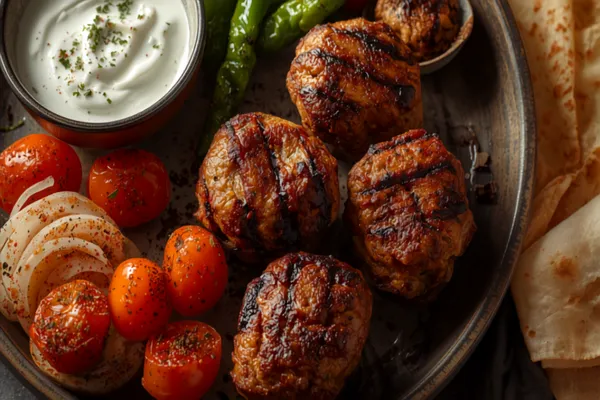
Turkey's everyday favourite: ground meat kneaded with onion, garlic and cumin, shaped into little ovals and grilled or pan-fried until charred outside and juicy within. Served with flatbread, grilled peppers and a cooling salad.
Aegean Turkey (Menemen, İzmir) · Turkish
Menemen (Turkish Eggs with Tomato and Peppers)
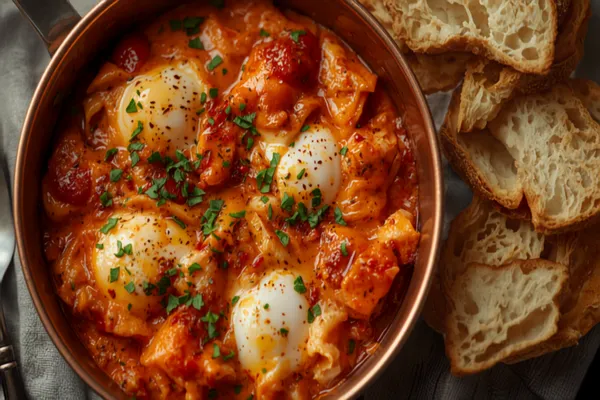
Turkey's beloved breakfast: eggs cooked soft and creamy in a simmer of tomatoes, green peppers and olive oil, gently spiced and eaten straight from the pan with plenty of bread. Quick, cheap and deeply comforting.
Sicily · Italian
Caponata (Sicilian Sweet-and-Sour Eggplant)
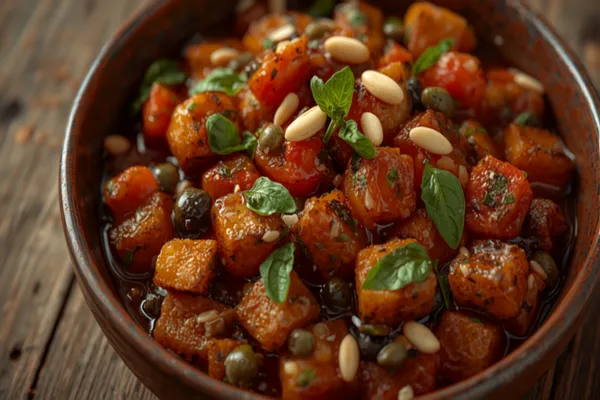
Sicily's great agrodolce: fried eggplant folded with celery, tomato, capers and olives in a sweet-sour sauce sharpened with vinegar and sugar. Better the next day, served at room temperature as a starter, side or relish.
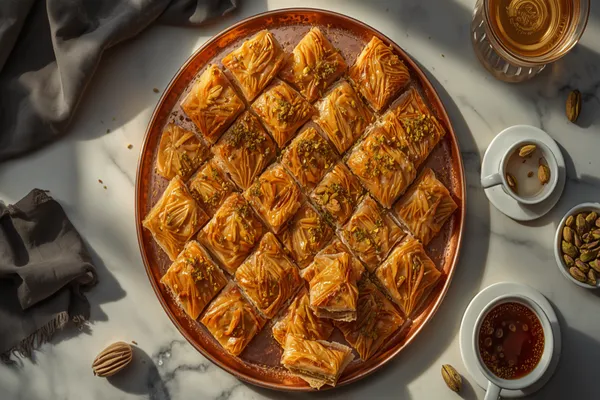
Gaziantep, south-eastern Anatolia — with living traditions across Greece, the Levant, Armenia and the Balkans · Turkish
Baklava — Gaziantep Pistachio, Clarified Butter and Forty Sheets of Yufka
The best baklava is not the sweetest — it is the crispest. This is the Gaziantep way: a tray of tissue-thin pastry, ground green pistachio, clarified butter and a plain lemon-sharpened sugar syrup, cut before it bakes and drenched hot-on-cold so every layer shatters instead of sagging.