Aegean Turkey (Menemen, İzmir) · Turkish
Menemen (Turkish Eggs with Tomato and Peppers)
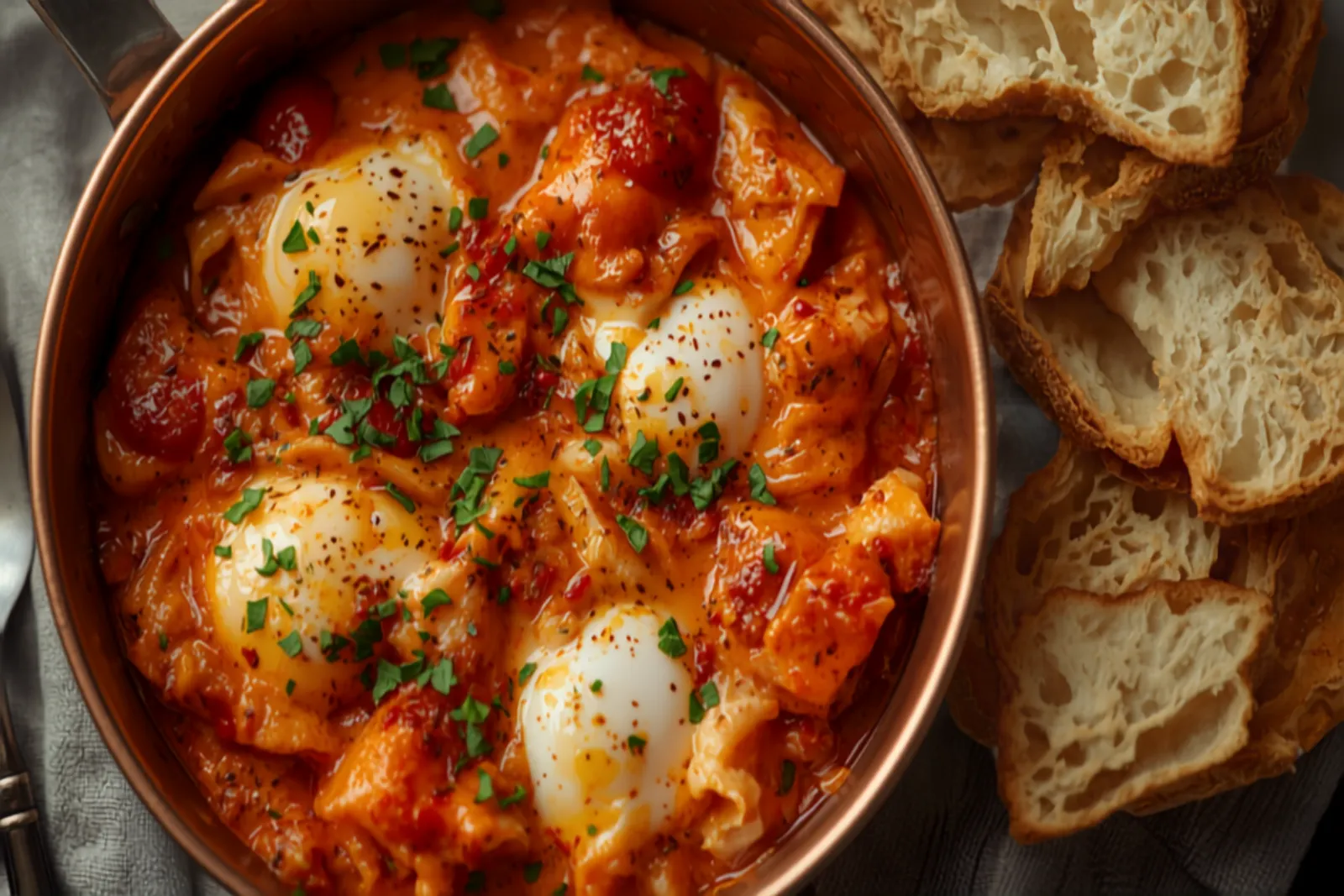
Turkey's beloved breakfast: eggs cooked soft and creamy in a simmer of tomatoes, green peppers and olive oil, gently spiced and eaten straight from the pan with plenty of bread. Quick, cheap and deeply comforting.
Published June 24, 2026
Cultural context
Named for the town of Menemen near İzmir, this is one of Turkey's most popular breakfast and brunch dishes, served in a small two-handled pan (sahan) and scooped up with bread. The eternal debate is soğanlı mı soğansız mı — with onion or without; İzmir purists insist on no onion. The eggs should stay soft and just-set, never dry and scrambled hard.
Menemen is the Turkish breakfast everyone has a strong opinion about — eggs cooked soft and creamy into a simmer of tomatoes, green peppers and olive oil, gently spiced, and eaten straight from the little two-handled pan with as much bread as you can manage. It’s quick, cheap and endlessly comforting, the kind of thing cooked on a weekend morning and argued over the rest of the week.
Reduce the tomato first
The most common menemen mistake is watery eggs, and it almost always comes from rushing the base. Soften the peppers, bloom a little pepper paste and Aleppo pepper in the oil, then cook the grated tomatoes down until they’re thick and jammy before the eggs go anywhere near the pan. A proper reduced base is what lets the eggs set into something rich rather than boiling in tomato juice.
Soft, not scrambled
Menemen lives somewhere between a soft scramble and shakshuka. Crack the eggs into the hot tomato base, pause to let the whites begin to set, then stir slowly and gently so they form soft, glossy curds — and pull the pan off the heat while they still look slightly underdone, because they keep cooking. Scatter with parsley, maybe a little crumbled white cheese, and serve it sizzling. And the question of onion — soğanlı mı soğansız mı — is for you to settle.
For more of the Turkish table, try köfte and imam bayıldı, or browse the full recipe collection.
Ingredients
For the menemen
- 3 tbsp olive oil (or part butter)
- 2 Turkish green peppers (sivri biber) or 1 green bell pepper The long, mild, pointed sivri biber is traditional; a green bell or banana pepper stands in.
- 4 ripe tomatoes, grated or finely chopped, skins discarded Ripe and juicy. In winter, a few tablespoons of good passata help.
- 1 tsp Turkish pepper paste (biber salçası), optional Adds depth and colour; tomato paste works too.
- 1/2 tsp Aleppo pepper (pul biber)
- 4 eggs
- salt and black pepper
To serve
- crusty bread; optional crumbled white cheese (beyaz peynir) and parsley
Method
Tap a step’s number to check it off as you go.
-
Warm the oil in a small pan and soften the chopped peppers over medium heat for 4-5 minutes.
Why: Cooking the peppers first takes off their raw edge and sweetens them, building the base of the dish.
-
Add the pepper paste and Aleppo pepper, stir for a few seconds, then add the grated tomatoes. Simmer 6-8 minutes until thick and most of the liquid has cooked off.
Why: The tomato needs to reduce to a thick base, or the eggs will boil in tomato water and turn watery. Blooming the paste in oil first deepens its flavour.
-
Season the tomato base, then crack in the eggs. Let them sit 30 seconds, then stir gently and slowly with a spatula.
Why: A brief pause lets the whites begin to set; slow, gentle stirring gives soft, creamy curds rather than a hard scramble.
-
Pull the pan off the heat while the eggs are still glossy and barely set — they'll finish in the residual heat.
Why: Menemen is meant to be soft and slightly runny; carryover heat overcooks it in seconds, so stop early.
-
Scatter with parsley (and cheese, if using) and serve straight from the pan with bread.
Why: Eating it hot from the pan with bread to scoop is the whole experience — it doesn't hold or reheat well.
A quick, anonymous tap — no review needed.
Variations
- Soğanlı (with onion)
Soften a finely chopped onion before the peppers for a sweeter, heartier version — delicious, though İzmir traditionalists object.
- With sucuk
Fry slices of Turkish sucuk (spiced sausage) before adding the vegetables for a richer, meatier breakfast.
- Cheesy
Stir in or scatter crumbled beyaz peynir or feta at the end so it just softens into the eggs.
Serving & Storage
Serve sizzling from the pan as part of a Turkish breakfast spread, with bread, olives, cheese, cucumber and tomato, and plenty of black tea.
Pairs with: Crusty bread, White cheese and olives, Turkish black tea (çay).
Storage: Best eaten immediately — eggs this soft don't reheat. Make the tomato-pepper base ahead and add eggs to order.
Nutrition
Per serving (1/2 recipe)
- Calories
- 320
- Protein
- 15 g
- Carbs
- 12 g
- Fat
- 24 g
- Fiber
- 3 g
- Sugar
- 7 g
- Sodium
- 360 mg
Notable micronutrients: Vitamin C, Vitamin A, Vitamin B12, Selenium
Estimated using standard ingredient data. Values vary with brands and substitutions.
Frequently Asked Questions
With onion or without?
It's Turkey's great menemen debate. İzmir purists keep it onion-free so the tomato and pepper lead; elsewhere a softened onion is welcome. Both are authentic — pick your camp.
Why are my eggs watery?
The tomato base wasn't reduced enough before the eggs went in. Cook the tomatoes down until thick and jammy first, so the eggs set into a rich base rather than boiling in juice.
Scrambled or set?
Neither extreme. Menemen sits between a soft scramble and shakshuka — gently stirred so the eggs form soft curds but stay creamy and just-set, pulled off the heat while still glossy.
What to drink with this
All drinks →Hand-picked pours to match this dish.

Turkey (Ottoman coffee tradition) · Turkish
Turkish Coffee (Türk Kahvesi — Unfiltered & Foamy)
Finely ground coffee simmered slowly in a cezve to a rich foam, served unfiltered in tiny cups. The grind, the heat and the foam that make it — plus the ritual of the grounds left behind.

Morocco (the Maghreb) · Moroccan
Moroccan Mint Tea (Atay — Maghrebi Mint Tea)
Morocco's sweet, fragrant green tea poured from a height into a frothy glass. The proper method — washing the tea, layering the mint, and the famous long pour — plus how sweet it really should be.

Mexico (agua fresca tradition) · Mexican
Agua de Jamaica (Hibiscus Iced Tea)
Mexico's ruby-red hibiscus cooler: dried jamaica flowers steeped, sweetened and chilled into a tart, refreshing agua fresca. The right steep, how to control the tartness, and why it's so good for you.
From our kitchen community
Ratings & Reviews
My Rating
Tap a star to rate — no sign-in, no form needed.
My Review
0 Ratings
🥣 0 home cooks made it!
Be the first to rate Menemen (Turkish Eggs with Tomato and Peppers).
Related Recipes
Turkey (pan-Turkish) · Turkish
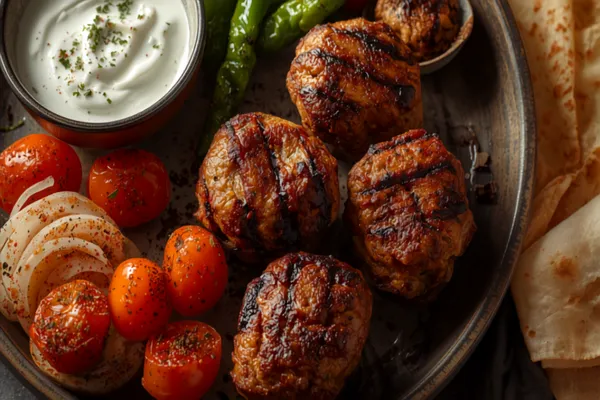
Turkish Köfte (Spiced Grilled Meatballs)
Turkey's everyday favourite: ground meat kneaded with onion, garlic and cumin, shaped into little ovals and grilled or pan-fried until charred outside and juicy within. Served with flatbread, grilled peppers and a cooling salad.
Turkey (Ottoman / pan-Turkish) · Turkish
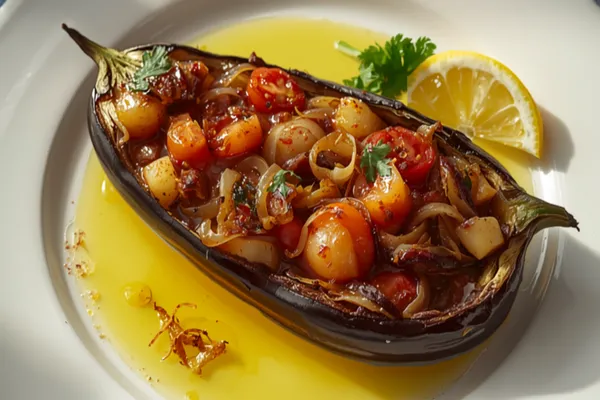
İmam Bayıldı (Turkish Stuffed Eggplant in Olive Oil)
The eggplant dish so good 'the imam fainted': whole eggplant braised soft in olive oil and stuffed with a sweet tangle of onion, garlic and tomato. Served at room temperature, it's the star of the Turkish olive-oil table.

Maghreb & the Levant · Levantine / North African
Shakshuka (Eggs Poached in Spiced Tomato and Pepper Sauce)
The great brunch of the eastern Mediterranean and North Africa: eggs gently poached in a simmering sauce of tomatoes, peppers, garlic, and warm spices, served bubbling from the pan with bread for scooping. One skillet, endlessly satisfying.