Minas Gerais, south-eastern Brazil (the Serra da Canastra dairy country) · Brazilian
Pão de Queijo (Brazilian Cheese Bread from Minas Gerais)
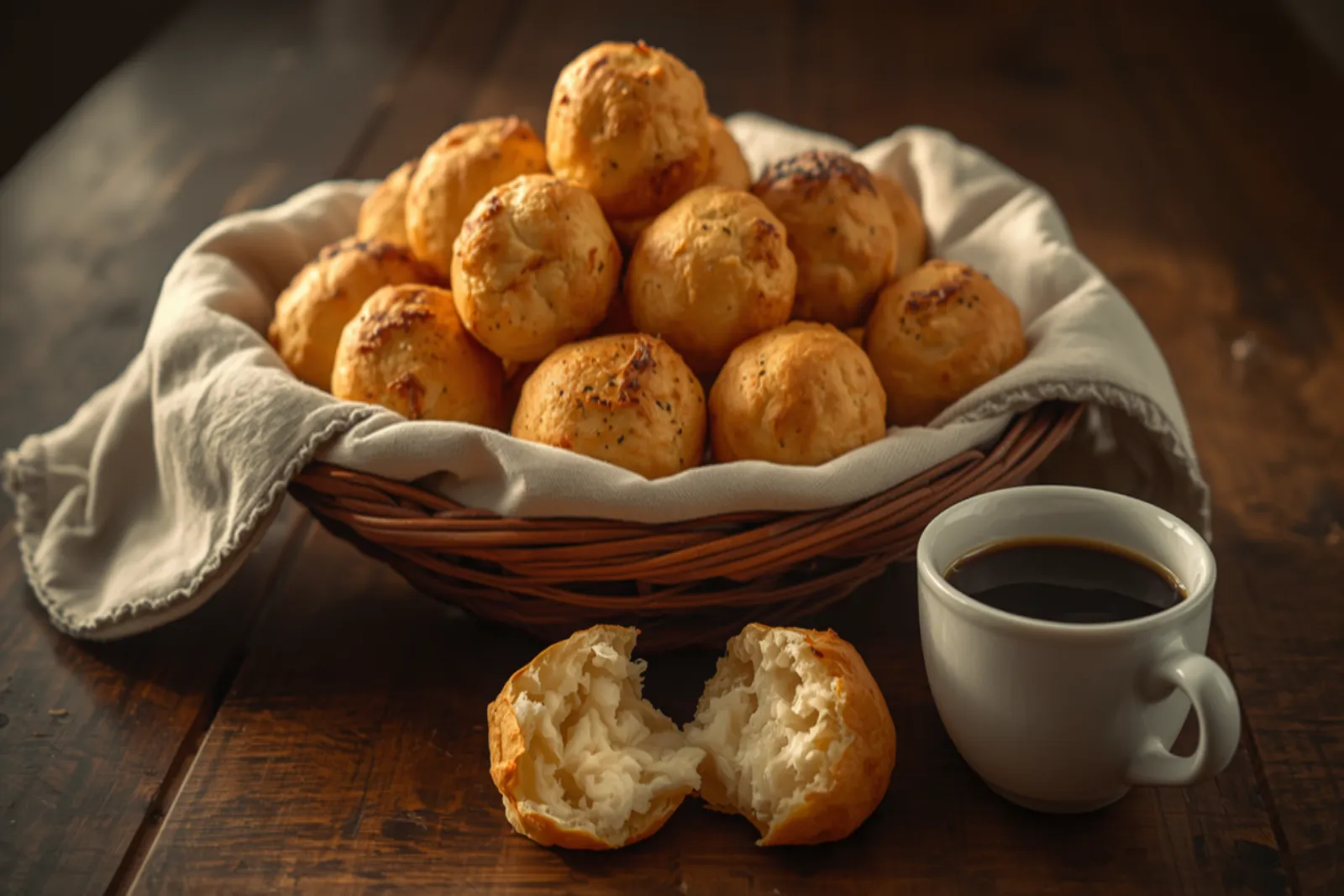
Brazil's great small bread: hollow, chewy cassava-starch puffs with a crackling shell and a stretchy, salty cheese-scented middle. Naturally gluten-free, and the batter keeps in the freezer for a hot tray any morning of the week.
Published August 12, 2026
Cultural context
Pão de queijo is the everyday bread of Minas Gerais, Brazil's dairy heartland, and the meeting point of three kitchens: Indigenous cassava, African hands and technique, and Portuguese baking and dairying. Food historians trace it to the sour cassava starch left over from processing manioc on colonial farms — a by-product the landowners discarded and enslaved cooks baked into small rolls. Cheese and milk entered the recipe in the late 19th and early 20th centuries, once dairy from the Minas hills was within reach, and by the mid-20th century the puffs had spread from farmhouse kitchens to every padaria and roadside café in the country.
Pão de queijo is what Brazil eats before it does anything else: a bowl of small, hollow, chewy cheese breads and a cup of coffee strong enough to stand a spoon in. They are the everyday bread of Minas Gerais, the mountainous dairy state in the south-east, and they contain no wheat at all — the structure comes from cassava starch, which behaves nothing like flour and makes a bread nothing like a roll. Bite one hot and the shell crackles, the inside pulls, and it is gone in two mouthfuls.
Three kitchens in one small bread
The dish is usually described as Mineiro, and it is, but its parts come from three directions. Cassava is Indigenous to South America and was being processed into starch long before the Portuguese arrived. The Portuguese brought the dairying and the baking. And the technique of turning the fine white starch left over from processing manioc — a by-product the colonial farms had no use for — into something worth eating is credited to enslaved African cooks on those same Minas farms in the 18th century. Cheese and milk came later, in the decades after abolition, when the dairy of the Minas hills reached ordinary kitchens. What we eat now is the last version of a bread that has been rewritten several times, by people who mostly did not get their names on it.
Why the scald is everything
Cassava starch has no gluten, so there is no network to trap gas and nothing to knead. Instead, the structure is built in a single violent moment: boiling liquid poured over dry starch. The heat bursts the starch granules and they swell into a sticky, elastic gel — the escaldo. That gel is what holds the steam later, and it only forms at a true rolling boil. Liquid that has merely gone hot will produce a dough that looks acceptable and bakes into small chalky stones.
Once the paste is made, let it cool to warm. Eggs added to a scorching paste scramble; eggs added to a warm one emulsify and become the leavening, because there is no yeast and no baking powder in this recipe at all. Every bit of rise is steam pushing against an elastic starch shell.
Sour starch, and why it matters
Two starches sit on the shelf in any Brazilian market. Polvilho azedo is fermented before drying — slightly acidic, and dramatically better at puffing. Polvilho doce is unfermented, mild, and browns more willingly. Sour starch alone gives spectacular hollow puffs with a faintly tangy edge; sweet alone gives a denser, more biscuit-like bread. Most Mineiro cooks split the difference, and roughly two parts sour to one part sweet is a reliable place to start.
Beat it longer than feels reasonable
After the cheese goes in, keep working the dough for two or three full minutes. It should turn glossy, sticky and stretchy, pulling off the side of the bowl in ropes. This is the step people cut short, and it is the difference between a chewy puff and a crumbly one.
The freezer is part of the recipe
Very few Brazilian households bake a batch from scratch when they want pão de queijo; they take rolled balls out of the freezer and bake them from frozen. Do the same. Roll the whole batch, freeze the balls solid on a tray so they do not fuse, then bag them. Twenty-five to thirty minutes later you have hot cheese bread on a Tuesday morning, which is the correct number of Tuesday mornings to have hot cheese bread.
For more gloriously cheese-heavy baking from another corner of the world, try khachapuri adjaruli — and there’s more on the dishes worth crossing a border for in the world classics guide.
Ingredients
For the scalded starch
- 250 g (about 1 3/4 cups) polvilho azedo (sour cassava starch) Sour starch is fermented and slightly acidic — it is what makes the puffs hollow and chewy rather than dense. Brazilian and Latin grocers stock it; online it is often labelled 'sour tapioca starch'.
- 125 g (about 3/4 cup) polvilho doce (sweet cassava starch / tapioca starch) The sweet starch softens the chew and helps the shell brown. If you can only find one type, use all sweet starch: the puffs will be a little denser and less tangy but still very good.
- 180 ml (3/4 cup) whole milk
- 120 ml (1/2 cup) neutral oil, or 100 g unsalted butter Oil is the farmhouse default and gives a crisper shell; butter gives a richer, shorter crumb. Many Mineiro cooks use half of each.
- 1 1/4 tsp fine sea salt Scale back if your cheese is very salty — taste the dough before the eggs go in.
For the dough
- 2, at room temperature large eggs, lightly beaten Room temperature matters: cold eggs seize the hot starch paste into lumps.
- 200 g (about 2 cups, finely grated) queijo minas meia-cura, or a mix of aged cheeses The traditional cheese is half-cured Minas — firm, mildly tangy, meltingly soft. Outside Brazil, a 50/50 mix of Parmesan (for salt and savour) and low-moisture mozzarella or a young Gouda (for stretch) is the closest workable substitute.
- 1 to 2 tbsp extra milk, if needed Only to loosen a dough that is too stiff to shape — add a teaspoon at a time.
Method
Tap a step’s number to check it off as you go.
-
Weigh both starches into a large heatproof bowl and whisk them together with the salt. Line two trays with parchment.
Why: The two starches behave differently — sour brings lift and tang, sweet brings tenderness and colour — so they need to be evenly distributed before the hot liquid hits them.
-
Bring the milk, oil (or butter) and a splash of water to a full rolling boil in a small pan. Do not let it merely steam.
Why: This is the escaldo, the scald, and it is the whole technique. The liquid must be genuinely boiling to gelatinise the cassava starch — below that the granules never swell, and the puffs bake flat and gritty.
-
Pour the boiling liquid over the starch all at once and beat hard with a wooden spoon until it comes together into a stiff, lumpy, opaque paste. It will look wrong. Keep going.
Why: The lumps are normal at this stage — they are pockets of dry starch that the mixing and the eggs will smooth out. The paste turns from chalky white to translucent as the starch gelatinises.
-
Leave the paste to cool for 15 to 20 minutes, until it is warm rather than hot to the touch.
Why: Hot paste scrambles the eggs and melts the cheese into grease. Warm paste absorbs both cleanly.
-
Beat in the eggs one at a time — by hand with real effort, or in a stand mixer with the paddle on medium — waiting until each is fully absorbed before adding the next.
Why: Eggs are the only leavening here; there is no yeast and no baking powder. The air you beat in, plus the steam from the eggs and milk, is what inflates each ball into a hollow shell.
-
Add the grated cheese and beat for another 2 to 3 minutes, until the dough is smooth, glossy, elastic and sticky, and pulls away from the sides of the bowl in ropes.
Why: Long beating is what gives pão de queijo its signature pull. Underworked dough bakes into a crumbly biscuit instead of a chewy puff.
-
Heat the oven to 200°C / 400°F. Oil your hands lightly and roll the dough into walnut-sized balls, about 40 g each, spacing them 4 cm apart on the trays.
Why: The dough is deliberately sticky, so oiled hands are not optional. Give them room — they roughly double in the oven, and touching puffs steam each other soft instead of crisping.
-
Bake for 20 to 25 minutes, until well puffed, dry to the touch and pale golden with deeper freckles on the base. Do not open the oven for the first 15 minutes.
Why: The rise is pure steam. Opening the door early drops the temperature and collapses the shells before they have set, and they will not come back.
-
Let them sit on the tray for 3 minutes, then serve hot. They should feel light for their size and sound hollow when tapped.
Why: Straight from the oven the shell is crackling and the middle is stretchy — that contrast is the dish, and it fades within the hour.
A quick, anonymous tap — no review needed.
Variations
- Freezer batch (the way Brazilians actually do it)
Roll the whole batch, freeze the balls solid on a tray, then bag them. Bake from frozen at 200°C for 25 to 30 minutes — no thawing. This is the standard household method and the puffs are arguably better for it.
- Pão de queijo de liquidificador
The blender version: blitz the milk, oil, eggs, cheese and starches into a thin batter, pour into mini muffin tins and bake. Faster, softer, more custardy inside — a weekday shortcut rather than a lesser recipe.
- Dairy-free
Replace the milk with unsweetened oat milk, use oil rather than butter, and swap the cheese for 150 g of a firm vegan cheese plus 2 tbsp nutritional yeast. The texture holds; the flavour is milder.
- Chipa (Paraguayan cousin)
The same cassava-starch-and-cheese family, made across Paraguay, north-eastern Argentina and southern Brazil, usually with anise and shaped into rings. Worth knowing that this bread has relatives across the region, not just one home.
Serving & Storage
Serve them hot, piled in a bowl or a cloth-lined basket, with strong black coffee — in Minas that pairing is the entire point of the morning. They also do good service as a bread basket at dinner, split and filled with requeijão or cream cheese, or alongside a feijoada.
Pairs with: Strong black coffee, Café com leite, Guava paste and cheese (Romeu e Julieta), Requeijão or cream cheese, Caipirinha.
Storage: Best within an hour of baking. Raw rolled balls freeze beautifully for up to 3 months and bake straight from frozen — this is how to store them. Baked puffs keep 2 days in an airtight container at room temperature; revive them at 180°C for 5 to 6 minutes. Avoid the microwave, which turns the shell leathery.
Nutrition
Per serving (3 puffs)
- Calories
- 310
- Protein
- 9 g
- Carbs
- 31 g
- Fat
- 17 g
- Fiber
- 0 g
- Sugar
- 2 g
- Sodium
- 480 mg
Notable micronutrients: Calcium, Phosphorus, Selenium, Vitamin A
Estimated using standard ingredient data. Values vary with brands and substitutions.
Frequently Asked Questions
What is the difference between polvilho azedo and polvilho doce?
Both are cassava starch, but polvilho azedo is fermented before drying, which makes it faintly sour and gives it far more oven spring — it is what makes the puffs hollow and chewy. Polvilho doce is unfermented and behaves like ordinary tapioca starch: milder, denser, browns more readily. A mix of roughly two parts sour to one part sweet is a good Mineiro default. If you can only find sweet starch, the recipe still works, just with a tighter crumb and less tang.
Can I use regular tapioca starch or tapioca flour?
Yes — tapioca starch and tapioca flour are the same thing as polvilho doce, so use the full 375 g of it if sour starch is unavailable. What you cannot substitute is cornstarch, potato starch or any wheat flour: cassava starch gelatinises and stretches in a way none of them replicate, and the dish stops being pão de queijo.
Why did my puffs come out flat and dense?
Almost always one of three things. The liquid was not at a true rolling boil when it hit the starch, so the scald failed. The eggs went in while the paste was still hot and scrambled instead of emulsifying. Or the dough was not beaten long enough after the cheese — it should be glossy and stretch in ropes, not sit in a crumbly heap. Opening the oven door in the first 15 minutes will also flatten them.
What cheese works if I can't get queijo minas?
Half finely grated Parmesan and half low-moisture mozzarella or a young Gouda gets you close: the Parmesan supplies the salt and savoury depth of a cured Minas, the mozzarella the melt and pull. Grate it finely so it disperses through the dough. Avoid pre-shredded cheese, which is coated in anti-caking starch and makes the dough gritty.
Do I have to freeze them, or can I bake the whole batch?
Bake as many as you want now and freeze the rest raw. Frozen balls go straight into a hot oven with five extra minutes and no thawing, which is why most Brazilian households keep a bag on hand. Freezing the dough as a lump is less useful — roll first, freeze on a tray, then bag.
What to drink with this
All drinks →Hand-picked pours to match this dish. Alcoholic pairings are for adults of legal drinking age (21+ in the US) — please drink responsibly.
 21+
21+ São Paulo, Brazil · Brazilian
Caipirinha (Brazil's National Cocktail)
Brazil in a glass: cachaça muddled with fresh lime and sugar over ice. Three ingredients, no fuss — how to cut the lime so it isn't bitter, and the right way to muddle.
 21+
21+ United States (turn of the 20th century) · American
Dry Martini (Gin, Vermouth & a Cold Glass)
The original cocktail of cocktails — good gin, a measure of dry vermouth, stirred long over ice and served brutally cold. The ratios, the stir, and why a Martini is shaken or stirred for a reason.

Mexico (agua fresca tradition) · Mexican
Agua de Jamaica (Hibiscus Iced Tea)
Mexico's ruby-red hibiscus cooler: dried jamaica flowers steeped, sweetened and chilled into a tart, refreshing agua fresca. The right steep, how to control the tartness, and why it's so good for you.
From our kitchen community
Ratings & Reviews
My Rating
Tap a star to rate — no sign-in, no form needed.
My Review
0 Ratings
🥣 0 home cooks made it!
Be the first to rate Pão de Queijo (Brazilian Cheese Bread from Minas Gerais).
Related Recipes

The Andean valleys and Caribbean coast shared by Venezuela and Colombia — Timoto-Cuica, Cumanagoto and Muisca corn country · Venezuelan & Colombian
Arepas — Griddled Corn Cakes from Venezuela and Colombia
Three ingredients, four hundred years older than either country that argues over them: masarepa, warm water and salt, griddled to a crust and baked through until they sound hollow. The trick is that masarepa is pre-cooked corn flour and nothing else will do.
Adjara, on Georgia's Black Sea coast (Batumi) · Georgian
Khachapuri Adjaruli (Georgian Cheese Boat Bread)
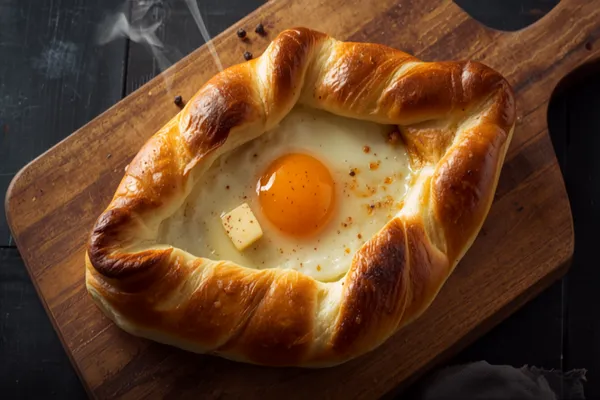
The boat-shaped Georgian cheese bread of the Black Sea coast: a chewy, blistered crust cradling molten salty cheese, finished at the table with a raw yolk and a knob of butter stirred through. Tear, dip, repeat.
Bavaria · German
Bavarian Soft Pretzels (Brezn)
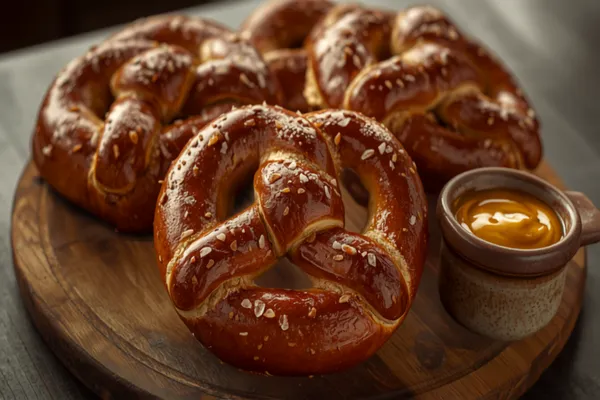
The mahogany-brown, lye-dipped soft pretzel of the Munich beer garden: a chewy, glossy crust giving way to a soft crumb, scattered with coarse salt. The Oktoberfest classic, made at home with a safe baking-soda bath.
Peru · Peruvian
Peruvian Ceviche (Ceviche de Pescado)
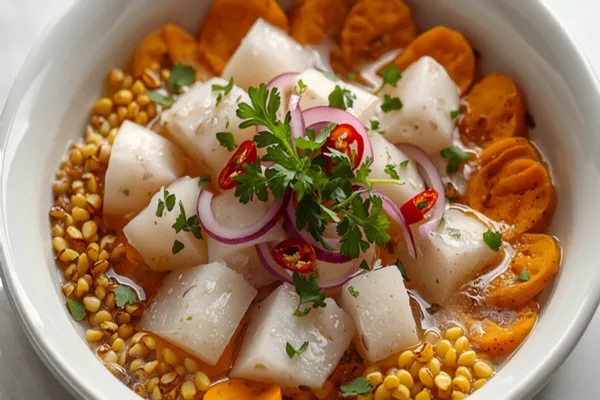
Peru's national dish: fresh white fish 'cooked' in lime juice with chili, red onion, and coriander, served with the bright, punchy marinade known as leche de tigre. Fast, raw, electric — a five-minute marinade is all it takes.
São Paulo, Brazil · Brazilian
Caipirinha (Brazil's National Cocktail)
Brazil in a glass: cachaça muddled with fresh lime and sugar over ice. Three ingredients, no fuss — how to cut the lime so it isn't bitter, and the right way to muddle.
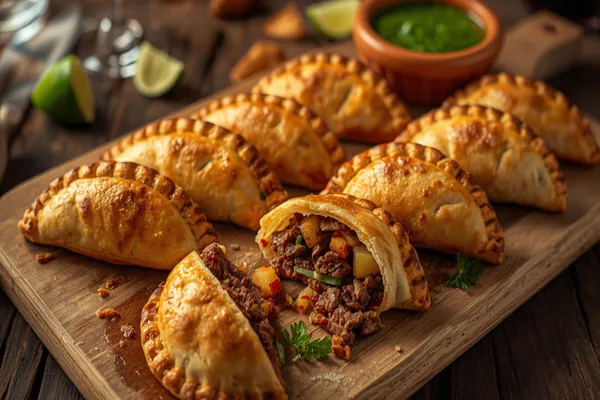
Salta, in the Andean north-west of Argentina — the high valleys around the capital and the Calchaquí wine country · Argentine
Empanadas Salteñas (Salta-Style Argentine Beef Empanadas)
The empanada Argentina argues about and Salta gets right — hand-chopped beef, soft potato and spring onion bound in cumin-red beef fat, sealed in a thin tallow pastry that bakes juicy enough to eat leaning forward.
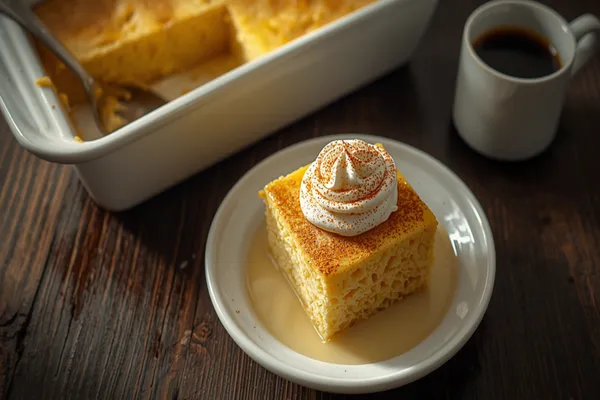
Managua and Nicaragua's Pacific cattle country — with a rival claim from Mexico's Gulf coast · Nicaraguan
Tres Leches Cake (Pastel de Tres Leches)
Latin America's great milk-soaked cake: a lean, fatless sponge built on whipped egg whites, flooded overnight with condensed, evaporated and whole milk, and finished with cold cream and cinnamon. Wet through to the last crumb and never soggy.

The Mozambican coast and the Zambezi delta — Maputo, Quelimane and Ilha de Moçambique — with a parallel life in Angola, in South Africa, and in the churrasqueiras of Portugal's Algarve · Mozambican
Peri-Peri Chicken — Frango Piri-Piri, the Chilli That Sailed Both Ways
A butterflied chicken lacquered in African bird's eye chilli, garlic, lemon and paprika, grilled over coals and basted until the skin is scarlet and blistered. The dish belongs to Mozambique, Angola, Portugal and South Africa at once — here is the version they'd all recognise, and why the baste matters more than the marinade.
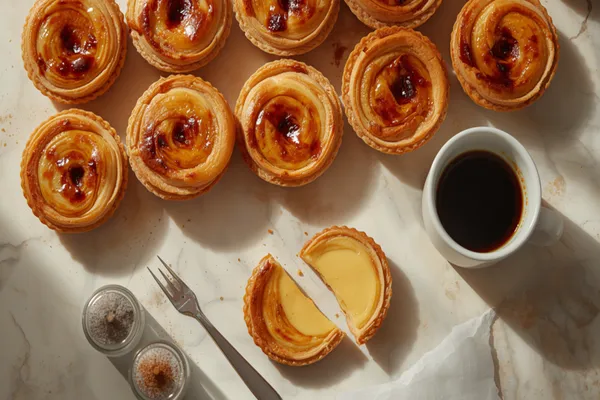
Belém, Lisbon — the Jerónimos Monastery quarter on the Tagus, within Portugal's wider convent-sweet tradition · Portuguese
Pastéis de Nata (Portuguese Custard Tarts)
Lisbon's blistered custard tart — a spiral-rolled puff shell that shatters like glass, a flour-set egg-yolk custard scented with lemon peel and cinnamon rather than vanilla, and an oven turned as hot as it will go so the top scorches into dark, bitter-sweet freckles.
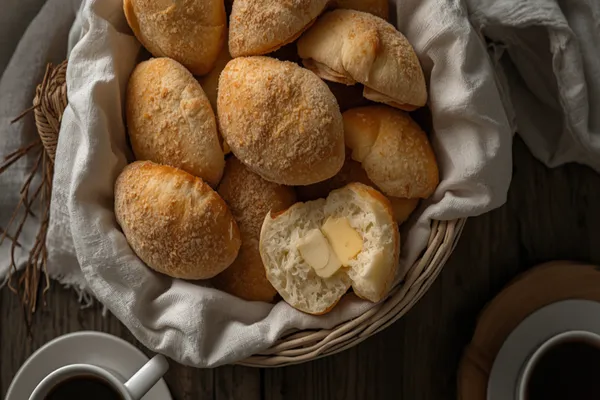
The Philippines — Manila's panaderia belt, with roots in the Spanish-era bakeries of Intramuros and Pampanga · Filipino
Pandesal (Filipino Breakfast Rolls with a Breadcrumb Crust)
The Philippines' morning bread: soft, faintly sweet yeasted rolls rolled in fine breadcrumbs, cut from a log and baked cut-side up so they tear open in feathery layers. Best eaten hot from the panaderia bag, dunked in coffee.

Rio de Janeiro and Minas Gerais — the black-bean south-east of Brazil, where the *feijoada completa* table took its modern form · Brazilian
Feijoada Completa — Rio's Saturday Pot of Black Beans and Pork
Brazil's national dish is a long, patient pot of black beans and salted, smoked and fresh pork, eaten at lunchtime on a Saturday with rice, garlicky collards, farofa and sliced orange. Here is how the whole table comes together, and why each part of it is there.