Peru · Peruvian
Peruvian Ceviche (Ceviche de Pescado)
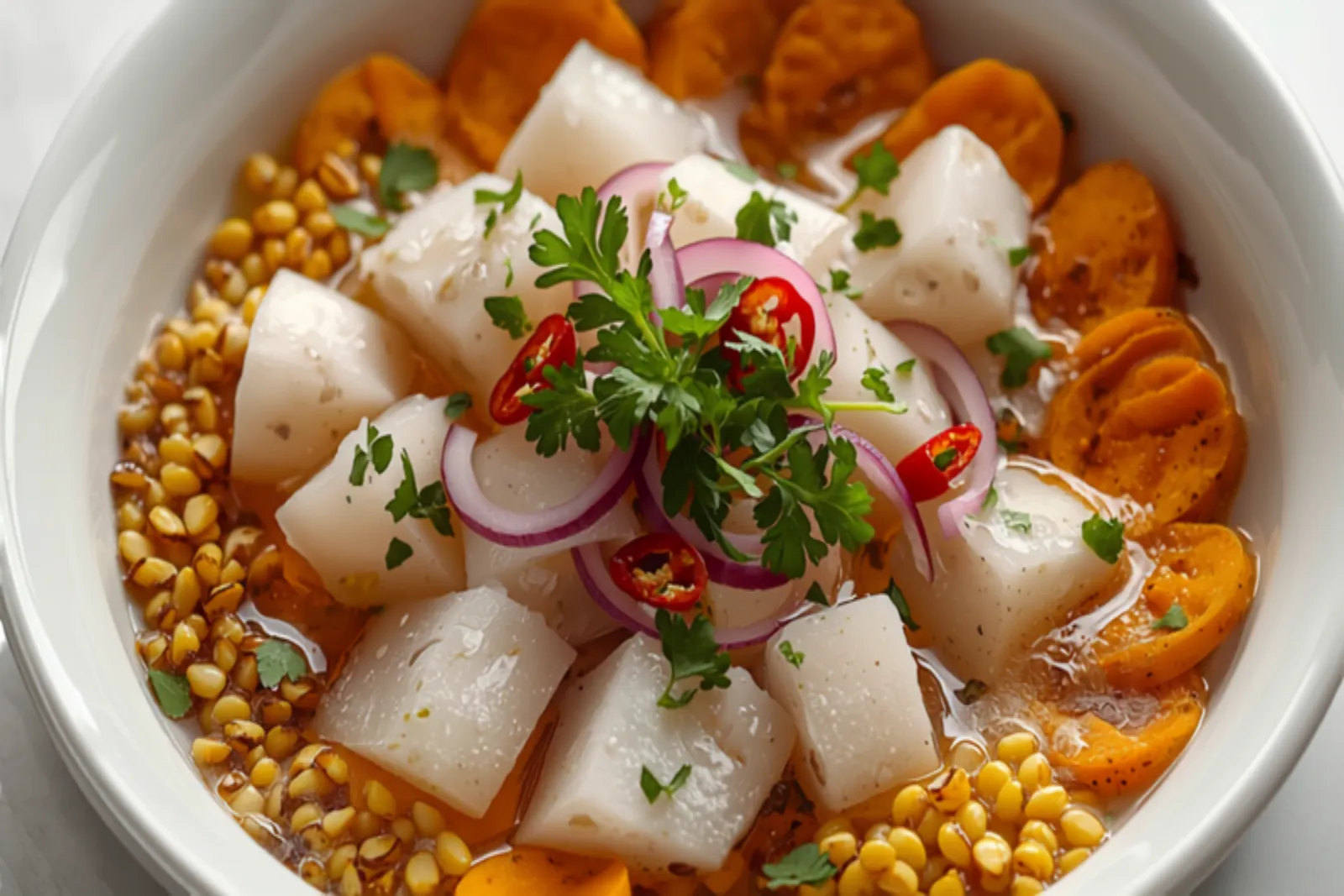
Peru's national dish: fresh white fish 'cooked' in lime juice with chili, red onion, and coriander, served with the bright, punchy marinade known as leche de tigre. Fast, raw, electric — a five-minute marinade is all it takes.
Published June 20, 2026
Cultural context
Ceviche is Peru's national dish, with roots stretching back to pre-Columbian coastal cultures who cured fish with fermented fruit juices. The modern lime-cured version is a point of national pride, even celebrated with its own holiday. The leftover marinade — leche de tigre, 'tiger's milk' — is drunk on its own as a restorative, and the dish is classically served with sweet potato and toasted corn.
Ceviche is proof that some of the best cooking involves barely any cooking at all. Cubes of impeccably fresh white fish are tossed with lime juice, chili, red onion, and coriander, and in the time it takes to set the table the acid has firmed the fish to silky opacity. It’s bright, sour, spicy, and clean — Peru’s national dish, and a point of real national pride along the country’s long Pacific coast.
The whole thing comes together in under half an hour, but it lives or dies on one thing: the fish.
Freshness is the whole game
Because ceviche is essentially raw, there’s nowhere to hide. Buy the freshest firm white fish you can — sushi-grade sea bass, sole, halibut, or bream — from a fishmonger you trust, and tell them what it’s for. Keep it ice-cold right up to the moment it meets the lime. Everything else in the recipe is seasoning; the fish is the dish.
Leche de tigre: the soul of it
The marinade has a name of its own — leche de tigre, “tiger’s milk” — and Peruvians prize it enough to drink it straight as a restorative. At its simplest it’s lime juice, chili, garlic, and salt. For the classic cloudy, slightly creamy version, blend in a small piece of fish and a few ice cubes and strain. Use only fresh lime juice, and don’t squeeze the limes too hard, or the bitter pith leaches in.
Don’t over-cure
Here’s where most home cooks go wrong: they leave the fish in the lime too long. Modern Peruvian ceviche is barely cured — three to five minutes — so it stays tender and almost raw at the centre. Leave it sitting and the acid keeps working, turning the fish chalky and tough. Dress it, fold in the onion and coriander, and serve it that instant, with sweet potato and toasted corn to balance the sour and the heat.
Looking for more bright, fresh dishes? Browse the full recipe collection, or read more cultural stories on the traditions behind the food.
Ingredients
For the ceviche
- 600 g very fresh firm white fish Sushi-grade sea bass, sole, halibut, or sea bream. Freshness is everything — buy from a trusted fishmonger and tell them it's for ceviche.
- 1/2 red onion, very thinly sliced Soak the slices in cold water for 5 minutes to mellow the bite.
- 10–12 limes, juiced (about 200 ml) Fresh juice only; bottled won't do. Don't squeeze too hard or the pith turns it bitter.
- 1 ají limo or other hot chili, finely chopped Ají amarillo paste is the classic Peruvian flavour; a fresh chili or a little of both works.
- 1 small clove garlic, grated
- 2 cm piece fresh ginger, grated (optional) A common modern addition for brightness.
- 1 small handful fresh coriander, chopped
- salt
To serve
- 1 cooked sweet potato (camote), sliced The traditional sweet counterpoint to the sour, spicy fish.
- 1 handful toasted corn (cancha) or boiled choclo For crunch — a classic accompaniment.
- a few lettuce leaves
Method
Tap a step’s number to check it off as you go.
-
Cut the fish into even 2 cm cubes and keep it ice-cold until the moment you use it. Slice the red onion paper-thin and soak it in cold water.
Why: Even cubes cure evenly; ice-cold fish stays firm. Soaking the onion removes its harsh edge while keeping the crunch.
-
Make the leche de tigre: combine the lime juice, grated garlic, ginger, chopped chili, a little salt, and a few coriander stalks. For a silkier version, blend with a small piece of the fish and a few ice cubes, then strain.
Why: This is the marinade and the soul of the dish. Blending in a little fish and ice gives the classic cloudy, emulsified 'tiger's milk'; ice keeps it cold and bright.
-
Season the fish lightly with salt, then pour the leche de tigre over it and toss gently. Let it sit for just 3–5 minutes.
Why: The lime's acid denatures the proteins — 'cooking' the fish — but only briefly. Leave it too long and the fish turns chalky and tough; modern Peruvian ceviche is barely cured and almost raw at the centre.
-
Add the drained onion and chopped coriander, toss once more, and taste for salt, acid, and heat.
Why: Folding the onion and herbs in at the very end keeps them crisp and fresh against the tender fish.
-
Serve immediately on chilled plates with slices of cooked sweet potato, toasted corn, and lettuce, spooning extra leche de tigre over the top.
Why: Ceviche waits for no one — it's eaten the moment it's dressed. The sweet potato and corn balance the sour, spicy fish exactly as they do in Peru.
A quick, anonymous tap — no review needed.
Variations
- Mixed seafood (ceviche mixto)
Add cooked, cooled shrimp, octopus, or scallops alongside the raw fish for a more substantial version.
- Vegan (mushroom or heart of palm)
Use king oyster mushrooms or hearts of palm in place of fish — they take on the leche de tigre beautifully and need no curing time.
- Extra spicy (ají amarillo)
Stir a spoonful of Peruvian ají amarillo paste into the leche de tigre for the authentic fruity heat and golden colour.
Serving & Storage
Serve cold, the instant it's mixed, as a starter or light lunch. In Peru it comes with camote (sweet potato) and cancha (toasted corn); a cold beer or a pisco sour is the natural pairing.
Pairs with: Sweet potato (camote), Toasted corn (cancha), Cold beer, Pisco sour.
Storage: Ceviche is not a make-ahead dish — eat it immediately. Prepped components (cut fish, leche de tigre) can be kept cold and separate for a few hours, then combined just before serving.
Nutrition
Per serving (1 starter portion (1/4 recipe))
- Calories
- 210
- Protein
- 30 g
- Carbs
- 16 g
- Fat
- 3 g
- Fiber
- 2 g
- Sugar
- 5 g
- Sodium
- 420 mg
Notable micronutrients: Vitamin C, Vitamin B12, Selenium
Estimated using standard ingredient data. Values vary with brands and substitutions.
Frequently Asked Questions
Is ceviche raw or cooked?
Technically raw — but the acid in the lime juice denatures the fish proteins, firming and opaque-ing the flesh much as heat would. It's 'cooked' chemically, not thermally. Because it stays raw, the freshness and quality of the fish is paramount.
What fish should I use?
A firm, very fresh, sushi-grade white fish: sea bass, sole, halibut, snapper, or sea bream. Tell your fishmonger it's for ceviche so they steer you to the freshest, safest option. Avoid pre-cut supermarket fillets of unknown age.
How long should the fish marinate?
Just 3–5 minutes for modern Peruvian ceviche — the fish should be barely cured, still tender and almost raw in the middle. Older recipes marinate for much longer, but that yields a firmer, chalkier texture most Peruvian cooks now avoid.
What is leche de tigre?
'Tiger's milk' — the citrusy, spicy, slightly cloudy marinade left after making ceviche. It's so prized it's often served as a shot on its own, said to be a hangover cure and an aphrodisiac. Blending a little fish into it gives the signature creamy body.
What to drink with this
All drinks →Hand-picked pours to match this dish. Alcoholic pairings are for adults of legal drinking age (21+ in the US) — please drink responsibly.
 21+
21+ Lima, Peru · Peruvian
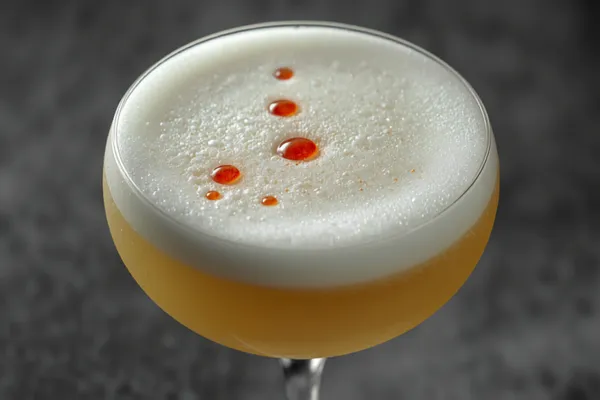
Pisco Sour (Peru's National Cocktail)
Peru's frothy, bright national drink: pisco, fresh lime, sugar and egg white, shaken to a silky foam and finished with bitters. The dry-shake trick for that signature cap.
 21+
21+ United States (turn of the 20th century) · American
Dry Martini (Gin, Vermouth & a Cold Glass)
The original cocktail of cocktails — good gin, a measure of dry vermouth, stirred long over ice and served brutally cold. The ratios, the stir, and why a Martini is shaken or stirred for a reason.

Mexico (agua fresca tradition) · Mexican
Agua de Jamaica (Hibiscus Iced Tea)
Mexico's ruby-red hibiscus cooler: dried jamaica flowers steeped, sweetened and chilled into a tart, refreshing agua fresca. The right steep, how to control the tartness, and why it's so good for you.
From our kitchen community
Ratings & Reviews
My Rating
Tap a star to rate — no sign-in, no form needed.
My Review
0 Ratings
🥣 0 home cooks made it!
Be the first to rate Peruvian Ceviche (Ceviche de Pescado).
Related Recipes

The Andean valleys and Caribbean coast shared by Venezuela and Colombia — Timoto-Cuica, Cumanagoto and Muisca corn country · Venezuelan & Colombian
Arepas — Griddled Corn Cakes from Venezuela and Colombia
Three ingredients, four hundred years older than either country that argues over them: masarepa, warm water and salt, griddled to a crust and baked through until they sound hollow. The trick is that masarepa is pre-cooked corn flour and nothing else will do.
Puebla (tinga poblana) · Mexican
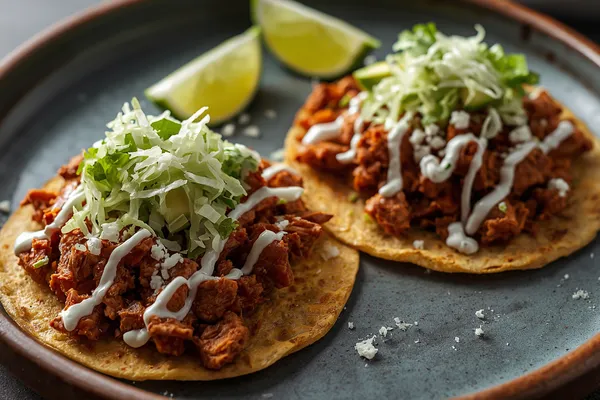
Tinga de Pollo (Chipotle Chicken Tinga)
Puebla's smoky shredded chicken: poached and pulled, then simmered with tomatoes, onions, and chipotles in adobo until glossy and deep. Pile it onto tostadas with crema and avocado for one of Mexico's great weeknight meals.
Minas Gerais, south-eastern Brazil (the Serra da Canastra dairy country) · Brazilian
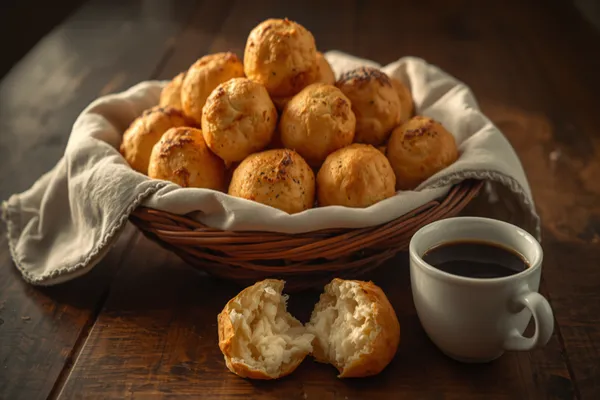
Pão de Queijo (Brazilian Cheese Bread from Minas Gerais)
Brazil's great small bread: hollow, chewy cassava-starch puffs with a crackling shell and a stretchy, salty cheese-scented middle. Naturally gluten-free, and the batter keeps in the freezer for a hot tray any morning of the week.
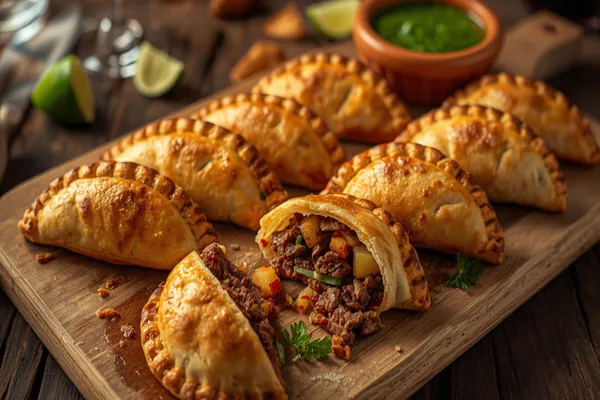
Salta, in the Andean north-west of Argentina — the high valleys around the capital and the Calchaquí wine country · Argentine
Empanadas Salteñas (Salta-Style Argentine Beef Empanadas)
The empanada Argentina argues about and Salta gets right — hand-chopped beef, soft potato and spring onion bound in cumin-red beef fat, sealed in a thin tallow pastry that bakes juicy enough to eat leaning forward.
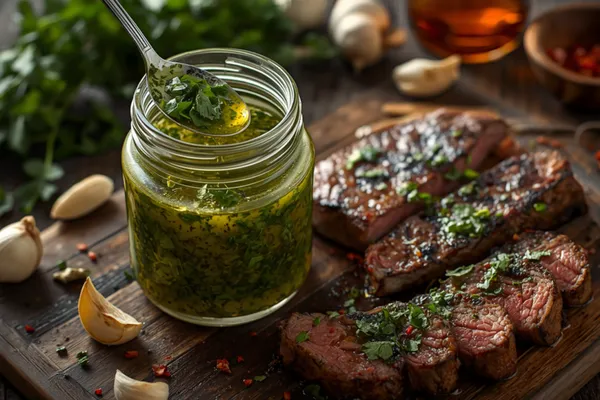
The Río de la Plata — the pampas of Argentina and the Uruguayan campo · Argentine & Uruguayan
Chimichurri (The Argentine & Uruguayan Herb Sauce for Asado)
The rough, hand-chopped parsley-and-oregano sauce that sits on every asado table in the Río de la Plata — built on a warm salt brine, sharpened with red wine vinegar, and deliberately left to separate rather than emulsified into a paste.