The Río de la Plata — the pampas of Argentina and the Uruguayan campo · Argentine & Uruguayan
Chimichurri (The Argentine & Uruguayan Herb Sauce for Asado)
The rough, hand-chopped parsley-and-oregano sauce that sits on every asado table in the Río de la Plata — built on a warm salt brine, sharpened with red wine vinegar, and deliberately left to separate rather than emulsified into a paste.
Published September 18, 2026
Cultural context
Chimichurri is the everyday condiment of the asado, the long wood-fire grill lunch shared across Argentina, Uruguay, Paraguay and southern Brazil. It belongs to the Río de la Plata as a whole rather than to one modern border: Argentine and Uruguayan kitchens developed it together, and the two versions differ by less than two households on the same street. Its usual origin story places it with the nineteenth-century gauchos of the grasslands, who had dried herbs, vinegar, fat and salt to hand and little else; the name is most plausibly traced to the Basque tximitxurri, roughly 'a mixture of things', by way of the huge Basque migration to the region, though the word itself is barely documented before the 1950s.
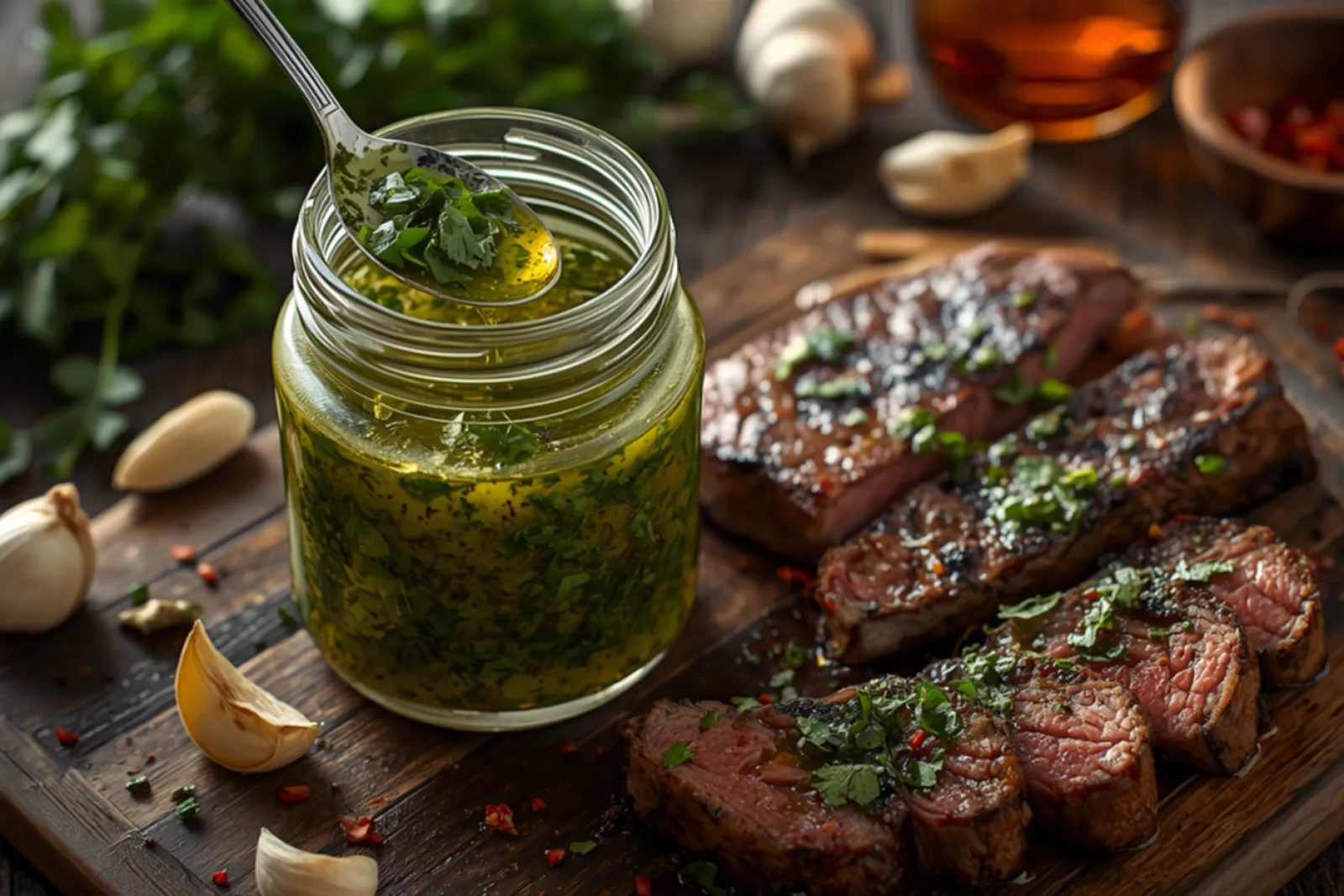
Chimichurri is the sauce in the open jar at the end of every asado table from Buenos Aires to Montevideo, and the first thing to understand about it is that it is not a blended green dressing. It is a rough, hand-chopped mixture of parsley, garlic, dried oregano, vinegar, oil and salt that is meant to separate in the jar, to be stirred with a spoon and tipped over meat straight off the fire. The Río de la Plata — the grasslands and the river shared by Argentina and Uruguay — made it, and neither country has a stronger claim than the other; Paraguayan and southern Brazilian grills use their own versions too. What the usual story agrees on is the setting: nineteenth-century cattle country, where a cook a long way from a kitchen garden had dried herbs, a bottle of vinegar, oil and coarse salt, and a great deal of grilled beef to make interesting.
The salmuera is the whole trick
If one step separates a real chimichurri from the hundreds of “chimichurri-style” sauces online, it is this: you begin with a small amount of hot water in which you dissolve the salt, and you steep the dried oregano and the ají molido in it before anything else happens.
Dried oregano is a dehydrated leaf. Drop it into oil and it stays dry — a rasping fleck that never gives up what it is carrying. Give it hot salted water and it swells, softens and releases its aromatics into the liquid, where they can travel through the whole sauce. The salt behaves the same way: dissolved in water it seasons every spoonful evenly, whereas salt stirred into oil simply hangs there as grit. Argentine cooks call this brine the salmuera, the same word used for the saltwater that gets brushed over meat on the grill, and it is why an authentic jar tastes seasoned all the way through rather than salty in patches.
Knife, not machine
The second rule is the one most people break. Parsley must be chopped by hand.
A food processor does not chop — it bruises. Spinning blades rupture cell walls, which releases chlorophyll and bitter compounds, and simultaneously whips the oil into the pulp. You end up with a smooth, dark, faintly bitter emulsion that clings to the top of a steak. A knife cuts cleanly, leaves most of the leaf intact, and gives you the loose, spoonable texture that lets the sauce sink into hot meat instead of sitting on it. Ten minutes of chopping is the price of admission, and it is a pleasant ten minutes.
Why you want it to separate
A good chimichurri sits in the jar as two layers: herbs and garlic settled at the bottom, clear oil above. That is not a fault to be whisked out. You stir before each spoonful, and you get a scoop of seasoned herb followed by the oil that carries it — the herbs land on the beef and stay there. Emulsify it properly and you have made a vinaigrette, which behaves completely differently on a hot surface.
So the oil goes in last, poured in a stream and stirred with a fork, and it goes in after the vinegar has had a few minutes alone with the parsley and garlic. Water and acid are what actually carry salt into a leaf and take the raw burn out of raw garlic; oil added first coats everything in fat and shuts that door.
Then you wait
Chimichurri is a resting sauce. Two hours is the minimum and overnight is better, because the oregano is still rehydrating, the vinegar is still sharp-edged and the garlic is still shouting. Somewhere in that first day the parts stop being a list and become one flavour. Season it more assertively than seems sensible while you taste — it will be eaten against fatty grilled beef, which flattens both salt and acid on contact.
Serve it in its jar with a spoon, alongside sliced skirt steak, a choripán, blistered vegetables or simply grilled bread. If you are building a wider table from the Americas, Peru’s ceviche and Brazil’s feijoada belong on it too — and there is more on the dishes worth crossing a border for in the world classics guide.
Ingredients
For the salmuera (the salt brine base)
- 80 ml (1/3 cup) hot water Hot from the kettle, not boiling. This is the step most recipes outside the region drop, and it is the one that makes the difference.
- 2 tsp coarse sea salt
- 2 tbsp dried oregano Dried, not fresh — this is not a compromise but the authentic choice. Mediterranean or Greek oregano sold on the stem has far more perfume than the dusty supermarket jar; crumble it between your palms as it goes in.
- 2 tsp ají molido Argentina's coarse ground red chilli, milled from dried ají criollo — warm and fruity rather than fierce. Substitute 1–2 tsp of mild red pepper flakes, or Aleppo pepper, which is the closest supermarket match in both heat and sweetness.
- 1 bay leaf, crumbled (optional) Common in the countryside versions; leave it out if you want the parsley cleaner.
For the sauce
- 1 large bunch (about 60 g leaves and fine stems) flat-leaf parsley Curly parsley is used in plenty of Argentine homes and is not wrong; flat-leaf simply tastes greener. Keep the tender upper stems — they carry the most flavour.
- 6–8 cloves garlic, minced as finely as you can Raw. This is a sauce for cutting through fat, and the garlic is a load-bearing wall.
- 80 ml (1/3 cup) red wine vinegar A decent one. Cheap harsh vinegar is very obvious here, since nothing is cooked to soften it.
- 180 ml (3/4 cup) neutral oil — sunflower, grapeseed or a light olive oil Argentine cooks reach for sunflower oil far more often than extra-virgin olive. Peppery extra-virgin competes with the parsley and oregano instead of carrying them; if you want olive oil, use a mild one and cut it half and half with sunflower.
- 1/2 tsp freshly ground black pepper
Optional — for a Uruguayan lean
- 1/2 small red morrón (red bell pepper), diced very fine Uruguayan jars more often carry it. It softens the acid and adds a faint sweetness without turning the sauce into chimichurri rojo.
Method
Tap a step’s number to check it off as you go.
-
Make the salmuera first. Put the salt in a heatproof bowl or jar, pour over the hot water and stir until it has completely dissolved. Add the dried oregano, ají molido and the crumbled bay leaf, and leave it to steep for 10 minutes while you chop everything else.
Why: Two jobs at once. Dried oregano is a dehydrated leaf — dropped straight into oil it stays a dry fleck that scratches rather than flavours, but given hot salted water it swells back and gives up its aromatics into the liquid. And salt dissolved in water disperses through the finished sauce evenly, where salt stirred into oil simply sits in it as grit. This brine is the traditional Río de la Plata base and the single biggest difference between chimichurri that tastes like Argentina and chimichurri that tastes like a herb dressing.
-
Chop the parsley by hand. Gather leaves and tender stems into a tight pile and work through them with a large sharp knife until they are fine but still recognisably chopped leaf — you want texture, not mince. Do not reach for the food processor.
Why: A blade spinning at speed does not chop parsley, it bruises it: cell walls rupture, chlorophyll and bitter compounds leach out, and the oil whips into the pulp. The result is a smooth, dull, faintly bitter green paste — closer to pesto than to chimichurri. Every asado in Argentina has a jar on the table and almost none of them came out of a blender.
-
Mince the garlic very finely, or crush it to a rough paste in a mortar with a pinch of the salt.
Why: Raw garlic in coarse pieces gives sudden hot bursts rather than a background; broken down small it spreads through the sauce. The mortar goes a step further, rupturing the cells so the garlic's flavour compounds form fully before the acid slows them down.
-
Stir the parsley, garlic, black pepper and the red wine vinegar into the steeped brine. Leave this — with no oil in it yet — for 5 minutes.
Why: Order matters. The water-and-vinegar phase is what actually carries salt and acid into the herbs and takes the raw burn off the garlic. Add the oil first and it coats every surface in fat, after which nothing water-soluble can get in, and the sauce ends up tasting oily on top of unseasoned parsley.
-
Now pour in the oil in a slow stream, stirring with a fork rather than whisking. Stop as soon as it is combined. Stir in the diced morrón if you are using it.
Why: You are deliberately not making an emulsion. A proper chimichurri separates in the jar into a layer of herby sediment under clear oil, and that is how it is meant to be spooned — stir, tip the spoon, and let the herbs land on the meat with the oil following. Whisk it into a stable creamy dressing and it sits on top of a steak like a sauce instead of soaking into it.
-
Cover and leave it for at least 2 hours, and preferably overnight, in the fridge or somewhere cool. Take it out 30 minutes before the meat comes off the fire.
Why: This is a resting sauce, not a blending sauce. The oregano goes on drinking up brine, the vinegar's sharp edge rounds off, the garlic loses its aggression, and the flavours stop tasting like a list of ingredients and start tasting like one thing. Served straight away it is thin and shouty; a day later it is chimichurri.
-
Taste at room temperature, just before serving, and correct. It should be assertively salty and sharp on a spoon — more than you think is right.
Why: You are never eating it alone. Chimichurri is judged against a mouthful of fatty grilled beef, which blunts salt and acid dramatically; a sauce balanced to taste pleasant on its own will vanish the moment it touches the meat.
A quick, anonymous tap — no review needed.
Variations
- Chimichurri rojo
The red one, for chorizo, morcilla and richer cuts. Parsley steps back to half a bunch and red comes forward: add 1 tbsp sweet pimentón, a little more ají molido, and either a ripe tomato or half a red morrón chopped very finely. Rounder, sweeter and deeper than the green, and it stains a sausage sandwich beautifully.
- Uruguayan
Across the river the jar leans a touch sweeter and less green — more dried oregano relative to parsley, finely diced red morrón stirred through, and sometimes a pinch of dried thyme. It is the same sauce with a different accent, not a different recipe.
- Milder, for a mixed table
Halve the garlic and the ají molido and add an extra tablespoon of oil. Keep the salmuera exactly as it is — the salt and the rehydrated oregano are what make it taste like chimichurri, not the heat.
- Fresh-herb summer version
Not traditional, but good in high summer when herbs are abundant: keep the dried oregano in the brine for backbone and add a small handful of fresh oregano and a little fresh coriander or mint at the end. Use it within two days — fresh herbs dull fast in acid.
- Dry chimichurri mix (for the cupboard or a gift)
Blend the dry parts alone — dried oregano, dried parsley, ají molido, granulated garlic, coarse salt, a crumbled bay leaf — and keep in a jar. To use, steep 3 tbsp of the mix in the hot salmuera, then add vinegar and oil. This is essentially how the gauchos carried it, and how many Argentine households still keep a supply.
Serving & Storage
Put it on the table in an open jar with a spoon and let people help themselves — it is a condiment, not a dressing poured in the kitchen. Its home is the asado: spooned over sliced bife de chorizo, entraña (skirt) and vacío (flank) straight off the fire, and stirred into a choripán, the split roll with a butterflied chorizo that every Argentine grill opens with. Beyond the grill it is excellent on roast or grilled vegetables, on white beans, over a fried egg, brushed onto grilled bread, or stirred into potatoes while they are still hot enough to drink it up.
Pairs with: Grilled skirt steak (entraña), Choripán, Grilled provolone (provoleta), Roast or grilled potatoes, Grilled aubergine and peppers, Malbec or Tannat, Crusty bread.
Storage: Keep it refrigerated in a clean sealed jar. Because it is acidified with a generous quantity of vinegar it holds up well — two to three weeks, with the parsley slowly darkening and the oregano and garlic deepening — and many people think it is best from day two to day five. Do not store it at room temperature, whatever you read: raw garlic sitting under oil in a low-oxygen environment is exactly the condition home-preservation authorities warn about for botulism, and the fridge removes the question entirely. It freezes well in an ice-cube tray for 3 months; thaw in the fridge, never in the microwave. Always spoon with a clean utensil, and if it ever smells fermented rather than sharp, start again.
Nutrition
Per serving (2 tbsp (about 30 ml))
- Calories
- 130
- Protein
- 0.3 g
- Carbs
- 1.5 g
- Fat
- 14 g
- Fiber
- 0.5 g
- Sugar
- 0.2 g
- Sodium
- 290 mg
Notable micronutrients: Vitamin K, Vitamin C, Vitamin A, Vitamin E
Estimated using standard ingredient data. Values vary with brands and substitutions.
Frequently Asked Questions
Can I just use a food processor? It would take thirty seconds.
You can, and the sauce will be edible, but it will not be chimichurri. Blades bruise parsley rather than cutting it, which releases bitter compounds and chlorophyll and whips the oil into the pulp — you get a smooth, dark, slightly bitter paste that sits on meat like pesto instead of a loose sauce that separates and soaks in. If you must use a machine, pulse the parsley alone in three or four very short bursts before the oil or vinegar go anywhere near it, and stop while it still looks chopped.
Fresh oregano must be better than dried, surely?
Not here. Dried oregano is the traditional and the better choice, and the reason is historical as much as culinary: this began as a field sauce made where fresh herbs would not survive the week, so it was built on dried herbs, garlic, vinegar, oil and salt. Drying concentrates oregano's aromatic oils and gives a deeper, more resinous note that fresh leaves — which are grassier and much more delicate — cannot supply. The salmuera exists precisely to bring those dried leaves back to life. Fresh parsley, on the other hand, is non-negotiable.
Olive oil or neutral oil?
Neutral oil is the more common choice in Argentina, usually sunflower. A peppery extra-virgin olive oil is a strong flavour in its own right and will argue with the parsley, oregano and garlic rather than carrying them, and it also firms up in the fridge. If you love olive oil, use a mild one, or cut it half and half with sunflower — a compromise plenty of Buenos Aires kitchens make themselves.
How far ahead should I make it?
A day ahead is the sweet spot, and two hours is the minimum. The dried oregano needs time to rehydrate fully, the vinegar needs time to stop tasting like vinegar, and raw garlic needs time to stop shouting. Made and served within ten minutes it tastes like separate ingredients in a bowl. Take it out of the fridge half an hour before serving so the oil is not cold and sluggish.
Is chimichurri spicy?
Barely, by design. Ají molido is a mild, fruity ground chilli — its job is warmth and colour, not heat — and the sauce's bite comes far more from raw garlic and vinegar than from capsaicin. If you want it hotter, add ají molido rather than cayenne, so you gain flavour along with the burn.
What is the difference between chimichurri and salsa criolla?
They usually share a table and do different jobs. Chimichurri is a herb-and-oil sauce built on parsley, dried oregano, garlic and vinegar, spooned over meat. Salsa criolla is a chopped fresh relish of tomato, onion and red pepper in vinegar and oil — chunkier, sweeter, more like a salad. At an Argentine asado you will often find both in front of you, plus chimichurri rojo for the sausages.
What to drink with this
All drinks →Hand-picked pours to match this dish. Alcoholic pairings are for adults of legal drinking age (21+ in the US) — please drink responsibly.
 21+
21+ United States (turn of the 20th century) · American
Dry Martini (Gin, Vermouth & a Cold Glass)
The original cocktail of cocktails — good gin, a measure of dry vermouth, stirred long over ice and served brutally cold. The ratios, the stir, and why a Martini is shaken or stirred for a reason.
 21+
21+ Long Island, New York (Prohibition-era claim) / Tennessee (rival origin) · American
Long Island Iced Tea (Five Spirits, No Tea)
The infamous Long Island Iced Tea, built in balance — five clear spirits, orange liqueur, fresh lemon and just enough cola to fake the colour of tea. Strong by design, but measured, not muddled.

Mexico (agua fresca tradition) · Mexican
Agua de Jamaica (Hibiscus Iced Tea)
Mexico's ruby-red hibiscus cooler: dried jamaica flowers steeped, sweetened and chilled into a tart, refreshing agua fresca. The right steep, how to control the tartness, and why it's so good for you.
From our kitchen community
Ratings & Reviews
My Rating
Tap a star to rate — no sign-in, no form needed.
My Review
0 Ratings
🥣 0 home cooks made it!
Be the first to rate Chimichurri (The Argentine & Uruguayan Herb Sauce for Asado).
Related Recipes
Peru · Peruvian
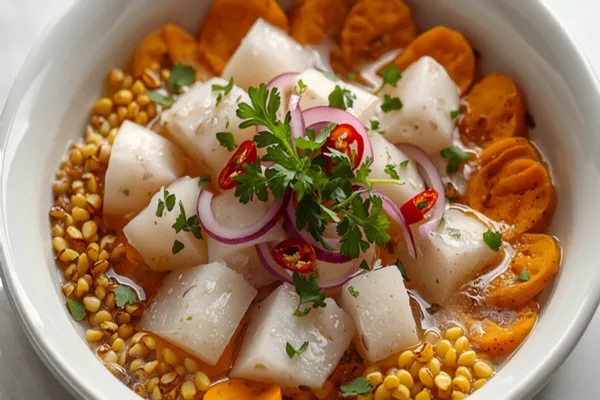
Peruvian Ceviche (Ceviche de Pescado)
Peru's national dish: fresh white fish 'cooked' in lime juice with chili, red onion, and coriander, served with the bright, punchy marinade known as leche de tigre. Fast, raw, electric — a five-minute marinade is all it takes.

Salta, in the Andean north-west of Argentina — the high valleys around the capital and the Calchaquí wine country · Argentine
Empanadas Salteñas (Salta-Style Argentine Beef Empanadas)
The empanada Argentina argues about and Salta gets right — hand-chopped beef, soft potato and spring onion bound in cumin-red beef fat, sealed in a thin tallow pastry that bakes juicy enough to eat leaning forward.

Rio de Janeiro and Minas Gerais — the black-bean south-east of Brazil, where the *feijoada completa* table took its modern form · Brazilian
Feijoada Completa — Rio's Saturday Pot of Black Beans and Pork
Brazil's national dish is a long, patient pot of black beans and salted, smoked and fresh pork, eaten at lunchtime on a Saturday with rice, garlicky collards, farofa and sliced orange. Here is how the whole table comes together, and why each part of it is there.

Portland parish, Jamaica — the Blue Mountain and John Crow interior of the Windward Maroons, and the roadside pits of Boston Bay · Jamaican
Jamaican Jerk Chicken — Pimento Smoke, Scotch Bonnet and the Maroons' Fire
Real jerk is not a sauce you brush on at the end. It is a wet pimento-and-Scotch-bonnet paste worked into slashes cut to the bone, then smoke-roasted slowly over allspice wood until the skin blisters black. Here is how to get genuinely close on a home grill — and why low heat, not high, is the whole trick.
Hausaland — northern Nigeria (Kano, Zaria, Sokoto) and across the Sahel into Niger, Chad and northern Cameroon · Nigerian
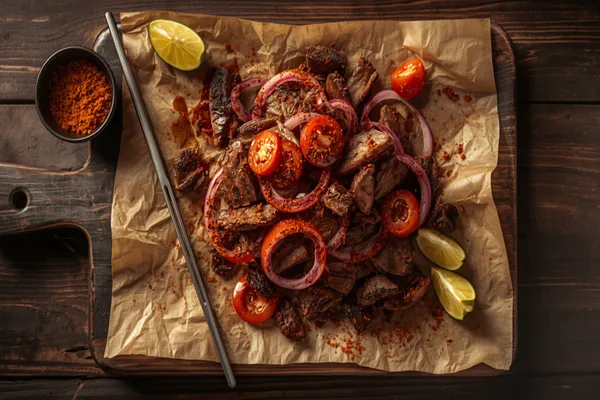
Suya (Tsire) — Hausa Grilled Beef Skewers with Yaji
Nigeria's great night-time street food: beef sliced paper-thin, oiled, buried twice in a dry peanut-and-chilli rub, and grilled fast over charcoal. The secret is that yaji is a dry rub, not a marinade — and that the peanut in it has had its oil pressed out.

United States · American
Classic American Cheeseburger
The all-American diner cheeseburger done right — a thin, well-seared beef patty with crackly edges, melted American cheese, and the classic fixings on a toasted, buttered bun. Simple, fast, and all about technique.