Salta, in the Andean north-west of Argentina — the high valleys around the capital and the Calchaquí wine country · Argentine
Empanadas Salteñas (Salta-Style Argentine Beef Empanadas)
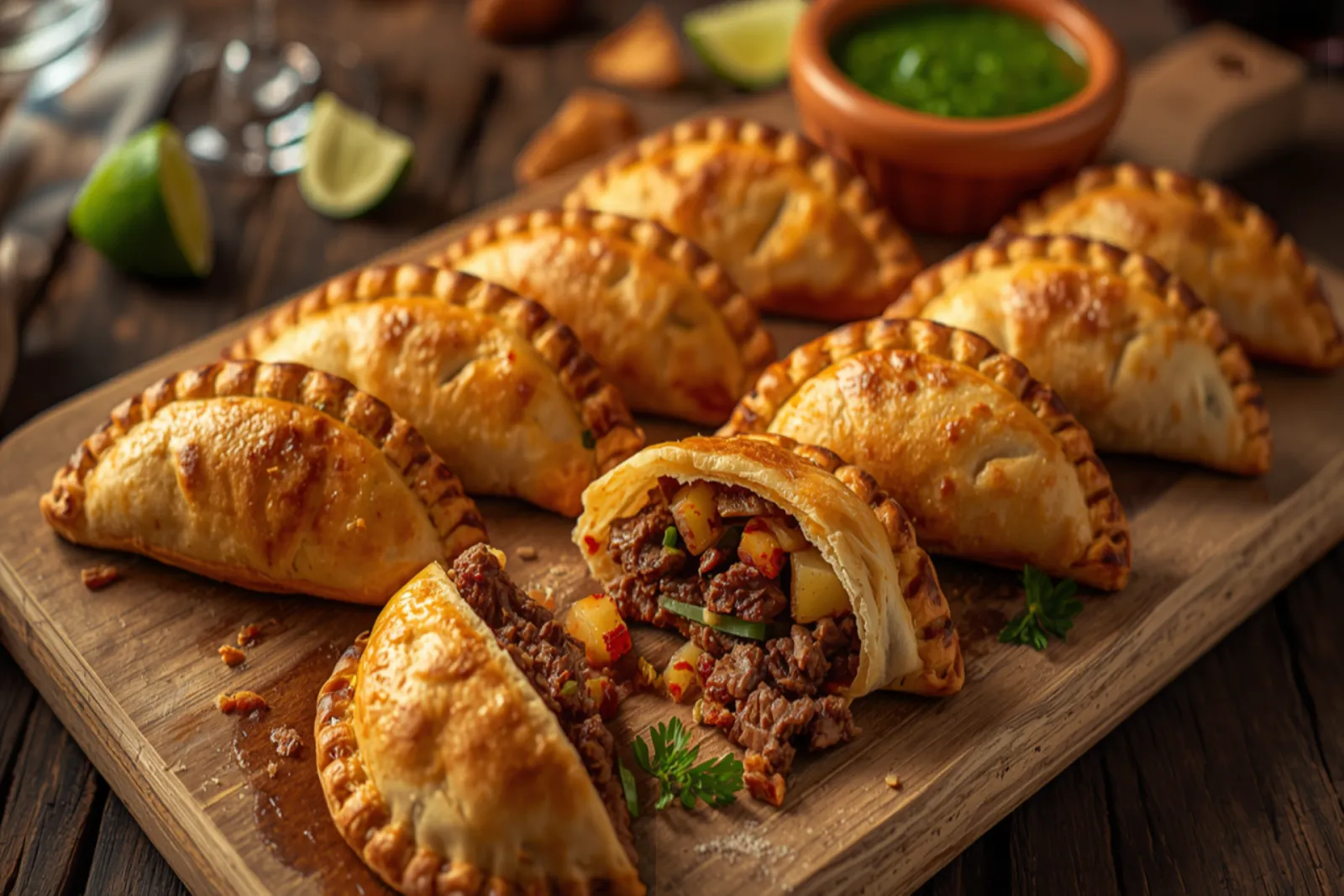
The empanada Argentina argues about and Salta gets right — hand-chopped beef, soft potato and spring onion bound in cumin-red beef fat, sealed in a thin tallow pastry that bakes juicy enough to eat leaning forward.
Published August 17, 2026
Cultural context
The empanada arrived in the Americas through Spain, which had taken the idea of meat sealed in pastry from the Arab world — the Spanish word first appears in print in a 1520 Catalan cookbook, and the sfiha of the Levant is its recognisable cousin. What Argentina's north-west did with it is its own: in Salta the beef is chopped by hand rather than minced, potato goes in, and the whole thing is kept small enough to eat in three bites. Every Argentine province defends its own version — Tucumán calls itself the cradle of the empanada, Mendoza runs sweeter, Catamarca finer — and the country holds a Fiesta Nacional de la Empanada in Tucumán each year precisely because nobody agrees. This is the Salta version, and it is not the same thing as the Bolivian salteña, which is a different, soupier pastry that took its name from a Salta-born exile.
Empanadas salteñas are what happens when a Spanish pastry, itself borrowed from the Arab world, spends four hundred years in the high dry valleys of north-western Argentina. Salta’s version is small enough to hold in three fingers, thin-skinned, stained brick-red with paprika and cumin, and filled with beef that has been chopped by hand rather than minced. Done properly it releases juice on the first bite, which is why locals will tell you — entirely seriously — to lean forward.
The word first appears in print in a Catalan cookbook of 1520, but the idea travelled a long way before that: sealed meat pastries move from the Levantine sfiha through Al-Andalus into Spain, then across the Atlantic with Galician emigration heavy enough that gallego became Argentine slang for “Spaniard.” What each Argentine province did next is the interesting part, and it is fiercely contested. Tucumán, which calls itself the cradle of the empanada and hosts the national festival, fries big ones. Mendoza runs sweeter, with olives and raisins. Catamarca chops finer. Salta bakes small ones with potato in them, and this is that recipe.
Hand-chopped, and why it is not fussiness
There is one line in this recipe that people skip and then wonder why their empanadas taste ordinary: chop the beef by hand. A mincer forces meat through a plate, rupturing the fibres so they knit together into a smooth, uniform paste. A knife leaves you a thousand small cubes with space between them. In a pastry the size of your palm, that difference is the entire eating experience — you feel meat instead of filling.
Freeze the beef for half an hour first and it firms enough to cut cleanly. Ten minutes with a sharp knife is the price of admission, and it is the single thing that most separates a salteña from a supermarket empanada.
Potato belongs, tomato does not
Northern Argentina puts diced potato in its empanadas and the rest of the country largely does not. It is not filler; it soaks up spiced fat and gives the filling body without weight. Boil it to just short of tender and drain it properly dry, because it gets a second cooking in the oven and because water is the enemy of a sealed pastry.
What does not go in is tomato. The deep red of a salteña filling comes entirely from pimentón bloomed in hot beef fat off the heat — a step worth respecting, since paprika turns bitter in seconds over a live flame.
The cold-filling rule
Everything about how a salteña eats depends on temperature discipline. The tallow in the filling has to be set hard before it meets the dough: it folds cleanly, seals cleanly, and then, sealed inside pastry in a very hot oven, it melts. That melted fat and the beef’s own juices become the jugo by which these empanadas are judged in Salta. Fill warm and you get torn dough, leaked fat, and a dry empanada — all three failures from one shortcut.
Chill the filling overnight, chill the assembled empanadas again before baking, and get a heavy tray properly hot in the oven first. Salta’s hornos de barro, the domed clay ovens, bake these in a handful of minutes at ferocious heat; the preheated tray is a home kitchen’s nearest approximation.
The repulgue
The braided crimp along the curved edge is a working seal, not decoration. Each small fold laps over the one before it, so the seam locks under pressure instead of simply being pinched shut. Thirteen folds is the number the north-west quotes, Tucumán most insistently — and nobody counts. What is real is the second function: the crimp pattern is a label. Beef and chicken can share an oven and still come out identifiable, which matters when you are baking six dozen for a room full of people.
If you want more of the region’s hand-held cooking, Peru’s ceviche sits at the bright, raw end of the same continent and Brazil’s pão de queijo at the snack end. The world classics guide covers where the rest of these dishes sit.
Ingredients
For the filling (make it the day before)
- 1 kg (2 1/4 lb) beef chuck, blade or rump, hand-chopped into 5 mm dice Hand-chopping is the whole difference between a Salta empanada and a generic one. Mince packs into a dense, uniform paste; chopped beef stays as distinct pieces you can feel. Freeze the meat for 30 minutes first — it firms up and the knife runs cleanly. Ask for a cut with some fat marbling; a lean eye of round will bake dry.
- 150 g (5 oz) beef tallow (grasa de pella), or lard The traditional fat, and the reason a good salteña runs juice when you bite it: tallow sets solid in the fridge, gets sealed into the pastry cold, then melts in the oven. Butter or oil will not do this. If tallow is hard to find, ask a butcher for suet and render it gently, or use lard.
- 600 g (about 4 medium) white onions, finely diced
- 1 large bunch (about 150 g) spring onions, green and white parts, finely sliced Cebolla de verdeo. Salta uses a lot of it and adds most of it off the heat, so it keeps its bite against the soft cooked onion.
- 500 g (about 3 medium) waxy potatoes, peeled and cut into 1 cm dice Waxy, not floury. They must hold their cube shape — floury potatoes disintegrate into mash and the filling turns stodgy.
- 2 tbsp sweet smoked or plain pimentón (Spanish paprika) Plain sweet pimentón is the Salta standard; smoked is a modern liberty that works well. This is where the filling's deep brick-red colour comes from, not from tomato — there is no tomato in a salteña.
- 1 tbsp ground cumin Cumin and pimentón are the two-note chord of northern Argentine cooking. Grind it fresh if you can — pre-ground cumin fades fast and this dish leans on it.
- 1–2 tsp ají molido (Argentine crushed red chilli), or mild chilli flakes Salta likes a low, warm heat rather than a sharp one. Kashmiri chilli powder or Aleppo pepper are decent stand-ins.
- 2 tsp fine sea salt, plus more to taste
- 1/2 tsp freshly ground black pepper
- 3 eggs, hard-boiled and roughly chopped Added at assembly, not to the cooked filling, so the pieces stay visible.
For the dough
- 1 kg (7 1/2 cups) plain flour, preferably a soft low-protein flour (harina 000) Argentine 000 is closest to a soft plain/all-purpose flour. Strong bread flour makes the pastry chewy and hard to crimp.
- 200 g (7 oz) beef tallow or lard, melted and slightly cooled
- 400–450 ml (1 3/4–2 cups) warm water
- 20 g (1 tbsp) fine sea salt, dissolved in the warm water
To finish
- 1 egg, beaten with 1 tbsp water, for glazing Optional but traditional for baked empanadas — it is what gives the tops their lacquered look.
To serve
- To taste lime or lemon wedges, and a bowl of salsa criolla or chimichurri
Method
Tap a step’s number to check it off as you go.
-
Melt the 150 g of tallow in a wide heavy pan over medium heat. Add the diced onions with a good pinch of salt and cook slowly for 15–20 minutes until completely soft and translucent but not browned.
Why: The onion is nearly half the filling by volume and it has to disappear into softness. Any crunch left here will still be there after baking, and browning would push the flavour toward caramel sweetness — Salta's filling is savoury and spiced, not sweet.
-
Pull the pan off the heat. Stir in the pimentón, cumin and ají molido and let them sizzle in the residual heat for about 30 seconds.
Why: Paprika scorches at frying temperature and turns acrid within seconds. Off the heat, the fat is still hot enough to bloom the spices — releasing their fat-soluble colour and aroma into the tallow, which is what dyes the whole filling red — without burning them.
-
Return to medium-high heat, add the hand-chopped beef and cook for just 4–6 minutes, stirring, until it has lost its raw colour on the outside but is still pink within. Season with the salt and pepper. Take it off the heat.
Why: The beef gets a second cooking inside the empanada. Cook it through now and it will be dry and grey by the time the pastry is golden. This brief pass is only to set the surface and get the meat coated in spiced fat.
-
While the beef cooks, boil the diced potato in salted water for 5–7 minutes, until a knife meets slight resistance — firm, not soft. Drain well and let the steam escape.
Why: The potato also cooks twice. Boiled to tenderness now, it will collapse into paste in the oven; underdone, it stays chalky. Draining dry matters too, because water in the filling is what makes the base of an empanada go soggy and split.
-
Fold the drained potato and about two-thirds of the sliced spring onions into the beef. Taste and over-season slightly — it should taste a touch too salty and too spiced straight from the pan. Spread the filling in a wide tray, cool to room temperature, then refrigerate uncovered for 2 hours and covered overnight.
Why: Two reasons, both non-negotiable. Flavour: chilled filling tastes flatter than warm filling, and pastry mutes it further, so you compensate now. Structure: the tallow must set hard. A cold, solid filling folds cleanly and then melts inside the sealed pastry as it bakes — that liquid fat and meat juice is the jugo, the juice, that a salteña is judged on. Warm filling tears the dough and leaks.
-
For the dough, mix the flour and the melted tallow in a large bowl, rubbing with your fingertips until it looks like coarse damp sand. Add the salted warm water gradually, bringing it together into a soft dough — you may not need all the water.
Why: Coating the flour in fat before the water goes in shortens the pastry: the fat gets between the flour particles and limits gluten development, giving a tender, flaky bite rather than a bready one. Warm water keeps the tallow liquid and evenly distributed.
-
Knead for 5 minutes only, until smooth. Wrap and rest at room temperature for 30 minutes.
Why: Enough kneading to make it cohesive, not enough to build strength. The rest lets the gluten you did develop relax, so the discs roll thin without springing back and the repulgue crimps without tearing.
-
Divide the dough into 24 pieces (about 60 g each) and roll each into a 12–13 cm disc, roughly 2 mm thick — thin enough to see a shadow through. Keep them covered as you go.
Why: Salta's pastry is noticeably thinner than Tucumán's. Thin dough bakes fast and stays crisp; thick dough goes bready and the filling steams instead of sizzling. Covering stops a skin forming, which would crack at the fold.
-
Working with cold filling, place a heaped tablespoon in the centre of each disc, add a few pieces of chopped egg and a pinch of the reserved spring onion. Dampen the rim lightly with water, fold into a half-moon and press out the air as you seal.
Why: The reserved raw spring onion goes in now so it keeps its freshness — cooked in earlier it would have vanished. Trapped air expands in the oven and is the most common cause of a burst empanada.
-
Make the repulgue: starting at one corner, fold a small piece of the sealed edge over on itself and press, then repeat along the curve, each fold overlapping the last, until you reach the other end. Aim for thirteen or so folds and a rope-like braid.
Why: The repulgue is not decoration — it is a mechanical seal, and each overlapping fold locks the one before it, which is what holds the pastry shut against melting fat and steam. In Argentina it is also a signature: the crimp pattern traditionally tells you what is inside, so a cook can bake beef and chicken on the same tray and still tell them apart.
-
Chill the assembled empanadas for at least 20 minutes. Heat the oven to 220°C (425°F) with a heavy baking tray inside.
Why: Cold empanadas onto a screaming hot surface gives the base an immediate blast of heat, which sets the pastry before the filling's melting fat can soak into it. This is the closest a domestic oven gets to Salta's horno de barro, the clay oven that bakes these in minutes.
-
Brush with the egg wash, slide onto the hot tray and bake for 12–15 minutes, until blistered and deeply golden with a few dark spots. Rest 5 minutes.
Why: The blisters and dark freckles are the mark of a properly hot oven, not a fault. The 5-minute rest is a mercy: straight out of the oven the interior fat is molten and will scald. It also lets the filling reabsorb some of its juice instead of running out at first bite.
-
Eat hot, held in the fingers, leaning forward over a plate, with a wedge of lime and a glass of Salta Malbec or Torrontés.
Why: The leaning-forward is genuine local etiquette rather than a joke. A correctly made salteña releases juice on the first bite, and the traditional advice — three bites, standing up, over a plate — is the technique for not wearing it.
A quick, anonymous tap — no review needed.
Variations
- Empanadas de pollo
Swap the beef for hand-chopped chicken thigh, keep everything else the same, and lift the cumin slightly. Northern Argentina bakes as many chicken empanadas as beef ones, and the different repulgue is how the tray gets sorted.
- Fried (fritas)
Salta bakes; Tucumán often fries. Fry in beef tallow or neutral oil at 180°C for 3–4 minutes a side until blistered. Skip the egg wash. The pastry comes out crisper and puffier, with bubbled patches.
- Vegetarian — humita
Fill with fresh sweetcorn cooked down with onion, a little pumpkin, spring onion and a pinch of pimentón until thick. Humita empanadas sit beside meat ones at every northern table and are not a modern substitution.
- With olives and raisins
Common further south and in Catamarca — a few chopped green olives and a scattering of raisins per empanada. Salta cooks are split on it; try one tray before committing.
- Smaller for a party
Roll 10 cm discs for 36 two-bite empanadas. Reduce the bake to 10–12 minutes and watch them closely.
Serving & Storage
Serve them hot on a wooden board with lime or lemon wedges and small bowls of salsa criolla (finely diced tomato, onion and pepper in oil and vinegar) or chimichurri. In Salta they open a meal rather than end one, eaten standing with a glass of high-altitude Torrontés or a young Malbec from the Calchaquí valleys, with a locro or grilled meat to follow.
Pairs with: Salta Malbec or Cafayate Torrontés, Salsa criolla, Chimichurri, Locro, Green salad with a sharp vinaigrette, Fernet and cola.
Storage: The filling keeps 2 days refrigerated and is better on day two. Assembled raw empanadas freeze beautifully: freeze flat on a tray, then bag — bake from frozen at 210°C for 18–22 minutes, no thawing (thawed dough goes slack and leaks). Baked empanadas keep 3 days refrigerated; revive them for 8 minutes in a 190°C oven. Do not microwave, which steams the pastry into a soft, grey shadow of itself.
Nutrition
Per serving (2 empanadas)
- Calories
- 470
- Protein
- 23 g
- Carbs
- 42 g
- Fat
- 24 g
- Fiber
- 3 g
- Sugar
- 3 g
- Sodium
- 620 mg
Notable micronutrients: Iron, Zinc, Vitamin B12, Vitamin C, Potassium, Niacin
Estimated using standard ingredient data. Values vary with brands and substitutions.
Frequently Asked Questions
Are these the same as Bolivian salteñas?
No, and the shared name causes constant confusion. Bolivian salteñas are a distinct pastry — a sweeter dough, a soupy filling set with gelatin so it liquefies in the oven, baked upright and eaten as a mid-morning snack. The name is a nod to Salta: they are usually credited to Juana Manuela Gorriti, a writer born in Salta province who lived in exile in Bolivia in the nineteenth century, and Bolivians called her empanadas 'the Salta woman's'. What you are making here is the Argentine original from Salta itself: drier, spicier, half-moon, hand-held.
Can I use minced beef instead of chopping it by hand?
You can, and the result will be a perfectly decent empanada — but not a salteña. Mince has been crushed through a plate, which ruptures the muscle fibres and lets them knit into a uniform paste; hand-chopped beef stays as separate pieces with texture between them, and it holds its juice rather than releasing it all at once. If the knife work is too much, ask a butcher to hand-cut it, or pulse very cold cubes two or three times in a food processor and accept it as a compromise.
Why is my filling leaking or the empanadas bursting?
Almost always one of three things. The filling went in warm, so it softened the dough and started melting before the seal was set — it must be fridge-cold and firm. Air was trapped inside, and it expanded; press it out as you fold. Or the repulgue was too loose or too close to the filling; leave a clear 1.5 cm rim of clean dough to crimp into and make each fold overlap the last.
What is the thirteen-fold repulgue, and does the number matter?
The repulgue is the braided crimp that seals the empanada, and thirteen folds is the number traditionally quoted in the north-west — Tucumán in particular treats it almost as a rule. In practice nobody counts at the table, and a well-sealed crimp of eleven or fifteen folds works identically. What does matter is that the folds overlap each other, so the seam locks rather than merely pinches, and that different fillings get visibly different crimps.
Do I have to use beef tallow?
For the authentic result, yes — in both the dough and the filling. Tallow has a high melting point, so it stays solid in the cold filling and liquefies only in the oven, which is exactly the mechanism that makes a salteña juicy. It also makes a shorter, sturdier pastry than butter. Lard is a very close substitute. Butter is a distant third and vegetable shortening, while it will work structurally, gives away the flavour entirely.
Can I make everything ahead for a party?
This dish is built for it. Make the filling one or two days ahead — it improves. Make the dough the morning of, or the day before and let it come to room temperature before rolling. Assemble and crimp up to 6 hours ahead, keeping the tray covered in the fridge, or freeze raw and bake straight from frozen. The only thing you cannot do in advance is bake them, because the point of an empanada is the fifteen minutes after it leaves the oven.
What to drink with this
All drinks →Hand-picked pours to match this dish. Alcoholic pairings are for adults of legal drinking age (21+ in the US) — please drink responsibly.
 21+
21+ United States (turn of the 20th century) · American
Dry Martini (Gin, Vermouth & a Cold Glass)
The original cocktail of cocktails — good gin, a measure of dry vermouth, stirred long over ice and served brutally cold. The ratios, the stir, and why a Martini is shaken or stirred for a reason.
 21+
21+ Long Island, New York (Prohibition-era claim) / Tennessee (rival origin) · American
Long Island Iced Tea (Five Spirits, No Tea)
The infamous Long Island Iced Tea, built in balance — five clear spirits, orange liqueur, fresh lemon and just enough cola to fake the colour of tea. Strong by design, but measured, not muddled.

Mexico (agua fresca tradition) · Mexican
Agua de Jamaica (Hibiscus Iced Tea)
Mexico's ruby-red hibiscus cooler: dried jamaica flowers steeped, sweetened and chilled into a tart, refreshing agua fresca. The right steep, how to control the tartness, and why it's so good for you.
From our kitchen community
Ratings & Reviews
My Rating
Tap a star to rate — no sign-in, no form needed.
My Review
0 Ratings
🥣 0 home cooks made it!
Be the first to rate Empanadas Salteñas (Salta-Style Argentine Beef Empanadas).
Related Recipes

The Andean valleys and Caribbean coast shared by Venezuela and Colombia — Timoto-Cuica, Cumanagoto and Muisca corn country · Venezuelan & Colombian
Arepas — Griddled Corn Cakes from Venezuela and Colombia
Three ingredients, four hundred years older than either country that argues over them: masarepa, warm water and salt, griddled to a crust and baked through until they sound hollow. The trick is that masarepa is pre-cooked corn flour and nothing else will do.
Peru · Peruvian
Peruvian Ceviche (Ceviche de Pescado)
Peru's national dish: fresh white fish 'cooked' in lime juice with chili, red onion, and coriander, served with the bright, punchy marinade known as leche de tigre. Fast, raw, electric — a five-minute marinade is all it takes.
Minas Gerais, south-eastern Brazil (the Serra da Canastra dairy country) · Brazilian
Pão de Queijo (Brazilian Cheese Bread from Minas Gerais)
Brazil's great small bread: hollow, chewy cassava-starch puffs with a crackling shell and a stretchy, salty cheese-scented middle. Naturally gluten-free, and the batter keeps in the freezer for a hot tray any morning of the week.
North India / pan-Indian street food · Indian
Samosa (Punjabi Aloo Samosa)
India's most famous snack: a crisp, flaky pastry triangle stuffed with spiced potatoes and peas. Made from scratch, with the secret of a low-and-slow fry for that signature blistered crust.
Spain (pan-Spanish) · Spanish
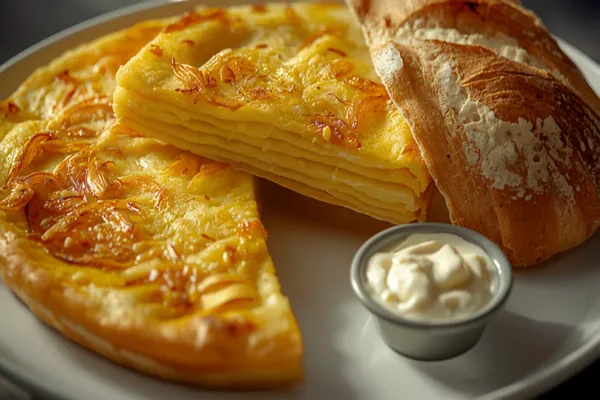
Tortilla Española (Spanish Potato Omelette)
Spain's national dish in a pan: potatoes slowly confited in olive oil, bound with egg and cooked into a thick, golden cake with a just-set, custardy centre. Served warm or at room temperature, in wedges or cubes.
Managua and Nicaragua's Pacific cattle country — with a rival claim from Mexico's Gulf coast · Nicaraguan
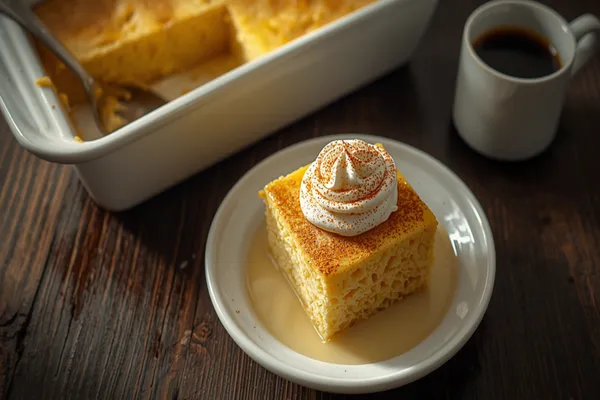
Tres Leches Cake (Pastel de Tres Leches)
Latin America's great milk-soaked cake: a lean, fatless sponge built on whipped egg whites, flooded overnight with condensed, evaporated and whole milk, and finished with cold cream and cinnamon. Wet through to the last crumb and never soggy.

Rio de Janeiro and Minas Gerais — the black-bean south-east of Brazil, where the *feijoada completa* table took its modern form · Brazilian
Feijoada Completa — Rio's Saturday Pot of Black Beans and Pork
Brazil's national dish is a long, patient pot of black beans and salted, smoked and fresh pork, eaten at lunchtime on a Saturday with rice, garlicky collards, farofa and sliced orange. Here is how the whole table comes together, and why each part of it is there.
The Río de la Plata — the pampas of Argentina and the Uruguayan campo · Argentine & Uruguayan
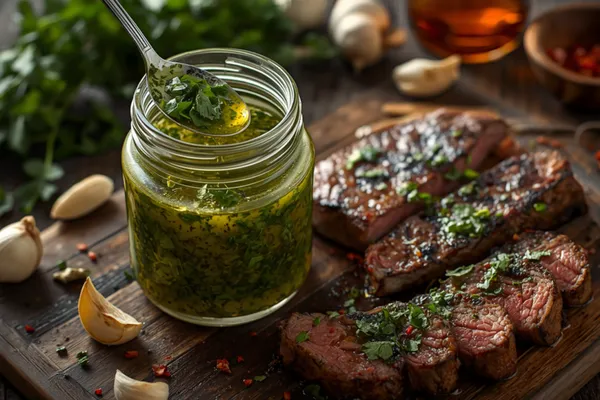
Chimichurri (The Argentine & Uruguayan Herb Sauce for Asado)
The rough, hand-chopped parsley-and-oregano sauce that sits on every asado table in the Río de la Plata — built on a warm salt brine, sharpened with red wine vinegar, and deliberately left to separate rather than emulsified into a paste.
The Río de la Plata — Buenos Aires and the Argentine pampas, shared with Uruguay (and, in variant forms, Peru and Chile) · Argentine & Uruguayan
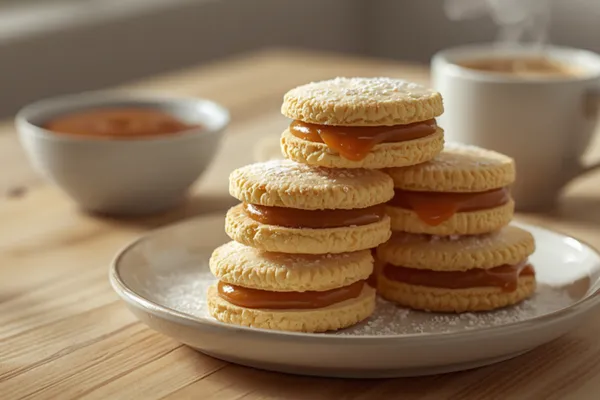
Alfajores de Maicena (Argentine Dulce de Leche Cornstarch Sandwich Cookies)
Two impossibly tender, cornstarch-rich shortbread rounds sandwiched with thick dulce de leche and rolled in coconut — the crumbly, melt-on-the-tongue cookie of Argentina, Uruguay and the wider Río de la Plata.