The Río de la Plata — Buenos Aires and the Argentine pampas, shared with Uruguay (and, in variant forms, Peru and Chile) · Argentine & Uruguayan
Alfajores de Maicena (Argentine Dulce de Leche Cornstarch Sandwich Cookies)
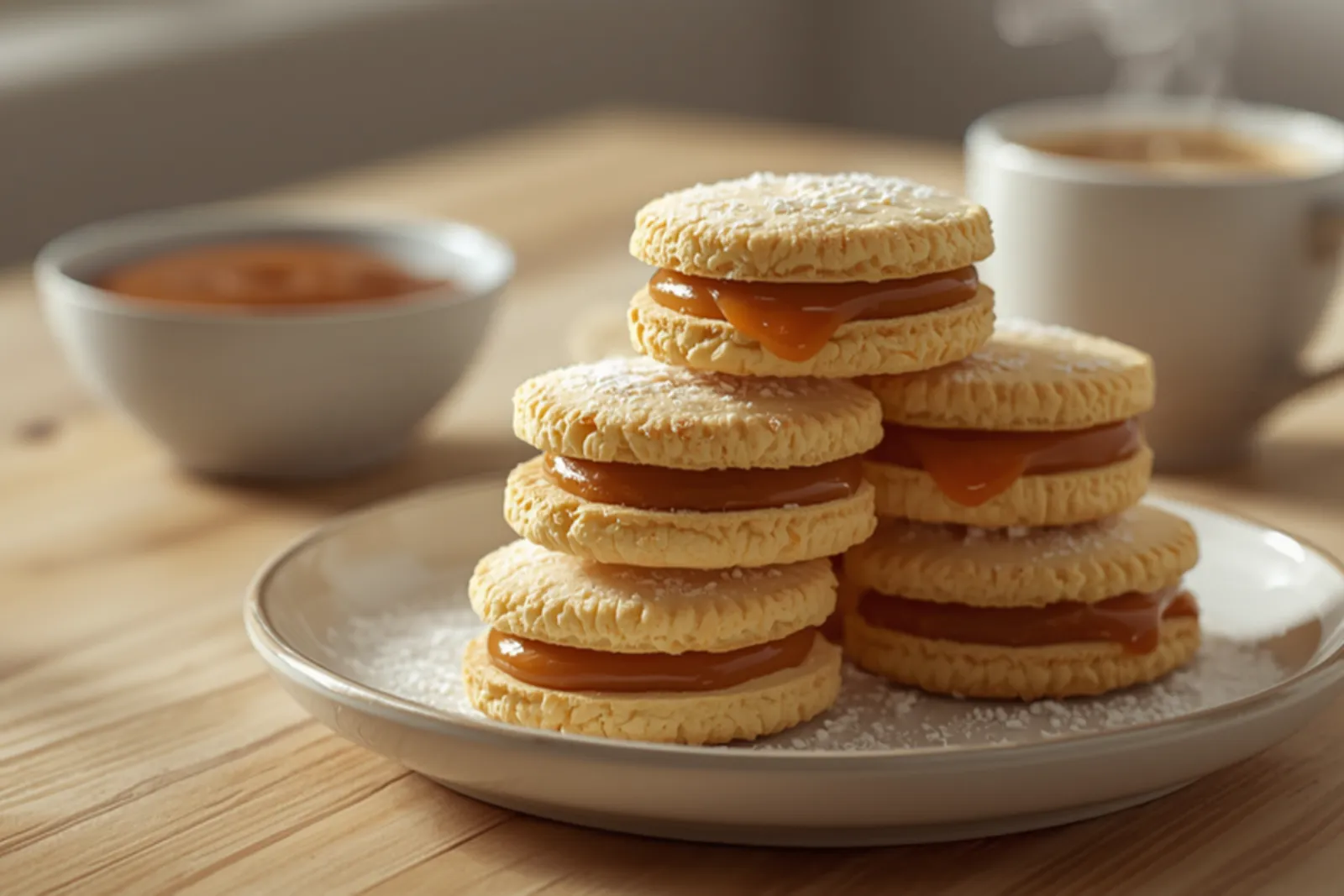
Two impossibly tender, cornstarch-rich shortbread rounds sandwiched with thick dulce de leche and rolled in coconut — the crumbly, melt-on-the-tongue cookie of Argentina, Uruguay and the wider Río de la Plata.
Published September 30, 2026
Cultural context
The alfajor is a Spanish word with Arabic roots — from al-fakhir, roughly 'the luxurious' — and the name first belonged to spiced honey-and-almond sweets of medieval al-Andalus, still made today around Medina-Sidonia in Spain. Carried to the Americas in the colonial period, the idea of a filled sweet took different shapes in different places. The cornstarch sandwich cookie sold as alfajor de maicena is the classic of the Río de la Plata: pale, crumbly discs held together with dulce de leche, coconut on the rim. Argentina eats them by the millions every day; Peru, Chile and Uruguay each have close cousins with their own names for the filling, and none of them owns the dish outright.
Alfajores de maicena are the cookie you find at every Buenos Aires kiosk, bakery counter and grandmother’s tin: two pale, crumbly rounds of cornstarch shortbread held together by a thick layer of dulce de leche, the edge rolled in coconut. They belong to the whole Río de la Plata — Argentina and Uruguay above all — and are part of a broader Latin American family of filled sweets that share a name and a history reaching back to medieval Spain.
A word with Arabic roots
The name alfajor comes from Arabic, and the sweet originally meant something very different: a dense honey-and-almond confection of Moorish Spain that is still made around Medina-Sidonia. Spanish colonists carried the idea to the Americas, where it split into local versions. Peru fills its alfajores with manjar blanco; Chile has its own; Argentina’s most famous versions are the chocolate-coated commercial alfajor and this one, the alfajor de maicena. It is worth saying plainly that no single country invented the alfajor — the version here is simply the one the Río de la Plata perfected.
The cornstarch is the whole point
Most cookies are built on wheat flour, which forms gluten and gives chew. These are built on cornstarch, which has none. Replace most of the flour with it and the dough becomes short and sandy: the cookie doesn’t so much crunch as dissolve. A little plain flour stays in the mix purely so you can roll and cut the dough without it breaking apart.
Powdered sugar, egg yolks and butter
Three small decisions do the rest. Powdered sugar dissolves completely, keeping the crumb fine where granulated leaves a slight grain. Egg yolks add richness and a pale golden colour without the toughening whites. And cool, creamed butter provides the fat that coats the starch and makes the dough short. A dash of lemon zest and a splash of brandy or pisco — common in home recipes — brighten the flavour.
Bake them pale
The biggest mistake with alfajores de maicena is baking them until they colour. They should stay blond, with only a faint golden edge underneath. Because the crumb sets with so little browning, a few extra minutes turns a melting cookie into a dry biscuit. Pull them out early and let residual heat finish the job as they cool.
Filling: thick dulce de leche, cooled cookies
Dulce de leche is slow-cooked sweet milk, caramelised to a deep golden brown. For alfajores, use the thick pastry style, sold as repostero, so it holds its shape and does not squeeze out. Always fill completely cooled cookies — a warm disc will melt the filling and slide apart. Press the top cookie down only until the dulce reaches the rim, then roll the edge in desiccated coconut, which seals the sticky band and adds a dry, faintly sweet chew.
Give them a night
Freshly filled alfajores are pleasant; overnight ones are the real thing. Moisture from the dulce de leche slowly softens the cookie, shifting it from crisp-short to a texture that melts on the tongue. Keep them in a sealed tin and serve them the way Argentines do at merienda, the late-afternoon break, with a strong coffee or a gourd of yerba mate.
For more Latin American sweets, try the milk-soaked tres leches cake, or build a fuller Río de la Plata table with chimichurri and empanadas salteñas. There is more on the dishes worth crossing a border for in the world classics guide.
Ingredients
For the cookies
- 150 g (1 1/4 cups) cornstarch (maicena) The soul of the cookie. Cornstarch has no gluten, so it turns the dough sandy and tender instead of chewy. Brands sold as 'corn flour' in the UK are the same thing.
- 100 g (3/4 cup plus 1 tbsp) plain (all-purpose) flour Just enough gluten to let you roll and cut the dough without it collapsing.
- 1 tsp baking powder
- 1/4 tsp baking soda
- 1/2 tsp fine salt
- 115 g (1/2 cup, 1 stick) unsalted butter, soft but cool Cool room temperature — it should hold a fingerprint but not look greasy.
- 75 g (2/3 cup) icing (powdered) sugar Not granulated. Powdered sugar dissolves completely, which keeps the crumb fine.
- 2 large egg yolks Yolks only — they add richness and colour without the toughening protein of the whites.
- 1 tsp vanilla extract
- Finely grated zest of 1/2 lemon lemon zest A common Argentine touch that cuts through the sweetness. Optional.
- 1 tbsp brandy, pisco or cognac Optional. Traditional in many family recipes, it adds a faint perfume and evaporates in the oven.
To fill and finish
- 240 g (about 3/4 cup) dulce de leche, thick (repostero) style Look for 'dulce de leche repostero' or 'pastelero' — the extra-thick pastry type — so it stays put between the cookies. Runny jarred caramel will squeeze out.
- 30 g (1/3 cup) unsweetened desiccated coconut For rolling the edges.
- 2 tbsp icing sugar, for dusting
Method
Tap a step’s number to check it off as you go.
-
Whisk the cornstarch, flour, baking powder, baking soda and salt together in a bowl. Sift them twice if you can.
Why: Cornstarch clumps and the leavening is used in tiny amounts, so it has to be distributed evenly. Sifting also aerates the mix, which helps the finished cookie feel light.
-
Beat the soft butter and icing sugar for 2 to 3 minutes until pale and fluffy. Beat in the egg yolks one at a time, then the vanilla, lemon zest and brandy, if using.
Why: Creaming traps a little air, which is most of the lift in a cookie with so little leavening. Adding the yolks one at a time keeps the fat from splitting.
-
Add the dry ingredients and mix on the lowest speed, or fold by hand, just until a soft dough forms. Pat it into a disc, wrap and refrigerate for 30 minutes.
Why: With so little gluten to work with, overmixing is less of a danger than warmth — but stop as soon as there are no dry patches. Chilling firms the butter so the discs hold their shape and bake up sandy instead of spreading.
-
Heat the oven to 180°C (350°F). Roll the dough between two sheets of baking paper to 5 mm (about 1/4 inch) thick. Cut out 5 cm (2 inch) rounds and arrange them 2 cm apart on lined trays. Re-roll scraps once.
Why: Rolling between paper means no extra flour, which would make the cookies dry. Thickness matters: too thin and they turn hard and brittle, too thick and they never get that delicate crumbly bite.
-
Chill the cut discs on the tray for 10 minutes, then bake for 9 to 11 minutes. They should stay very pale, with only the barest golden tinge on the bottom edge.
Why: These are meant to be blond. A coloured alfajor is a dry one — the tenderness comes from cooking them just past raw dough, so the crumb sets without browning.
-
Cool the discs on the tray for 5 minutes, then move them to a rack and let them cool completely.
Why: They are fragile while hot and firm up as the butter sets. Filling a warm cookie melts the dulce de leche and makes the sandwich slide apart.
-
Spread or pipe about a tablespoon (15 g) of dulce de leche on the flat side of half the discs, leaving a thin rim. Top with a second disc and press gently until the filling reaches the edge.
Why: A generous, thick layer is half the point of the cookie. Pressing only until the filling meets the rim keeps the crumb from cracking.
-
Roll the exposed band of filling in desiccated coconut, then dust the tops lightly with icing sugar.
Why: The coconut is the traditional finish: it seals the sticky edge so the cookies can be stacked and handled, and its dry, faintly sweet chew balances the caramel.
-
Let the finished alfajores rest in an airtight tin for at least 4 hours, ideally overnight, before serving.
Why: The dulce de leche slowly softens the cookie from the inside. After a night the crumb goes from crisp-short to melt-in-the-mouth — this is when they taste like the ones in a Buenos Aires confitería.
A quick, anonymous tap — no review needed.
Variations
- Chocolate-dipped
Melt 200 g of dark or semi-sweet chocolate with a teaspoon of neutral oil and dip the finished, filled cookies halfway or fully. This is the classic supermarket-style alfajor de chocolate; skip the coconut in that case.
- Peruvian-style
Use manjar blanco, Peru's thick milk-based caramel, for the filling, and finish with plain icing sugar rather than coconut. Peruvian recipes often use a higher proportion of flour and a little pisco in the dough.
- Gluten-free
Replace the 100 g of plain flour with a good gluten-free all-purpose blend and add 1/4 teaspoon of xanthan gum if the blend lacks it. The cornstarch base means the result is remarkably close to the original.
- Mini alfajores
Cut the dough with a 3 cm cutter, bake for 7 to 8 minutes and fill with a teaspoon of dulce de leche. Ideal for parties and tea trays.
- Homemade dulce de leche
Simmer a can of sweetened condensed milk, fully submerged, for 2 to 3 hours, topping up the water as needed, then cool completely before opening. It comes out soft; beat in 1 tablespoon of cornstarch off the heat and chill to stiffen it for filling.
Serving & Storage
Serve with strong black coffee, a cortado or mate at merienda — the Argentine late-afternoon snack — or with a cup of tea. Stack them on a plate for a tea table, or wrap a pair in wax paper as a gift. They are equally good as a small dessert with a scoop of vanilla ice cream beside them.
Pairs with: Cortado or black coffee, Yerba mate, Vanilla ice cream, Fresh strawberries, Sweet Torrontés or Moscatel.
Storage: Keep in an airtight tin at room temperature for up to 5 days; in hot, humid weather store them in the fridge and bring to room temperature before eating. Unfilled discs freeze well for 2 months, and finished alfajores freeze for 1 month — thaw in the tin so condensation does not soften the coconut.
Nutrition
Per serving (1 sandwich cookie (about 40 g))
- Calories
- 185
- Protein
- 2 g
- Carbs
- 26 g
- Fat
- 9 g
- Fiber
- 0.5 g
- Sugar
- 13 g
- Sodium
- 100 mg
Notable micronutrients: Calcium, Vitamin A, Riboflavin
Estimated using standard ingredient data. Values vary with brands and substitutions.
Frequently Asked Questions
Why did my alfajores spread or turn hard?
Spreading usually means the butter was too warm or the dough skipped its chill. Hardness usually means the cookies were baked too long, or rolled too thin. Aim for 5 mm and pull them from the oven when the tops are still pale — they firm up as they cool.
Can I use all cornstarch instead of adding flour?
You can, and some Argentine family recipes do, but the dough becomes very fragile and hard to roll. A little plain flour gives just enough structure for cutting and handling without sacrificing tenderness.
What is the best dulce de leche for filling?
A thick, pastry-grade dulce de leche, sold as repostero or pastelero. It holds its shape between the cookies. If you only have a soft, pourable one, simmer it gently in a saucepan for 10 to 15 minutes to reduce, then cool completely.
Do alfajores need to rest before eating?
They are edible right away, but a night in a sealed tin transforms them. The moisture in the dulce de leche migrates into the cookie and softens the crumb into that melting texture.
Are alfajores Argentine or Peruvian?
Both — and Uruguayan, Chilean and Spanish. The word and idea come from Arab-Andalusian sweets brought by Spanish colonists, and each country developed its own version. The cornstarch cookie rolled in coconut is most closely associated with Argentina and Uruguay; Peru's tends to use manjar blanco and powdered sugar.
What to drink with this
All drinks →Hand-picked pours to match this dish. Alcoholic pairings are for adults of legal drinking age (21+ in the US) — please drink responsibly.
Río de la Plata (Argentina, Uruguay, Paraguay, southern Brazil) · Argentine / Uruguayan
Yerba Mate (How to Brew & Share the Gourd)
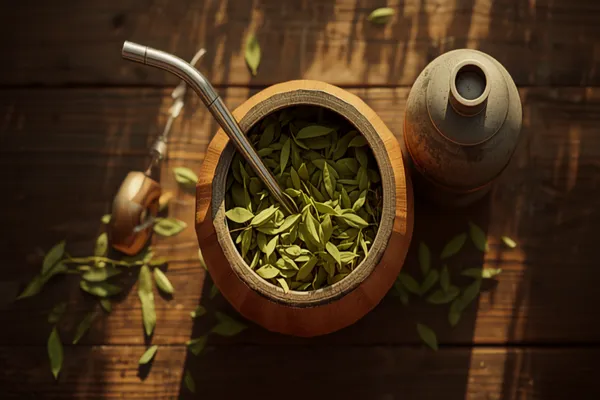
The grassy, caffeinated herbal tea of Argentina, Uruguay and beyond — steeped in a gourd and sipped through a metal straw. More than a drink, it's a daily social ritual. Here's how to set the gourd and brew it without bitterness.
 21+
United States (turn of the 20th century) · American
Dry Martini (Gin, Vermouth & a Cold Glass)
The original cocktail of cocktails — good gin, a measure of dry vermouth, stirred long over ice and served brutally cold. The ratios, the stir, and why a Martini is shaken or stirred for a reason.
 21+
Long Island, New York (Prohibition-era claim) / Tennessee (rival origin) · American
Long Island Iced Tea (Five Spirits, No Tea)
The infamous Long Island Iced Tea, built in balance — five clear spirits, orange liqueur, fresh lemon and just enough cola to fake the colour of tea. Strong by design, but measured, not muddled.
From our kitchen community
Ratings & Reviews
My Rating
Tap a star to rate — no sign-in, no form needed.
My Review
0 Ratings
🥣 0 home cooks made it!
Be the first to rate Alfajores de Maicena (Argentine Dulce de Leche Cornstarch Sandwich Cookies).
Related Recipes
Managua and Nicaragua's Pacific cattle country — with a rival claim from Mexico's Gulf coast · Nicaraguan
Tres Leches Cake (Pastel de Tres Leches)
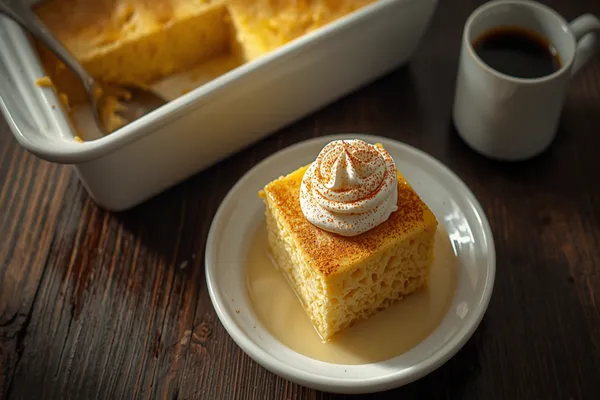
Latin America's great milk-soaked cake: a lean, fatless sponge built on whipped egg whites, flooded overnight with condensed, evaporated and whole milk, and finished with cold cream and cinnamon. Wet through to the last crumb and never soggy.
The Río de la Plata — the pampas of Argentina and the Uruguayan campo · Argentine & Uruguayan
Chimichurri (The Argentine & Uruguayan Herb Sauce for Asado)
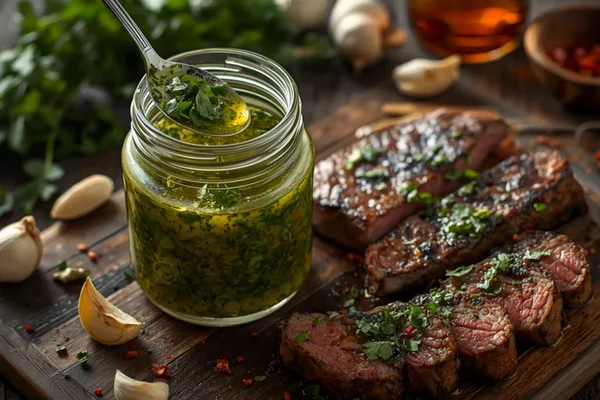
The rough, hand-chopped parsley-and-oregano sauce that sits on every asado table in the Río de la Plata — built on a warm salt brine, sharpened with red wine vinegar, and deliberately left to separate rather than emulsified into a paste.
Salta, in the Andean north-west of Argentina — the high valleys around the capital and the Calchaquí wine country · Argentine
Empanadas Salteñas (Salta-Style Argentine Beef Empanadas)
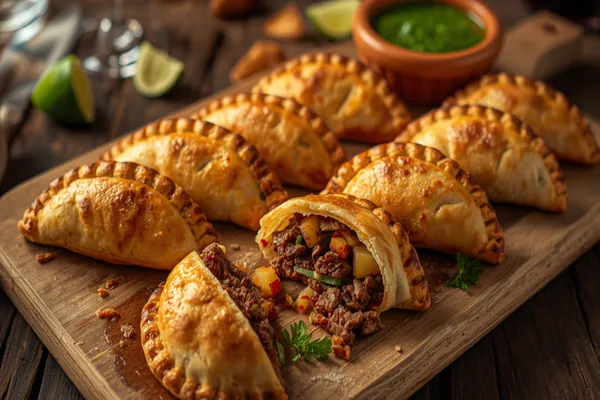
The empanada Argentina argues about and Salta gets right — hand-chopped beef, soft potato and spring onion bound in cumin-red beef fat, sealed in a thin tallow pastry that bakes juicy enough to eat leaning forward.
Río de la Plata (Argentina, Uruguay, Paraguay, southern Brazil) · Argentine / Uruguayan
Yerba Mate (How to Brew & Share the Gourd)
The grassy, caffeinated herbal tea of Argentina, Uruguay and beyond — steeped in a gourd and sipped through a metal straw. More than a drink, it's a daily social ritual. Here's how to set the gourd and brew it without bitterness.
Belém, Lisbon — the Jerónimos Monastery quarter on the Tagus, within Portugal's wider convent-sweet tradition · Portuguese
Pastéis de Nata (Portuguese Custard Tarts)
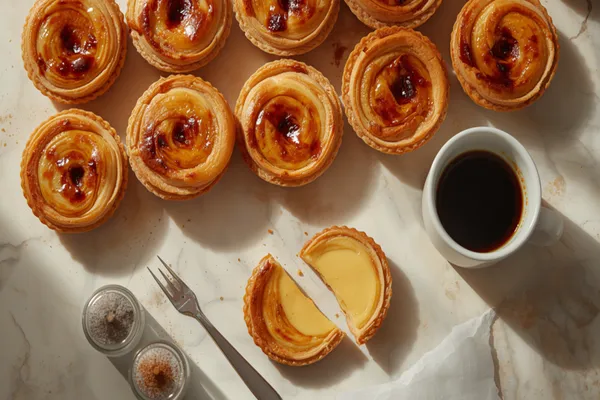
Lisbon's blistered custard tart — a spiral-rolled puff shell that shatters like glass, a flour-set egg-yolk custard scented with lemon peel and cinnamon rather than vanilla, and an oven turned as hot as it will go so the top scorches into dark, bitter-sweet freckles.