Hausaland — northern Nigeria (Kano, Zaria, Sokoto) and across the Sahel into Niger, Chad and northern Cameroon · Nigerian
Suya (Tsire) — Hausa Grilled Beef Skewers with Yaji
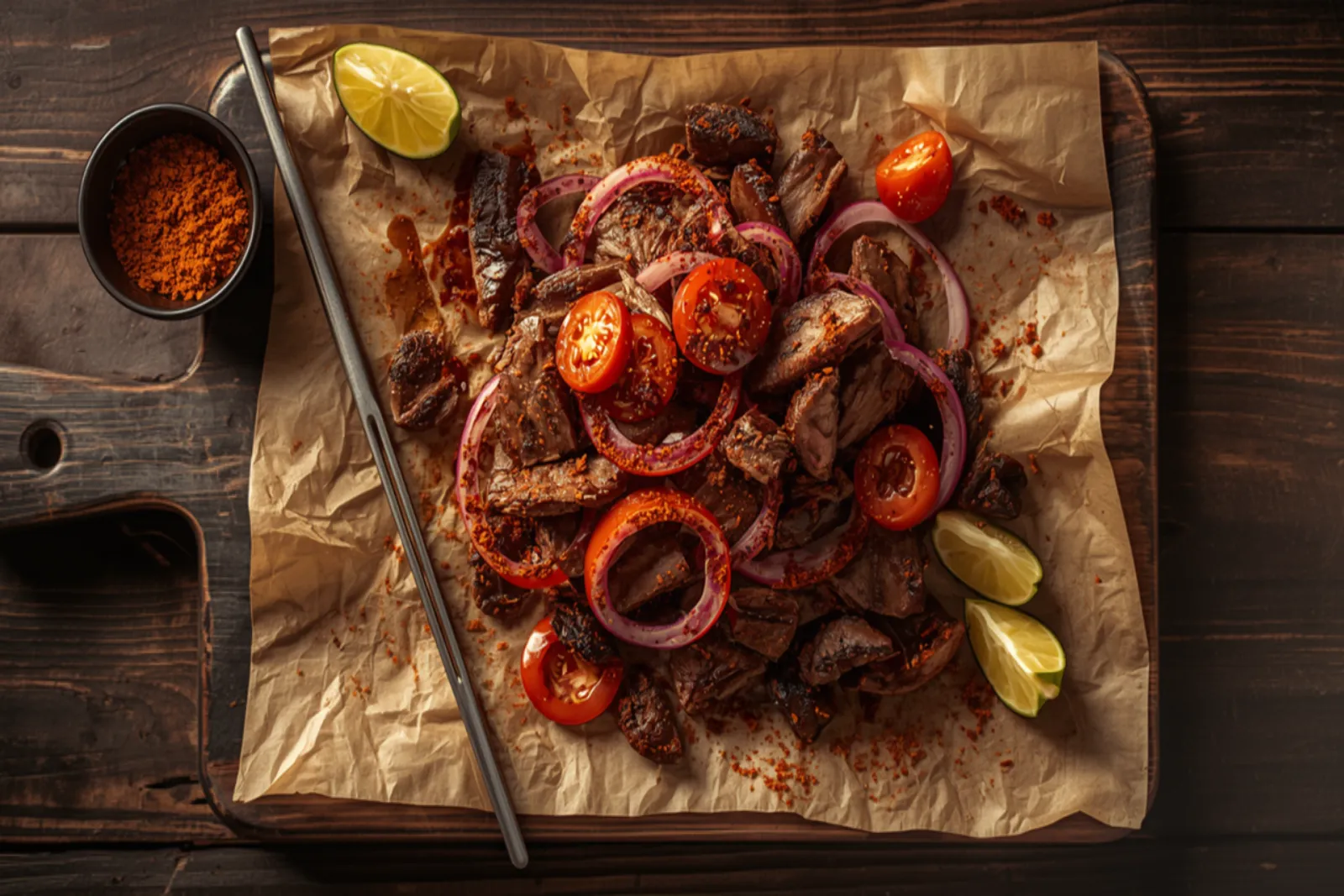
Nigeria's great night-time street food: beef sliced paper-thin, oiled, buried twice in a dry peanut-and-chilli rub, and grilled fast over charcoal. The secret is that yaji is a dry rub, not a marinade — and that the peanut in it has had its oil pressed out.
Published August 25, 2026
Cultural context
Suya is Hausa food, and Hausa speakers still call it tsire — 'suya' spread outward because it is what the sellers shouted at the roadside. It belongs to the cattle-herding Sahel more than to any one border: the same skewers are grilled in Niger, Chad, northern Cameroon and, as kyinkyinga or chichinga, in Ghana. Within Nigeria it long ago crossed every regional line and is cooked and eaten nationwide, usually after dark, which is why writers keep calling it a unifying dish. The men who make it — mai suya, 'the suya man' — are a trade in themselves, and the spice mix has no fixed recipe.
Suya is what northern Nigeria smells like after dark. Beef sliced almost to translucency, rubbed in a rust-red powder of ground peanut and chilli, threaded onto flat skewers and grilled hard over charcoal until the edges blacken — then chopped onto paper, buried under raw onion, and dusted a second time with the same spice while it’s still hot enough to bloom. The spice is called yaji, the dish is called tsire by the people who invented it, and the man selling it is the mai suya.
Hausaland, and a dish that outgrew its region
Suya belongs to the Hausa, whose homeland runs across what is now northern Nigeria and southern Niger and whose cattle-herding, long-distance-trading culture is stamped all over the dish: lean meat, cut thin so it cooks fast, preserved and flavoured with a dry spice that travels. The Hausa name is tsire. “Suya” was the sellers’ cry — roughly, the grilling itself — and it stuck for everyone who wasn’t Hausa, which by now is most of the customers.
That spread is worth being precise about. The same skewers are grilled in Niger, Chad and northern Cameroon, and Ghana has a very close cousin in kyinkyinga. Inside Nigeria, suya crossed every regional and religious line generations ago; you’ll find it in Lagos, Enugu and Port Harcourt with local arguments about whose is best. It’s fair to call it a Nigerian national dish. It isn’t fair to call it a Nigerian invention and leave the Sahel out of it.
The whole recipe turns on defatted peanut
Authentic yaji is built on kuli-kuli — peanuts roasted, ground to a paste, and then physically pressed until the groundnut oil runs out, leaving a dry cake that gets fried into hard sticks and eaten as a snack in its own right. Crushed back to powder, that de-oiled peanut is the backbone of the rub.
This is not a fussy detail; it’s the mechanism. Dry peanut solids are starch and protein, and on a hot grate they toast and set into a crust. Peanut fat does the opposite — it loosens as the meat warms, slides off, hits the coals, flares, and comes back up as bitter smoke. Every home suya that tastes vaguely of burnt satay failed at exactly this point. If kuli-kuli isn’t available, unsweetened defatted peanut flour does the job, or you can press the oil out of your own ground peanuts between layers of kitchen paper in about ten minutes.
The rest of the blend is chilli — properly a lot of it — plus ginger, onion, garlic, a restrained hit of clove, and, if you can get them, the West African aromatics uda, uziza and ehuru. There is no fixed formula. Every mai suya has his own, and none of them will tell you it.
Dry rub, not marinade — and dust it twice
Two techniques separate real suya from spiced kebabs.
The first: there is no liquid in this recipe. No vinegar, no citrus, no yoghurt, no water. The meat is tossed in oil purely so the powder has something to stick to, and then it is coated dry. A wet marinade dissolves the spice into a sauce, and sauced meat steams on a grill instead of searing. Everything about the technique is engineered toward a crust.
The second: the second dusting. When the skewers come off the fire, fresh yaji goes on immediately, onto meat that is hot and slick with its own fat. The rub that grilled has toasted — good, but muted. Raw spice on hot oil blooms instantly, and that release of ginger and clove and chilli is the smell people actually mean when they say they can find a suya stand by nose. Skip it and you’ve made a decent skewer; do it and you’ve made suya.
Slice thin, grill hot, eat standing up
Everything else is about heat and geometry. Firm the beef in the freezer so you can genuinely cut 3 mm sheets, cut across the grain so the fibres are short, ruffle the slices onto the skewer rather than stretching them flat so there are edges to char, and use a fire hot enough that two or three minutes a side is all it takes. Then chop it, pile the raw onion on, and eat it with your fingers — because that sharp, cold onion against hot chilli-heavy beef is the balance the whole dish was designed around.
For where the Hausa fire ends up further west, try Nigeria’s jollof rice or Senegal’s thieboudienne — and there’s more on dishes worth travelling for in the world classics guide.
Ingredients
For the yaji (suya spice)
- 150 g (about 1 cup) roasted unsalted peanuts, skins rubbed off — or 100 g kuli-kuli, or 100 g defatted peanut flour Kuli-kuli is the authentic form: peanut paste with the oil pressed out, then fried into hard sticks. If you can buy it, crush it and skip the de-oiling below. Unsweetened defatted peanut flour (sold as 'peanut powder') is the easiest supermarket stand-in. Plain peanut butter is the one thing that will not work.
- 2–3 tbsp cayenne or ground dried African bird's-eye chilli Real yaji is properly hot. Start at 2 tbsp; a mai suya would use more.
- 1 tbsp sweet paprika Not traditional in the north, but it buys the deep red colour without adding heat, which is how most home cooks dial the chilli down.
- 1 tbsp ground ginger
- 2 tsp onion powder
- 2 tsp garlic powder
- 1/2 tsp ground cloves Small amount, big effect — cloves are what make yaji smell like yaji and not like chilli powder. Do not scale this one up.
- 4 pods uda (grains of Selim / Negro pepper), toasted and ground — optional Smoky, resinous, faintly medicinal. Along with uziza (Guinea cubeb) and ehuru (calabash nutmeg) it is what separates a West African blend from a generic peanut rub. Find them at an African grocer or online; the recipe is still good without.
- 1 seasoning cube (Maggi or Knorr), crumbled — optional Near-universal in Nigerian kitchens. If you use it, halve the salt.
- 1 1/2 tsp fine sea salt
For the meat
- 700 g beef sirloin, flank or skirt, in one piece You want a lean, evenly grained cut you can slice very thin. Sirloin is the forgiving choice; flank and skirt have more flavour but must be cut across the grain or they eat like rope. Boneless lamb leg, goat, chicken thigh, beef liver or kidney are all traditional alternatives.
- 3 tbsp groundnut (peanut) oil, plus more for basting Groundnut oil is the West African cooking fat and it echoes the rub. Any neutral high-smoke-point oil works.
To serve
- 1 large red onion, sliced into thin rings
- 2 firm tomatoes, sliced
- 1 lime or lemon, in wedges
- 1 small bunch fresh cabbage, finely shredded — optional Common in southern Nigerian suya spots, less so in the north.
Equipment
- 12 flat metal or soaked bamboo skewers Flat skewers stop thin slices spinning when you turn them. Soak bamboo for 30 minutes.
Method
Tap a step’s number to check it off as you go.
-
If you're starting from whole roasted peanuts, grind them in a spice grinder to a coarse meal — stop before it turns to butter. Tip the meal onto a triple layer of kitchen paper, fold it over, and press hard with a heavy pan or rolling pin for 10–15 minutes, changing the paper once. You want a dry, crumbly powder, not a paste.
Why: This is the single step that decides whether your suya tastes like the real thing. Kuli-kuli is *defatted* peanut, and the reason matters: peanut oil dripping onto hot coals flares and coats the meat in acrid smoke, while the dry, starchy peanut solids instead form a crust that toasts. A rub made with full-fat nut butter slides off and burns.
-
Blitz or stir the de-oiled peanut powder with the cayenne, paprika, ginger, onion and garlic powder, cloves, ground uda if using, crumbled seasoning cube and salt. Store in a sealed jar.
Why: Made ahead, yaji keeps its punch for about three months — the ground peanut is what goes stale first, which is another argument for pressing the oil out.
-
Freeze the beef, uncovered, for 30–45 minutes, until firm at the edges but not frozen solid.
Why: Suya is defined by thinness. A firm piece of beef can be cut to 3 mm; a soft one squashes under the blade and you end up with steak chunks, which cook completely differently.
-
Working across the grain and holding the knife at about 45 degrees, slice the beef into wide sheets 3 mm thick. Lay each slice between cling film and give it a few light taps with a rolling pin or the flat of a cleaver.
Why: Two things at once. Cutting across the grain shortens the muscle fibres so a fast-grilled slice is tender rather than chewy, and the light pounding both flattens the slice further and creates the rough surface the dry rub can grip.
-
Toss the slices with the 3 tbsp of oil until every piece is glossy. Then add about two-thirds of the yaji and massage it in, one handful of meat at a time, so every slice is coated on both sides. Cover and refrigerate for 1 hour (up to 8).
Why: Oil first, spice second — deliberately. The oil is the adhesive: powdered rub has nothing to cling to on a dry, cold surface and simply falls off on the grill. Note that there is no water, no vinegar and no lemon juice anywhere here. Suya is a dry rub, not a wet marinade; liquid would dissolve the crust you are trying to build and stew the meat instead of searing it.
-
Thread the slices onto skewers in loose S-folds — pierced two or three times each, gathered rather than stretched flat — leaving a little space between pieces. Let them sit at room temperature for 30 minutes while the grill heats.
Why: Ruffled meat gives you edges, and edges are where the crust and the char happen. Packing the skewer tight makes the slices steam each other. Room-temperature meat also sears instead of shocking cold onto the grate and sticking.
-
Get a charcoal grill hot enough that you can hold your hand 10 cm above the grate for only 2–3 seconds — or set a gas grill or a ridged cast-iron pan to high, and an oven grill to its top setting with the shelf close underneath.
Why: Thin meat needs a very hot, very short cook. Anything moderate dries the slices to jerky long before they colour. Charcoal is genuinely better here: the smoke is part of the flavour, which is why suya is grilled and not fried.
-
Grill the skewers for 2–3 minutes a side, basting once with a little oil, until the edges are charred and the crust is dark. Do not cook them beyond just-done.
Why: At 3 mm, beef goes from rare to overcooked in under a minute. Colour, not time, is your gauge — pull them when the spice crust looks nearly-burnt at the tips and the meat still gives slightly.
-
Off the heat, immediately dust the hot skewers generously with the reserved third of the yaji and press it on lightly with the back of a spoon. Rest 2 minutes.
Why: This second dusting is the mai suya's signature and it is not optional. The rub that went on before grilling has toasted and lost its top notes; raw yaji hitting hot, oily meat blooms instantly — the ginger and cloves come back, the chilli sharpens, and you get the smell that carries down a Nigerian street at nine at night.
-
Slide the meat off the skewers onto a board, chop into bite-size pieces, pile it into paper or onto a platter, and heap raw onion rings and tomato over the top. Serve with lime wedges and a small bowl of extra yaji for dipping.
Why: Raw sharp onion against hot, fatty, chilli-heavy meat is the balance the dish is built on — it's a cooling agent and an acid at once, and it's why suya is almost never served without it.
A quick, anonymous tap — no review needed.
Variations
- Chicken suya
Boneless thigh, sliced 5 mm rather than 3 mm because it is more forgiving, and grilled 3–4 minutes a side. Extremely common at Nigerian suya spots and the usual gateway for people who find beef suya too chewy.
- Ram, goat or offal
Goat and ram are the northern default where the herds are, and both take the yaji beautifully. Liver, kidney and tripe skewers sit on the same grill at any serious suya stand — slice liver thicker, at about 1 cm, and pull it while still faintly pink or it turns to chalk.
- Suya prawns
Toss large peeled prawns in oil and yaji, thread three or four to a skewer, and grill 90 seconds a side. The peanut rub is startlingly good on shellfish.
- Kilishi (the dried version)
The Hausa relative of suya and, arguably, the more remarkable dish: paper-thin beef is sun-dried, soaked in a thick yaji-and-peanut slurry, dried again and briefly toasted. It keeps for weeks. A dehydrator gets you surprisingly close.
- Balangu
Also Hausa, and the counter-argument to yaji: fatty meat grilled over the fire with nothing but salt, then chopped and served with the spice on the side. Worth knowing that suya's spice crust is a choice, not the only northern way.
- Meat-free
Firm tofu pressed dry, thick king oyster mushroom slices, or halved sweet potatoes all take the rub well — press the tofu hard, because the same rule applies: wet surfaces won't hold a dry crust.
Serving & Storage
Serve it the way it is sold — chopped straight off the skewer onto paper or a wooden board, buried under raw onion rings and tomato, with lime and an extra saucer of yaji on the side. In Hausa homes it goes with masa, the small fermented rice cakes; further south you'll get it with sliced cabbage, fried plantain or simply a cold bottle of something. It is evening food, meant for standing up and eating with your fingers.
Pairs with: Chapman (Nigerian citrus cooler), Fried plantain (dodo), Zobo / bissap hibiscus cooler, Cold lager, Jollof rice, Masa (Hausa rice cakes).
Storage: Suya is at its best within minutes of the second dusting and does not really keep — the crust softens. If you must, refrigerate up to 2 days and revive it in a very hot dry pan for 60 seconds a side, then re-dust with fresh yaji. The uncooked spiced meat holds 24 hours in the fridge or 1 month frozen, and freezing it already skewered is a genuinely good idea. The yaji itself keeps 3 months in a sealed jar away from light.
Nutrition
Per serving (3 skewers with onion and tomato)
- Calories
- 385
- Protein
- 38 g
- Carbs
- 9 g
- Fat
- 22 g
- Fiber
- 3 g
- Sugar
- 3 g
- Sodium
- 780 mg
Notable micronutrients: Iron, Zinc, Vitamin B12, Niacin, Selenium
Estimated using standard ingredient data. Values vary with brands and substitutions.
Frequently Asked Questions
Can I use peanut butter instead of kuli-kuli?
No — and this is the mistake that ruins most home suya. Kuli-kuli is peanut with the oil pressed *out*; peanut butter is peanut with the oil left in and often sugar and salt added. The dry, starchy peanut solids are what form a toasted crust on the grill. Fat-heavy peanut butter loosens as it warms, slides off the meat, drips into the coals and comes back as acrid smoke. If you can't find kuli-kuli, buy unsweetened defatted peanut flour, or press the oil out of ground roasted peanuts yourself between layers of kitchen paper — it takes ten minutes and it works.
Is suya Nigerian, or does it belong to the wider Sahel?
Both things are true and neither cancels the other. It originates with the Hausa, whose homeland straddles the modern border between northern Nigeria and Niger and whose traders and herders carried it across Chad, northern Cameroon and into Ghana, where a close relative is sold as kyinkyinga or chichinga. Within Nigeria it has been national food for generations, sold in every state and claimed proudly as Nigerian. The honest framing is that it is a Hausa dish that Nigeria made famous, not a dish invented at a border post.
Why is my suya tough?
Almost always one of three things: the slices were too thick, they were cut with the grain instead of across it, or the grill wasn't hot enough so the meat dried out before it charred. Firm the beef in the freezer first so you can genuinely get to 3 mm, look at which way the fibres run and cut perpendicular to them, and don't put anything on a grill you can still hold your hand over comfortably. Cut and heat matter far more than the cut of beef you buy.
Do I have to use a charcoal grill?
You'll get very good suya from a ridged cast-iron pan or an oven grill with the shelf pushed close to the element — the crust and the second dusting do most of the work. What you lose is the wood smoke, which is a real part of the flavour at a roadside stand. A pinch of smoked paprika or a few drops of liquid smoke in the rub closes some of that gap, though no Hausa cook would recognise either.
What are uda, uziza and ehuru, and can I skip them?
They are the West African aromatics that give yaji its particular character: uda (grains of Selim) is smoky and resinous, uziza (Guinea cubeb) is peppery with a bitter edge, and ehuru (calabash nutmeg) is warmer and earthier than the nutmeg you know. Toast the pods briefly before grinding. You can skip them and still make something you'll be glad of — but if there's an African grocer near you, they are cheap, they last, and they are the difference between an approximation and the thing itself.
How hot should yaji actually be?
Hotter than most non-Nigerian palates expect. A mai suya's mix is chilli-forward and the extra bowl on the side is for people who want *more*. The recipe here starts at a manageable 2 tablespoons of cayenne with paprika carrying the colour; if you want the roadside version, take it to 4 tablespoons and drop the paprika. Heat is easier to add at the table than to remove, which is exactly why the extra saucer exists.
What to drink with this
All drinks →Hand-picked pours to match this dish.

North & West India (peak-summer drink across the subcontinent) · Indian
Aam Panna (Raw Green Mango Summer Cooler)
India's tangy, jade-green raw-mango cooler — roasted or boiled green mangoes blended with cumin, black salt and mint. The traditional heat-stroke remedy that tastes like summer.

Mexico (agua fresca tradition) · Mexican
Agua de Jamaica (Hibiscus Iced Tea)
Mexico's ruby-red hibiscus cooler: dried jamaica flowers steeped, sweetened and chilled into a tart, refreshing agua fresca. The right steep, how to control the tartness, and why it's so good for you.
Pan-Indian (North & West India) · Indian
Badam Milk (Saffron Almond Milk)
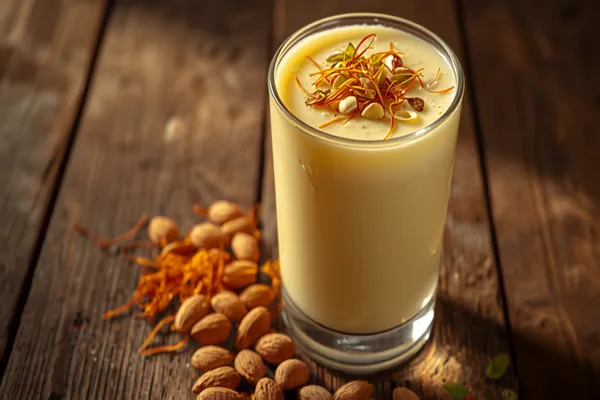
Milk simmered with a paste of soaked almonds, saffron, cardamom and a whisper of nutmeg — India's rich, fragrant almond drink. Comforting served warm in winter, reviving served chilled in summer, festive any time.
From our kitchen community
Ratings & Reviews
My Rating
Tap a star to rate — no sign-in, no form needed.
My Review
0 Ratings
🥣 0 home cooks made it!
Be the first to rate Suya (Tsire) — Hausa Grilled Beef Skewers with Yaji.
Related Recipes
Lagos and south-western Nigeria — part of the wider West African jollof belt · Nigerian
Jollof Rice (Nigerian Party Style)
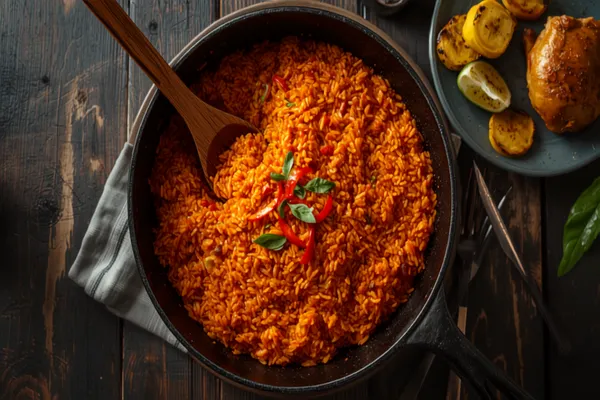
West Africa's great one-pot rice, cooked the Lagos party way: a long-fried pepper-and-tomato base, parboiled long-grain rice steamed until every grain is stained red, and a deliberately toasted bottom pot for that smoky finish.
Saint-Louis and the Atlantic coast of Senegal — now cooked nationwide, from Dakar to the Casamance · Senegalese
Thieboudienne (Ceebu Jën) — Senegalese Fish and Broken Rice
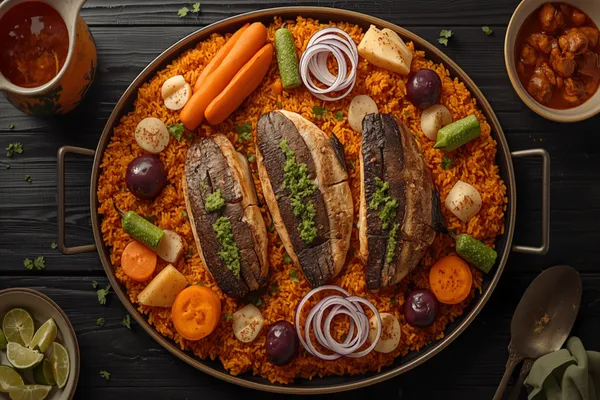
Senegal's national dish and UNESCO-listed culinary art: whole fish stuffed with a pounded parsley-and-garlic rof, fried, then simmered with cassava, cabbage and carrot in a long-fried tomato base — and broken rice steamed in that broth until every grain drinks it up.
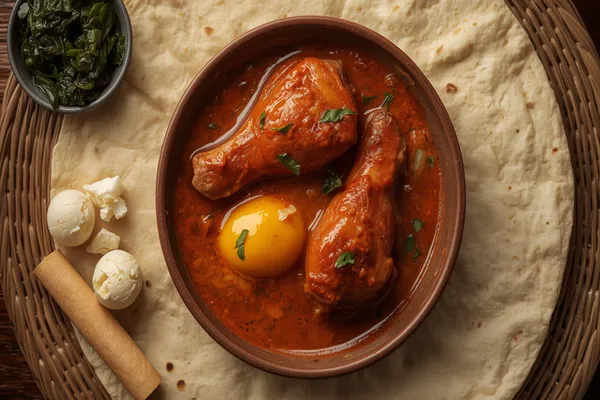
The Ethiopian highlands — Amhara and Addis Ababa, shared across the Horn of Africa · Ethiopian
Doro Wat (Ethiopian Spiced Chicken Stew)
Ethiopia's feast-day chicken stew, built the slow way: a kilo of onions dry-cooked to a purée before any fat touches the pan, berbere and spiced butter bloomed into them, and chicken and whole eggs simmered until the sauce turns mahogany.
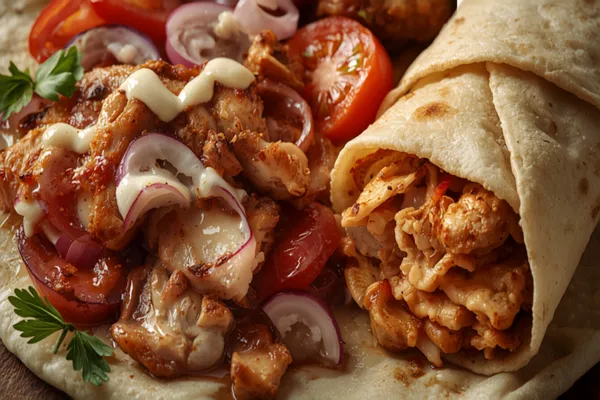
The Levant (Lebanon, Syria, Palestine) · Lebanese
Chicken Shawarma (Levantine Spiced Roast Chicken)
Home-style chicken shawarma: thigh meat marinated in yogurt, garlic and a warm Levantine spice blend, roasted until charred and juicy, then sliced and wrapped in flatbread with garlic sauce, pickles and tomato.
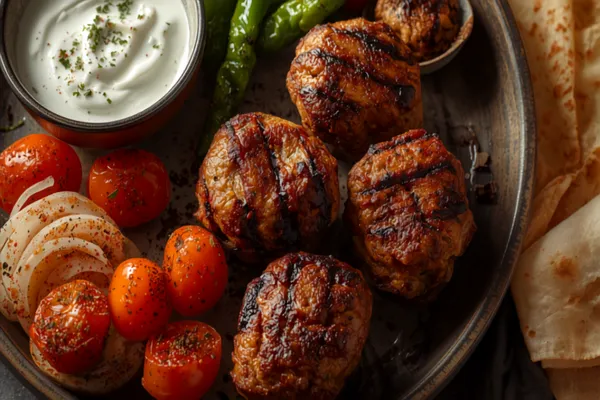
Turkey (pan-Turkish) · Turkish
Turkish Köfte (Spiced Grilled Meatballs)
Turkey's everyday favourite: ground meat kneaded with onion, garlic and cumin, shaped into little ovals and grilled or pan-fried until charred outside and juicy within. Served with flatbread, grilled peppers and a cooling salad.
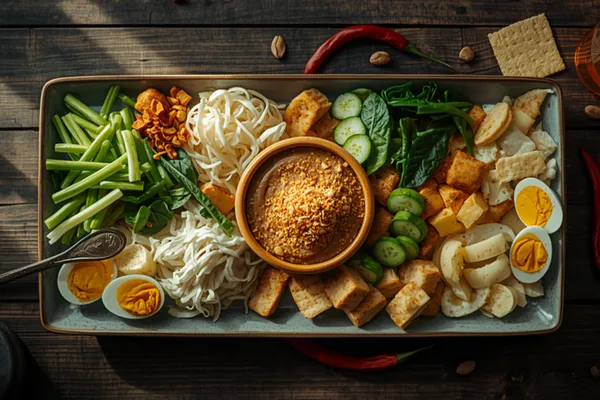
Java — the Sundanese west and Betawi Jakarta, where the dish took its familiar form · Indonesian
Gado-Gado (Indonesian Vegetable Plate with Bumbu Kacang)
Indonesia's national salad: blanched cabbage, long beans, bean sprouts and water spinach with potato, fried tofu and tempeh, boiled egg and lontong, under a ground sauce of fried peanuts, palm sugar, tamarind and chilli.

Portland parish, Jamaica — the Blue Mountain and John Crow interior of the Windward Maroons, and the roadside pits of Boston Bay · Jamaican
Jamaican Jerk Chicken — Pimento Smoke, Scotch Bonnet and the Maroons' Fire
Real jerk is not a sauce you brush on at the end. It is a wet pimento-and-Scotch-bonnet paste worked into slashes cut to the bone, then smoke-roasted slowly over allspice wood until the skin blisters black. Here is how to get genuinely close on a home grill — and why low heat, not high, is the whole trick.

The Mozambican coast and the Zambezi delta — Maputo, Quelimane and Ilha de Moçambique — with a parallel life in Angola, in South Africa, and in the churrasqueiras of Portugal's Algarve · Mozambican
Peri-Peri Chicken — Frango Piri-Piri, the Chilli That Sailed Both Ways
A butterflied chicken lacquered in African bird's eye chilli, garlic, lemon and paprika, grilled over coals and basted until the skin is scarlet and blistered. The dish belongs to Mozambique, Angola, Portugal and South Africa at once — here is the version they'd all recognise, and why the baste matters more than the marinade.

Northern Ghana — Dagbon and the Hausa zongo quarters, now sold at every roadside in Accra and Kumasi · Ghanaian
Waakye (Ghanaian Rice and Beans with Sorghum Leaves)
Ghana's great breakfast: long-grain rice and black-eyed peas simmered with dried red sorghum leaf sheaths until every grain turns burgundy, then loaded with shito, gari, talia and a boiled egg the way the roadside sellers of Accra do it.

Casamance, southern Senegal — the Jola country below the Gambia river, and across the borders into the Gambia and Guinea-Bissau · Senegalese & Gambian
Chicken Yassa (Poulet Yassa) — Casamance's Lemon and Onion Braise
More onion than chicken, by weight — that is not a mistake, it is the recipe. Casamance's poulet yassa marinates chicken overnight in lemon, mustard and a mountain of sliced onions, chars it over fire, then braises it back down into a jammy, sour-sweet sauce.
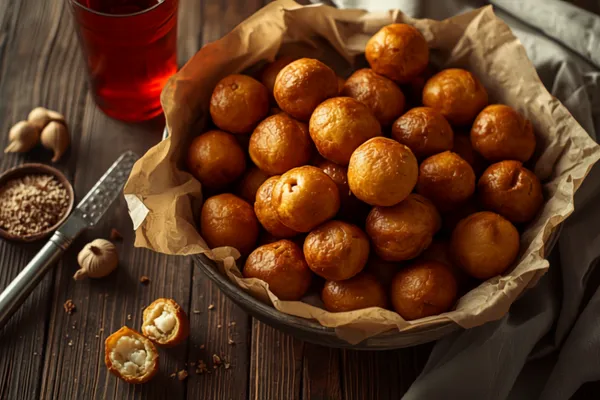
Lagos and southern Nigeria — and, under a dozen other names, from Ghana and Togo through Cameroon to the Congo basin · Nigerian & West African
Puff Puff — West Africa's Yeasted, Nutmeg-Scented Fried Dough
Not a doughnut and not a fritter: puff puff is a wet, live, nutmeg-scented yeast batter squeezed from a fist straight into hot oil, where it blows up into a lacquered golden sphere with a stretchy, honeycombed inside. Nigeria's party snack, and West Africa's under a dozen other names.
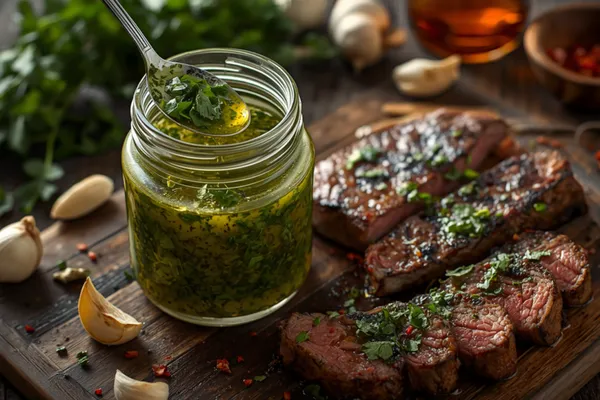
The Río de la Plata — the pampas of Argentina and the Uruguayan campo · Argentine & Uruguayan
Chimichurri (The Argentine & Uruguayan Herb Sauce for Asado)
The rough, hand-chopped parsley-and-oregano sauce that sits on every asado table in the Río de la Plata — built on a warm salt brine, sharpened with red wine vinegar, and deliberately left to separate rather than emulsified into a paste.
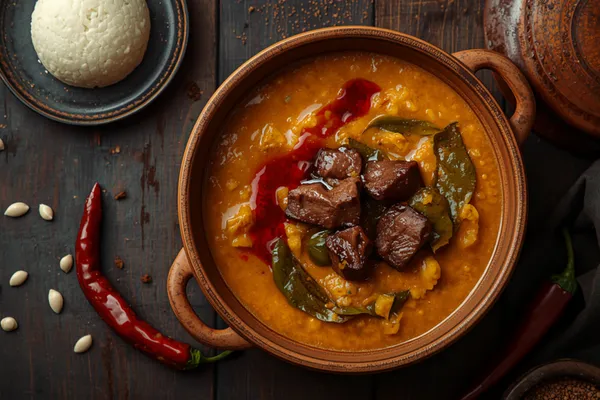
Southern Nigeria — Yorubaland in the south-west and Igboland in the south-east — and, under other names, across Ghana, Benin, Togo, Cameroon and the Congo basin · Nigerian & West African
Egusi Soup — Nigeria's Melon-Seed Stew, Fried in Red Palm Oil
Ground melon seeds fried in red palm oil until they break into soft golden curds, then simmered with stockfish, crayfish and fermented locust bean into the thick, savoury, oil-slicked stew that anchors the Nigerian table. Eaten with your hands, with pounded yam or eba.
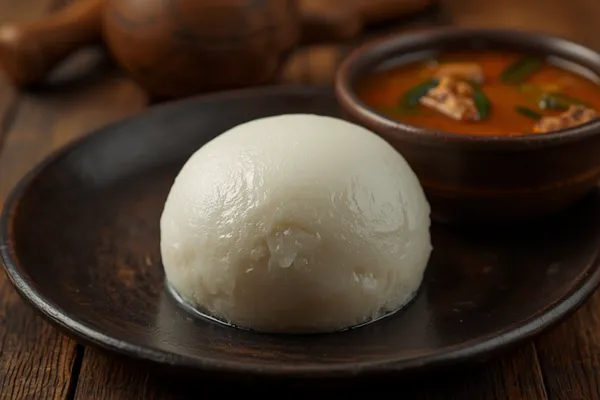
Ghana, among the Akan peoples of the Ashanti, Akuapem, Akyem, Bono and Fante — and, under other names, throughout Nigeria, Ivory Coast, Sierra Leone, Cameroon, Angola and the Congo basin · Ghanaian & West African
Fufu — West Africa's Pounded Cassava & Plantain Swallow
Boiled cassava and green plantain pounded in a mortar until every lump disappears, into the smooth, stretchy dough West and Central Africa tears off by hand and dips into soup. No pineapple, no shortcuts — just the technique that makes fufu fufu.
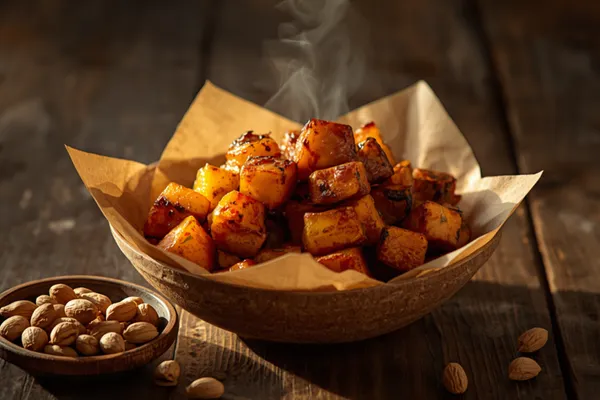
Ghana — the evening street stalls of Accra, Kumasi and Cape Coast, with fried-plantain cousins across Nigeria (dodo), Ivory Coast (aloco) and the wider West African coast · Ghanaian & West African
Kelewele (Ghanaian Spiced Fried Plantain)
Ghana's best-loved street snack: ripe plantain cubes tossed in fresh ginger, hot pepper, onion and warm spices, then fried until caramelized at the edges and soft as custard inside. Sweet, fiery and impossible to stop eating.