Southern Nigeria — Yorubaland in the south-west and Igboland in the south-east — and, under other names, across Ghana, Benin, Togo, Cameroon and the Congo basin · Nigerian & West African
Egusi Soup — Nigeria's Melon-Seed Stew, Fried in Red Palm Oil
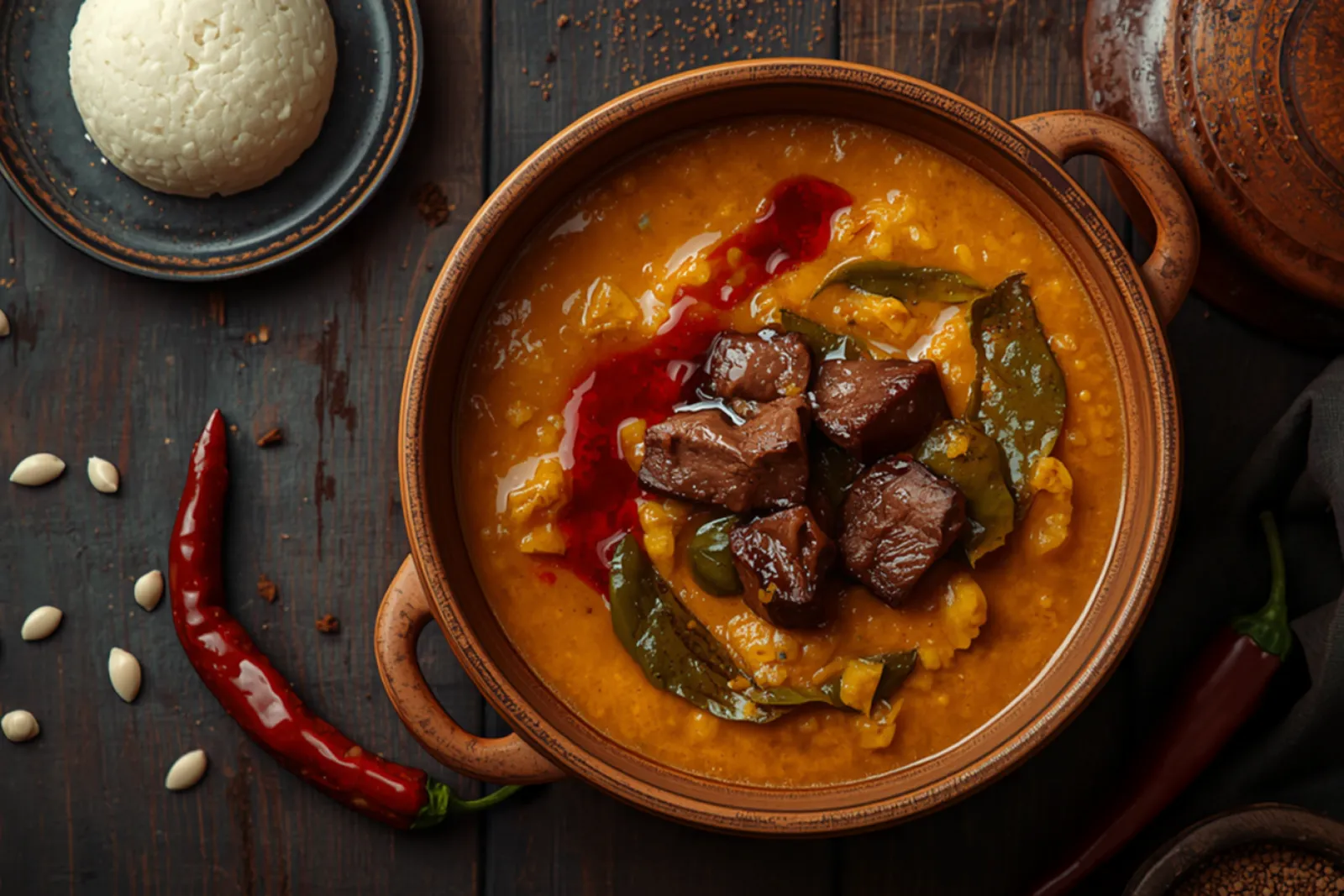
Ground melon seeds fried in red palm oil until they break into soft golden curds, then simmered with stockfish, crayfish and fermented locust bean into the thick, savoury, oil-slicked stew that anchors the Nigerian table. Eaten with your hands, with pounded yam or eba.
Published September 19, 2026
Cultural context
The word *egusi* is Yoruba, and it names the seed rather than the dish: the fat- and protein-rich kernels of a West African seed-melon (chiefly *Citrullus mucosospermus*, sometimes the paler *Cucumeropsis mannii*), a crop domesticated in this part of the continent and carried in West African pots for thousands of years. The soup built from it is called *ofe egusi* in Igbo, *efo elegusi* in Yoruba and *miyan gushi* in Hausa, and the same seed thickens stews as *agushi* in Ghana, *avrouda* in Benin and *mbika* in Cameroon and the Congo. It is not one country's dish and not one recipe: the two great Nigerian schools — frying the seed in palm oil, or dropping it raw into stock to cake into lumps — are argued over at every family table.
Egusi soup is what happens when you treat a seed as the main event. Ground melon kernels — over half fat, more than a quarter protein — are fried in red palm oil until they turn yellow and smell like toasted nuts, then coaxed apart with hot meat stock into soft irregular curds and simmered with stockfish, smoked fish, crayfish and fermented locust bean until a clear orange slick of oil rises to the top. It is the most-cooked soup in Nigeria and probably the best-known dish in West Africa after jollof rice, and it is eaten with the right hand, with a ball of pounded yam, and with a certain amount of ceremony.
The seed came first
Egusi is a Yoruba word, and it names the seed, not the soup. It comes from a West African seed-melon — chiefly Citrullus mucosospermus, sometimes the paler Cucumeropsis mannii — grown not for its flesh, which is bitter and inedible, but for the dense cream-coloured kernels packed inside. The plant is indigenous to this part of the continent, and it is old: recent genome work on 6,000-year-old Citrullus seeds traced much of their ancestry back to West African seed-use egusi melons rather than to the sweet pulp watermelon everyone now eats. Nigeria has been growing it by the tens of thousands of tonnes since at least the 1960s.
That is why the same seed turns up thickening stews across an enormous stretch of Africa under a different name every few hundred kilometres: agushi or neri in Ghana, avrouda in Benin, ibara and mbika in Cameroon and the Congo. Within Nigeria alone the soup is ofe egusi to the Igbo, efo elegusi to the Yoruba and miyan gushi to the Hausa. No one culture owns it, and pretending otherwise would flatten something genuinely shared.
The two schools: fried or caked
Ask two Nigerian cooks how to make egusi and you may get two different soups.
The fried method — oil before egusi, and the one written out above — is the more south-western, Yoruba-leaning approach. The palm oil goes into the pot first, the ground seed is stirred into it until every grain is coated and yellow, and the whole thing is stir-fried for ten minutes before any liquid arrives. Toasting the seed’s oils this way gives a drier, nuttier, more emphatically grainy soup. It also demands a lot of oil, because a grain that isn’t coated sits directly on hot metal and scorches, and burnt egusi ruins the entire pot.
The caking method — egusi before oil, more common in the Igbo south-east — skips the frying entirely. The ground seed is mixed into a paste, dropped in spoonfuls into simmering stock and then left strictly alone for ten minutes so it sets into distinct lumps, with the palm oil folded in afterwards. It uses roughly half the oil and gives a lighter, lumpier soup with a cleaner, untoasted seed flavour.
Neither is the correct one. They’re both in this recipe — the fried version in the steps, the caking version in the variations.
Why you add the stock a ladle at a time
In the fried method, the texture of the finished soup is decided in about ninety seconds of technique. Add the hot stock gradually and each ladleful lets the swollen seed meal break into soft, irregular curds; tip it all in at once and the egusi slackens into a uniform grainy gruel that can never be brought back. Use hot stock, too — cold liquid hitting hot palm oil shocks the fat straight out of suspension.
Why it has to cook for half an hour
Every Nigerian cook will tell you the same thing, usually sternly: egusi needs a real 25 to 30 minutes of simmering after the liquid goes in. Undercooked melon seed tastes chalky and raw, and it is famously hard on the stomach — a rushed pot is the reason plenty of people think they don’t like egusi. The signal that it’s ready isn’t the clock but the oil: when a clear orange layer breaks the emulsion and pools on the surface, the seed has cooked through. Stir every few minutes while you wait, because a thickening egusi will catch and burn the moment you stop paying attention.
Stockfish, crayfish, ogiri
Three ingredients do the flavour work that the seed can’t. Stockfish (okporoko), Norwegian cod air-dried to the density of timber and shipped to West Africa for over a century, gives a deep, almost cheesy fish savour once it’s been soaked soft. Ground dried crayfish is the savoury backbone under nearly every Nigerian soup. And ogiri okpei — iru in Yoruba — is fermented locust bean: pungent enough out of the packet to alarm a first-time cook, and the single ingredient most likely to make someone say the soup tastes like home. Leave all three out and you still have a good stew. Keep them and you have egusi.
Then eat it properly: a wide bowl of soup, a plate of pounded yam or eba alongside, and no cutlery. For more of the West African thread through this collection, try Nigeria’s suya or the great rice arguments of jollof rice and Senegal’s thieboudienne — and there’s more on the dishes worth crossing a border for in the world classics guide.
Ingredients
For the meat and fish base
- 700 g beef chuck or goat shoulder, cut into large 4 cm chunks Red meat on the bone is the Nigerian default and goat is the celebration version. Big chunks, not stew dice — they cook for an hour and would otherwise shred away to nothing.
- 250 g shaki (cow tripe), cleaned and cut into strips Optional but classic, and the reason Nigerian soups have that particular gelatinous chew. It is the toughest thing in the pot — start it first. Leave it out and the soup is still egusi.
- 150 g stockfish (okporoko), preferably the head or a thick cut Air-dried cod from Norway, sold in every African grocer and the single most distinctive savoury note in the pot. Hard as wood: soak it (see step 1). Substitute another 150 g of dried fish if you can't find it, but expect a shallower soup.
- 100 g dried fish — smoked catfish, mackerel or panla Smoked, not merely dried, is what you want: it brings the campfire note that sits under everything else. Add it late, since it is already cooked and will collapse if boiled hard.
- 1 medium onion, roughly chopped
- 2 stock cubes (Maggi or Knorr) Non-negotiable in a Nigerian kitchen, whatever a purist elsewhere says — the bouillon cube has been part of this soup for three generations. Salt lightly until the very end, because the cubes carry plenty.
For the pepper base
- 2 red bell peppers (tatashe), seeded and roughly chopped Not for heat — tatashe is what gives Nigerian soups and stews their deep red body and a faint sweetness under the chilli.
- 2–4 scotch bonnets (ata rodo), stems removed Two is warm, four is properly Nigerian. Seeds in for full heat. The fruity perfume of a scotch bonnet is as important here as the burn — a cayenne or bird's eye brings heat but not that smell.
- 1 medium onion, quartered
For the egusi
- 350 g (about 2 1/2 cups) egusi (melon) seeds, shelled Buy them whole and grind them yourself in a dry spice mill or blender the same day you cook: the seeds are over half fat and pre-ground egusi goes rancid fast, which is why so much supermarket egusi tastes bitter and stale. Grind to a coarse, damp, sandy meal, not a smooth butter.
- 180–220 ml (3/4–1 cup) red palm oil Unrefined red palm oil, the thick orange kind that sets solid in a cold kitchen. It is the colour, the flavour and the frying medium all at once — no other oil substitutes, and this method genuinely needs enough to coat every grain (see step 4). Look for sustainably sourced West African palm oil where you can.
For the seasoning
- 3 tbsp ground crayfish Dried, smoked West African crayfish ground to a powder — the savoury backbone of almost every Nigerian soup. Dried shrimp ground fine is a workable stand-in.
- 1 tsp (1 small ball) ogiri okpei, crumbled — or 1 tbsp iru (fermented locust bean) Fermented locust bean, called *ogiri okpei* in Igbo and *iru* in Yoruba. It smells alarming out of the packet and tastes like nothing else once it melts into the pot: deep, funky, almost cheesy. This is the ingredient that makes people say a soup tastes like their mother's. Optional, and the soup is good without it, but it is what separates good from right.
- to taste salt
For the greens
- 250 g ugu (fluted pumpkin leaves), washed and finely shredded *Telfairia occidentalis* — sold frozen or fresh at African grocers, and worth seeking out for its firm, faintly grassy bite. Mature spinach, chopped small, is the standard substitute; bitterleaf (*onugbu*) is the other traditional choice and goes in much earlier — see the variations.
Method
Tap a step’s number to check it off as you go.
-
Soak the stockfish. Cover it with boiling water and leave for at least an hour, or boil it hard for 20 minutes and then leave it in its water to steep. When it gives under your fingers, pull it into chunks and pick out the bones. Soak the dried fish separately in warm water for 15 minutes, then flake it and remove every bone you find.
Why: Stockfish is dried to roughly a fifth of its weight and is genuinely rock-hard — dropped into a pot unsoaked it will still be unchewable an hour later. Boning both fish now matters more than it sounds: once they are stirred into a thick soup eaten with the fingers, a stray fish bone is very hard to find.
-
Build the stock. Put the beef, shaki, chopped onion and stock cubes in a large pot with a good pinch of salt and about 500 ml of water — just enough to come halfway up the meat. Cover and simmer 45–60 minutes, adding the stockfish for the last 20 minutes, until everything is tender. Lift the meat and fish out with a slotted spoon and keep the stock; you want around 1 litre, so top up with hot water if you are short.
Why: Nigerian soups are built on a concentrated meat-and-fish stock rather than water, and starting with a small amount of liquid is deliberate: the meat effectively braises in its own juices and the stock stays intense. That stock is the only liquid going into the egusi, so everything you want to taste in the finished soup has to get in here first. Shaki needs the full hour; if your beef is tender before that, pull it out early and return it at the end.
-
Blend the pepper base. Put the red bell peppers, scotch bonnets and quartered onion in a blender with a splash of water and blend to a coarse purée — a little texture is better than a smooth juice.
Why: This *ata* base is the common ancestor of Nigerian stew and soup alike. Blending coarse rather than smooth keeps some body in the finished soup; blended to a thin liquid it disappears into the egusi and you lose the red-pepper sweetness that balances the richness of the seed.
-
Grind the egusi and fry it. Grind the seeds to a coarse damp meal. Heat the palm oil in a wide heavy pot until it has fully melted and turned clear-orange — do not let it smoke or go dark. Tip in the ground egusi all at once and stir hard over low-medium heat until every grain is coated and turns from off-white to a uniform yellow, then keep stir-frying for 8–10 minutes.
Why: This is the fried method — *oil before egusi* — the school that leans Yoruba, and it produces a drier, nuttier, more distinctly grainy soup than the caking method. The coating is the whole point: an uncoated grain sitting on hot metal scorches, and burnt egusi turns the entire pot acrid and dry. Frying also cooks off the raw, chalky, faintly green taste of the uncooked seed and toasts its oils, which is where the nuttiness comes from. Keep the heat low — palm oil that is bleached pale or smoking has been overheated and has lost both colour and flavour.
-
Loosen with stock, a ladle at a time. Add a ladleful of the hot reserved stock, stir until it is absorbed and the mixture tightens again, then add the next. Keep going until you have used most of the stock and the egusi has relaxed into a thick, spoonable, slightly lumpy mass.
Why: Adding the liquid gradually is what gives the fried method its texture. Each ladle lets the swollen seed meal break into soft irregular curds rather than dissolving into a smooth paste, and those curds are exactly what the soup should feel like in the mouth. Dumping all the stock in at once slackens everything into a uniform gruel, and the lumps can never be recovered. Hot stock, not cold — cold liquid shocks the fat and the oil will seize out of suspension.
-
Add the pepper base and simmer properly. Stir in the blended peppers, cover, and cook over low heat for 25–30 minutes, stirring every five minutes and topping up with hot water or the last of the stock if it tightens too far. It is done when a clear layer of orange oil rises and pools on the surface.
Why: Two things are happening. The pepper base needs long enough to lose its raw, grassy edge and sweeten. And the egusi itself needs a genuine 25–30 minutes: undercooked melon seed tastes chalky and raw and sits heavily on the stomach, which is why every Nigerian cook insists on the time. That separating oil is the traditional visual signal — when the fat breaks out of the emulsion, the seed has cooked through and the soup is ready for the seasonings. Stirring is not optional; egusi catches and burns on the bottom the moment you neglect it.
-
Season. Stir in the ground crayfish and the crumbled ogiri okpei or iru and cook another 5 minutes, then return the beef, shaki and stockfish and fold in the flaked dried fish. Taste and add salt now — not before.
Why: The crayfish and fermented locust bean go in late because both are volatile: boiled for half an hour their aromatics simply cook off, and you are left with the salt and none of the perfume. Salting last matters because the stock cubes, the crayfish, the ogiri and the dried fish are all salty in their own right, and the soup has reduced — a pot seasoned at the start is almost always over-salted by the end.
-
Add the greens and stop. Stir in the shredded ugu or spinach, put the lid back on, and take the pot off the heat after 3–4 minutes. Rest 5 minutes before serving.
Why: The residual heat is enough to wilt the leaves through. Boiled any longer, ugu goes olive-drab and loses the firm, fresh bite it is there to provide — the greens are meant to be a contrast to a long-cooked, heavy soup, not another soft element in it. (Bitterleaf is the exception; it is tough and goes in far earlier.) The rest lets the oil settle back into the soup.
A quick, anonymous tap — no review needed.
Variations
- Caking method (ofe egusi, the Igbo school)
The other half of the argument, and the one you'll meet more often in the south-east. Skip the frying entirely: mix the ground egusi with a little water into a thick paste, bring the seasoned stock and pepper base to a simmer, then drop the paste in in spoonfuls and leave it alone for 10 minutes without stirring so it sets into distinct lumps. Add the palm oil *after*, stir gently, and simmer 20 minutes more. The result is lumpier, lighter and noticeably less oily — it needs perhaps half the palm oil — with a cleaner seed flavour, since nothing was toasted.
- Bitterleaf egusi (egusi onugbu)
Replace the ugu with 200 g of bitterleaf and add it with the pepper base rather than at the end, since it is tough and needs the full simmer. Wash the leaves first — squeeze them repeatedly in several changes of water until the water runs nearly clear — unless you want the full bitterness, which plenty of people do. Pre-washed frozen bitterleaf is widely sold and saves the job. The bitterness against the fat of the seed and the palm oil is, for a lot of Nigerians, the best version there is.
- Akpuruakpu egusi (moulded egusi balls)
A south-eastern speciality. Mix half the ground egusi with a beaten egg, a pinch of salt and just enough water to bind, roll into walnut-sized balls, and poach them in the simmering stock for 15 minutes until firm before building the rest of the soup around them. You end up eating egusi like meat — dense, savoury dumplings sitting in the soup. Traditionally paired with *achara* (elephant grass shoots).
- Vegetarian and vegan egusi
Genuinely good, not a consolation prize, because the seed itself does most of the work. Drop the meat and fish; build the stock from dried mushrooms, smoked paprika and a little liquid smoke for the missing smoked-fish note, and keep the ogiri or iru, which is plant-based and carries most of the funk. Add fried firm tofu, or blanched cocoyam, or chunks of roasted mushroom at the end. Skip the crayfish or substitute a tablespoon of toasted, ground pumpkin seeds.
- Egusi and ogbono combo
A popular hybrid: stir 3 tablespoons of ground ogbono (wild mango seed) into the palm oil and fry it for two minutes before the egusi goes in. Ogbono is a mucilaginous thickener, so the soup picks up a distinct slippery draw alongside the grainy egusi texture. Serve with eba.
- Without egusi seeds
If no African grocer is within reach, raw shelled pumpkin seeds are the closest widely available substitute — grind them coarse and proceed exactly as written. They are milder, greener and slightly sweeter than true egusi and the soup will be a little less rich, but the texture behaves the same way. Raw sunflower seeds also work and are used in the diaspora; melon seeds from an Indian grocer (*magaz*) are a decent third option.
Serving & Storage
Egusi is a soup in the Nigerian sense — a thick stew eaten with a *swallow*, not spooned from a bowl. Pounded yam (*iyan*) is the classic and the most prized; eba (garri), amala, cassava fufu, semolina or tuwo shinkafa all do the job. You pinch off a small ball of the swallow with your right hand, press a dent in it with your thumb, scoop up soup and swallow it more or less whole without chewing. Serve the soup in a wide bowl with the swallow alongside on its own plate, and put out extra meat and fish for people to add themselves. Cold water, chapman or a bottle of malt drink is the standard accompaniment; palm wine if you can get it.
Pairs with: Pounded yam (iyan), Eba (garri), Amala, Cassava fufu, Chapman, Palm wine or malt drink.
Storage: Egusi keeps better than almost anything else on a Nigerian table and most cooks think it is better on day two, once the palm oil, crayfish and ogiri have had a night to settle into each other. Refrigerate up to 4 days in a sealed container — the surface oil will set into an orange cap, which is normal and simply melts back in. Reheat gently on the stove with a splash of water, stirring, since the microwave heats unevenly and the egusi catches. It freezes very well for up to 3 months; freeze it *before* adding the greens if you can, and stir fresh ugu or spinach into the reheated pot, because leaves that have been frozen and reheated turn grey and limp. In Nigerian kitchens without reliable refrigeration the traditional answer is to bring the whole pot to a full boil once a day, which will hold it safely for two or three days.
Nutrition
Per serving (About 1 1/2 cups of soup, without a swallow)
- Calories
- 520
- Protein
- 33 g
- Carbs
- 12 g
- Fat
- 39 g
- Fiber
- 4 g
- Sugar
- 4 g
- Sodium
- 780 mg
Notable micronutrients: Iron, Magnesium, Zinc, Vitamin A, Vitamin E, Potassium
Estimated using standard ingredient data. Values vary with brands and substitutions.
Frequently Asked Questions
Fried or caking method — which one is the real egusi soup?
Both are real, and which one you grew up with usually decides the argument. The fried method (*oil before egusi*) leans Yoruba: the ground seed is stir-fried in palm oil first, which toasts its oils and gives a drier, nuttier, grainier soup — at the cost of noticeably more oil. The caking method (*egusi before oil*) leans Igbo: the paste is dropped into simmering stock and left undisturbed to set into distinct lumps, with the palm oil going in afterwards. It is lighter, lumpier and cleaner-tasting. Neither is more authentic; this recipe gives the fried version in full and the caking version in the variations, so you can decide for yourself.
Where do I buy egusi, and can I substitute something?
Any African or Caribbean grocer, and plenty of online sellers — look for whole shelled seeds, pale cream and slightly translucent, not pre-ground powder. Because egusi is more than half fat, ground seed oxidises quickly and stale egusi tastes bitter and soapy, which puts a lot of first-timers off the dish entirely. Grind it yourself in a dry spice mill the day you cook. If you truly can't find it, raw shelled pumpkin seeds are the best substitute and behave almost identically in the pot; sunflower seeds are the diaspora fallback. Both are milder than the real thing but neither is a failure.
My soup tastes bitter or burnt. What happened?
Three likely culprits. First, stale ground egusi — the fat has gone rancid, and no amount of cooking will fix it. Second, the palm oil was overheated: if it went dark, thin and smoked, it has bleached out and turned acrid, and you should start that step again. Third, the egusi caught on the bottom during the long simmer; it burns easily once it thickens, so stir every few minutes and keep the heat genuinely low. If you are using unwashed bitterleaf, the bitterness is intentional — wash the leaves in several changes of water to reduce it.
How much palm oil is too much?
The fried method needs enough that every grain of ground egusi turns yellow when you stir it in — under-oiled egusi scorches — which for 350 g of seed is roughly 180–220 ml. That is genuinely a lot, and it's why the oil visibly separates and pools on top at the end. If that bothers you, the caking method is the answer rather than cutting the oil here: it uses about half as much by design. You can also skim some of the separated surface oil off before serving without hurting the flavour much.
Can I make egusi soup without stockfish, crayfish or ogiri?
Yes, and it will still be a good soup — but those three are what make it taste specifically Nigerian rather than generally West African. Stockfish gives a deep, almost cheesy fish savour; ground crayfish is the savoury backbone; ogiri okpei or iru contributes a fermented funk nothing else replicates. If you can only get one, get the crayfish. If you're vegetarian, keep the ogiri — it's fermented locust bean, entirely plant-based — and lean on dried mushrooms and smoked paprika for the rest.
Why is it called soup when it's this thick?
"Soup" in Nigerian English means the stew-like dish you eat *with* a starch, as opposed to a "stew", which is the tomato-and-pepper sauce served over rice. Nobody drinks it from a bowl. The intended consistency is thick enough to cling to a ball of pounded yam without running off it and loose enough to scoop — around the texture of a very thick porridge. If yours pours, simmer it down; if it's stiff, loosen it with hot stock.
How long does egusi actually need to cook?
A minimum of 25–30 minutes after the liquid goes in, and there is no shortcut. Undercooked melon seed tastes chalky and raw and is notoriously hard on the stomach — a very common complaint from people whose first egusi was rushed. The visual cue every Nigerian cook uses is the oil: when a clear orange layer breaks out and floats on the surface, the seed has cooked through.
What to drink with this
All drinks →Hand-picked pours to match this dish. Alcoholic pairings are for adults of legal drinking age (21+ in the US) — please drink responsibly.

Pan-Indian (the everyday tea of the subcontinent) · Indian
Masala Chai (Spiced Indian Tea)
India's daily ritual in a cup: black tea brewed with milk, sugar and freshly crushed spices. The proper stovetop method, plus how to build your own masala.

Mexico (agua fresca tradition) · Mexican
Agua de Jamaica (Hibiscus Iced Tea)
Mexico's ruby-red hibiscus cooler: dried jamaica flowers steeped, sweetened and chilled into a tart, refreshing agua fresca. The right steep, how to control the tartness, and why it's so good for you.
 21+
21+ Florence, Italy (Tuscan aperitivo tradition) · Italian
Negroni (The Perfect Three-Part Aperitivo)
Equal parts gin, Campari and sweet vermouth, stirred over ice with an orange peel. Italy's great bitter aperitivo — the easiest world-class cocktail to remember and one of the hardest to improve on.
From our kitchen community
Ratings & Reviews
My Rating
Tap a star to rate — no sign-in, no form needed.
My Review
0 Ratings
🥣 0 home cooks made it!
Be the first to rate Egusi Soup — Nigeria's Melon-Seed Stew, Fried in Red Palm Oil.
Related Recipes
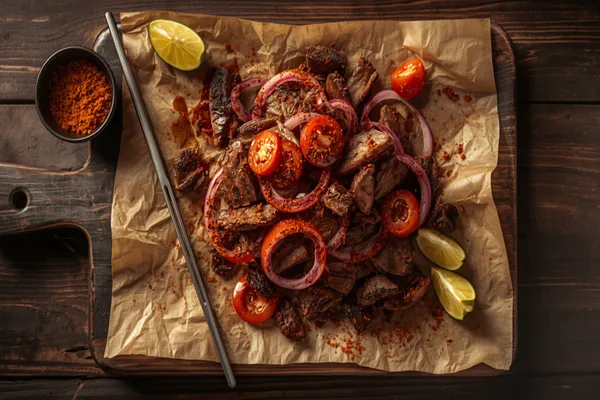
Hausaland — northern Nigeria (Kano, Zaria, Sokoto) and across the Sahel into Niger, Chad and northern Cameroon · Nigerian
Suya (Tsire) — Hausa Grilled Beef Skewers with Yaji
Nigeria's great night-time street food: beef sliced paper-thin, oiled, buried twice in a dry peanut-and-chilli rub, and grilled fast over charcoal. The secret is that yaji is a dry rub, not a marinade — and that the peanut in it has had its oil pressed out.
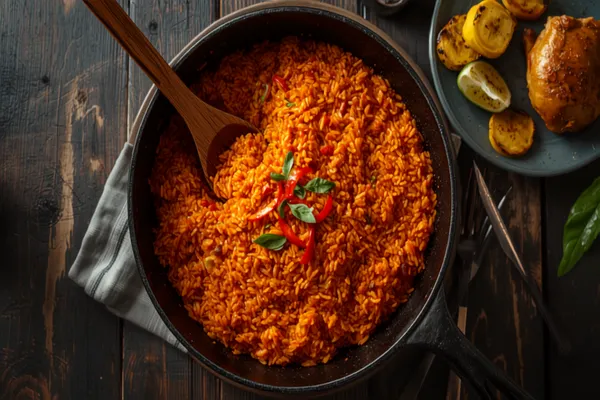
Lagos and south-western Nigeria — part of the wider West African jollof belt · Nigerian
Jollof Rice (Nigerian Party Style)
West Africa's great one-pot rice, cooked the Lagos party way: a long-fried pepper-and-tomato base, parboiled long-grain rice steamed until every grain is stained red, and a deliberately toasted bottom pot for that smoky finish.
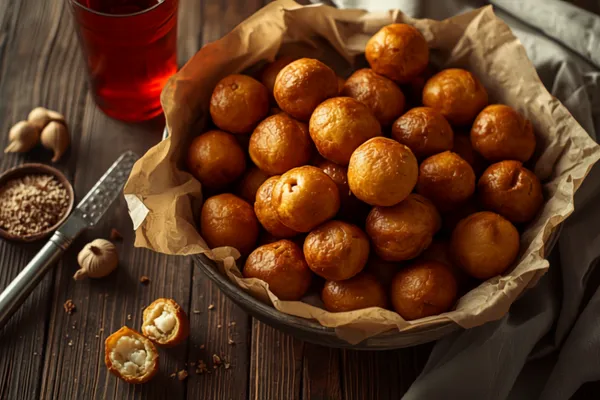
Lagos and southern Nigeria — and, under a dozen other names, from Ghana and Togo through Cameroon to the Congo basin · Nigerian & West African
Puff Puff — West Africa's Yeasted, Nutmeg-Scented Fried Dough
Not a doughnut and not a fritter: puff puff is a wet, live, nutmeg-scented yeast batter squeezed from a fist straight into hot oil, where it blows up into a lacquered golden sphere with a stretchy, honeycombed inside. Nigeria's party snack, and West Africa's under a dozen other names.

Northern Ghana — Dagbon and the Hausa zongo quarters, now sold at every roadside in Accra and Kumasi · Ghanaian
Waakye (Ghanaian Rice and Beans with Sorghum Leaves)
Ghana's great breakfast: long-grain rice and black-eyed peas simmered with dried red sorghum leaf sheaths until every grain turns burgundy, then loaded with shito, gari, talia and a boiled egg the way the roadside sellers of Accra do it.

Casamance, southern Senegal — the Jola country below the Gambia river, and across the borders into the Gambia and Guinea-Bissau · Senegalese & Gambian
Chicken Yassa (Poulet Yassa) — Casamance's Lemon and Onion Braise
More onion than chicken, by weight — that is not a mistake, it is the recipe. Casamance's poulet yassa marinates chicken overnight in lemon, mustard and a mountain of sliced onions, chars it over fire, then braises it back down into a jammy, sour-sweet sauce.
Saint-Louis and the Atlantic coast of Senegal — now cooked nationwide, from Dakar to the Casamance · Senegalese
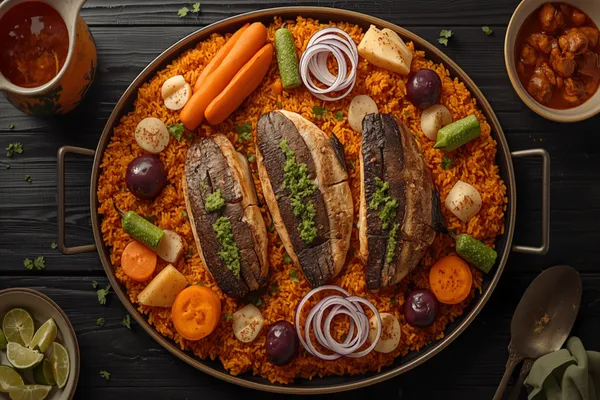
Thieboudienne (Ceebu Jën) — Senegalese Fish and Broken Rice
Senegal's national dish and UNESCO-listed culinary art: whole fish stuffed with a pounded parsley-and-garlic rof, fried, then simmered with cassava, cabbage and carrot in a long-fried tomato base — and broken rice steamed in that broth until every grain drinks it up.