Lagos and southern Nigeria — and, under a dozen other names, from Ghana and Togo through Cameroon to the Congo basin · Nigerian & West African
Puff Puff — West Africa's Yeasted, Nutmeg-Scented Fried Dough
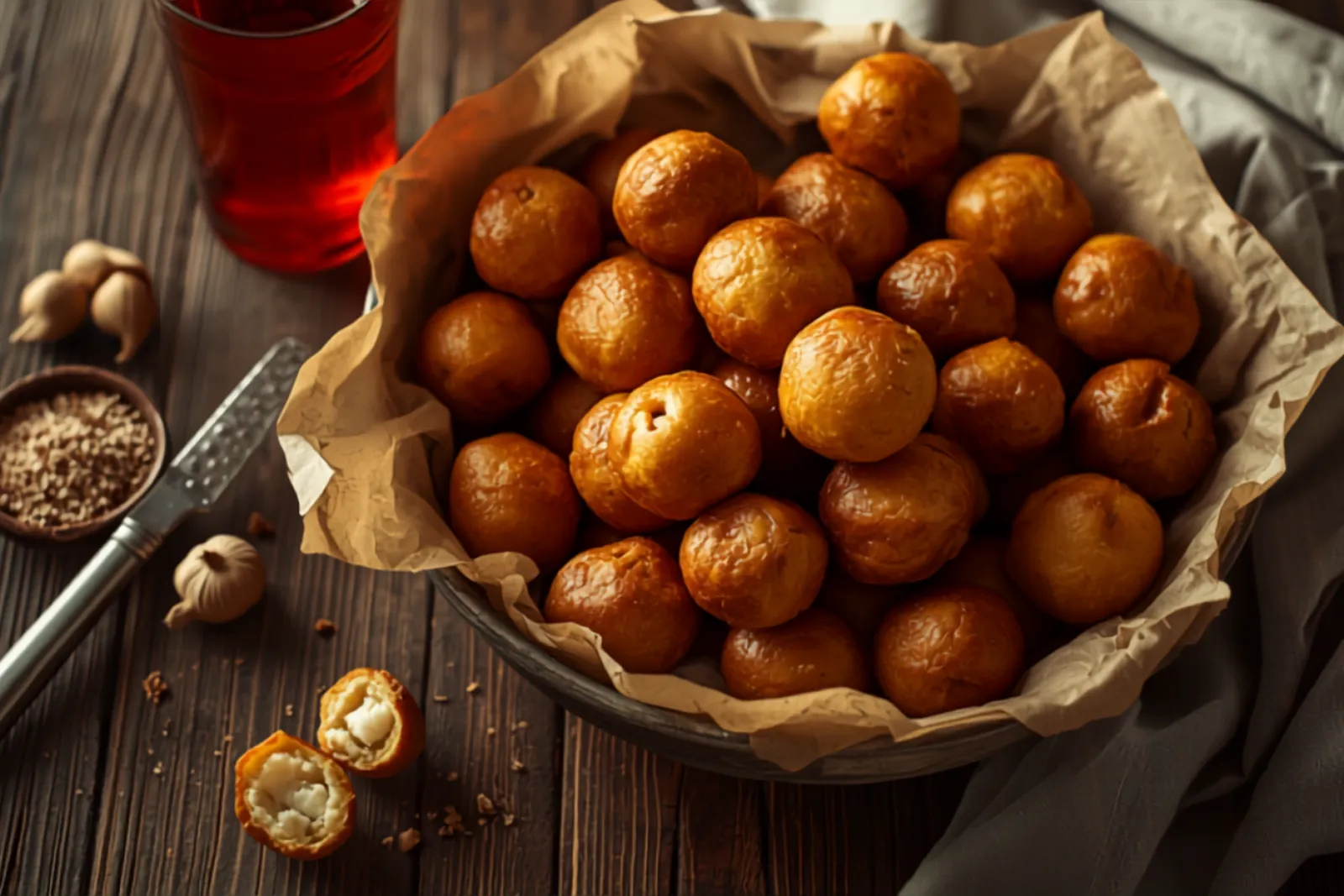
Not a doughnut and not a fritter: puff puff is a wet, live, nutmeg-scented yeast batter squeezed from a fist straight into hot oil, where it blows up into a lacquered golden sphere with a stretchy, honeycombed inside. Nigeria's party snack, and West Africa's under a dozen other names.
Published September 13, 2026
Cultural context
"Puff puff" is the Nigerian name, and Nigeria is where the reduplicated English nickname stuck, but the snack itself belongs to a belt that runs most of the width of the continent. It is *bofrot* or *togbei* in Ghana, *botokoin* in Togo, *bofloto* in Côte d'Ivoire, *kala* in Liberia, *beignet* in Senegal, Cameroon and the Gambia — where a Senegalese version, *beignets dougoub*, is made with millet flour rather than wheat — *mikate* in the Congo, *micate* in Angola, *legemat* in Sudan and *vetkoek* or *magwinya* down in South Africa, Botswana and Zimbabwe. Nobody owns it. In Nigeria it is the fixed point of *small chops*, the tray of party food that circulates at every *owambe* wedding and naming ceremony; in Cameroon it is breakfast, eaten with stewed beans; in Ghana it is what the woman with the covered basin sells outside the school gate at four in the afternoon.
Puff puff is a wet, living yeast batter squeezed out of a closed fist into hot oil, where it inflates into a lacquered golden sphere the size of a small plum. Split one open while it is still too hot to hold and the inside is stretchy and steaming, threaded with irregular holes, sweet but not sugary, and unmistakably scented with nutmeg. It is Nigeria’s most recognisable snack — the fixed point of every small chops tray at every owambe wedding — and it belongs, under a dozen other names, to a belt of West and Central Africa that runs from Dakar to Kinshasa.
One snack, a dozen names
The reduplicated English nickname is Nigerian, and it is the reason the rest of the world calls it puff puff. But almost exactly the same batter is fried in almost exactly the same way across a huge stretch of the continent: bofrot or togbei in Ghana, botokoin in Togo, bofloto in Côte d’Ivoire, kala in Liberia, plain beignet in Senegal, Cameroon and the Gambia, mikate in the Congo, micate in Angola, legemat in Sudan, and vetkoek or magwinya in South Africa, Botswana and Zimbabwe.
The differences between them are small and telling. Ghanaian bofrot often carries an egg and a little butter, which makes a richer, more cakey crumb. A Senegalese version, beignets dougoub, swaps a share of the wheat for millet flour and tastes earthier for it. Cameroonians take the sugar right down and eat theirs at breakfast with stewed beans and maize porridge — beignets-haricots-bouillie, one of the great street breakfasts anywhere. What none of these is, despite the constant comparison, is a doughnut: there is no butter-rich enriched dough, no rolling, no cutting, no second proof.
The batter is the whole recipe
If a puff puff goes wrong it is nearly always decided before the oil is hot. The batter has to sit in a narrow window: thicker than pancake batter, far looser than bread dough, sticky enough that you cannot pick it up cleanly, heavy enough that it falls from a spoon in a reluctant ribbon rather than pouring.
Too stiff and the ball cannot inflate — steam has nowhere to push, and you get a dense, bready lump. Too loose and it spreads across the surface of the oil into a flat brown disc. Use plain flour rather than bread flour, too: a wet batter beaten for two minutes develops plenty of gluten on its own, and strong flour takes it straight past light and cottony into chewy.
Let it rise, then leave it alone
Cover the bowl properly — cling film or a plate, not a draped cloth — and give it one to two hours somewhere warm, until it has doubled, domed, bubbled all over its surface and smells faintly of beer. Then do not stir it. Puff puff gets no second proof, so every bubble knocked out now is gone for good. This is the single most common unforced error in the recipe, and it costs nothing to avoid.
Deep oil, moderate heat, constant turning
Two numbers carry the frying. The oil wants to be at least 8 cm deep so each ball floats and turns freely instead of resting on hot metal and flattening, and it wants to sit at 170–175°C — cool enough that the middle cooks before the crust darkens, hot enough that the surface seals instantly instead of drinking oil.
Because they float, roughly a third of each ball is always above the oil. Left alone, that stripe stays pale and raw. Turn them constantly with a slotted spoon and take them to a deep, even gold rather than pulling them early — they are so light that it is easy to underestimate how long they need.
Squeezing the ball
The traditional shaping is a one-handed squeeze: wet your hand, scoop up a fistful, close your fist, and let the batter rise up through the ring made by your thumb and forefinger until a ball a little smaller than a golf ball has formed, then flick it into the oil. It exists because the batter is far too slack to roll, and forcing it through that ring gives the ball a smooth, taut skin that sets into a genuine sphere. An oiled ice-cream scoop is a perfectly honest substitute; the puff puff will be a little craggier and taste identical.
Then eat them standing up, within ten minutes, ideally while someone is still frying the next batch. For more of the West African thread running through this collection, try Nigeria’s suya or the region’s great rice arguments in jollof rice and Ghana’s waakye — and there’s more on the dishes worth crossing a border for in the world classics guide.
Ingredients
For the batter
- 500 g (4 cups) plain (all-purpose) flour Ordinary low-protein plain flour, not bread flour. Strong flour builds too much gluten in a batter this wet and gives you chewy, bready spheres instead of the light, cottony crumb puff puff is supposed to have.
- 2 1/4 tsp (7 g, one standard sachet) instant or active dry yeast Yeast, not baking powder. Baking powder works and some cooks use it when they're in a hurry, but it gives a dense, cakey ball with none of the faintly sour, beery depth that fermentation builds.
- 100 g (1/2 cup) granulated sugar Nigerian puff puff is sweet but not dessert-sweet — you should still be able to eat six. Ghanaian *bofrot* often runs a little sweeter, Cameroonian breakfast beignets noticeably less so. Take it down to 75 g if you plan to dust them in sugar afterwards.
- 1 tsp nutmeg, freshly grated The signature Nigerian note, and the thing that makes a puff puff taste like a puff puff rather than a generic fried dough. Grate it yourself — pre-ground nutmeg loses its volatile oils within weeks and tastes dusty.
- 1 tsp fine salt Sounds like a lot next to the sugar. It isn't — without it the batter tastes flat and cloying.
- 480–540 ml (2–2 1/4 cups) lukewarm water Body temperature, about 38°C/100°F — warm to the inside of your wrist, never hot. Water above roughly 50°C kills yeast outright. Flours vary, so hold back the last 60 ml and add it only if the batter is too stiff.
Optional additions
- 1 egg, lightly beaten Optional and regional. An egg gives a richer, more custardy crumb and a deeper colour; the plainest and most common Nigerian street version has none, which is also what keeps the recipe vegan.
- 1–2 scotch bonnet or habanero chillies, very finely minced For *peppered puff puff*, a genuinely popular Lagos variant. Seeds out unless you mean it.
For frying and serving
- 1.5–2 litres neutral oil for deep-frying — groundnut, sunflower or palm-kernel Groundnut (peanut) oil is the West African default and has the smoke point for the job. You need a genuine depth of oil, not a shallow pan — see step 5.
- to taste granulated or icing sugar, for rolling — optional Not traditional in Nigeria, where they go out plain and hot. Common in the diaspora and lovely with a little cinnamon through it.
Method
Tap a step’s number to check it off as you go.
-
Whisk the flour, yeast, sugar, nutmeg and salt together in a large bowl — the batter will more than double, so use a bowl that looks absurdly big.
Why: Mixing instant yeast straight into the dry ingredients is fine and saves a step. If you're using active dry yeast in granules, stir it into 120 ml of the lukewarm water with a pinch of the sugar first and leave it 5–10 minutes: it should be visibly frothy and smell of bread. If nothing happens in ten minutes the yeast is dead and the batter will never rise — start again rather than hoping.
-
Pour in about 480 ml of the lukewarm water and beat hard with your hand or a wooden spoon for 2–3 minutes, until completely smooth and elastic, adding the last splash of water only if needed. You are after a batter thicker than pancake batter but far looser than a bread dough — it should fall from a spoon in a heavy, reluctant ribbon rather than pour, and it should be sticky enough that you can't pick it up cleanly.
Why: This consistency is the whole recipe, and it is where almost every failed puff puff fails. A stiff, kneadable dough cannot inflate — the steam has nowhere to push — so it fries into a dense bready lump. Too thin and it spreads across the oil into flat brown discs instead of balls. Beating vigorously for a couple of minutes also develops just enough gluten to trap the gas without turning the batter tough.
-
Cover the bowl tightly with cling film or a plate — airtight, not a draped tea towel — and leave somewhere warm for 1–2 hours, until the batter has at least doubled, the surface is domed and covered in bubbles, and it smells distinctly yeasty and faintly sour.
Why: Sealing the bowl keeps the surface from drying into a skin that would hold the rise down, and traps the batter's own warmth and humidity. Time is less useful than the visual cue: a cold kitchen may need three hours, a hot one 45 minutes. The bubbles are the point — they are the aerated structure that will expand in the oil, and a batter that has only half risen makes a heavy puff puff no matter how well you fry it.
-
Do not stir or knock back the risen batter. Leave it exactly as it is.
Why: Unlike bread, puff puff gets no second proof, so every bubble you deflate now is lost for good. This is the shortest step here and one of the most consequential.
-
Pour oil into a deep, heavy pot to a depth of at least 8 cm (3 inches) and heat to 170–175°C (340–350°F). Test with a bead of batter: it should sink briefly, then bob straight back up and start fizzing within a second or two.
Why: Depth matters more than quantity of oil in general — a ball needs room to float and turn freely, and in a shallow pan the underside rests on hot metal and flattens before it can round out. Temperature is the other half: below about 160°C the batter drinks oil and comes out greasy and pale; above 180°C the outside seizes into a dark shell while the middle stays raw and doughy. If you have a thermometer, use it.
-
Wet one hand. Scoop up a fistful of batter, close your fist, and squeeze so a ball of batter rises up through the ring of your thumb and forefinger; when it is a little smaller than a golf ball, flick it off into the oil from close to the surface. Work in batches of 6–8.
Why: This one-handed squeeze is the traditional shaping method and it exists because the batter is too slack to roll. Forcing it through a constricting ring gives the ball a smooth, taut, self-sealing surface that fries into a neat sphere. A wet hand stops the batter clinging, and dropping from close to the oil avoids a splash. If it defeats you, an oiled ice-cream scoop or two dessert spoons will produce a slightly craggier ball that tastes identical. Crowding the pot is the one thing to avoid — it drops the oil temperature and you get greasy puffs.
-
Fry 5–7 minutes, turning the balls with a slotted spoon whenever a golden side surfaces, until they are a deep, even, mahogany-tinged gold all over and sound hollow when tapped.
Why: Puff puff floats, so roughly a third of each ball is always out of the oil — left alone they cook into two-tone hemispheres with a raw stripe around the equator. Turning them repeatedly is what makes them cook through and colour evenly. Deep gold rather than pale: an underdone puff puff has a wet, gummy centre, and because they are so light it is easy to underestimate how long they need.
-
Lift into a colander or a paper-lined sieve — not onto a flat plate — and let them drain for a minute. Bring the oil back up to temperature before the next batch.
Why: A colander lets steam escape from underneath; on a flat plate that steam condenses and the crisp underside goes soggy within a couple of minutes. Letting the oil recover between batches keeps the last puff puff as good as the first.
-
Eat them hot, plain, or tossed in sugar while still tacky. They are at their best within about ten minutes of leaving the oil.
Why: The contrast between a thin, faintly crisp lacquered shell and a hot, stretchy, steam-filled interior lasts a very short time. Nobody in Lagos has ever waited for puff puff to cool, and neither should you.
A quick, anonymous tap — no review needed.
Variations
- Peppered puff puff
A Lagos favourite and the best possible use of leftover batter. Mince one or two scotch bonnets extremely finely — a rough chop leaves hot pockets — and beat them into the batter before it rises, along with a tablespoon of finely grated onion if you like. Cut the sugar to 60 g. The result is sweet-hot rather than sweet, and it is what most people reach for first on a small-chops tray.
- Bofrot (Ghana)
Ghana's version of the same snack, usually a touch sweeter and often enriched with a beaten egg and a spoonful of softened butter or margarine, which gives a more cake-like, golden crumb. Some cooks add a little grated fresh ginger with the nutmeg. Shaped and fried identically.
- Cameroonian breakfast beignets, with beans
In Cameroon these are breakfast, not a party snack: drop the sugar to 30 g and skip the rolling sugar entirely, then serve them alongside stewed red beans and a mug of *pap* (fermented maize porridge). The famous Yaoundé street combination is *beignets-haricots-bouillie*, and the savoury-sweet balance only works if you take the sugar down.
- Beignets dougoub (Senegal, millet flour)
Replace a third of the wheat flour with fine millet flour (*dougoub*) for the Senegalese version. Millet brings a gentle, earthy, almost malty flavour and a slightly denser, sandier crumb, and it has no gluten, so keep at least two-thirds wheat or the balls won't hold together.
- Banana or plantain puff puff
Mash one very ripe banana or a soft over-ripe plantain into the batter with the water and cut the sugar to 60 g. The fruit adds sweetness, a little more moisture and a deeper brown crust, since the extra sugar caramelises faster — drop the oil to 165°C so the outsides don't run ahead of the middles.
- Same-day, no-yeast
Not traditional, but it works when people arrive in an hour: swap the yeast for 4 tsp baking powder, mix the batter and rest it 15 minutes only. You get a denser, more scone-like ball with a plainer flavour — decent, but you'll notice what fermentation was contributing.
Serving & Storage
Hot, out of a bowl, with nothing on them and a cold drink alongside — bissap or zobo (hibiscus), chapman, ginger beer or a mug of sweet milky tea. On a Nigerian small-chops tray they sit beside chin chin, samosas, spring rolls and peppered gizzard. Sugar or cinnamon sugar is a diaspora habit and a good one; in Cameroon they come with stewed beans for breakfast, and across the region a smear of condensed milk or a bowl of stewed tomato pepper sauce for dipping are both fair game.
Pairs with: Zobo or bissap (hibiscus cooler), Chapman, Ginger beer, Sweet milky tea, Nigerian chin chin, Stewed beans (Cameroonian style).
Storage: Puff puff is a same-day food and everyone in West Africa will tell you so — the shell softens within an hour or two and the crumb tightens as it cools. If you must keep them, store in a paper bag (never a sealed plastic box, which steams them limp) at room temperature for up to a day, and revive in a 180°C oven or air fryer for 4–5 minutes; microwaving turns them rubbery. The raw batter keeps better than the fried balls: after its rise it can go into the fridge for up to 24 hours, where it will ferment slowly and taste slightly tangier. Bring it back to room temperature for 30–45 minutes before frying. Fried puff puff freezes acceptably for a month and reheats from frozen in a hot oven in about 10 minutes, but it is a shadow of the fresh thing.
Nutrition
Per serving (3–4 balls)
- Calories
- 310
- Protein
- 6 g
- Carbs
- 52 g
- Fat
- 9 g
- Fiber
- 2 g
- Sugar
- 14 g
- Sodium
- 300 mg
Notable micronutrients: Iron, Folate, Thiamin, Niacin, Selenium
Estimated using standard ingredient data. Values vary with brands and substitutions.
Frequently Asked Questions
My puff puff came out flat instead of round. What went wrong?
Almost always one of two things, and both are fixable. Either the batter was too thin — it should drop from a spoon in a thick, reluctant ribbon, closer to a very wet dough than to pancake batter, so beat in a few extra tablespoons of flour if it pours freely. Or the oil was too shallow: a ball needs at least 8 cm of oil to float and rotate in, and in a shallow pan it settles against the bottom and fries into a disc before its shape can set. A third, rarer cause is oil that isn't hot enough, which lets the batter relax and spread before the outside firms.
Why is my puff puff greasy and heavy?
The oil was too cool, or you crowded the pot — which amounts to the same thing, since a big batch of cold batter drags the temperature down fast. Below about 160°C the surface doesn't seal quickly enough and oil soaks inward instead of steam pushing outward. Keep the oil at 170–175°C, fry no more than six to eight at a time, and let the temperature climb back between batches. Under-risen batter also fries heavy: if it hadn't at least doubled and bubbled, the crumb was dense before it ever met the oil.
The outside is dark but the middle is raw dough. How do I fix it?
Your oil is too hot — over about 185°C the crust browns long before the centre is cooked. Turn the heat down, wait for it to drop into the 170s, and make the balls a touch smaller: anything much bigger than a golf ball struggles to cook through before the outside overshoots. Turning them often as they fry also helps, because it spreads the heat instead of hammering one face.
Can I make puff puff without yeast?
You can, with about 4 teaspoons of baking powder and a 15-minute rest, and plenty of home cooks do on a weeknight. But it is a different snack. Yeast fermentation produces alcohols and esters that give puff puff its faintly sour, beery background note, and it builds a stretchy, irregular honeycomb crumb that chemical leavening — which makes small, even bubbles all at once — simply cannot. A baking-powder ball is denser and tastes plainer, closer to a scone than to the real thing.
Is puff puff Nigerian, Ghanaian or Cameroonian?
All three, and about a dozen others. The English nickname "puff puff" is Nigerian, which is why it travels under that name, but essentially the same yeasted fried dough is *bofrot* and *togbei* in Ghana, *botokoin* in Togo, *bofloto* in Côte d'Ivoire, *kala* in Liberia, *beignet* in Cameroon, Senegal and the Gambia, *mikate* in the Congo, *legemat* in Sudan and *vetkoek* in South Africa. The differences are real but small — sugar level, whether there's an egg, sometimes millet flour instead of wheat — and no single country has a claim on the idea.
Do I really have to squeeze it out of my fist?
No, but it is worth learning. The squeeze exists because the batter is too slack to roll between your palms, and forcing it up through the ring of your thumb and forefinger gives each ball a smooth, taut skin that fries into a genuinely round sphere. If it's going badly, a small ice-cream scoop dipped in oil between scoops, or two oiled dessert spoons, will give you a slightly rougher-edged ball that tastes exactly the same. Keep your hand wet either way — dry skin and wet batter is a losing combination.
How far ahead can I make these for a party?
Make the batter ahead, not the puff puff. Let it rise fully, then refrigerate it for up to 24 hours — it keeps fermenting slowly and gains a pleasant tang — and pull it out 30–45 minutes before you want to fry. The fried balls themselves are at their best within ten minutes and merely acceptable after two hours, which is why at Nigerian parties someone is usually still frying while the guests eat.
What to drink with this
All drinks →Hand-picked pours to match this dish. Alcoholic pairings are for adults of legal drinking age (21+ in the US) — please drink responsibly.
 21+
21+ Bermuda · Bermudian
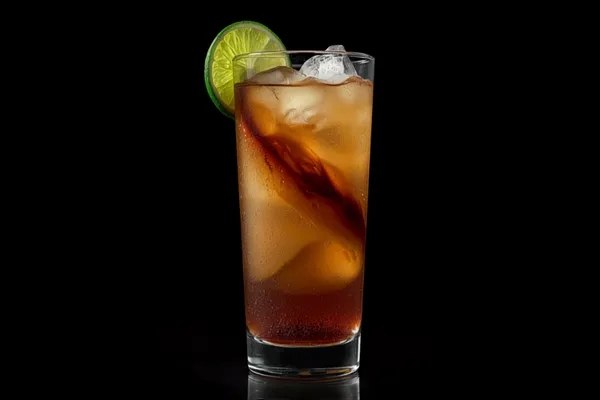
Dark 'n' Stormy (Dark Rum & Ginger Beer)
Bermuda's national drink and a two-ingredient masterclass — spicy ginger beer poured tall, then dark rum floated on top so it rolls through like a storm cloud. Fresh lime, the right rum, and why the float matters.
Jamaica & the Caribbean; England · Caribbean / British
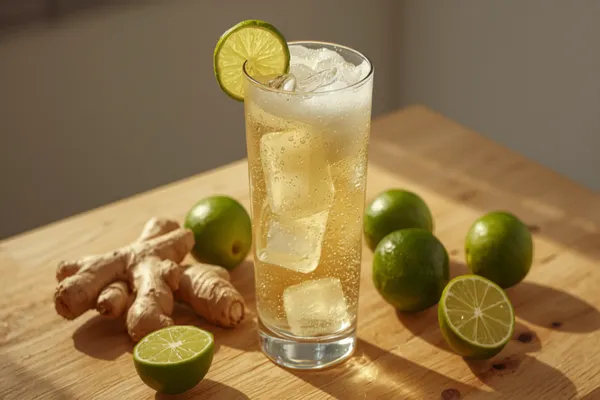
Ginger Beer (Homemade, Fiery & Non-Alcoholic)
Fresh ginger, lime and sugar carbonated into a spicy, bracing brew — the real thing, far hotter than anything bottled. A Caribbean and British favourite that's the backbone of the Moscow Mule and Dark 'n' Stormy, and a sensational soda on its own.
 21+
21+ Ireland by way of the American mule craze · Irish
Irish Mule (Irish Whiskey, Lime & Ginger Beer)
The mule in a green sweater: smooth Irish whiskey in place of vodka, fresh lime and spicy ginger beer over ice. Light, honeyed and gently spiced — a two-minute copper-mug cooler with an easy Irish charm.
From our kitchen community
Ratings & Reviews
My Rating
Tap a star to rate — no sign-in, no form needed.
My Review
0 Ratings
🥣 0 home cooks made it!
Be the first to rate Puff Puff — West Africa's Yeasted, Nutmeg-Scented Fried Dough.
Related Recipes
Hausaland — northern Nigeria (Kano, Zaria, Sokoto) and across the Sahel into Niger, Chad and northern Cameroon · Nigerian
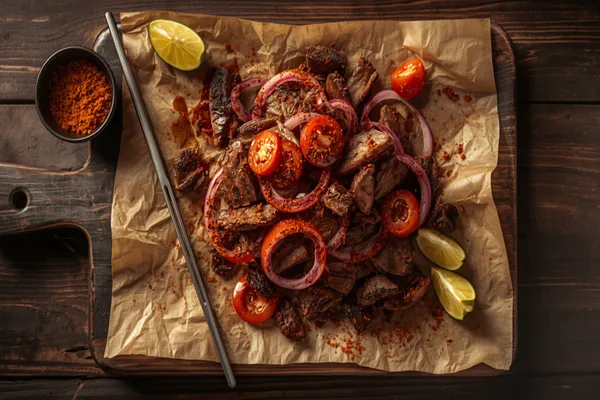
Suya (Tsire) — Hausa Grilled Beef Skewers with Yaji
Nigeria's great night-time street food: beef sliced paper-thin, oiled, buried twice in a dry peanut-and-chilli rub, and grilled fast over charcoal. The secret is that yaji is a dry rub, not a marinade — and that the peanut in it has had its oil pressed out.
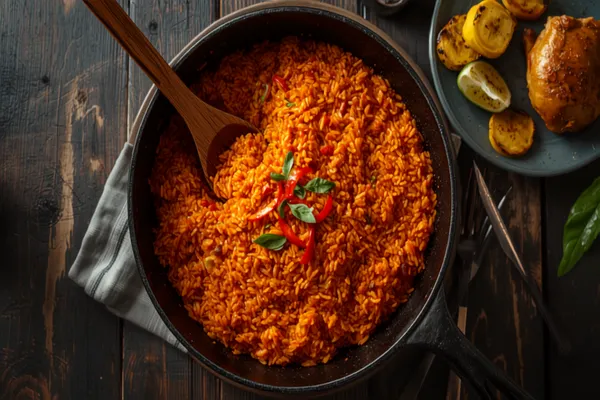
Lagos and south-western Nigeria — part of the wider West African jollof belt · Nigerian
Jollof Rice (Nigerian Party Style)
West Africa's great one-pot rice, cooked the Lagos party way: a long-fried pepper-and-tomato base, parboiled long-grain rice steamed until every grain is stained red, and a deliberately toasted bottom pot for that smoky finish.

Northern Ghana — Dagbon and the Hausa zongo quarters, now sold at every roadside in Accra and Kumasi · Ghanaian
Waakye (Ghanaian Rice and Beans with Sorghum Leaves)
Ghana's great breakfast: long-grain rice and black-eyed peas simmered with dried red sorghum leaf sheaths until every grain turns burgundy, then loaded with shito, gari, talia and a boiled egg the way the roadside sellers of Accra do it.

Casamance, southern Senegal — the Jola country below the Gambia river, and across the borders into the Gambia and Guinea-Bissau · Senegalese & Gambian
Chicken Yassa (Poulet Yassa) — Casamance's Lemon and Onion Braise
More onion than chicken, by weight — that is not a mistake, it is the recipe. Casamance's poulet yassa marinates chicken overnight in lemon, mustard and a mountain of sliced onions, chars it over fire, then braises it back down into a jammy, sour-sweet sauce.
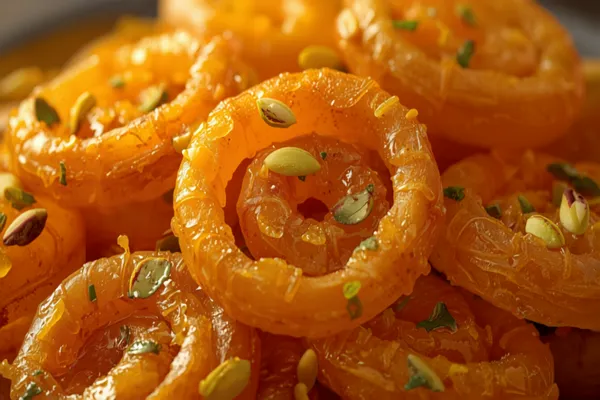
North India / pan-Indian (and across West and South Asia) · Indian
Jalebi (Crisp Syrup-Soaked Spirals)
India's festive sweet: fermented batter piped into spirals, fried crisp, and soaked in saffron syrup. Crunchy outside, juicy inside, and best eaten hot.
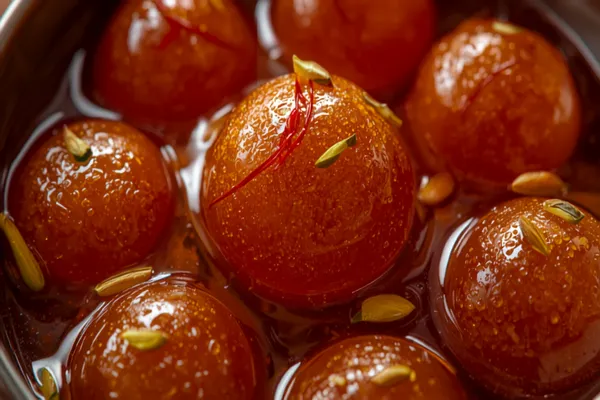
North India / pan-Indian · Indian
Gulab Jamun (Milk Dumplings in Rose-Cardamom Syrup)
The king of Indian sweets: soft khoya dumplings fried to deep gold and soaked in warm rose-and-cardamom syrup until they swell, juicy and melting. The dessert no Diwali or wedding is complete without.
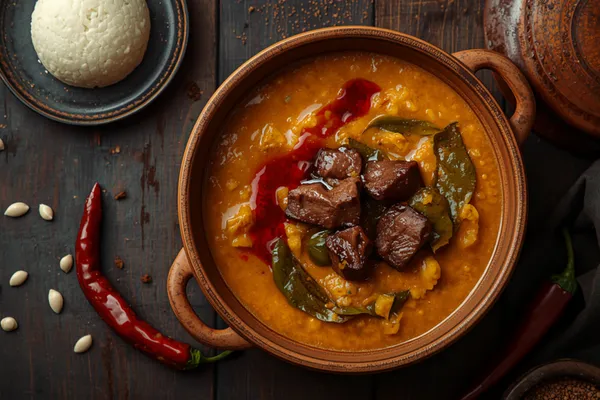
Southern Nigeria — Yorubaland in the south-west and Igboland in the south-east — and, under other names, across Ghana, Benin, Togo, Cameroon and the Congo basin · Nigerian & West African
Egusi Soup — Nigeria's Melon-Seed Stew, Fried in Red Palm Oil
Ground melon seeds fried in red palm oil until they break into soft golden curds, then simmered with stockfish, crayfish and fermented locust bean into the thick, savoury, oil-slicked stew that anchors the Nigerian table. Eaten with your hands, with pounded yam or eba.