Lagos and south-western Nigeria — part of the wider West African jollof belt · Nigerian
Jollof Rice (Nigerian Party Style)
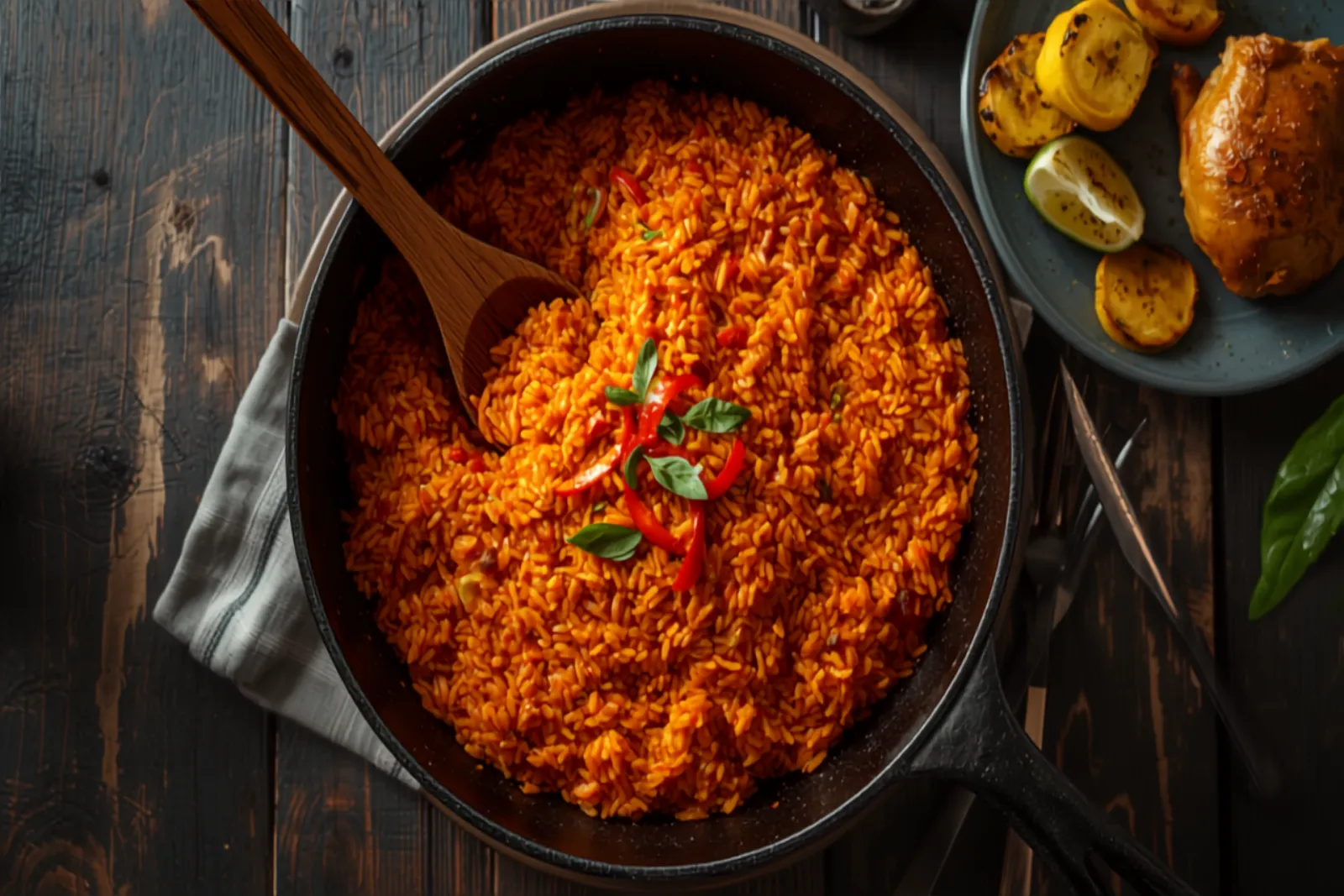
West Africa's great one-pot rice, cooked the Lagos party way: a long-fried pepper-and-tomato base, parboiled long-grain rice steamed until every grain is stained red, and a deliberately toasted bottom pot for that smoky finish.
Published August 11, 2026
Cultural context
Jollof belongs to all of West Africa, not one country. Food historians trace it to the Wolof (Jolof) empire of the Senegambia region, where its ancestor survives as thieboudienne — rice cooked in a fish and tomato broth, and now inscribed on UNESCO's intangible cultural heritage list. The dish travelled east along the coast and picked up a name and a personality everywhere it landed: benachin in The Gambia, riz gras in Burkina Faso and Guinea, jollof in Ghana and Nigeria. This is the Nigerian party version — the smoky, deep-red pot cooked in enormous quantities for weddings, naming ceremonies and Christmas.
Jollof rice is the most argued-about dish on earth, and the argument is a form of affection. A pot of it — long-grain rice steamed in a fried base of red peppers, tomatoes and Scotch bonnet until every grain is stained the colour of terracotta — turns up at Nigerian weddings, Ghanaian funerals, Senegalese Sunday lunches and Liberian Christmas tables, and each country will tell you, warmly and at length, that theirs is the real one. This is the Nigerian party version: the deep, oil-slicked, smoky pot that gets cooked in cauldrons over firewood for two hundred guests.
Where it actually comes from
Food historians place jollof’s origins in the Senegambia region — the Wolof, or Jolof, empire that rose in the fourteenth century in what is now inland Senegal. Its direct ancestor is still cooked there: thieboudienne, rice simmered in a broth of fish, tomato and vegetables, a dish so central to Senegalese identity that UNESCO added it to the intangible cultural heritage list. As the dish travelled the coast it changed name and character with each kitchen it passed through: benachin in The Gambia, riz gras in Burkina Faso and Guinea, and jollof in Ghana and Nigeria, where the tomato-and-pepper base moved to the front and the fish stepped aside.
So the “jollof wars” between Lagos and Accra are a family argument, not a border dispute. The two versions genuinely differ — Ghana favours aromatic jasmine or basmati and a more perfumed, ginger-forward pot, Nigeria favours sturdy long-grain parboiled rice and a heavier, smokier base — and both are worth cooking.
The base does all the work
Nigerian jollof is built on obe ata, the fried pepper-and-tomato sauce that underpins half the country’s cooking. What makes it taste of a party rather than of tinned tomatoes is time in hot oil.
Blend the peppers, tomatoes and Scotch bonnet smooth, then reduce that purée hard before it ever meets the pot of oil. Raw peppers are mostly water; boil that off first and you get to add real stock later instead of diluting your own sauce. Then fry the tomato paste on its own until it darkens, and fry the reduced base until a slick of red oil breaks out around the edge of the pan. That separation is the signal every Nigerian cook watches for. It means the water is gone and the sugars are caramelising — and it is the difference between rice that tastes seasoned and rice that tastes cooked.
Rice, liquid, and the discipline of not stirring
Use long-grain parboiled rice. The parboiling process gelatinises the starch inside the grain before it’s milled, so it drinks up a heavy sauce without disintegrating — exactly what a 30-minute covered steam demands. Rinse it until the water runs clear, drain it properly, and then remember that the base is itself liquid: the stock tops the pot up, it doesn’t do the whole job.
Once the lid is on, the rice is out of your hands. Lay foil or parchment directly over the pot before the lid so escaping steam is forced back down through the grains, keep the flame at its very lowest, and do not stir. Every stir breaks grains and frees starch, and starch is how jollof becomes risotto.
The bottom pot
The smokiness that defines party jollof came originally from firewood, and you can get most of it from a domestic hob with two minutes of nerve. When the rice is tender, turn the heat up until you hear a faint crackle and catch the first toasted smell, then pull the pot off immediately. The scorched layer against the metal — the bottom pot — is not a mistake to be scraped away; it’s folded back through the rice, and it’s the bit people fight over. Two minutes makes it. Four minutes ruins it.
Serve it heaped, with fried plantain, something grilled, and a cold drink. If you’re building a wider table of one-pot rice and grain dishes, Egypt’s koshari and Valencia’s paella belong in the same conversation — and there’s more on dishes worth crossing a border for in the world classics guide.
Ingredients
For the pepper base (obe ata)
- 4 large (about 500 g) red bell peppers, stemmed and seeded Nigerians call these tatashe. They do most of the colouring and almost none of the heat — this is why jollof is red without being fiery.
- 4 (about 400 g) plum tomatoes, quartered Ripe and deep red. Out of season, swap in a 400 g tin of good whole plum tomatoes, drained.
- 1–3 Scotch bonnet chillies, stemmed Rodo. One gives warmth and its distinctive fruity perfume; three is party-hot. Habanero is the closest substitute.
- 1 large red onion, half roughly chopped for blending, half thinly sliced
- 3 cloves garlic
- 2 cm piece fresh ginger, peeled
For the rice
- 500 g (about 2 1/2 cups) long-grain parboiled rice Parboiled (converted) rice is the standard for a reason — the pre-gelatinised grain absorbs the stew without collapsing. Basmati works if you cut the liquid by about 100 ml; short-grain rice will turn to porridge.
- 120 ml (1/2 cup) groundnut or other neutral oil It looks like a lot. It isn't optional: the oil carries the pepper flavour into every grain and is what lets the base fry rather than stew.
- 70 g (about 4 tbsp) double-concentrated tomato paste Depth and colour insurance for tomatoes that aren't at their peak.
- 750 ml (3 cups) chicken or beef stock, hot Well-seasoned stock is the difference between good and great jollof. The liquid from poaching the chicken you're serving alongside is the classic choice.
- 2 bay leaves
- 1 tsp dried thyme
- 1 tbsp Nigerian curry powder A mild, turmeric-forward blend, not the hot Madras kind. It is a colonial-era import that has been thoroughly naturalised — leave it out and the dish tastes noticeably less Nigerian.
- 2 seasoning cubes (Maggi or Knorr), crumbled Every Nigerian kitchen uses them. Substitute 2 tsp of a good bouillon powder, and hold back on the salt until you taste.
- 1 tsp white pepper The quiet signature of party jollof — floral and slightly musty where black pepper is just sharp.
- 1 tsp fine sea salt, plus more to taste
To finish
- 2 tbsp unsalted butter A party-cook's trick, stirred through at the end for gloss and richness. Use oil to keep the dish dairy-free.
- 1 red bell pepper and 1/2 red onion, sliced into thin strips Scattered over the rice for the last few minutes so they steam to just-tender, keeping some bite and colour.
Method
Tap a step’s number to check it off as you go.
-
Blend the bell peppers, tomatoes, Scotch bonnets, the chopped onion half, garlic and ginger to a smooth purée. You should have roughly 1.2 litres.
Why: Blending smooth, not chunky, is what gives jollof its even colour — you want the base to coat the grains, not sit between them.
-
Pour the purée into a wide pan and simmer briskly, uncovered, for 15–20 minutes, until it has reduced by about a third and darkened.
Why: Raw peppers and tomatoes are mostly water. Driving that water off now means you can add proper stock later — flavour instead of dilution — and it takes the raw, green edge off the peppers.
-
Meanwhile, rinse the rice in several changes of cold water until the water runs clear, then drain thoroughly.
Why: Rinsing removes loose surface starch, the main cause of claggy, clumping jollof. Drain it well — wet rice throws off your liquid ratio.
-
Heat the oil in a heavy pot over medium heat. Add the sliced onion, bay leaves and thyme and cook for 4–5 minutes until the onion softens.
Why: Blooming the dried thyme and bay in hot oil at the start makes their flavour fat-soluble, so it travels into the rice rather than sitting on top of it.
-
Stir in the tomato paste and fry it, stirring almost constantly, for 5–7 minutes, until it darkens to brick red and smells sweet rather than metallic.
Why: This is the step home cooks skip and shouldn't. Frying cooks out the tinny, sour taste of concentrate and caramelises its sugars — pure depth for seven minutes' work.
-
Add the reduced pepper base, curry powder, seasoning cubes, white pepper and salt. Fry over medium heat for 15–20 minutes, stirring often, until the sauce is thick and a slick of red oil separates out at the edges.
Why: That separating oil is the visual cue Nigerian cooks look for: it means the water has gone and the base is frying, not simmering. Add the rice before this point and you'll be boiling it in tomato juice.
-
Pour in the hot stock, bring to a boil and taste. It should be a touch saltier and more assertive than you want the finished rice to be.
Why: This is your last chance to season the liquid. The rice will absorb all of it and dilute the seasoning as it goes.
-
Stir in the drained rice, level the surface and bring back to a simmer. The liquid should sit just at or barely above the rice.
Why: Parboiled rice wants roughly its own volume in liquid once the stew is already juicy. Too much and you get mush; the steam trapped in the pot does the rest.
-
Lay a sheet of foil or parchment directly over the pot, press the lid down on top, turn the heat to its lowest setting and leave it alone for 25 minutes. Do not stir.
Why: The foil forces escaping steam back down through the rice so the top layer cooks as fast as the bottom. Stirring breaks the grains and releases starch — the single fastest way to turn jollof into risotto.
-
Lift the lid, scatter the sliced pepper and onion over the surface, replace the cover and cook for a further 5–8 minutes, until the rice is tender.
Why: Adding them late keeps them crisp-tender and bright; stirred in at the start they'd disappear into the base.
-
Turn the heat to medium-high for 90 seconds to 2 minutes — listen for a faint crackle and the first smell of toasting — then take the pot straight off the heat.
Why: This is the 'bottom pot': the layer touching the metal toasts and perfumes the whole pot with the smokiness that firewood used to provide. Two minutes is the line between smoky and burnt, so use your nose, not a timer.
-
Rest the pot, covered, for 10 minutes, then dot the butter over the top and fold the rice through gently with a wide spoon or fork, scraping up the toasted layer from the bottom.
Why: Resting lets the grains firm up and finish absorbing steam, so they separate instead of smearing. Folding rather than stirring keeps them whole.
A quick, anonymous tap — no review needed.
Variations
- Vegan / vegetarian
Use a strong vegetable or dried-mushroom stock and swap the butter for a final tablespoon of oil. Jollof is naturally plant-based — meat is what's served beside it, not in it.
- Ghanaian style
Ghana's version leans on aromatic rice — jasmine or basmati — with more ginger and often a bay-and-nutmeg warmth, giving a lighter, more perfumed grain. Whether this is better than the Nigerian pot is a settled question in both countries, in opposite directions.
- Smokier still
Ladle out about 200 ml of the fried base before adding the stock, cook it hard in a small pan until it genuinely catches and blackens at the edges, then stir it back in with the rice.
- Jollof with fish (the Senegalese ancestor)
Nod to thieboudienne: cook the rice in a fish stock and serve with a stuffed, fried whole fish and boiled cassava, carrot and cabbage laid over the top.
- Oven method
Once the stock and rice are in, cover tightly and bake at 180°C / 350°F for 35–40 minutes. The heat is gentler and more even — you lose some bottom pot, but you also lose the risk of scorching.
Serving & Storage
Serve in a heaped mound with fried plantain (dodo) on the side, a piece of grilled or fried chicken, and a spoonful of the sharp, sweet Nigerian coleslaw whose job is to cut through all that fried pepper base.
Pairs with: Fried plantain (dodo), Grilled or fried chicken, Nigerian coleslaw, Moin moin (steamed bean pudding).
Storage: Keeps 4 days refrigerated and, unusually for rice, tastes better on day two once the pepper base has settled into the grains. Cool within an hour and refrigerate promptly. Reheat with a splash of water under a lid, or in a hot pan with a little oil to crisp the edges. Freezes well for 3 months in portions.
Nutrition
Per serving (About 1 1/2 cups)
- Calories
- 430
- Protein
- 8 g
- Carbs
- 66 g
- Fat
- 15 g
- Fiber
- 4 g
- Sugar
- 8 g
- Sodium
- 900 mg
Notable micronutrients: Vitamin C, Vitamin A, Potassium, Manganese
Estimated using standard ingredient data. Values vary with brands and substitutions.
Frequently Asked Questions
Whose jollof is it — Nigeria's or Ghana's?
Neither, originally. The dish traces back to the Wolof (Jolof) empire in what is now Senegal and The Gambia, where its ancestor survives as thieboudienne, and it spread across West Africa from there under a dozen names. The Nigeria–Ghana 'jollof wars' are a genuinely affectionate modern rivalry about two excellent regional versions of a shared inheritance — not a claim of ownership. This recipe is the Nigerian party style; Ghana's rice-forward version is in the variations.
Why did my jollof turn out mushy?
Three usual culprits. Too much liquid — remember the pepper base is itself wet, so the stock is topping it up, not doing the whole job. Not reducing the base until the oil separates. And stirring during the steam, which breaks grains and releases starch. Use long-grain parboiled rice, rinse and drain it well, and once the lid goes on, leave it.
How do I get the smoky flavour without a firewood fire?
Deliberately toast the bottom. After the rice is cooked, take the heat up for 90 seconds to two minutes so the layer against the pot catches — that scent perfumes the whole pot when you fold it through. A heavy-bottomed pot gives you more margin for error than a thin one. If you want more, blacken a ladleful of the base separately and stir it back in.
Can I make it ahead for a party?
Yes, and Nigerian cooks routinely do. Make it a day ahead, cool it quickly and refrigerate; the flavour deepens overnight. Reheat covered with a splash of stock over low heat, or in a 160°C oven for 25 minutes. The pepper base alone also freezes well, which turns the dish into a 40-minute job on the day.
Is jollof rice spicy?
Less than its colour suggests. The red comes almost entirely from sweet red bell peppers and tomatoes; the Scotch bonnets are there for a fruity, back-of-the-throat warmth. One chilli makes a mild pot that children will eat, three makes it properly hot. Deseeding them takes out most of the burn while keeping the aroma.
What rice should I use if I can't find parboiled?
Basmati is the best fallback — reduce the stock by about 100 ml and cut the covered steam to 18–20 minutes, as it cooks faster and absorbs less. Avoid short- and medium-grain varieties, and avoid pre-washed 'easy cook' rice that's already partly cooked, both of which break down into porridge under a long steam.
What to drink with this
All drinks →Hand-picked pours to match this dish. Alcoholic pairings are for adults of legal drinking age (21+ in the US) — please drink responsibly.

Pan-Indian (the everyday tea of the subcontinent) · Indian
Masala Chai (Spiced Indian Tea)
India's daily ritual in a cup: black tea brewed with milk, sugar and freshly crushed spices. The proper stovetop method, plus how to build your own masala.
Mexico (agua fresca tradition) · Mexican
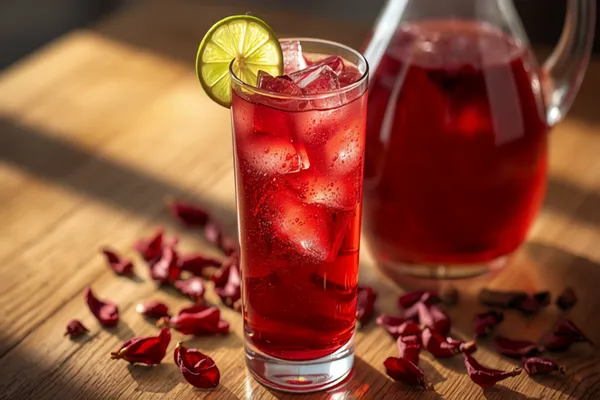
Agua de Jamaica (Hibiscus Iced Tea)
Mexico's ruby-red hibiscus cooler: dried jamaica flowers steeped, sweetened and chilled into a tart, refreshing agua fresca. The right steep, how to control the tartness, and why it's so good for you.
 21+
21+ Florence, Italy (Tuscan aperitivo tradition) · Italian
Negroni (The Perfect Three-Part Aperitivo)
Equal parts gin, Campari and sweet vermouth, stirred over ice with an orange peel. Italy's great bitter aperitivo — the easiest world-class cocktail to remember and one of the hardest to improve on.
From our kitchen community
Ratings & Reviews
My Rating
Tap a star to rate — no sign-in, no form needed.
My Review
0 Ratings
🥣 0 home cooks made it!
Be the first to rate Jollof Rice (Nigerian Party Style).
Related Recipes
Egypt (Cairo) · Egyptian
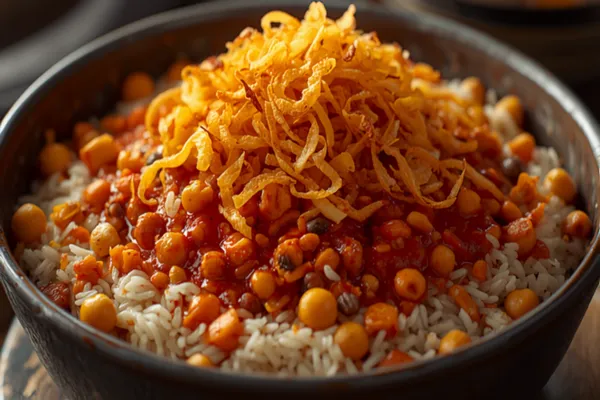
Koshari (Egyptian Rice, Lentils, Pasta and Crispy Onions)
Egypt's national dish and ultimate comfort food: a glorious carb-on-carb layering of rice, brown lentils and macaroni topped with chickpeas, a garlicky-spiced tomato sauce, a sharp vinegar daqqa, and a mountain of crispy fried onions.
Valencia · Spanish
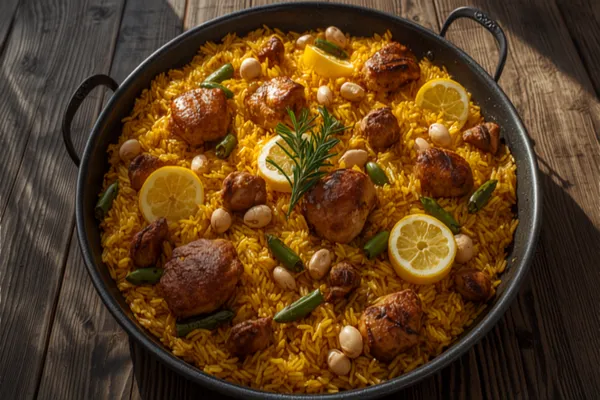
Paella Valenciana (Authentic Valencian Paella)
The original paella from Valencia — not a seafood free-for-all, but chicken, rabbit, and green beans cooked with bomba rice, saffron, and a prized layer of toasted crust called the socarrat. Cooked in a wide pan over a wide flame, it's a Sunday ritual as much as a recipe.
Morocco · Moroccan
Moroccan Chicken Tagine with Preserved Lemon and Olives
The classic of the Moroccan table: chicken slow-cooked with preserved lemon, green olives, ginger, and saffron until the meat slips off the bone in a golden, deeply savoury sauce. Aromatic, gently spiced, and far easier than it looks.
Morocco (Maghreb) · Moroccan
Moroccan Vegetable Couscous (Seven-Vegetable Couscous)
The Friday couscous: fluffy steamed semolina mounded under a fragrant broth of seven vegetables — carrots, turnip, squash, courgette, chickpeas and more — gently spiced and slow-simmered. A celebratory one-pot for the table.
The Ethiopian highlands — Amhara and Addis Ababa, shared across the Horn of Africa · Ethiopian
Doro Wat (Ethiopian Spiced Chicken Stew)
Ethiopia's feast-day chicken stew, built the slow way: a kilo of onions dry-cooked to a purée before any fat touches the pan, berbere and spiced butter bloomed into them, and chicken and whole eggs simmered until the sauce turns mahogany.
Saint-Louis and the Atlantic coast of Senegal — now cooked nationwide, from Dakar to the Casamance · Senegalese
Thieboudienne (Ceebu Jën) — Senegalese Fish and Broken Rice
Senegal's national dish and UNESCO-listed culinary art: whole fish stuffed with a pounded parsley-and-garlic rof, fried, then simmered with cassava, cabbage and carrot in a long-fried tomato base — and broken rice steamed in that broth until every grain drinks it up.
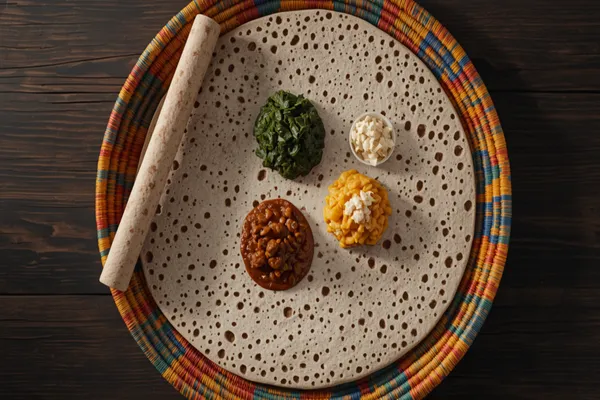
The Ethiopian and Eritrean highlands — teff country, from Gojjam and Shewa north into the Eritrean plateau · Ethiopian
Injera (Ethiopian and Eritrean Teff Flatbread)
The sour, lace-holed teff flatbread that is plate, cutlery and staple across the Horn of Africa — fermented for three days, thickened with a cooked absit, and cooked on one side only until the eyes open.
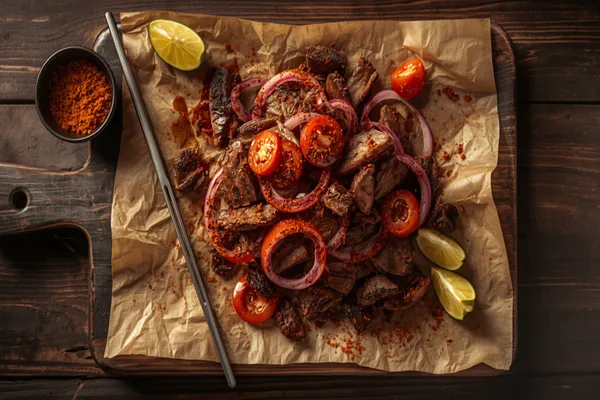
Hausaland — northern Nigeria (Kano, Zaria, Sokoto) and across the Sahel into Niger, Chad and northern Cameroon · Nigerian
Suya (Tsire) — Hausa Grilled Beef Skewers with Yaji
Nigeria's great night-time street food: beef sliced paper-thin, oiled, buried twice in a dry peanut-and-chilli rub, and grilled fast over charcoal. The secret is that yaji is a dry rub, not a marinade — and that the peanut in it has had its oil pressed out.

Portland parish, Jamaica — the Blue Mountain and John Crow interior of the Windward Maroons, and the roadside pits of Boston Bay · Jamaican
Jamaican Jerk Chicken — Pimento Smoke, Scotch Bonnet and the Maroons' Fire
Real jerk is not a sauce you brush on at the end. It is a wet pimento-and-Scotch-bonnet paste worked into slashes cut to the bone, then smoke-roasted slowly over allspice wood until the skin blisters black. Here is how to get genuinely close on a home grill — and why low heat, not high, is the whole trick.

The Mozambican coast and the Zambezi delta — Maputo, Quelimane and Ilha de Moçambique — with a parallel life in Angola, in South Africa, and in the churrasqueiras of Portugal's Algarve · Mozambican
Peri-Peri Chicken — Frango Piri-Piri, the Chilli That Sailed Both Ways
A butterflied chicken lacquered in African bird's eye chilli, garlic, lemon and paprika, grilled over coals and basted until the skin is scarlet and blistered. The dish belongs to Mozambique, Angola, Portugal and South Africa at once — here is the version they'd all recognise, and why the baste matters more than the marinade.

Northern Ghana — Dagbon and the Hausa zongo quarters, now sold at every roadside in Accra and Kumasi · Ghanaian
Waakye (Ghanaian Rice and Beans with Sorghum Leaves)
Ghana's great breakfast: long-grain rice and black-eyed peas simmered with dried red sorghum leaf sheaths until every grain turns burgundy, then loaded with shito, gari, talia and a boiled egg the way the roadside sellers of Accra do it.

Casamance, southern Senegal — the Jola country below the Gambia river, and across the borders into the Gambia and Guinea-Bissau · Senegalese & Gambian
Chicken Yassa (Poulet Yassa) — Casamance's Lemon and Onion Braise
More onion than chicken, by weight — that is not a mistake, it is the recipe. Casamance's poulet yassa marinates chicken overnight in lemon, mustard and a mountain of sliced onions, chars it over fire, then braises it back down into a jammy, sour-sweet sauce.
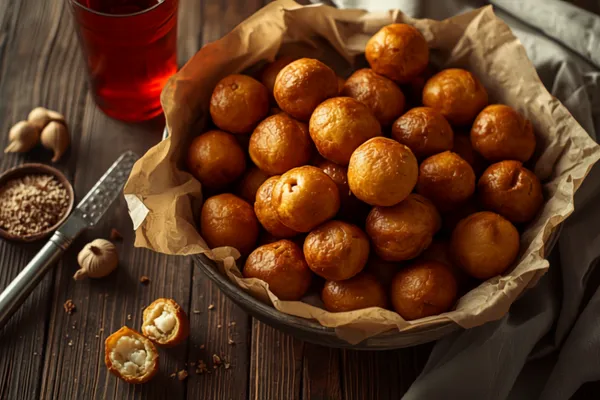
Lagos and southern Nigeria — and, under a dozen other names, from Ghana and Togo through Cameroon to the Congo basin · Nigerian & West African
Puff Puff — West Africa's Yeasted, Nutmeg-Scented Fried Dough
Not a doughnut and not a fritter: puff puff is a wet, live, nutmeg-scented yeast batter squeezed from a fist straight into hot oil, where it blows up into a lacquered golden sphere with a stretchy, honeycombed inside. Nigeria's party snack, and West Africa's under a dozen other names.
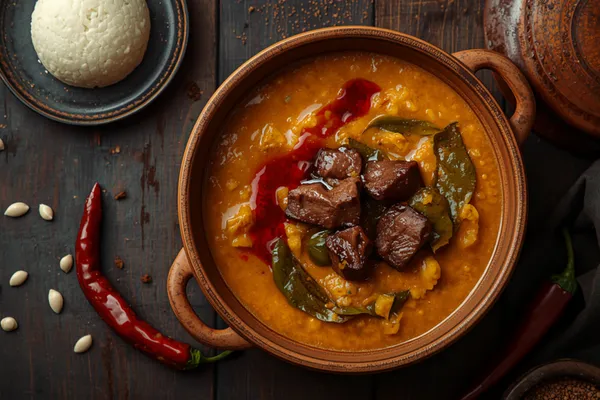
Southern Nigeria — Yorubaland in the south-west and Igboland in the south-east — and, under other names, across Ghana, Benin, Togo, Cameroon and the Congo basin · Nigerian & West African
Egusi Soup — Nigeria's Melon-Seed Stew, Fried in Red Palm Oil
Ground melon seeds fried in red palm oil until they break into soft golden curds, then simmered with stockfish, crayfish and fermented locust bean into the thick, savoury, oil-slicked stew that anchors the Nigerian table. Eaten with your hands, with pounded yam or eba.
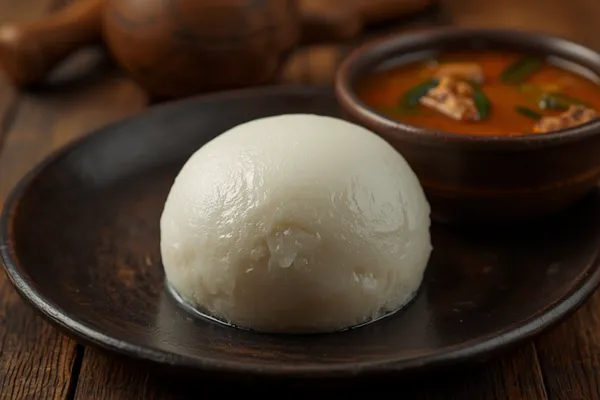
Ghana, among the Akan peoples of the Ashanti, Akuapem, Akyem, Bono and Fante — and, under other names, throughout Nigeria, Ivory Coast, Sierra Leone, Cameroon, Angola and the Congo basin · Ghanaian & West African
Fufu — West Africa's Pounded Cassava & Plantain Swallow
Boiled cassava and green plantain pounded in a mortar until every lump disappears, into the smooth, stretchy dough West and Central Africa tears off by hand and dips into soup. No pineapple, no shortcuts — just the technique that makes fufu fufu.
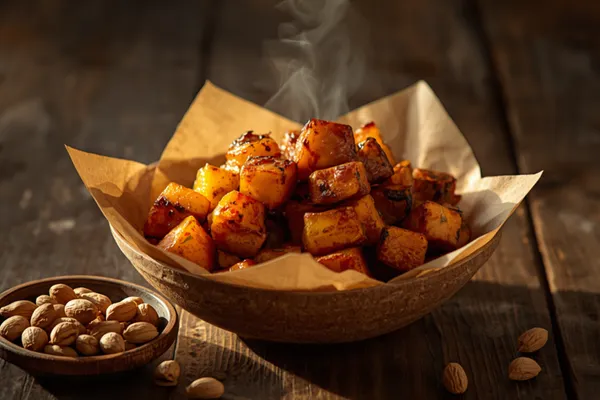
Ghana — the evening street stalls of Accra, Kumasi and Cape Coast, with fried-plantain cousins across Nigeria (dodo), Ivory Coast (aloco) and the wider West African coast · Ghanaian & West African
Kelewele (Ghanaian Spiced Fried Plantain)
Ghana's best-loved street snack: ripe plantain cubes tossed in fresh ginger, hot pepper, onion and warm spices, then fried until caramelized at the edges and soft as custard inside. Sweet, fiery and impossible to stop eating.