Egypt (Cairo) · Egyptian
Koshari (Egyptian Rice, Lentils, Pasta and Crispy Onions)
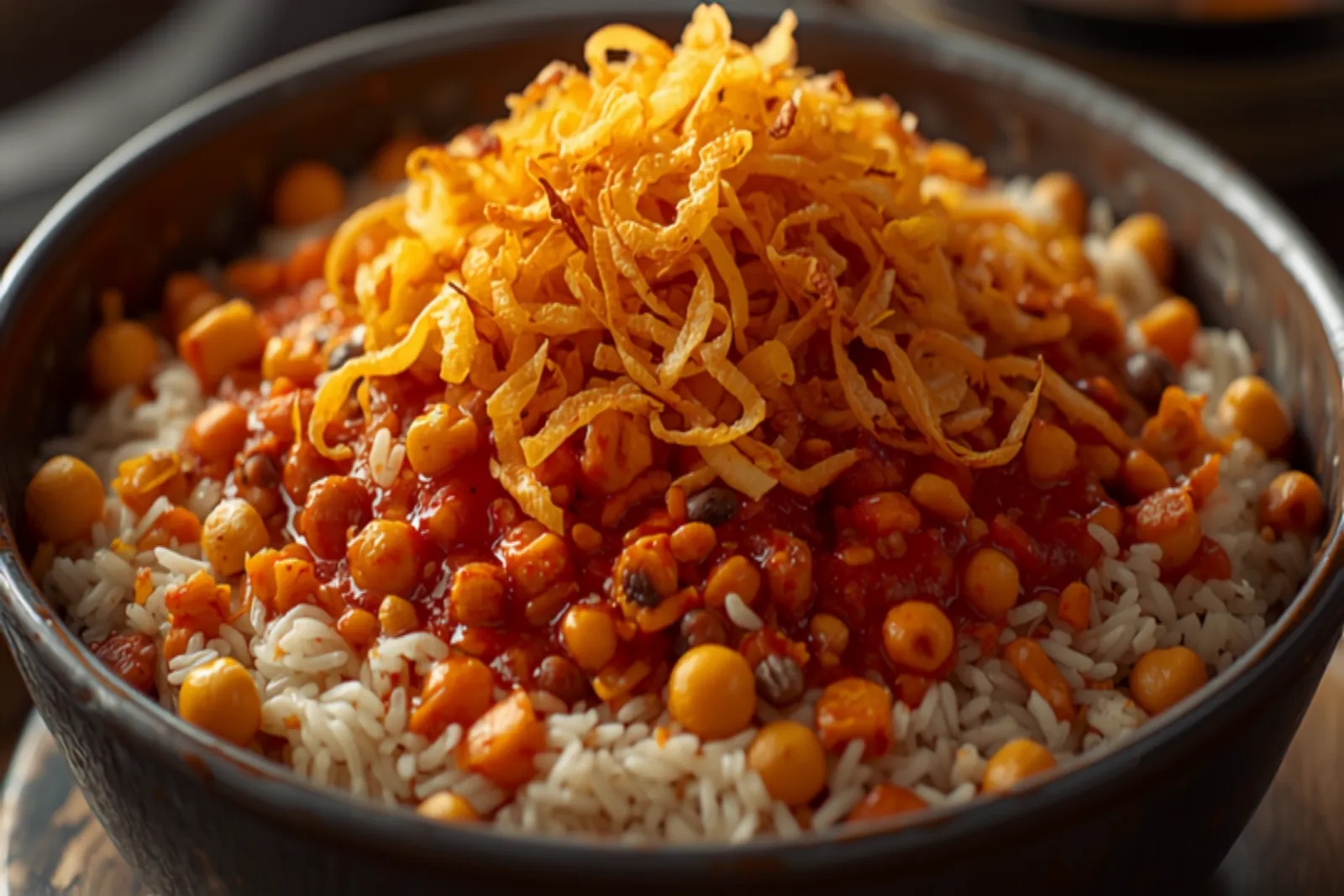
Egypt's national dish and ultimate comfort food: a glorious carb-on-carb layering of rice, brown lentils and macaroni topped with chickpeas, a garlicky-spiced tomato sauce, a sharp vinegar daqqa, and a mountain of crispy fried onions.
Published June 24, 2026
Cultural context
Koshari (or koshary) is the undisputed national dish of Egypt — street food sold from dedicated koshari shops and carts, ladled into bowls in great assembled layers. Its roots are often traced to the 19th century, blending Indian rice-and-lentils (kichari), Italian pasta, and Middle Eastern pulses into something wholly Egyptian. Vegan by nature and cheap to make, it's the great democratic meal of Cairo.
Koshari is Egypt’s national dish and one of the great comfort foods of the world — a glorious, unapologetic pile of carbohydrates: rice and brown lentils, macaroni, chickpeas, a garlicky-spiced tomato sauce, a sharp vinegar drizzle, and a towering heap of crispy fried onions on top. Sold from dedicated koshari shops and street carts across Cairo, it’s cheap, filling, entirely vegan by nature, and the great democratic meal of Egypt.
A dish of separate parts
The thing to understand about koshari is that it’s an assembly, not a one-pot. Each element is cooked on its own — lentils until just tender, pasta al dente, rice fluffed pilaf-style with the lentils and a little onion oil — so every component has the right texture before it’s layered. Yes, it means several pans; the contrast between them is the whole reason the dish works. Frying the onions first is doubly useful: they’re the crown, and their oil flavours everything else.
Two sauces make it sing
What lifts koshari above a bowl of plain carbs is the sauces. A tangy, cumin-spiced tomato sauce sharpened with vinegar ties it together, and the daqqa — a sizzling drizzle of fried garlic and vinegar — cuts straight through the richness. Layer it all up in deep bowls — rice and lentils, pasta, chickpeas, tomato sauce, daqqa, then a mountain of crispy onions — so every spoonful has soft, tangy, sharp and crunchy at once.
For more of the Egyptian table, try ful medames and ta’ameya, or browse the full recipe collection.
Ingredients
For the crispy onions
- 3 large onions, thinly sliced
- for frying neutral oil
For the base
- 200 g brown or green lentils, rinsed
- 250 g rice (medium-grain or basmati)
- 150 g short pasta (ditalini or elbow macaroni)
- 100 g small pasta or vermicelli (optional, to toast with the rice)
- 1 can (400 g) chickpeas, drained and warmed
- salt and oil, as needed
For the tomato sauce
- 2 tbsp oil (use some of the onion oil)
- 4 cloves garlic, minced
- 1 tsp each ground cumin and coriander
- 1/4-1/2 tsp chilli flakes, to taste
- 700 g tomato passata
- 2 tbsp white or red wine vinegar
For the daqqa (garlic-vinegar sauce)
- 4 cloves garlic, crushed, fried briefly with 1 tsp cumin and 3 tbsp vinegar The sharp, garlicky drizzle that defines koshari — don't skip it.
Method
Tap a step’s number to check it off as you go.
-
Fry the sliced onions slowly in oil until deep golden brown and crisp, then drain on paper. Save the oil.
Why: Crispy onions are the crown of koshari and the onion-infused oil flavours everything else — fry low and slow so they crisp evenly without burning.
-
Cook the lentils in plenty of water until just tender, about 20 minutes; drain. Boil the pasta separately until al dente; drain.
Why: Cooking each component on its own means each is properly done — lentils tender, pasta al dente, rice fluffy — rather than a single overcooked pot.
-
Toast the rice (and optional vermicelli) in a little onion oil, then add the cooked lentils and enough water to cook the rice through, pilaf-style. Season and steam until fluffy.
Why: Cooking the rice with the lentils and a little of the onion oil seasons the grains throughout; toasting first keeps them separate.
-
Make the tomato sauce: soften the garlic in oil, add cumin, coriander and chilli, then the passata and vinegar. Simmer 15 minutes until thick and tangy.
Why: The tangy, spiced tomato sauce ties the whole dish together; the vinegar gives koshari its characteristic sharp edge.
-
Make the daqqa: fry crushed garlic with cumin briefly, then add vinegar and let it sizzle.
Why: This sharp garlic-vinegar drizzle is a defining koshari element, cutting through the rich carbs — it's what makes the dish sing.
-
Layer in bowls: rice-and-lentils, then pasta, then chickpeas, a ladle of tomato sauce, a drizzle of daqqa, and a generous heap of crispy onions on top.
Why: Koshari is all about the assembled layers and contrasts — soft carbs, tangy sauce, sharp garlic and crunchy onions in every spoonful.
A quick, anonymous tap — no review needed.
Variations
- Shortcut onions
Store-bought crispy fried onions save real time and are a legitimate everyday cheat, though home-fried have the best flavour.
- Spicier (shatta)
Serve with Egyptian shatta — a fiery chilli-vinegar sauce — on the side for those who like real heat.
- Make-ahead components
Cook the lentils, sauces and onions in advance; assemble hot to order. The dish is built for batch prep.
Serving & Storage
Assemble in deep bowls and serve hot, passing extra tomato sauce, daqqa and chilli at the table so everyone can adjust. A simple side salad of tomato and cucumber is the usual partner.
Pairs with: Extra garlic-vinegar daqqa, Shatta chilli sauce, Tomato-cucumber salad.
Storage: Keep the components separately for up to 3 days and assemble hot to serve — pre-mixed koshari goes soft. The crispy onions stay crisp in an airtight container.
Nutrition
Per serving (1 bowl (1/6 recipe))
- Calories
- 480
- Protein
- 16 g
- Carbs
- 82 g
- Fat
- 11 g
- Fiber
- 11 g
- Sugar
- 8 g
- Sodium
- 520 mg
Notable micronutrients: Iron, Folate, Fiber, Magnesium
Estimated using standard ingredient data. Values vary with brands and substitutions.
Frequently Asked Questions
Why so many separate pots?
Each element — lentils, rice, pasta, two sauces, onions — is cooked on its own so each has the right texture, then layered together. It's more washing-up, but the contrast of components is the entire appeal of koshari.
What's the daqqa?
It's the sharp garlic-and-vinegar sauce drizzled over the top (sometimes called the garlic sauce). With the tangy tomato sauce, it gives koshari its signature sour-garlicky kick that cuts the rich carbs.
Can I use canned crispy onions?
Yes, as a shortcut — but home-fried onions, cooked slowly to a deep gold, have far better flavour and give you the onion-infused oil to cook the rest of the dish in.
What to drink with this
All drinks →Hand-picked pours to match this dish.

Morocco (the Maghreb) · Moroccan
Moroccan Mint Tea (Atay — Maghrebi Mint Tea)
Morocco's sweet, fragrant green tea poured from a height into a frothy glass. The proper method — washing the tea, layering the mint, and the famous long pour — plus how sweet it really should be.

Turkey (Ottoman coffee tradition) · Turkish
Turkish Coffee (Türk Kahvesi — Unfiltered & Foamy)
Finely ground coffee simmered slowly in a cezve to a rich foam, served unfiltered in tiny cups. The grind, the heat and the foam that make it — plus the ritual of the grounds left behind.

Mexico (agua fresca tradition) · Mexican
Agua de Jamaica (Hibiscus Iced Tea)
Mexico's ruby-red hibiscus cooler: dried jamaica flowers steeped, sweetened and chilled into a tart, refreshing agua fresca. The right steep, how to control the tartness, and why it's so good for you.
From our kitchen community
Ratings & Reviews
My Rating
Tap a star to rate — no sign-in, no form needed.
My Review
0 Ratings
🥣 0 home cooks made it!
Be the first to rate Koshari (Egyptian Rice, Lentils, Pasta and Crispy Onions).
Related Recipes
Egypt (pan-Egyptian) · Egyptian
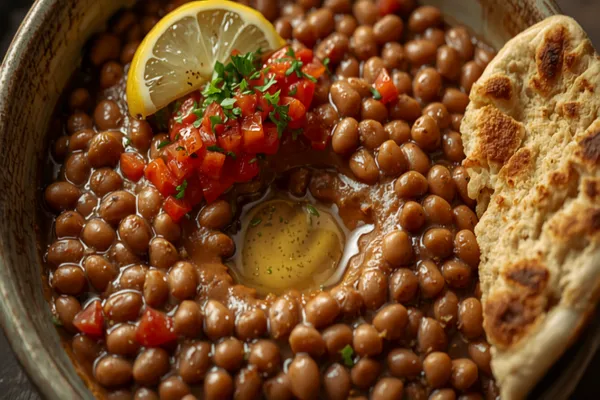
Ful Medames (Egyptian Stewed Fava Beans)
Egypt's ancient breakfast: fava beans slow-simmered until soft, mashed with garlic, cumin, lemon and olive oil, and finished with tomato and herbs. Scooped with warm bread, it's been fuelling the country for millennia.
Egypt (Cairo & the Delta) · Egyptian
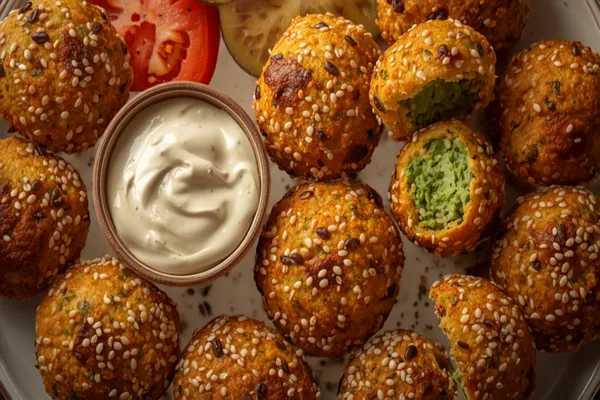
Ta'ameya (Egyptian Fava Bean Falafel)
Egypt's own falafel: split dried fava beans blitzed with herbs, leeks and garlic into a vivid green batter, formed into patties and fried until shatteringly crisp outside and fluffy-green within. Lighter and herbier than its chickpea cousin.
The Levant (Lebanon, Syria, Jordan, Palestine) · Middle Eastern
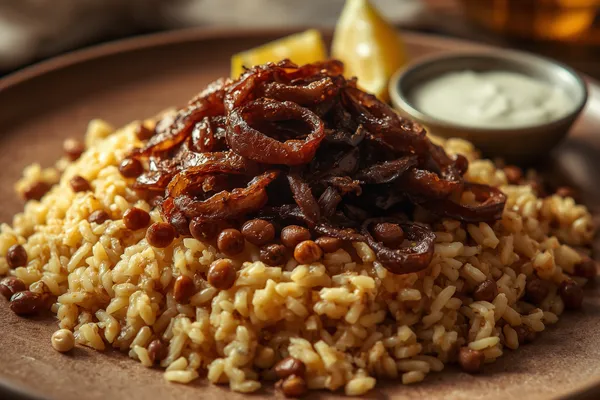
Mujaddara (Lentils and Rice with Crispy Caramelized Onions)
The Levantine dish of lentils, rice, and deeply caramelized onions — humble, ancient, and quietly luxurious. A handful of ingredients turned into something far greater than their cost, crowned with onions fried until almost black and sweet.
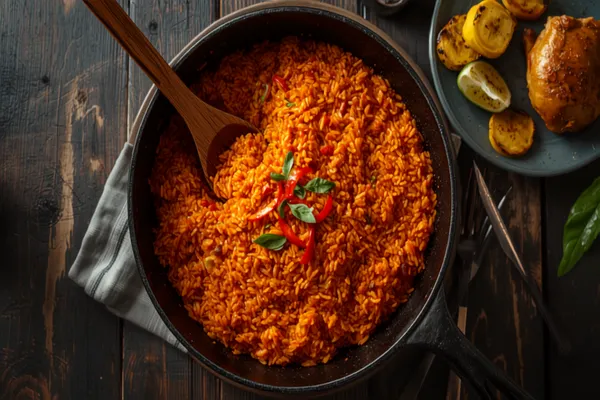
Lagos and south-western Nigeria — part of the wider West African jollof belt · Nigerian
Jollof Rice (Nigerian Party Style)
West Africa's great one-pot rice, cooked the Lagos party way: a long-fried pepper-and-tomato base, parboiled long-grain rice steamed until every grain is stained red, and a deliberately toasted bottom pot for that smoky finish.
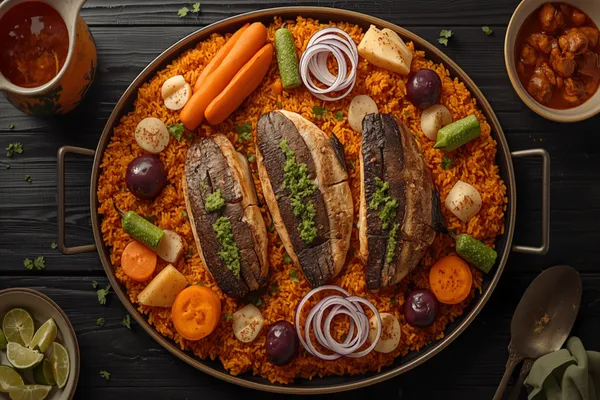
Saint-Louis and the Atlantic coast of Senegal — now cooked nationwide, from Dakar to the Casamance · Senegalese
Thieboudienne (Ceebu Jën) — Senegalese Fish and Broken Rice
Senegal's national dish and UNESCO-listed culinary art: whole fish stuffed with a pounded parsley-and-garlic rof, fried, then simmered with cassava, cabbage and carrot in a long-fried tomato base — and broken rice steamed in that broth until every grain drinks it up.

Northern Ghana — Dagbon and the Hausa zongo quarters, now sold at every roadside in Accra and Kumasi · Ghanaian
Waakye (Ghanaian Rice and Beans with Sorghum Leaves)
Ghana's great breakfast: long-grain rice and black-eyed peas simmered with dried red sorghum leaf sheaths until every grain turns burgundy, then loaded with shito, gari, talia and a boiled egg the way the roadside sellers of Accra do it.
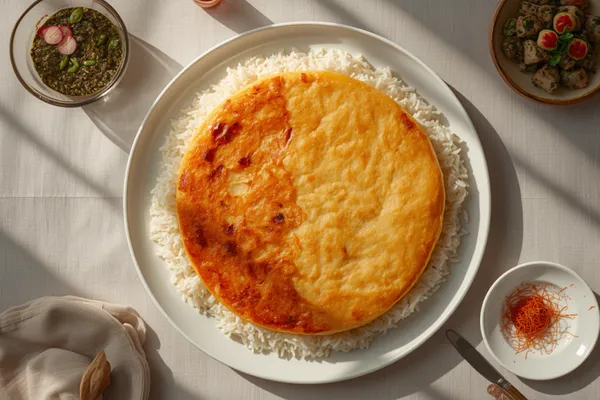
Iran — the Caspian rice provinces of Gilan and Mazandaran, refined in the court kitchens of Isfahan and Tehran · Persian
Tahdig (Persian Crispy Rice Crust)
The golden, shattering crust at the bottom of a Persian rice pot — saffron, yogurt and long-grain rice fried slowly into a single lacquered disc, inverted onto the platter and fought over before anyone touches the stew.