Morocco · Moroccan
Moroccan Chicken Tagine with Preserved Lemon and Olives
The classic of the Moroccan table: chicken slow-cooked with preserved lemon, green olives, ginger, and saffron until the meat slips off the bone in a golden, deeply savoury sauce. Aromatic, gently spiced, and far easier than it looks.
Published June 20, 2026
Cultural context
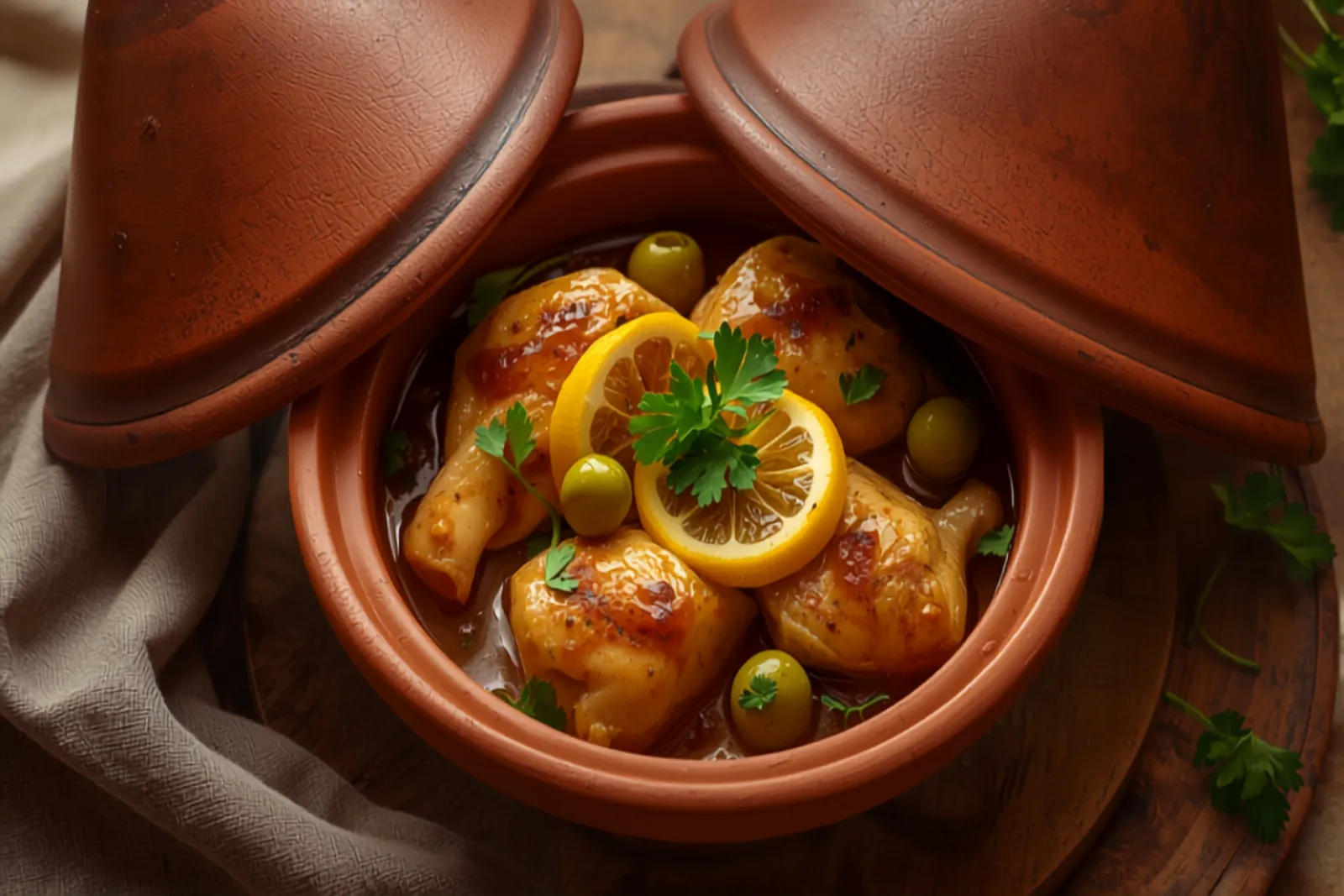
A tagine is both the conical earthenware pot and the slow-cooked stew made in it, whose sloped lid traps steam and returns it to the dish. This version — djaj mqualli, chicken with preserved lemon and olives — is one of Morocco's most iconic, built on the country's signature pairing of salty preserved lemon and warm, savoury-sweet spice. It is everyday celebration food, served from the centre of the table and eaten with bread.
A chicken tagine is one of those dishes that looks far more complicated than it is. Chicken, onions, spice, preserved lemon, and olives go into a single pot, and an hour of gentle heat turns them into something golden, fragrant, and deeply savoury — the meat slipping off the bone in a sauce you’ll want to mop up with bread. It is among the most beloved dishes of Morocco, where “tagine” names both the conical clay pot and whatever slow-cooked stew comes out of it.
This particular version — djaj mqualli, chicken with preserved lemon and olives — is the one most people picture, built on Morocco’s signature flavour pairing.
Preserved lemon is non-negotiable
If you take one thing from this recipe, let it be this: preserved lemons are not the same as fresh lemons, and there’s no real substitute. Lemons packed in salt and left to ferment turn mellow, savoury, and intensely perfumed, with none of fresh lemon’s sour bite. You use mostly the rind, rinsed and sliced. They come in jars, keep for months, and transform the dish.
Low and slow, lid on
A real tagine’s sloped lid traps rising steam and drips it back over the food, which is why so little liquid is needed. You don’t need the special pot, though — any heavy lidded pot works the same way. What matters is gentle heat. A hard boil toughens the chicken and splits the sauce; a low, patient simmer lets the onions melt into a silky base and the meat go meltingly tender.
Salt at the end
Both the preserved lemon and the olives bring their own salt, so they go in late and you season the dish only after they’ve had a chance to release it. Finish uncovered to reduce the sauce, scatter over fresh coriander, and bring the whole pot to the table.
Looking for more aromatic braises? Browse the full recipe collection, or read more cultural stories on the traditions behind the food.
Ingredients
For the chicken and marinade
- 8 pieces bone-in, skin-on chicken thighs and drumsticks Bone-in is essential for flavour and tenderness.
- 3 cloves garlic, grated
- 1 tsp ground ginger
- 1 tsp sweet paprika
- 1/2 tsp ground turmeric
- 1 generous pinch saffron threads Steeped in 2 tbsp warm water. Worth it for the colour and aroma.
- 3 tbsp olive oil
- salt and black pepper
For the tagine
- 2 large onions, thinly sliced
- 1 small bunch fresh coriander and parsley, tied together
- 250 ml water or chicken stock
- 2 preserved lemons The defining ingredient — salty, fermented lemons. Rinse, discard the pulp, and slice the rind. Available in jars; don't substitute fresh lemon.
- 150 g green olives Cracked green olives like picholine. Rinse if very salty.
To finish
- 1 small handful fresh coriander, chopped
Method
Tap a step’s number to check it off as you go.
-
Toss the chicken with the garlic, ginger, paprika, turmeric, steeped saffron, olive oil, salt, and pepper. Marinate at least 30 minutes, ideally a few hours.
Why: The spice-and-saffron marinade is the backbone of the dish; time lets it penetrate the meat and the saffron bloom.
-
In a tagine or heavy pot, layer half the sliced onions on the bottom, set the chicken on top, scatter the rest of the onions over, and tuck in the herb bundle. Pour in the water or stock.
Why: The onions melt into a sweet base and protect the chicken from scorching, while the trapped steam does the cooking — the whole principle of a tagine.
-
Cover and cook gently — on the stove over low heat or in a 170°C/340°F oven — for about 45 minutes, until the chicken is very tender and the onions have collapsed into a sauce.
Why: Low and slow is the rule; a hard boil toughens the chicken and breaks the sauce. The onions release enough liquid that little extra is needed.
-
Add the sliced preserved lemon and olives, and simmer uncovered for 10–15 minutes to reduce the sauce and let the flavours marry.
Why: Adding the lemon and olives late keeps them bright and distinct rather than dissolving them; reducing concentrates the sauce so it clings.
-
Remove the herb bundle, taste for salt (the lemon and olives are salty, so go carefully), and finish with chopped fresh coriander.
Why: Seasoning at the end accounts for the salt the preserved lemon and olives have already added. Fresh herbs lift the whole pot.
A quick, anonymous tap — no review needed.
Variations
- With vegetables
Add chunks of carrot, potato, or zucchini in the last 25 minutes for a one-pot meal, or stir in a handful of green peas at the end.
- Sweet-savoury (with apricots)
For a different Moroccan classic, swap the lemon and olives for dried apricots or prunes, a cinnamon stick, and a drizzle of honey, and finish with toasted almonds.
- Without a tagine
Any heavy, lidded pot or Dutch oven works — the cooking principle is the same. A wide, shallow pan helps the sauce reduce.
Serving & Storage
Serve from the centre of the table with warm Moroccan bread (khobz) for scooping, or over fluffy couscous. A bowl of harissa on the side adds heat for those who want it.
Pairs with: Moroccan bread (khobz), Couscous, Harissa, Mint tea.
Storage: Keeps 3 days refrigerated and tastes even better the next day. Reheat gently with a splash of water. Freezes well for up to 2 months.
Nutrition
Per serving (2 pieces with sauce (1/4 recipe))
- Calories
- 420
- Protein
- 34 g
- Carbs
- 12 g
- Fat
- 26 g
- Fiber
- 3 g
- Sugar
- 5 g
- Sodium
- 880 mg
Notable micronutrients: Vitamin C, Iron, Vitamin B6
Estimated using standard ingredient data. Values vary with brands and substitutions.
Frequently Asked Questions
Can I use regular lemon instead of preserved lemon?
Not really — preserved lemon is the soul of this dish. The salt-fermenting process transforms the rind into something mellow, savoury, and intensely lemony, with none of fresh lemon's sharpness. Jarred preserved lemons are widely available, and they keep for ages.
Do I need an actual tagine pot?
No. A tagine's sloped lid is clever, but any heavy lidded pot or Dutch oven cooks the dish just as well. The key is gentle, even heat and a tight lid to trap the steam.
Should I use chicken breast?
Bone-in thighs and drumsticks are far better — they stay juicy and flavourful through a long, gentle cook, while breast dries out. Skin-on adds richness, though you can remove it after browning if you prefer a leaner sauce.
Why is my sauce watery?
The onions and chicken release a lot of liquid. Finish the dish uncovered for 10–15 minutes to reduce the sauce until it's glossy and clings to the meat.
What to drink with this
All drinks →Hand-picked pours to match this dish.

Morocco (the Maghreb) · Moroccan
Moroccan Mint Tea (Atay — Maghrebi Mint Tea)
Morocco's sweet, fragrant green tea poured from a height into a frothy glass. The proper method — washing the tea, layering the mint, and the famous long pour — plus how sweet it really should be.

Turkey (Ottoman coffee tradition) · Turkish
Turkish Coffee (Türk Kahvesi — Unfiltered & Foamy)
Finely ground coffee simmered slowly in a cezve to a rich foam, served unfiltered in tiny cups. The grind, the heat and the foam that make it — plus the ritual of the grounds left behind.

Mexico (agua fresca tradition) · Mexican
Agua de Jamaica (Hibiscus Iced Tea)
Mexico's ruby-red hibiscus cooler: dried jamaica flowers steeped, sweetened and chilled into a tart, refreshing agua fresca. The right steep, how to control the tartness, and why it's so good for you.
From our kitchen community
Ratings & Reviews
My Rating
Tap a star to rate — no sign-in, no form needed.
My Review
0 Ratings
🥣 0 home cooks made it!
Be the first to rate Moroccan Chicken Tagine with Preserved Lemon and Olives.
Related Recipes
The Levant (Lebanon, Syria, Jordan, Palestine) · Middle Eastern
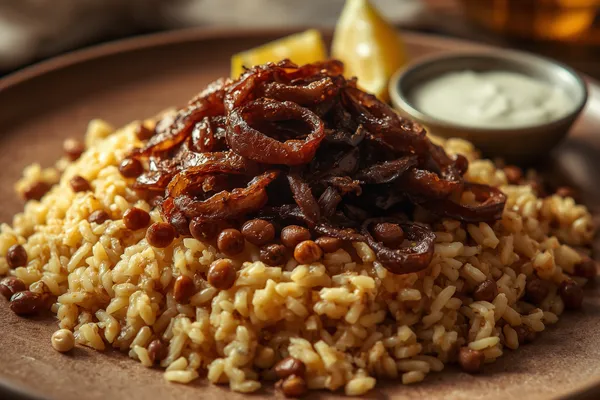
Mujaddara (Lentils and Rice with Crispy Caramelized Onions)
The Levantine dish of lentils, rice, and deeply caramelized onions — humble, ancient, and quietly luxurious. A handful of ingredients turned into something far greater than their cost, crowned with onions fried until almost black and sweet.
Lagos and south-western Nigeria — part of the wider West African jollof belt · Nigerian
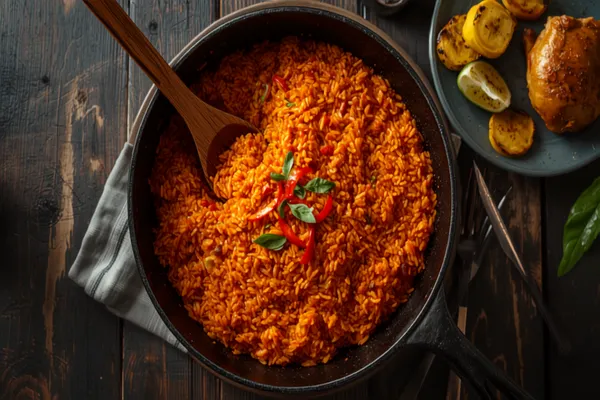
Jollof Rice (Nigerian Party Style)
West Africa's great one-pot rice, cooked the Lagos party way: a long-fried pepper-and-tomato base, parboiled long-grain rice steamed until every grain is stained red, and a deliberately toasted bottom pot for that smoky finish.
The Ethiopian highlands — Amhara and Addis Ababa, shared across the Horn of Africa · Ethiopian
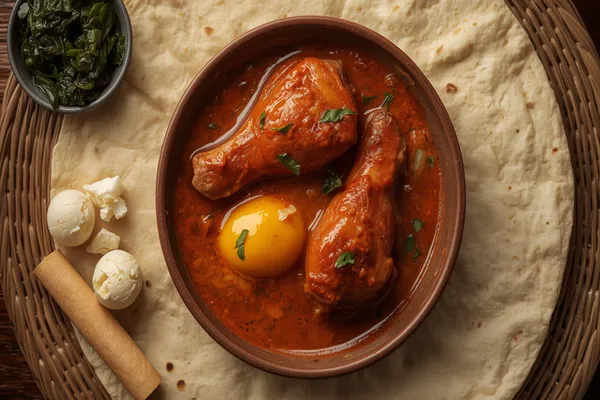
Doro Wat (Ethiopian Spiced Chicken Stew)
Ethiopia's feast-day chicken stew, built the slow way: a kilo of onions dry-cooked to a purée before any fat touches the pan, berbere and spiced butter bloomed into them, and chicken and whole eggs simmered until the sauce turns mahogany.
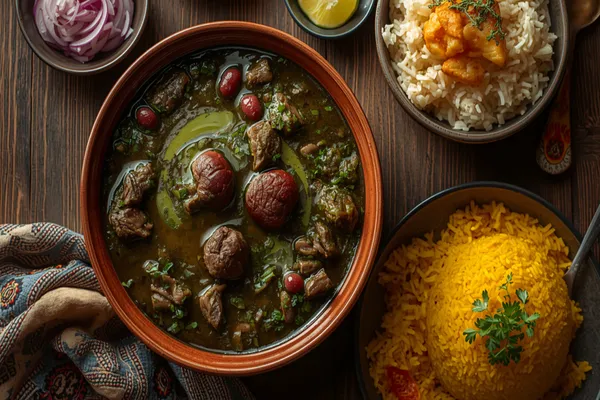
Iran — a national dish cooked from Tehran and Tabriz to Shiraz, with the herb blend shifting from province to province · Persian
Ghormeh Sabzi (Persian Herb Stew)
Iran's national stew — kilos of parsley, coriander and fenugreek fried down to a near-black green, simmered for hours with lamb, red kidney beans and dried Persian limes until the whole pot turns deep, sour and unmistakably Persian.

Casamance, southern Senegal — the Jola country below the Gambia river, and across the borders into the Gambia and Guinea-Bissau · Senegalese & Gambian
Chicken Yassa (Poulet Yassa) — Casamance's Lemon and Onion Braise
More onion than chicken, by weight — that is not a mistake, it is the recipe. Casamance's poulet yassa marinates chicken overnight in lemon, mustard and a mountain of sliced onions, chars it over fire, then braises it back down into a jammy, sour-sweet sauce.