Iran — a national dish cooked from Tehran and Tabriz to Shiraz, with the herb blend shifting from province to province · Persian
Ghormeh Sabzi (Persian Herb Stew)
Iran's national stew — kilos of parsley, coriander and fenugreek fried down to a near-black green, simmered for hours with lamb, red kidney beans and dried Persian limes until the whole pot turns deep, sour and unmistakably Persian.
Published August 16, 2026
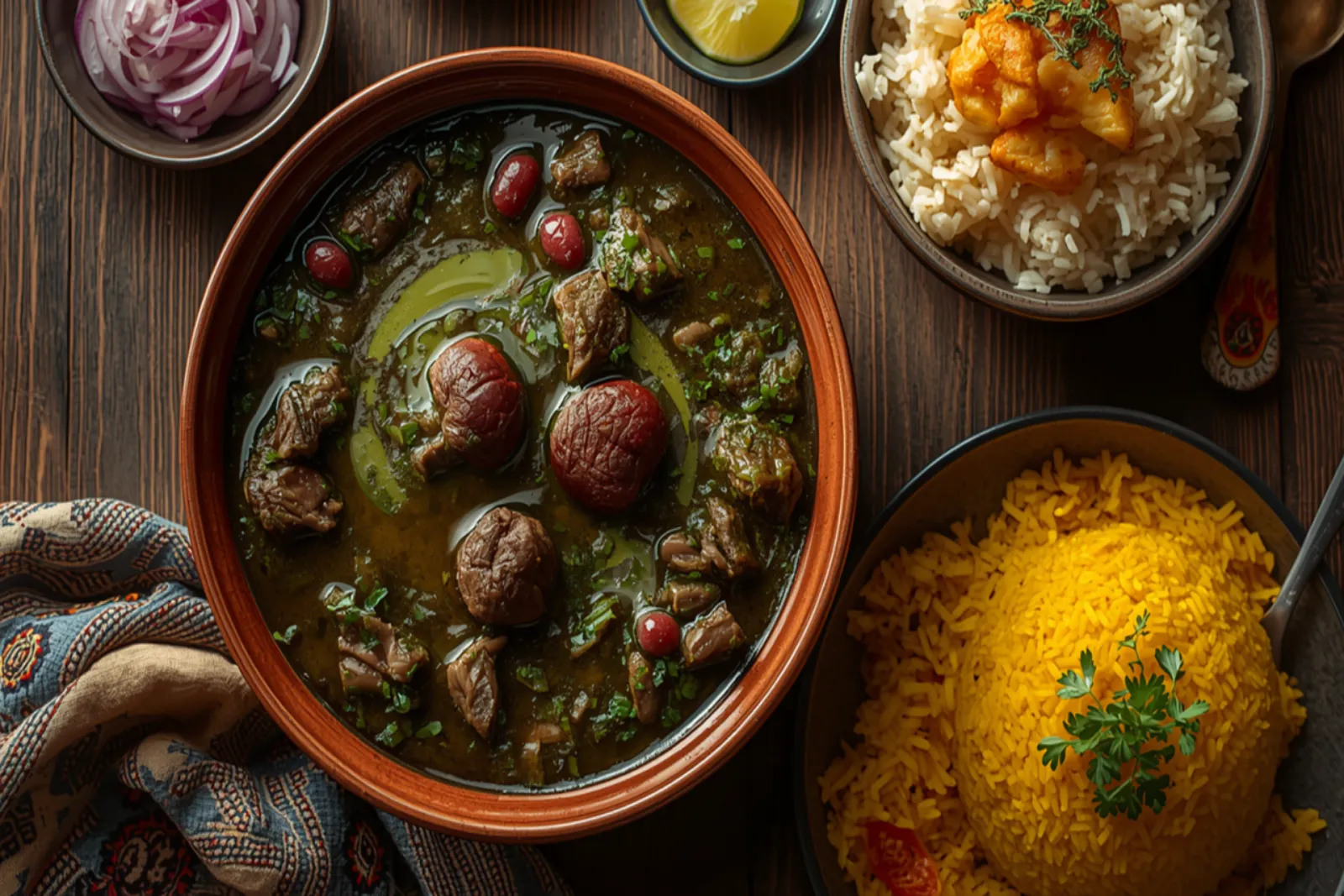
Cultural context
Ghormeh sabzi is the dish Iranians name when asked what Iran tastes like. 'Ghormeh' comes from the Turkic kavurma, to braise or fry; 'sabzi' is Persian for herbs — the name is literally the method. Some food historians place its ancestry in the Sassanian kitchen, where meat, herbs and pulses were slow-cooked together; the version recognisable today settled in the Safavid era, when Persian court cooking codified the khoresh, the stew served over rice. It is the centrepiece of family lunches, the dish carried to Sizdah Bedar picnics on the thirteenth day of Nowruz, and the food Iranians abroad cook when they are homesick. Every household claims a slightly different herb ratio and defends it.
Ghormeh sabzi is the stew Iranians reach for when they want to explain their country to someone. It is dark — properly made, almost black-green — sour in a way that has nothing to do with fresh citrus, and built on a quantity of fresh herbs that startles anyone meeting it for the first time. Four bunches of parsley go into a pot that serves six. They come out as a spoonful of something else entirely.
The name is a set of instructions. Ghormeh descends from the Turkic kavurma, to fry or braise; sabzi is Persian for herbs. Some historians trace the ancestry of herb-and-pulse stews like this to the Sassanian kitchen, well over a thousand years ago; the khoresh as Iranians know it now — a stew built to be eaten alongside steamed rice — was codified under the Safavids, when Persian court cooking took the shape it still largely holds. What has not changed is its place at the table. Ghormeh sabzi is Friday lunch with the extended family, the pot carried out to a park on Sizdah Bedar at the end of Nowruz, and the thing Iranians living abroad cook on the days the distance is loudest.
The herbs are a technique, not an ingredient
Everything that makes this dish distinctive happens in a frying pan before the stew starts. Parsley, coriander and garlic chives, chopped as fine as patience allows, go into oil over medium-low heat and stay there for twenty to thirty minutes. They collapse. The water cooks off, the volume drops by four-fifths, the colour slides from bright green through olive to something close to black, and the smell changes from grassy to nutty and faintly toasted.
Stop early and you will have made a perfectly pleasant lamb and bean stew with parsley in it. The transformation is the whole point: frying converts the herbs’ sharp fresh compounds into the deep, savoury base that the rest of the dish is stacked on. This is also why ghormeh sabzi does not photograph as a vivid green stew, whatever the internet suggests. A green one has not been fried long enough.
Fenugreek: small amount, large consequence
Fenugreek leaf — shanbalileh, the same leaf Indian kitchens know as kasoori methi — is the aroma that makes the dish identifiable across a room. It is also the most common way to ruin it. Three tablespoons of the dried leaf is plenty for this quantity; double it and the pot turns bitter in a way nothing will fix. It goes in for the last two minutes of frying, not the first, because it scorches far faster than parsley does.
Dried limes do the souring
Limoo omani are whole limes boiled in brine and dried until they rattle. Their sourness is musky and slightly fermented, closer to tamarind’s register than to fresh lime, and it is what separates a Persian khoresh from every other herb stew in the region. Pierce them, never crush them, and taste the pot at ninety minutes: once the sauce is pleasantly sour, fish them out. Left in too long they push past sour into bitter, and that door only swings one way.
Knowing when it is done
Iranian cooks watch for roghan andakhtan — “throwing oil.” Toward the end, as the sauce reduces, the emulsion breaks and a slick of dark green-gold oil rises to the surface. That slick is the signal: the stew has concentrated far enough, the meat has given up its collagen, and the herbs have finished releasing their colour into the liquid. Uncover the pot for the last half hour to get there.
Then rest it, and serve it the Iranian way — alongside chelow rather than poured over it, with a shard of crisp tahdig, a plate of fresh herbs and feta, and something pickled. It will be better tomorrow, which every Iranian household already knows and cooks accordingly.
For more of the wider region’s slow cooking, try Morocco’s chicken tagine or the Levantine mujaddara. The world classics guide maps the rest.
Ingredients
For the herbs (sabzi)
- 300 g (about 4 large bunches) flat-leaf parsley, leaves and fine stems, very finely chopped Weigh after trimming the thick stalks. This looks like an absurd quantity of parsley — it is meant to. The herbs cook down to roughly a fifth of their raw volume.
- 150 g (about 2 large bunches) coriander (cilantro), leaves and fine stems, very finely chopped
- 100 g (about 1 large bunch) garlic chives or Chinese chives (tareh), finely chopped Tareh is the traditional allium. Regular chives plus the green tops of spring onions are the usual substitute; leek greens work at a pinch.
- 3 tbsp dried, or 60 g fresh fenugreek leaves (shanbalileh / kasoori methi) The signature aroma, and the one ingredient you cannot leave out or fake. Use dried if fresh is unavailable — Indian kasoori methi is the same leaf. Do not exceed this amount: fenugreek turns aggressively bitter in quantity.
- 6 tbsp neutral oil, for frying the herbs
For the stew
- 700 g (1 1/2 lb) boneless lamb shoulder or neck, cut into 3 cm cubes Lamb is the classic. Beef chuck or shin is an equally accepted alternative and is what many Tehran households use. Both need collagen — lean leg meat will go dry.
- 2 large onions, finely chopped
- 3 tbsp neutral oil or ghee
- 1 tsp ground turmeric
- 1/2 tsp freshly ground black pepper
- 150 g (3/4 cup) dried, or 1 x 400 g tin red kidney beans, soaked overnight and drained Dried and soaked gives a firmer bean that holds its shape through three hours. If using tinned, rinse well and add only in the last 30 minutes or they will collapse.
- 4–5 dried Persian limes (limoo omani), plus 1 tbsp dried lime powder (optional) The other non-negotiable. Buy the black ones for a deeper, more fermented sourness or the tan ones for a brighter, cleaner one. Pierce each lime several times before it goes in.
- 1.2 litres hot water or light lamb stock
- 2 tsp fine sea salt, plus more to taste
- 1/2 tsp dried rose petals, ground (optional) A quiet Isfahani flourish. Adds a floral top note; leave it out if you want the herbs unadorned.
To serve
- 500 g basmati rice, cooked Persian-style (chelow) with a tahdig crust
Method
Tap a step’s number to check it off as you go.
-
Soak the dried limes in hot water for 20 minutes while you chop, then drain and pierce each one three or four times with the tip of a knife or a skewer.
Why: A whole dried lime is a sealed shell. Piercing lets the sour, faintly fermented interior leach into the stew instead of staying locked inside — and lets the liquid in, which stops the lime bobbing on the surface untouched. Soaking and draining first washes off some of the bitterness that lives in the skin.
-
Chop the parsley, coriander and chives as finely as you can manage — this takes real time and is the least glamorous half-hour in Persian cooking. Keep the fenugreek separate.
Why: Fine chopping is what lets the herbs dissolve into the sauce rather than sit in it as leaves. A food processor will bruise and water them; if you must use one, pulse in short bursts and stop before it turns to paste.
-
Heat 6 tablespoons of oil in a wide pan over medium-low heat. Add the parsley, coriander and chives and fry gently for 20–30 minutes, stirring often, until the volume has collapsed by about four-fifths and the mass has turned from bright green to a very dark, almost black-green and smells nutty rather than grassy. Stir in the fenugreek only for the last 2 minutes.
Why: This is the step that makes the dish, and the step people rush. Frying drives off the herbs' water and then browns their sugars, converting a fresh, sharp, grassy flavour into something deep, dark and savoury. Under-fried herbs give a khoresh that tastes like soup with parsley in it. The fenugreek goes in last because it is far more delicate and scorches into bitterness within minutes.
-
Meanwhile, in a large heavy pot, fry the onions in 3 tablespoons of oil over medium heat for 10–12 minutes until soft and golden. Stir in the turmeric and pepper and cook for 30 seconds, then add the lamb and turn it in the spiced onions for 5 minutes until it loses its raw colour.
Why: Blooming turmeric in hot fat before the meat goes in does two jobs at once: it takes the raw, chalky edge off the spice, and it coats the lamb so the finished stew carries turmeric's colour and earthiness all the way through rather than in patches.
-
Tip the fried herbs into the meat pot. Add the soaked kidney beans, the pierced dried limes, the salt and the hot water. Bring to a simmer, cover with the lid slightly ajar, and cook very gently for 2 to 2 1/2 hours.
Why: Everything now needs time in the same pot. The lamb's collagen melts, the beans soften, the limes slowly release their sourness, and the herbs give up their colour into the liquid — which is why a good ghormeh sabzi is dark green-brown rather than bright green. Keep it at a bare simmer: a hard boil breaks the meat apart and clouds the sauce.
-
After about 90 minutes, taste the sauce. If it is pleasantly sour, fish out the limes and discard them. If you want more sourness, press them gently against the side of the pot with a spoon and leave them in.
Why: Dried limes go from fragrant to bitter if left too long, and how fast depends on the individual fruit. Tasting at the 90-minute mark is how Iranian cooks control it — there is no fixed rule, and a stew soured past the point of pleasure cannot be brought back.
-
Uncover for the last 20–30 minutes and let the stew reduce until a distinct slick of dark oil rises to the surface. Stir in the ground rose petals, if using. Taste and correct the salt and sourness with a squeeze of fresh lime if needed.
Why: The rising oil, roghan andakhtan, is the traditional visual signal that a khoresh is finished. It means the emulsion has broken and the sauce has reduced far enough to concentrate — Iranian cooks look for it the way an Italian looks for a sauce coating a spoon.
-
Rest the pot off the heat for 15 minutes, then serve over Persian steamed rice with a piece of tahdig.
Why: Resting lets the herbs settle and the sourness distribute evenly through the sauce. Served straight off the boil the lime tastes sharply separate from everything else; ten minutes later it has merged.
A quick, anonymous tap — no review needed.
Variations
- Beef instead of lamb
Beef chuck or shin is entirely standard, especially in Tehran and among cooks who find lamb too assertive against the herbs. Use the same weight and add 20–30 minutes to the simmer.
- Vegan ghormeh sabzi
Skip the meat, double the kidney beans and add 200 g of cubed mushrooms or firm tofu browned separately, plus a tablespoon of soy sauce or a little dried mushroom powder for depth. The herbs and limes carry the dish perfectly well on their own — this version is common during Muharram and among Iran's growing vegetarian cooks.
- With spinach
Many families stretch the herb mix with 100–150 g of finely chopped spinach. It softens the intensity and deepens the colour, and is the usual way to make the dish when good parsley is expensive or out of season.
- Pressure cooker
Fry the herbs on the hob as usual — no shortcut exists for that. Then pressure cook the meat, beans, limes and herbs together for 35 minutes, release, and reduce uncovered until the oil separates.
- Tabrizi style
Cooks in Iranian Azerbaijan often lean heavier on the tareh and lighter on the fenugreek, and sometimes add a spoonful of yellow split peas. The result is greener and less pungent.
Serving & Storage
Ghormeh sabzi is always served over chelow — Persian steamed basmati with a crisp golden tahdig at the bottom of the pot, broken into shards and passed around. Set out a plate of sabzi khordan (fresh mint, tarragon, radishes, spring onion and feta), a bowl of torshi pickles and thin sheets of lavash. Iranians spoon the stew alongside the rice rather than over it, so the grains stay separate.
Pairs with: Chelow with tahdig, Sabzi khordan (fresh herb plate), Mast-o-khiar (yoghurt with cucumber and mint), Torshi liteh or mixed Persian pickles, Doogh (salted mint yoghurt drink), Shirazi salad.
Storage: Refrigerates for 4 days and genuinely improves on days two and three, as the herbs and limes keep exchanging flavour. Cool quickly and store with the oil layer intact — it seals the surface. Reheat gently over low heat with a splash of water; a hard reheat splits the sauce. It freezes well for 3 months, though the kidney beans soften; freeze in portions and defrost overnight before warming. Do not freeze it with the dried limes still in, as they keep souring.
Nutrition
Per serving (1 generous ladle of stew (about 300 g), without rice)
- Calories
- 385
- Protein
- 28 g
- Carbs
- 20 g
- Fat
- 22 g
- Fiber
- 7 g
- Sugar
- 4 g
- Sodium
- 690 mg
Notable micronutrients: Iron, Vitamin K, Vitamin A, Vitamin C, Folate, Potassium
Estimated using standard ingredient data. Values vary with brands and substitutions.
Frequently Asked Questions
Can I make ghormeh sabzi without dried limes?
You can make a herb stew, but it will not be ghormeh sabzi. The dried Persian lime provides a specific sourness — musky, faintly fermented, quite unlike fresh citrus — that defines the dish. If you truly cannot find limoo omani, dried lime powder is the next best thing, and a large squeeze of fresh lime juice plus a teaspoon of tamarind paste is a distant third. Iranian and Middle Eastern grocers stock the whole limes cheaply, and they keep for years.
Why did my ghormeh sabzi turn out bitter?
Almost always one of two things. Either the fenugreek was overdone — it is potent, and more than about 3 tablespoons dried, or more than 2 minutes in hot oil, tips the whole pot into bitterness. Or the dried limes stayed in too long: they should come out once the sauce tastes pleasantly sour, usually around the 90-minute mark. Soaking and draining the limes first, and piercing rather than crushing them, both help.
How dark should the herbs get before I stop frying?
Much darker than instinct allows. You are looking for a mass that has shrunk to roughly a fifth of its raw volume, turned a very deep green-black, and stopped smelling grassy — it should smell nutty and slightly toasted. That usually takes 20–30 minutes on medium-low heat. Stop short of this and the finished khoresh tastes thin and raw; the colour of a properly made ghormeh sabzi comes from this step, not from the simmering.
Is ghormeh sabzi Iranian, or is it shared with neighbouring cuisines?
It is Iranian, and unusually uncontested for a dish of the region — it is widely called Iran's national dish and is cooked across the country, from Tabriz to Shiraz, with local variations in the herb ratio. Its name carries a Turkic loanword (kavurma, to braise) and closely related herb stews exist in Iraqi Kurdistan and among Persian-speaking communities in Afghanistan and the Caucasus, which is what you would expect of a dish this old on a route this well travelled. But ghormeh sabzi itself is a Persian khoresh.
Can I use dried herbs instead of fresh?
Only for the fenugreek, which is traditionally dried anyway. Dried parsley and coriander have almost none of the volatile oils that make the frying step work, and the stew will taste dusty. If fresh bunches are hard to get, frozen chopped Persian herb mix — sold as 'sabzi ghormeh' at Iranian grocers — is a legitimate and widely used shortcut; fry it straight from frozen, allowing extra time for the water to cook off.
What is tahdig, and do I have to make it?
Tahdig is the golden crust of rice — sometimes with a layer of potato, flatbread or yoghurt-enriched rice at the bottom of the pot — that forms while chelow steams. It is not compulsory, but at an Iranian table it is the piece everyone reaches for first, and ghormeh sabzi's sauce is designed to be soaked up by it. Plain steamed basmati works perfectly well if you would rather not.
What to drink with this
All drinks →Hand-picked pours to match this dish.

Morocco (the Maghreb) · Moroccan
Moroccan Mint Tea (Atay — Maghrebi Mint Tea)
Morocco's sweet, fragrant green tea poured from a height into a frothy glass. The proper method — washing the tea, layering the mint, and the famous long pour — plus how sweet it really should be.

Turkey (Ottoman coffee tradition) · Turkish
Turkish Coffee (Türk Kahvesi — Unfiltered & Foamy)
Finely ground coffee simmered slowly in a cezve to a rich foam, served unfiltered in tiny cups. The grind, the heat and the foam that make it — plus the ritual of the grounds left behind.

Mexico (agua fresca tradition) · Mexican
Agua de Jamaica (Hibiscus Iced Tea)
Mexico's ruby-red hibiscus cooler: dried jamaica flowers steeped, sweetened and chilled into a tart, refreshing agua fresca. The right steep, how to control the tartness, and why it's so good for you.
From our kitchen community
Ratings & Reviews
My Rating
Tap a star to rate — no sign-in, no form needed.
My Review
0 Ratings
🥣 0 home cooks made it!
Be the first to rate Ghormeh Sabzi (Persian Herb Stew).
Related Recipes
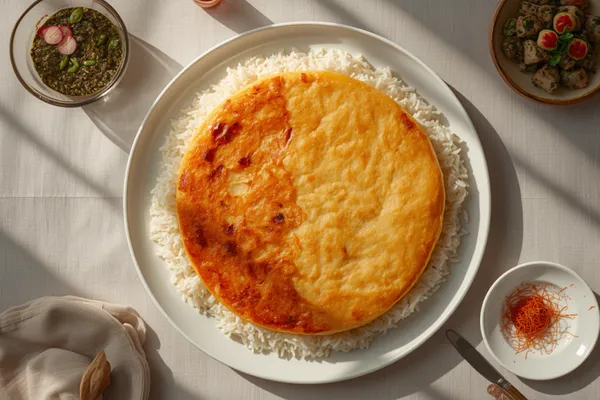
Iran — the Caspian rice provinces of Gilan and Mazandaran, refined in the court kitchens of Isfahan and Tehran · Persian
Tahdig (Persian Crispy Rice Crust)
The golden, shattering crust at the bottom of a Persian rice pot — saffron, yogurt and long-grain rice fried slowly into a single lacquered disc, inverted onto the platter and fought over before anyone touches the stew.
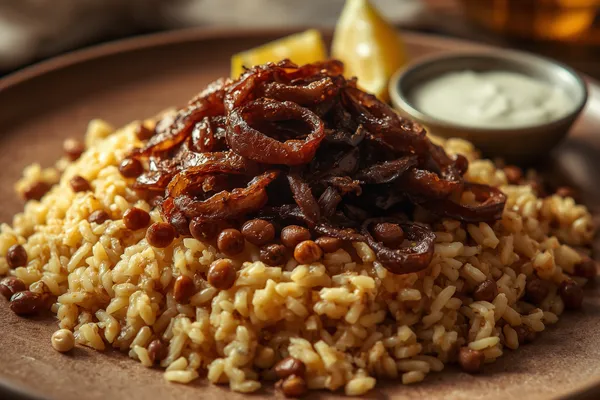
The Levant (Lebanon, Syria, Jordan, Palestine) · Middle Eastern
Mujaddara (Lentils and Rice with Crispy Caramelized Onions)
The Levantine dish of lentils, rice, and deeply caramelized onions — humble, ancient, and quietly luxurious. A handful of ingredients turned into something far greater than their cost, crowned with onions fried until almost black and sweet.
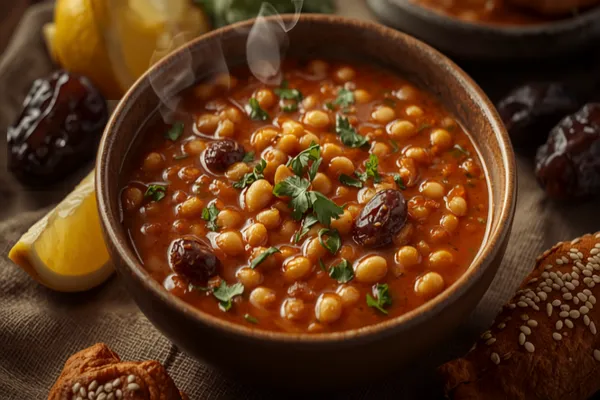
Morocco (Maghreb) · Moroccan
Harira (Moroccan Chickpea, Lentil and Tomato Soup)
Morocco's beloved soup: a hearty, tangy broth of chickpeas, lentils and tomatoes thickened with a flour-and-water tadouira, fragrant with ginger, turmeric and a flurry of herbs. The traditional dish for breaking the Ramadan fast.
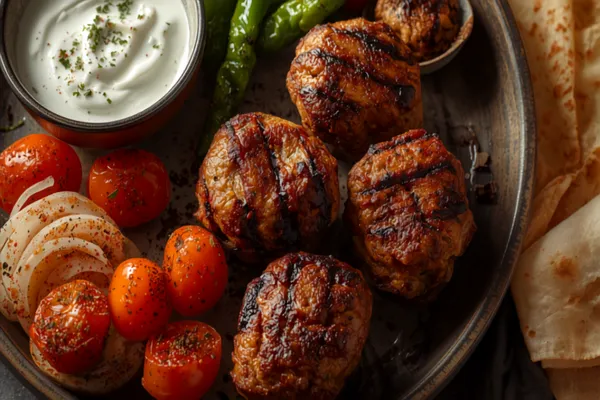
Turkey (pan-Turkish) · Turkish
Turkish Köfte (Spiced Grilled Meatballs)
Turkey's everyday favourite: ground meat kneaded with onion, garlic and cumin, shaped into little ovals and grilled or pan-fried until charred outside and juicy within. Served with flatbread, grilled peppers and a cooling salad.
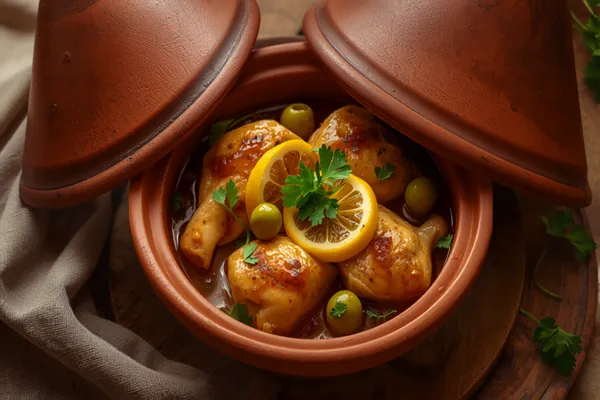
Morocco · Moroccan
Moroccan Chicken Tagine with Preserved Lemon and Olives
The classic of the Moroccan table: chicken slow-cooked with preserved lemon, green olives, ginger, and saffron until the meat slips off the bone in a golden, deeply savoury sauce. Aromatic, gently spiced, and far easier than it looks.