The Ethiopian and Eritrean highlands — teff country, from Gojjam and Shewa north into the Eritrean plateau · Ethiopian
Injera (Ethiopian and Eritrean Teff Flatbread)
The sour, lace-holed teff flatbread that is plate, cutlery and staple across the Horn of Africa — fermented for three days, thickened with a cooked absit, and cooked on one side only until the eyes open.
Published August 22, 2026
Cultural context
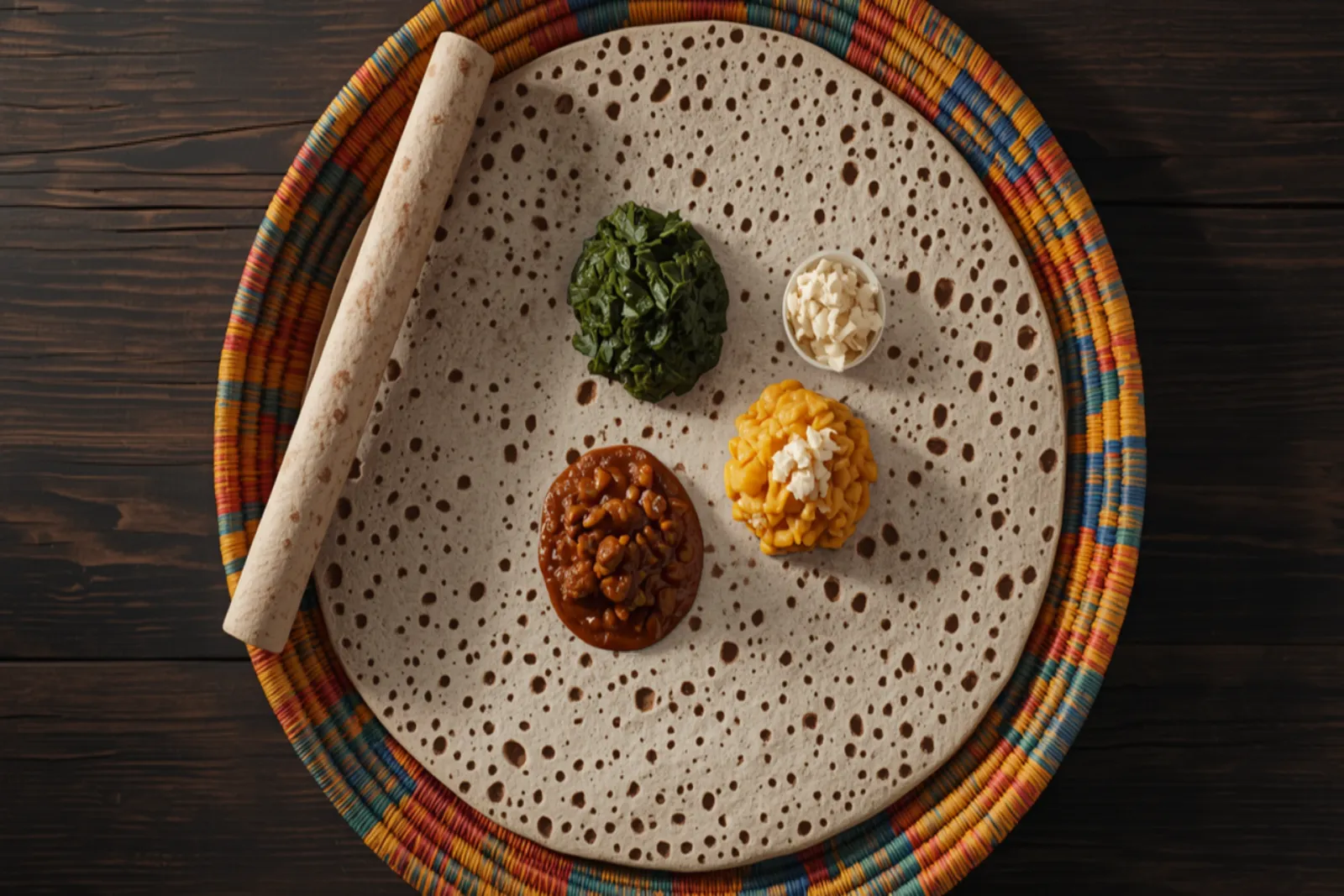
Injera is the base of the shared platter across Ethiopia and Eritrea and among the Tigrinya, Amhara, Oromo and Gurage communities of the Horn of Africa — the bread that stews are ladled onto and eaten with, so that plate and cutlery are the same thing. Teff, the tiny grain it is milled from, was domesticated in the Ethiopian highlands thousands of years ago and still occupies roughly a quarter of the country's cropland. The word for the starter, ersho, and the skill of judging a batter by smell are usually passed down within families; a household culture can be older than the cook using it. Eritrean kitchens make the same bread under the same name, and a related sour flatbread called taita turns up wherever the Tigrinya-speaking world extends, so injera belongs to a region rather than to one modern border.
Injera is the only bread most of the Ethiopian and Eritrean highlands ever needs, and it is also the plate, the spoon and the last course. Stews are ladled straight onto a wide grey-tan round of it laid over a communal tray; you tear from the edge, pinch up a mouthful, and by the end the bread beneath has drunk all the sauce and is eaten too. It is made from teff — a grain so small its Amharic name is usually explained as coming from the word for lost, because it disappears in the threshing — which was domesticated in these highlands thousands of years ago and still occupies about a quarter of Ethiopia’s cropland. Eritrean kitchens make exactly the same bread and Tigrinya speakers on both sides of the border call it taita, so this is food that belongs to a region and a set of cultures, not to a modern boundary.
Three days of doing nothing
The recipe has two ingredients and one real skill, which is patience.
Teff flour and water are whisked smooth and then left alone, loosely covered, somewhere warm and dark for three days. Nothing is added: the bran of the grain arrives carrying its own wild yeasts and lactic acid bacteria, and they do the whole job. The yeasts make carbon dioxide, which will eventually become the holes. The bacteria make lactic and acetic acid, which make injera sour and also make it safe, dropping the pH far enough that nothing unwelcome can establish itself.
By the second day a layer of cloudy yellow liquid stands on top of the batter. This is the ersho, and it is the most valuable thing in the bowl. You pour most of it off — leaving it in makes the bread punishingly sour — but you keep three tablespoons in a jar in the fridge, because stirred into your next batch it cuts the ferment from three days to about one. Families keep an ersho going for years the way bakers keep a sourdough, and a household culture is often older than the person feeding it.
The absit is not optional
Here is the step that separates injera that works from injera that comes out as a flat sour pancake. Before cooking, you take a cup of the fermented batter, whisk it with twice its volume of water, and cook it, stirring, into a loose glossy paste. Then you cool it and stir it back in.
That paste is the absit, and it is doing food science. Cooking gelatinises the starch, and gelatinised starch thickens the batter just enough that the gas the yeasts are producing gets trapped in the body of the bread instead of escaping through it. Without the absit the bubbles rise and vanish; with it they hold, and open at the surface as the fine pocked holes called the ïn — the eyes. Ethiopian cooks judge a bread by them. The absit is also what keeps injera soft and foldable a day later rather than papery.
One side, no flipping
The pan — properly a mitad, a wide clay or electric griddle with a domed lid, though a 28 cm non-stick pan with a good lid will do — goes to a medium heat, gets wiped once with oil, and then stays dry for the rest of the session.
Batter is poured, not spread, in a thin spiral from the outer edge inward, and left to flow together on its own. Within a minute the eyes open right across the surface. Then the lid goes on for two or three minutes, and the bread is finished by trapped steam rather than by contact heat. Injera is never turned over: browning it on the second side would give you a crisp crêpe, and what you actually want is something pale, soft, faintly spongy and absorbent enough to soak up an hour’s worth of stew. Slide each one onto a cloth to cool flat, and only stack them once they have stopped steaming, or they will fuse.
What goes on top is up to the table. The obvious partner is doro wat, the berbere chicken stew Ethiopians cook when a fast ends — and if you’re building a wider African spread, there’s more of it in the world classics guide.
Ingredients
For the batter
- 500 g (about 4 cups) brown or ivory teff flour Ivory (white) teff gives the pale, tan injera served in restaurants; brown teff is nuttier, darker and what most highland households actually eat. Buy it fresh — teff's germ is milled in, so old flour goes rancid and the batter will smell wrong from day one.
- 1.2–1.4 litres lukewarm water, plus more for adjusting Filtered or left to stand if your tap water is heavily chlorinated; chlorine slows a wild ferment considerably.
- 3 tbsp ersho — the cloudy liquid saved off a previous batch Optional for the first batch, essential after that. With no ersho the batter recruits its own wild yeasts and lactic acid bacteria from the flour and the air, which simply takes a day longer. Save the yellow liquid from this batch to start the next.
- 1/2 tsp fine sea salt Added only at the end, just before cooking.
Optional — a common household blend
- up to 150 g barley, sorghum, millet or rice flour, replacing an equal weight of teff Not a compromise so much as normal practice: teff is expensive even in Ethiopia, and most everyday injera is cut with another grain. Keep teff at 70 per cent or more or you lose the flavour. Note that barley is not gluten-free.
For cooking
- 1 tsp neutral oil, for seasoning the pan once A traditional mitad is wiped with an oiled cloth or a halved onion, and only for the very first injera. After that the pan goes dry.
Method
Tap a step’s number to check it off as you go.
-
Whisk the teff flour with 1 litre of the lukewarm water until completely smooth — no lumps, roughly the consistency of thin pancake batter. Stir in the ersho if you have it. Cover the bowl loosely with a cloth or a lid set ajar and leave it somewhere warm and dark, 21–24°C, for 3 days. Do not stir it.
Why: Teff carries its own population of wild yeasts and lactic acid bacteria on the bran, so nothing needs to be added; leaving the batter undisturbed lets them stratify and work. The yeasts make the carbon dioxide that will become the eyes, and the bacteria make the lactic and acetic acid that gives injera its sourness and, incidentally, keeps spoilage organisms out.
-
By day two you should see a layer of cloudy yellowish liquid standing on top and the batter beneath it looking risen and pocked with bubbles. Leave it. On day three, pour that liquid off carefully and keep 3 tablespoons of it in a jar in the fridge — that is your ersho for the next batch.
Why: The liquid is not spoilage, it is the ferment's own culture concentrated at the top. Pouring it off sharpens the flavour (too much of it and the bread turns aggressively sour) while saving it means the next batch inherits an established culture and ferments in a day rather than three.
-
Smell and taste the batter. It should smell distinctly sour and yeasty — like sourdough starter, tart but clean. If it smells only faintly of anything, give it another 12–24 hours in a warmer spot. If it has grown pink or orange fuzz, or smells of solvent or vomit, throw it out and start again.
Why: Fermentation is finished by nose, not by clock, because a 19°C kitchen and a 26°C one are on completely different schedules. Grey liquid and a hard sour smell are normal; coloured mould is not.
-
Make the absit. Whisk 250 ml of the fermented batter with 500 ml of water in a small saucepan and cook over medium heat, stirring constantly, for 3–5 minutes until it thickens into a loose, glossy paste like thin porridge. Take it off the heat and let it cool to lukewarm.
Why: This is the step people skip and then wonder why their injera has no holes. Cooking gelatinises the starch, and gelatinised starch gives the batter enough viscosity to trap carbon dioxide instead of letting it escape. It is also what makes injera soft and pliable enough to roll rather than brittle.
-
Stir the cooled absit back into the main bowl of batter along with the salt, then thin with the remaining water until the batter runs off a spoon in an unbroken ribbon — thinner than pancake batter, closer to single cream. Cover and rest for 1–2 hours.
Why: Injera is poured, not spread, so the batter has to be thin enough to flow across a 28 cm pan in a few seconds. The rest lets the yeasts wake up again after the shock of the cooked paste and start producing a fresh round of gas.
-
Heat a wide non-stick or well-seasoned flat pan — 28–30 cm, no lip if you can manage it — over medium heat until a drop of water skitters and vanishes in about a second. Wipe it once with an oiled cloth or a cut onion, then wipe it dry.
Why: The heat has to be high enough to set the surface fast, which is what forces the gas upward into visible holes, but not so high that the underside scorches before the top cooks through. Injera is never flipped, so the pan is doing the whole job from one side.
-
Pour about 200 ml of batter in a thin, steady spiral, starting at the outside edge and working inward to the centre. Do not tilt or spread it — it should flow together on its own in a few seconds.
Why: The spiral is a practical technique, not decoration: pouring outside-in means the batter that hits the hottest outer ring has the longest time to level out, so the bread ends up an even thickness rather than thick in the middle.
-
Watch for 30–60 seconds. Small holes — the ïn, the eyes — will open right across the surface. As soon as the surface stops looking wet, cover the pan with a lid and cook for a further 2–3 minutes.
Why: The eyes are the proof that the ferment worked, and they only appear on the exposed top surface, which is why injera is cooked on one side. The lid then traps steam to set the top without ever browning it, so the finished bread stays pale, soft and absorbent.
-
The injera is done when the edges lift away from the pan and the surface is matte and dry to a fingertip, with no shine left. Slide or lift it out onto a clean cloth or a wide basket, eyes upward. Do not stack it yet.
Why: A hot injera stacked straight on another one steams itself into a single glued mass. Ten minutes of cooling on a cloth is all it needs, and this is also why they are traditionally laid out on wide mesheb baskets rather than piled on a plate.
-
Repeat with the rest of the batter, stirring gently before each pour and letting the pan come back to temperature between breads. Once cool, stack the injera with a sheet of baking paper between each and cover.
Why: The batter settles as it stands and the top of the bowl becomes thinner than the bottom, so a quick stir keeps every bread the same. Letting the pan recover matters more than it sounds — a pan that has dropped 20 degrees produces a pale, holeless bread.
A quick, anonymous tap — no review needed.
Variations
- Quick injera (1 day)
Once you have a live ersho, 3 tablespoons of it in the batter will take the ferment down to 18–24 hours. This is what a household with a working culture actually does; the three-day version is the from-scratch start.
- Blended-flour injera
Replace up to 30 per cent of the teff with barley, sorghum, millet or rice flour. Barley is the most traditional partner in the highlands and gives a slightly sweeter, softer bread — though it takes the recipe out of gluten-free territory.
- No-teff aja / substitute injera
Outside the Horn, cooks improvise with 3 parts self-raising or all-purpose flour to 1 part teff, or with buckwheat and rice flour for a gluten-free version, fermented 24 hours. It makes a pleasant sour pancake and is honest cooking under constraint, but it is not injera — teff's fine, slightly molasses-ish flavour is most of what you are tasting.
- Kita / kicha (unfermented)
The everyday emergency bread: teff or wheat flour, water and salt cooked straight away with no ferment, dense and flatbread-like. Made when someone arrives unexpectedly and there is no injera in the basket.
- Firfir and fitfit
Not a variation on making it but the standard use for day-old injera: torn into pieces and tossed with berbere and spiced butter (firfir) or dressed cold with oil, chilli and onion (fitfit), usually for breakfast. No good injera is ever thrown away.
Serving & Storage
Lay two or three injera flat to cover a large communal tray, then ladle stews directly onto the bread in separate mounds — doro wat, misir wat, gomen, atakilt — so the sauces soak in. Roll another few and set them at the edge for tearing. Everyone eats from the same platter with the right hand: tear a piece from the edge, pinch up a mouthful of stew, and never let your fingers touch your lips. Feeding someone else a gursha, a hand-fed bite, is a gesture of affection. The sauce-soaked bread underneath is the last and best part of the meal.
Pairs with: Doro wat, Misir wat (red lentils), Gomen (stewed collard greens), Shiro (spiced chickpea purée), Ayib (fresh cheese), Ethiopian buna (coffee), Tej (honey wine).
Storage: Injera is at its best the day it is made and genuinely good for two, kept stacked with paper between the breads in a sealed bag at room temperature — refrigeration stales it fast and turns it papery. It freezes well for 2 months with paper between each; thaw at room temperature and warm briefly in a covered pan or a low oven, never uncovered. Day-three injera is not a failure, it is the raw material for firfir. The fermenting batter itself will hold in the fridge for about 5 days, and the saved ersho for 2 weeks.
Nutrition
Per serving (1 injera, about 28 cm (roughly 120 g))
- Calories
- 165
- Protein
- 6 g
- Carbs
- 33 g
- Fat
- 1 g
- Fiber
- 4 g
- Sugar
- 1 g
- Sodium
- 120 mg
Notable micronutrients: Iron, Calcium, Magnesium, Manganese, Phosphorus, Resistant starch
Estimated using standard ingredient data. Values vary with brands and substitutions.
Frequently Asked Questions
Why does my injera have no holes?
Almost always one of three things. The batter was under-fermented — it should smell properly sour, not faintly tangy, and three days at 21°C is a minimum from scratch. Or you skipped the absit, the cooked paste that gelatinises the starch so the batter can hold the gas rather than letting it bubble away. Or the pan was too cool: the surface has to set quickly for the gas to be forced upward into visible eyes. Fix the ferment first, then the absit, then the heat.
Can I make injera without teff?
You can make a fermented sour flatbread without it, and plenty of diaspora cooks do — commonly a mix of all-purpose or self-raising flour with a little teff, or buckwheat and rice flour for a gluten-free version. It behaves similarly and is worth making. But teff is a specific flavour, faintly nutty and molasses-like, and the very high proportion of bran and germ in such a tiny grain is also what makes injera nutritionally unusual. A wheat version is its own thing rather than a copy.
Is injera gluten-free?
Pure teff injera is naturally gluten-free, which is why teff flour has become widely available outside the Horn of Africa. But a great deal of injera — including much of what is served in restaurants and nearly all of the cheaper kind — is blended with barley or wheat to bring the cost down. If you are cooking for someone coeliac, make it yourself from 100 per cent teff and check that the flour is milled in a gluten-free facility.
Is injera Ethiopian or Eritrean?
Both, and the question is really about modern borders rather than food. The bread, the grain and the shared-platter way of eating all belong to the highland cultures of the Horn of Africa, which sat inside one political space for long stretches of their history and were divided along their present line only in the twentieth century. Eritrean and Ethiopian Tigrinya speakers make the same bread, and it is also called taita in Tigrinya. Naming one country as the origin gets the history wrong in either direction.
How sour should it taste?
Assertively so — closer to a tangy sourdough than to a pancake. That sourness is structural, not incidental: injera is the counterweight to berbere-heavy stews, and a bland version leaves the whole plate tasting flat and hot. If yours is too sharp, pour off more of the ersho liquid or shorten the ferment by half a day. If it is too mild, ferment longer or in a warmer place.
Do I need a mitad?
No. A mitad is a wide clay or electric griddle with a domed lid, and it is the right tool — big, evenly heated and dry — but a 28–30 cm non-stick frying pan with a well-fitting lid produces good injera at home. What matters is width, an even flat base, and a lid, because the top of the bread is set by trapped steam. A pan with high sloping sides makes it hard to get the finished bread out in one piece.
What to drink with this
All drinks →Hand-picked pours to match this dish.

North & West India (peak-summer drink across the subcontinent) · Indian
Aam Panna (Raw Green Mango Summer Cooler)
India's tangy, jade-green raw-mango cooler — roasted or boiled green mangoes blended with cumin, black salt and mint. The traditional heat-stroke remedy that tastes like summer.

Mexico (agua fresca tradition) · Mexican
Agua de Jamaica (Hibiscus Iced Tea)
Mexico's ruby-red hibiscus cooler: dried jamaica flowers steeped, sweetened and chilled into a tart, refreshing agua fresca. The right steep, how to control the tartness, and why it's so good for you.
Pan-Indian (North & West India) · Indian
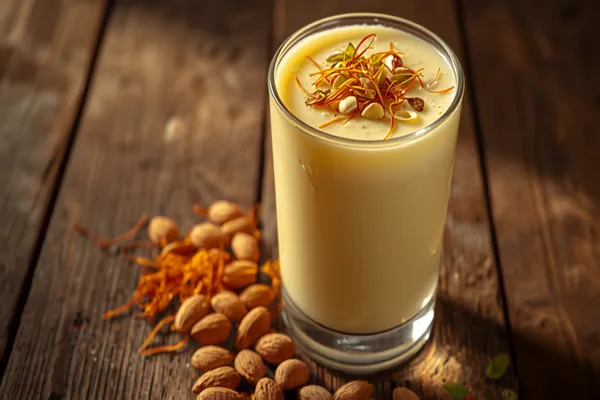
Badam Milk (Saffron Almond Milk)
Milk simmered with a paste of soaked almonds, saffron, cardamom and a whisper of nutmeg — India's rich, fragrant almond drink. Comforting served warm in winter, reviving served chilled in summer, festive any time.
From our kitchen community
Ratings & Reviews
My Rating
Tap a star to rate — no sign-in, no form needed.
My Review
0 Ratings
🥣 0 home cooks made it!
Be the first to rate Injera (Ethiopian and Eritrean Teff Flatbread).
Related Recipes
The Ethiopian highlands — Amhara and Addis Ababa, shared across the Horn of Africa · Ethiopian
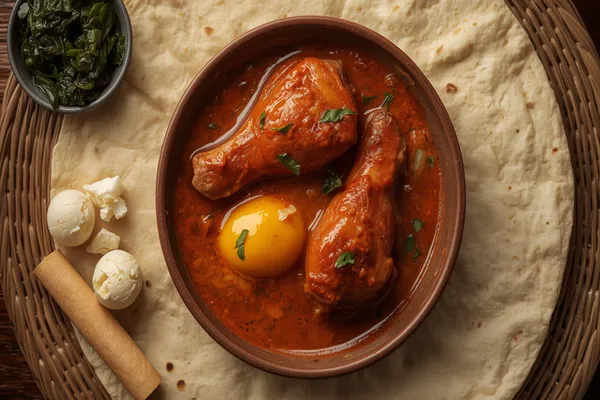
Doro Wat (Ethiopian Spiced Chicken Stew)
Ethiopia's feast-day chicken stew, built the slow way: a kilo of onions dry-cooked to a purée before any fat touches the pan, berbere and spiced butter bloomed into them, and chicken and whole eggs simmered until the sauce turns mahogany.
Saint-Louis and the Atlantic coast of Senegal — now cooked nationwide, from Dakar to the Casamance · Senegalese
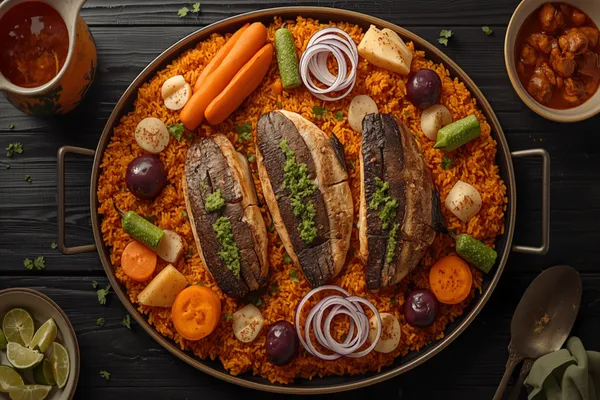
Thieboudienne (Ceebu Jën) — Senegalese Fish and Broken Rice
Senegal's national dish and UNESCO-listed culinary art: whole fish stuffed with a pounded parsley-and-garlic rof, fried, then simmered with cassava, cabbage and carrot in a long-fried tomato base — and broken rice steamed in that broth until every grain drinks it up.
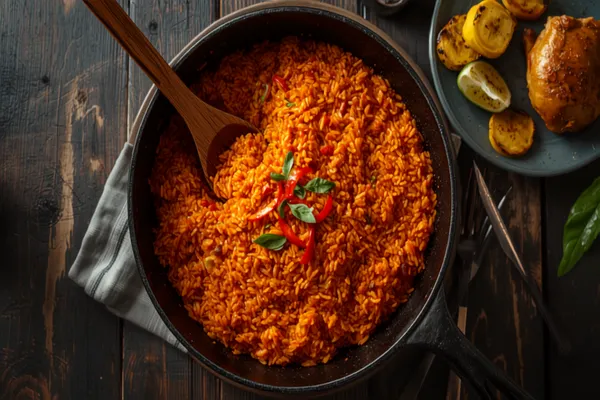
Lagos and south-western Nigeria — part of the wider West African jollof belt · Nigerian
Jollof Rice (Nigerian Party Style)
West Africa's great one-pot rice, cooked the Lagos party way: a long-fried pepper-and-tomato base, parboiled long-grain rice steamed until every grain is stained red, and a deliberately toasted bottom pot for that smoky finish.
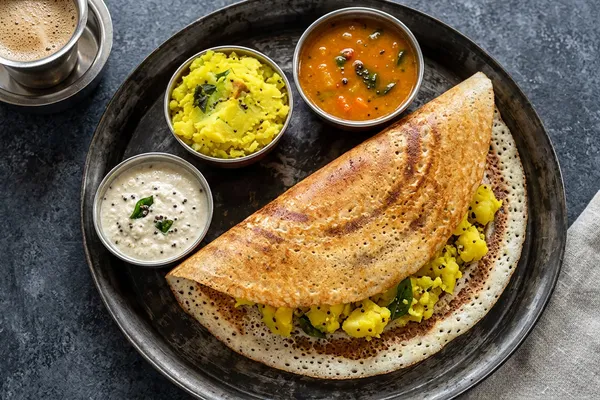
Tamil Nadu / Karnataka / South India · Indian
Masala Dosa (Crispy South Indian Crepe with Spiced Potato)
The South Indian icon: a fermented rice-and-lentil crepe griddled until lacy and golden, wrapped around a turmeric-yellow potato masala, and served with coconut chutney and sambar. A weekend project worth every minute.

Adjara, on Georgia's Black Sea coast (Batumi) · Georgian
Khachapuri Adjaruli (Georgian Cheese Boat Bread)
The boat-shaped Georgian cheese bread of the Black Sea coast: a chewy, blistered crust cradling molten salty cheese, finished at the table with a raw yolk and a knob of butter stirred through. Tear, dip, repeat.

Northern Ghana — Dagbon and the Hausa zongo quarters, now sold at every roadside in Accra and Kumasi · Ghanaian
Waakye (Ghanaian Rice and Beans with Sorghum Leaves)
Ghana's great breakfast: long-grain rice and black-eyed peas simmered with dried red sorghum leaf sheaths until every grain turns burgundy, then loaded with shito, gari, talia and a boiled egg the way the roadside sellers of Accra do it.
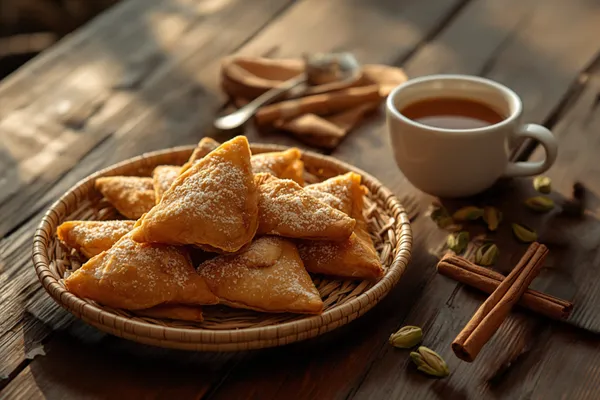
The Swahili Coast — Mombasa, Zanzibar, and Dar es Salaam, and inland across Kenya, Tanzania and Uganda · Kenyan & Tanzanian (Swahili Coast)
Mandazi (Swahili Coast Coconut-Cardamom Fried Bread)
East Africa's beloved breakfast bread: a pillowy, lightly sweet fried dough perfumed with cardamom and coconut milk. Crisp outside, tender within, and made for dunking in hot chai.