Adjara, on Georgia's Black Sea coast (Batumi) · Georgian
Khachapuri Adjaruli (Georgian Cheese Boat Bread)
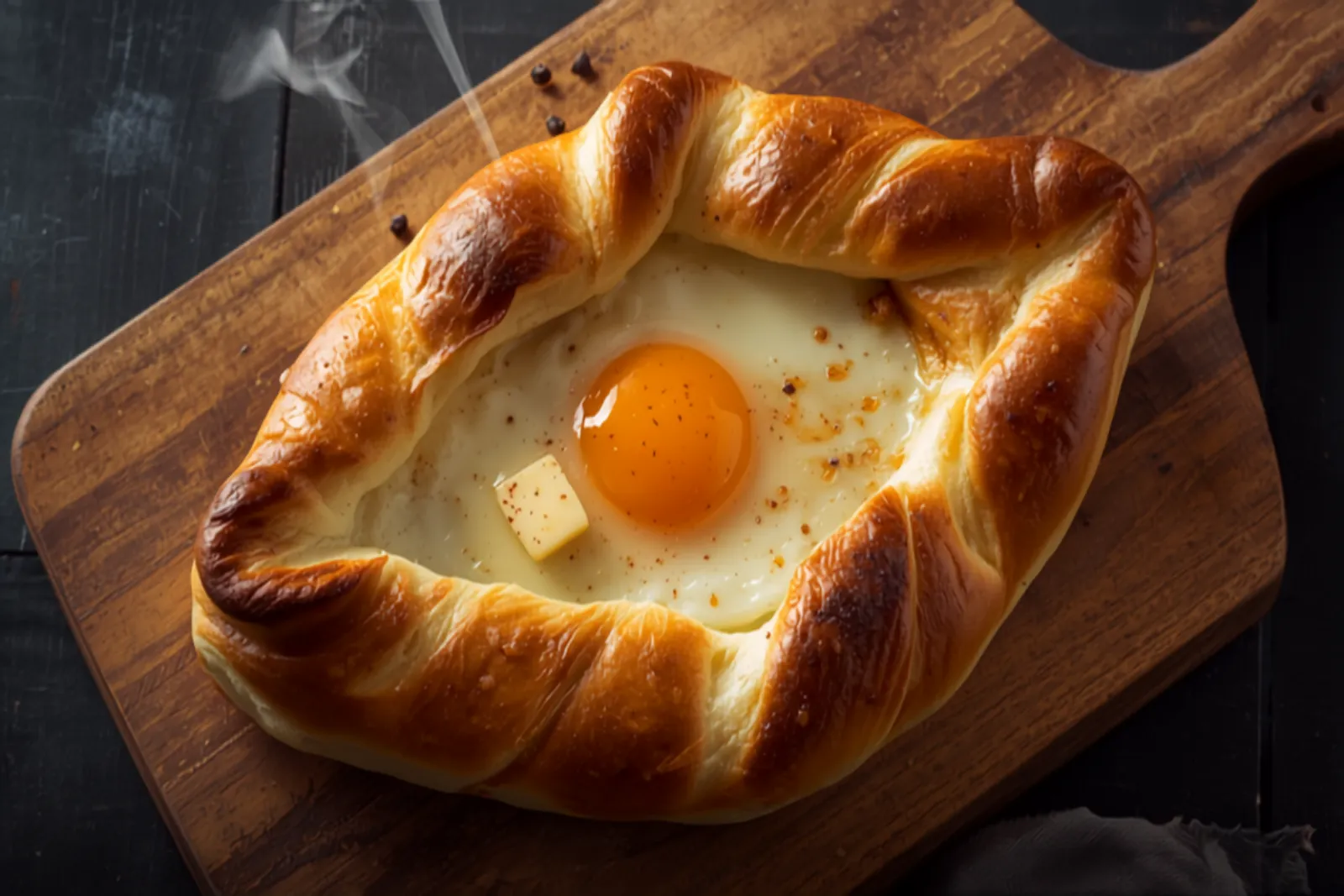
The boat-shaped Georgian cheese bread of the Black Sea coast: a chewy, blistered crust cradling molten salty cheese, finished at the table with a raw yolk and a knob of butter stirred through. Tear, dip, repeat.
Published August 10, 2026
Cultural context
Khachapuri — literally 'cheese bread' — exists in a dozen regional shapes across Georgia, and every region defends its own. The boat-shaped, egg-topped version belongs to Adjara, the humid subtropical province around Batumi where the country meets the Black Sea and the Turkish border. Local lore ties the shape to Adjara's boat-building past, and the dish shares clear ancestry with the Laz and Turkish pide traditions of the same coastline. Georgians eat it year-round and at any hour; it is a national dish rather than a festival one.
Khachapuri adjaruli is the dish most people picture when they picture Georgian food: a boat of yeasted bread, its rim twisted into two sharp points, holding a lake of molten salty cheese with a raw egg yolk and a slab of butter dropped into the middle. You stir the yolk through, tear off a piece of the rim, and dip. It arrives at the table still bubbling, and it is very hard to be reserved about.
Why a boat
The shape belongs to Adjara, the humid subtropical province in Georgia’s south-western corner where the mountains run down to the Black Sea at Batumi. Adjarians were boat builders, and the local telling is that they shaped their bread into the thing they knew best — the yolk standing in for the sun over the water. The dish also sits squarely on a culinary border: this same coastline is home to the Laz people and, a few kilometres further, to Turkish pide, and the family resemblance between a pide and an Adjaruli boat is not a coincidence. Khachapuri itself is pan-Georgian and ancient; the open, egg-topped boat is the coast’s contribution to it.
The cheese is the recipe
Traditionally the filling is about half sulguni — a brined, stretched-curd cheese with the pull of mozzarella and more tang — and half imeruli, a fresh, soft, salty curd from the region of Imereti. Neither travels widely. The workable substitution is low-moisture mozzarella for the stretch and feta for the salt, with a spoonful of whole-milk ricotta to bring back the milky slackness that supermarket feta lacks. Do not use fresh mozzarella packed in water: it releases too much liquid and you end up with a soggy hull.
Season the filling before it goes in. There is no sauce and no spicing to hide behind — the entire dish is bread, salt, fat and dairy, and it lives or dies on whether that cheese mixture tastes good cold on a spoon.
Build the rim properly
The twisted rim is structural, not decorative. It has to hold a heavy pool of liquid cheese through 18 minutes in a hot oven, and it is also the handle you tear and dip with. Pinch the two ends together hard and give them a genuine twist; a half-hearted pinch will spring open as the dough proves in the heat and your cheese will run out onto the tray. Rolling the long sides inward, rather than just folding them, gives you a rim with enough height to contain the filling.
High heat, real colour
Bake at 240°C on a preheated stone or an inverted heavy tray. The fierce bottom heat sets the base before the cheese can waterlog it, and it browns the crust and freckles the cheese — which is where most of the flavour is. Pale khachapuri tastes of raw flour.
The last thirty seconds
Everything that makes this dish distinct happens after it leaves the oven. Make a shallow well in the cheese, drop in the yolk and the butter, and carry it to the table immediately. The residual heat is enough to warm the yolk without setting it, and stirring the two through with a fork turns a stringy cheese pull into a glossy, pourable sauce. Do it while it’s screaming hot, then eat with your hands.
If you like this kind of yeasted, cheese-forward baking, try Bavarian soft pretzels or a proper Neapolitan pizza — and there’s more on dishes worth crossing a border for in the world classics guide.
Ingredients
For the dough
- 500 g (about 4 cups) strong white bread flour Bread flour gives the chew that lets the rim survive being torn and dunked. Plain flour works but the crumb is softer.
- 300 ml whole milk, warmed to about 40°C / 105°F Warm, not hot — above roughly 50°C you start killing the yeast.
- 7 g (1 sachet) instant dried yeast
- 1 tbsp caster sugar
- 1 1/2 tsp fine sea salt
- 3 tbsp olive oil or neutral oil
For the cheese filling
- 400 g low-moisture mozzarella, coarsely grated Standing in for sulguni, Georgia's brined stretched-curd cheese. Use the firm block kind, not fresh mozzarella in water, or the filling turns soupy.
- 200 g feta, crumbled Standing in for imeruli, the fresh salted curd cheese. If your feta is very salty, soak the block in cold water for 20 minutes and pat dry.
- 150 g whole-milk ricotta Not traditional on its own, but it restores the soft, milky slackness that imeruli brings and Western feta doesn't.
- 1 egg, lightly beaten Binds the filling just enough that it stays put in the boat.
To finish
- 4 egg yolks, at room temperature Kept raw and stirred in at the table — buy the freshest eggs you can. Use pasteurised eggs if raw yolk is a concern.
- 40 g (about 3 tbsp) unsalted butter, cut into 4 pieces
- 1 egg, beaten with a splash of milk, for the crust
Method
Tap a step’s number to check it off as you go.
-
Whisk the sugar and yeast into the warm milk and leave for 5–10 minutes, until it looks foamy and smells of bread.
Why: This proves the yeast is alive before you commit 500 g of flour to it — the one failure that can't be rescued later.
-
Combine the flour and salt in a large bowl, pour in the yeast milk and the oil, and mix to a shaggy dough.
Why: Salt goes in with the flour, not straight onto the yeast — direct contact with undissolved salt draws water out of the yeast cells and slows the rise.
-
Knead on a lightly floured surface for 8–10 minutes, or 6 minutes in a mixer with the dough hook, until smooth and elastic and it springs back when poked.
Why: You are building a gluten network strong enough to be stretched thin in the middle without tearing, while the twisted rim stays tall.
-
Cover and leave in a warm place for about 1 hour, until doubled.
Why: A full first rise develops both volume and flavour; underproved dough bakes dense and tastes flatly of yeast.
-
Meanwhile, mix the mozzarella, feta, ricotta and the beaten egg in a bowl. Taste it — the mixture should be assertively salty but not harsh. Chill until needed.
Why: The filling is the whole dish, so season it before it goes in the oven, not after. Chilling keeps it from slumping while you shape.
-
Heat the oven to 240°C / 465°F with a baking stone or a heavy inverted baking tray on the middle shelf.
Why: Khachapuri wants fierce, direct bottom heat — that's what sets the base fast enough to stop the cheese soaking into it.
-
Knock the dough back, divide into 4 pieces, shape each into a ball and rest for 10 minutes under a cloth.
Why: Resting relaxes the gluten so the dough will stretch instead of snapping back at you.
-
Roll each ball into an oval roughly 25 cm long. Fold the two long sides in over the filling line and pinch the ends together hard, twisting them into points, to make a canoe with a thin middle and a rolled rim.
Why: The rim is the handle and the structure: it holds the molten cheese in, and it's the part you tear off to dip. Pinch the ends properly or the boat springs a leak in the oven.
-
Lift the boats onto parchment, spoon the cheese into the wells, mounding it slightly, and brush the rims with egg wash.
Why: Egg wash is what gives the rim its deep glossy tan against the pale bubbling cheese.
-
Slide onto the hot stone and bake for 15–18 minutes, until the crust is well browned and the cheese is bubbling with brown freckles.
Why: Take it to real colour. A pale khachapuri is a doughy khachapuri, and the browned patches on the cheese carry most of the flavour.
-
Pull them out, quickly nudge a well in the centre of each cheese pool with the back of a spoon, drop in a raw egg yolk and a piece of butter, and serve immediately.
Why: The residual heat of the cheese cooks the yolk just enough. Adding it in the oven overcooks it and you lose the sauce.
-
At the table, stir the yolk and butter through the hot cheese with a fork until glossy and stretchy, then tear off pieces of the rim and dip.
Why: This is the point of the dish: the yolk and butter emulsify the cheese into a rich, pourable sauce. Stirring is not optional and it is not a garnish.
A quick, anonymous tap — no review needed.
Variations
- Megruli (Mingrelian)
The round Mingrelian cousin: seal the cheese inside a disc of dough, roll flat, bake, then scatter more cheese over the top to melt. No egg, twice the cheese.
- Imeruli
The everyday version from Imereti — a flat round loaf with the cheese sealed entirely inside, cooked in a pan. The simplest of the family and the best weeknight one.
- Without raw egg
Crack a whole egg into the well and return the boat to the oven for 3–4 minutes to set the white while the yolk stays soft. Less silky, but fully cooked.
- Closer to the real cheese
If you can find sulguni and imeruli at a Georgian, Russian or Eastern European grocer, use 300 g of each and skip the ricotta and feta entirely.
Serving & Storage
Serve straight from the oven, one boat per person, with a sharp tomato-and-cucumber salad and something cold to drink — the dish is unrelentingly rich and needs acid alongside. Eat with your hands.
Pairs with: Tomato and cucumber salad, Pickled vegetables, Dry white wine, Sparkling water with lemon.
Storage: Best within minutes of leaving the oven — this is not a make-ahead dish. The dough, however, is: it will hold in the fridge for up to 48 hours after its first rise, and improves in flavour. Leftover baked boats keep 2 days refrigerated; reheat at 200°C for 8 minutes (never the microwave, which turns the crust to rubber).
Nutrition
Per serving (1/2 boat)
- Calories
- 620
- Protein
- 26 g
- Carbs
- 51 g
- Fat
- 33 g
- Fiber
- 2 g
- Sugar
- 4 g
- Sodium
- 1100 mg
Notable micronutrients: Calcium, Phosphorus, Vitamin B12, Selenium
Estimated using standard ingredient data. Values vary with brands and substitutions.
Frequently Asked Questions
What cheese should I use if I can't find sulguni?
The authentic filling is roughly half sulguni (a brined, stretchy curd cheese) and half imeruli (a fresh, salty, crumbly one). Low-moisture mozzarella covers the stretch and feta covers the salt and tang; a little whole-milk ricotta brings back the soft freshness that imeruli has and feta doesn't. Georgian, Russian and Eastern European grocers often stock the real thing, and it is worth the trip.
Is the egg yolk really raw?
Yes — it goes into the centre after baking and is stirred through the hot cheese, which cooks it only lightly. That's the traditional Adjaruli service and it's what makes the filling saucy rather than stringy. If raw yolk isn't for you, use pasteurised eggs, or crack a whole egg in and return the boat to the oven for a few minutes to set it.
My cheese leaked out of the boat. What went wrong?
Almost always the ends. The pinched, twisted points are the seal, and they need to be squeezed firmly and given a proper twist — a light pinch pops open as the dough expands. It also helps to keep the filling chilled and not to overfill: mound it slightly, but leave the rim proud of the cheese.
Can I make the dough ahead?
Yes, and it's the best way to serve this to guests. After the first rise, knock the dough back, cover tightly and refrigerate for up to 48 hours. Bring it to room temperature for about an hour before shaping. The slow cold ferment gives a noticeably better-flavoured crust.
How is Adjaruli different from other khachapuri?
Khachapuri is a family, not a single recipe. Adjaruli is the open boat with the egg, from the Black Sea coast. Imeruli is a flat sealed round, the everyday one. Megruli is the same, with extra cheese melted on top. Achma is layered like a lasagne. Each region will tell you theirs is the correct one.
What to drink with this
All drinks →Hand-picked pours to match this dish. Alcoholic pairings are for adults of legal drinking age (21+ in the US) — please drink responsibly.

Pan-Indian (the everyday tea of the subcontinent) · Indian
Masala Chai (Spiced Indian Tea)
India's daily ritual in a cup: black tea brewed with milk, sugar and freshly crushed spices. The proper stovetop method, plus how to build your own masala.

Mexico (agua fresca tradition) · Mexican
Agua de Jamaica (Hibiscus Iced Tea)
Mexico's ruby-red hibiscus cooler: dried jamaica flowers steeped, sweetened and chilled into a tart, refreshing agua fresca. The right steep, how to control the tartness, and why it's so good for you.
 21+
21+ Florence, Italy (Tuscan aperitivo tradition) · Italian
Negroni (The Perfect Three-Part Aperitivo)
Equal parts gin, Campari and sweet vermouth, stirred over ice with an orange peel. Italy's great bitter aperitivo — the easiest world-class cocktail to remember and one of the hardest to improve on.
From our kitchen community
Ratings & Reviews
My Rating
Tap a star to rate — no sign-in, no form needed.
My Review
0 Ratings
🥣 0 home cooks made it!
Be the first to rate Khachapuri Adjaruli (Georgian Cheese Boat Bread).
Related Recipes
Bavaria · German
Bavarian Soft Pretzels (Brezn)
The mahogany-brown, lye-dipped soft pretzel of the Munich beer garden: a chewy, glossy crust giving way to a soft crumb, scattered with coarse salt. The Oktoberfest classic, made at home with a safe baking-soda bath.
Ukraine — the Poltava and Kyiv regions and the wider black-earth belt · Ukrainian
Ukrainian Borscht (Борщ)
The UNESCO-listed soup of the Ukrainian black-earth belt — pork-rib broth, cabbage, potato and beetroot cooked so its colour stays ruby rather than brick, finished with garlic-and-salo tovchanka and a spoonful of smetana. Served with pampushky, and always better the next day.
Naples, Campania · Italian
Neapolitan Pizza Margherita
The original pizza: a slow-fermented dough stretched thin, topped simply with San Marzano tomatoes, fresh mozzarella, and basil, and blasted in the hottest oven you've got until the rim puffs and chars. Three toppings, one perfect pie.
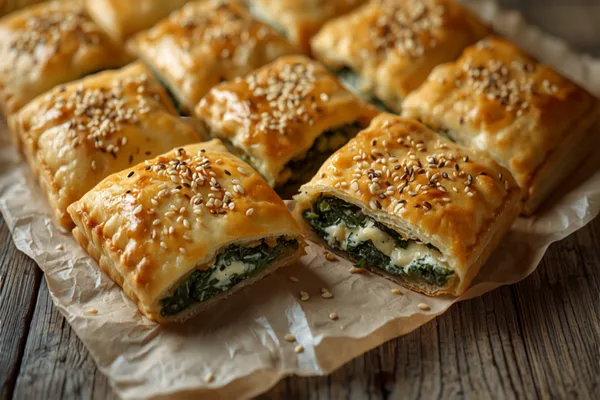
Greece (pan-Hellenic) · Greek
Spanakopita (Greek Spinach and Feta Pie)
The great Greek spinach pie: a generous filling of wilted spinach, herbs, scallions and sharp feta, baked between shatteringly crisp layers of butter-and-oil brushed phyllo. Cut into squares, served warm or at room temperature.
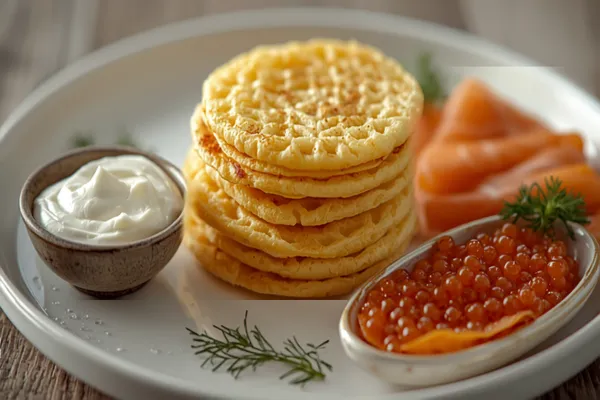
Russia · Russian
Russian Blini (Yeasted Buckwheat Pancakes)
The pancakes at the heart of Maslenitsa, Russia's butter-rich farewell to winter: thin, lacy, yeast-raised rounds with a faint tang, served in stacks with butter, sour cream, jam, or — for a feast — smoked salmon and caviar.

Minas Gerais, south-eastern Brazil (the Serra da Canastra dairy country) · Brazilian
Pão de Queijo (Brazilian Cheese Bread from Minas Gerais)
Brazil's great small bread: hollow, chewy cassava-starch puffs with a crackling shell and a stretchy, salty cheese-scented middle. Naturally gluten-free, and the batter keeps in the freezer for a hot tray any morning of the week.
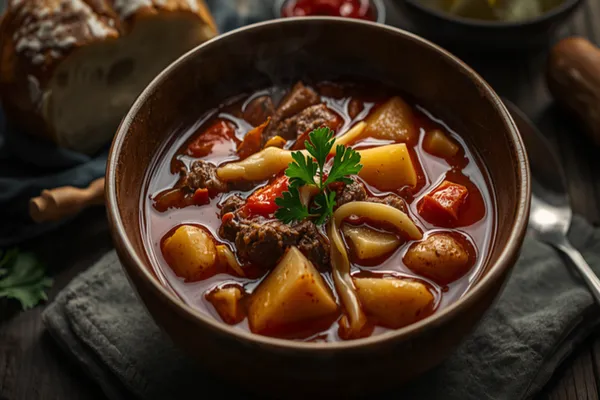
The Great Hungarian Plain (Alföld) — Hortobágy and the Puszta cattle country · Hungarian
Hungarian Goulash (Gulyásleves)
The real gulyás of the Hungarian plain — a brothy, paprika-red beef soup with potatoes, sweet peppers and hand-pinched csipetke noodles. No flour, no roux, no sour cream: just onions, good paprika and three unhurried hours.
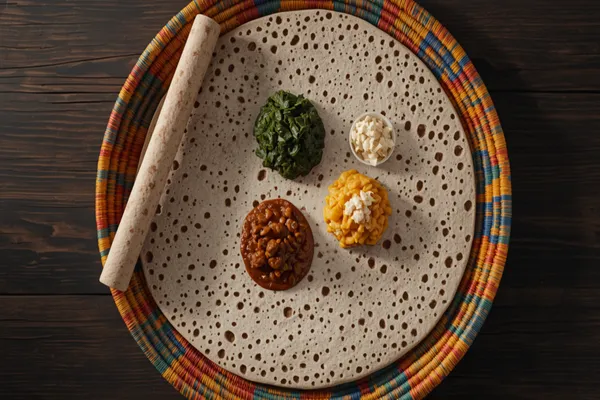
The Ethiopian and Eritrean highlands — teff country, from Gojjam and Shewa north into the Eritrean plateau · Ethiopian
Injera (Ethiopian and Eritrean Teff Flatbread)
The sour, lace-holed teff flatbread that is plate, cutlery and staple across the Horn of Africa — fermented for three days, thickened with a cooked absit, and cooked on one side only until the eyes open.
Poland — eaten nationwide, but named for Ruś (Red Ruthenia), the historic borderland now split between south-eastern Poland and western Ukraine · Polish
Pierogi Ruskie (Polish Potato and Twaróg Dumplings)
Poland's most-loved pierogi: a hot-water dough rolled thin enough to see through, wrapped around floury potato, tangy twaróg curd cheese and onions fried slowly to deep gold — boiled, buttered, and eaten under a spoonful of sour cream.