Poland — eaten nationwide, but named for Ruś (Red Ruthenia), the historic borderland now split between south-eastern Poland and western Ukraine · Polish
Pierogi Ruskie (Polish Potato and Twaróg Dumplings)
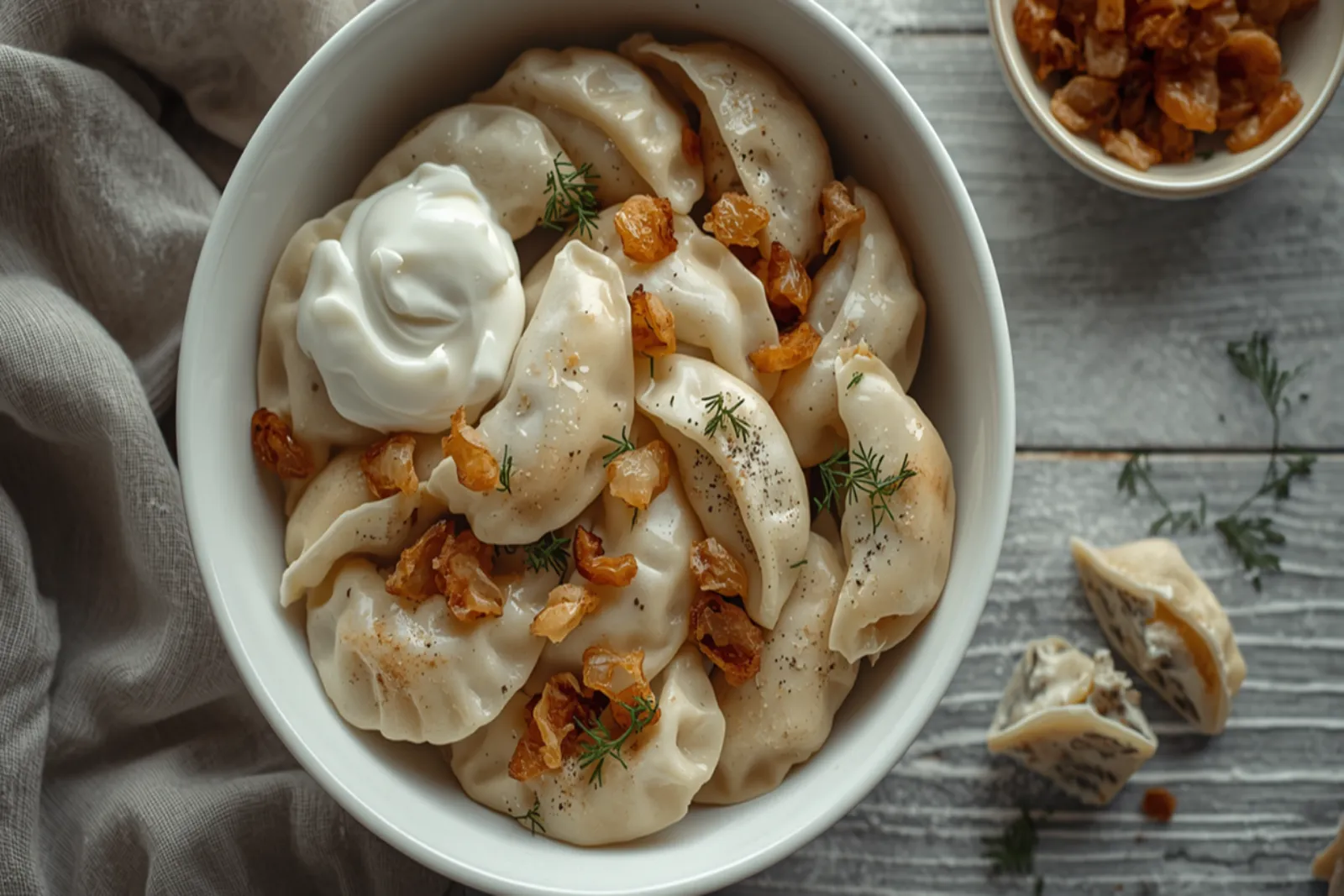
Poland's most-loved pierogi: a hot-water dough rolled thin enough to see through, wrapped around floury potato, tangy twaróg curd cheese and onions fried slowly to deep gold — boiled, buttered, and eaten under a spoonful of sour cream.
Published August 24, 2026
Cultural context
The name misleads almost everyone: ruskie means Ruthenian, not Russian — Russian would be rosyjskie. The filling of potato, curd cheese and fried onion belongs to Red Ruthenia, the eastern borderlands of pre-war Poland, and travelled west with the millions of people resettled from the Kresy after 1945, which is how a regional dumpling became the default pierogi of every milk bar in the country. Ukrainian cooks make the same dumpling and call it varenyky z kartopleyu i syrom; since 2022 a good many Polish restaurants have simply renamed the dish pierogi ukraińskie to end the confusion.
Pierogi ruskie are the pierogi you get if you walk into a Polish milk bar and ask for pierogi without specifying — the potato-and-curd-cheese half-moons that outsell every other filling in the country by a wide margin. They are also the ones with the most misleading name in Polish cooking. Ruskie does not mean Russian. It means Ruthenian, from Ruś: Red Ruthenia, the old eastern borderland that is now split between south-eastern Poland and western Ukraine. Russian, in Polish, is rosyjskie — a different word entirely.
The distinction matters more than it used to. When Poland’s borders were moved west in 1945 and millions of people were resettled out of the Kresy, they brought this dumpling with them, which is how a regional filling became the national default. Ukrainian kitchens make the same thing and call it varenyky z kartopleyu i syrom, and since 2022 a great many Polish restaurants have quietly relabelled their menus pierogi ukraińskie — partly as a gesture, partly because they were tired of explaining the etymology to every table.
Three ingredients, no hiding place
The filling is potato, curd cheese and onion. That is all. There is no garlic, no herb, nothing that could be described as a spice except black pepper, which means every one of those three components has to be handled properly because there is nothing to hide behind.
The potato must be floury and it must be dry — boiled hard in salted water, drained, then left in the hot pan for a minute until the surfaces go chalky. Water left in the potato becomes steam inside a sealed dumpling, and steam is the single most common reason pierogi come apart in the pot. Mash it hot, by hand. Never a food processor: hot potato yields with almost no pressure, but a blade shears the starch granules open and you get glue.
The cheese is twaróg, the semi-fat Polish curd cheese sold in every Eastern European shop as a firm white brick. It is drier than quark, crumblier than cottage cheese, and it carries a clean lactic sourness that is the whole reason this filling isn’t bland. Cream cheese and ricotta are not substitutes — both are wetter and both are sweet. If twaróg is genuinely unavailable, press full-fat quark or cottage cheese in a muslin until the whey stops running.
And the onions want fifteen unhurried minutes in butter, taken well past soft to a real gold. Pale onion tastes raw against curd cheese. Browned onion turns sweet and becomes the savoury spine of the dish.
Season it cold
One small rule that changes the result out of proportion to the effort: cool the filling completely and taste it then. Curd cheese reads noticeably blander cold than it does warm, so a filling seasoned while hot always arrives at the table under-salted and under-peppered. Cold filling is also firmer and far easier to wrap — and it won’t steam the inside of the dough while you work, which is what makes edges go tacky and refuse to seal.
Why the water is hot
Polish pierogi dough is made with hot water — around 85°C, steaming and moving in the pan but short of boiling — and no egg. Both choices are deliberate.
Hot water partially gelatinises the surface starch and interferes with the gluten as it forms. What you get is a dough that stretches thin without recoiling, and stays soft and workable for the hour it takes to fill forty dumplings. Cold-water dough is springier, fights the rolling pin, and dries at the edges while you’re still folding. Egg makes a firmer dough that a beginner will find easier to handle and that freezes a shade better, but it also makes the cooked wrapper tougher — and for ruskie in particular, the ideal is a wrapper thin enough to nearly disappear around the filling.
Then rest it, covered, for a full half hour, and keep it covered for the rest of the session. A dough surface that has dried even slightly will not seal to itself no matter how hard you pinch. Roll to about 2 mm — thin enough to almost read through — press the air out as you crimp, and go along each seam a second time. The seam is the only part of a pierogi that can fail.
In the pot, and out of it
A wide pot, well-salted water, a gentle rolling boil rather than a violent one, ten or twelve at a time. They rise to the surface when the air inside warms and expands, which is not the same as being cooked — give them two to three minutes after they float, because the crimped seam is double-thickness dough and will taste raw at the fold otherwise.
Lift them out, and toss them in melted butter straight away. Drained pierogi weld themselves together within a minute as the surface starch sets, and in any case plain boiled pierogi are considered unfinished in Poland. What goes on top is doing real work: fried onions for sweetness, or skwarki — crisp pork scraps poured over with their fat — and a cold spoonful of sour cream to cut through what is otherwise a great deal of soft starch.
Make far more than you need and freeze them raw on a floured tray. The folding is the slow part, and the ninth dumpling is no faster than the fortieth.
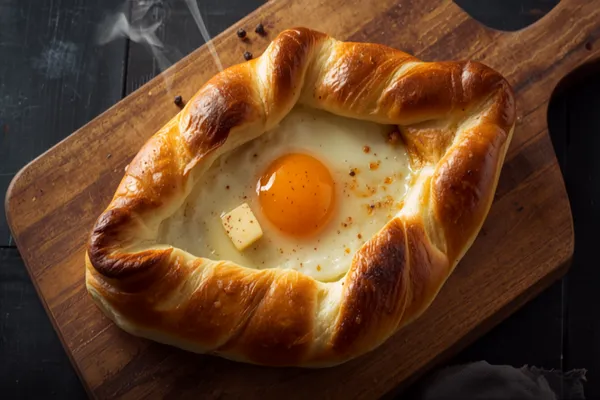
If you want to keep going east and west through the same tradition of filled and folded dough, the Georgian khachapuri adjaruli works the same instinct — dough, dairy, butter — in a completely different shape, and there is more of the wider canon in the world classics guide.
Ingredients
For the filling
- 700 g (1 lb 9 oz) floury potatoes, peeled and cut into even chunks Maris Piper, King Edward or russet. Waxy salad potatoes hold water and stay gluey when mashed — the filling needs to be dry and fluffy or it will burst the seams in the pot.
- 400 g (14 oz) twaróg półtłusty (semi-fat Polish curd cheese), crumbled The one ingredient worth hunting for; any Polish or Eastern European shop has it. Failing that: dry farmer's cheese, or full-fat quark or cottage cheese pressed in a cloth until no more whey runs out. Not cream cheese and not ricotta — both are too sweet and too wet, and neither has the clean sour edge the dish is built on.
- 2 large (about 300 g) onions, finely diced Two go into the filling, and it is worth frying a third for the top.
- 40 g (3 tbsp) butter, or lard for the traditional version
- 1 1/4 tsp fine salt, plus more to taste
- 1 tsp black pepper, coarsely ground More than feels right. Pepper is the only spice in the dish and it is meant to be assertive — grind it coarse so you get flashes of heat rather than a background hum.
For the dough
- 500 g (4 cups) plain (all-purpose) flour Plus 50 g or so for dusting. Don't use bread flour; the extra protein makes a dough that fights the rolling pin and boils up chewy.
- 300 ml (1 1/4 cups) hot water, around 85°C / 185°F Steaming and moving in the pan but not boiling. Straight from a just-boiled kettle, left to stand two minutes, is close enough.
- 2 tbsp sunflower oil or melted butter
- 1 tsp fine salt
To serve
- 1 onion, sliced, fried in butter until golden The classic vegetarian topping. The meat-eater's version is skwarki — 100 g of diced smoked bacon or salt pork rendered until crisp, poured over fat and all.
- 200 ml (3/4 cup) sour cream (śmietana, 18%)
- 2 tbsp butter, melted, for tossing the drained pierogi
- chopped dill or chives (optional)
Method
Tap a step’s number to check it off as you go.
-
Boil the potatoes in generously salted water until a knife slides through with no resistance, 15–20 minutes. Drain, return them to the dry hot pan and leave them uncovered over the lowest heat for a minute, shaking once or twice, until the surfaces look chalky.
Why: That minute of steam-drying is the difference between a filling and a paste. Any water left in the potato turns to steam inside the sealed dumpling, and steam has to go somewhere — usually out through the seam, into the pot.
-
Mash while still hot with a hand masher or pass through a ricer. Never a food processor or stick blender.
Why: Hot potato mashes smooth with almost no work; cold potato has to be beaten, and beating ruptures the starch granules. A blender does it instantly — you get wallpaper paste, and no amount of cheese will rescue it.
-
Meanwhile, melt the butter in a wide frying pan and cook the two diced onions over medium-low heat for 12–15 minutes, stirring often, until they are deep gold and sweet. Take them further than merely soft.
Why: There is no garlic, no herb and no spice in this filling beyond pepper, so the onion is carrying the entire savoury register. Pale, barely-cooked onion tastes raw and sharp against the curd cheese; properly browned onion turns sweet and gives the filling its backbone.
-
Crumble the twaróg into the hot mashed potato, add about two-thirds of the fried onions, the salt and the pepper, and mash together until evenly combined but still slightly textured. Spread it on a plate and cool completely — at least 30 minutes, or refrigerate.
Why: Two reasons the filling must be cold. Warm filling steams the inside of the dough as you work, turning the edges tacky and impossible to seal. And curd cheese tastes noticeably blander cold than hot, so anything you season while it is warm will end up under-salted on the plate. Taste it cold and adjust then.
-
For the dough, put the flour and salt in a wide bowl, make a well and add the oil. Pour in the hot water in a steady stream, stirring with a fork until it comes together in shaggy lumps, then turn out and knead for 8–10 minutes until completely smooth, soft and elastic — it should feel like an earlobe.
Why: Hot water is the whole trick of Polish pierogi dough. It partially gelatinises the surface starch and denatures some of the gluten as it forms, which gives a dough that stretches thin without springing back and stays supple for the hour it takes you to fill forty dumplings. Cold-water dough is tougher, fights the pin, and dries out while you work.
-
Cover the dough with an upturned bowl and rest for 30 minutes at room temperature. Keep it covered from now on — always.
Why: Resting lets the gluten relax so the dough rolls to 2 mm instead of shrinking back to 4 mm. And a dough skin that has dried out even slightly will not seal, no matter how hard you pinch: the seam needs tacky dough meeting tacky dough.
-
Cut the dough into quarters, keeping three covered. Roll one quarter on a lightly floured surface until you can almost read print through it — about 2 mm. Cut 8 cm (3 in) rounds with a glass or cutter.
Why: Pierogi are judged on the ratio of filling to dough, and thin is the entire point; a thick, doughy pierogi is the standard complaint about the frozen supermarket kind. Gather and re-roll the scraps once, but only once — twice-worked dough goes tough.
-
Put a heaped teaspoon of filling (about 20 g) on each round. Fold into a half-moon and pinch the seam shut firmly from the centre outwards, pressing the air out as you go, then go back along the seam a second time. Keep flour off the edges you intend to join.
Why: Trapped air is the main cause of pierogi that split. It expands the moment the dumpling hits boiling water and pops the weakest point of the seal. Working from the centre out gives the air somewhere to escape, and the second pass along the seam is cheap insurance — the seam is the only part of a pierogi that can fail.
-
Lay the finished pierogi in a single layer on a well-floured cloth or tray. Don't let them touch, and don't stack them.
Why: The dough is damp on the inside surface and will fuse to anything it rests against. A stacked tray becomes one large ravioli, and prising them apart tears the seams.
-
Bring a wide, deep pot of well-salted water to a gentle rolling boil. Slide in 10–12 pierogi at a time, stir once with a wooden spoon to lift them off the base, and cook for 2–3 minutes after they float to the surface.
Why: A hard boil batters the dumplings against each other and tears them; a gentle roll cooks them just as fast. Floating only means the inside has warmed enough to expand — the seam is double-thickness dough and needs those extra two minutes to cook through, which is why an under-boiled pierogi tastes raw exactly at the crimp.
-
Lift out with a slotted spoon, drain briefly, and turn them in melted butter in a warm bowl as each batch comes out.
Why: Boiled pierogi glue themselves together within about a minute of draining as the surface starch cools and sets. A film of butter stops that, and it is also how they are served — plain boiled pierogi are considered unfinished.
-
Serve hot, topped with the reserved fried onions (or hot skwarki and their fat), a spoonful of sour cream and dill if you like.
Why: Every element on top is doing a job: the onion supplies sweetness, the fat carries it, and the cold sour cream cuts through what is otherwise a lot of soft starch. Skip the sour cream and the plate tastes heavy within three dumplings.
A quick, anonymous tap — no review needed.
Variations
- Pierogi z kapustą i grzybami (sauerkraut and mushroom)
The Wigilia dumpling, eaten on Christmas Eve when the table is meatless. Soak 30 g dried porcini, chop them and simmer with 400 g rinsed, squeezed sauerkraut and a fried onion until dry, then season hard with pepper. Earthy, sour and completely different in character from the ruskie filling — and traditionally served in clear beetroot barszcz rather than with sour cream.
- Pierogi z mięsem (meat)
The other everyday classic: leftover boiled or braised beef from making stock, minced with fried onion and moistened with a spoon of the cooking broth. A thrift dish by design, and the reason Polish soup-making and pierogi-making are traditionally the same afternoon's work.
- Pierogi z jagodami (blueberry)
The summer version, filled with wild bilberries and a little sugar, boiled and served with sour cream and more sugar. Sweet pierogi are eaten as a main course in Poland, not as pudding.
- Odsmażane (pan-fried)
What Poland does with yesterday's pierogi, and many people's preferred way of eating them. Fry the cold boiled dumplings in butter over medium heat until blistered and brown on both sides. Freshly boiled pierogi can be treated the same way, but they need to drain and cool for a few minutes first or they steam rather than fry.
- Vegan
The dough is already vegan if you use oil rather than butter. For the filling, replace the twaróg with 350 g firm tofu crumbled and pressed dry, whisked with 2 tbsp lemon juice, 2 tbsp nutritional yeast and a pinch of salt. Not what anyone's grandmother made, but it gets the sour-savoury balance closer than any plant-based cream cheese does.
- Pierogi leniwe (lazy pierogi)
For when the folding is too much: twaróg, egg and flour worked into a soft dough, rolled into logs, cut on the diagonal and boiled — the same flavours in fifteen minutes, no wrapping. A standard Polish weekday supper and a good use for leftover curd cheese.
Serving & Storage
A plate of pierogi ruskie is a main course in Poland, not a starter — count six to eight per adult. Serve them straight from the pot while the butter is still glossy, with the fried onions and sour cream on the table so people help themselves. The classic accompaniment is something sharp and cold: mizeria, the cucumber-and-sour-cream salad, or a plain grated beetroot salad. A cup of clear barszcz alongside turns it into the standard Polish holiday plate.
Pairs with: Mizeria (cucumber and sour cream salad), Clear beetroot barszcz, Pickled cucumbers, Cold buttermilk or kefir, Crisp pilsner.
Storage: Boiled pierogi keep 3 days covered in the fridge; reheat by frying in butter rather than reboiling, which makes the dough slack. They freeze better raw than cooked — freeze the formed, uncooked dumplings in a single layer on a floured tray until solid, then bag them for up to 3 months and boil straight from frozen, adding 2–3 minutes to the time. Never thaw raw pierogi first; they go limp and stick to each other. The filling can be made 2 days ahead and is easier to work with cold, but the dough is best made and used the same day.
Nutrition
Per serving (About 7 pierogi with butter and onion)
- Calories
- 445
- Protein
- 18 g
- Carbs
- 63 g
- Fat
- 13 g
- Fiber
- 4 g
- Sugar
- 4 g
- Sodium
- 640 mg
Notable micronutrients: Calcium, Potassium, Vitamin C, Vitamin B12, Selenium, Phosphorus
Estimated using standard ingredient data. Values vary with brands and substitutions.
Frequently Asked Questions
Does 'ruskie' mean Russian?
No — this is the single most common misunderstanding about the dish, in Poland as much as anywhere else. Ruskie means Ruthenian, from Ruś: Red Ruthenia, the historic eastern borderland now divided between south-eastern Poland and western Ukraine. Russian in Polish is rosyjskie, a different word. The dumpling arrived in central Poland with people resettled westward from the Kresy after the borders moved in 1945. Because the name is misread so often, many Polish restaurants now list them as pierogi ukraińskie instead — a change that became widespread in 2022.
What can I use instead of twaróg?
Dry farmer's cheese is the closest substitute and is sold in most Eastern European and many Jewish delis. Otherwise, use full-fat quark or plain cottage cheese and press it: tip it into a muslin-lined sieve, weight it, and leave it in the fridge for a few hours until no more whey runs. What you are after is a crumbly, faintly sour cheese with almost no free moisture. Cream cheese and ricotta both fail on the same two counts — too wet, and too mild-sweet to balance the potato.
Why did my pierogi burst open in the water?
Almost always one of three things. Air trapped inside, which expands and blows the seam — press it out as you seal. A wet filling, which steams for the same reason; steam-dry the potatoes and let the filling cool. Or flour on the sealing edge, which stops the dough sticking to itself: keep your dusting flour away from the rims and wipe your fingers between batches. A hard, thrashing boil finishes off any seam that was already marginal, so keep the water at a gentle roll.
Should the dough have egg in it?
It is genuinely a matter of household and region — plenty of Polish cooks add one, plenty don't. Egg gives a firmer dough that is easier for a beginner to handle and holds up better to freezing, but it also makes the cooked dumpling slightly tougher and less silky. The hot-water, no-egg dough here is softer, rolls thinner, and is the version favoured for pierogi ruskie specifically, where the point is that the wrapper almost disappears around the filling.
My dough keeps springing back when I roll it. What's wrong?
It needs more rest. Gluten that has just been kneaded is tight and elastic; give it a full 30 minutes under a bowl and it will relax enough to roll to 2 mm without recoiling. If you have already rested it and it is still fighting, you have likely worked in too much extra flour during kneading, or re-rolled the scraps more than once. Let the stubborn piece sit for another 10 minutes rather than forcing it — the pin will win eventually, but the dumpling will be chewy.
Can I make a big batch and freeze them?
Yes, and this is how most Polish households handle the work — the folding is the slow part, so it makes sense to do it once. Freeze them raw and separated on a floured tray, then bag them once solid. Boil straight from frozen in plenty of salted water, allowing 2–3 minutes longer than fresh. Cooked pierogi can also be frozen but come back softer; if you do, reheat them by frying rather than boiling.
What to drink with this
All drinks →Hand-picked pours to match this dish. Alcoholic pairings are for adults of legal drinking age (21+ in the US) — please drink responsibly.

Pan-Indian (the everyday tea of the subcontinent) · Indian
Masala Chai (Spiced Indian Tea)
India's daily ritual in a cup: black tea brewed with milk, sugar and freshly crushed spices. The proper stovetop method, plus how to build your own masala.

Mexico (agua fresca tradition) · Mexican
Agua de Jamaica (Hibiscus Iced Tea)
Mexico's ruby-red hibiscus cooler: dried jamaica flowers steeped, sweetened and chilled into a tart, refreshing agua fresca. The right steep, how to control the tartness, and why it's so good for you.
 21+
21+ Florence, Italy (Tuscan aperitivo tradition) · Italian
Negroni (The Perfect Three-Part Aperitivo)
Equal parts gin, Campari and sweet vermouth, stirred over ice with an orange peel. Italy's great bitter aperitivo — the easiest world-class cocktail to remember and one of the hardest to improve on.
From our kitchen community
Ratings & Reviews
My Rating
Tap a star to rate — no sign-in, no form needed.
My Review
0 Ratings
🥣 0 home cooks made it!
Be the first to rate Pierogi Ruskie (Polish Potato and Twaróg Dumplings).
Related Recipes
The Great Hungarian Plain (Alföld) — Hortobágy and the Puszta cattle country · Hungarian
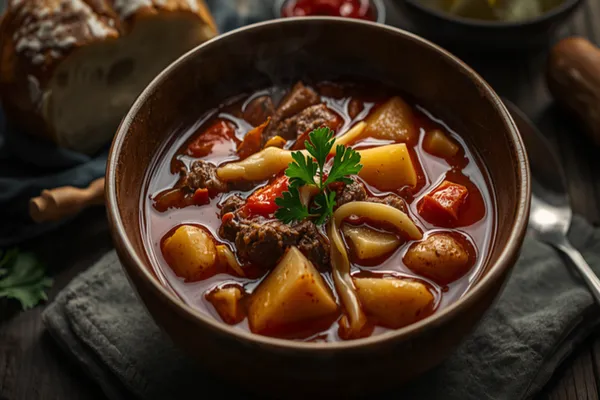
Hungarian Goulash (Gulyásleves)
The real gulyás of the Hungarian plain — a brothy, paprika-red beef soup with potatoes, sweet peppers and hand-pinched csipetke noodles. No flour, no roux, no sour cream: just onions, good paprika and three unhurried hours.
Ukraine — the Poltava and Kyiv regions and the wider black-earth belt · Ukrainian
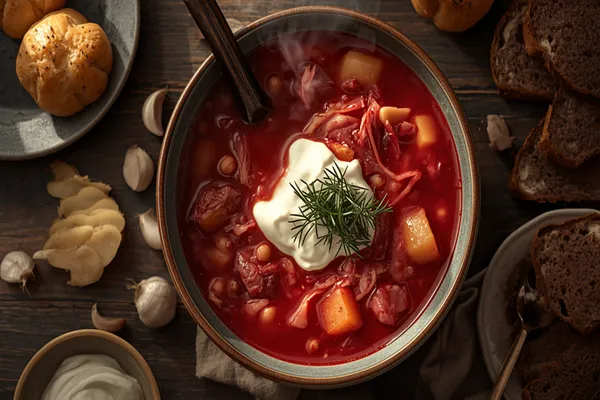
Ukrainian Borscht (Борщ)
The UNESCO-listed soup of the Ukrainian black-earth belt — pork-rib broth, cabbage, potato and beetroot cooked so its colour stays ruby rather than brick, finished with garlic-and-salo tovchanka and a spoonful of smetana. Served with pampushky, and always better the next day.
Adjara, on Georgia's Black Sea coast (Batumi) · Georgian
Khachapuri Adjaruli (Georgian Cheese Boat Bread)
The boat-shaped Georgian cheese bread of the Black Sea coast: a chewy, blistered crust cradling molten salty cheese, finished at the table with a raw yolk and a knob of butter stirred through. Tear, dip, repeat.
Russia · Russian
Russian Blini (Yeasted Buckwheat Pancakes)
The pancakes at the heart of Maslenitsa, Russia's butter-rich farewell to winter: thin, lacy, yeast-raised rounds with a faint tang, served in stacks with butter, sour cream, jam, or — for a feast — smoked salmon and caviar.
Northern China · Chinese
Pork and Chive Potstickers (Jiaozi)
The dumplings at the heart of Chinese celebration: juicy pork-and-chive filling folded into pleated wrappers, then pan-fried crisp on the bottom and steamed soft on top. A hands-on, make-together feast — fold a big batch and freeze the rest.
Japan (nationwide; strongly associated with Utsunomiya and Hamamatsu, Japan's dueling gyoza capitals) · Japanese
Gyoza (Japanese Pan-Fried Pork Dumplings)
Yaki-gyoza done properly: juicy pork-and-cabbage dumplings steam-fried into one skillet so they gather a lacy, crackling brown 'wing' underneath. With a bright soy-vinegar dipping sauce and a whole section on pleating.
New York City — the Lower East Side bakeries, by way of Ashkenazi Poland · Jewish American
New York Bagels (Boiled, Blistered, Properly Chewy)
Real New York bagels: a stiff, low-hydration dough, an overnight cold rise, a barley-malt boil and a blazing oven. Glossy, blistered crust, dense chew, and a crumb that pulls rather than tears.