Ukraine — the Poltava and Kyiv regions and the wider black-earth belt · Ukrainian
Ukrainian Borscht (Борщ)
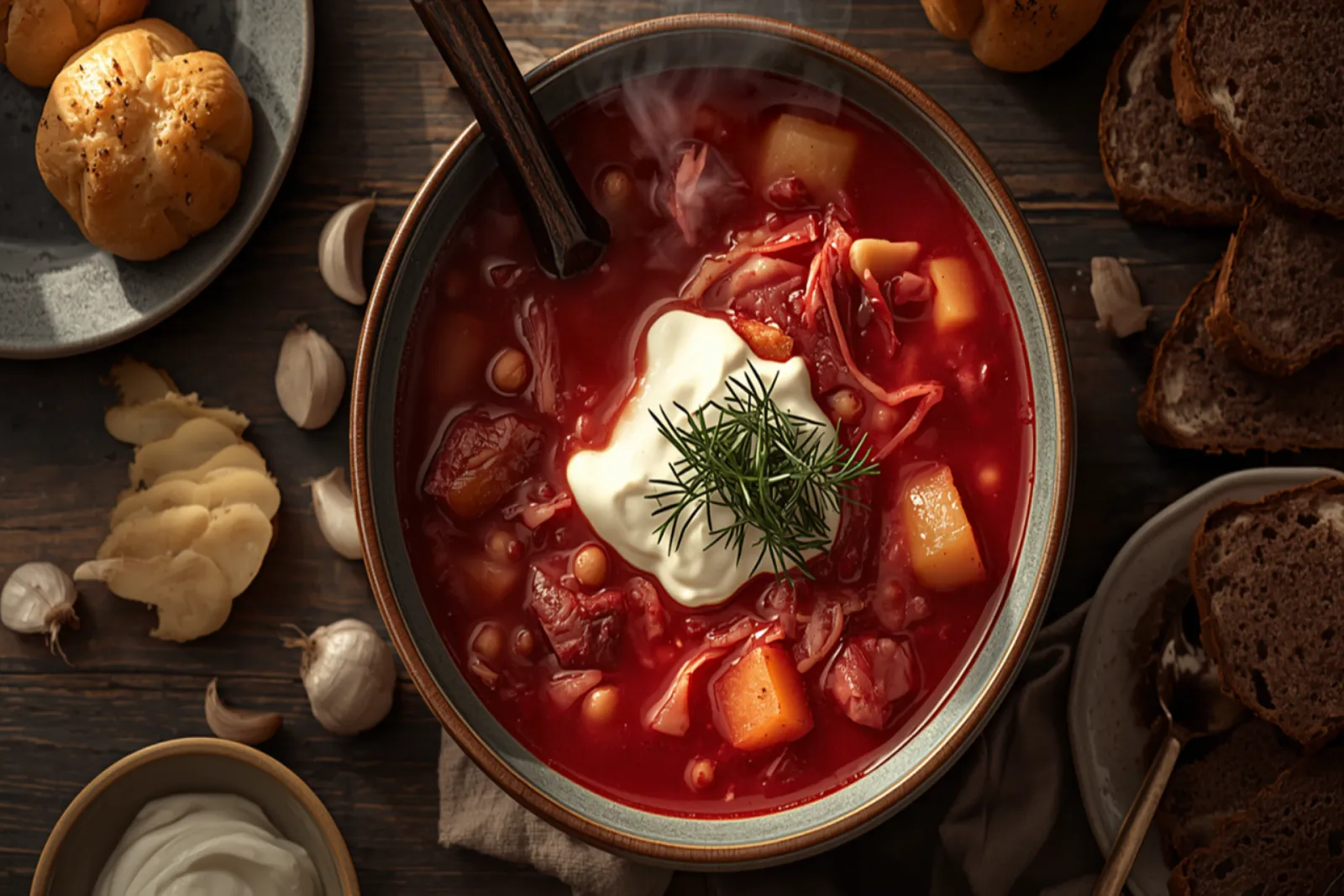
The UNESCO-listed soup of the Ukrainian black-earth belt — pork-rib broth, cabbage, potato and beetroot cooked so its colour stays ruby rather than brick, finished with garlic-and-salo tovchanka and a spoonful of smetana. Served with pampushky, and always better the next day.
Published September 3, 2026
Cultural context
Borscht is the everyday soup of Ukraine and the axis its home cooking turns on: a pot made on Sunday, eaten all week, and judged with real seriousness by everyone at the table. The name predates the beetroot — it comes from an old Slavic word for hogweed, borshchivnyk, the sour green that flavoured the soup before beets and tomatoes arrived. Every household has its own version, and the regional list is long: Poltava borscht with poultry broth and halushky dumplings, Kyiv-style with beef and beet kvass, Chernihiv with courgette and apple, Lviv and Galician versions, green spring borscht with sorrel, cold summer ones. UNESCO inscribed the culture of Ukrainian borscht cooking on its List of Intangible Cultural Heritage in Need of Urgent Safeguarding in July 2022, citing the displacement of the cooks who carry the tradition. Related red soups are cooked across Poland, Belarus, Lithuania, Romania, Russia and the Ashkenazi diaspora; this is the Ukrainian one.
Ukrainian borscht is not a beetroot soup that happens to be Ukrainian. It is the axis the country’s home cooking turns on — a pot made large on Sunday and eaten down through the week, argued over between families, and judged with a seriousness that surprises visitors. In July 2022 UNESCO inscribed the culture of Ukrainian borscht cooking on its List of Intangible Cultural Heritage in Need of Urgent Safeguarding, not because the recipe was at risk but because the people who carry it had been displaced from the kitchens, gardens and communities where it lives.
The soup is older than its most famous ingredient. The name comes from borshchivnyk, an old Slavic word for hogweed, the sour green that flavoured the pot long before beetroot and tomatoes reached Eastern Europe. What survives from that ancestry is the insistence on sourness — borscht should taste sour first and sweet second — and the fact that green borscht, made with sorrel and no beets at all, is still cooked every spring. Red beetroot soups are cooked across Poland, Belarus, Lithuania, Romania and the Ashkenazi diaspora, each with its own long history. This is the Ukrainian version, built on pork-rib broth in the Poltava–Kyiv style.
Keeping it red is chemistry, not luck
The most common failure is colour. Borscht that has been boiled hard with beetroot loose in the pot comes out the shade of old brick, and no amount of seasoning brings it back. The pigment responsible is betanin, and it degrades under two conditions: sustained heat and neutral pH.
So Ukrainian cooks do not boil the beets in the soup. They build a zasmazhka — onion, carrot and grated beetroot fried in sunflower oil or pork fat, then stewed in a covered pan with tomato paste, a spoon of sugar and a splash of vinegar or fermented beet kvass. The acid holds the pH low enough to protect the pigment while the beetroot cooks tender, and the whole glossy dark mass goes into the pot near the end. A final trick seals it: a handful of raw grated beetroot squeezed in off the heat, its colour untouched by any heat at all.
The order of the pot
Everything else is timing. The ribs simmer alone for an hour and a half, skimmed carefully — a good borscht is clear beneath its colour, and skimming is the only way there. Potatoes go into the strained broth first, cabbage six minutes behind them, both pulled a shade underdone because they carry on cooking as the soup stands. Then the beet base, three minutes, and off the heat.
Cabbage added at the beginning turns grey and sulphurous. Potato added at the end stays chalky. Neither mistake is fatal, but the staggering is free and it shows in the bowl.
Tovchanka, and then patience
The last thing in is the step Ukrainian cooks are least willing to surrender: tovchanka, salo pounded to a rough paste with raw garlic and dill, stirred through the hot soup off the heat. Cooked garlic turns sweet and recedes; raw garlic added at the end keeps its allicin sharp and lifts the entire pot. It takes two minutes and it is the difference between a good soup and one that tastes like somebody’s grandmother made it.
Then wait. Half an hour off the heat is the minimum — the fat rises, the salt spreads, the sourness settles. A day in the fridge is better still, which is exactly why the pot was made big. Serve it very hot, with a cold spoonful of smetana collapsing in the middle, dill on top, and garlic pampushky for wiping the bowl.
For more of Eastern Europe’s great cold-weather cooking, try Poland’s pierogi ruskie or Hungary’s gulyásleves. The world classics guide maps the rest.
Ingredients
For the broth
- 800 g (1 3/4 lb) meaty pork ribs, cut into individual bones Pork ribs are the Poltava and Kyiv default. Beef short rib or shin works and gives a darker broth; a whole chicken makes the lighter Poltava version. Bone-in is not negotiable — the gelatin is what stops the soup tasting like boiled vegetables.
- 3 litres cold water
- 1 onion, halved, skin left on The skin adds a little colour to the broth and is thrown out with the onion at the end.
- 1 small carrot, halved
- 2 bay leaves
- 6 black peppercorns and 4 allspice berries Allspice (dushystyi perets) is a quiet signature of Slavic soup-making. Leave it out and the broth loses a warm, faintly clove-like background.
For the pot
- 500 g (about 4 medium) floury potatoes, cut into 2 cm cubes
- 350 g (about 1/3 small head) white or green cabbage, shredded Traditionally a firm, late-season head. Shred it a little thicker than coleslaw — it should keep a slight bite.
- 1 x 400 g tin white or kidney beans, drained (optional) Standard in Poltava-style borscht and in most Ukrainian home versions, though not universal. It turns the soup into a full meal.
For the zasmazhka (the fried base)
- 3 tbsp sunflower oil, or 2 tbsp rendered pork fat Unrefined sunflower oil is the Ukrainian pantry fat and has a distinct toasted-seed smell. It is worth seeking out.
- 1 large onion, finely chopped
- 1 large carrot, coarsely grated
- 500 g (2 medium-large) raw beetroot, peeled and coarsely grated Keep about a quarter of it aside, raw, for the very end — see the steps. Wear an apron. Pre-cooked vacuum-packed beets will not work here; they have already lost most of the pigment you are trying to preserve.
- 2 tbsp tomato paste Or 3 chopped ripe tomatoes plus 1 tbsp paste in late summer.
- 1 tbsp white wine vinegar or lemon juice The traditional acid is buriakovyi kvas, fermented beet juice, which many Ukrainian families keep going in a jar. Vinegar is the everyday stand-in and does the same chemical job.
- 1 tsp caster sugar Not to sweeten the soup but to balance the acid — borscht should taste sour-sweet, with the sourness in front.
For the tovchanka (garlic and salo finish)
- 40 g salo (cured pork back fat), finely chopped Streaky bacon fat or good lardo is the nearest substitute. Vegetarians can skip it entirely and pound the garlic with 1 tbsp of sunflower oil instead.
- 4 cloves garlic
- 1 small handful dill, plus more for serving
To serve
- To taste fine sea salt and black pepper
- 1 large spoonful per bowl smetana (full-fat sour cream) Use the highest-fat sour cream you can find, at least 20%. Low-fat versions split into threads in a hot bowl.
- To serve pampushky — soft yeast rolls brushed with crushed garlic, dill and sunflower oil The classic partner. Any soft white roll, split and rubbed hard with a cut clove of raw garlic, gets you most of the way there.
Method
Tap a step’s number to check it off as you go.
-
Put the ribs in a large pot with the cold water. Bring slowly to a bare simmer and skim off the grey foam as it rises — several times over the first ten minutes. Add the halved onion, carrot, bay, peppercorns and allspice, and simmer, barely bubbling and half-covered, for 1 1/2 hours.
Why: Starting in cold water draws soluble proteins out gradually so they coagulate at the surface as foam you can lift off, rather than clouding the broth. Ukrainian borscht is judged partly on clarity beneath the colour, and skimming is the only way to get it.
-
Lift out the ribs and strain the broth; discard the aromatics. Pull the meat off the bones in large pieces and set aside. You want about 2.2 litres of broth — top up with hot water if you are short.
Why: The whole aromatics have given everything they have and would fall apart into the soup. Removing them now keeps the finished pot clean-tasting and lets the vegetables added next stay distinct.
-
Heat the oil or pork fat in a wide frying pan. Cook the onion for 5 minutes until soft and translucent, add the grated carrot and cook 3 minutes more. Stir in three-quarters of the grated beetroot and cook for 5 minutes.
Why: This fried base — the zasmazhka — is the step that separates borscht from a boiled beet soup. Sweating the vegetables in fat first converts their sugars and dissolves the fat-soluble aromatics, so the flavour arrives layered rather than watery.
-
Add the tomato paste, sugar and vinegar to the pan, along with a ladleful of the hot broth. Turn the heat low, cover, and let it stew gently for 15 minutes, until the beetroot is tender and the mixture is thick, dark and glossy.
Why: The acid goes in here, not later, and it is the single most important trick in the recipe. Betanin — the pigment that makes beetroot red — degrades to a dull brown at neutral pH and under sustained heat. An acidic, covered braise holds the pH low and keeps the pigment intact, which is why a well-made borscht is ruby and a badly made one is the colour of old brick.
-
Bring the strained broth back to a simmer, add the potatoes and cook for 8 minutes. Add the cabbage and cook for 6–8 minutes more, until both are just tender.
Why: Staggering matters. Cabbage added at the start turns sulphurous and grey; potato added too late stays chalky in the middle. Aim to have both a shade underdone, because they keep cooking in the residual heat while the soup rests.
-
Stir the zasmazhka into the pot along with the beans, if using, and the reserved rib meat. Bring back to a simmer for 3–4 minutes only, then take the pot off the heat.
Why: Once the beet base is in, the clock is running on the colour. Boiling borscht hard after this point is the classic way to lose the red — a few minutes is all it needs to come together.
-
Pound the salo, garlic and dill to a rough paste in a mortar (or chop them together to a fine mince) and stir it through the hot soup off the heat.
Why: This is tovchanka, and it is what makes the soup taste Ukrainian rather than generically Slavic. Adding raw garlic off the heat keeps its volatile allicin intact — cooked in, it turns sweet and disappears; stirred in at the end, it stays sharp and lifts the whole pot.
-
Squeeze or finely grate the reserved raw beetroot straight into the pot, stir, taste and correct the salt and acid — it should be clearly sour before it is sweet. Cover and leave to stand for at least 30 minutes before serving.
Why: The raw beet at the end is an old household trick: its pigment goes in untouched by heat and refreshes the colour just before serving. The rest is not optional either — Ukrainians say borscht has to 'ripen', and half an hour lets the fat rise, the salt distribute and the sourness settle into the broth.
A quick, anonymous tap — no review needed.
Variations
- Poltava borscht
Made on poultry broth rather than pork, with beans and halushky — soft flour dumplings dropped in at the end. Lighter, and the version most associated with the Poltava region's reputation as Ukraine's borscht heartland.
- Lenten / vegan borscht
Cooked through the Orthodox fasting calendar without meat: use a mushroom-and-vegetable broth, dried porcini for depth, sunflower oil instead of salo, and beans for body. Skip the sour cream or use a cashew cream. It is a real dish in its own right, not a compromise.
- Green borscht (zeleny borshch)
The spring version, and closer to the soup's pre-beetroot ancestor: no beets at all, but sorrel, spinach and young nettles for sourness, with soft-boiled egg halves in the bowl.
- Cold borscht (kholodnyk)
A summer soup, shocking pink, built on kefir or buttermilk with cooked beetroot, cucumber, radish, dill and egg. Served chilled, often with hot boiled potatoes on the side.
- With smoked ribs
Swap half the fresh ribs for smoked ones. Common in western Ukraine and worth doing at least once — it pushes the broth somewhere deep and campfire-like.
Serving & Storage
Serve very hot in deep bowls, each with a heaped spoonful of cold smetana dropped in the middle and a shower of dill. Pampushky come to the table warm, glossy with garlic oil, for wiping the bowl. A plate of thinly sliced salo, black rye bread, raw garlic cloves and pickles alongside is the full traditional setting; a shot of horilka is optional but not unusual.
Pairs with: Pampushky (garlic yeast rolls), Black rye bread and salo, Smetana (full-fat sour cream), Pickled cucumbers and sauerkraut, Horilka, or a dry Riesling.
Storage: Refrigerates for 4–5 days and genuinely improves for the first two — the flavour deepens as it stands, which is why the pot is made big on purpose. Cool it quickly, store it with the meat in the soup, and reheat gently without letting it boil, or the colour dulls. If the red has faded on reheating, grate a little raw beetroot in with a squeeze of lemon and simmer for a minute to bring it back. It freezes for 3 months, though the potatoes go slightly grainy — freeze before adding them if you are planning ahead.
Nutrition
Per serving (1 large bowl (about 450 ml) with meat, without sour cream)
- Calories
- 385
- Protein
- 22 g
- Carbs
- 32 g
- Fat
- 19 g
- Fiber
- 7 g
- Sugar
- 12 g
- Sodium
- 760 mg
Notable micronutrients: Folate, Vitamin C, Potassium, Iron, Manganese, Vitamin B12
Estimated using standard ingredient data. Values vary with brands and substitutions.
Frequently Asked Questions
Why does my borscht turn brown instead of staying red?
Because the beetroot pigment, betanin, breaks down with prolonged heat and at neutral pH. Two things fix it. First, cook the beets separately in the covered pan with vinegar or lemon juice rather than boiling them loose in the soup — the acid stabilises the pigment. Second, keep the pot at a bare simmer once the beet base goes in, and stir a little raw grated beetroot through at the very end. Together those steps are the whole secret, and they are why so many Ukrainian recipes insist on the zasmazhka.
Is borscht Ukrainian, Polish or Russian?
Red beetroot soups are cooked all over Central and Eastern Europe and each tradition is real: Poland's clear barszcz czerwony, Belarusian and Lithuanian versions, Romanian borș, and the Ashkenazi borscht that travelled to New York. What UNESCO recognised in 2022 was specifically the culture of Ukrainian borscht cooking — the household practice, the regional repertoire and the social role it plays — not ownership of the soup itself. This recipe is the Ukrainian one; it is not a claim on anyone else's.
Do I have to use meat?
No. Lenten borscht, cooked without meat through the Orthodox fasting calendar, is centuries old and completely standard. Build a mushroom-and-root-vegetable broth, use dried porcini for savoury depth, swap the salo for sunflower oil in the tovchanka, and keep the beans — they supply the body the ribs would have. Do not simply omit the meat from this recipe and change nothing; the broth needs replacing, not deleting.
What is tovchanka and can I skip it?
Tovchanka (also called zatovka) is salo pounded with raw garlic and dill and stirred into the finished pot off the heat. You can skip it and still have a good soup, but it is the step Ukrainian cooks are least willing to give up — it adds a savoury richness and a sharp raw-garlic top note that cooked garlic cannot. If you have no salo, pound the garlic and dill with a tablespoon of sunflower oil instead.
Why is the pot so big, and why does everyone say it's better the next day?
Because borscht is made to be lived off. A Ukrainian pot is cooked to last several days, and the soup measurably improves as it sits: starch from the potato thickens the broth slightly, the fat and salt redistribute, and the sour-sweet balance settles. Even on the first day, letting it stand off the heat for half an hour — 'ripening' — makes a noticeable difference.
Can I use pre-cooked or tinned beetroot?
It is a poor trade. Vacuum-packed cooked beets have already been through the heat that degrades their pigment and lost much of their earthy sweetness to the packing liquid, so you get a paler, flatter soup. If it is all you have, add them at the very end with an extra splash of vinegar rather than braising them, and accept that the colour will be muted.
What to drink with this
All drinks →Hand-picked pours to match this dish. Alcoholic pairings are for adults of legal drinking age (21+ in the US) — please drink responsibly.

Pan-Indian (the everyday tea of the subcontinent) · Indian
Masala Chai (Spiced Indian Tea)
India's daily ritual in a cup: black tea brewed with milk, sugar and freshly crushed spices. The proper stovetop method, plus how to build your own masala.

Mexico (agua fresca tradition) · Mexican
Agua de Jamaica (Hibiscus Iced Tea)
Mexico's ruby-red hibiscus cooler: dried jamaica flowers steeped, sweetened and chilled into a tart, refreshing agua fresca. The right steep, how to control the tartness, and why it's so good for you.
 21+
21+ Florence, Italy (Tuscan aperitivo tradition) · Italian
Negroni (The Perfect Three-Part Aperitivo)
Equal parts gin, Campari and sweet vermouth, stirred over ice with an orange peel. Italy's great bitter aperitivo — the easiest world-class cocktail to remember and one of the hardest to improve on.
From our kitchen community
Ratings & Reviews
My Rating
Tap a star to rate — no sign-in, no form needed.
My Review
0 Ratings
🥣 0 home cooks made it!
Be the first to rate Ukrainian Borscht (Борщ).
Related Recipes

Poland — eaten nationwide, but named for Ruś (Red Ruthenia), the historic borderland now split between south-eastern Poland and western Ukraine · Polish
Pierogi Ruskie (Polish Potato and Twaróg Dumplings)
Poland's most-loved pierogi: a hot-water dough rolled thin enough to see through, wrapped around floury potato, tangy twaróg curd cheese and onions fried slowly to deep gold — boiled, buttered, and eaten under a spoonful of sour cream.
The Great Hungarian Plain (Alföld) — Hortobágy and the Puszta cattle country · Hungarian
Hungarian Goulash (Gulyásleves)
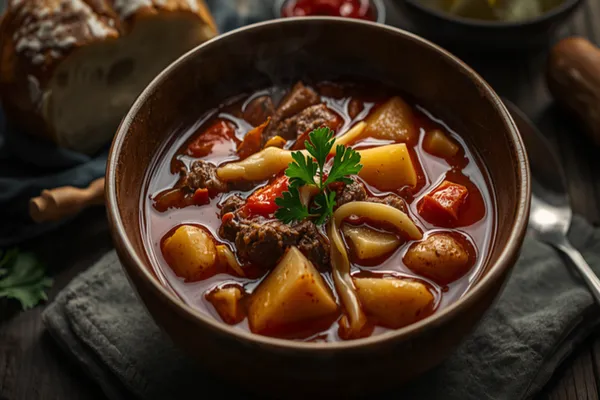
The real gulyás of the Hungarian plain — a brothy, paprika-red beef soup with potatoes, sweet peppers and hand-pinched csipetke noodles. No flour, no roux, no sour cream: just onions, good paprika and three unhurried hours.

Russia · Russian
Russian Blini (Yeasted Buckwheat Pancakes)
The pancakes at the heart of Maslenitsa, Russia's butter-rich farewell to winter: thin, lacy, yeast-raised rounds with a faint tang, served in stacks with butter, sour cream, jam, or — for a feast — smoked salmon and caviar.

Adjara, on Georgia's Black Sea coast (Batumi) · Georgian
Khachapuri Adjaruli (Georgian Cheese Boat Bread)
The boat-shaped Georgian cheese bread of the Black Sea coast: a chewy, blistered crust cradling molten salty cheese, finished at the table with a raw yolk and a knob of butter stirred through. Tear, dip, repeat.