Morocco (Maghreb) · Moroccan
Moroccan Vegetable Couscous (Seven-Vegetable Couscous)
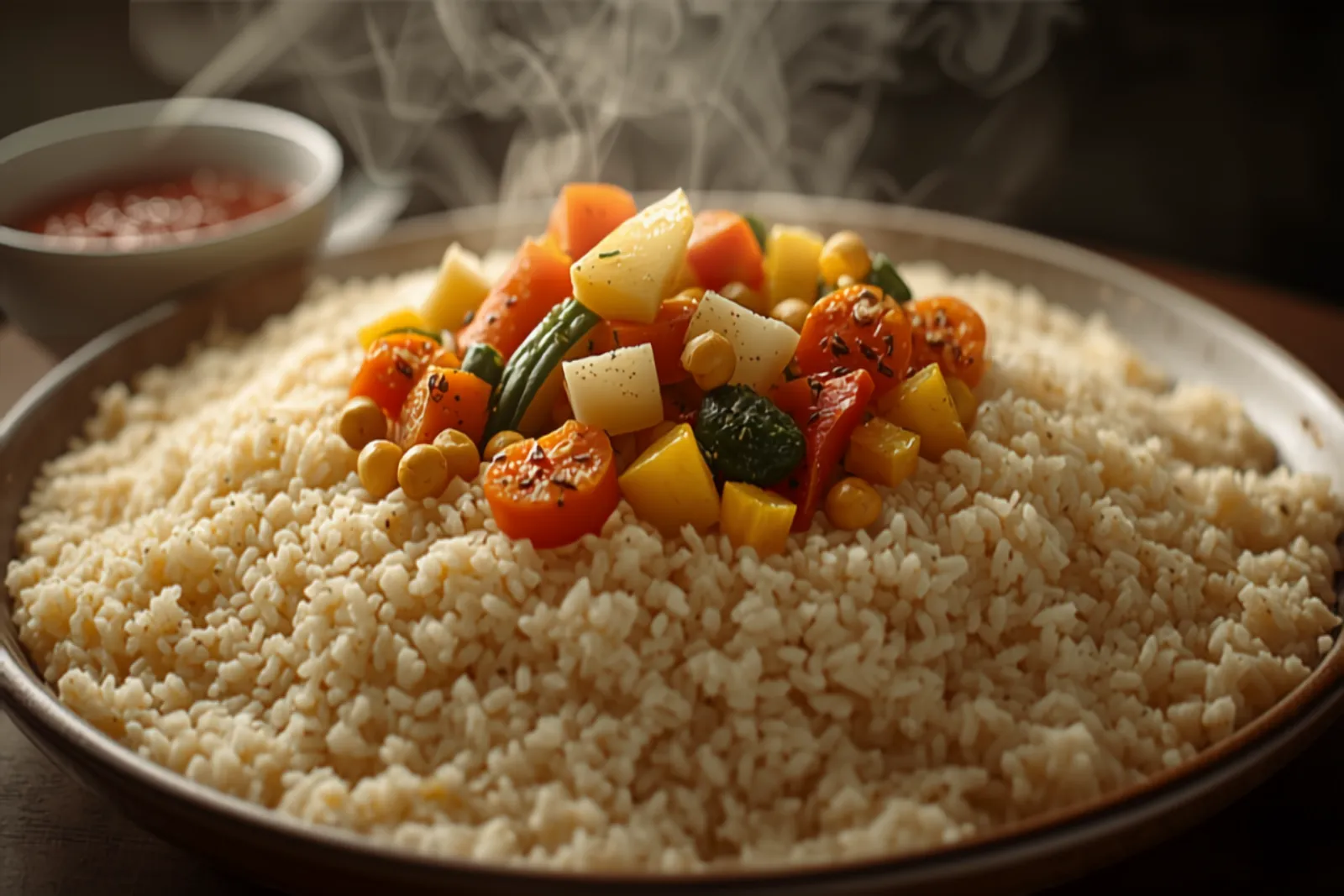
The Friday couscous: fluffy steamed semolina mounded under a fragrant broth of seven vegetables — carrots, turnip, squash, courgette, chickpeas and more — gently spiced and slow-simmered. A celebratory one-pot for the table.
Published June 24, 2026
Cultural context
Couscous is the Friday dish across the Maghreb — made after midday prayers and shared from a single great mound. The 'seven vegetables' version is the most celebrated, the number seven considered auspicious. Traditionally the couscous is steamed three times over the simmering broth in a couscoussier, the grains hand-rolled with oil and water between steamings to become impossibly light. This is a streamlined home version.
Across the Maghreb, couscous is the Friday dish — made after midday prayers, shared from a single great mound, and treated with real ceremony. The most celebrated version is the seven-vegetable couscous, the auspicious number crowning a fragrant broth of carrots, turnip, squash, courgette, chickpeas and more, gently spiced and slow-simmered, all piled over a mountain of feather-light steamed semolina.
A broth built on bloomed spice
The vegetables simmer in a golden broth that gets its warmth from ginger, turmeric, paprika and saffron, bloomed in oil with onion and garlic before the liquid goes in. The trick is timing: the dense roots — carrots, turnip — go in first, with the softer squash, courgette and cabbage added later so everything finishes tender together rather than dissolving into the pot.
Light grains are the whole point
Authentic couscous is famously steamed three times over the broth in a couscoussier, the grains hand-rubbed with oil and water between steamings until they’re impossibly light. This home version takes a shortcut — toss the grains with oil, soak in hot broth, and fluff thoroughly — but the principle is the same: coat them in fat, don’t drown them, and fluff well so they stay separate and airy. Mound the couscous, crown it with vegetables, ladle over the broth, and serve with harissa on the side.
For more of the Moroccan table, try harira and zaalouk, or browse the full recipe collection.
Ingredients
For the broth
- 3 tbsp olive oil
- 2 onions, sliced
- 3 cloves garlic, chopped
- 2 tsp ground ginger
- 1 tsp each turmeric and sweet paprika
- 1/2 tsp black pepper, plus a pinch of saffron (optional)
- 2 tomatoes, chopped (or 2 tbsp tomato paste)
- 1.5 litres vegetable stock or water
For the seven vegetables
- 3 carrots, in batons
- 1 small turnip, in wedges
- 400 g pumpkin or butternut squash, in chunks
- 2 courgettes / zucchini, in batons
- 1 can (400 g) chickpeas, drained
- 1/4 small cabbage, in wedges (plus a handful of raisins, optional)
For the couscous
- 400 g couscous
- 2 tbsp olive oil or butter, plus salt
- 500 ml hot broth or water (to steam/soak)
Method
Tap a step’s number to check it off as you go.
-
Soften the onions and garlic in oil, then add the ginger, turmeric, paprika, pepper and saffron and stir until fragrant. Add the tomatoes and stock.
Why: Blooming the spices in oil before the liquid goes in is what gives the broth its warm depth rather than a raw, dusty spice taste.
-
Add the firmer vegetables — carrots, turnip and chickpeas — and simmer 20 minutes.
Why: The dense root vegetables need a head start so everything finishes tender at the same time.
-
Add the squash, courgette and cabbage (and raisins) and simmer another 20-25 minutes until all the vegetables are tender and the broth is rich.
Why: Adding the softer vegetables later keeps them from collapsing into the broth before the roots are done.
-
Meanwhile, prepare the couscous: toss the grains with oil and salt, pour over the hot broth or water, cover, and leave 8-10 minutes, then fluff thoroughly with a fork (or fingers).
Why: Coating the grains in oil first keeps them separate; fluffing breaks up clumps so the couscous stays light and individual rather than gluey.
-
Mound the couscous on a large platter, make a well, and pile the vegetables in the centre. Ladle over plenty of broth.
Why: The traditional presentation — a mountain of couscous crowned with vegetables and soaked in broth — is both beautiful and the right way to serve and eat it.
-
Serve the extra broth (and harissa) on the side for spooning over.
Why: Couscous should be moist, and diners like to add broth and heat to taste; offering more on the side lets everyone adjust.
A quick, anonymous tap — no review needed.
Variations
- With meat (tfaya)
Add lamb or chicken to the broth and crown the couscous with tfaya — sweet caramelised onions and raisins — for the festive version.
- Triple-steamed (traditional)
For the lightest grains, steam the couscous three times over the broth in a couscoussier, rubbing it with oil and water between steamings.
- With harissa
Stir a spoonful of broth into harissa and serve on the side; the seven-vegetable couscous itself is mild, with heat added to taste.
Serving & Storage
Serve from one big platter, family-style, with extra broth and a bowl of harissa on the side. A salad of orange and olives or a simple Moroccan tomato-and-pepper salad rounds out the meal.
Pairs with: Harissa, Moroccan salads, Buttermilk (lben), Mint tea to finish.
Storage: Broth and vegetables keep 3 days refrigerated and reheat well; steam or microwave the couscous separately with a splash of water to re-fluff. Keep the two apart so the grains don't go soggy.
Nutrition
Per serving (1/6 platter)
- Calories
- 420
- Protein
- 12 g
- Carbs
- 72 g
- Fat
- 10 g
- Fiber
- 10 g
- Sugar
- 12 g
- Sodium
- 440 mg
Notable micronutrients: Vitamin A, Vitamin C, Folate, Fiber
Estimated using standard ingredient data. Values vary with brands and substitutions.
Frequently Asked Questions
Why seven vegetables?
Seven is considered an auspicious, blessed number, and the seven-vegetable couscous is the celebrated Friday and special-occasion version. The exact vegetables vary by season and region — the spirit matters more than the precise count.
How do I keep the couscous from going gluey?
Toss the dry grains with a little oil before adding the hot liquid, don't drown them, and fluff thoroughly with a fork once steamed. The traditional triple-steaming gives the lightest result of all.
Can I use instant couscous?
Yes — the quick soak-and-fluff method works fine with standard (instant) couscous. For a more authentic, ultra-light texture, steam it several times over the broth in a couscoussier.
What to drink with this
All drinks →Hand-picked pours to match this dish.

Morocco (the Maghreb) · Moroccan
Moroccan Mint Tea (Atay — Maghrebi Mint Tea)
Morocco's sweet, fragrant green tea poured from a height into a frothy glass. The proper method — washing the tea, layering the mint, and the famous long pour — plus how sweet it really should be.

Turkey (Ottoman coffee tradition) · Turkish
Turkish Coffee (Türk Kahvesi — Unfiltered & Foamy)
Finely ground coffee simmered slowly in a cezve to a rich foam, served unfiltered in tiny cups. The grind, the heat and the foam that make it — plus the ritual of the grounds left behind.

Mexico (agua fresca tradition) · Mexican
Agua de Jamaica (Hibiscus Iced Tea)
Mexico's ruby-red hibiscus cooler: dried jamaica flowers steeped, sweetened and chilled into a tart, refreshing agua fresca. The right steep, how to control the tartness, and why it's so good for you.
From our kitchen community
Ratings & Reviews
My Rating
Tap a star to rate — no sign-in, no form needed.
My Review
0 Ratings
🥣 0 home cooks made it!
Be the first to rate Moroccan Vegetable Couscous (Seven-Vegetable Couscous).
Related Recipes
Morocco (Maghreb) · Moroccan
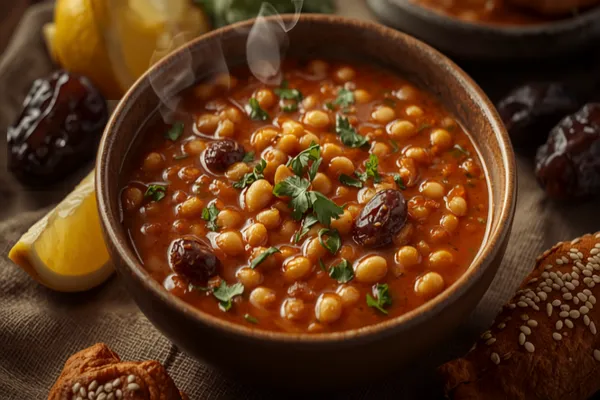
Harira (Moroccan Chickpea, Lentil and Tomato Soup)
Morocco's beloved soup: a hearty, tangy broth of chickpeas, lentils and tomatoes thickened with a flour-and-water tadouira, fragrant with ginger, turmeric and a flurry of herbs. The traditional dish for breaking the Ramadan fast.
Morocco (Maghreb) · Moroccan
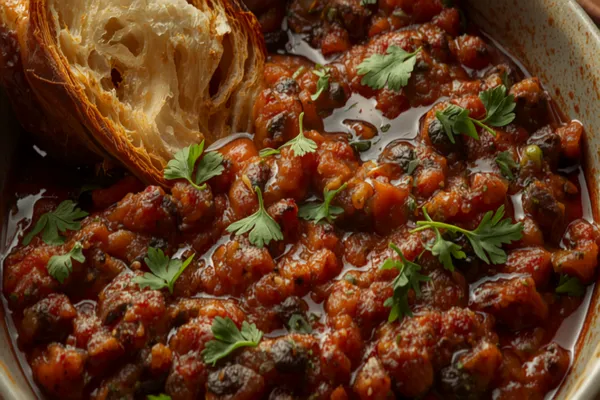
Zaalouk (Moroccan Smoky Eggplant and Tomato Salad)
A Moroccan cooked salad to love: charred eggplant and tomato melted down with garlic, cumin, paprika and coriander into a smoky, jammy dip. Scooped with bread, warm or at room temperature, on every Moroccan table.
Morocco · Moroccan
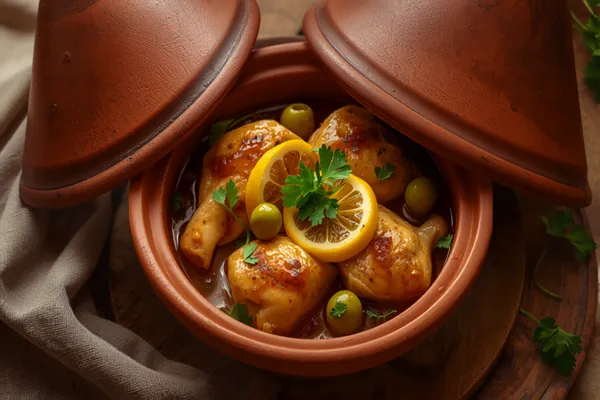
Moroccan Chicken Tagine with Preserved Lemon and Olives
The classic of the Moroccan table: chicken slow-cooked with preserved lemon, green olives, ginger, and saffron until the meat slips off the bone in a golden, deeply savoury sauce. Aromatic, gently spiced, and far easier than it looks.
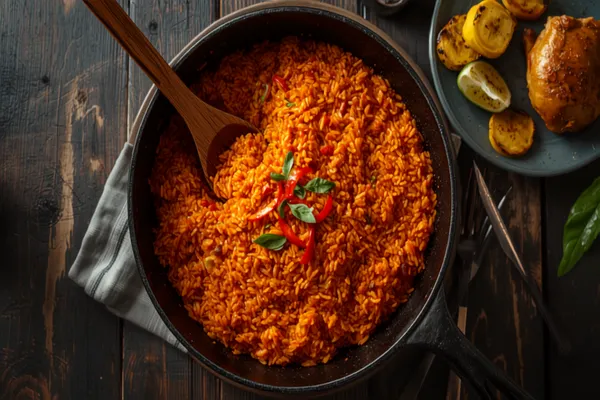
Lagos and south-western Nigeria — part of the wider West African jollof belt · Nigerian
Jollof Rice (Nigerian Party Style)
West Africa's great one-pot rice, cooked the Lagos party way: a long-fried pepper-and-tomato base, parboiled long-grain rice steamed until every grain is stained red, and a deliberately toasted bottom pot for that smoky finish.