North India / pan-Indian · Indian
Gulab Jamun (Milk Dumplings in Rose-Cardamom Syrup)
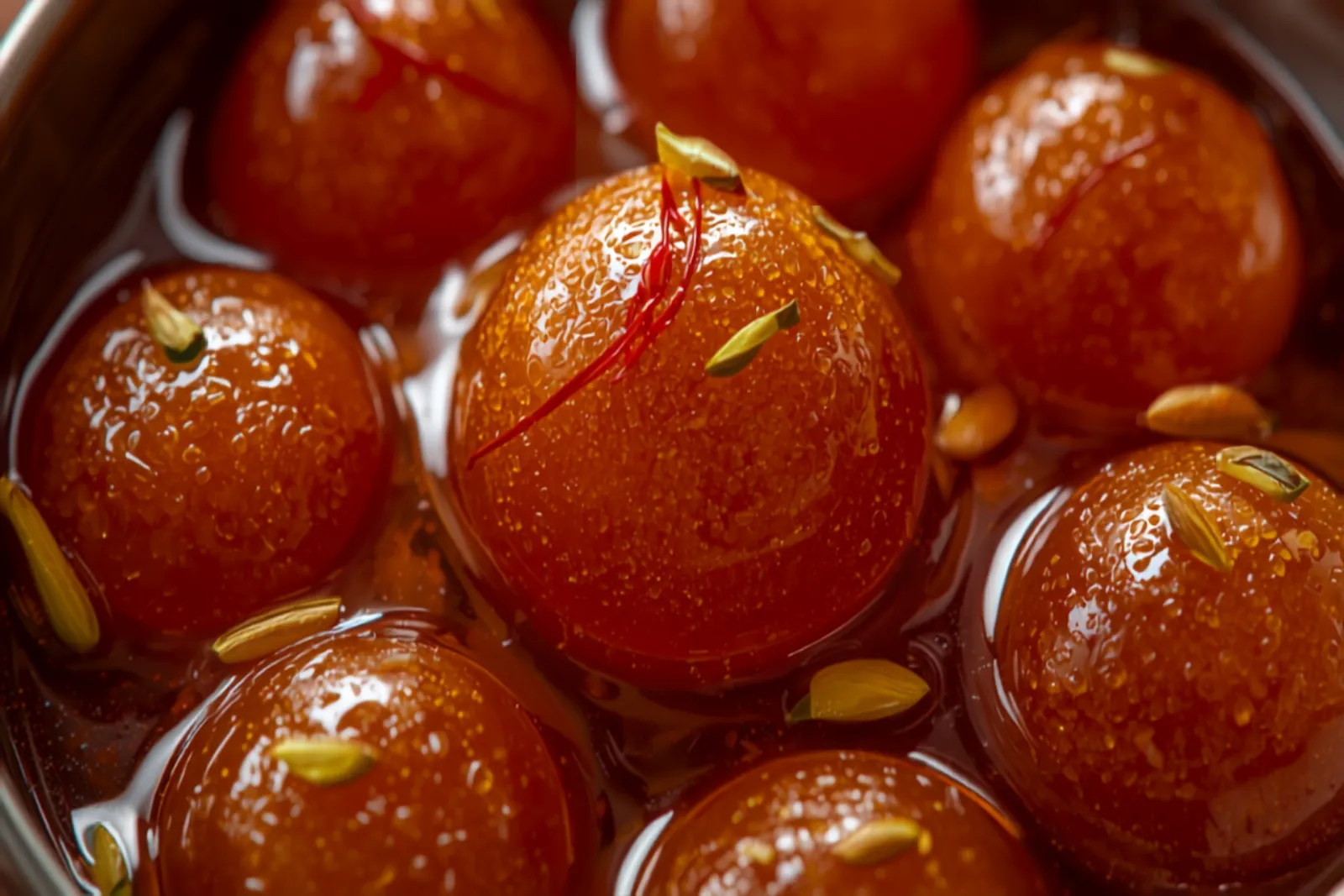
The king of Indian sweets: soft khoya dumplings fried to deep gold and soaked in warm rose-and-cardamom syrup until they swell, juicy and melting. The dessert no Diwali or wedding is complete without.
Published July 6, 2026
Cultural context
Gulab jamun — 'gulab' for rose, 'jamun' for the dark berry it resembles — traces to the milk-based sweet traditions carried into India through Persian and Mughal influence. Today it's the most universal celebratory sweet in the subcontinent, served at Diwali, Eid, weddings, and every festival in between.
Gulab jamun is, by common consent, the king of Indian sweets — soft dumplings of milk solids fried to a deep gold and soaked in warm rose-and-cardamom syrup until they swell, juicy and melting on the tongue. No Diwali, Eid, or wedding feels complete without a bowl of them. The name says what it is: gulab (rose), for the fragrant syrup, and jamun, for the dark berry the fried balls resemble.
Two things decide success: the dough and the syrup
A great gulab jamun is soft and syrup-soaked, never hard or dry. That comes down to a soft, smooth, crack-free dough (minimal flour, gentle handling, just a pinch of soda) and a thin, warm syrup. A thick syrup sits on the surface and leaves the centre dense; a thin one soaks all the way through.
Fry low and slow
The most common mistake is frying too hot. The balls need to cook through to the middle as they slowly brown, so keep the heat low-medium and stir gently for even colour. Rushed, they brown outside and stay raw within.
Hot jamuns, warm syrup
The golden rule of soaking: drop the hot fried jamuns straight into warm syrup. The temperature match is what lets them drink it in and balloon into soft, juicy spheres. Give them an hour or two to soak before serving.
For more festive sweets, see kaju katli and our guide to Indian festival sweets, or browse the full recipe collection.
Ingredients
For the dumplings
- 1 cup khoya (mawa / dried evaporated milk solids), grated The traditional base. A good shortcut: 1 cup milk powder with the additions below.
- 3 tbsp all-purpose flour (maida)
- 1/4 tsp baking soda Just a pinch — too much and the jamuns crack or dissolve.
- 2–3 tbsp warm milk, to bind
- ghee or oil for deep-frying
For the syrup
- 2 cups sugar
- 2 cups water
- 4 cardamom pods, crushed; 1 tsp rose water; a few saffron strands; a squeeze of lemon
Method
Tap a step’s number to check it off as you go.
-
Make the syrup: simmer sugar and water with cardamom for 8–10 minutes to a thin, sticky (not thready) syrup. Stir in rose water, saffron, and lemon. Keep warm.
Why: A thin warm syrup soaks into the jamuns; a thick one stays on the surface and leaves them dense. Lemon stops it crystallising.
-
Mix the khoya, flour, and soda, then add just enough warm milk to form a soft, smooth, crack-free dough. Rest 10 minutes.
Why: A soft, smooth dough makes tender jamuns; over-kneading or too much flour makes them hard. Cracks in the dough become cracks in frying.
-
Roll into smooth, small balls (they double in size). Make sure there are no cracks.
Why: Smooth, crack-free balls fry evenly and won't split open in the oil; small ones, because they swell a lot.
-
Fry on low-medium heat, stirring gently, until deep golden-brown all over.
Why: Low heat is essential — the balls must cook through to the centre as they slowly brown. Too hot and they brown outside while raw within.
-
Drop the hot fried jamuns straight into the warm syrup and soak at least 1–2 hours.
Why: Hot jamuns into warm syrup is the rule — the temperature lets them drink in the syrup and swell into soft, juicy spheres.
A quick, anonymous tap — no review needed.
Variations
- Milk powder (quick)
No khoya? Mix 1 cup milk powder, 3 tbsp flour, 2 tbsp ghee, soda, and milk to a soft dough — a reliable shortcut version.
- Kala jamun
Fry darker and use a slightly drier dough for the deep, almost-black kala jamun with a denser bite.
- Stuffed
Tuck a few chopped pistachios or a saffron strand inside each ball before frying.
Serving & Storage
Serve warm or at room temperature, two to a bowl with a little syrup — and, if you like, a scoop of vanilla ice cream for the modern 'gulab jamun à la mode.'
Pairs with: A little warm syrup, Vanilla ice cream, A festive sweets platter.
Storage: Keep in their syrup, refrigerated, up to a week. Warm gently before serving so they soften again.
Nutrition
Per serving (2 pieces)
- Calories
- 300
- Protein
- 5 g
- Carbs
- 44 g
- Fat
- 12 g
- Fiber
- 0 g
- Sugar
- 40 g
- Sodium
- 60 mg
Notable micronutrients: Calcium, Phosphorus
Estimated using standard ingredient data. Values vary with brands and substitutions.
Frequently Asked Questions
Why did my gulab jamuns turn hard?
Usually too much flour, over-kneading, or frying too hot. Use a soft dough with minimal flour, handle it gently, and fry on low-medium so they cook through and stay tender. The syrup should be warm and thin so they can soak.
Why did my jamuns crack or break apart in the oil?
Cracks in the rolled balls or too much baking soda. Roll them perfectly smooth and crack-free, and use only a pinch of soda. A dough that's too dry also cracks — add a little more milk.
Can I make gulab jamun without khoya?
Yes — the milk-powder version (see variations) is popular and reliable, and instant mixes exist too. Khoya gives the most traditional, rich flavour, but milk powder is a great everyday substitute.
What to drink with this
All drinks →Hand-picked pours to match this dish.
North & West India (peak-summer drink across the subcontinent) · Indian
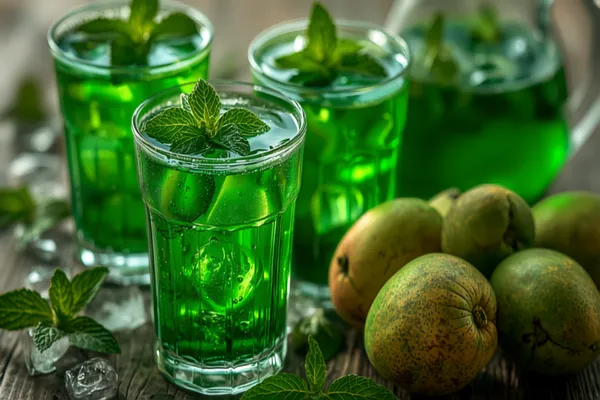
Aam Panna (Raw Green Mango Summer Cooler)
India's tangy, jade-green raw-mango cooler — roasted or boiled green mangoes blended with cumin, black salt and mint. The traditional heat-stroke remedy that tastes like summer.
Pan-Indian (North & West India) · Indian
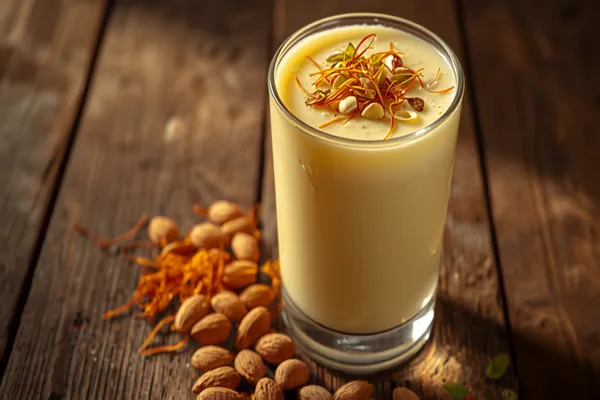
Badam Milk (Saffron Almond Milk)
Milk simmered with a paste of soaked almonds, saffron, cardamom and a whisper of nutmeg — India's rich, fragrant almond drink. Comforting served warm in winter, reviving served chilled in summer, festive any time.
Pan-Indian (Gujarat & West India especially) · Indian
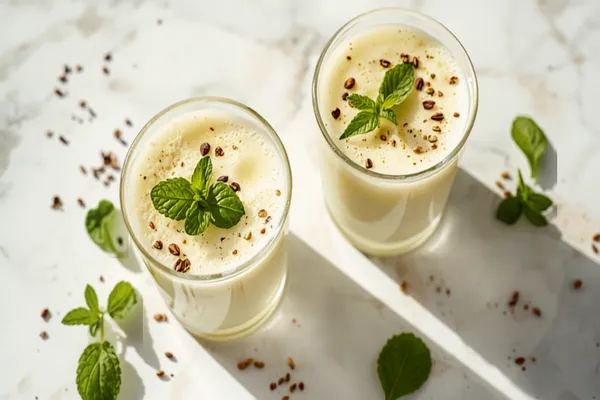
Chaas (Spiced Indian Buttermilk / Masala Chaas)
Whisked yogurt thinned with water and seasoned with cumin, green chilli, ginger and curry leaves — India's cooling, savoury buttermilk. A salty-tangy digestive that beats the heat and settles a heavy meal in two minutes.
From our kitchen community
Ratings & Reviews
My Rating
Tap a star to rate — no sign-in, no form needed.
My Review
0 Ratings
🥣 0 home cooks made it!
Be the first to rate Gulab Jamun (Milk Dumplings in Rose-Cardamom Syrup).
Related Recipes
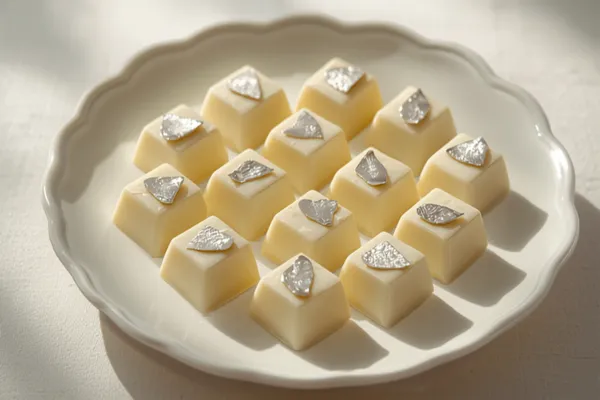
North India / pan-Indian · Indian
Kaju Katli (Cashew Fudge Diamonds)
The elegant, melt-in-the-mouth cashew fudge of Diwali: just cashews and sugar cooked into a smooth dough, rolled thin, and cut into the signature silver-leafed diamonds. Four ingredients, endless festive prestige.
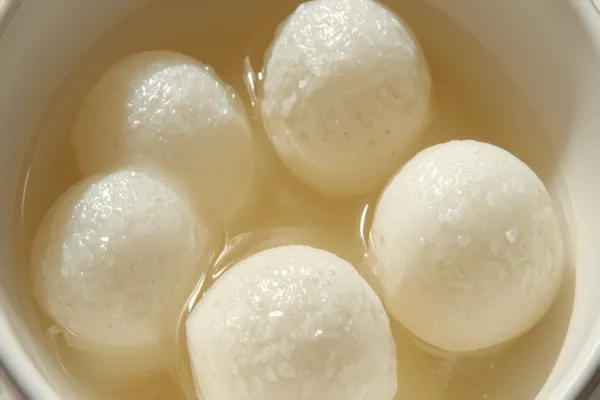
Eastern India (West Bengal and Odisha) · Indian
Rasgulla (Spongy Chhena Dumplings in Syrup)
The cloud-soft sweet of eastern India: dumplings of fresh chhena (curdled-milk cheese) boiled in light sugar syrup until they swell into springy, syrup-soaked spheres. Deceptively simple, gloriously satisfying.
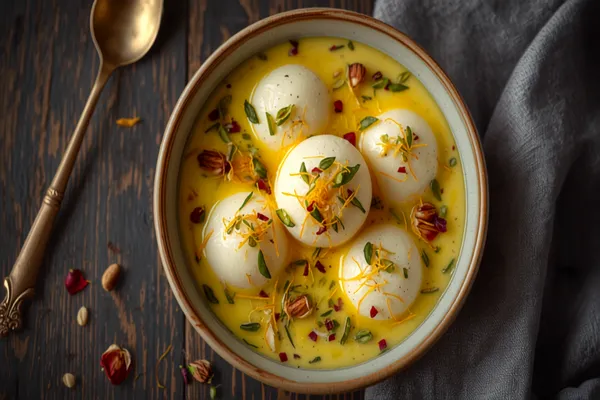
Eastern India (Bengal) · Indian
Rasmalai (Chhena Discs in Saffron-Cardamom Cream)
Soft, spongy discs of fresh chhena poached in syrup, then soaked in saffron- and cardamom-scented rabri (thickened milk) and showered with pistachios. Eastern India's most luxurious milk sweet, served cold.
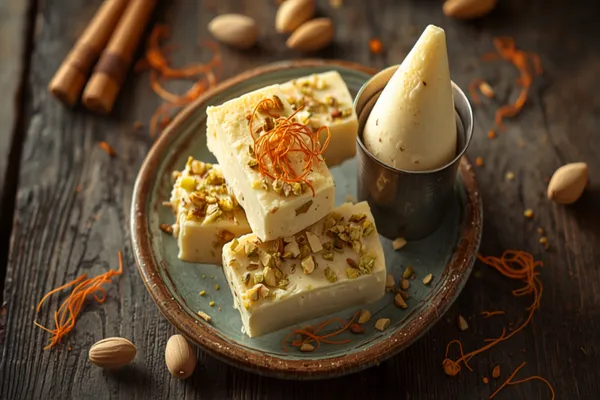
North India (Mughal-era Delhi) · Indian
Malai Kulfi (Traditional Indian Frozen Custard)
The original Indian frozen dessert — full-fat milk slow-cooked until thick and caramel-sweet, scented with cardamom, saffron and pistachio, then frozen dense and hard. No churning, no ice-cream machine, just patience.
Mysore, Karnataka (South India) · Indian
Mysore Pak (The Melt-in-the-Mouth Ghee Sweet)
The legendary ghee sweet born in the Mysore Palace kitchens: gram flour, sugar and a river of hot ghee cooked to a golden, porous fudge that dissolves the instant it touches your tongue. Just three ingredients, exacting technique, royal pedigree.
Maharashtra · Indian
Puran Poli (Maharashtrian Sweet Stuffed Flatbread)
A soft, ghee-glossed flatbread stuffed with a spiced chana dal and jaggery filling — the festive sweet of Maharashtra made for Holi and Gudi Padwa. Fragrant with cardamom and nutmeg, tender enough to tear with your fingers.
Lagos and southern Nigeria — and, under a dozen other names, from Ghana and Togo through Cameroon to the Congo basin · Nigerian & West African
Puff Puff — West Africa's Yeasted, Nutmeg-Scented Fried Dough
Not a doughnut and not a fritter: puff puff is a wet, live, nutmeg-scented yeast batter squeezed from a fist straight into hot oil, where it blows up into a lacquered golden sphere with a stretchy, honeycombed inside. Nigeria's party snack, and West Africa's under a dozen other names.
Further reading
- Festival & SeasonalIndian Festival Sweets: From Diwali to EidIn India, no celebration is complete without mithai. A guide to the sweets that define the festival calendar — the Diwali mithai box, the Eid dessert table, and the regional treasures of Bengal and the south — and what makes each one special.
- Cultural Story · North IndiaA Complete Guide to North Indian CookingThe cuisine the world knows best — and understands least. From Punjab's tandoor and dairy to Kashmir's aromatic Wazwan and Awadh's courtly kebabs, a guide to North India's regions, techniques, and where to begin.