Maharashtra · Indian
Puran Poli (Maharashtrian Sweet Stuffed Flatbread)
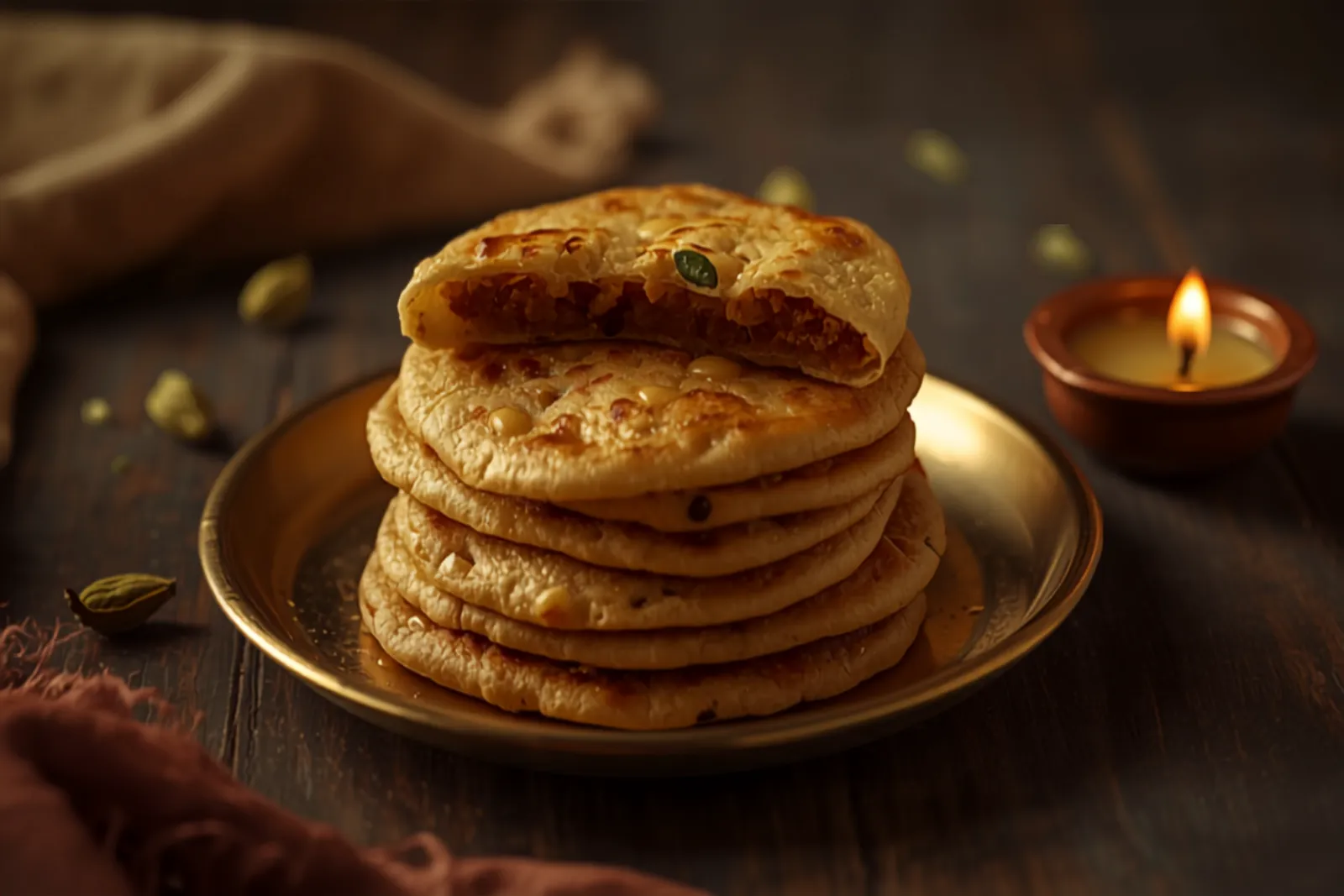
A soft, ghee-glossed flatbread stuffed with a spiced chana dal and jaggery filling — the festive sweet of Maharashtra made for Holi and Gudi Padwa. Fragrant with cardamom and nutmeg, tender enough to tear with your fingers.
Published August 2, 2026
Cultural context
Puran poli (puranachi poli) is Maharashtra's great festive sweet — a jaggery-and-chana-dal filling sealed inside a thin wheat flatbread and griddled in ghee. It appears on the table for Holi, Gudi Padwa and Ganesh Chaturthi, and close cousins are eaten across the Deccan (as holige/obbattu in Karnataka and bobbatlu in Andhra and Telangana). Sweetness marks an auspicious beginning, which is why it anchors so many new-year and harvest feasts.
Puran poli is the sweet that tells a Maharashtrian household a festival has arrived. A stiff, fragrant filling of chana dal cooked down with jaggery — the puran — is sealed inside a supple wheat poli and griddled in ghee until it blisters gold. Torn open, it releases a warm scent of cardamom and nutmeg, and it’s soft enough to eat with your fingers. Across the Deccan the same idea takes different names, but in Maharashtra it belongs above all to Holi and Gudi Padwa, when a bite of something sweet is meant to set the tone for the year ahead.
The puran is a lesson in dryness
Everything good about puran poli comes down to one discipline: getting the water out. Chana dal is simmered until it’s completely tender, then drained so hard that the cooking liquid is saved separately — Maharashtrians don’t waste it, they spice it into katachi amti, a thin tangy soup served alongside. The drained dal is cooked with an almost equal weight of jaggery until the mixture stiffens and pulls away from the pan in a single mass. Only then is it smooth and dry enough to shape. Skip that reduction and the filling weeps, steams the dough from the inside, and splits the poli the moment you roll it.
A dough built to stretch
The wrapper is deliberately soft and a little slack, kneaded with ghee and rested under a film of oil so the gluten relaxes. A spoon of maida among the atta gives it the extensibility to be pulled thin around a generous ball of puran without tearing — because in a proper poli the filling should nearly outweigh the dough. Turmeric tints it the traditional gold. Roll gently from the centre outward, let the filling migrate to the edges on its own, and finish each poli on a moderate tawa with enough ghee to crisp the surface while the middle stays tender.
Why it means “an auspicious start”
Sweetness at the threshold of a new year is the whole point. On Gudi Padwa, the Marathi new year, and again at Holi, puran poli anchors the festive plate precisely because it is rich, laborious and shared — a dish you make for people you love. Serve it hot with warm ghee and, if you’re doing it properly, a bowl of that reserved katachi amti and a cup of warm milk.
For more of the region’s cooking, see the West Indian cooking guide, and for its place among the country’s celebration sweets, the Indian festival sweets essay. It sits happily on a festive table beside undhiyu and gulab jamun.
Ingredients
For the puran (filling)
- 1 cup (200 g) chana dal (split Bengal gram) Rinsed and soaked 30 minutes; this is the backbone of the filling.
- 1 cup (200 g) jaggery, grated or chopped Soft, dark jaggery (gur) dissolves best. Roughly equal to the cooked dal by volume.
- 1/2 tsp green cardamom, freshly ground
- 1/4 tsp nutmeg, freshly grated
- 1/4 tsp fennel seeds, ground (optional) A traditional Maharashtrian touch; adds a gentle anise warmth.
- 1 tbsp ghee
- 1/2 cup (60 g) all-purpose flour (maida) The maida makes the dough stretchy enough to roll paper-thin without tearing.
- 1/4 tsp ground turmeric For the traditional golden dough, not flavour.
- 1/4 tsp salt
- 3 tbsp ghee or neutral oil, plus more for the dough and griddling
- about 1/2 cup warm water, as needed
- extra ghee, for roasting and serving
For the dough
- 1 cup (120 g) whole wheat flour (atta)
Method
Tap a step’s number to check it off as you go.
-
Soak the rinsed chana dal for 30 minutes, then drain. Pressure-cook or simmer with 3 cups fresh water until very soft but not disintegrating — about 3 whistles or 25–30 minutes on the stovetop.
Why: The dal must be fully tender so the puran grinds smooth, but overcooked mush holds water and makes the filling impossible to seal.
-
Drain the dal thoroughly in a colander, pressing gently to release every drop of liquid. Reserve the cooking water (it becomes katachi amti, a spiced side soup).
Why: Residual moisture is the number-one reason puran poli fails — a wet filling steams the dough and bursts the poli. Dry dal is non-negotiable.
-
Meanwhile, knead the two flours, turmeric and salt with the 3 tbsp ghee and enough warm water into a soft, sticky dough. Coat it in a film of oil and rest, covered, for at least 30 minutes.
Why: Resting relaxes the gluten and the oil-slicked rest makes the dough elastic and extensible, so it can be pulled thin around the filling without tearing.
-
Combine the drained dal and jaggery in a heavy pan over medium-low heat. Cook, stirring and mashing constantly, until the jaggery melts and the mix thickens into a stiff mass that pulls away from the sides, 8–12 minutes.
Why: Jaggery first loosens the mixture with its moisture, then that moisture must cook off — you want a paste dry enough to shape, or it will ooze when rolled.
-
Off the heat, stir in the cardamom, nutmeg, fennel and 1 tbsp ghee, then pass the puran through a puran yantra (or mash very smooth and cool). It should be firm enough to roll into balls.
Why: A smooth, lump-free puran rolls out evenly; whole bits of dal puncture the thin dough.
-
Divide dough and puran into 8 equal balls each, keeping the puran balls slightly larger. Flatten a dough ball, cup it, seat a puran ball inside, and pleat the dough closed over it. Pinch off any excess and seal well.
Why: A generous filling-to-dough ratio is what defines a good poli; the tight seal keeps the puran from leaking during rolling.
-
Dust with flour and roll gently from the centre outward into a 6–7 inch round, easing the pressure so the filling spreads evenly and the dough stays intact.
Why: Rolling from the centre distributes the puran to the edges; heavy-handed pressure tears the skin and forces filling out.
-
Griddle on a hot tawa over medium heat until brown spots appear, about 1 minute, flip, brush generously with ghee, and cook the second side until golden and puffed. Repeat with the rest.
Why: Ghee on a moderate griddle crisps the surface while keeping the inside soft; too hot and the outside scorches before the poli cooks through.
A quick, anonymous tap — no review needed.
Variations
- Karnataka holige
Roll the polis much thinner and use half chana dal, half toor dal for a paler, silkier obbattu; a little rice flour on the rolling surface keeps them from sticking.
- Vegan
Swap ghee for a good coconut or groundnut oil throughout. You lose some richness but the dish stays authentic — many households make it oil-only during fasts.
- Sugar swap
Traditionalists use jaggery, but an equal amount of grated palm sugar (or a mix with a little regular sugar) works if soft jaggery is hard to find.
Serving & Storage
Serve hot off the tawa with a pool of warm ghee and, for the full Maharashtrian spread, a bowl of katachi amti (the spiced dal-water soup) and a cup of warm milk.
Pairs with: Warm ghee, Katachi amti, Warm milk, Aamras (mango pulp).
Storage: Keeps 2 days at room temperature wrapped in a cloth, or up to a week refrigerated. Reheat on a tawa with a little ghee. The puran filling can be made a day ahead and chilled.
Nutrition
Per serving (1 poli)
- Calories
- 290
- Protein
- 8 g
- Carbs
- 52 g
- Fat
- 6 g
- Fiber
- 4 g
- Sugar
- 24 g
- Sodium
- 80 mg
Notable micronutrients: Iron, Folate, Magnesium
Estimated using standard ingredient data. Values vary with brands and substitutions.
Frequently Asked Questions
Why did my puran poli tear or leak while rolling?
Almost always too much moisture in the puran, or a dough that wasn't rested enough. Drain the cooked dal until it's genuinely dry, cook the jaggery mixture down until it pulls cleanly from the pan, and let the dough rest a full 30 minutes so it stretches instead of splitting. Roll gently from the centre out.
What's the difference between puran poli, holige and bobbatlu?
They're regional siblings of the same idea — a sweet dal-and-jaggery filling in a griddled flatbread. Maharashtra's puran poli tends to be thicker and cardamom-nutmeg scented; Karnataka's holige/obbattu is rolled almost translucent; Andhra and Telangana call it bobbatlu, often with a little more sugar. Tamil Nadu's boli is a close cousin too.
Can I make puran poli ahead for a festival?
Yes — this is a make-ahead sweet. The puran filling keeps a day in the fridge, and finished polis hold for two days at room temperature wrapped in a clean cloth. Warm them on a tawa with fresh ghee just before serving so they taste freshly made.
What to drink with this
All drinks →Hand-picked pours to match this dish.
North & West India (peak-summer drink across the subcontinent) · Indian
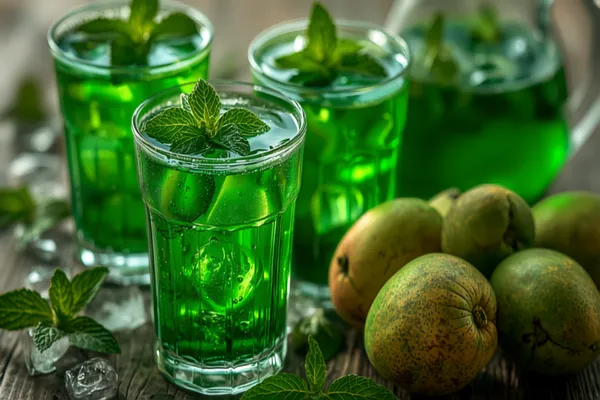
Aam Panna (Raw Green Mango Summer Cooler)
India's tangy, jade-green raw-mango cooler — roasted or boiled green mangoes blended with cumin, black salt and mint. The traditional heat-stroke remedy that tastes like summer.
Pan-Indian (North & West India) · Indian
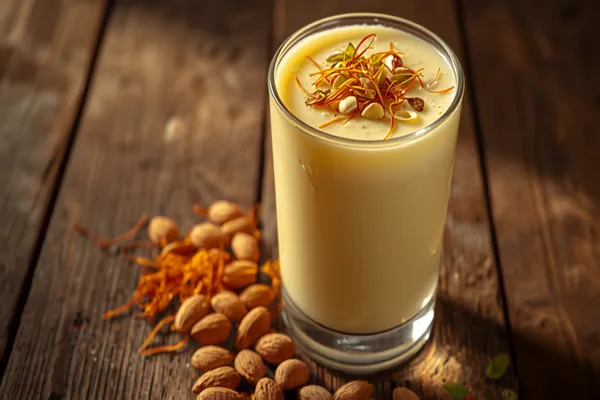
Badam Milk (Saffron Almond Milk)
Milk simmered with a paste of soaked almonds, saffron, cardamom and a whisper of nutmeg — India's rich, fragrant almond drink. Comforting served warm in winter, reviving served chilled in summer, festive any time.
Pan-Indian (Gujarat & West India especially) · Indian
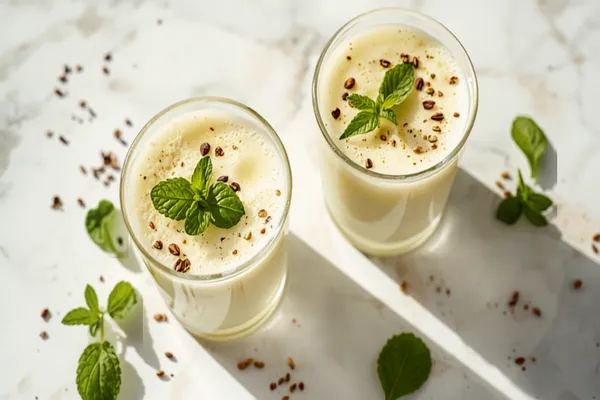
Chaas (Spiced Indian Buttermilk / Masala Chaas)
Whisked yogurt thinned with water and seasoned with cumin, green chilli, ginger and curry leaves — India's cooling, savoury buttermilk. A salty-tangy digestive that beats the heat and settles a heavy meal in two minutes.
From our kitchen community
Ratings & Reviews
My Rating
Tap a star to rate — no sign-in, no form needed.
My Review
0 Ratings
🥣 0 home cooks made it!
Be the first to rate Puran Poli (Maharashtrian Sweet Stuffed Flatbread).
Related Recipes
Gujarat / West India · Indian
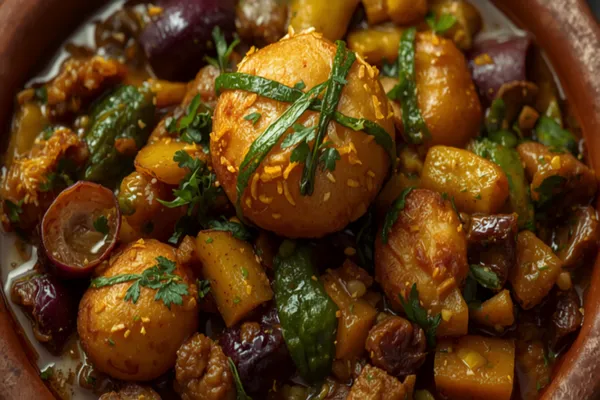
Undhiyu (Gujarati Mixed Winter Vegetable Casserole)
Gujarat's grand winter dish: a slow-cooked medley of seasonal vegetables and fried fenugreek dumplings (muthia) in a fragrant green masala of coriander, coconut, and green garlic. Festive, layered, and the pride of Uttarayan.
Punjab / North India · Indian
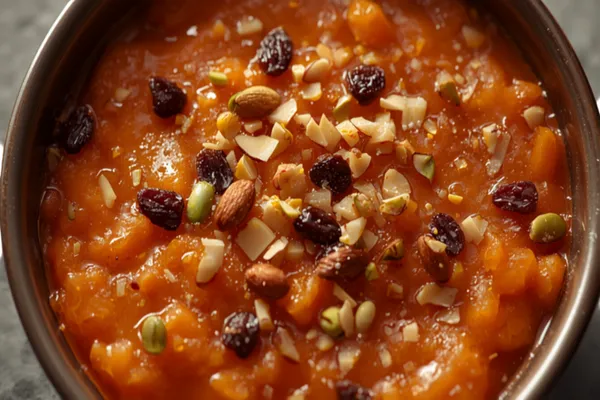
Gajar ka Halwa (Carrot Halwa)
North India's beloved winter dessert: grated carrots slow-cooked in milk and ghee until jammy and rich, studded with nuts and scented with cardamom.
North India / pan-Indian · Indian
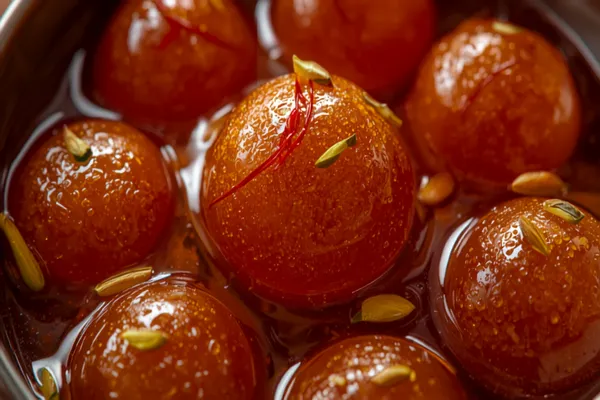
Gulab Jamun (Milk Dumplings in Rose-Cardamom Syrup)
The king of Indian sweets: soft khoya dumplings fried to deep gold and soaked in warm rose-and-cardamom syrup until they swell, juicy and melting. The dessert no Diwali or wedding is complete without.
Maharashtra, West India (the Pune–Nashik belt) · Indian
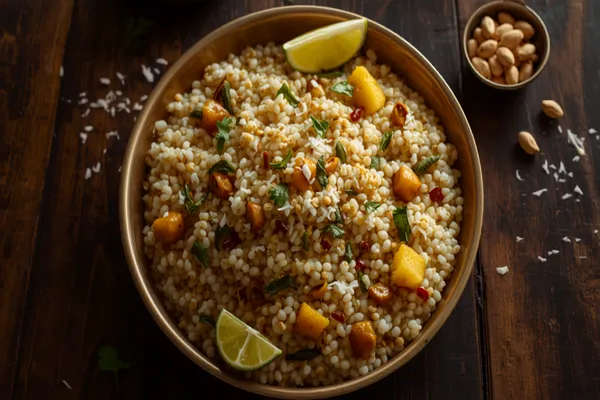
Sabudana Khichdi (Maharashtrian Fasting Tapioca Pearls)
The Maharashtrian upvas classic: tapioca pearls soaked until they squash between your fingers, then tossed with ghee, cumin, potato and a thick coating of crushed roasted peanuts. Every pearl separate, glossy and nutty — never a sticky lump.
Further reading
- Cultural Story · West IndiaA Complete Guide to West Indian CookingFour very different states, one coast: Maharashtra's street food and fiery Kolhapuri curries, Gujarat's sweet-savoury vegetarian thali, Goa's twin Hindu and Catholic kitchens, and Rajasthan's desert cooking. A guide to western India's table.
- Festival & SeasonalIndian Festival Sweets: From Diwali to EidIn India, no celebration is complete without mithai. A guide to the sweets that define the festival calendar — the Diwali mithai box, the Eid dessert table, and the regional treasures of Bengal and the south — and what makes each one special.