Maharashtra, West India (the Pune–Nashik belt) · Indian
Sabudana Khichdi (Maharashtrian Fasting Tapioca Pearls)
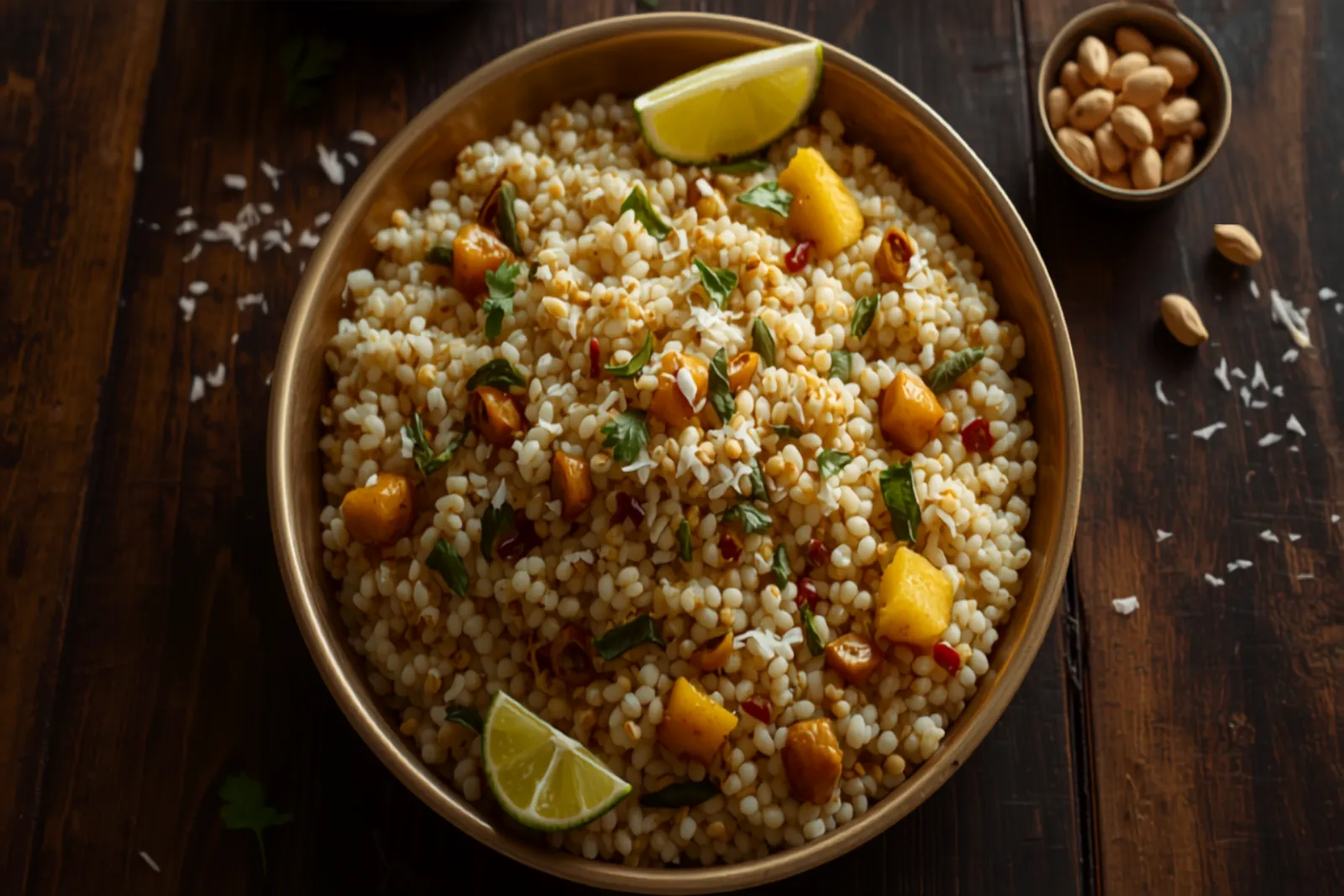
The Maharashtrian upvas classic: tapioca pearls soaked until they squash between your fingers, then tossed with ghee, cumin, potato and a thick coating of crushed roasted peanuts. Every pearl separate, glossy and nutty — never a sticky lump.
Published August 9, 2026
Cultural context
Sabudana khichdi is the great fasting plate of Maharashtra, eaten on Ekadashi, Mahashivratri, Ashadhi and through the nine days of Navratri, when grains and regular salt are set aside. Tapioca arrived in India from Brazil via Portuguese and later colonial-era plantations, and by the early twentieth century Maharashtra's kitchens — with groundnuts from the Deccan and ghee at hand — had turned the imported pearl into a fasting staple. It has long since escaped the fasting calendar: today it is Pune breakfast-stall food, sold by the plate with a wedge of lime, any day of the week.
Sabudana khichdi is what Maharashtra eats when it isn’t eating grain. On Ekadashi, on Mahashivratri, through the nine nights of Navratri, wheat and rice are set aside and the fasting kitchen turns to tapioca pearls, groundnuts, potato and ghee — ingredients that sit outside the grain category and, not coincidentally, make one of the most satisfying breakfasts in India. Get it right and the pearls are separate, glassy and springy, each one wearing a coat of crushed roasted peanut. Get it wrong and you have a pan of glue. The difference is almost entirely in the soak.
Tapioca in a Maharashtrian kitchen
Sabudana isn’t indigenous to India at all. Tapioca is a Brazilian root, carried across the world by Portuguese traders and later planted at scale in South India during the colonial period. Maharashtra took the processed pearl and made it a fasting food, pairing it with the Deccan’s other great crop — the groundnut — and with ghee. Today the dish has slipped its ritual mooring completely: Pune’s breakfast stalls sell it by the plate at eight in the morning to people not fasting at all, and the smell of cumin hitting hot ghee is as much a Maharashtrian morning as poha.
The soak is the recipe
Everything else here is a stir-fry. The part that decides your khichdi happens hours earlier, in a covered bowl.
Rinse until the water runs clear
Tapioca pearls carry loose starch on their surfaces. That starch is glue. Three or four rinses, rubbing the pearls between your fingers, gets rid of it — skip this and no technique later will save you.
Water level with the pearls, not above them
The classic ratio is about 3/4 cup of water to 1 cup of sabudana: enough to sit level with the drained pearls, no more. The pearls should drink the water, not swim in it. Five or six hours, or overnight, and you test by squashing one between finger and thumb. It should flatten with no white speck at the core. Sabudana softens by hydration, not by heat, so a hard centre now is a hard centre forever.
Why the peanut powder goes on before the pan
Roast the peanuts yourself, rub off the skins, and pound them coarse — sandy, not smooth. Then fork that powder through the soaked pearls before any cooking. It seasons the dish, yes, but the real job is mechanical: a dry, gritty coating keeps each pearl from touching its neighbour when things get hot. This is the step home cooks most often skip, and the one that most reliably separates good khichdi from gummy khichdi.
Fold, don’t stir, and stop early
Wide pan, low heat, four to six minutes. Fold with a spatula rather than stirring, and watch the colour: chalky white to translucent glass is your doneness signal, and it arrives faster than you expect. Keep going past it and the starch gelatinises, the pearls slump into each other and you’ve lost the bounce. Off the heat, a squeeze of lime and a handful of coriander — the acid goes in last so it stays bright against the ghee and peanuts.
Serve it immediately, with plain yoghurt on the side. If you want the rest of the Maharashtrian morning table, make kanda poha or a plate of misal pav — and there’s more on the region’s pantry and habits in our guide to West Indian cooking.
Ingredients
For soaking
- 1 cup (about 180 g) sabudana (tapioca pearls) Use the medium nylon sabudana sold for khichdi. The tiny pearls dissolve into paste; the very large ones stay chalky at the core.
- about 3/4 cup water Just enough to sit level with the drained pearls — not a bowlful. Water is a soaking medium here, not a cooking medium.
For the peanut mix
- 3/4 cup (about 110 g) raw peanuts Skin-on. Roasting and rubbing them yourself is worth it — pre-roasted packet peanuts are flatter in flavour.
- 1 tsp sugar Maharashtrian seasoning: a little sugar sharpens the lime and salt rather than making the dish sweet.
For the khichdi
- 3 tbsp ghee Ghee is traditional and permitted on most fasting days. Use groundnut oil for a vegan version.
- 1 tsp cumin seeds
- 2 green chillies Slit lengthways or finely chopped, to taste.
- 8 to 10 curry leaves (optional) Common in Pune-style khichdi; omitted by families who keep a stricter fasting kitchen.
- 1 medium (about 150 g) potato Peeled and cut into 1 cm dice. Waxy potatoes hold their cubes; floury ones fluff and break.
- 1 tsp sendha namak (rock salt), or to taste Rock salt is what makes this fasting-legal. Regular sea salt is fine on a non-fasting day.
To finish
- 2 tbsp fresh coriander, chopped
- 1 lime, cut into wedges
- 2 tbsp fresh grated coconut (optional)
Method
Tap a step’s number to check it off as you go.
-
Tip the sabudana into a sieve and rinse under cold running water, rubbing the pearls between your fingers, until the water runs clear — three or four changes. Drain thoroughly for a couple of minutes.
Why: Tapioca pearls are coated in loose surface starch. Rinsing it away is the single biggest factor in whether your khichdi ends up separate and glossy or a sticky mass, because that free starch is what glues the pearls together in the pan.
-
Transfer the drained pearls to a bowl and add just enough water to come level with the top of them — roughly 3/4 cup for 1 cup of sabudana. Cover and leave for 5–6 hours or overnight at room temperature.
Why: The pearls need to absorb water, not swim in it. Too much water and the outsides turn to paste before the centres hydrate; the level-with-the-top ratio lets them drink exactly what they can hold.
-
Test one: press a pearl between thumb and forefinger. It should squash flat with no hard white speck in the middle. If any chalkiness remains, sprinkle over a tablespoon of water, fluff, and give it another hour.
Why: An under-soaked pearl will never soften in the pan — sabudana cooks by hydration, not by heat — and you get the dreaded crunchy-centre khichdi. This one-second test is the only reliable check.
-
Meanwhile, dry-roast the peanuts in a heavy pan over medium heat, shaking often, for 6–8 minutes until the skins blister and they smell toasty. Cool, rub off the skins in a tea towel, then pulse or pound to a coarse, sandy powder — not a paste.
Why: Toasting drives off moisture and blooms the peanut oils, which is where the dish's whole savoury backbone comes from. Coarse is deliberate: the grit clings to each pearl and keeps them from sticking to one another.
-
Fork the peanut powder and the sugar through the soaked sabudana until every pearl is dusted. Season with the rock salt.
Why: Coating the pearls before they meet heat is the professional trick — the peanut powder acts as a dry barrier so the pearls glide past each other instead of fusing. Salting now also seasons from the inside out.
-
Heat the ghee in a wide kadai or frying pan over medium heat. Add the cumin and let it sizzle for 15 seconds, then the green chillies and curry leaves.
Why: Blooming cumin in fat releases its aromatic oils into the ghee, which then carries that flavour to every pearl. A wide pan matters more than you'd think — depth traps steam and steam makes stickiness.
-
Add the diced potato, stir to coat, cover and cook for 6–8 minutes, stirring once or twice, until tender and lightly golden at the edges.
Why: The potato must be fully cooked before the sabudana goes in. Once the pearls are added the whole thing needs to come off the heat in minutes, so there is no time left to soften raw potato.
-
Turn the heat to low, add the coated sabudana and fold gently with a spatula. Cook for 4–6 minutes, folding every minute, until the pearls turn from opaque white to glassy and translucent.
Why: Translucency is the doneness signal, and it happens fast. Low heat and folding — rather than stirring — keeps the pearls whole. Push past this point and the starch gelatinises further and the khichdi turns gummy.
-
Take the pan off the heat, squeeze over the juice of half a lime and fold through the coriander and coconut. Serve straight away with more lime wedges.
Why: Sabudana khichdi firms up as it cools and is at its best within minutes of leaving the pan. The lime goes in off the heat so its brightness isn't cooked away — it's what cuts the richness of ghee and peanuts.
A quick, anonymous tap — no review needed.
Variations
- Vegan
Swap the ghee for cold-pressed groundnut oil. The dish is otherwise entirely plant-based, and groundnut oil actually echoes the peanut flavour.
- Nashik-style, with extra crunch
Reserve a spoonful of the roasted peanuts whole rather than grinding them all, and scatter them over at the table for pockets of bite.
- Sabudana thalipeeth
Bind leftover khichdi with a boiled mashed potato, pat into discs and shallow-fry in ghee until crisp on both sides — the classic second-day dish.
- Non-fasting weekday version
Use regular salt, add a finely chopped small onion with the potato, and finish with a pinch of red chilli powder. Not fasting-legal, but excellent.
Serving & Storage
Serve hot, straight from the pan, with a wedge of lime and a bowl of plain sweetened yoghurt or dahi on the side. A cup of chai alongside is the Pune breakfast-stall way — though on a strict fasting day, chai is usually skipped.
Pairs with: Plain yoghurt, Masala chai, Fresh lime, Coconut chutney.
Storage: Best eaten within minutes of cooking — the pearls firm up and harden as they cool. Leftovers keep 1 day refrigerated; revive them in a covered pan over low heat with a teaspoon of ghee and a sprinkle of water, or turn them into thalipeeth. The soaked, drained sabudana itself keeps 2 days in the fridge, so you can soak ahead and cook to order.
Nutrition
Per serving (1 serving (about 1.5 cups))
- Calories
- 420
- Protein
- 9 g
- Carbs
- 56 g
- Fat
- 19 g
- Fiber
- 4 g
- Sugar
- 3 g
- Sodium
- 480 mg
Notable micronutrients: Magnesium, Vitamin E, Niacin, Potassium
Estimated using standard ingredient data. Values vary with brands and substitutions.
Frequently Asked Questions
Why is my sabudana khichdi sticky and lumpy?
Almost always one of three things: the pearls weren't rinsed enough before soaking, so surface starch glued them together; they were soaked in too much water, which turns the outsides to paste; or they were cooked too long or over too high a heat. Rinse until the water runs clear, soak in water just level with the pearls, coat them in coarse peanut powder before they hit the pan, and pull them off the heat the moment they turn translucent.
My pearls are still hard in the middle after soaking. Can I fix it?
Yes, before you cook — sprinkle over a tablespoon of water, fluff with a fork, cover and wait another hour, then re-test by squashing a pearl. Once the khichdi is in the pan it's too late: sabudana softens by absorbing water, not by cooking, so hard centres stay hard no matter how long you fry them.
What is sendha namak, and do I have to use it?
Sendha namak is unrefined rock salt, the only salt permitted in most Hindu fasting kitchens because it isn't processed the way table salt is. If you're cooking this as an ordinary breakfast rather than for a vrat, regular salt works exactly the same. It's a ritual distinction, not a culinary one — though rock salt is a touch milder.
Can I make sabudana khichdi ahead for a crowd?
Soak the sabudana and roast and grind the peanuts a day ahead, and keep both covered in the fridge — that's the slow part done. The cooking itself is under ten minutes, so fry it to order. Made ahead and reheated, the pearls tighten and lose the bounce that makes the dish.
What to drink with this
All drinks →Hand-picked pours to match this dish.

Pan-Indian (the everyday tea of the subcontinent) · Indian
Masala Chai (Spiced Indian Tea)
India's daily ritual in a cup: black tea brewed with milk, sugar and freshly crushed spices. The proper stovetop method, plus how to build your own masala.
North & West India (peak-summer drink across the subcontinent) · Indian
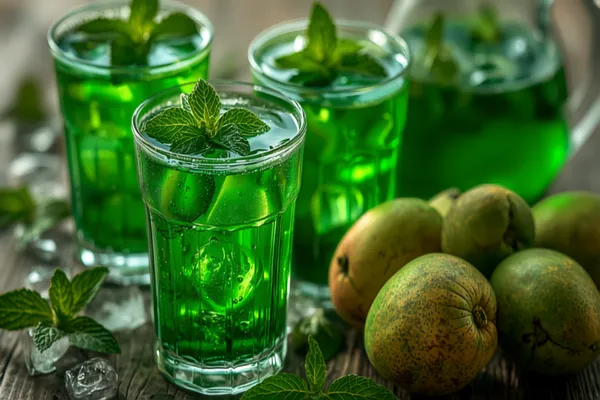
Aam Panna (Raw Green Mango Summer Cooler)
India's tangy, jade-green raw-mango cooler — roasted or boiled green mangoes blended with cumin, black salt and mint. The traditional heat-stroke remedy that tastes like summer.
Pan-Indian (North & West India) · Indian
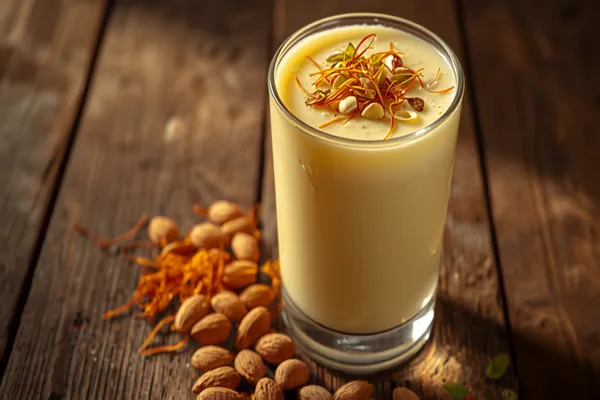
Badam Milk (Saffron Almond Milk)
Milk simmered with a paste of soaked almonds, saffron, cardamom and a whisper of nutmeg — India's rich, fragrant almond drink. Comforting served warm in winter, reviving served chilled in summer, festive any time.
From our kitchen community
Ratings & Reviews
My Rating
Tap a star to rate — no sign-in, no form needed.
My Review
0 Ratings
🥣 0 home cooks made it!
Be the first to rate Sabudana Khichdi (Maharashtrian Fasting Tapioca Pearls).
Related Recipes
Maharashtra / West India · Indian
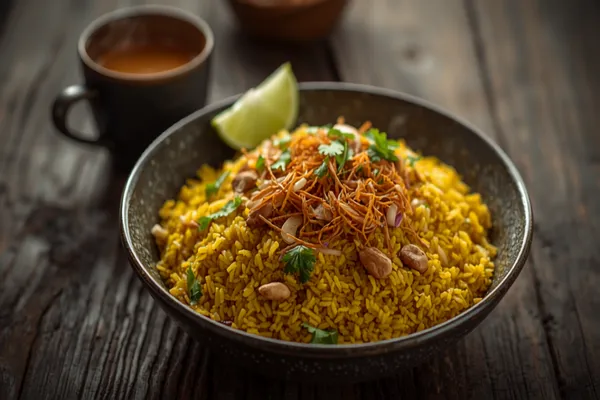
Kanda Poha (Maharashtrian Onion Flattened Rice)
Maharashtra's beloved 15-minute breakfast: soft flattened rice tossed with onions, a mustard-and-curry-leaf tempering, toasted peanuts and a bright squeeze of lime. Light, savoury and endlessly comforting.
Maharashtra / West India · Indian
Misal Pav (Maharashtrian Sprouted Bean Curry)
Maharashtra's fiery street-food breakfast: a spiced sprouted-moth-bean curry (usal) under a slick of spicy tarri gravy, topped with crunchy farsan, onion, and lime, scooped up with soft pav. Big, bold, and built for a crowd.

Maharashtra · Indian
Puran Poli (Maharashtrian Sweet Stuffed Flatbread)
A soft, ghee-glossed flatbread stuffed with a spiced chana dal and jaggery filling — the festive sweet of Maharashtra made for Holi and Gudi Padwa. Fragrant with cardamom and nutmeg, tender enough to tear with your fingers.
Pan-Indian (the everyday tea of the subcontinent) · Indian
Masala Chai (Spiced Indian Tea)
India's daily ritual in a cup: black tea brewed with milk, sugar and freshly crushed spices. The proper stovetop method, plus how to build your own masala.