Cultural Story · West India
A Complete Guide to West Indian Cooking
Four very different states, one coast: Maharashtra's street food and fiery Kolhapuri curries, Gujarat's sweet-savoury vegetarian thali, Goa's twin Hindu and Catholic kitchens, and Rajasthan's desert cooking. A guide to western India's table.
Published July 19, 2026
Western India packs four wildly different cuisines along and behind one coast: Maharashtra’s street food and fiery curries, Gujarat’s sweet-savoury vegetarian thali, Goa’s twin Hindu and Catholic kitchens, and Rajasthan’s desert cooking. There’s no single “western Indian” flavour — which is exactly what makes the region so rewarding to explore.
Maharashtra
Maharashtra runs from the street food of Mumbai — the spiced-potato vada pav and the fiery sprouted-bean misal pav — to rustic staples like pithla with bhakri, to the blistering heat of southern Kolhapur, home of dishes like Kolhapuri chicken and its famous red-and-white rassa pairing.
Gujarat
Gujarat is largely vegetarian and unmistakably sweet-savoury — a balance of jaggery against salt and spice. The thali is its art form, anchored by the thin, gently sweet Gujarati kadhi, the festive winter undhiyu, the travel-ready thepla, and snacks like the spongy khaman dhokla.
Goa: two kitchens
Goa’s food splits into two great traditions. The Catholic kitchen, shaped by Portuguese rule, gives us the tangy, vinegar-laced pork vindaloo. The Hindu (Saraswat) kitchen leans on coconut, tamarind, jaggery, and the citrusy spice teppal, in festive dishes like khatkhate and the cooling kokum-coconut sol kadhi.
Rajasthan
The desert state cooks for a land where fresh vegetables were once scarce — hence its reliance on dairy, lentils, dried spices, and preservation. Its most famous dish is the fiery, smoky laal maas, born of the Rajput hunting tradition.
Where to start
For street food, start with vada pav or misal pav. For a snack, khaman dhokla. Then explore Goa through a vindaloo or khatkhate, and brave the Rajasthani laal maas. Browse the full recipe collection for more.
Frequently Asked Questions
Which states make up West Indian cuisine?
Primarily Maharashtra, Gujarat, Goa, and Rajasthan — four very different cuisines. Maharashtra ranges from Mumbai street food to fiery Kolhapuri curries; Gujarat is largely vegetarian and sweet-savoury; Goa has distinct Hindu and Catholic kitchens; Rajasthan is desert cooking built on preservation and dairy.
What's the difference between Goan Hindu and Goan Catholic food?
Goan Catholic cooking (like pork vindaloo) uses vinegar, pork, and Portuguese-influenced techniques. Goan Hindu (Saraswat) cooking leans on coconut, tamarind, jaggery, and the spice teppal, with festive vegetarian dishes like khatkhate. Both are authentically Goan.
Where should I start with West Indian cooking?
Start with Mumbai's vada pav or misal pav for street food, or Gujarati khaman dhokla for a snack. Then try a Goan curry — vindaloo (Catholic) or khatkhate (Hindu) — and the fiery Rajasthani laal maas.
Related Recipes
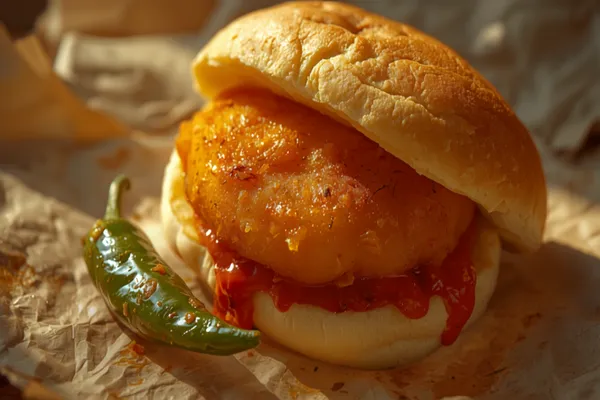
Mumbai, Maharashtra / West India · Indian
Vada Pav (Mumbai's Spiced Potato Burger)
Mumbai's beloved street snack and unofficial city sandwich: a spiced, deep-fried potato dumpling (batata vada) tucked into a soft pav with dry garlic chutney and a fried green chili. Cheap, fiery, and completely addictive.
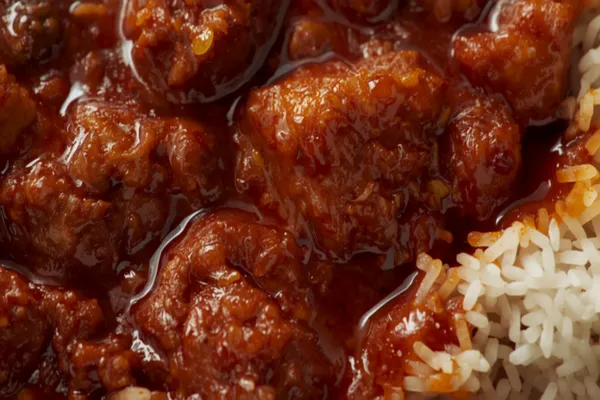
Goa / West India · Indian
Goan Pork Vindaloo
The real vindaloo: tender pork in a tangy, garlicky, chili-and-vinegar masala born of Portuguese 'carne de vinha d'alhos' and remade in Goa. Deeply spiced, sharp with vinegar — and not just 'the hot one' on the menu.
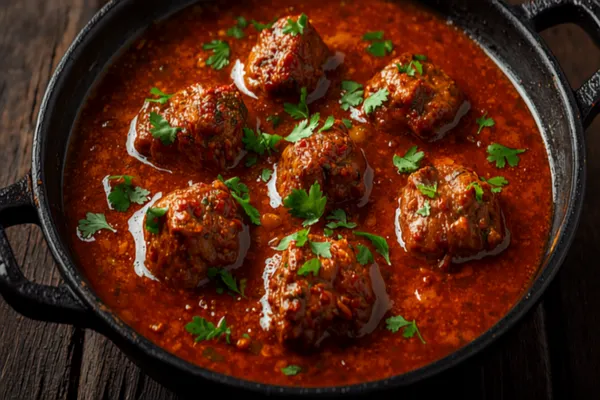
Rajasthan / West India · Indian
Laal Maas (Rajasthani Red Mutton Curry)
A fiery Rajasthani classic from the royal hunting kitchens: mutton braised in a brick-red gravy of Mathania chilies and yogurt, with an optional ember-and-ghee smoking that gives it a hunter's smokiness. Bold, lean, and unforgettable.
Related stories & guides
- Ingredient Deep DiveThe Indian Spice Pantry: A Beginner's MapYou don't need a hundred spices to cook Indian food — you need a dozen, and the know-how to use them. A practical guide to the essential Indian spices, what each does, and the techniques (tadka, bhuna, dry-roasting) that unlock them.
- Cultural Story · South IndiaA Complete Guide to South Indian CookingSouth India isn't one cuisine but many — Tamil, Kerala, Karnataka, Andhra and Telangana, each with its own grains, spices, and rituals. A guide to the building blocks, the regional differences, and where to start cooking.
- Cultural Story · Eastern IndiaA Complete Guide to Bengali and Eastern Indian CookingFrom the fish-and-rice heart of Bengal to Odisha's temple food, Assam's sour-clean dishes, and the smoke-and-ferment cooking of the Northeast — a guide to eastern India's distinct, often gentle, sometimes fiery table.
- Cultural Story · North IndiaA Complete Guide to North Indian CookingThe cuisine the world knows best — and understands least. From Punjab's tandoor and dairy to Kashmir's aromatic Wazwan and Awadh's courtly kebabs, a guide to North India's regions, techniques, and where to begin.