Rajasthan / West India · Indian
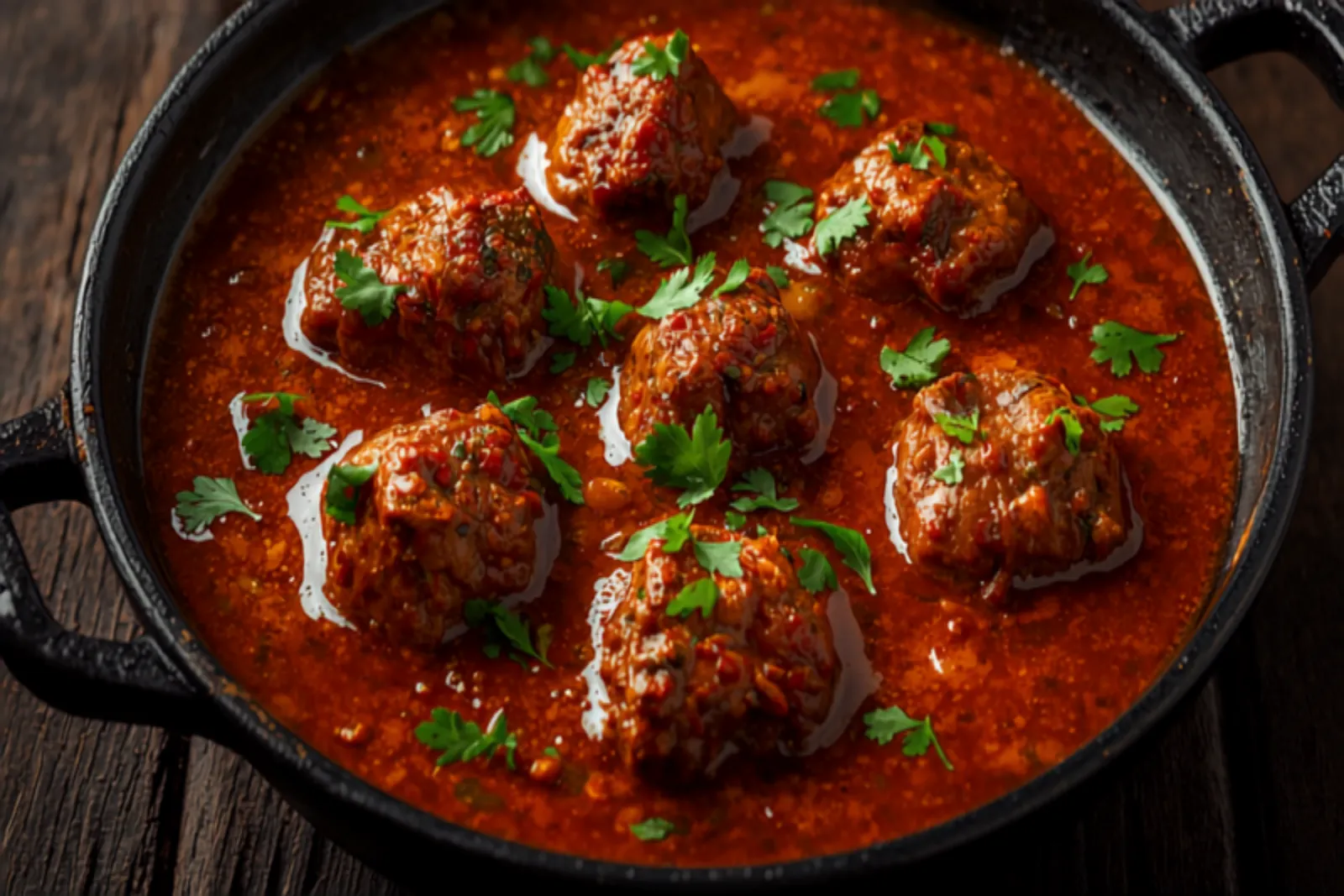
Laal Maas (Rajasthani Red Mutton Curry)
A fiery Rajasthani classic from the royal hunting kitchens: mutton braised in a brick-red gravy of Mathania chilies and yogurt, with an optional ember-and-ghee smoking that gives it a hunter's smokiness. Bold, lean, and unforgettable.
Published June 25, 2026
Cultural context
Laal maas ('red meat') comes from the Rajput warrior and hunting traditions of Rajasthan, where game was cooked over fire with chilies and few vegetables (which were scarce in the desert). Its colour and heat come from Mathania chilies, and many versions are finished with a dhungar — smoking with a live coal and ghee — echoing its open-fire origins.
Laal maas — “red meat” — is Rajasthan’s most famous curry, and it wears its history on its surface: a fierce, brick-red gravy of dried chilies and yogurt braising bone-in goat, often finished with a whiff of charcoal smoke. It comes from the Rajput hunting and warrior kitchens, where game was cooked over open fire with chilies and almost no vegetables, which the desert could not spare. The result is lean, bold, and unmistakable.
The colour and the heat
Both come from one place: a paste of soaked dried red chilies, traditionally the fiery Mathania chili of Rajasthan. If you want the dramatic red without the blaze, lean on Kashmiri chilies, which colour deeply but burn gently. Grinding soaked chilies to a paste — rather than shaking in powder — is what gives laal maas its glossy, vivid gravy.
Yogurt, slowly
The other backbone is yogurt, which tenderises the meat and balances the chili. Add it whisked, a little at a time, off a hard boil, stirring constantly so it doesn’t split. Then let the curry braise low and long until the goat is meltingly tender — there’s no shortcut for tough cuts.
A hunter’s smokiness
Many cooks finish laal maas with dhungar: a live coal set in a bowl in the pot, doused with ghee and cloves, covered to trap the smoke. It’s optional, but it threads the dish back to its open-fire origins and is worth doing once you’ve tried it plain.
Serve with bajra roti or rice. For more bold regional meat cookery, try Goan pork vindaloo or browse the full recipe collection.
Ingredients
For the chili paste
- 12–15 dried Mathania red chilies (or Kashmiri for less heat) Soaked in warm water and ground to a paste — the source of the red colour. Mathania is authentic and fiery; Kashmiri gives colour with less heat.
For the meat
- 1 kg bone-in mutton/goat, cut into pieces Bone-in is essential for flavour; goat is traditional.
- 1 cup thick yogurt, whisked
- 4 tbsp ghee or mustard oil Ghee is traditional and rich; laal maas is generous with it.
- 3 onions, sliced
- 2 tbsp ginger-garlic paste
- whole spices: 4 cloves, 2 bay leaves, 4 green cardamom, 1 black cardamom, 1 inch cinnamon
- 1 tsp ground coriander
- salt
For the dhungar (smoking, optional)
- 1 piece of live charcoal, a little ghee, a few cloves
Method
Tap a step’s number to check it off as you go.
-
Soak the dried chilies in warm water, then grind to a smooth red paste.
Why: Soaking and grinding the chilies gives laal maas its signature brick-red colour and is the base of its heat — a far better result than chili powder alone.
-
Heat ghee, fry the whole spices, then the onions until deep golden. Add ginger-garlic and cook off the raw smell.
Why: A well-browned onion base and bloomed whole spices build the foundation; rushing the onions leaves the gravy thin.
-
Add the mutton and sear well, then add the chili paste and ground coriander and fry until the ghee separates.
Why: Searing the meat and frying the chili paste in fat develops deep flavour and tames the raw chili before liquid goes in.
-
Lower the heat and add the whisked yogurt a little at a time, stirring constantly, then salt and a little water. Cover and simmer gently 1 hour+ until the mutton is tender.
Why: Adding yogurt slowly off a high boil stops it from splitting; the long, low braise is what makes tough goat meat fall-apart tender.
-
Optional dhungar: place a heated coal in a small bowl set in the curry, pour ghee with a few cloves over it, cover immediately for 2–3 minutes to trap the smoke, then remove.
Why: The dhungar method infuses a hunter's-fire smokiness that nods to the dish's open-flame origins — a defining flourish for many cooks.
A quick, anonymous tap — no review needed.
Variations
- Milder (Kashmiri chili)
Use Kashmiri chilies for the deep red colour with far less heat — still authentic in look, gentler on the palate.
- Without smoking
Skip the dhungar step; the curry is excellent on its own, just without the smoky note.
- Safed maas (white cousin)
For contrast, try Rajasthan's safed maas — a mild, pale curry of cashew, yogurt, and cream — a different but related royal dish.
Serving & Storage
Serve with bajra (pearl millet) roti, plain rice, or Rajasthani baati. Sliced onion and a cooling raita help balance the heat.
Pairs with: Bajra roti, Steamed rice, Onion-lime salad, Raita.
Storage: Keeps 3–4 days refrigerated and deepens overnight as the spices settle. Reheat gently to keep the meat tender.
Nutrition
Per serving (1 serving)
- Calories
- 520
- Protein
- 38 g
- Carbs
- 9 g
- Fat
- 37 g
- Fiber
- 2 g
- Sugar
- 4 g
- Sodium
- 660 mg
Notable micronutrients: Iron, Zinc, Vitamin B12
Estimated using standard ingredient data. Values vary with brands and substitutions.
Frequently Asked Questions
Why is laal maas so red?
The colour comes from a paste of soaked dried red chilies — traditionally Mathania chilies from Rajasthan. Use Kashmiri chilies if you want the same red without the fierce heat.
What is the dhungar (smoking) step?
Dhungar is an Indian smoking technique: a piece of live charcoal is placed in a small bowl set into the curry, doused with ghee (and often cloves), and the pot is covered to trap the smoke for a few minutes. It gives laal maas a distinctive smoky aroma echoing its open-fire roots. It's optional but characteristic.
Can I use lamb or chicken instead of goat?
Goat (mutton) is traditional and stands up to the bold spicing. Lamb works well too. Chicken can be used for a quicker version, but reduce the cooking time substantially and expect a lighter dish.
What to drink with this
All drinks →Hand-picked pours to match this dish.
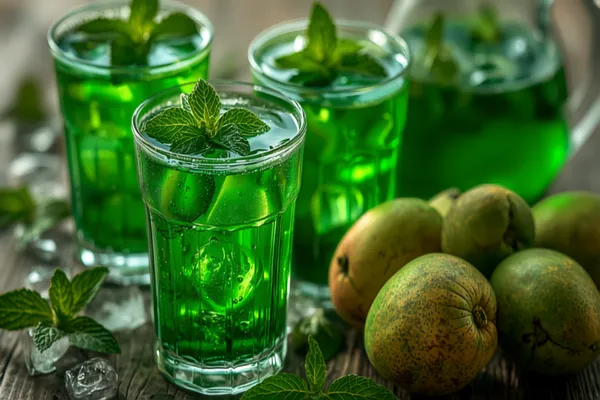
North & West India (peak-summer drink across the subcontinent) · Indian
Aam Panna (Raw Green Mango Summer Cooler)
India's tangy, jade-green raw-mango cooler — roasted or boiled green mangoes blended with cumin, black salt and mint. The traditional heat-stroke remedy that tastes like summer.
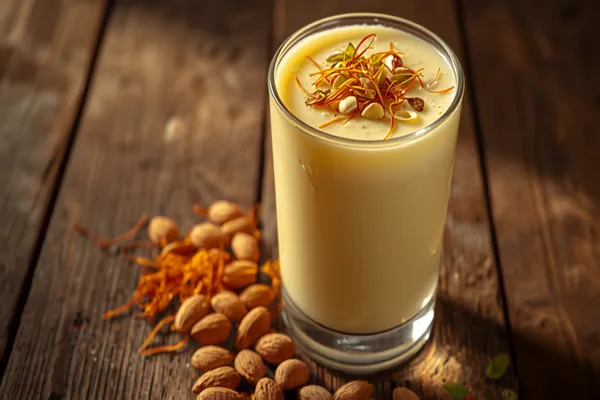
Pan-Indian (North & West India) · Indian
Badam Milk (Saffron Almond Milk)
Milk simmered with a paste of soaked almonds, saffron, cardamom and a whisper of nutmeg — India's rich, fragrant almond drink. Comforting served warm in winter, reviving served chilled in summer, festive any time.
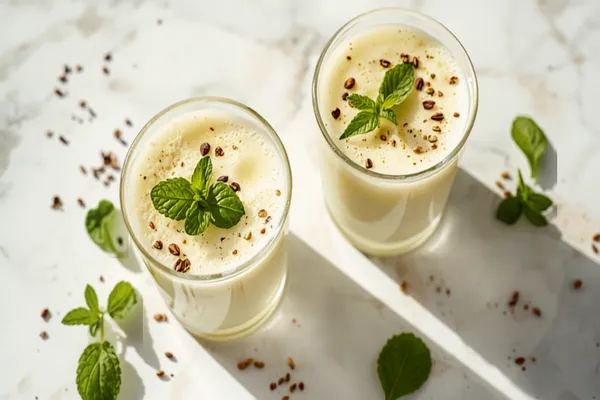
Pan-Indian (Gujarat & West India especially) · Indian
Chaas (Spiced Indian Buttermilk / Masala Chaas)
Whisked yogurt thinned with water and seasoned with cumin, green chilli, ginger and curry leaves — India's cooling, savoury buttermilk. A salty-tangy digestive that beats the heat and settles a heavy meal in two minutes.
From our kitchen community
Ratings & Reviews
My Rating
Tap a star to rate — no sign-in, no form needed.
My Review
0 Ratings
🥣 0 home cooks made it!
Be the first to rate Laal Maas (Rajasthani Red Mutton Curry).
Related Recipes
Goa / West India · Indian
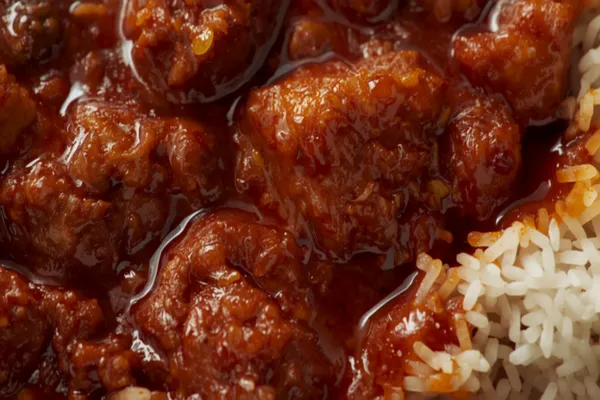
Goan Pork Vindaloo
The real vindaloo: tender pork in a tangy, garlicky, chili-and-vinegar masala born of Portuguese 'carne de vinha d'alhos' and remade in Goa. Deeply spiced, sharp with vinegar — and not just 'the hot one' on the menu.
Hyderabad, Telangana / Deccan · Indian
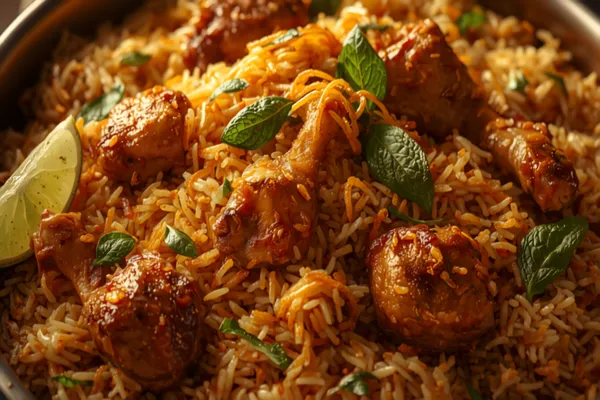
Hyderabadi Chicken Biryani (Dum Biryani)
The jewel of Hyderabad's Deccan kitchens: chicken marinated in yogurt and spice, layered raw with par-cooked basmati, and sealed to cook on slow dum. The kachay gosht method that makes it legendary — and how to get it right at home.
Rajasthan / West India — the Marwar and Shekhawati belt · Indian
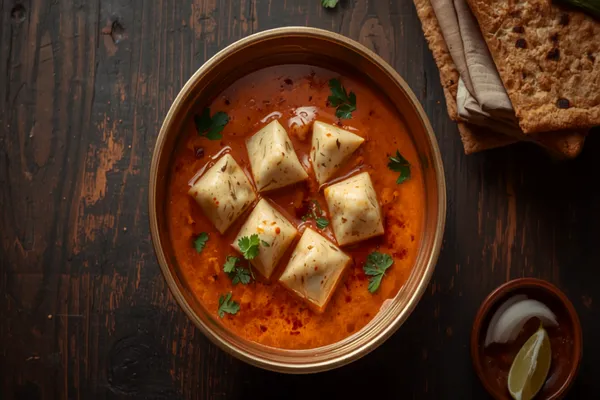
Gatte ki Sabzi (Rajasthani Gram-Flour Dumplings in Yoghurt Curry)
Spiced besan dumplings simmered in a tangy, chilli-red yoghurt gravy — Rajasthan's brilliant answer to a desert with no fresh vegetables. Soft gatte, a sharp curry, and a hing-cumin tempering that perfumes the whole kitchen.
Further reading
- Cultural Story · West IndiaA Complete Guide to West Indian CookingFour very different states, one coast: Maharashtra's street food and fiery Kolhapuri curries, Gujarat's sweet-savoury vegetarian thali, Goa's twin Hindu and Catholic kitchens, and Rajasthan's desert cooking. A guide to western India's table.
- Ingredient Deep DiveThe Indian Spice Pantry: A Beginner's MapYou don't need a hundred spices to cook Indian food — you need a dozen, and the know-how to use them. A practical guide to the essential Indian spices, what each does, and the techniques (tadka, bhuna, dry-roasting) that unlock them.