Hyderabad, Telangana / Deccan · Indian
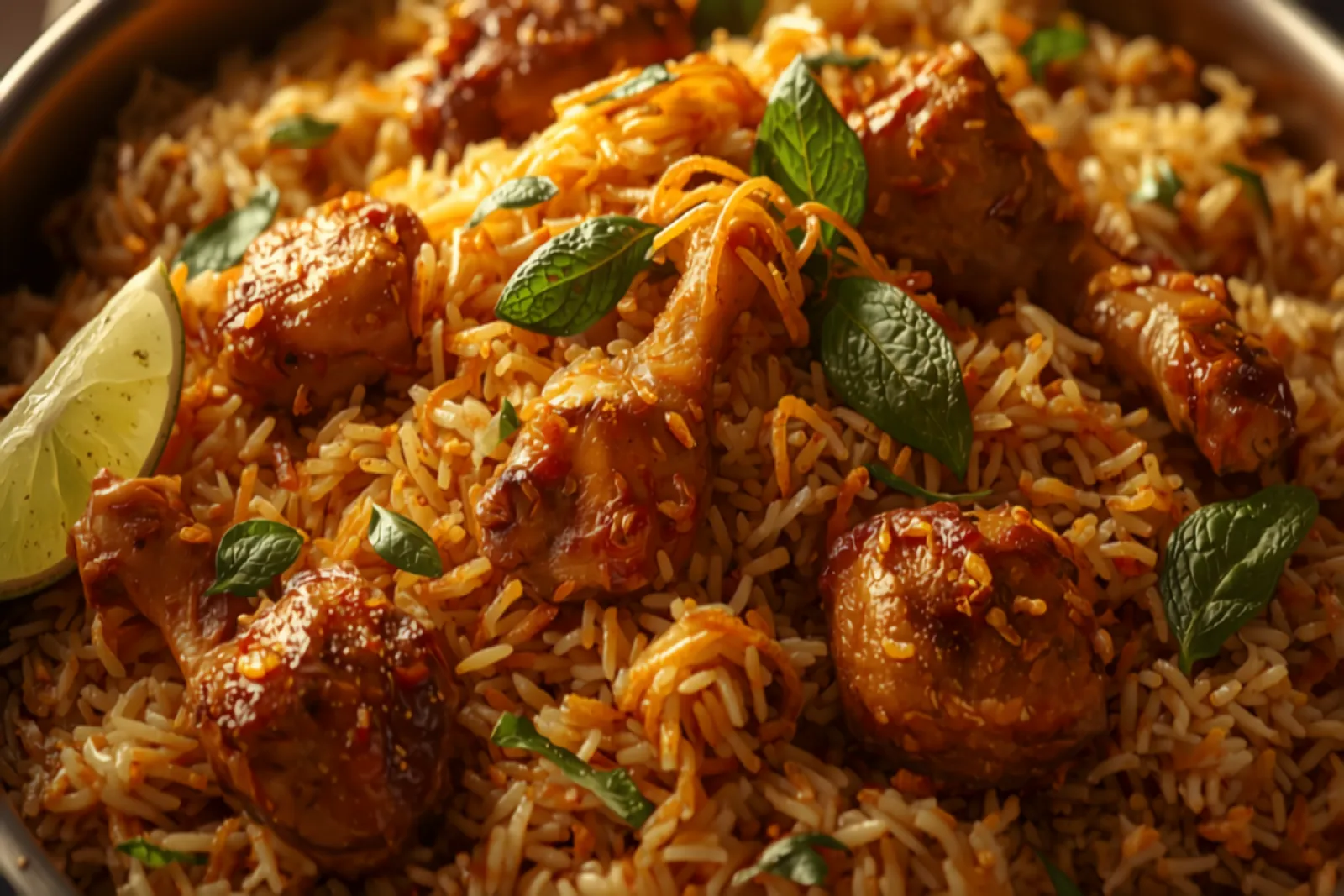
Hyderabadi Chicken Biryani (Dum Biryani)
The jewel of Hyderabad's Deccan kitchens: chicken marinated in yogurt and spice, layered raw with par-cooked basmati, and sealed to cook on slow dum. The kachay gosht method that makes it legendary — and how to get it right at home.
Published June 21, 2026
Cultural context
Hyderabadi biryani is the signature of the Deccan's Nizami kitchens, where Mughlai technique met South Indian ingredients. Its defining method is kacchi (kachay gosht) — raw marinated meat layered with par-boiled rice and slow-cooked together under a sealed lid, so the meat's juices perfume the rice from within.
Few dishes carry as much ceremony as Hyderabadi chicken biryani — the layered rice-and-meat dish that is the pride of the Deccan, born where Mughlai courtly technique met the ingredients and fire of South India. At its best it is a study in restraint and patience: marinated chicken and par-cooked basmati layered together and sealed to cook slowly on dum, until the rice is perfumed all the way through and the meat falls from the bone.
What makes it Hyderabadi: the kacchi method
The defining technique is kacchi (kachay gosht) — raw marinated meat layered beneath the rice and cooked together under a sealed lid. As the pot heats, the meat’s juices rise as steam and flavour every grain from within. It’s also the trickiest method, because the raw meat must cook through in the same time the rice finishes. Two things make it work: a long, generous marination, and par-boiling the rice to exactly 70% so it can finish in the trapped steam without turning to mush.
The non-negotiables
Three ingredients carry the dish: aged basmati (for separate, elongated grains), good yogurt and a long marination (for tender, deeply flavoured meat), and birista — golden fried onions — layered through for sweetness and depth. Saffron in warm milk and a final scatter of mint and coriander finish it.
Dum, gently
Seal the pot tight, build steam on high for a few minutes, then drop to the lowest heat — ideally over a tawa to diffuse it — for 40-odd minutes, and rest before opening. When you serve, lift gently from the bottom rather than stirring, so the basmati stays long and whole.
Serve with raita and salan. For more Deccan and South Indian cooking, browse the full recipe collection.
Ingredients
For the marinade
- 1 kg bone-in chicken, cut into large pieces Bone-in is essential — it flavours the rice and stays moist through dum.
- 1 cup thick yogurt
- 2 tbsp ginger-garlic paste
- 1 cup fried onions (birista) Golden-brown fried onions — the soul of the dish. Fry your own or use good store-bought.
- 2 tsp red chili powder
- 1 tsp garam masala
- 1/2 tsp turmeric
- juice of 1 lime, chopped mint and coriander, salt
For the rice
- 750 g (about 3.5 cups) aged basmati rice Long-grain aged basmati holds its shape and stays separate; soak 30 minutes.
- whole spices: 4 green cardamom, 1 black cardamom, 1 bay leaf, 1 inch cinnamon, 4 cloves, 1 tsp shahi jeera (caraway)
- salt (the water should taste well-salted)
For layering & dum
- 1 large pinch saffron, soaked in 1/4 cup warm milk
- 3 tbsp ghee
- extra fried onions, mint, coriander; dough or foil to seal
Method
Tap a step’s number to check it off as you go.
-
Marinate the chicken with yogurt, ginger-garlic, fried onions, spices, lime, herbs, and salt for at least 2 hours (overnight is better).
Why: The yogurt tenderises and the long marination drives flavour deep — critical because the meat cooks from raw in the kacchi method.
-
Bring a large pot of well-salted water with the whole spices to a boil. Add the soaked, drained rice and cook only until 70% done — still firm at the core — then drain.
Why: The rice finishes cooking in its own steam during dum; fully cooking it now would leave it mushy. The 70% stage is the single most important timing in the dish.
-
In a heavy-bottomed pot, spread the marinated chicken in an even layer. Top with the par-boiled rice. Scatter saffron milk, ghee, fried onions, mint, and coriander over the top.
Why: Layering raw marinated meat under the rice lets the juices rise as steam and flavour every grain — the essence of Hyderabadi dum.
-
Seal the pot tightly (dough rope or foil under the lid). Cook on high 3–4 minutes to build steam, then on the lowest heat (over a tawa/griddle if you have one) for 40–45 minutes. Rest 10 minutes, sealed.
Why: A tight seal traps the steam that cooks the raw meat through; the diffusing tawa stops the bottom scorching. The rest lets everything settle before you open it.
-
Open, and gently lift from the bottom to mix the layers as you serve, keeping the grains intact.
Why: Folding gently rather than stirring keeps the basmati long and unbroken — biryani should never be a mush.
A quick, anonymous tap — no review needed.
Variations
- Vegetable biryani
Replace chicken with hearty vegetables and paneer in the same marinade for a vegetarian Hyderabadi-style dum biryani.
- Pakki (easier) method
If raw-meat dum feels risky, fully cook the chicken curry first, then layer with rice and dum briefly — more forgiving, still delicious.
- Mutton biryani
Use bone-in mutton/goat; it needs a longer marination and a longer, gentler dum to become tender.
Serving & Storage
Serve with mirchi ka salan (chili-peanut curry) and a cooling onion-tomato raita. A wedge of lime and extra fried onions on top are traditional.
Pairs with: Raita, Mirchi ka salan, Salan, Sliced onion with lime.
Storage: Keeps 2–3 days refrigerated; reheat gently with a sprinkle of water to re-steam. Biryani is famously good the next day.
Nutrition
Per serving (1 generous plate)
- Calories
- 640
- Protein
- 34 g
- Carbs
- 68 g
- Fat
- 24 g
- Fiber
- 3 g
- Sugar
- 4 g
- Sodium
- 820 mg
Notable micronutrients: Niacin, Selenium, Vitamin B6
Estimated using standard ingredient data. Values vary with brands and substitutions.
Frequently Asked Questions
What is kacchi (dum) biryani?
Kacchi biryani layers raw marinated meat directly under par-cooked rice and slow-cooks them together, sealed, so the meat cooks in its own steam and its juices flavour the rice. It's the authentic Hyderabadi method — and the trickiest, since the timing must let the raw meat cook through.
Which rice is best for biryani?
Aged, long-grain basmati. Aging makes the grains firmer so they stay separate and elongate during dum. Soak it 30 minutes and par-boil only to 70%.
How do I keep the bottom from burning?
Cook the dum over very low heat, ideally with the pot sitting on a flat tawa or griddle to diffuse the heat. A tight seal and a heavy-bottomed pot both help.
What to drink with this
All drinks →Hand-picked pours to match this dish.

Punjab / North India (lassi heartland) · Indian
Mango Lassi (Yogurt and Mango Drink)
The creamy, cooling mango-and-yogurt drink of North Indian summers and restaurant menus everywhere. Three ingredients, two minutes, and a little cardamom.

North & West India (peak-summer drink across the subcontinent) · Indian
Aam Panna (Raw Green Mango Summer Cooler)
India's tangy, jade-green raw-mango cooler — roasted or boiled green mangoes blended with cumin, black salt and mint. The traditional heat-stroke remedy that tastes like summer.
Pan-Indian (North & West India) · Indian
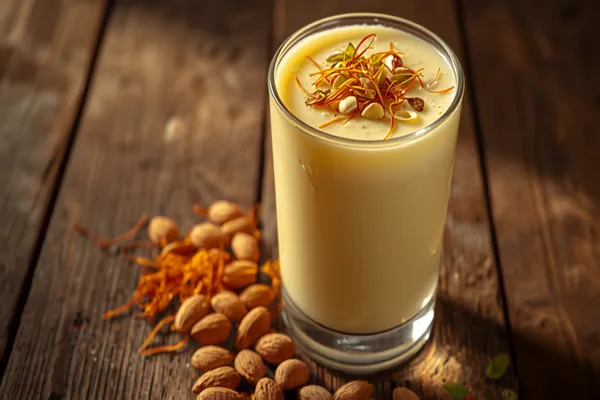
Badam Milk (Saffron Almond Milk)
Milk simmered with a paste of soaked almonds, saffron, cardamom and a whisper of nutmeg — India's rich, fragrant almond drink. Comforting served warm in winter, reviving served chilled in summer, festive any time.
From our kitchen community
Ratings & Reviews
My Rating
Tap a star to rate — no sign-in, no form needed.
My Review
0 Ratings
🥣 0 home cooks made it!
Be the first to rate Hyderabadi Chicken Biryani (Dum Biryani).
Related Recipes
Kerala / South India (Malabar coast) · Indian
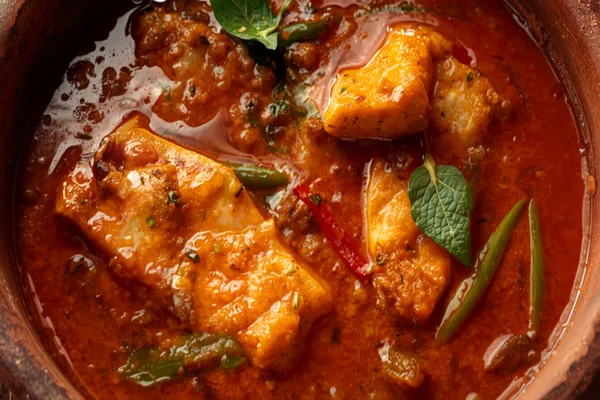
Kerala Fish Curry (Meen Curry with Coconut)
A coastal Kerala classic: fish simmered in a tangy, coconut-rich gravy sharpened with kokum-like kudampuli (Malabar tamarind) and a fragrant curry-leaf tempering. Sour, spicy, and built for rice.
Lucknow, Awadh (Uttar Pradesh) / North India · Indian
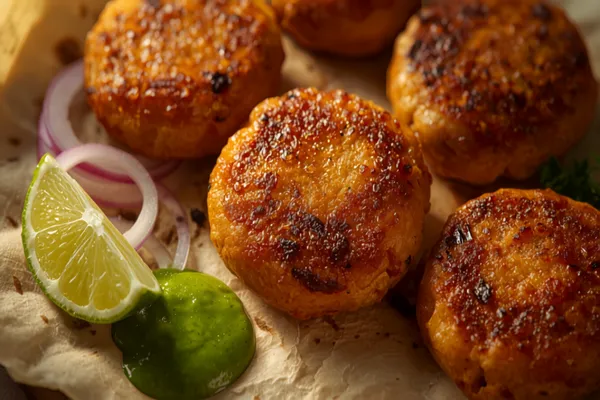
Galouti Kebab (Lucknowi Melt-in-the-Mouth Mince Kebab)
The legendary Awadhi kebab said to be invented for a toothless Nawab: spiced minced meat tenderised with raw papaya and enriched with ghee, fried into soft patties that dissolve on the tongue. Lucknow's edible silk.
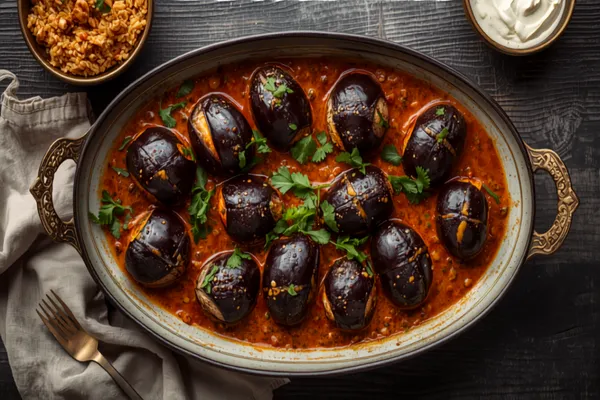
Hyderabad, Telangana / Deccan · Indian
Bagara Baingan (Hyderabadi Baby Eggplants in Peanut-Sesame Gravy)
Hyderabad's great banquet curry — small brinjals slit and fried whole, then simmered in a dark, tangy gravy of roasted peanuts, sesame, dry coconut and tamarind. The dish that sits beside the biryani and quietly outshines it.
Further reading
- Cultural Story · South IndiaA Complete Guide to South Indian CookingSouth India isn't one cuisine but many — Tamil, Kerala, Karnataka, Andhra and Telangana, each with its own grains, spices, and rituals. A guide to the building blocks, the regional differences, and where to start cooking.
- Ingredient Deep DiveThe Indian Spice Pantry: A Beginner's MapYou don't need a hundred spices to cook Indian food — you need a dozen, and the know-how to use them. A practical guide to the essential Indian spices, what each does, and the techniques (tadka, bhuna, dry-roasting) that unlock them.