Lucknow, Awadh (Uttar Pradesh) / North India · Indian
Galouti Kebab (Lucknowi Melt-in-the-Mouth Mince Kebab)
The legendary Awadhi kebab said to be invented for a toothless Nawab: spiced minced meat tenderised with raw papaya and enriched with ghee, fried into soft patties that dissolve on the tongue. Lucknow's edible silk.
Published June 27, 2026
Cultural context
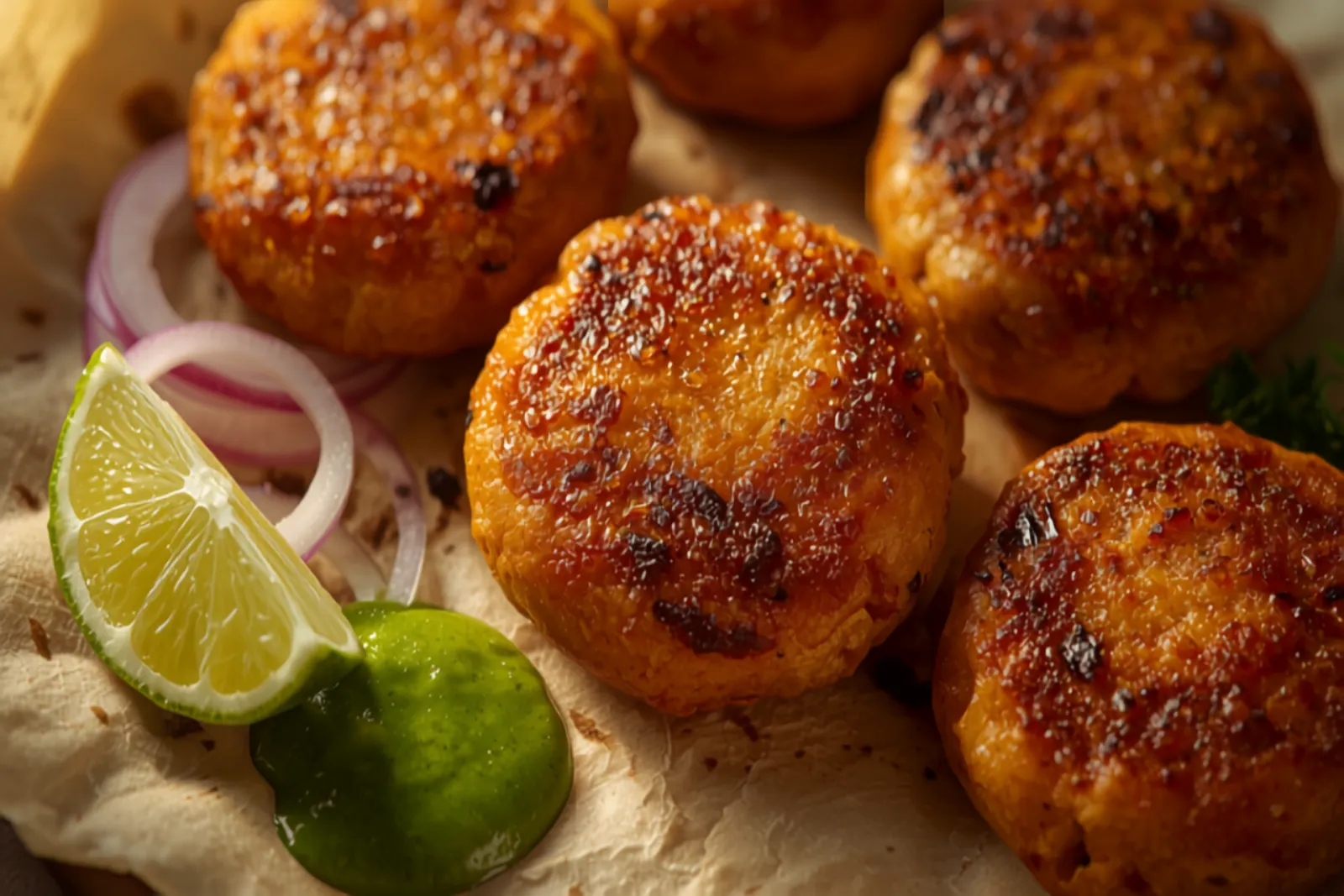
Galouti kebab is the pride of Awadhi (Lucknowi) cuisine, the refined court cooking of the Nawabs. Legend credits its invention to the kitchens of Nawab Wajid Ali Shah, made so soft ('galouti' means melt-in-the-mouth) that an aged, toothless ruler could enjoy meat. It's famous for its closely guarded spice blends and lavish use of ghee.
Galouti kebab is Lucknow’s edible silk — a spiced minced-meat kebab so soft it dissolves on the tongue. It comes from Awadhi cuisine, the refined court cooking of the Nawabs, and carries one of Indian food’s best origin legends: that it was created in the kitchens of Nawab Wajid Ali Shah for an aged, toothless ruler who could no longer chew his meat. Galouti means melt-in-the-mouth, and a good one earns the name.
The secret is raw papaya
What makes galouti melt is twofold: meat minced to an almost pasty fineness, and raw papaya paste, whose natural enzyme breaks down the meat fibres as the mixture rests. Give it the resting time — this is not a dish to rush — and the texture becomes something no amount of mincing alone could achieve.
A perfume of spices
Awadhi cooking is famous for its complex, closely guarded spice blends — cardamoms, mace, nutmeg, cloves, cinnamon and more — and a delicate floral note from rose or kewra water. You don’t need a hundred spices, but a good garam masala lifted with extra mace and nutmeg, plus a little saffron and rose water, captures the Lucknowi character.
Fry them flat and gentle
Galouti are too soft to skewer or grill — they’re shaped into small flat patties and pan-fried in ghee on a griddle. Cook them gently, let each side set before turning, and baste with ghee. A whiff of charcoal smoke (dhungar) is a traditional finishing touch.
Serve with thin paratha and mint chutney. For more North Indian and Awadhi cooking, try Hyderabadi biryani or browse the full recipe collection.
Ingredients
For the kebabs
- 500 g finely minced mutton/goat (or lamb) Ask for it double- or triple-minced — the paste must be very fine and smooth.
- 2 tbsp raw papaya paste The natural tenderiser that gives galouti its melting texture — don't skip it.
- 3 tbsp fried onion (birista), ground to a paste
- 2 tbsp ghee (plus more for frying)
- 1 tbsp ginger-garlic paste
- 2 tsp garam masala / galouti spice blend Traditionally a complex blend (cardamoms, mace, nutmeg, cloves, cinnamon, etc.); a good garam masala plus extra mace and nutmeg works.
- 1/2 tsp rose water or kewra (screwpine) water The delicate floral note typical of Awadhi cooking.
- 1 tbsp roasted chana (gram) flour or besan Helps bind the very soft mixture.
- salt, a few saffron strands, chili powder
For the dhungar (smoking)
- 1 piece live charcoal, a little ghee, a clove
Method
Tap a step’s number to check it off as you go.
-
Mix the fine mince with papaya paste, ginger-garlic, and salt and rest 1–2 hours (refrigerated) to tenderise.
Why: Raw papaya contains an enzyme (papain) that breaks down the meat — this resting step is what creates the signature melt-in-the-mouth softness.
-
Add the ground fried onion, ghee, spice blend, chili, saffron, rose/kewra water, and roasted gram flour, and mix to a very smooth, soft paste. Rest again 1 hour.
Why: The second rest lets the spices permeate and the gram flour hydrate so the soft mixture holds together when fried.
-
Optional dhungar: smoke the mixture with a ghee-doused live coal, covered, for a few minutes for an authentic smoky depth.
Why: A gentle smoking adds the subtle char-aroma traditional to many Awadhi kebabs.
-
Heat a thin film of ghee on a flat griddle. Shape the soft mixture into small flat patties (wet hands help) and fry gently on low-medium heat.
Why: Galouti are too soft to grill or skewer — they're pan-fried flat. Low heat and ghee cook them through without breaking the delicate patties.
-
Fry until deep golden and set on both sides, basting with ghee, and lift carefully.
Why: A proper crust holds the soft interior together; flipping too early or too roughly will break them, so let each side set before turning.
A quick, anonymous tap — no review needed.
Variations
- Chicken galouti
Use very finely minced chicken for a lighter kebab; it's less traditional but works with the same method.
- Beef/lamb
Lamb gives a richer kebab; keep the mince extremely fine for the right texture.
- Pan-only (no smoking)
Skip the dhungar; the kebabs are still wonderful, just without the smoky note.
Serving & Storage
Serve hot with ultra-thin Lucknowi ulta tawa paratha (or any soft paratha/roomali roti), thinly sliced onion, mint chutney, and a wedge of lime.
Pairs with: Ulta tawa paratha, Mint chutney, Sliced onion and lime.
Storage: The raw mixture keeps 1 day refrigerated (or freeze). Cooked kebabs are best fresh but keep 2 days; reheat gently in ghee so they don't dry out.
Nutrition
Per serving (3 kebabs)
- Calories
- 340
- Protein
- 22 g
- Carbs
- 6 g
- Fat
- 25 g
- Fiber
- 1 g
- Sugar
- 2 g
- Sodium
- 480 mg
Notable micronutrients: Iron, Zinc, Vitamin B12
Estimated using standard ingredient data. Values vary with brands and substitutions.
Frequently Asked Questions
Why are galouti kebabs so soft?
Two reasons: extremely finely minced meat, and raw papaya paste, whose enzyme (papain) breaks down the meat fibres as it rests. Plus generous ghee. The result is a kebab that genuinely melts on the tongue — the meaning of 'galouti.'
Can I grill galouti kebabs?
No — they're far too soft to skewer or grill. Galouti are shaped into flat patties and gently pan-fried in ghee on a griddle. That's the traditional and only reliable method.
What if I can't find raw papaya?
Raw papaya is the authentic tenderiser and hard to fully replace. A small amount of kiwi paste can substitute (it has a similar enzyme), but use it sparingly and don't over-rest, or the meat turns mushy.
What to drink with this
All drinks →Hand-picked pours to match this dish.
North & West India (peak-summer drink across the subcontinent) · Indian
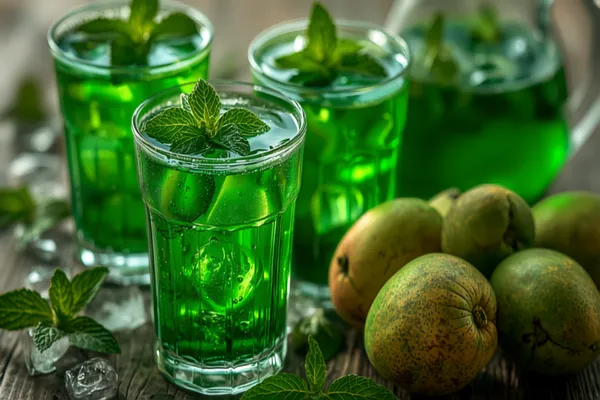
Aam Panna (Raw Green Mango Summer Cooler)
India's tangy, jade-green raw-mango cooler — roasted or boiled green mangoes blended with cumin, black salt and mint. The traditional heat-stroke remedy that tastes like summer.
Pan-Indian (North & West India) · Indian
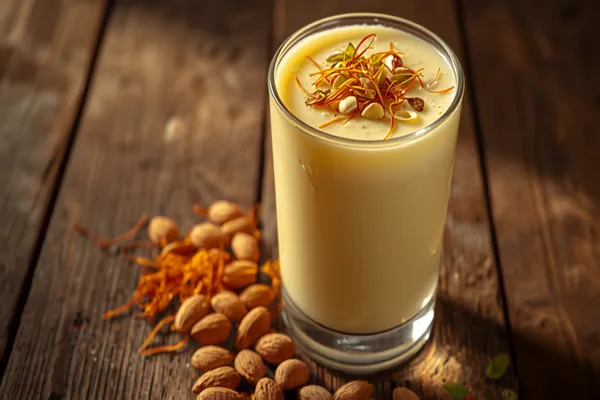
Badam Milk (Saffron Almond Milk)
Milk simmered with a paste of soaked almonds, saffron, cardamom and a whisper of nutmeg — India's rich, fragrant almond drink. Comforting served warm in winter, reviving served chilled in summer, festive any time.
Pan-Indian (Gujarat & West India especially) · Indian
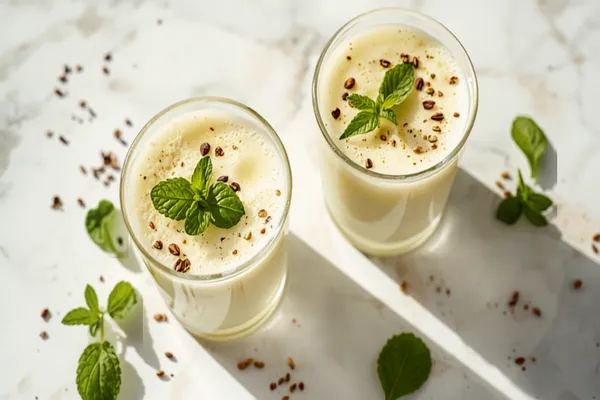
Chaas (Spiced Indian Buttermilk / Masala Chaas)
Whisked yogurt thinned with water and seasoned with cumin, green chilli, ginger and curry leaves — India's cooling, savoury buttermilk. A salty-tangy digestive that beats the heat and settles a heavy meal in two minutes.
From our kitchen community
Ratings & Reviews
My Rating
Tap a star to rate — no sign-in, no form needed.
My Review
0 Ratings
🥣 0 home cooks made it!
Be the first to rate Galouti Kebab (Lucknowi Melt-in-the-Mouth Mince Kebab).
Related Recipes
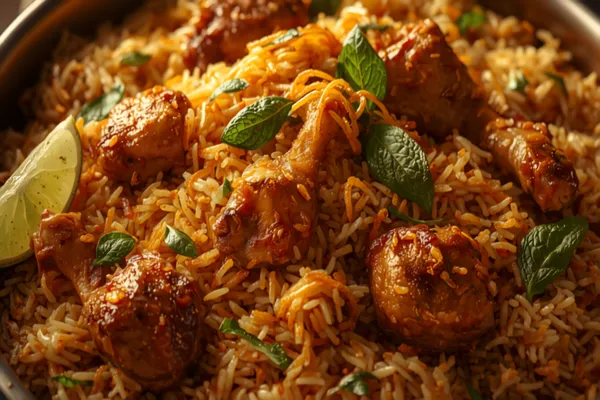
Hyderabad, Telangana / Deccan · Indian
Hyderabadi Chicken Biryani (Dum Biryani)
The jewel of Hyderabad's Deccan kitchens: chicken marinated in yogurt and spice, layered raw with par-cooked basmati, and sealed to cook on slow dum. The kachay gosht method that makes it legendary — and how to get it right at home.
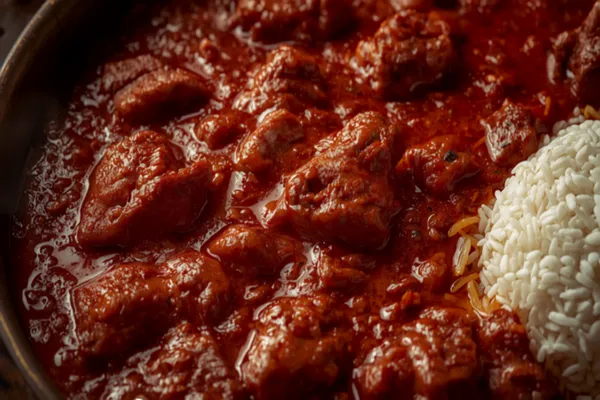
Kashmir / North India · Indian
Kashmiri Rogan Josh (Aromatic Red Lamb Curry)
The Kashmiri Wazwan classic: lamb slow-cooked in a brick-red gravy coloured by Kashmiri chilies and ratan jot, perfumed with fennel, ginger powder, and warm spices — and, in the Pandit style, no onion or garlic. Aromatic, not fiery.
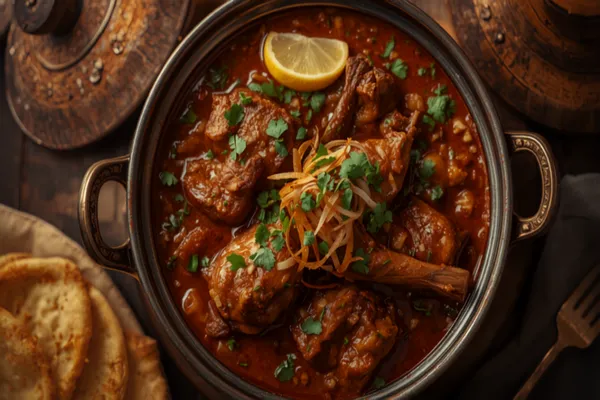
Old Delhi (Purani Dilli), Mughal era · Indian
Nihari (Old Delhi Slow-Cooked Meat Stew)
The legendary dawn stew of Mughal-era Delhi — mutton or lamb shank braised overnight in a deep, spice-laden gravy thickened with wheat flour and finished with sizzling ghee. Rich, silky and unforgettable, eaten with warm khameeri roti or naan.
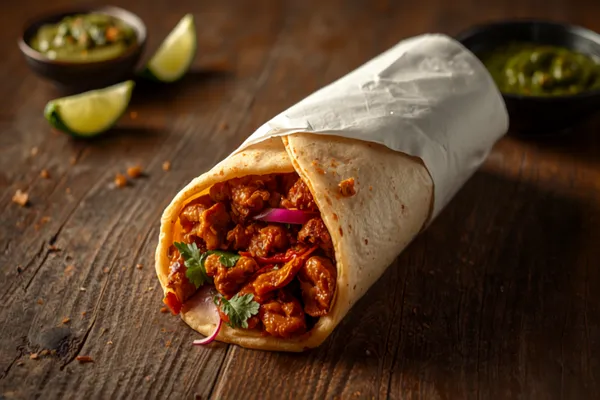
Kolkata, West Bengal / East India · Indian
Kolkata Kathi Roll (Chicken & Egg Paratha Roll)
Smoky spiced chicken and a just-set egg rolled into a flaky, twice-cooked paratha with sharp onions and green chutney — Kolkata's legendary street roll, born at Nizam's in the 1930s.
Further reading
- Cultural Story · North IndiaA Complete Guide to North Indian CookingThe cuisine the world knows best — and understands least. From Punjab's tandoor and dairy to Kashmir's aromatic Wazwan and Awadh's courtly kebabs, a guide to North India's regions, techniques, and where to begin.
- Ingredient Deep DiveThe Indian Spice Pantry: A Beginner's MapYou don't need a hundred spices to cook Indian food — you need a dozen, and the know-how to use them. A practical guide to the essential Indian spices, what each does, and the techniques (tadka, bhuna, dry-roasting) that unlock them.