Rajasthan / West India — the Marwar and Shekhawati belt · Indian
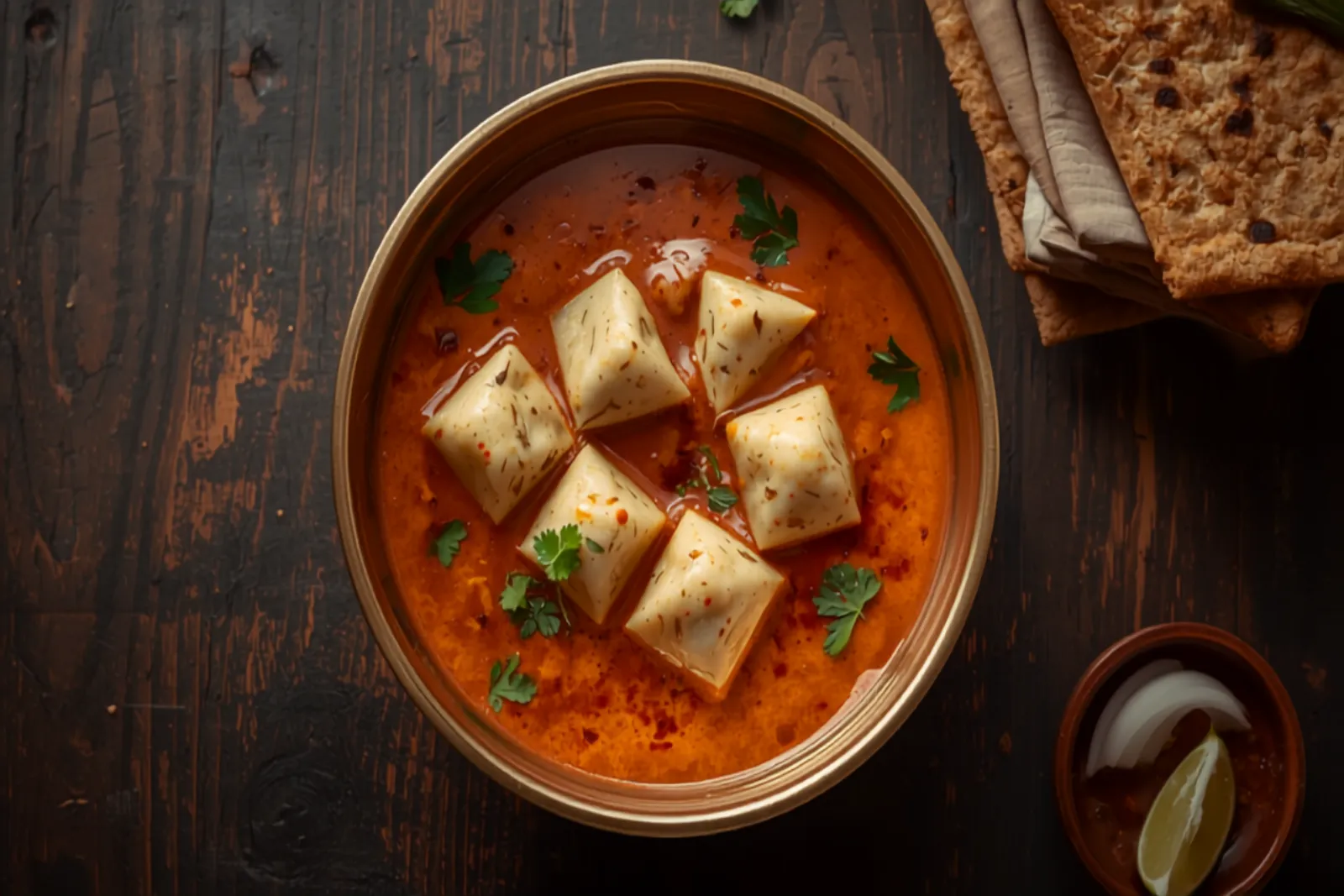
Gatte ki Sabzi (Rajasthani Gram-Flour Dumplings in Yoghurt Curry)
Spiced besan dumplings simmered in a tangy, chilli-red yoghurt gravy — Rajasthan's brilliant answer to a desert with no fresh vegetables. Soft gatte, a sharp curry, and a hing-cumin tempering that perfumes the whole kitchen.
Published August 9, 2026
Cultural context
Born of the Thar desert, where fresh vegetables were scarce and water scarcer, gatte ki sabzi turns two shelf-stable staples — gram flour and soured yoghurt — into a full main course. It travelled from Marwari home kitchens into the royal thali, and is still the dish a Rajasthani household makes when the vegetable basket is empty.
Gatte ki sabzi is the dish that explains Rajasthan. In a state where the Thar desert makes fresh vegetables an unreliable luxury and water something you carry rather than turn on, cooks in the Marwar and Shekhawati belt built an entire cuisine out of what keeps: gram flour, lentils, dried spices, ghee and yoghurt. Roll spiced besan into logs, boil them, cut them into coins, and simmer them in a sharp yoghurt gravy — and you have a main course with no vegetable in it at all, and no one at the table feels short-changed.
Why gram flour, and why yoghurt
Besan stores for months in a desert climate, carries roughly three times the protein of wheat flour, and — crucially — behaves like a dough when you want it to. Yoghurt, meanwhile, was the one dairy product that survived a hot afternoon; households soured it deliberately, because a sharp curd makes a better gravy than a sweet one. Put the two together and you get the flavour signature of the region: nutty, tangy, chilli-red, and heavy on ghee because in that heat, fat is fuel.
The other thing to notice is what’s absent. Classic Marwari cooking uses no onion and no garlic, which is why the asafoetida measurement here looks generous. Bloomed in hot ghee for ten seconds, hing turns from a startling raw smell into something rounded and savoury that does almost exactly the work an onion base would.
The two places it goes wrong
Hard gatte. Gram flour with too much water and not enough fat sets into something closer to a pencil eraser. Rub the ghee into the besan with your fingertips first, until it looks like damp breadcrumbs, and only then add water — a tablespoon at a time — until it just comes together as a firm dough. A pinch of baking soda and a ten-minute rest do the rest.
Split gravy. Yoghurt curdles when it meets heat too fast. The fixes are all small and all necessary: room-temperature yoghurt, a spoonful of besan whisked into it for starch, added to the pan off the heat, then brought up over a low flame while you stir without stopping. Once it simmers and thickens it is set and stable.
Don’t throw away the water
The cloudy water the gatte boiled in is not waste — it is a besan stock, thickened with starch and seasoned by the spices that leached out of the dough. Rajasthani cooks use it as the liquid for the gravy, which is both thrift and good cooking. Tap water gives you a thinner, flatter curry.
Eating it properly
Bajra roti and a knob of ghee, sliced raw onion, a green chilli, and a wedge of lime. Make it in the morning if you can — an hour of sitting lets the gatte drink up the gravy, and the dish is unmistakably better for it.
For the rest of the Rajasthani table, try Dal Baati Churma and Laal Maas. For more on the region’s pantry-driven cooking, read the Guide to West Indian Cooking.
Ingredients
For the gatte (dumplings)
- 1 1/2 cups (150 g) besan (gram flour) Sift it. Coarse Rajasthani besan gives the best bite; fine besan works but makes softer gatte.
- 3 tbsp thick yoghurt Binds the dough and keeps the gatte tender rather than bullet-hard.
- 2 tbsp ghee or neutral oil
- 1/2 tsp ajwain (carom seeds) Non-negotiable — its thyme-like sharpness cuts the density of gram flour and settles the stomach.
- 1/2 tsp red chilli powder Kashmiri chilli for colour without fierce heat.
- 1/4 tsp turmeric
- 1/4 tsp baking soda A pinch only. It aerates the dough so the gatte stay soft after boiling.
- 1 tsp salt
- 4–5 tbsp lukewarm water Add a spoon at a time — the dough should be firm and smooth, not sticky.
For the yoghurt gravy
- 1 1/2 cups (350 g) yoghurt, slightly sour Whisked completely smooth with 1 tbsp besan and 1/2 cup water. Room temperature, never fridge-cold.
- 3 tbsp ghee or mustard oil Ghee is the Marwari default; mustard oil gives a sharper, more rustic gravy.
- 1 tsp cumin seeds
- 1/4 tsp asafoetida (hing) Central to the flavour — much of Rajasthani cooking is traditionally onion- and garlic-free, and hing stands in for both.
- 2 dried red chillies, broken
- 1 tsp coriander powder
- 1 tsp Kashmiri red chilli powder
- 1/2 tsp turmeric
- 1/2 tsp garam masala
- 1 1/2 cups reserved gatta cooking water The starchy water the dumplings boiled in — it carries flavour and thickens the gravy. Don't pour it away.
- to taste salt
To finish
- 2 tbsp coriander leaves, chopped
- 1 tsp ghee and a pinch of red chilli powder, for the final tempering
Method
Tap a step’s number to check it off as you go.
-
Rub the besan, yoghurt, ghee, ajwain, chilli powder, turmeric, baking soda and salt together with your fingertips until the mixture looks like damp breadcrumbs.
Why: Working the fat into the flour before any water goes in coats the gram flour and stops the gatte turning rubbery — the same logic as rubbing butter into pastry.
-
Add lukewarm water a spoon at a time and knead to a firm, smooth, non-sticky dough. Rest it 10 minutes under a damp cloth.
Why: Besan hydrates slowly. Resting lets it absorb the water evenly so the rolled logs don't crack.
-
Divide into 5–6 pieces and roll each into a smooth cylinder about 1.5 cm thick and 15 cm long, with no cracks along the surface.
Why: Cracks let water in while boiling and the gatte fall apart. Roll with light, even pressure.
-
Bring a wide pan of salted water to a rolling boil, slide in the logs, cover and simmer 12–15 minutes until they float and feel firm.
Why: They are cooked when they bob to the surface — the baking soda has expanded and set the dough. A knife inserted should come out clean.
-
Lift the logs out, RESERVE the cooking water, cool the logs for 5 minutes and cut into 2 cm diagonal pieces.
Why: Cutting them warm rather than hot gives clean edges; the cloudy cooking water is essentially a besan stock and becomes the body of the gravy.
-
Optional but traditional: shallow-fry the cut gatte in 1 tbsp ghee for 2 minutes until lightly golden at the edges.
Why: A quick fry firms the surface so the pieces hold their shape in the curry and adds a toasted, nutty note.
-
Whisk the yoghurt with 1 tbsp besan and 1/2 cup water until completely lump-free. Set aside at room temperature.
Why: The spoon of besan is insurance — its starch stabilises the yoghurt proteins so the gravy stays silky instead of splitting.
-
Heat the ghee in a heavy pan, crackle the cumin, then add the hing and broken dried chillies for 10 seconds.
Why: Asafoetida burns in seconds but blooms in hot fat into a savoury, allium-like depth — it is doing the job of the onions and garlic this cuisine leaves out.
-
Take the pan off the heat for a moment, stir in the coriander, chilli powder and turmeric, then pour in the whisked yoghurt.
Why: Ground spices scorch instantly in bare ghee; adding them off-heat with the yoghurt right behind them keeps them fragrant, not bitter.
-
Return to LOW heat and stir constantly in one direction for 4–5 minutes until the gravy comes to a bare simmer and thickens slightly.
Why: This is the step that decides the dish. Constant motion and gentle heat let the yoghurt proteins set gradually; stop stirring or rush the heat and it curdles.
-
Add the reserved gatta water, season with salt, and simmer 5 minutes. Slide in the gatte and simmer another 5–7 minutes.
Why: The gatte are porous — they drink up the tangy gravy in these last minutes, which is why the curry tastes better an hour later.
-
Stir in the garam masala, finish with a teaspoon of hot ghee bloomed with chilli powder poured over the top, and scatter coriander leaves.
Why: Garam masala added at the end keeps its top notes; the chilli-ghee slick is the visual signature of a Rajasthani gravy.
A quick, anonymous tap — no review needed.
Variations
- Govind gatte
The festive version — stuff each dumpling with a paste of cashews, raisins and paneer before rolling. Richer, sweeter, and traditionally made for weddings and guests.
- Vegan
Use a thick unsweetened cashew or coconut yoghurt and swap ghee for mustard oil. Add an extra teaspoon of besan to the yoghurt for stability.
- Tomato-onion gravy
The Jaipur restaurant style: sauté onion and tomato before the yoghurt goes in. Not the desert-village original, but a milder, sweeter curry.
- Dry gatte (sookhe gatte)
Skip the gravy entirely — toss the boiled, fried gatte with dry masala, amchur and coriander for a snack or lunchbox side.
Serving & Storage
Serve hot with bajra roti or plain phulkas and a spoon of ghee, with sliced onion, green chilli and a wedge of lime on the side. Steamed rice works too — the tangy gravy is thin enough to soak in.
Pairs with: Bajra roti, Steamed rice, Ker sangri, Boondi raita, Sliced onion and green chilli.
Storage: Keeps 3 days refrigerated and genuinely improves overnight as the gatte absorb the gravy. Reheat gently over low heat with a splash of water — high heat will split the yoghurt. Freezing is not recommended; the gatte turn spongy.
Nutrition
Per serving (1 serving (about 1 cup with gatte))
- Calories
- 345
- Protein
- 13 g
- Carbs
- 33 g
- Fat
- 18 g
- Fiber
- 6 g
- Sugar
- 5 g
- Sodium
- 620 mg
Notable micronutrients: Iron, Folate, Calcium, Magnesium
Estimated using standard ingredient data. Values vary with brands and substitutions.
Frequently Asked Questions
Why did my yoghurt gravy curdle?
Three usual culprits: fridge-cold yoghurt, high heat, or not stirring. Bring the yoghurt to room temperature, whisk a tablespoon of besan into it, add it off the heat, and then stir continuously over low heat until it reaches a bare simmer. Once the gravy has come up to temperature and thickened, it is stable and you can relax.
My gatte came out hard. What went wrong?
Usually too little fat or over-kneading with too much water. Rub the ghee into the besan properly before adding any liquid, keep the dough firm rather than wet, add the pinch of baking soda, and don't boil them beyond 15 minutes — overcooked gatte tighten up.
Can I make it without onion and garlic?
This recipe already is. Traditional Marwari and Jain Rajasthani cooking leaves out both, which is exactly why asafoetida is used so generously — it delivers the savoury depth that alliums otherwise would. It is a naturally satvik dish, suitable for fasting days and temple kitchens.
Can I make gatte ahead of time?
Yes. Boil and cut the gatte up to two days ahead and keep them refrigerated in a little of their cooking water. Make the gravy fresh and drop them in for the final simmer — that is how most Rajasthani households manage it on a busy day.
What to drink with this
All drinks →Hand-picked pours to match this dish.
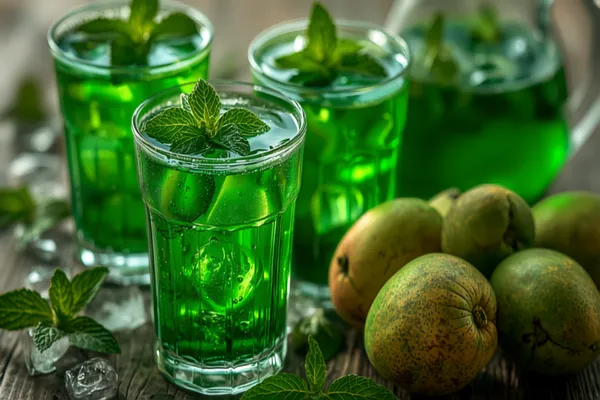
North & West India (peak-summer drink across the subcontinent) · Indian
Aam Panna (Raw Green Mango Summer Cooler)
India's tangy, jade-green raw-mango cooler — roasted or boiled green mangoes blended with cumin, black salt and mint. The traditional heat-stroke remedy that tastes like summer.
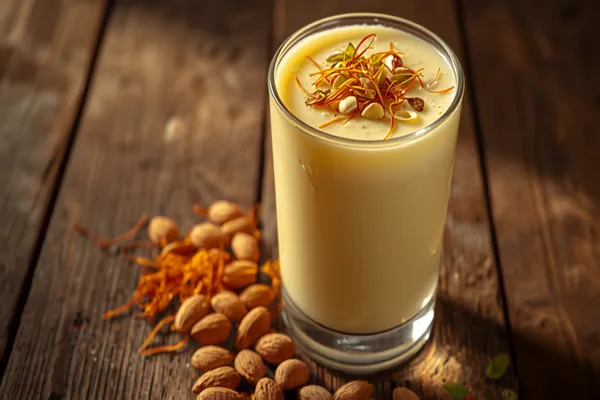
Pan-Indian (North & West India) · Indian
Badam Milk (Saffron Almond Milk)
Milk simmered with a paste of soaked almonds, saffron, cardamom and a whisper of nutmeg — India's rich, fragrant almond drink. Comforting served warm in winter, reviving served chilled in summer, festive any time.

Pan-Indian (Gujarat & West India especially) · Indian
Chaas (Spiced Indian Buttermilk / Masala Chaas)
Whisked yogurt thinned with water and seasoned with cumin, green chilli, ginger and curry leaves — India's cooling, savoury buttermilk. A salty-tangy digestive that beats the heat and settles a heavy meal in two minutes.
From our kitchen community
Ratings & Reviews
My Rating
Tap a star to rate — no sign-in, no form needed.
My Review
0 Ratings
🥣 0 home cooks made it!
Be the first to rate Gatte ki Sabzi (Rajasthani Gram-Flour Dumplings in Yoghurt Curry).
Related Recipes
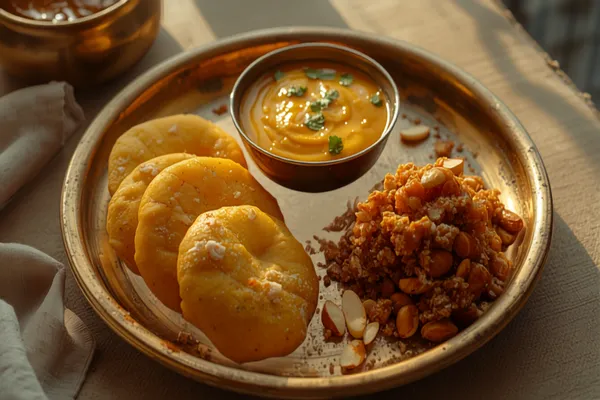
Rajasthan / West India · Indian
Dal Baati Churma (Rajasthani Baked Wheat Balls with Dal and Sweet Crumble)
Rajasthan's iconic three-part feast: hard-baked wheat baati cracked open and soaked in ghee, served with a spiced panchmel dal and a sweet, cardamom-scented churma crumble.
Rajasthan / West India · Indian
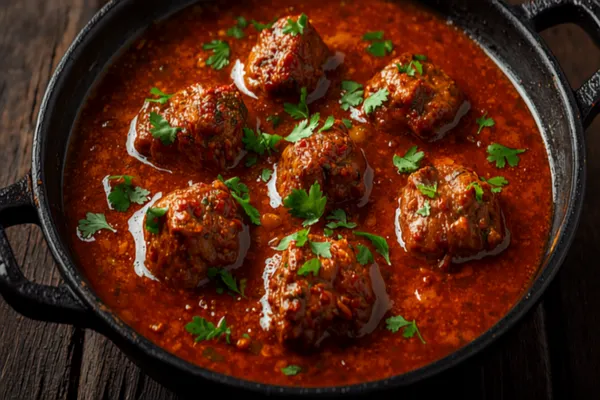
Laal Maas (Rajasthani Red Mutton Curry)
A fiery Rajasthani classic from the royal hunting kitchens: mutton braised in a brick-red gravy of Mathania chilies and yogurt, with an optional ember-and-ghee smoking that gives it a hunter's smokiness. Bold, lean, and unforgettable.
Gujarat / West India · Indian
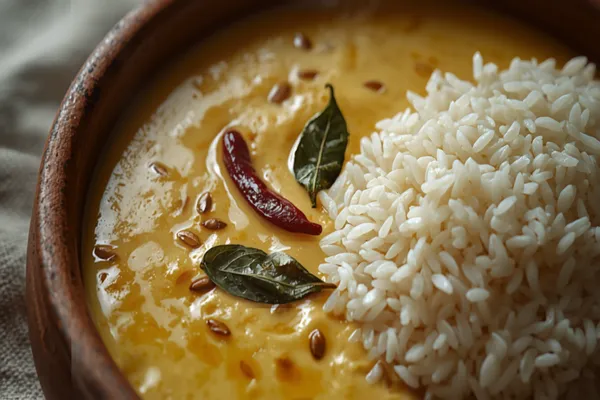
Gujarati Kadhi (Sweet-and-Tangy Yogurt Curry)
The soothing soul of a Gujarati thali: a silky, gently sweet-and-sour curry of yogurt and chickpea flour, tempered with cumin, curry leaves, and a whisper of clove and cinnamon. Light, warming, and made to pour over rice or khichdi.
Maharashtra / West India · Indian
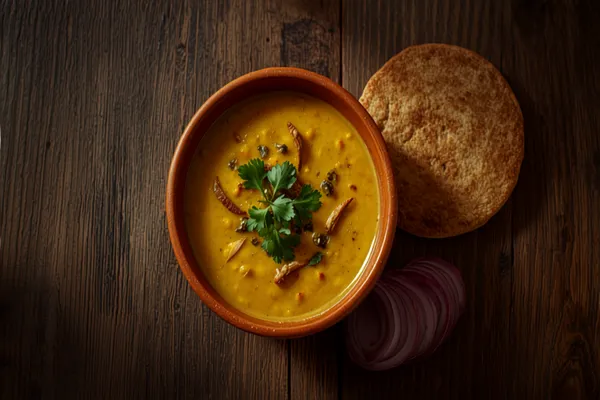
Pithla (Maharashtrian Chickpea Flour Curry)
Rural Maharashtra's 10-minute comfort food: chickpea flour whisked into a tempered, garlicky base until it thickens into a soft, savory curry. Pithla-bhakri is the farmer's lunch — humble, fast, and deeply satisfying.
Further reading
- Cultural Story · West IndiaA Complete Guide to West Indian CookingFour very different states, one coast: Maharashtra's street food and fiery Kolhapuri curries, Gujarat's sweet-savoury vegetarian thali, Goa's twin Hindu and Catholic kitchens, and Rajasthan's desert cooking. A guide to western India's table.
- Ingredient Deep DiveThe Indian Spice Pantry: A Beginner's MapYou don't need a hundred spices to cook Indian food — you need a dozen, and the know-how to use them. A practical guide to the essential Indian spices, what each does, and the techniques (tadka, bhuna, dry-roasting) that unlock them.