Rajasthan / West India · Indian
Dal Baati Churma (Rajasthani Baked Wheat Balls with Dal and Sweet Crumble)
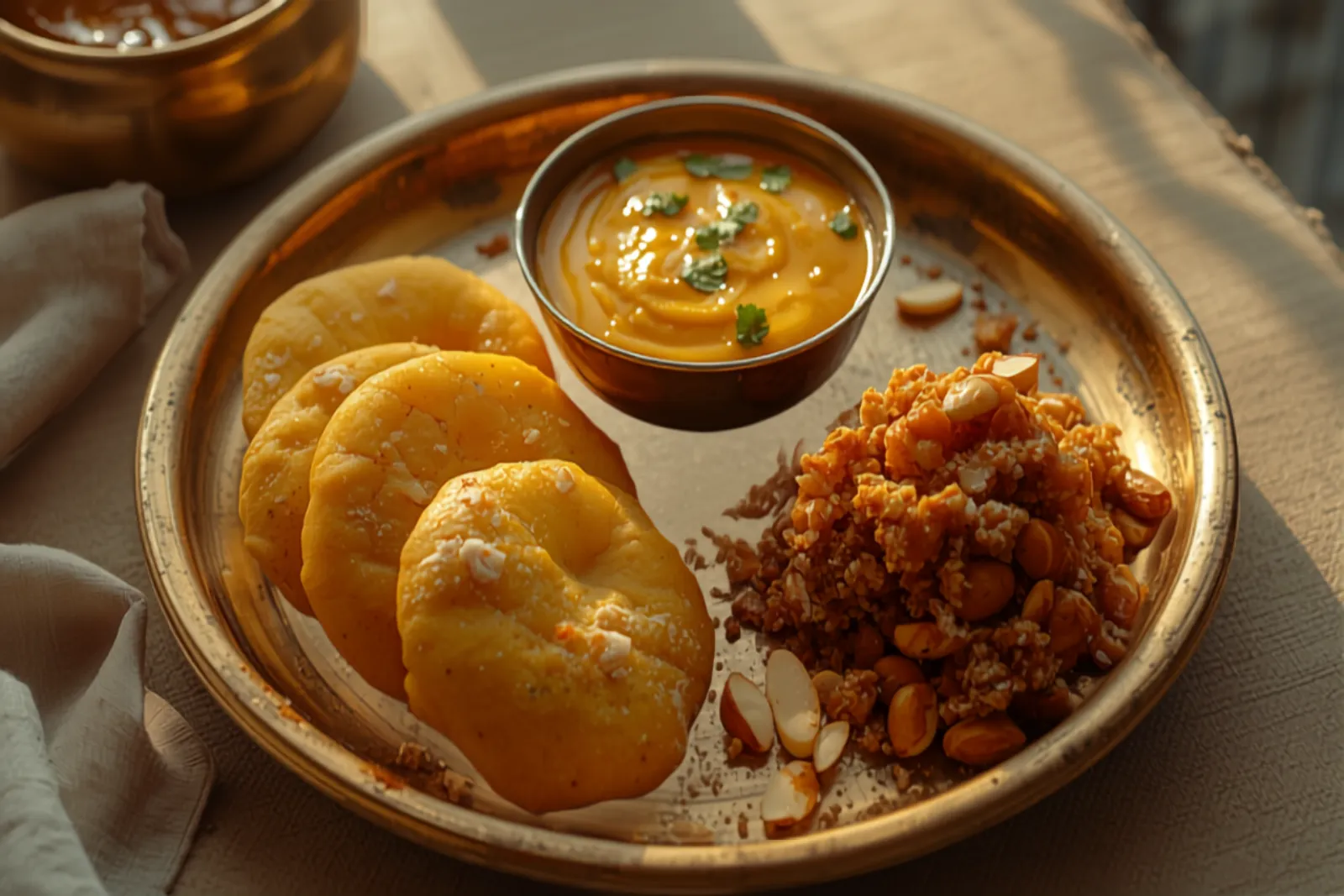
Rajasthan's iconic three-part feast: hard-baked wheat baati cracked open and soaked in ghee, served with a spiced panchmel dal and a sweet, cardamom-scented churma crumble.
Published July 23, 2026
Cultural context
Dal baati churma is the defining dish of Rajasthan, born of a desert where hardy, long-keeping food mattered. Baati — dense wheat balls — were once buried in hot sand or baked over embers by Rajput armies and travellers because they needed no fresh ingredients and lasted for days. Paired with protein-rich dal and sweet churma, it became the festive thali of the region.
Dal baati churma is the great festive thali of Rajasthan — a three-part feast born of the desert. Hard-baked wheat baati are cracked open and soaked in ghee, served with a richly spiced five-lentil panchmel dal and a sweet, cardamom-scented churma crumble. Each element is plain on its own; together, they’re one of India’s most distinctive plates.
Baati: desert-proof bread
Baati were made to last. In a land short on fresh ingredients, Rajput armies and travellers baked these dense wheat balls in hot sand or over embers because they kept for days and needed nothing perishable. The texture comes from plenty of ghee rubbed into a stiff dough plus a little semolina, then a long, dry bake until the crust is hard and cracked — ready to drink in ghee.
Dal with a generous tempering
The dal is a panchmel — five lentils for depth and texture — finished with a lavish ghee tempering of cumin, mustard, dried chili and hing. Rajasthani cooking is unembarrassed about ghee, and the dal is the better for it.
Sweet from the same bread
Churma is the clever, no-waste third act: baati crushed, fried in ghee, and bound with jaggery, cardamom and nuts into a sweet crumble. Eaten together — ghee-soaked baati, spicy dal, sweet churma — it’s pure Rajasthan. Pair with laal maas for a full Rajasthani spread, and see the guide to West Indian cooking.
Ingredients
For the baati
- 2 cups coarse whole wheat flour (atta)
- 1/4 cup fine semolina (sooji) Adds the characteristic crumbly, sturdy texture.
- 1/4 cup ghee (for the dough, the 'moyan')
- 1/2 tsp baking soda, 1/2 tsp ajwain, 1/2 tsp salt, milk or water to bind a stiff dough
For the panchmel dal
- 1.5 cups mixed lentils (toor, chana, moong, urad, masoor) 'Panchmel' means five lentils — the traditional mix, though any combination works.
- 1 tsp turmeric, 1 tsp red chili powder, 1 tsp coriander powder, salt
For the dal tempering
- 3 tbsp ghee, 1 tsp cumin, 1 tsp mustard seeds, 2 dried red chilies, pinch hing, 1 tbsp ginger-garlic paste, 1 chopped tomato, garam masala
For the churma
- 4–5 baati, crushed Churma is made from the same baati, broken and sweetened.
- 1/2 cup powdered jaggery or sugar, 1/4 cup ghee, 1/2 tsp cardamom, chopped nuts
To serve
- lots of melted ghee
Method
Tap a step’s number to check it off as you go.
-
Make a stiff baati dough with atta, semolina, ghee, ajwain, soda and salt, binding with a little milk. Shape into balls with a slight thumb dent. Bake at 180°C for 40–45 minutes until golden and cracked (traditionally baked over coal embers).
Why: Plenty of ghee in the dough (the moyan) and semolina give the crumbly interior; the long, dry bake creates the hard, cracked crust that lets baati soak up ghee without going soggy.
-
Boil the mixed lentils with turmeric, chili, coriander and salt until soft. In ghee, temper cumin, mustard, dried chili, hing and ginger-garlic, add tomato, then pour into the dal. Simmer to a thick, spiced consistency.
Why: A panchmel mix of five lentils gives depth and varied texture; a generous ghee tempering with whole spices is what makes Rajasthani dal rich and aromatic.
-
For the churma, crush 4–5 baati coarsely, then fry the crumbs briefly in ghee and mix with jaggery, cardamom and nuts while warm.
Why: Using baati for churma is the traditional, no-waste approach; warm jaggery and ghee bind the crumble into a sweet, fudgy crumb that balances the savoury dal.
-
To serve, crack the hot baati open, douse generously in melted ghee, and plate with the hot dal poured over and the churma alongside.
Why: Baati must be soaked in ghee — that's the dish. The contrast of ghee-soaked baati, spicy dal and sweet churma in one plate is the whole experience.
A quick, anonymous tap — no review needed.
Variations
- Baked vs. fried baati
Some cooks deep-fry the baked baati for an extra-rich, restaurant-style version (bafla baati are boiled then baked).
- Masala baati
Stuff the baati with a spiced peas or sattu filling for extra flavour.
- Bafla
The Malwa/Rajasthan variant: boil the baati briefly before baking for a softer interior.
Serving & Storage
Serve hot, with the ghee-soaked baati broken into the dal and the sweet churma on the side. Garlic chutney (lahsun ki chutney), buttermilk (chaas) and raw onion are classic accompaniments.
Pairs with: Panchmel dal, Churma, Garlic chutney, Chaas (buttermilk).
Storage: Baati keep 2–3 days at room temperature and reheat well (re-douse in ghee). Dal keeps 3 days refrigerated. Churma keeps a week in an airtight jar.
Nutrition
Per serving (1 plate (2 baati, dal, churma))
- Calories
- 680
- Protein
- 20 g
- Carbs
- 82 g
- Fat
- 32 g
- Fiber
- 12 g
- Sugar
- 18 g
- Sodium
- 620 mg
Notable micronutrients: Protein, Fiber, Iron, Folate
Estimated using standard ingredient data. Values vary with brands and substitutions.
Frequently Asked Questions
Why is my baati hard or dry inside?
Either too little ghee in the dough or too soft a dough. The moyan (ghee rubbed into the flour) makes the inside crumbly, and the dough must be stiff. Always soak the baked baati in ghee before eating — that's intrinsic to the dish, not optional.
What is panchmel dal?
Panchmel (or panchratna) dal is a mix of five lentils — typically toor, chana, moong, urad and masoor — giving more depth and texture than a single dal. Any combination you have works.
Can I bake baati without a tandoor or coal?
Yes — a 180°C oven for 40–45 minutes gives golden, cracked baati. Traditionally they're baked over cow-dung cakes or coal (kanda), which adds smoke, but the oven version is excellent.
What to drink with this
All drinks →Hand-picked pours to match this dish.
Pan-Indian (Gujarat & West India especially) · Indian
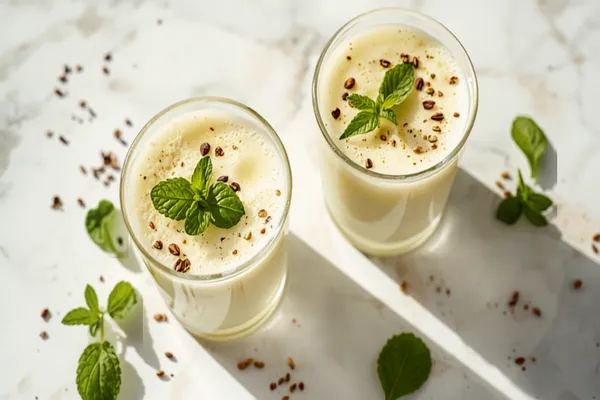
Chaas (Spiced Indian Buttermilk / Masala Chaas)
Whisked yogurt thinned with water and seasoned with cumin, green chilli, ginger and curry leaves — India's cooling, savoury buttermilk. A salty-tangy digestive that beats the heat and settles a heavy meal in two minutes.
North & West India (peak-summer drink across the subcontinent) · Indian
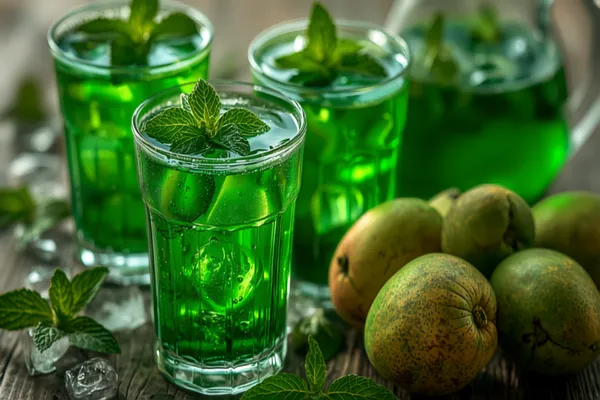
Aam Panna (Raw Green Mango Summer Cooler)
India's tangy, jade-green raw-mango cooler — roasted or boiled green mangoes blended with cumin, black salt and mint. The traditional heat-stroke remedy that tastes like summer.
Pan-Indian (North & West India) · Indian
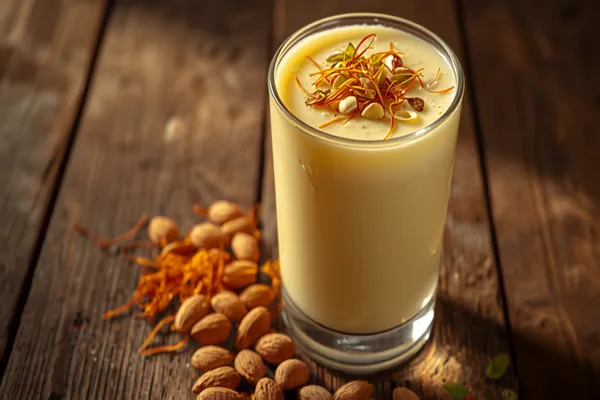
Badam Milk (Saffron Almond Milk)
Milk simmered with a paste of soaked almonds, saffron, cardamom and a whisper of nutmeg — India's rich, fragrant almond drink. Comforting served warm in winter, reviving served chilled in summer, festive any time.
From our kitchen community
Ratings & Reviews
My Rating
Tap a star to rate — no sign-in, no form needed.
My Review
0 Ratings
🥣 0 home cooks made it!
Be the first to rate Dal Baati Churma (Rajasthani Baked Wheat Balls with Dal and Sweet Crumble).
Related Recipes
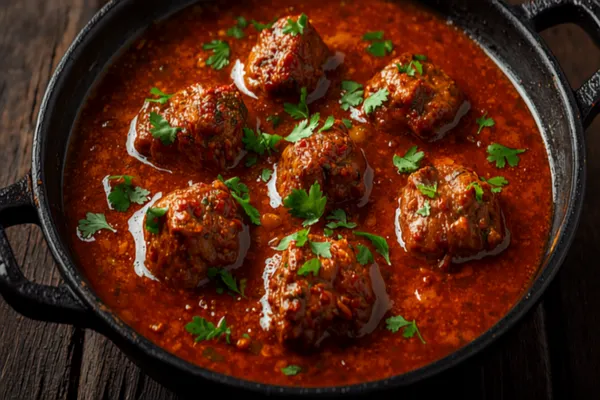
Rajasthan / West India · Indian
Laal Maas (Rajasthani Red Mutton Curry)
A fiery Rajasthani classic from the royal hunting kitchens: mutton braised in a brick-red gravy of Mathania chilies and yogurt, with an optional ember-and-ghee smoking that gives it a hunter's smokiness. Bold, lean, and unforgettable.
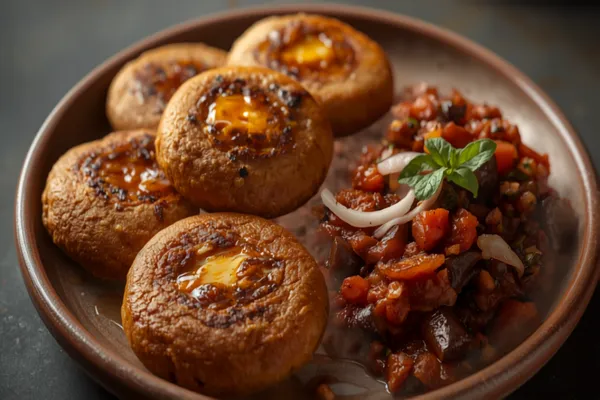
Bihar & Jharkhand / East India · Indian
Litti Chokha (Bihari Roasted Wheat Balls with Mashed Vegetables)
Bihar and Jharkhand's signature meal: wheat-flour balls stuffed with spiced roasted sattu, charred over coals, and served with smoky mashed brinjal, potato and tomato chokha.
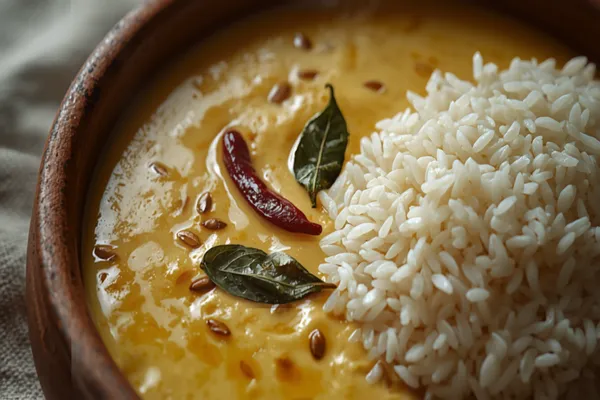
Gujarat / West India · Indian
Gujarati Kadhi (Sweet-and-Tangy Yogurt Curry)
The soothing soul of a Gujarati thali: a silky, gently sweet-and-sour curry of yogurt and chickpea flour, tempered with cumin, curry leaves, and a whisper of clove and cinnamon. Light, warming, and made to pour over rice or khichdi.
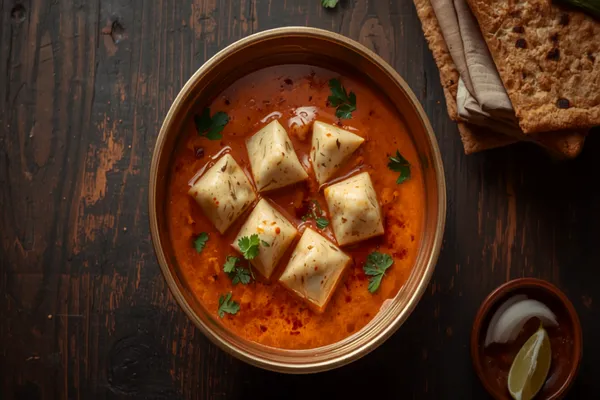
Rajasthan / West India — the Marwar and Shekhawati belt · Indian
Gatte ki Sabzi (Rajasthani Gram-Flour Dumplings in Yoghurt Curry)
Spiced besan dumplings simmered in a tangy, chilli-red yoghurt gravy — Rajasthan's brilliant answer to a desert with no fresh vegetables. Soft gatte, a sharp curry, and a hing-cumin tempering that perfumes the whole kitchen.
Further reading
- Cultural Story · West IndiaA Complete Guide to West Indian CookingFour very different states, one coast: Maharashtra's street food and fiery Kolhapuri curries, Gujarat's sweet-savoury vegetarian thali, Goa's twin Hindu and Catholic kitchens, and Rajasthan's desert cooking. A guide to western India's table.
- Ingredient Deep DiveThe Indian Spice Pantry: A Beginner's MapYou don't need a hundred spices to cook Indian food — you need a dozen, and the know-how to use them. A practical guide to the essential Indian spices, what each does, and the techniques (tadka, bhuna, dry-roasting) that unlock them.