Maharashtra / West India · Indian
Pithla (Maharashtrian Chickpea Flour Curry)
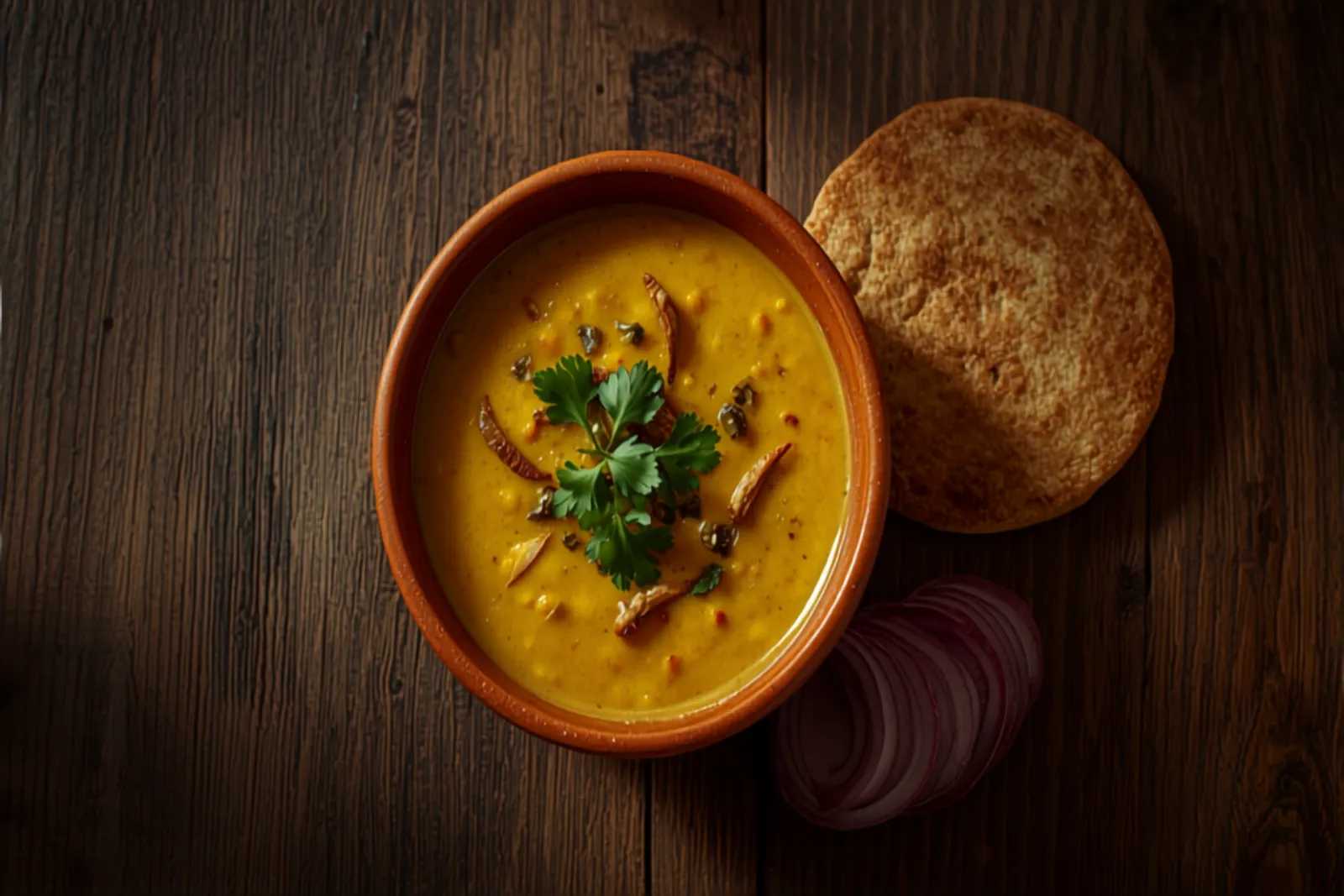
Rural Maharashtra's 10-minute comfort food: chickpea flour whisked into a tempered, garlicky base until it thickens into a soft, savory curry. Pithla-bhakri is the farmer's lunch — humble, fast, and deeply satisfying.
Published July 15, 2026
Cultural context
Pithla is the everyday comfort food of Maharashtra — a quick chickpea-flour (besan) curry born of rural kitchens, made from pantry staples when fresh vegetables were scarce. Paired with bhakri (sorghum or millet flatbread), pithla-bhakri is the iconic farmer's and working meal of the state. Its drier cousin is zunka.
Pithla is Maharashtra’s great everyday comfort food — chickpea flour whisked into a garlicky tempered base until it thickens into a soft, savory curry, ready in barely ten minutes. Born in rural kitchens from nothing but pantry staples, pithla-bhakri — pithla with a coarse sorghum or millet flatbread — is the iconic farmer’s and working lunch of the state, and proof that humble food can be deeply satisfying.
Pantry food, by design
There’s no shopping list to speak of: besan, onion, garlic, green chili, and a tempering of mustard and cumin. That’s the point. Pithla came from making a hot, nourishing meal when fresh vegetables were scarce, and its resourcefulness is woven into its identity.
Smooth is everything
The one technique that matters is avoiding lumps. Whisk the besan with water into a smooth slurry before it goes anywhere near the pan, then pour it in while stirring continuously. Cook it until it thickens and the raw chickpea smell is gone — undercooked besan tastes chalky.
Soft or dry
Pithla is soft and pourable; with much less water it becomes zunka, a thick, crumbly dry version. Either way it firms up fast off the heat, so serve it hot, with bhakri, raw onion, and a fiery thecha (chili-garlic relish) on the side.
For the fiery Maharashtrian meat counterpart, see Kolhapuri chicken; for the wider region, read the guide to West Indian cooking.
Ingredients
For the pithla
- 1 cup besan (chickpea flour) Whisked with water into a lump-free slurry before it goes in.
- 3 cups water For a soft, pourable pithla; use less for a thicker zunka-style.
For the tempering
- 3 tbsp oil
- 1 tsp mustard seeds
- 1 tsp cumin seeds
- 1 pinch asafoetida (hing)
- 6 cloves garlic, crushed Garlic is key to a good pithla.
- 1 onion, finely chopped
- 2 green chilies, chopped
- 1 sprig curry leaves
- turmeric, salt, chopped coriander
Method
Tap a step’s number to check it off as you go.
-
Whisk the besan with the water until completely smooth and lump-free. Set aside.
Why: Whisking the slurry in advance is the key to a smooth pithla — adding dry besan to hot oil makes lumps that won't dissolve.
-
Heat oil and temper mustard and cumin seeds, asafoetida, curry leaves, crushed garlic, green chili, and onion; cook until the onion softens.
Why: The garlicky tempering is the flavour base of pithla; soft onion adds sweetness against the savory besan.
-
Add turmeric, then pour in the besan slurry, stirring continuously.
Why: Pouring the pre-mixed slurry while stirring prevents lumps and lets the besan cook evenly into the base.
-
Cook, stirring, until it thickens to a soft, porridge-like curry and the raw besan smell is gone, 6–8 minutes.
Why: Besan must be cooked through or it tastes raw and chalky; constant stirring stops it catching as it thickens.
-
Adjust salt and consistency, finish with coriander, and serve hot (it thickens further as it sits).
Why: Pithla firms up quickly off the heat, so serve it right away — and add a splash of water to loosen if needed.
A quick, anonymous tap — no review needed.
Variations
- Zunka (dry)
Use much less water for a thick, crumbly zunka, eaten as a dry side with bhakri.
- Kanda pithla
Load it with extra onion (kanda) for a sweeter, heartier version.
- Spicier
Add more green chili or a spoon of red chili powder, and a final tempering of chili in hot oil on top.
Serving & Storage
The classic is pithla-bhakri — pithla with jowar (sorghum) or bajra (millet) flatbread, raw onion, and a green chili or thecha (chili-garlic relish). It's also eaten with rice.
Pairs with: Bhakri (jowar/bajra), Steamed rice, Raw onion, Thecha (chili-garlic relish).
Storage: Best fresh and hot; it sets firm as it cools. Reheat with a splash of water, whisking to loosen back to a soft curry. Keeps a day refrigerated.
Nutrition
Per serving (about 1 cup)
- Calories
- 220
- Protein
- 9 g
- Carbs
- 22 g
- Fat
- 11 g
- Fiber
- 5 g
- Sugar
- 3 g
- Sodium
- 390 mg
Notable micronutrients: Folate, Iron, Magnesium
Estimated using standard ingredient data. Values vary with brands and substitutions.
Frequently Asked Questions
How do I keep pithla from getting lumpy?
Whisk the besan with the water into a smooth slurry before it goes into the pan, and pour it in while stirring continuously. Never add dry besan directly to hot oil or liquid — that's what causes lumps.
What's the difference between pithla and zunka?
Same idea, different consistency: pithla is soft and pourable (more water), while zunka is thick and crumbly (much less water), eaten as a dry side. Both are besan-based Maharashtrian staples paired with bhakri.
Why is pithla considered comfort/poverty food?
It's made entirely from pantry staples — chickpea flour, onion, garlic, spices — so it could be cooked quickly and cheaply when fresh vegetables were scarce. That humble, resourceful origin is exactly why pithla-bhakri is such beloved everyday Maharashtrian food.
What to drink with this
All drinks →Hand-picked pours to match this dish.
North & West India (peak-summer drink across the subcontinent) · Indian
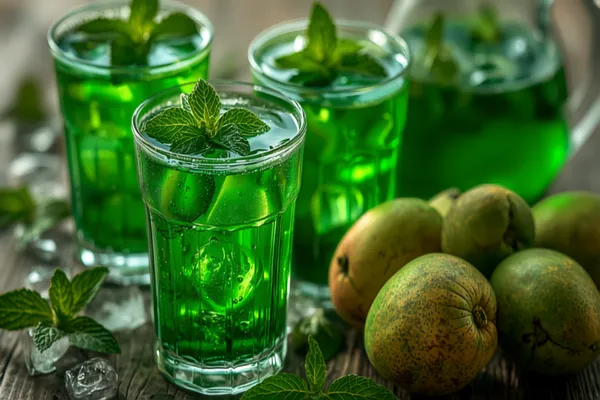
Aam Panna (Raw Green Mango Summer Cooler)
India's tangy, jade-green raw-mango cooler — roasted or boiled green mangoes blended with cumin, black salt and mint. The traditional heat-stroke remedy that tastes like summer.
Pan-Indian (North & West India) · Indian
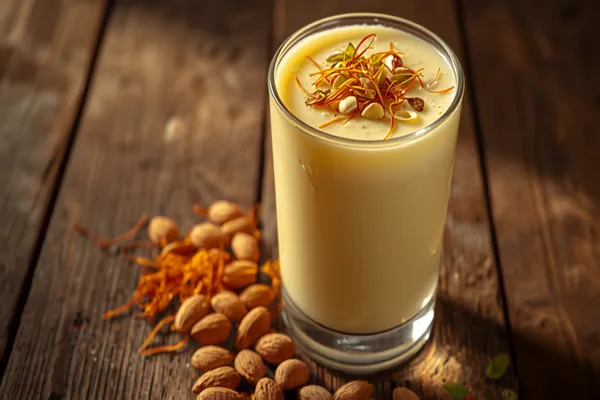
Badam Milk (Saffron Almond Milk)
Milk simmered with a paste of soaked almonds, saffron, cardamom and a whisper of nutmeg — India's rich, fragrant almond drink. Comforting served warm in winter, reviving served chilled in summer, festive any time.
Pan-Indian (Gujarat & West India especially) · Indian
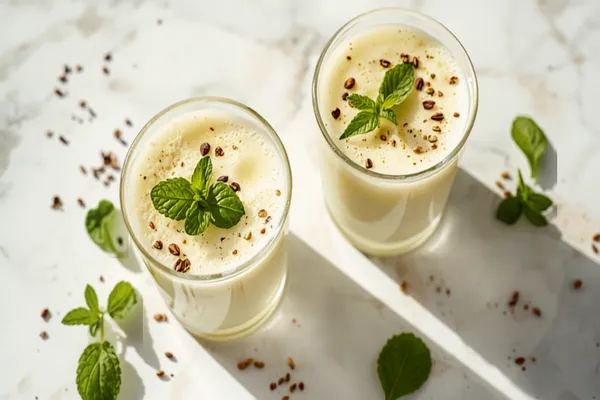
Chaas (Spiced Indian Buttermilk / Masala Chaas)
Whisked yogurt thinned with water and seasoned with cumin, green chilli, ginger and curry leaves — India's cooling, savoury buttermilk. A salty-tangy digestive that beats the heat and settles a heavy meal in two minutes.
From our kitchen community
Ratings & Reviews
My Rating
Tap a star to rate — no sign-in, no form needed.
My Review
0 Ratings
🥣 0 home cooks made it!
Be the first to rate Pithla (Maharashtrian Chickpea Flour Curry).
Related Recipes
Kolhapur, Maharashtra / West India · Indian
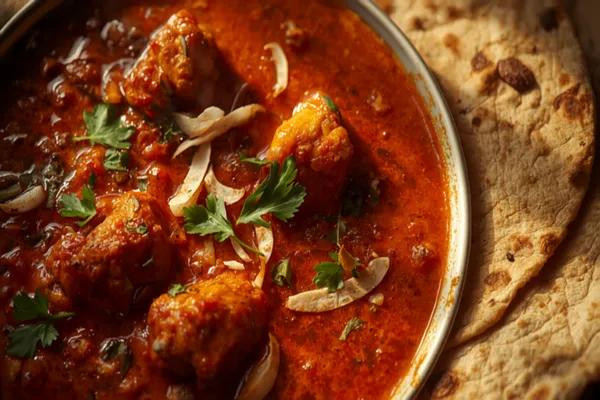
Kolhapuri Chicken (Tambda Rassa-Style Spicy Chicken)
From Maharashtra's fieriest kitchen: chicken in a blazing-red gravy built on freshly ground Kolhapuri masala and roasted dry coconut (kanda-khobra). Bold, fragrant, and seriously hot — the pride of Kolhapur.
Maharashtra / West India · Indian
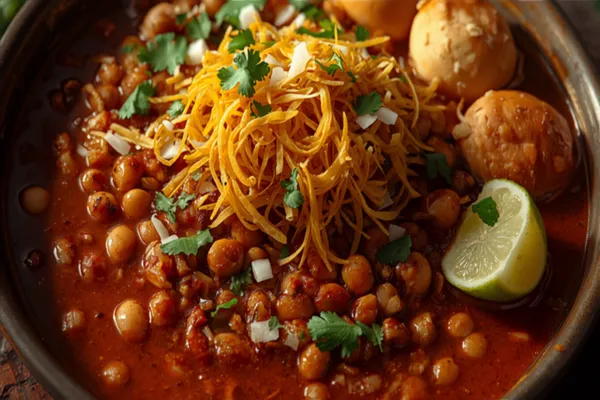
Misal Pav (Maharashtrian Sprouted Bean Curry)
Maharashtra's fiery street-food breakfast: a spiced sprouted-moth-bean curry (usal) under a slick of spicy tarri gravy, topped with crunchy farsan, onion, and lime, scooped up with soft pav. Big, bold, and built for a crowd.
Rajasthan / West India — the Marwar and Shekhawati belt · Indian
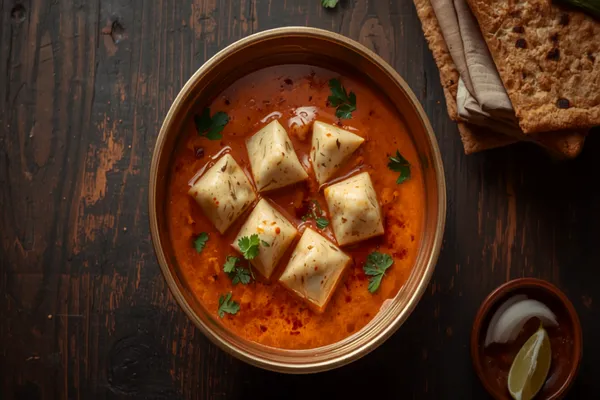
Gatte ki Sabzi (Rajasthani Gram-Flour Dumplings in Yoghurt Curry)
Spiced besan dumplings simmered in a tangy, chilli-red yoghurt gravy — Rajasthan's brilliant answer to a desert with no fresh vegetables. Soft gatte, a sharp curry, and a hing-cumin tempering that perfumes the whole kitchen.