Kolhapur, Maharashtra / West India · Indian
Kolhapuri Chicken (Tambda Rassa-Style Spicy Chicken)
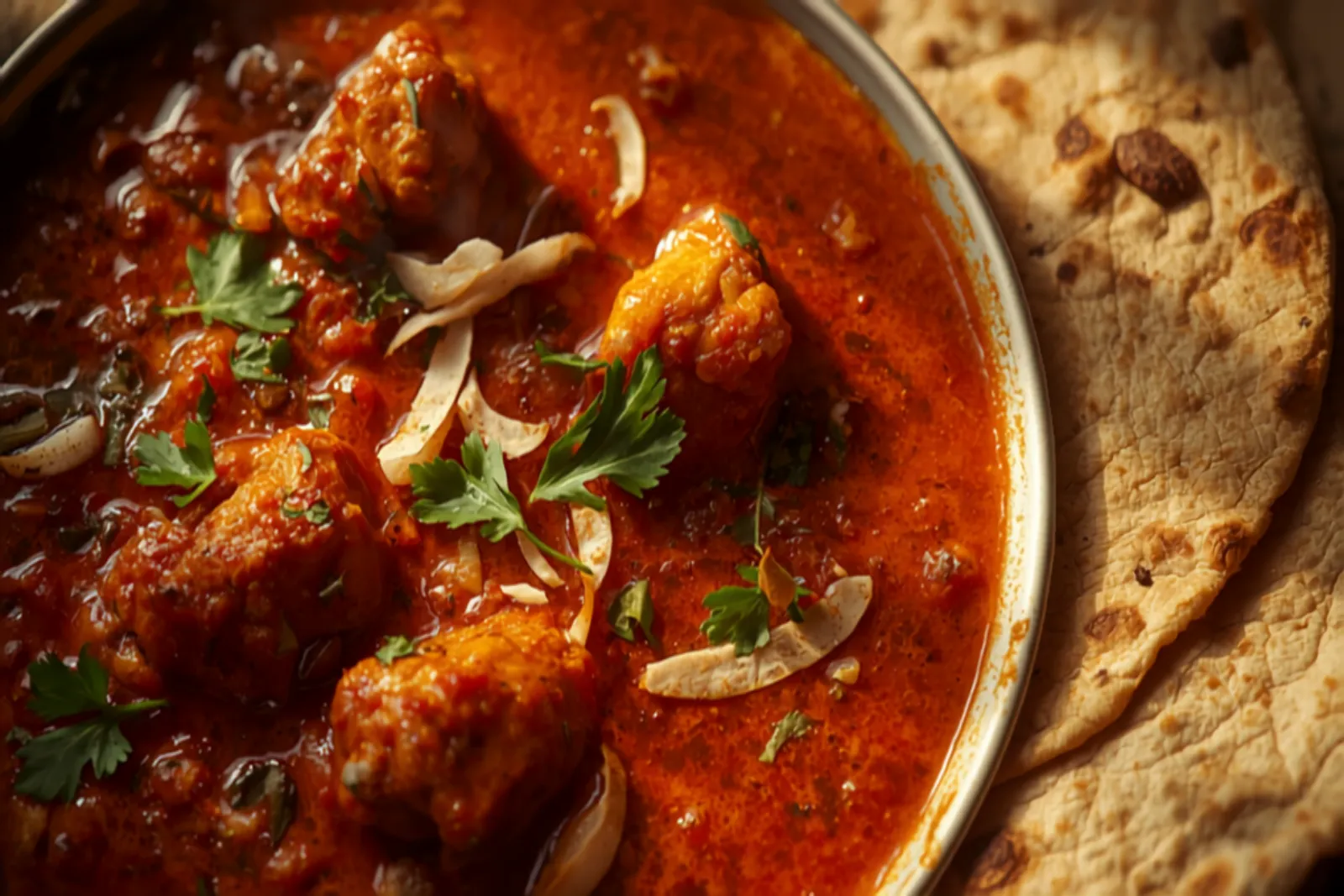
From Maharashtra's fieriest kitchen: chicken in a blazing-red gravy built on freshly ground Kolhapuri masala and roasted dry coconut (kanda-khobra). Bold, fragrant, and seriously hot — the pride of Kolhapur.
Published July 15, 2026
Cultural context
Kolhapur, in southern Maharashtra, is famous for some of India's spiciest cooking. Its non-vegetarian table is built on a fierce, freshly ground Kolhapuri masala and the iconic pairing of tambda rassa (fiery red curry) and pandhra rassa (white coconut curry). This chicken draws on that bold, red, coconut-and-chili tradition.
Kolhapuri chicken brings the heat of southern Maharashtra to the table — chicken in a blazing-red gravy built on a freshly ground masala of roasted dry coconut, onion, and a generous hand of chili. Kolhapur is famous for some of the spiciest cooking in India, and its non-vegetarian table revolves around bold, fragrant, fiery curries. This is a taste of that tradition.
Roasted coconut is the secret
The soul of Kolhapuri gravy is kanda-khobra — onion and dry coconut roasted dark, then ground with whole spices and chili into a smoky, deep-red paste. That dark roasting is what separates a real Kolhapuri curry from a generic spicy one, giving it body, smokiness, and colour. Grind it fresh; packet masala won’t get you there.
Fry the masala, then simmer
As with Chettinad and ghee roast, the freshly ground paste is fried in oil until the fat separates and it darkens — concentrating the chili and coconut — before water and the chicken simmer together. Traditional tambda rassa is a thinner, fiery curry, so keep the gravy on the looser side.
Tame it to taste
Authentic Kolhapuri is seriously hot, but the heat is yours to set: Kashmiri chili gives the glorious red colour with little burn, and you add hotter chili to your tolerance. In Kolhapur it’s classically served with both the red (tambda) and a cooling white (pandhra) curry, with bhakri to soak it up.
For the vegetarian Maharashtrian staple, see pithla; for the wider region, read the guide to West Indian cooking.
Ingredients
For the Kolhapuri masala (roast & grind)
- 1/2 cup dry coconut (khobra/copra), grated Roasted dark — the smoky base of Kolhapuri gravy.
- 1 onion, sliced and roasted/fried dark
- 1 tbsp coriander seeds
- 1 tsp each cumin, sesame seeds, poppy seeds
- 4 cloves, 1 inch cinnamon, 2 black peppercorns, 1 star anise, 1 stone flower (dagad phool, optional)
- 2 tbsp Kolhapuri / Kashmiri red chili powder Kolhapur uses fiery local chilies; blend Kashmiri (colour) with hotter chili (heat) to taste.
For the curry
- 700 g bone-in chicken, cut into pieces
- 3 tbsp oil
- 1 onion, finely chopped
- 1 tbsp ginger-garlic paste
- turmeric, salt, fresh coriander
Method
Tap a step’s number to check it off as you go.
-
Dry-roast the coconut, sliced onion, and whole spices separately until deep brown and fragrant, then grind with the chili powder and a little water into a smooth, dark-red masala paste.
Why: Roasting the coconut and onion dark is the soul of Kolhapuri gravy — it gives the smoky depth and rich colour. Fresh grinding, not packet powder, is what makes it authentic.
-
Heat oil, fry the chopped onion until golden, add ginger-garlic and turmeric, then the chicken and sear.
Why: Building a browned base and searing the chicken layers flavour before the intense masala goes in.
-
Add the ground Kolhapuri masala and fry until the oil separates and the paste darkens, 6–8 minutes.
Why: Frying the freshly ground paste cooks out rawness and concentrates the chili and coconut — the step that builds the gravy's depth and heat.
-
Add hot water to reach your preferred consistency (Kolhapuri rassa is on the thinner, spicier side), cover, and simmer 20–25 minutes until the chicken is tender.
Why: A proper simmer cooks the chicken through and lets it absorb the fiery masala; tambda rassa is traditionally a thinner, drinkable-hot curry.
-
Finish with fresh coriander and rest a few minutes.
Why: Coriander brightens the heat; a short rest lets the flavours settle.
A quick, anonymous tap — no review needed.
Variations
- Pandhra rassa (white curry)
Make the Kolhapuri white curry from coconut milk, cashew, and white spices for the cooling counterpart traditionally served alongside the red.
- Mutton Kolhapuri
Use bone-in mutton and extend the simmer until tender for the classic mutton version.
- Milder
Lean on Kashmiri chili for colour and cut the hot chili sharply; the roasted-coconut masala still gives plenty of depth.
Serving & Storage
Serve with bhakri (sorghum/millet flatbread), jowar roti, or rice. In Kolhapur it's classically eaten with both tambda (red) and pandhra (white) rassa, sliced onion, and lime.
Pairs with: Bhakri, Jowar roti, Steamed rice, Sliced onion and lime.
Storage: Keeps 3 days refrigerated and deepens overnight. Reheat gently with a splash of water; the gravy thickens as it sits.
Nutrition
Per serving (1 serving)
- Calories
- 450
- Protein
- 31 g
- Carbs
- 12 g
- Fat
- 31 g
- Fiber
- 4 g
- Sugar
- 3 g
- Sodium
- 640 mg
Notable micronutrients: Niacin, Iron, Vitamin B6
Estimated using standard ingredient data. Values vary with brands and substitutions.
Frequently Asked Questions
What is Kolhapuri masala?
A fiery, aromatic spice blend from Kolhapur built on roasted dry coconut and onion, whole spices, sesame and poppy seeds, and a generous amount of red chili. Freshly roasting and grinding it (rather than using packet powder) is what gives Kolhapuri dishes their signature smoky depth and heat.
What are tambda and pandhra rassa?
They're Kolhapur's iconic pair of curries: tambda rassa is a thin, fiery red gravy (chili and coconut), and pandhra rassa is a mild white curry (coconut milk and cashew). They're traditionally served together, the white cooling the fire of the red.
How spicy is Kolhapuri chicken?
Authentically, very — Kolhapur is known for heat. But you control it: use Kashmiri chili for colour and add hotter chili to your tolerance. The roasted coconut-onion masala gives deep flavour regardless of how hot you take it.
What to drink with this
All drinks →Hand-picked pours to match this dish.
North & West India (peak-summer drink across the subcontinent) · Indian
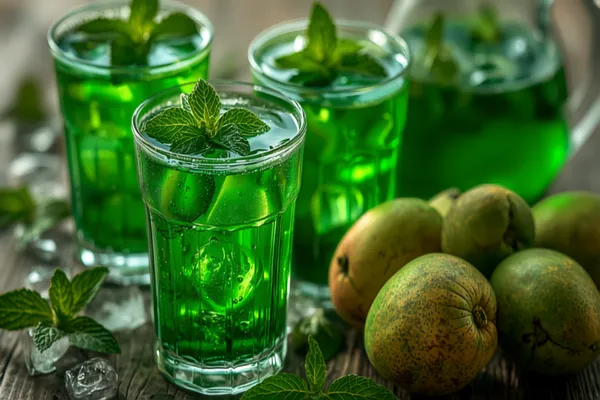
Aam Panna (Raw Green Mango Summer Cooler)
India's tangy, jade-green raw-mango cooler — roasted or boiled green mangoes blended with cumin, black salt and mint. The traditional heat-stroke remedy that tastes like summer.
Pan-Indian (North & West India) · Indian
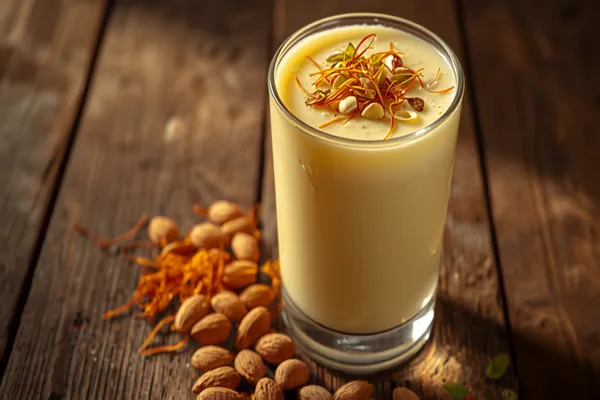
Badam Milk (Saffron Almond Milk)
Milk simmered with a paste of soaked almonds, saffron, cardamom and a whisper of nutmeg — India's rich, fragrant almond drink. Comforting served warm in winter, reviving served chilled in summer, festive any time.
Pan-Indian (Gujarat & West India especially) · Indian
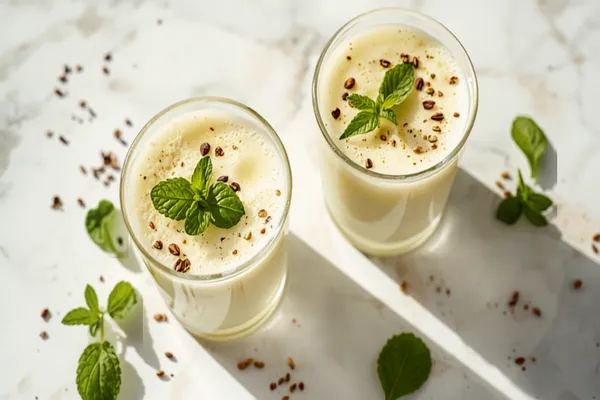
Chaas (Spiced Indian Buttermilk / Masala Chaas)
Whisked yogurt thinned with water and seasoned with cumin, green chilli, ginger and curry leaves — India's cooling, savoury buttermilk. A salty-tangy digestive that beats the heat and settles a heavy meal in two minutes.
From our kitchen community
Ratings & Reviews
My Rating
Tap a star to rate — no sign-in, no form needed.
My Review
0 Ratings
🥣 0 home cooks made it!
Be the first to rate Kolhapuri Chicken (Tambda Rassa-Style Spicy Chicken).
Related Recipes
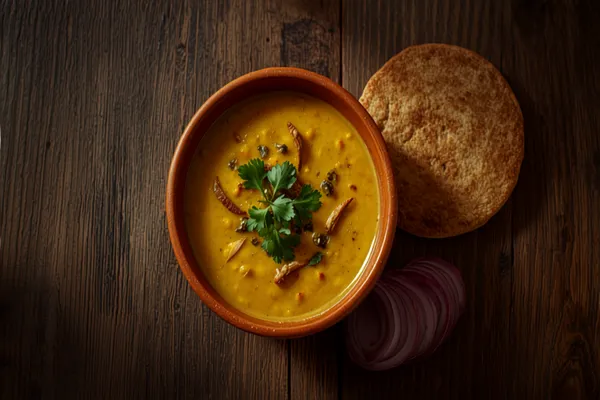
Maharashtra / West India · Indian
Pithla (Maharashtrian Chickpea Flour Curry)
Rural Maharashtra's 10-minute comfort food: chickpea flour whisked into a tempered, garlicky base until it thickens into a soft, savory curry. Pithla-bhakri is the farmer's lunch — humble, fast, and deeply satisfying.
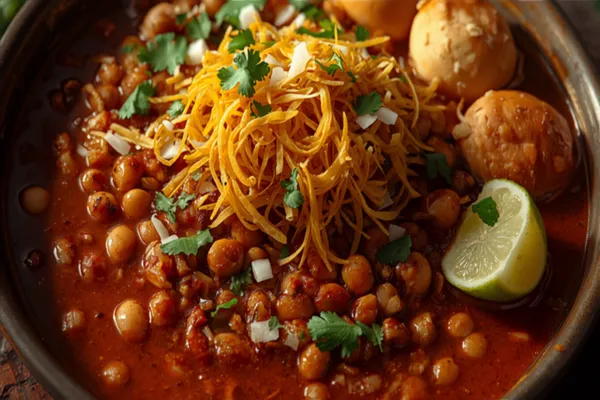
Maharashtra / West India · Indian
Misal Pav (Maharashtrian Sprouted Bean Curry)
Maharashtra's fiery street-food breakfast: a spiced sprouted-moth-bean curry (usal) under a slick of spicy tarri gravy, topped with crunchy farsan, onion, and lime, scooped up with soft pav. Big, bold, and built for a crowd.
Further reading
- Cultural Story · West IndiaA Complete Guide to West Indian CookingFour very different states, one coast: Maharashtra's street food and fiery Kolhapuri curries, Gujarat's sweet-savoury vegetarian thali, Goa's twin Hindu and Catholic kitchens, and Rajasthan's desert cooking. A guide to western India's table.
- Ingredient Deep DiveThe Indian Spice Pantry: A Beginner's MapYou don't need a hundred spices to cook Indian food — you need a dozen, and the know-how to use them. A practical guide to the essential Indian spices, what each does, and the techniques (tadka, bhuna, dry-roasting) that unlock them.