Gujarat / West India · Indian
Khaman Dhokla (Gujarati Steamed Chickpea Cake)
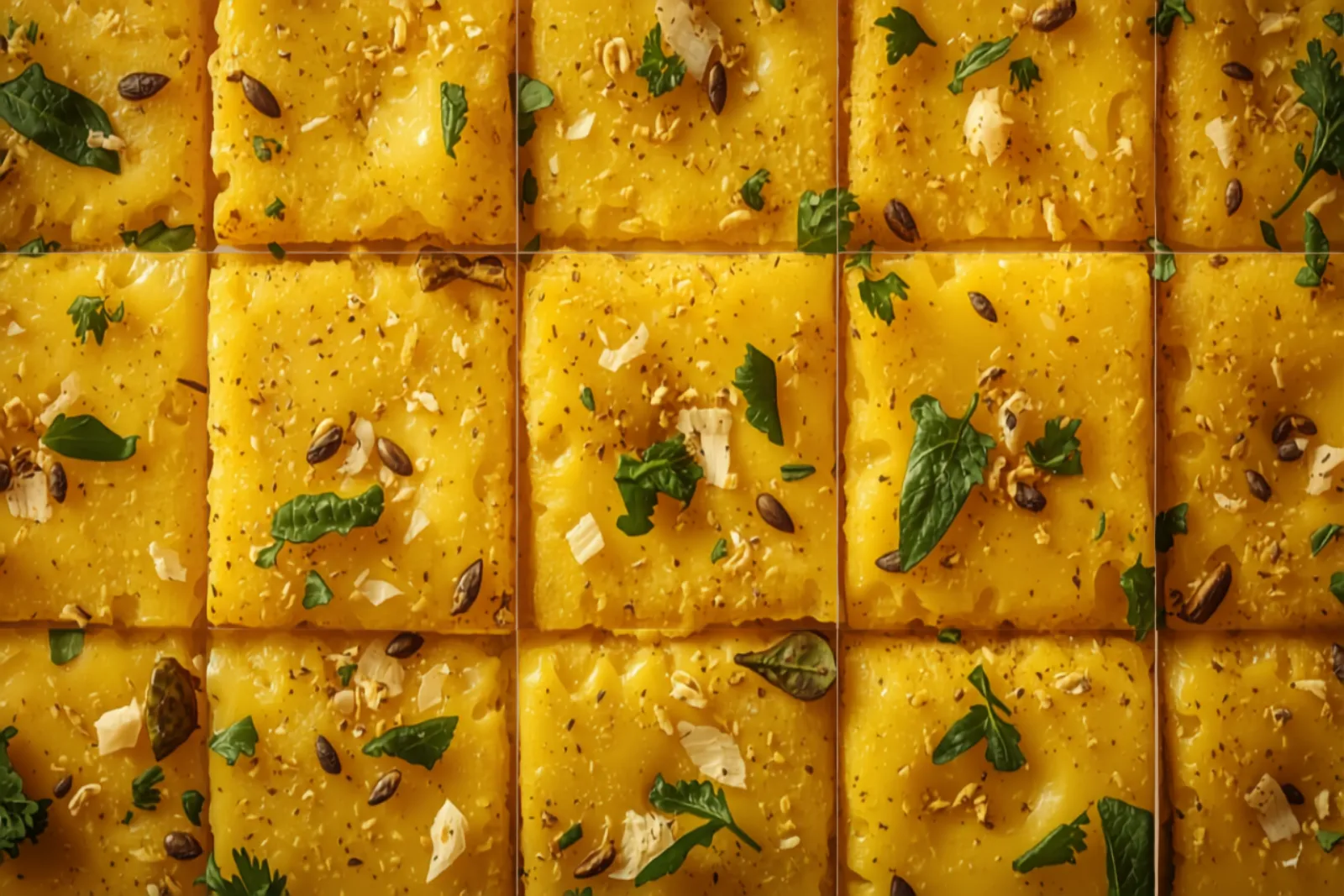
Gujarat's beloved snack: a soft, spongy, faintly sweet-and-tangy steamed cake of ground chickpea (besan), finished with a glossy tempering of mustard seeds, green chili, and curry leaves. Light, quick, and irresistible.
Published June 24, 2026
Cultural context
What most people call 'dhokla' is usually khaman — the soft, yellow, instant version made from besan (gram flour), distinct from the white, fermented rice-and-dal dhokla. A cornerstone of Gujarati farsan (savory snacks), it appears at breakfast, tea time, and festive spreads alike, balancing the cuisine's signature sweet-savory-tangy notes.
Khaman dhokla is Gujarat’s gift to snack time: soft, spongy, sunshine-yellow squares of steamed chickpea flour, faintly sweet and tangy, slicked with a glossy tempering of mustard seeds, green chili, and curry leaves. Light enough for breakfast, festive enough for a spread, it’s one of the most beloved items in the Gujarati farsan (savory snacks) repertoire.
Khaman, not “white dhokla”
A quick clarification, because the names tangle: what most people call dhokla is really khaman — the instant, yellow, besan-based version in this recipe. True white dhokla is a different, fermented rice-and-dal cake. This one needs no fermentation and comes together in under an hour.
The sponge is all about timing
The texture — airy, springy, moist — hinges on one moment: stirring in the Eno (or baking soda with acid) and getting the frothing batter into an already-boiling steamer immediately. The bubbles that make khaman spongy collapse within seconds, so everything else should be ready before you add it.
The sweet tempering finish
What separates great khaman from dry is the finish: a tempering of mustard seeds and curry leaves with a little sweetened water poured over the cut pieces, soaking in to keep them moist and giving that signature gentle Gujarati sweetness. Coconut and coriander on top, green chutney alongside.
Serve with chai. For more West Indian cooking, try misal pav or browse the full recipe collection.
Ingredients
For the batter
- 1.5 cups besan (gram/chickpea flour) Sift it to avoid lumps; fresh besan steams softest.
- 1 tbsp fine semolina (sooji), optional For a slightly firmer sponge; omit to keep it strictly gluten-free.
- 1 tbsp lemon juice
- 1 tsp sugar
- 1 tbsp ginger-green chili paste
- 1 tsp Eno fruit salt (or 1/2 tsp baking soda + extra lemon) The leavening that makes it spongy — add right before steaming.
- salt, water, a pinch of turmeric
For the tempering
- 2 tbsp oil
- 1 tsp mustard seeds
- 2 green chilies, slit
- 1 sprig curry leaves
- 1 tsp sugar dissolved in 1/4 cup water Poured over after steaming for the signature moist, faintly sweet finish.
To finish
- grated coconut and chopped coriander
Method
Tap a step’s number to check it off as you go.
-
Whisk the besan with semolina, turmeric, salt, sugar, lemon, ginger-chili paste, and enough water to a smooth, thick-but-pourable batter. Rest 10 minutes.
Why: A lump-free, well-rested batter steams into an even sponge; resting hydrates the besan.
-
Grease a steaming tray and bring your steamer to a rolling boil. Stir the Eno into the batter — it will froth — and immediately pour into the tray.
Why: Eno reacts instantly, releasing the bubbles that make dhokla spongy. You must get the batter into the hot steamer before the fizz dies, or it turns dense.
-
Steam on high for 15–18 minutes until a skewer comes out clean and the top springs back. Cool slightly, then cut into squares.
Why: Full, undisturbed steam sets the airy structure; opening the lid early can deflate it.
-
Make the tempering: heat oil, pop the mustard seeds, add green chilies and curry leaves, then carefully add the sugar water (it will sputter) and bring to a simmer.
Why: The sweet tempering water is what keeps khaman moist and gives its characteristic gentle sweetness.
-
Pour the tempering evenly over the cut dhokla so it soaks in, and finish with coconut and coriander.
Why: Pouring it over the cut pieces lets the moisture and flavour seep into every square.
A quick, anonymous tap — no review needed.
Variations
- Sandwich dhokla
Layer with green chutney between two steamed sheets for a pretty two-tone version.
- Without Eno
Use baking soda with extra lemon (an acid) to activate it; the texture is slightly less airy but still good.
- Mixed-flour
Add a spoon of semolina or fine rava for a firmer bite, if you don't need it gluten-free.
Serving & Storage
Serve with green coriander-mint chutney and a sweet tamarind chutney, alongside hot masala chai. It's a tea-time and breakfast favourite.
Pairs with: Green chutney, Tamarind chutney, Masala chai.
Storage: Best the day it's made; keeps 2 days refrigerated. Revive by steaming briefly or microwaving with a damp cover so it doesn't dry out.
Nutrition
Per serving (4 pieces)
- Calories
- 230
- Protein
- 9 g
- Carbs
- 28 g
- Fat
- 9 g
- Fiber
- 5 g
- Sugar
- 6 g
- Sodium
- 440 mg
Notable micronutrients: Folate, Iron, Magnesium
Estimated using standard ingredient data. Values vary with brands and substitutions.
Frequently Asked Questions
What's the difference between khaman and dhokla?
Khaman is the soft, yellow, instant cake made from besan (gram flour), which is what most people picture. 'White dhokla' is a different, fermented batter of rice and dal. They're often both called dhokla, but this recipe is khaman.
Why did my dhokla turn out dense?
Usually the leavening. Add the Eno (or soda+acid) right before steaming and get the batter into an already-hot steamer immediately — the bubbles collapse fast. An over-thick batter or under-steaming also makes it dense.
Can I make khaman without Eno?
Yes — use baking soda activated with extra lemon juice. Eno just gives the most reliable, airy sponge. Either way, steam right after mixing in the leavening.
What to drink with this
All drinks →Hand-picked pours to match this dish.
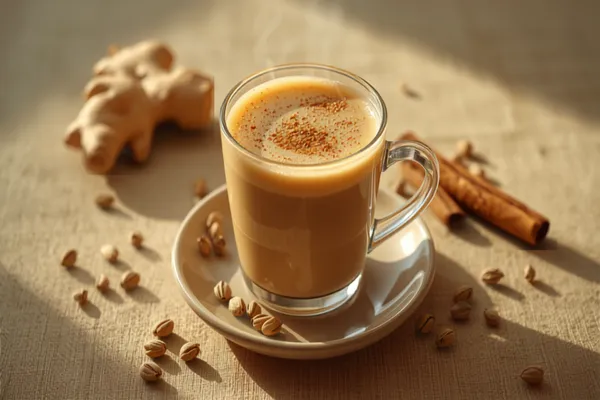
Pan-Indian (the everyday tea of the subcontinent) · Indian
Masala Chai (Spiced Indian Tea)
India's daily ritual in a cup: black tea brewed with milk, sugar and freshly crushed spices. The proper stovetop method, plus how to build your own masala.
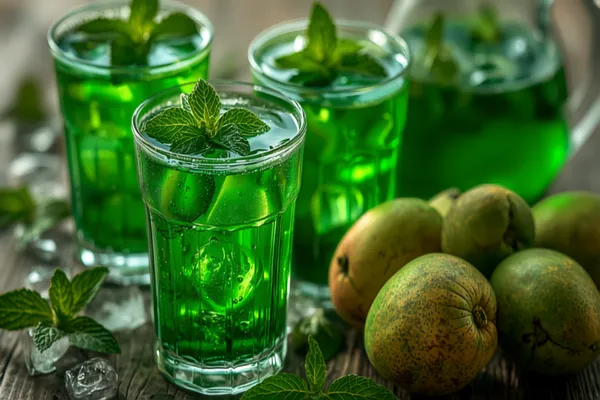
North & West India (peak-summer drink across the subcontinent) · Indian
Aam Panna (Raw Green Mango Summer Cooler)
India's tangy, jade-green raw-mango cooler — roasted or boiled green mangoes blended with cumin, black salt and mint. The traditional heat-stroke remedy that tastes like summer.
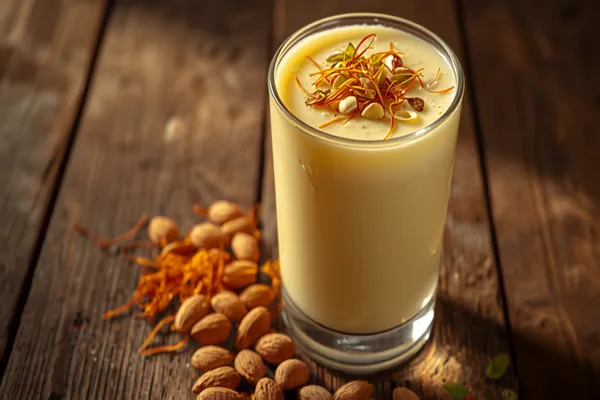
Pan-Indian (North & West India) · Indian
Badam Milk (Saffron Almond Milk)
Milk simmered with a paste of soaked almonds, saffron, cardamom and a whisper of nutmeg — India's rich, fragrant almond drink. Comforting served warm in winter, reviving served chilled in summer, festive any time.
From our kitchen community
Ratings & Reviews
My Rating
Tap a star to rate — no sign-in, no form needed.
My Review
0 Ratings
🥣 0 home cooks made it!
Be the first to rate Khaman Dhokla (Gujarati Steamed Chickpea Cake).
Related Recipes
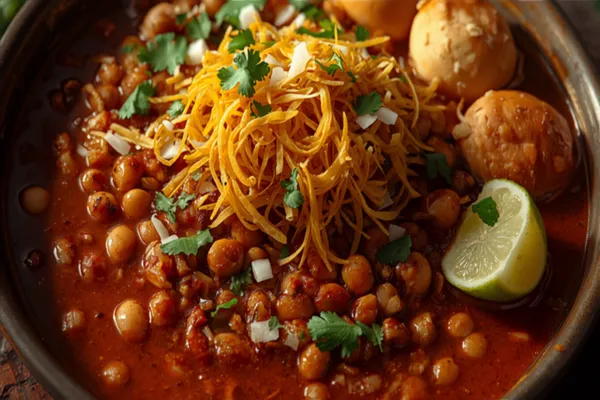
Maharashtra / West India · Indian
Misal Pav (Maharashtrian Sprouted Bean Curry)
Maharashtra's fiery street-food breakfast: a spiced sprouted-moth-bean curry (usal) under a slick of spicy tarri gravy, topped with crunchy farsan, onion, and lime, scooped up with soft pav. Big, bold, and built for a crowd.
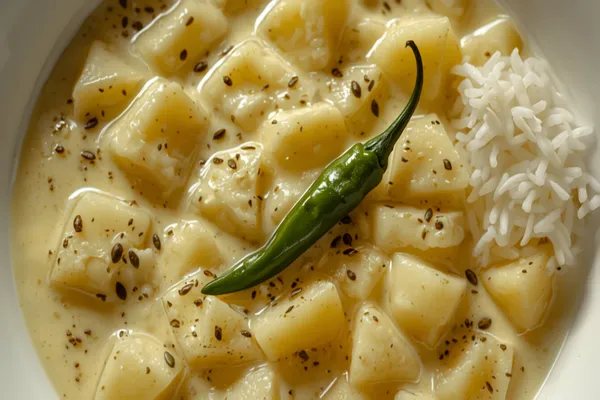
West Bengal / East India · Indian
Aloo Posto (Bengali Potatoes in Poppy Seed Paste)
A beloved Bengali vegetarian dish: potatoes cooked in a creamy, nutty paste of ground white poppy seeds, gently spiced and finished with mustard oil and green chili. Humble, soothing, and quietly addictive.
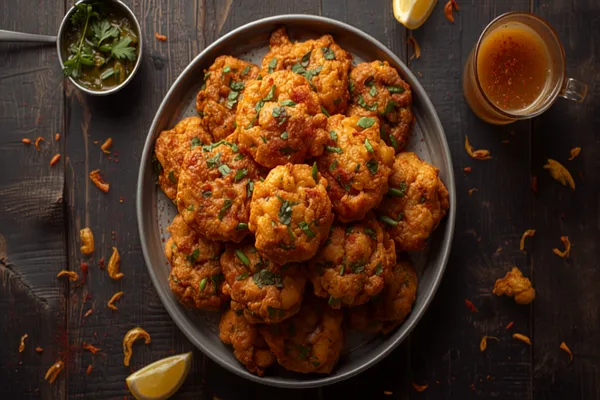
North India, Punjab–Delhi belt · Indian
Pyaaz Pakoda (Crispy Onion Pakora)
The North Indian monsoon snack: slivered onions bound with just enough besan, spiked with ajwain and green chilli, fried into shaggy, shatteringly crisp fritters. No thick batter, no soggy middles — and a cup of masala chai alongside.