North India, Punjab–Delhi belt · Indian
Pyaaz Pakoda (Crispy Onion Pakora)
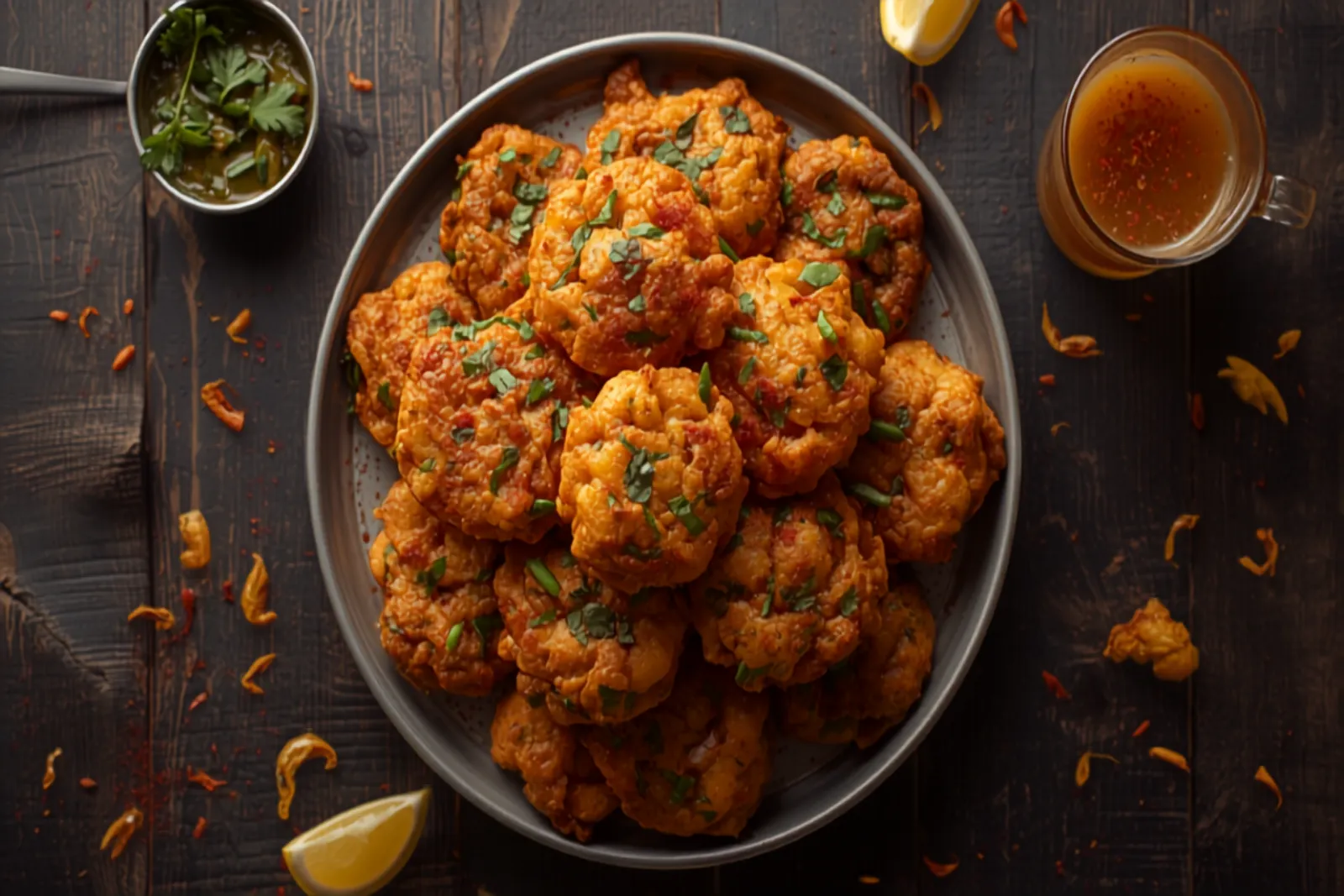
The North Indian monsoon snack: slivered onions bound with just enough besan, spiked with ajwain and green chilli, fried into shaggy, shatteringly crisp fritters. No thick batter, no soggy middles — and a cup of masala chai alongside.
Published August 6, 2026
Cultural context
Pakoras — besan-battered fritters — are associated above all with Punjab and the wider North Indian plains, where the first grey monsoon clouds are still a cue to heat a kadhai of oil. The onion version travels under many names: pyaaz pakoda in the north, kanda bhaji in Maharashtra, ulli bajji in the south, and 'onion bhaji' in Britain, where it became the default curry-house starter. The dish is genuinely pan-South-Asian rather than any one region's property; what changes is the spicing — ajwain and coarse chilli in the north, curry leaves and garlic further south.
Onion pakoda is what the first rain of the season smells like in North India. The moment the sky goes slate-grey over the Punjab plains, kadhais come out, besan comes down from the shelf, and within twenty minutes there is a plate of shaggy golden fritters and a pot of chai. It is not a refined dish and it isn’t meant to be — it is the fastest, most reliable way an Indian kitchen knows to turn four onions into an occasion.
The mix is not a batter
This is the thing most recipes get wrong. A good pyaaz pakoda is not sliced onion dipped in a bowl of gram-flour batter; it is sliced onion salted, left to weep, and then tossed with barely enough besan to cling. The onions supply their own liquid. That distinction is the whole recipe: a lean mix fries into open, lacy clusters with crisp filaments poking out in every direction, while a wet batter fries into a smooth dumpling with a steamy interior.
So resist the flour. If the mix looks a little too dry after a minute of squeezing, keep squeezing — more water is coming out of the onions than you think.
Slice with the grain
Halve each onion and cut from root to tip, not across. Slivers cut along the grain hold their shape in the oil and tangle into each other; rings cut across the grain collapse into soft strands and the clumps fall apart as they fry.
Why ajwain, and why rice flour
Two small ingredients do disproportionate work. Ajwain — carom seed — carries thymol, the same compound that gives thyme its bite, and it is the flavour that reads instantly as North Indian pakora rather than generic fritter. Cooks have added it to fried food for generations for digestive reasons as much as culinary ones.
Rice flour is the crispness insurance. Besan alone browns beautifully but softens quickly; rice flour, with no gluten and little protein, sets into a brittle, glassy shell that survives the journey from kadhai to table. Two tablespoons in this quantity is plenty.
Read the oil, and read the sound
Medium heat, around 170°C, is the target for the first fry — hot enough that the surface seals on contact, gentle enough that the raw besan cooks through and the onion inside turns sweet. Then listen. Loud, aggressive bubbling means water is still boiling out of the fritter. When the noise drops to a soft crackle, the inside is dry and the pakoda is done.
The optional second fry, thirty seconds in hotter oil after a short rest, is a restaurant trick worth stealing. It drives off the last of the surface moisture and buys you an extra twenty minutes of crunch — which, given how fast these disappear, is usually more than enough.
One dish, many names
Calling this “the” onion pakoda would be unfair to the rest of the subcontinent. It is kanda bhaji in Maharashtra, ulli bajji in the Telugu and Malayalam-speaking south, pyaaz ke pakode across the Hindi belt, and the whole family reappears in Britain as the curry-house onion bhaji. The base technique is shared; the spicing is where each region signs its name. This is the northern signature: ajwain, coarse Kashmiri chilli, amchur, and no garlic.
Serve them within minutes, with a bowl of green chutney and something hot to drink. If you want to keep the tea-time table going, Samosa is the natural next plate and Masala Chai is non-negotiable — and the North Indian cooking guide has more on how the region’s frying and tempering traditions fit together.
Ingredients
For the pakodas
- 500 g (about 4 medium) red onions Indian red onions are sharper and less watery than sweet varieties. Slice them into thin half-moons along the grain, not into rings — long slivers tangle together and give you the shaggy, lacy edges.
- 1 tsp fine salt Used first, on its own, to draw water out of the onions.
- 2 green chillies, finely chopped
- 1 tbsp fresh coriander, chopped (stems included)
- 3/4 tsp ajwain (carom seeds) The signature North Indian pakora spice — thyme-like and slightly bitter. It also has a long reputation for making fried food easier to digest. Crush lightly between your palms as you add it.
- 1 tsp Kashmiri red chilli powder For colour more than heat. Use half the quantity of a hotter chilli powder.
- 1/2 tsp turmeric
- 1/2 tsp amchur (dried mango powder) Optional but excellent — a tart lift that cuts the richness. A squeeze of lemon at the table does a similar job.
- 90 g (about 3/4 cup) besan (gram flour) Chickpea flour. Sift it if lumpy. Do not be tempted to add more — the onions should look barely dusted, not coated.
- 2 tbsp rice flour The crispness insurance. Rice flour has no gluten and little protein, so it fries into a brittle, glassy shell instead of a soft one.
- 1 tbsp hot frying oil, taken from the kadhai Optional. Stirred into the mix just before frying it shortens the batter, giving a lighter, less bready crumb.
- 1–3 tbsp water, only if needed
- for deep-frying neutral oil Groundnut, sunflower or rice-bran oil. You want about 5 cm depth in a kadhai or deep pan.
To serve
- to serve green coriander-mint chutney, tamarind chutney or tomato ketchup
- to serve masala chai Not optional in any Indian household.
Method
Tap a step’s number to check it off as you go.
-
Peel and halve the onions, then slice them into thin half-moons following the grain from root to tip. Put them in a wide bowl with the 1 tsp salt, rub gently with your fingertips and leave for 10 minutes.
Why: Salt pulls water out of the onions by osmosis. That released water is the only liquid the mix needs — it hydrates the besan into a clinging paste rather than a batter, which is the single biggest difference between a great pakoda and a doughy one.
-
Meanwhile, set the oil to heat over a medium flame. It's ready when a pinch of batter dropped in sinks briefly, then rises and sizzles steadily — roughly 170–175°C.
Why: Medium is deliberate. Too cool and the fritters sit in the oil absorbing it; too hot and the outside browns before the raw besan inside has cooked through and the onion has softened.
-
Add the green chillies, coriander, ajwain, chilli powder, turmeric and amchur to the wet onions and toss to coat.
Why: Spicing the onions before the flour goes in means the seasoning sticks to the moist surfaces instead of sitting in dry pockets of besan.
-
Scatter over the besan and rice flour and mix with your hand, squeezing and turning, for about a minute. Add the hot oil if using. The mix should clump when pressed and look like slivered onions barely veiled in flour — add water a teaspoon at a time only if it stays powdery.
Why: Flour is the binder, not the body. Every extra spoonful thickens the coating and pushes you towards a bhajia-style dumpling; a lean mix fries into open, lacy fritters with crisp filaments sticking out everywhere.
-
Working quickly, drop loose, untidy clumps of about a heaped tablespoon into the oil, four or five at a time. Don't press or shape them into neat balls.
Why: Craggy edges are surface area, and surface area is crunch. A compacted ball steams in the middle. Fry in small batches so the oil temperature doesn't crash.
-
Fry for 3–4 minutes, turning once, until deep golden and the sizzling has quietened to a soft crackle. Lift out with a slotted spoon onto a wire rack.
Why: The noise is a moisture gauge — loud, vigorous bubbling means water is still escaping. When it settles, the pakoda is dry enough inside to be crisp. Draining on a rack rather than paper keeps steam from softening the base.
-
For a shattering crust, rest the fried pakodas for 5 minutes, then return them to slightly hotter oil (185°C) for 30–45 seconds.
Why: A second, hotter fry drives off the last surface moisture and sets the crust. This is what keeps pakodas crisp on the plate long enough to actually reach the table.
-
Sprinkle with a pinch of extra chilli powder or chaat masala and serve immediately with chutney and hot chai.
Why: Pakodas are at their best within minutes of leaving the oil. Everything about the recipe is engineered for that first five minutes.
A quick, anonymous tap — no review needed.
Variations
- Kanda bhaji (Maharashtrian)
Skip the ajwain and amchur, add a pinch of sugar and a little more coriander, and serve with fried green chillies and salt. This is the version sold outside Mumbai's suburban stations in the rains.
- Southern ulli bajji
Add a sprig of torn curry leaves, a teaspoon of grated ginger and a little asafoetida to the mix, and swap half the chilli powder for coarsely crushed black pepper.
- Palak or methi pakoda
Replace a third of the onion with shredded spinach or chopped fenugreek leaves. Both bring extra water, so hold back on any added liquid.
- Air-fried
Brush the clumps with oil and air-fry at 190°C for 12–14 minutes, turning halfway. They'll be crisp and much lighter, though not as lacy — the open filaments need immersion in oil to form.
- Pakoda kadhi
Drop leftover pakodas into a simmering besan-and-yogurt kadhi for the last five minutes so they swell and soak. A whole second dinner out of the same fritters.
Serving & Storage
Serve piping hot, straight from the rack, in a steel plate lined with newspaper the way roadside stalls do. Green coriander-mint chutney is the classic partner; a wedge of lemon and a dusting of chaat masala is the minimalist one. In the north they're eaten with sweet-sharp tamarind chutney and, invariably, a cup of strong masala chai — the tannin cuts the fried richness in a way nothing else does.
Pairs with: Masala chai, Coriander-mint chutney, Tamarind chutney, Nimbu pani, Adrak chai with extra ginger.
Storage: Pakodas are a make-and-eat-now dish and lose their crunch within an hour. If you must hold them, keep them uncovered on a wire rack at room temperature for up to 4 hours and refresh in a 200°C oven or air fryer for 5 minutes — never a microwave, which turns them limp. The unfried onion mix cannot be stored: the salt keeps drawing water and it will turn to slurry within the hour.
Nutrition
Per serving (About 5 pakodas (100 g))
- Calories
- 245
- Protein
- 7 g
- Carbs
- 27 g
- Fat
- 12 g
- Fiber
- 5 g
- Sugar
- 5 g
- Sodium
- 390 mg
Notable micronutrients: Folate, Iron, Vitamin C, Manganese
Estimated using standard ingredient data. Values vary with brands and substitutions.
Frequently Asked Questions
Why did my pakodas come out soft and oily instead of crisp?
Almost always one of three things. Too much besan, which makes a thick jacket that soaks up oil; too much added water, when the salted onions had already provided enough; or oil that wasn't hot enough, so the fritters sat and absorbed fat rather than sealing on contact. Aim for a mix that looks like onions dusted with flour, not onions swimming in batter, and test the oil before every batch.
Is an onion bhaji the same thing as an onion pakoda?
Broadly yes, though the names come from different places. In India, bhaji/bhajji and pakoda are largely regional synonyms for a besan fritter — kanda bhaji in Maharashtra, pyaaz pakoda in the north, ulli bajji in the south. British curry houses adopted 'onion bhaji' and standardised it into a rounder, denser, more heavily bound patty. The recipe here is the looser, lacier Indian home style.
Can I make these gluten-free?
They already are, as written — besan and rice flour contain no gluten. Just check that your besan is milled in a gluten-free facility if you're cooking for someone with coeliac disease, since shared mills are common.
What is ajwain and can I skip it?
Ajwain, or carom seed, is a tiny seed with a sharp thyme-and-oregano flavour from the same compound, thymol. It's the note that makes a fritter taste specifically North Indian, and it's traditionally added to fried food to settle the stomach. If you have none, use a pinch of dried thyme plus a pinch of cumin — not the same, but closer than nothing.
Which onion is best?
Small, sharp Indian red onions if you can find them. Ordinary red onions are the next best thing. Avoid large sweet or Spanish onions — they carry much more water and sugar, so they steam the batter from within and brown too fast.
What to drink with this
All drinks →Hand-picked pours to match this dish.
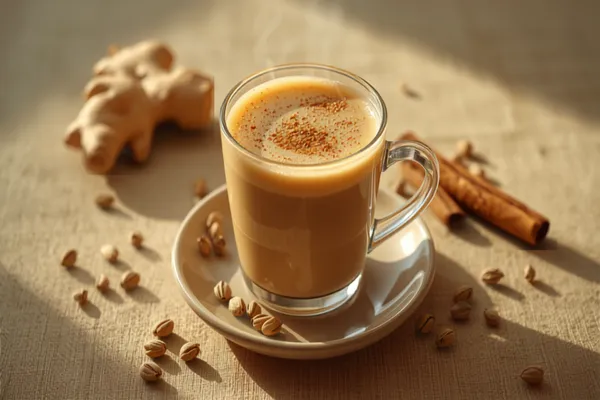
Pan-Indian (the everyday tea of the subcontinent) · Indian
Masala Chai (Spiced Indian Tea)
India's daily ritual in a cup: black tea brewed with milk, sugar and freshly crushed spices. The proper stovetop method, plus how to build your own masala.
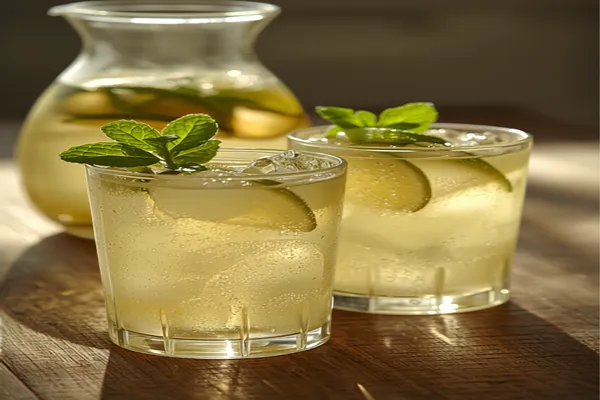
North India (shikanji), pan-Indian street drink · Indian
Nimbu Pani (Indian Spiced Lemonade / Shikanji)
India's everyday thirst-quencher: fresh lime, sugar or jaggery, a hit of black salt and roasted cumin, lengthened with water. Sweet, salty, tangy and instantly reviving in the heat.
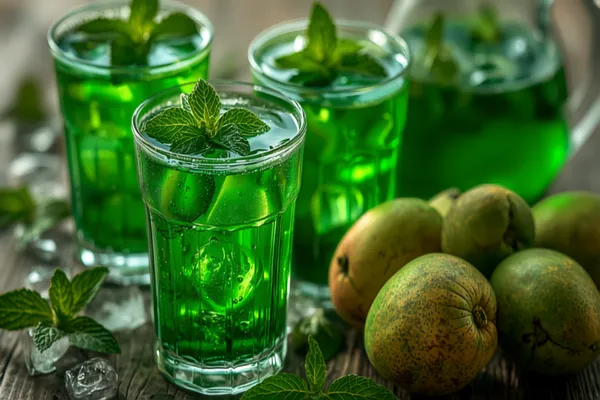
North & West India (peak-summer drink across the subcontinent) · Indian
Aam Panna (Raw Green Mango Summer Cooler)
India's tangy, jade-green raw-mango cooler — roasted or boiled green mangoes blended with cumin, black salt and mint. The traditional heat-stroke remedy that tastes like summer.
From our kitchen community
Ratings & Reviews
My Rating
Tap a star to rate — no sign-in, no form needed.
My Review
0 Ratings
🥣 0 home cooks made it!
Be the first to rate Pyaaz Pakoda (Crispy Onion Pakora).
Related Recipes
North India / pan-Indian street food · Indian
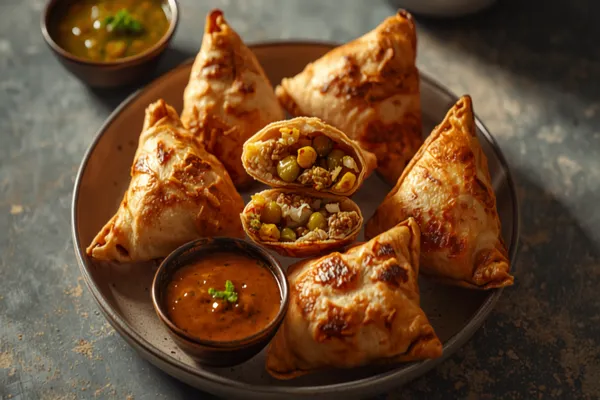
Samosa (Punjabi Aloo Samosa)
India's most famous snack: a crisp, flaky pastry triangle stuffed with spiced potatoes and peas. Made from scratch, with the secret of a low-and-slow fry for that signature blistered crust.
Pan-Indian (the everyday tea of the subcontinent) · Indian
Masala Chai (Spiced Indian Tea)
India's daily ritual in a cup: black tea brewed with milk, sugar and freshly crushed spices. The proper stovetop method, plus how to build your own masala.
Mumbai, Maharashtra / West India · Indian
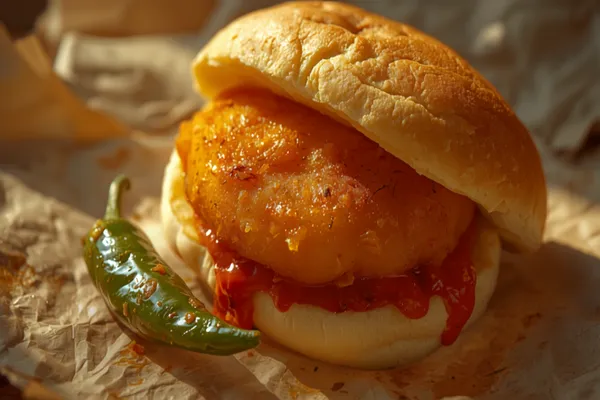
Vada Pav (Mumbai's Spiced Potato Burger)
Mumbai's beloved street snack and unofficial city sandwich: a spiced, deep-fried potato dumpling (batata vada) tucked into a soft pav with dry garlic chutney and a fried green chili. Cheap, fiery, and completely addictive.
Gujarat / West India · Indian
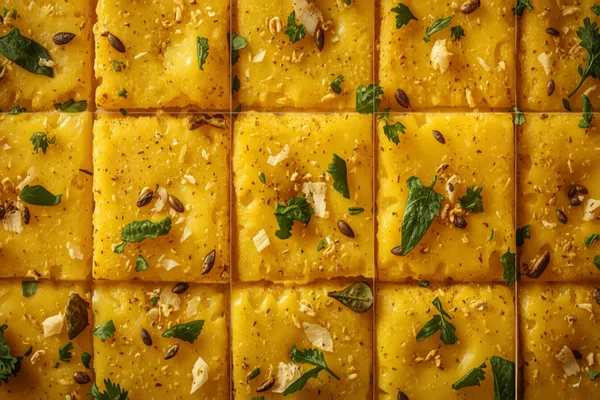
Khaman Dhokla (Gujarati Steamed Chickpea Cake)
Gujarat's beloved snack: a soft, spongy, faintly sweet-and-tangy steamed cake of ground chickpea (besan), finished with a glossy tempering of mustard seeds, green chili, and curry leaves. Light, quick, and irresistible.
Further reading
- Cultural Story · North IndiaA Complete Guide to North Indian CookingThe cuisine the world knows best — and understands least. From Punjab's tandoor and dairy to Kashmir's aromatic Wazwan and Awadh's courtly kebabs, a guide to North India's regions, techniques, and where to begin.
- Ingredient Deep DiveThe Indian Spice Pantry: A Beginner's MapYou don't need a hundred spices to cook Indian food — you need a dozen, and the know-how to use them. A practical guide to the essential Indian spices, what each does, and the techniques (tadka, bhuna, dry-roasting) that unlock them.